
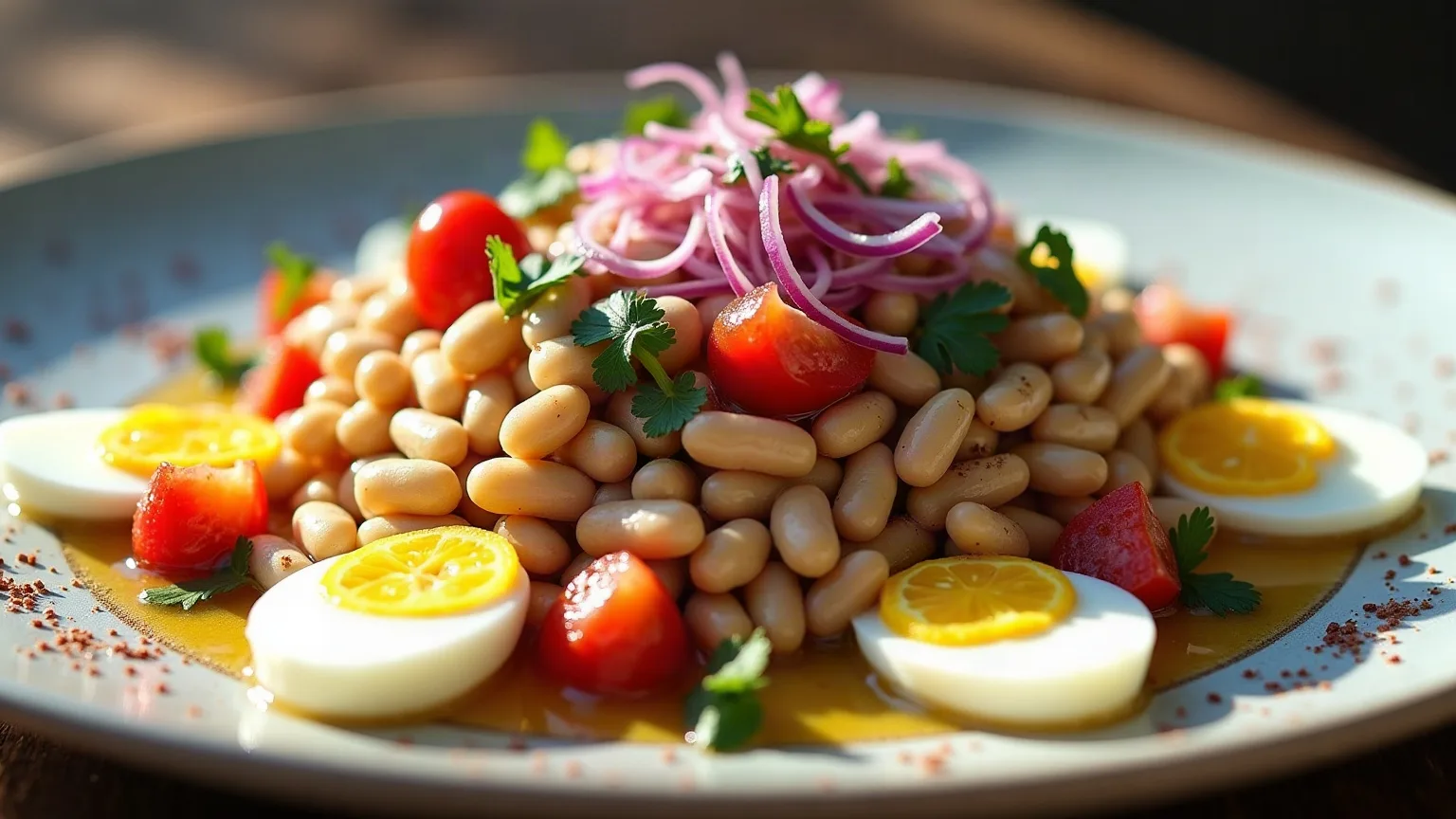
White bean salad
The dressing goes on while the beans are HOT. A cold bean takes nothing up; a hot one draws the dressing into its starch.
Pulses · Turkish Mediterranean · Budget · Vegan · Weekend batch · Uses leftovers
- Preparation
- 20 min
- Cooking
- 50 min
- Resting
- 30 min
- Difficulty
- Easy
- Cost
- Very cheap
- Season
- All year
In Antalya piyaz is made with egg and tahini, in Istanbul plain and with onion; both schools know the same thing, which is that the dressing goes onto hot beans. The reason is the state of the starch: above 60 °C the gel is loose and takes up liquid, and as it cools it retrogrades and closes. It is the same rule that governs a potato salad.
Method
- Soak the beans overnight.
- Slice the onion fine, rub it with salt, wait ten minutes and squeeze it dry.
You will need: A pan · A wide bowl
-
Boil the soaked beans in unsalted water for forty-five to fifty minutes, until soft.
Look for Crushable under a finger with the skin intact.
Why In a piyaz the bean must be fully soft without collapsing: it is eaten as a salad, so the skin has to stay whole. -
Whisk the oil, lemon, tahini, sumac and salt into a dressing.
Look for It should lighten to a cream and stay emulsified.
Why The tahini binds the dressing: oil and lemon separate on their own, and the lecithin and fibre in tahini hold them together. One spoon changes the consistency of the whole thing.Salt · 1.52% Right in the window. Flavours sharpen, bitterness retreats, water is held.
-
Drain the beans and mix them with the dressing while HOT; leave them thirty minutes.
Look for The beans should take the dressing up and darken slightly, with no loose dressing in the bowl.
Why Above 60 °C the bean’s starch gel is loose and absorbs liquid; as it cools it retrogrades and closes, and the dressing then only sits on the surface. A piyaz dressed hot tastes from within and one dressed cold tastes from outside.If it went wrong
If the beans have cooled, steam them two minutes and dress them then: heat opens the gel again.
Salt · 1.52% Right in the window. Flavours sharpen, bitterness retreats, water is held.
-
Fold in the squeezed onion, parsley and tomato, and lay the sliced boiled eggs on top.
Look for The tomatoes should not yet have wept.
Why The herbs and tomato go in last: left in the dressing they release water and thin the salad.Starch still asleep The granules are just floating there doing nothing. No body arrives before 62 °C.
Salt · 0.68% Right in the window. Flavours sharpen, bitterness retreats, water is held.
This recipe was run through the engine step by step — what goes in when, and at what temperature and for how long. The reactions above come from that run.
peak 100 °C · 89 minutes · engine 1.0.0 · confidence low
After the heat goes off
At room temperature. The classic partner to köfte, and a meal on its own.
Two days in the fridge, with the egg and tomato added at serving.
Not reheated.
Not for the freezer: the dressing separates and the tomato goes spongy.
Mashed into a sandwich or stirred into a soup.
Suitable from twelve months. For 12–36 months crush the beans, leave the onion out and lift their share before the salt; sumac and tahini are fine. For a baby under one, unsalted beans and mashed yolk work.
- White beans (dry) → Black-eyed peas (dry) Black-eyed peas work and cut the boiling to twenty-five minutes; thinner skin and a softer texture.
- Plating & table The method this recipe rests on
- White beans (dry) What it does in heat, water and acid
- Tomato What it does in heat, water and acid
- Red onion What it does in heat, water and acid
- Borlotti bean pilaki Similar method, or something that sits on the same table
- Black-eyed pea salad Similar method, or something that sits on the same table
- White beans Similar method, or something that sits on the same table
- Budget Other recipes that answer the same need
- Vegan Other recipes that answer the same need
- Weekend batch Other recipes that answer the same need
- Uses leftovers Other recipes that answer the same need
What it tastes like
No axis sits clearly above the average: a balanced recipe.
This profile is computed rather than measured: the role-weighted average of its ingredients’ taste vectors, shifted by what the cooking does. The thin line is the database average on that axis.
Closest in taste
Not hand-picked: ranked by distance across the eight taste axes.
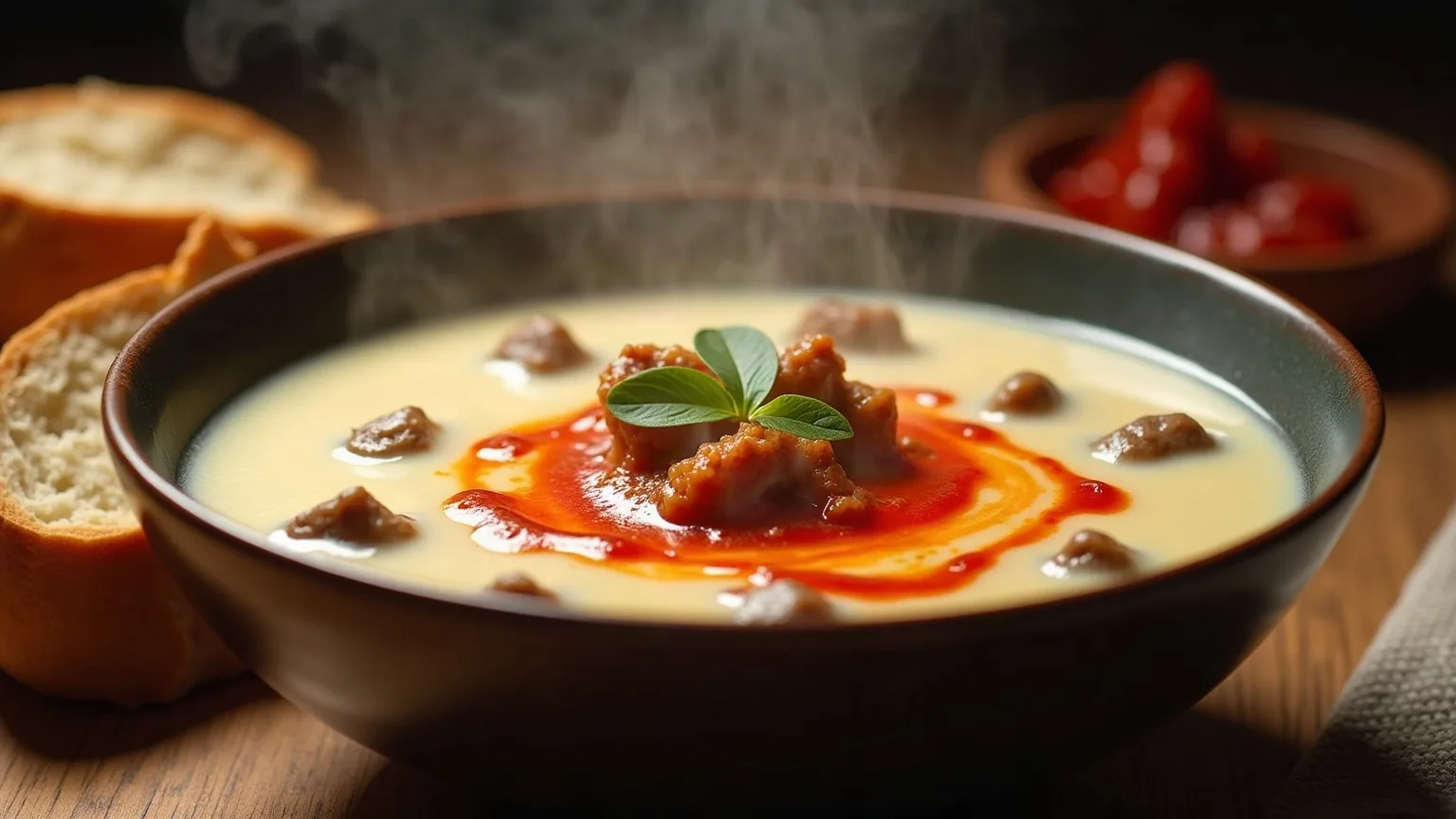
Wedding soup
Lamb broth, a liaison, and red pepper butter over the top: yayla soup’s richer cousin, built on stock instead of water.…
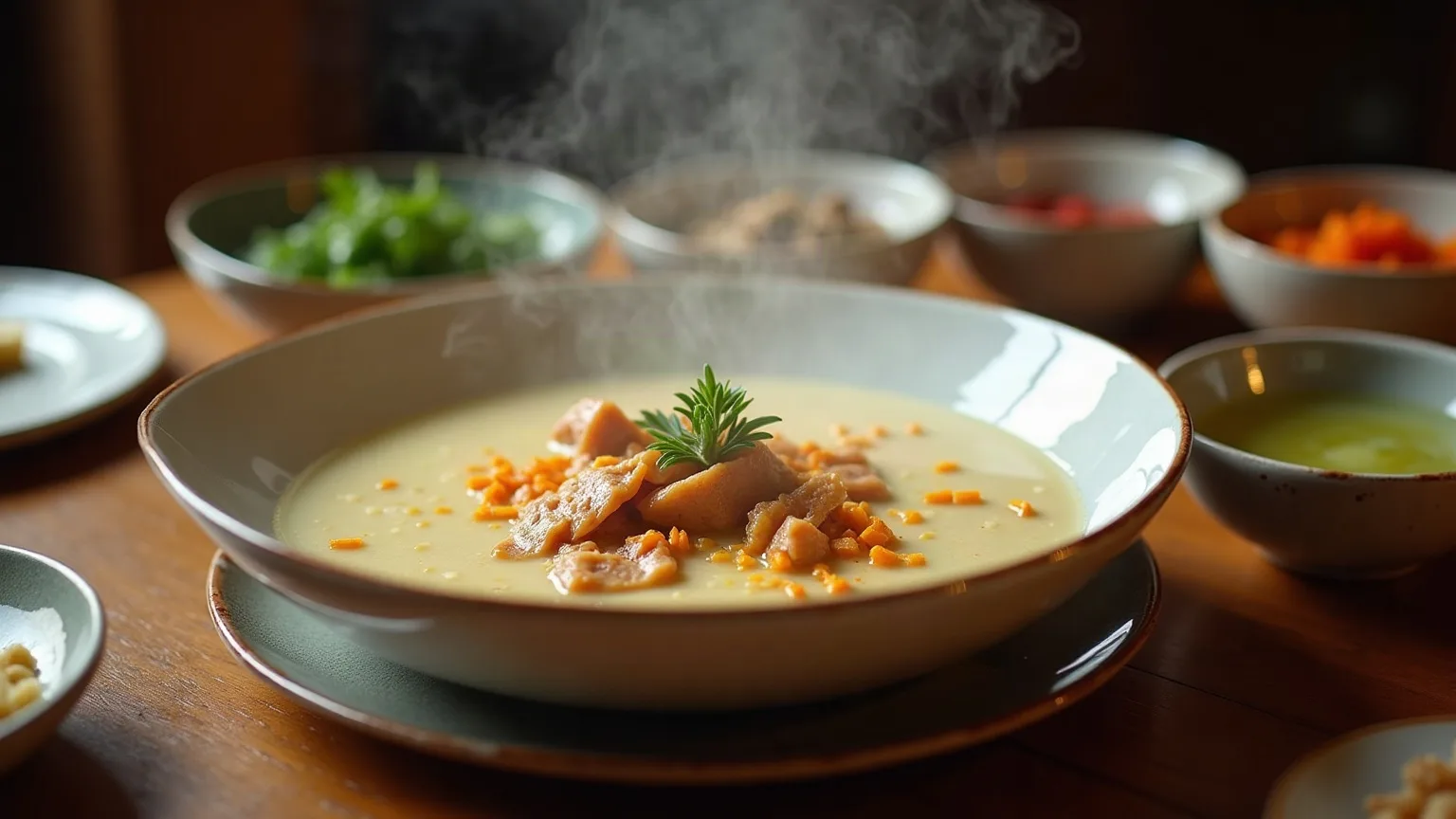
Tripe soup
Three hours of simmering and a liaison. What decides the smell is not the recipe but how well the tripe was cleaned.…
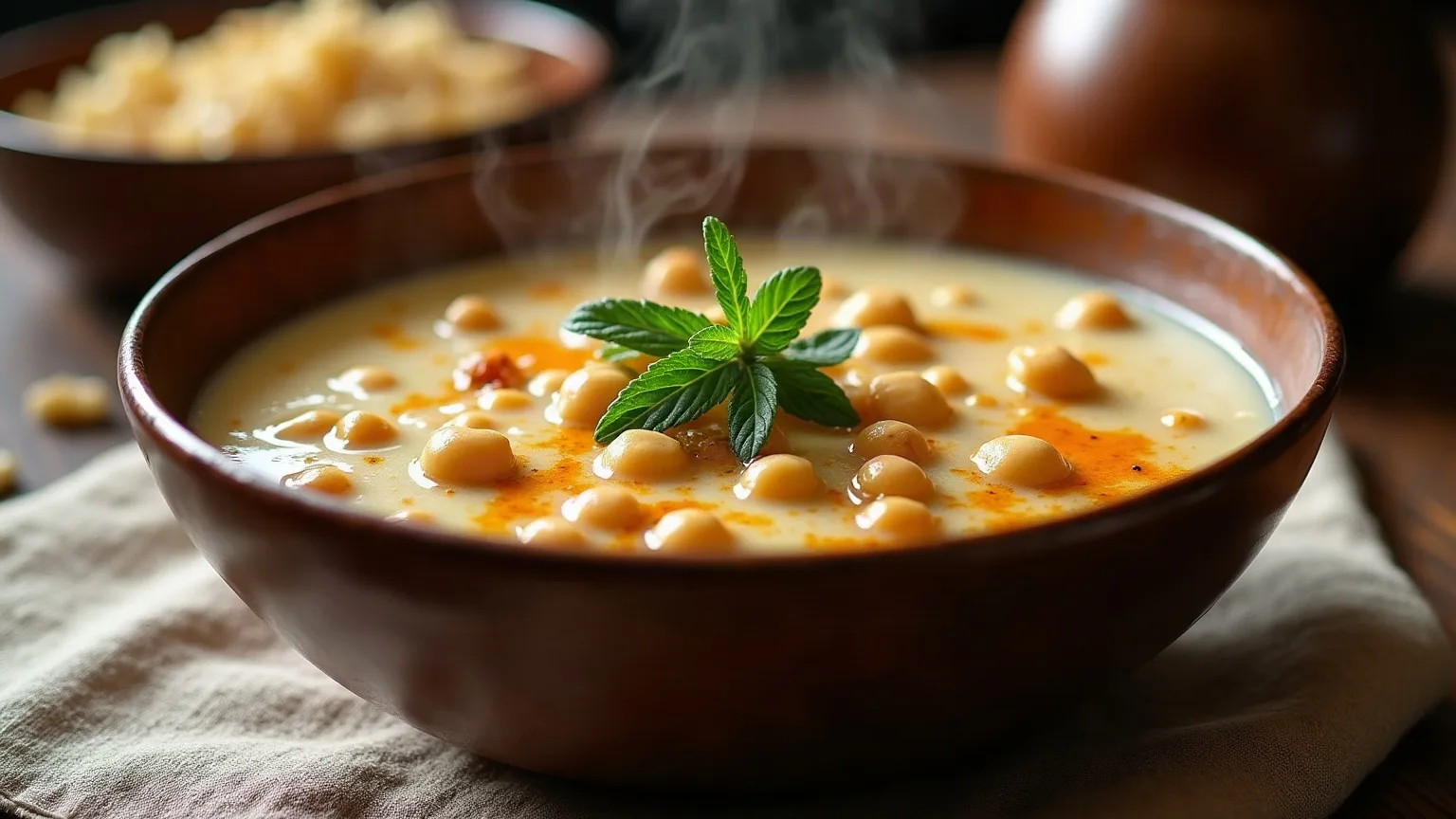
Lebeniye soup
A yoghurt soup thickened with chickpeas and hulled wheat, finished with garlic and mint in butter. The Antep version add…
Tutmaç soup
Yoghurt, chickpeas and noodles cut into squares: a soup a thousand years old, named in Kaşgarlı Mahmud’s dictionary.…