
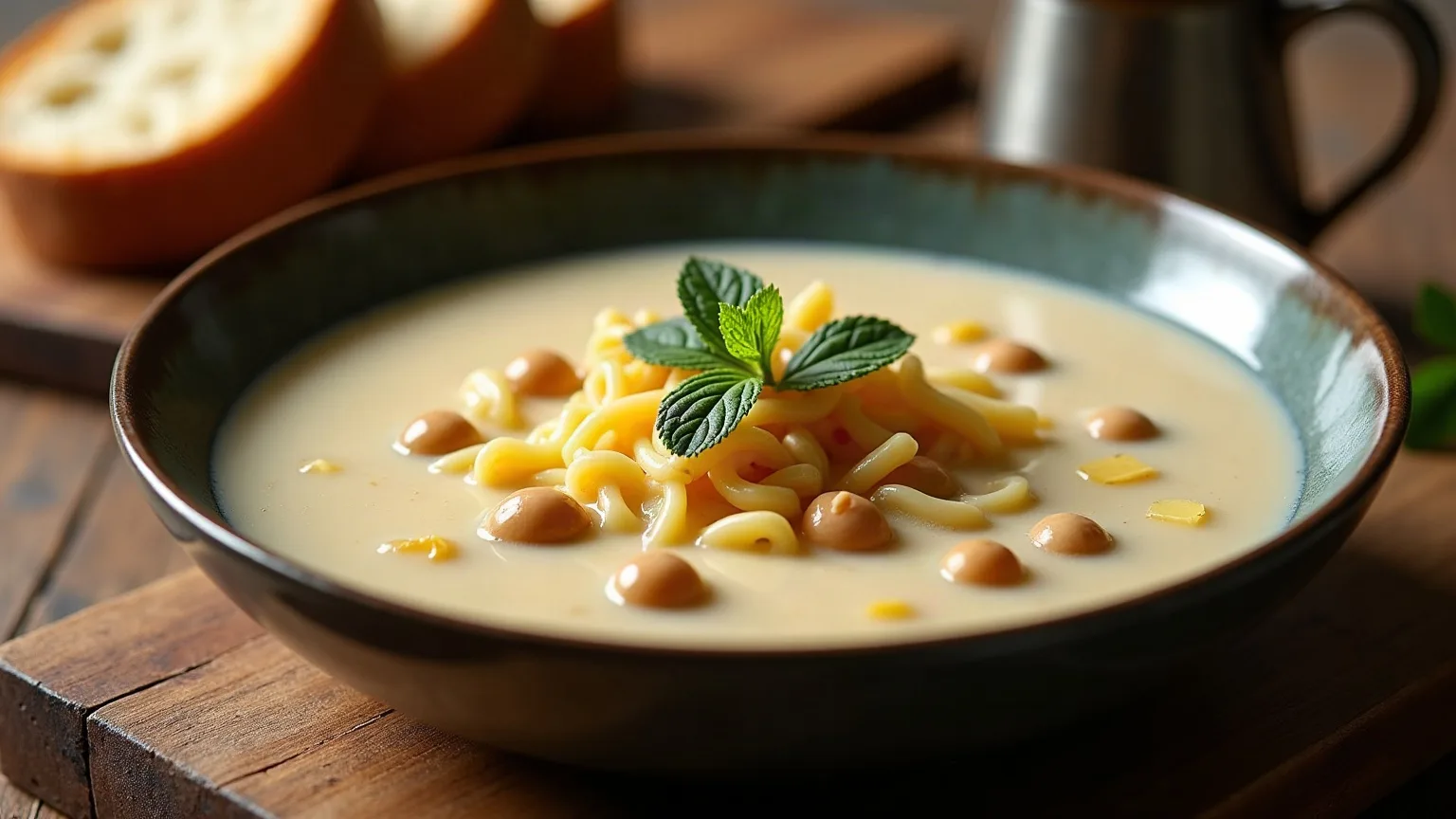
Tutmaç soup
Yoghurt, chickpeas and noodles cut into squares: a soup a thousand years old, named in Kaşgarlı Mahmud’s dictionary.
Soups · Central Anatolia · Budget · One pot
- Preparation
- 10 min
- Cooking
- 30 min
- Difficulty
- Practised hand
- Cost
- Very cheap
- Season
- Autumn, Winter
Tutmaç is among the oldest Turkish dishes named in the Divânu Lugâti’t-Türk of 1072, and it still carries the same three elements: yoghurt, dough and a pulse. Cutting the noodles into squares is function rather than style — squares fit a spoon and do not tangle the way long strips do. The yoghurt liaison follows the same rule as everywhere else: the temperature climbs gradually.
Method
- Have the chickpeas already cooked; from dry, soak overnight and boil forty minutes.
- Break the noodles into 1.5 cm squares.
- Crush the garlic with salt.
You will need: A pan · A whisk · A small pan
-
Bring the water to the boil, add the noodles and cook eight minutes, then add the chickpeas and boil three more.
Look for The water should cloud slightly: that is starch, and a good sign.
Why The noodles give their starch to the water and prepare the ground the liaison will hold on to; the chickpeas are already cooked and only need warming.Starch gelatinised The granules soaked up water, swelled and burst into a network. It has thickened, and it will firm further as it cools. no way back
A gluten web is forming Gliadin and glutenin hydrated into an elastic net. This is what will hold the gas. no way back
-
Whisk the yoghurt and flour in a bowl, then ladle five of the boiling liquid in, whisking.
Look for The bowl should warm with each ladle and the mixture stay smooth.
Why The yoghurt has to climb from 20 °C to 70 °C gradually; a sudden shock coagulates the casein and the soup goes grainy.If it went wrong
If it starts to look grainy, stop, wrap the bowl in a cold cloth and keep stirring: it may come back as the temperature drops. If not, blend it.
A gluten web is forming Gliadin and glutenin hydrated into an elastic net. This is what will hold the gas. no way back
-
Pour the mixture back, add the crushed garlic and the salt, and heat five minutes stirring WITHOUT boiling.
Look for It should thicken with no bubble breaking the surface.
Why The garlic is neither raw nor boiled: around 70 °C the allicin partly breaks down, the sharpness goes and the smell stays.If it went wrong
If it boiled and split, blitz it for twenty seconds.
Starch gelatinised The granules soaked up water, swelled and burst into a network. It has thickened, and it will firm further as it cools. no way back
A gluten web is forming Gliadin and glutenin hydrated into an elastic net. This is what will hold the gas. no way back
Salt · 0.29% Low. Everything reads flat and nothing steps forward.
-
Melt the butter, swirl the mint in it for ten seconds and pour it over.
Look for The mint should darken without blackening.
Why Menthol dissolves in fat, and minted butter has finished this soup for a thousand years.Starch gelatinised The granules soaked up water, swelled and burst into a network. It has thickened, and it will firm further as it cools. no way back
A gluten web is forming Gliadin and glutenin hydrated into an elastic net. This is what will hold the gas. no way back
Salt · 0.29% Low. Everything reads flat and nothing steps forward.
If you want a crust, do not stay under 140 °C. Food cooks at this heat but never colours.
This recipe was run through the engine step by step — what goes in when, and at what temperature and for how long. The reactions above come from that run.
peak 130 °C · 21 minutes · engine 1.0.0 · confidence low
What can go wrong here
The yoghurt sauce curdled⌄
What happened
The yoghurt passed 85 °C. The casein micelles lost their charge, the protein clumped and released the water it was holding. Once split, it does not come back.
By the numbers
Stabilise 500 g of yoghurt with a tablespoon of starch and one yolk, stir in one direction, never boil.
Without a thermometer
Catch the threshold by eye: the moment a few large bubbles appear on the surface you are around 85 °C, take it off. The sauce is ready when it coats the back of a spoon — draw a line with your finger and the line should hold.
After the heat goes off
Hot, in a deep bowl, with bread. No lemon.
Two days in the fridge. The noodles drink and the soup thickens.
Lowest flame, with water added, never boiling.
The yoghurt puts it out of the freezer.
Thickened, the leftovers go into an oven dish with cheese grated over and fifteen minutes of heat.
Suitable from twelve months: soft and without heat. For 12–36 months halve the garlic and lift their share before the salt; crushing the chickpea skins makes them easier for a toddler to swallow.
- Egg noodles (dry) → Orzo pasta Orzo stands in for the square noodles and behaves the same on a spoon.
- Terbiye — tempering a sauce The method this recipe rests on
- Yoghurt What it does in heat, water and acid
- Chickpea What it does in heat, water and acid
- Egg noodles (dry) What it does in heat, water and acid
- Yoghurt and rice soup Similar method, or something that sits on the same table
- Wedding soup Similar method, or something that sits on the same table
- Analı kızlı Similar method, or something that sits on the same table
- Budget Other recipes that answer the same need
- One pot Other recipes that answer the same need
What it tastes like
No axis sits clearly above the average: a balanced recipe.
This profile is computed rather than measured: the role-weighted average of its ingredients’ taste vectors, shifted by what the cooking does. The thin line is the database average on that axis.
Closest in taste
Not hand-picked: ranked by distance across the eight taste axes.
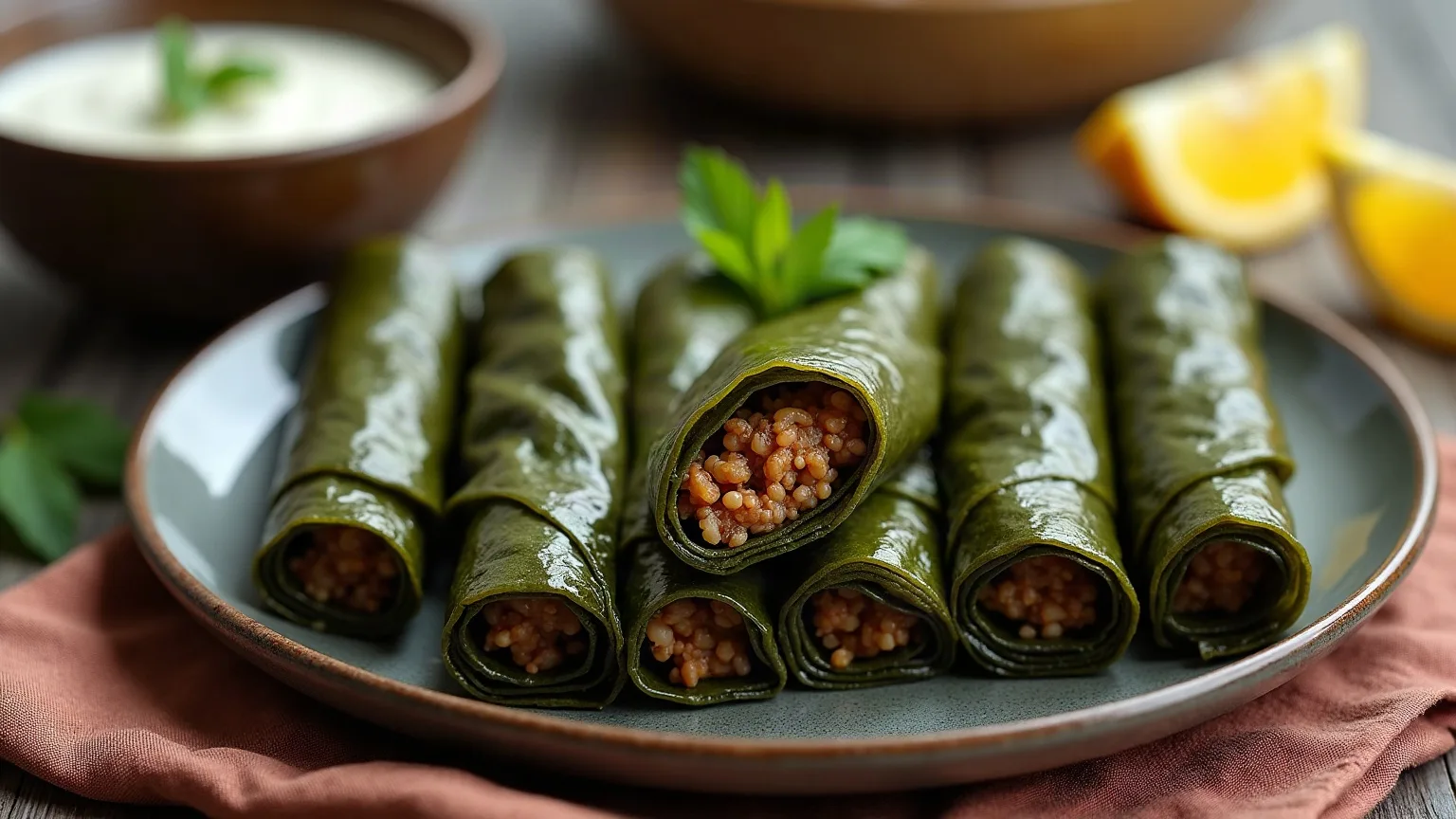
Vine leaves stuffed with meat
Sarma holds together because the pan is packed, not because the roll is tight. Leave gaps and every one of them opens.…
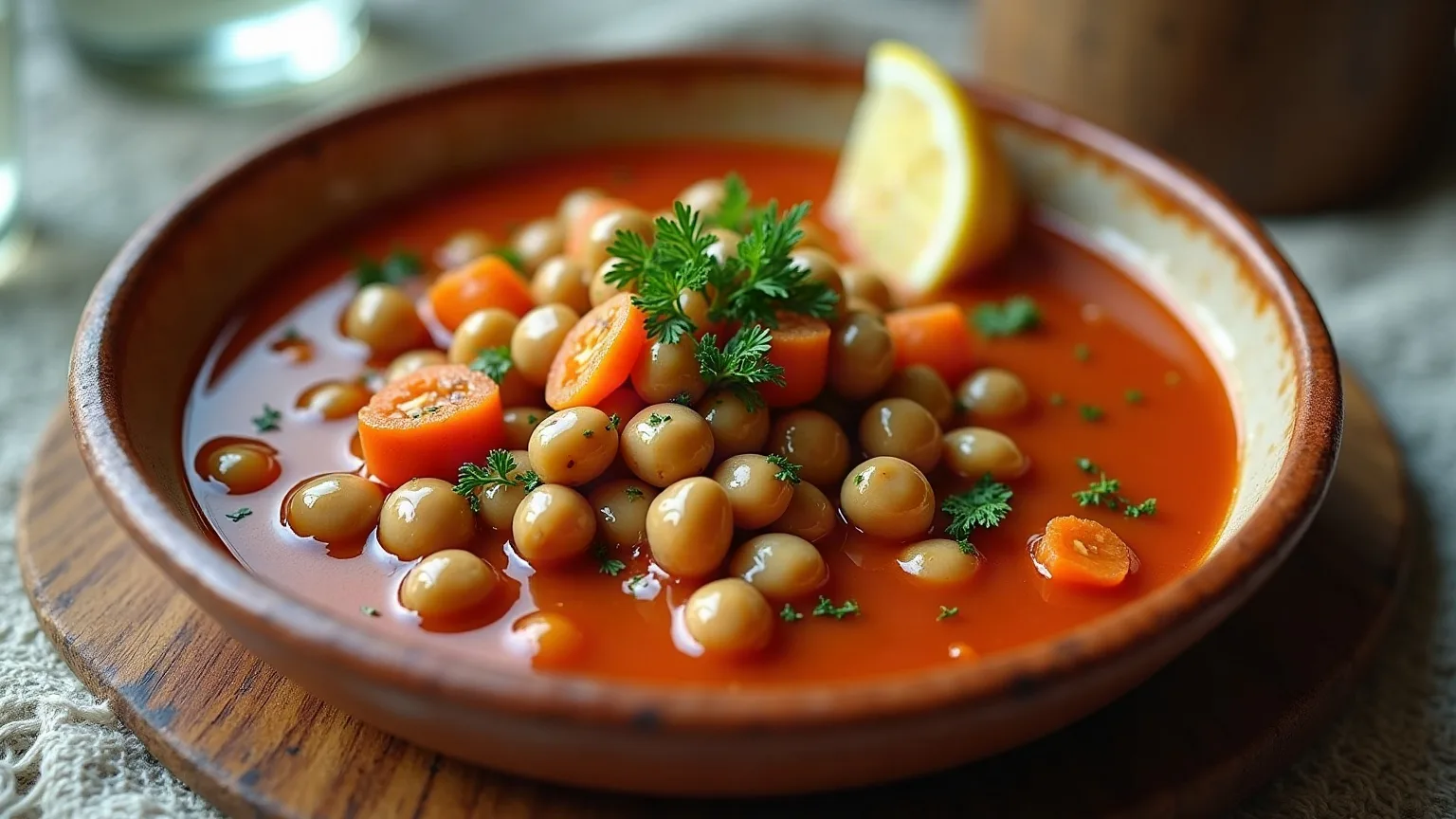
Black-eyed pea stew
The one common dried pulse that needs no soaking: its coat is thin and permeable, so it goes from dry seed to tender in …
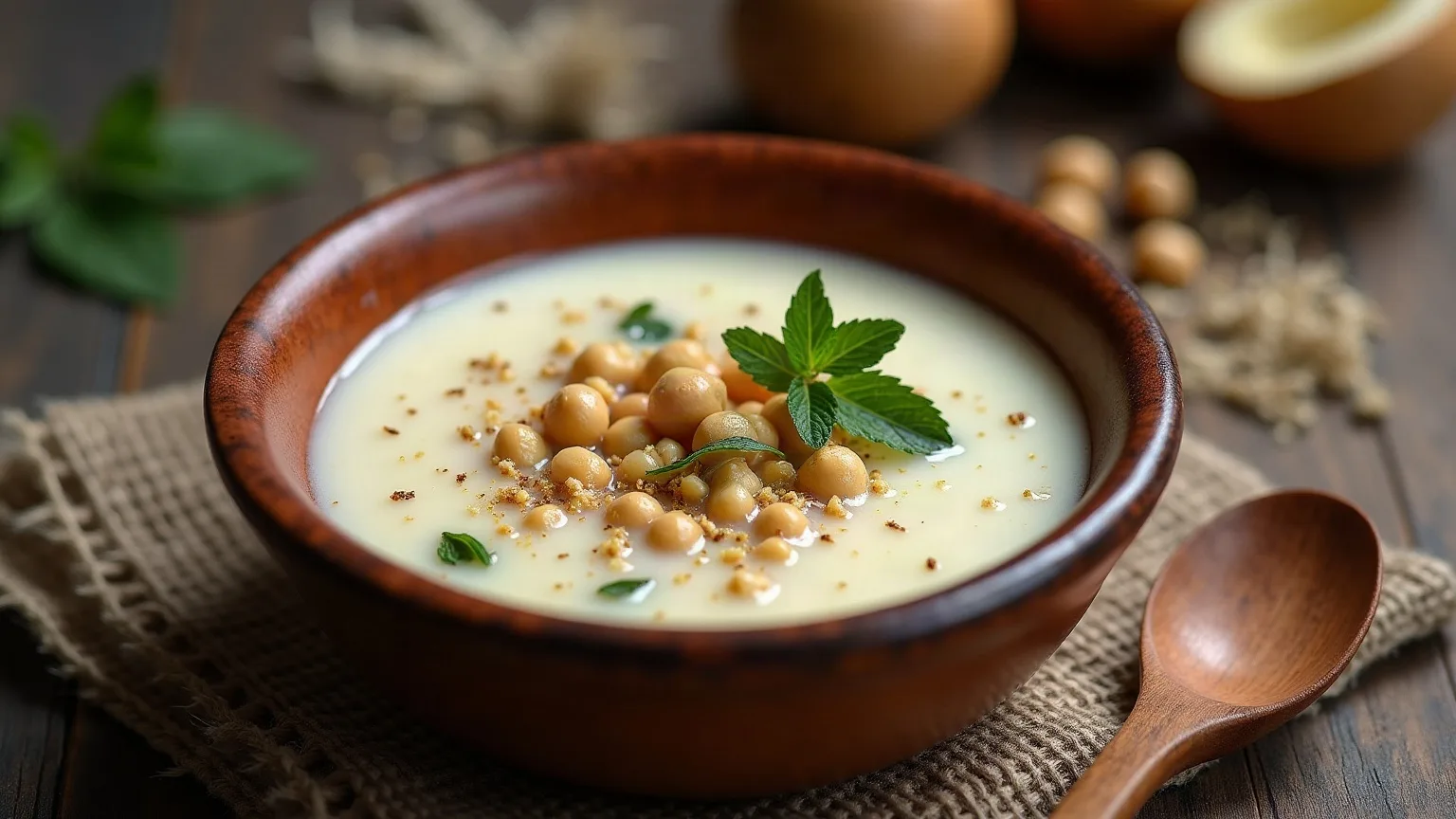
Toyga soup
A thicker, more archaic cousin of yayla çorbası: hulled wheat instead of rice, strained yoghurt instead of plain. A hosp…
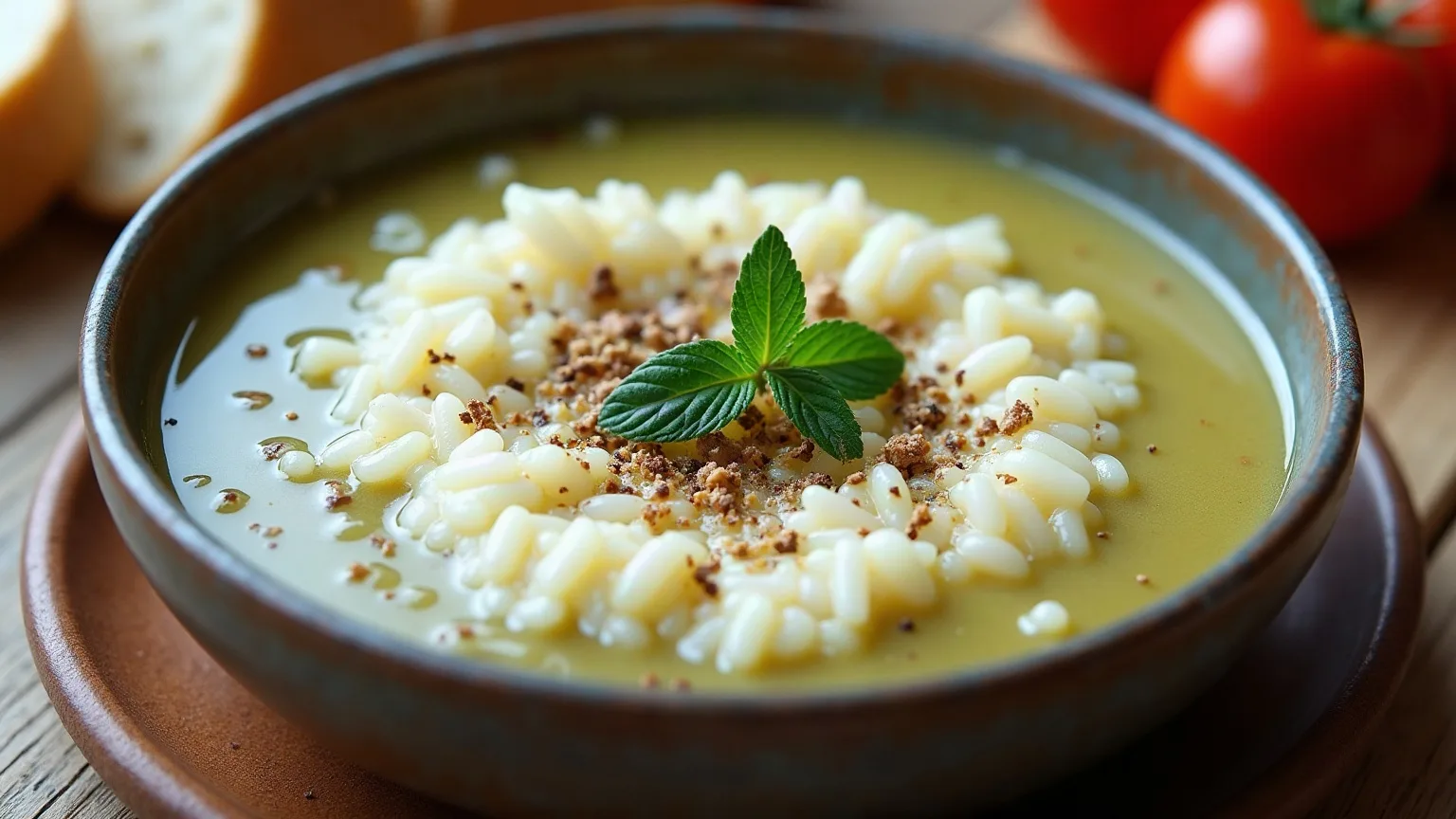
Yoghurt and rice soup
Every yoghurt soup has the same single problem: splitting. The answer is not the flour and the egg but the way the tempe…