
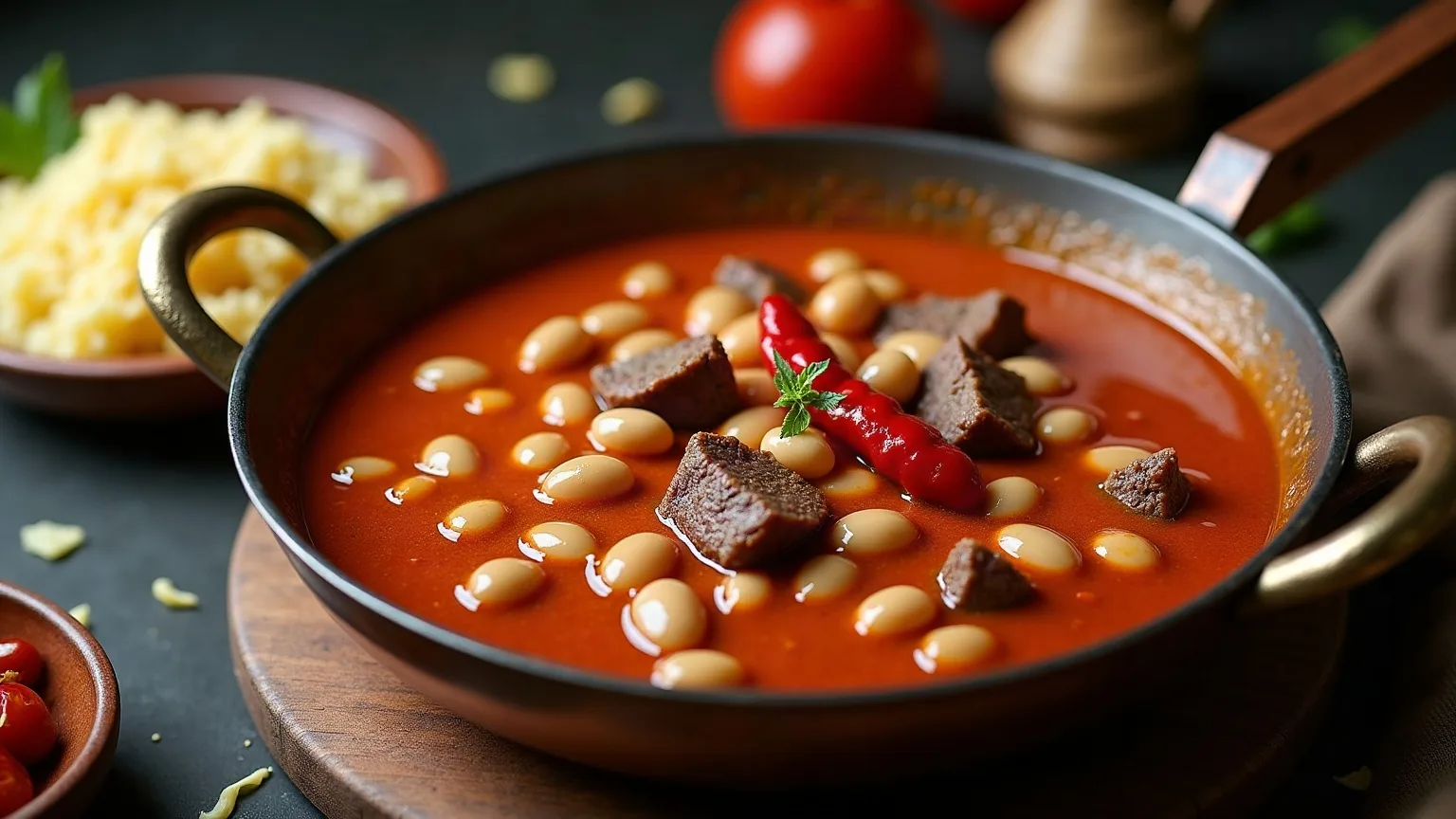
White beans
Beans stay hard for almost always the same reason: the tomato paste went in early. Acid locks the pectin in the skin.
Pulses · Turkish · Budget · One pot · Freezes well · Weekend batch
- Preparation
- 15 min
- Cooking
- 80 min
- Difficulty
- Needs attention
- Cost
- Cheap
- Season
- Autumn, Winter
The plate often called Turkey’s national dish, and the recipe most often ruined. The bean usually gets the blame for being old, but the cause is chemical: paste, tomato and vinegar all lower the pH of the water, and pectin does not dissolve at low pH. The same bean cooks in forty-five minutes in plain water and will not cook in two hours with paste in it. Hard water does the same thing, because calcium bridges to the pectin.
Method
- Soak the beans overnight and discard the water.
- If your water is hard, use bottled: calcium keeps beans firm.
You will need: A deep pan, or a pressure cooker
-
Put the soaked beans in CLEAN water and boil them forty-five to fifty-five minutes, with NO salt and NO paste.
Look for Lift one out and blow on it: if the skin lifts, it is ready. The inside should crush to a cream between two fingers.
Why This stage is the whole recipe. Pectin needs the water neutral or slightly alkaline to dissolve; paste takes the pH to about 4.5 and there it does not dissolve at all. The bean softens first and the flavour comes afterwards.If it went wrong
Still hard at fifty-five minutes: half a teaspoon of bicarbonate and twenty minutes more. Do not add salt or paste — past that point it will never soften.
Starch gelatinised The granules soaked up water, swelled and burst into a network. It has thickened, and it will firm further as it cools. no way back
-
In a separate pan sear the meat in the butter, soften the onion for eight minutes and fry the paste for one.
Look for Deep brown meat and brick-coloured paste.
Why The meat is not boiled with the beans: the Maillard flavour of a seared piece would never form in an hour of simmering, and the meat’s juices cloud the bean liquid.Starch gelatinised The granules soaked up water, swelled and burst into a network. It has thickened, and it will firm further as it cools. no way back
Frying dynamics Surface water is flashing to steam and pushing outward — that is the shield keeping the oil out. no way back
-
Add the meat mixture to the beans with the pepper and the SALT now, and cook twenty-five minutes more.
Look for The sauce should thicken and coat the beans, with no free water in the pan.
Why The bean is soft now, and while acid and salt firm the skin they cannot harden what is already cooked. These twenty-five minutes are for flavour rather than for cooking.Starch gelatinised The granules soaked up water, swelled and burst into a network. It has thickened, and it will firm further as it cools. no way back
Salt · 0.39% Low. Everything reads flat and nothing steps forward.
This recipe was run through the engine step by step — what goes in when, and at what temperature and for how long. The reactions above come from that run.
peak 200 °C · 87 minutes · engine 1.0.0 · confidence low
After the heat goes off
Hot with rice and pickles: the three are eaten together, and that is a balance of complementary protein and acid rather than a custom.
Four days in the fridge and markedly better on the second.
Ten minutes on a low flame with a little water.
Four months; beans take the freezer very well.
Mashed onto bread, turned into a soup, or dressed as a piyaz.
Suitable from twelve months. For 12–36 months crush the beans, take the pepper out and lift their share before the salt. Suitable mashed for a baby from eight months, starting small.
- Lamb → Pastırma cured beef Beans with pastırma is a classic variation; the pastırma goes in for the last five minutes only, or it toughens.
- Lamb → Olive oil Without meat it is vegan and works identically; double the olive oil.
- Boiling & poaching The method this recipe rests on
- White beans (dry) What it does in heat, water and acid
- Bulb onion What it does in heat, water and acid
- Lamb What it does in heat, water and acid
- Chickpea stew Similar method, or something that sits on the same table
- Borlotti bean pilaki Similar method, or something that sits on the same table
- White bean salad Similar method, or something that sits on the same table
- Budget Other recipes that answer the same need
- One pot Other recipes that answer the same need
- Freezes well Other recipes that answer the same need
- Weekend batch Other recipes that answer the same need
What it tastes like
No axis sits clearly above the average: a balanced recipe.
This profile is computed rather than measured: the role-weighted average of its ingredients’ taste vectors, shifted by what the cooking does. The thin line is the database average on that axis.
Closest in taste
Not hand-picked: ranked by distance across the eight taste axes.
Pasta with tomato paste
There is no sauce until the paste has been fried: raw paste stays sour and metallic.…
Analı kızlı
The big stuffed dumplings are the mothers, the small plain ones the daughters. Both are bulgur, both cook in the same pa…
Lamb and pea stew
The peas go in last. Boiled with the meat from the start they lose both their colour and their texture.…
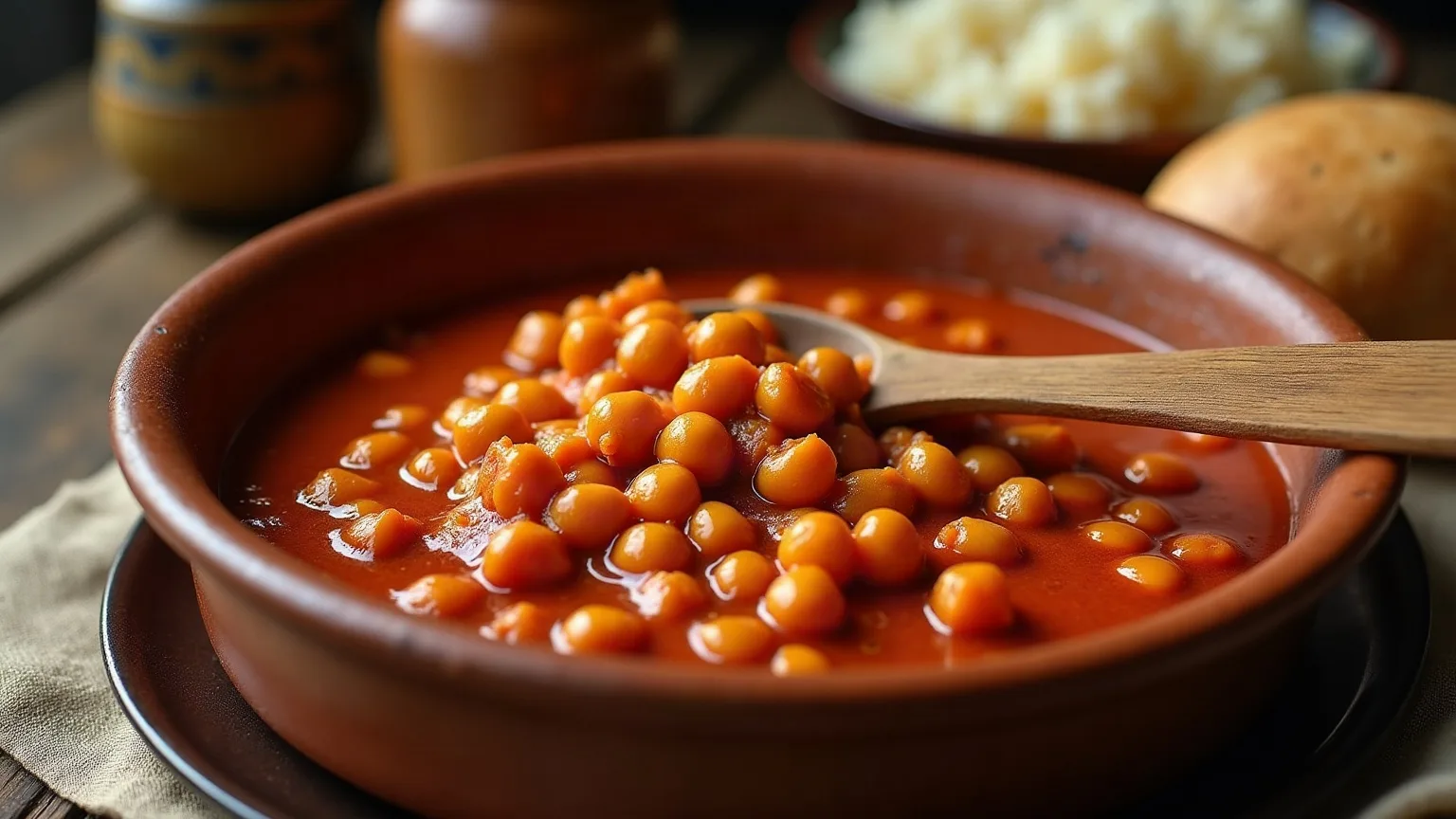
Chickpea stew
Dried chickpeas, tomato paste and olive oil — and a pinch of bicarbonate that halves the cooking time.…