What to cook In the mood Workshop Scenarios Actually easy Techniques Dishes Ingredients Diets Recipes
Home · Ingredients · Tahini
Tahini
Fats · Ta

Tahini

55% fat · inverts when water is added

Per 100 g
595 kcal Energy
17 g Protein
21.2 g Carbs
53.8 g Fat
9.3 g Fibre
Gluten-free SESAME

Let’s cook with it → Invent something with it

What it is for

They carry aroma. Most smell molecules dissolve in fat rather than water, which is why you bloom spices in oil. They also conduct heat, shorten gluten and soften texture.

Where it catches you out

Every fat has its own smoke point. Butter burns at 150 °C, extra virgin olive oil holds to 190 — choose the fat for the job, not the bottle.

The knack

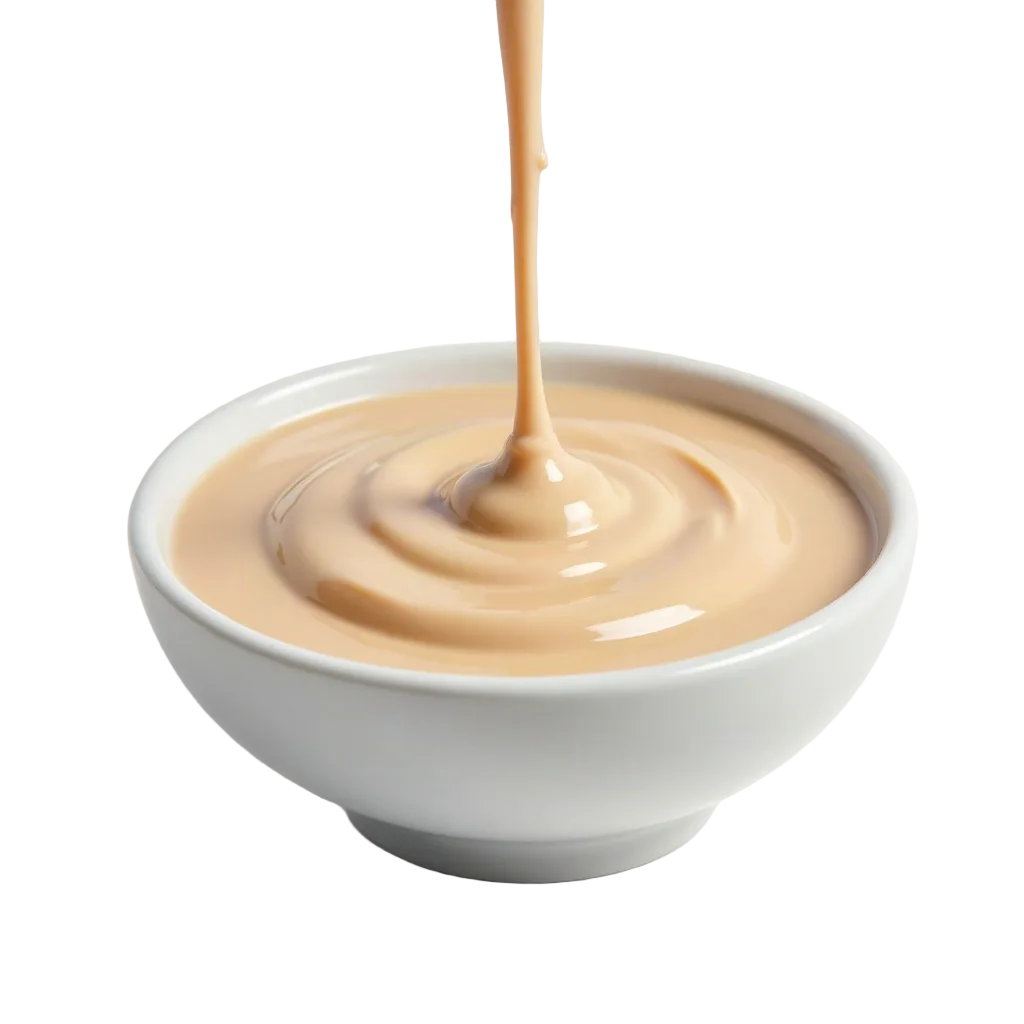
It seizes when water goes in — that is a normal inverse emulsion. Keep stirring; it loosens and turns pale.

Storage and health

How to keep it, and who it suits.

Keeping it

Sealed in the cupboard for 6-12 months; oil separating on top is not spoilage, just stir it back. The fridge stiffens it but extends its life.

Gluten-free

Plain tahini is nothing but sesame and contains no gluten.

Allergen: SESAME

Glycaemic index

This ingredient carries no meaningful carbohydrate, so it has no glycaemic index. On its own it will not move blood sugar; what you eat alongside it decides that.

What it works with

Pairings, and the reason for each

"They go well together" is not an explanation. Every pairing below has a chemical or structural mechanism under it.

Lemon

Adding water to a continuous oil phase drives emulsion inversion: the paste seizes, then breaks into a pale oil-in-water emulsion. That is why tahini sauce counter-intuitively whitens and thins with more water.

Molasses

The fat coats the tongue and slows sugar delivery so the mixture reads as rich rather than cloying, and the lignans’ faint bitterness gives the sweetness an edge.

Also works with

What goes on top
  • Tahini is both a topping — over aubergine, in tarator — and a base for molasses and honey
Key compounds
Sesamol / sesamin / sesamolin
Lignans that give an 80% unsaturated oil unusually high oxidative stability.
Nutritionally

Tahini is calcium-rich but also phytate-rich, so only part of the calcium is available. Its real kitchen value is the fat plus a methionine profile that complements legumes.