
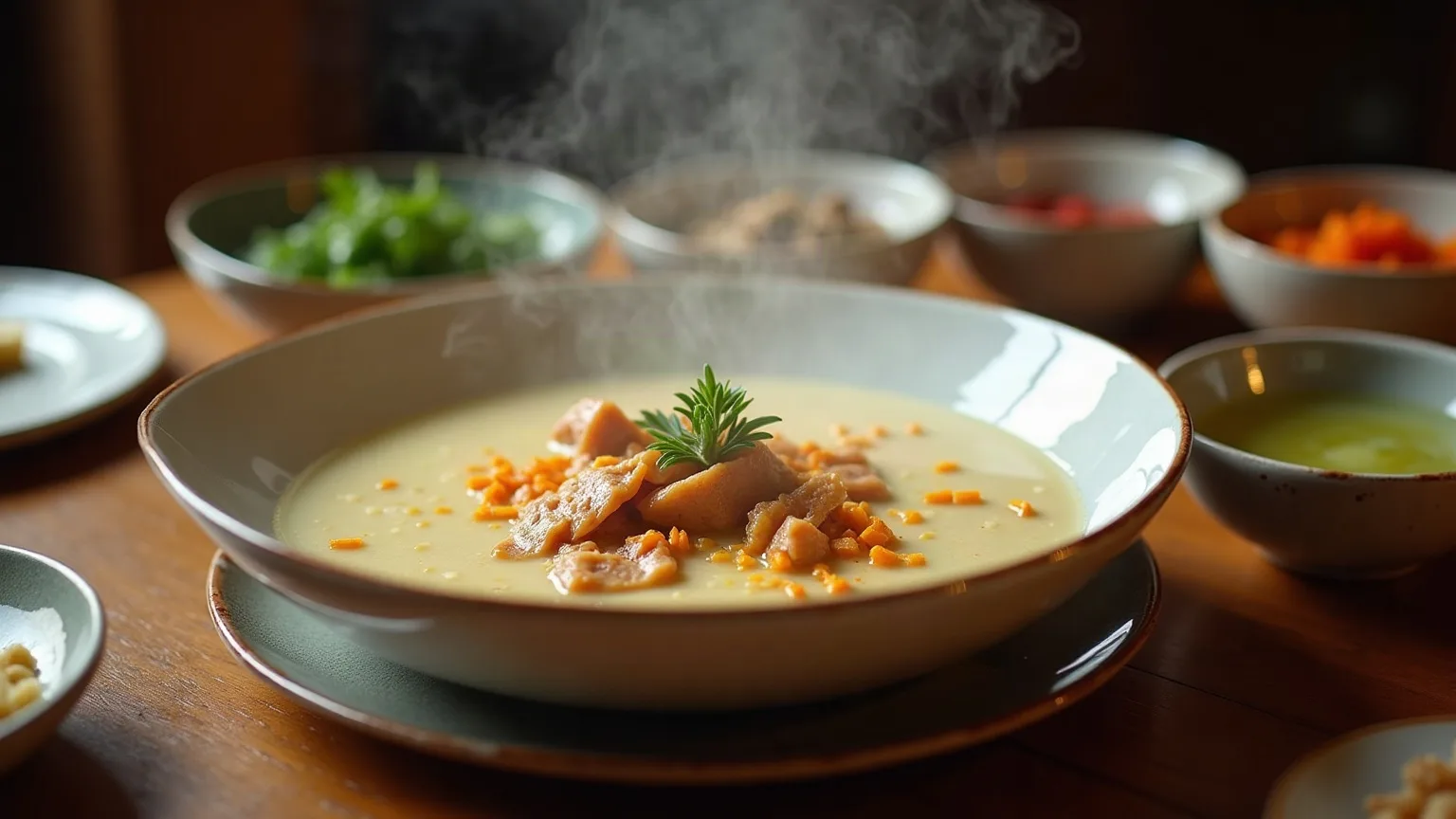
Tripe soup
Three hours of simmering and a liaison. What decides the smell is not the recipe but how well the tripe was cleaned.
Soups · Marmara · One pot · Weekend batch
- Preparation
- 20 min
- Cooking
- 190 min
- Difficulty
- Hard
- Cost
- Cheap
- Season
- Autumn, Winter
The soup of the small hours — Istanbul’s işkembeciler have kept the same opening times for centuries. Tripe needs long cooking because the stomach wall is smooth muscle dense with collagen, and that collagen only becomes gelatin over hours above 80 °C. The garlic vinegar added at the table is function rather than tradition: acid cuts the fat and lightens what is left in the mouth.
Method
- Wash the tripe three times, rubbing it with coarse salt, changing the water each time.
- Have the liaison ready in a bowl.
You will need: A deep pan, or a pressure cooker · A whisk
-
Put the washed tripe in cold water, boil it, then after five minutes pour the water away entirely and rinse the pan.
Look for The discarded water should be cloudy and smell: that is the sign it worked.
Why The first boil takes the soluble odorous compounds and any residue off the surface into the water, and throwing that water away is the single step that decides how the soup smells.If it went wrong
If you forgot to discard the first water the smell stays all the way through. Do not skip it next time, and balance this batch with plenty of garlic vinegar.
-
Cook it in fresh water for three hours just below the boil — forty-five minutes in a pressure cooker.
Look for A piece should tear easily between two fingers. If it does not, another thirty minutes.
Why The collagen in smooth muscle becomes gelatin over hours above 80 °C, and that conversion both makes the tripe chewable and gives the soup its body. Cut the time and the tripe stays rubber. -
Lift the tripe out and cut it into fine strips; strain the liquid, measure it and return it to the pan.
Look for The strips want to be 3–4 mm wide.
Why Fine cutting makes it easy to chew and the strips sit properly on a spoon; a thick piece is still hard work after three hours. -
Cook the butter and flour together for two minutes, loosen with some of the hot liquid and stir it into the pan. Simmer five minutes.
Look for It should coat the back of the spoon.
Why The liquid is already thick with its own gelatin, but the flour adds a smoothness on top of it; the characteristic velvet of this soup comes from the two together.Starch gelatinised The granules soaked up water, swelled and burst into a network. It has thickened, and it will firm further as it cools. no way back
A gluten web is forming Gliadin and glutenin hydrated into an elastic net. This is what will hold the gas. no way back
-
Whisk the yolks with the lemon, add four ladles of hot soup slowly, pour it back and heat three minutes WITHOUT boiling. Add the salt.
Look for The soup should thicken slightly and turn cream-yellow; visible specks mean it went too far.
Why Egg yolk sets at 70 °C, and added straight to a boiling soup it becomes flecks of omelette. Ladling warms it gradually instead.If it went wrong
If the egg has set, pass the soup through a fine sieve: the specks stay behind and the texture is saved.
Starch gelatinised The granules soaked up water, swelled and burst into a network. It has thickened, and it will firm further as it cools. no way back
A gluten web is forming Gliadin and glutenin hydrated into an elastic net. This is what will hold the gas. no way back
The egg is setting Proteins unfold and link up, binding everything together. This is where creaminess comes from. no way back
Salt · 0.28% Low. Everything reads flat and nothing steps forward.
-
Crush the garlic into the vinegar and take it to the table in its own bowl.
Look for The vinegar should go cloudy and smell of garlic; ten minutes of standing settles it.
Why The garlic vinegar goes on the plate rather than into the pan: everybody wants a different amount of acid, and in the pan it risks splitting the liaison.A gluten web is forming Gliadin and glutenin hydrated into an elastic net. This is what will hold the gas. no way back
Salt · 0.28% Low. Everything reads flat and nothing steps forward.
This recipe was run through the engine step by step — what goes in when, and at what temperature and for how long. The reactions above come from that run.
peak 100 °C · 201 minutes · engine 1.0.0 · confidence low
What can go wrong here
The yoghurt sauce curdled⌄
What happened
The yoghurt passed 85 °C. The casein micelles lost their charge, the protein clumped and released the water it was holding. Once split, it does not come back.
By the numbers
Stabilise 500 g of yoghurt with a tablespoon of starch and one yolk, stir in one direction, never boil.
Without a thermometer
Catch the threshold by eye: the moment a few large bubbles appear on the surface you are around 85 °C, take it off. The sauce is ready when it coats the back of a spoon — draw a line with your finger and the line should hold.
After the heat goes off
Very hot in a deep bowl, with garlic vinegar, chilli and dried mint beside it; everybody builds their own.
Two days in the fridge. It sets to a jelly as it cools, which is the gelatin and a good sign.
Lowest flame, stirring, never boiling. A liaison splits easily on a second heating.
Not with the liaison in it. The boiled tripe and its liquid freeze separately for three months; make the liaison on the day.
The spare liquid becomes the base of other soups, and the strips are eaten cold with garlic vinegar as a meze.
Not recommended for a small child: the texture is hard to chew and the taste is unfamiliar to most children. For 12–36 months it does not suit at all. If a school-age child wants some, cut the strips very fine and leave the vinegar out.
- Vinegar → Lemon Lemon juice does the same job with a gentler acid; the tripe houses use vinegar because its sharpness cuts the fat better.
- Terbiye — tempering a sauce The method this recipe rests on
- Beef tripe What it does in heat, water and acid
- Egg What it does in heat, water and acid
- Butter What it does in heat, water and acid
- Wedding soup Similar method, or something that sits on the same table
- Chicken broth soup Similar method, or something that sits on the same table
- Yoghurt and rice soup Similar method, or something that sits on the same table
- One pot Other recipes that answer the same need
- Weekend batch Other recipes that answer the same need
What it tastes like
No axis sits clearly above the average: a balanced recipe.
This profile is computed rather than measured: the role-weighted average of its ingredients’ taste vectors, shifted by what the cooking does. The thin line is the database average on that axis.
Closest in taste
Not hand-picked: ranked by distance across the eight taste axes.
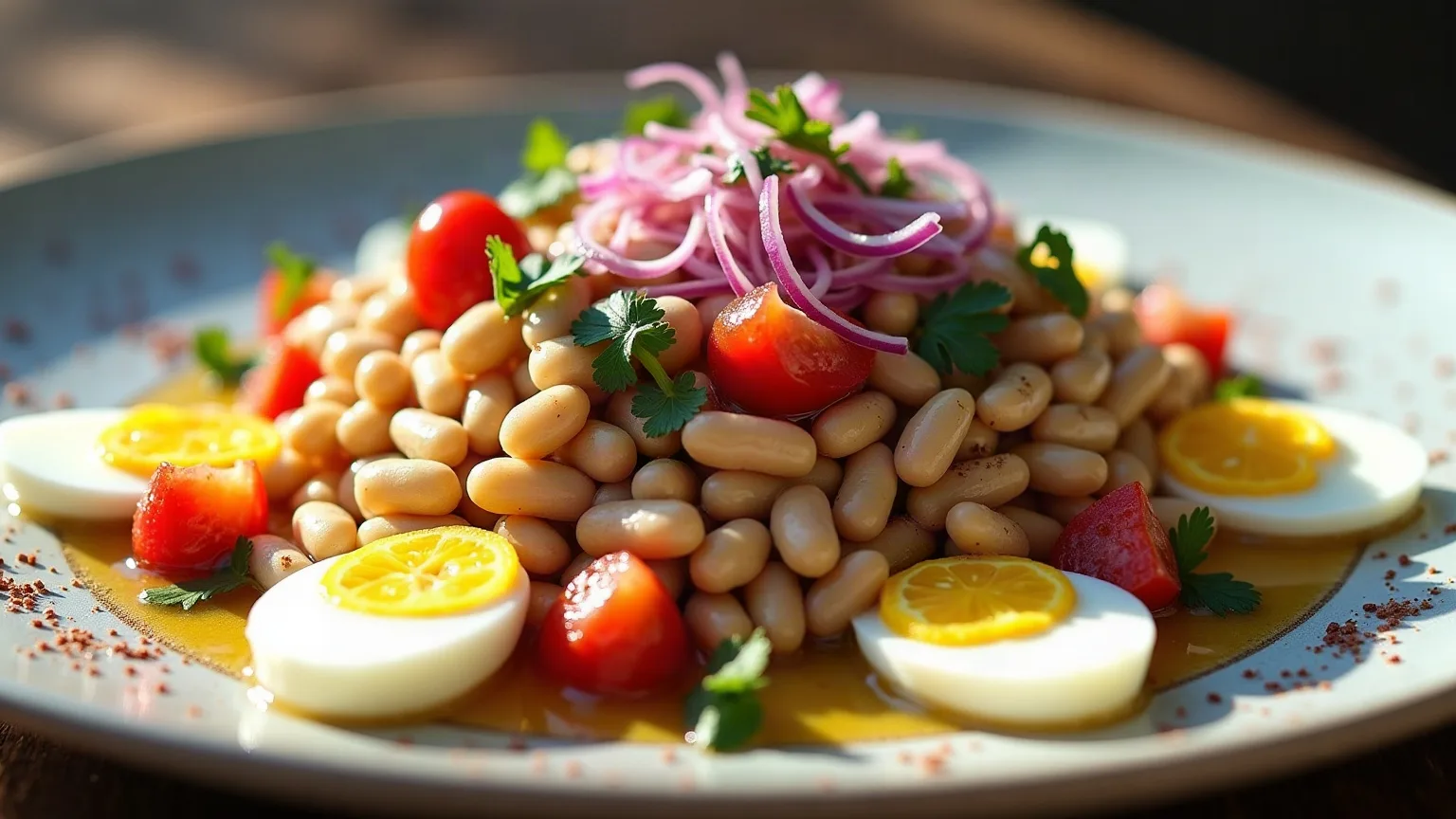
White bean salad
The dressing goes on while the beans are HOT. A cold bean takes nothing up; a hot one draws the dressing into its starch…
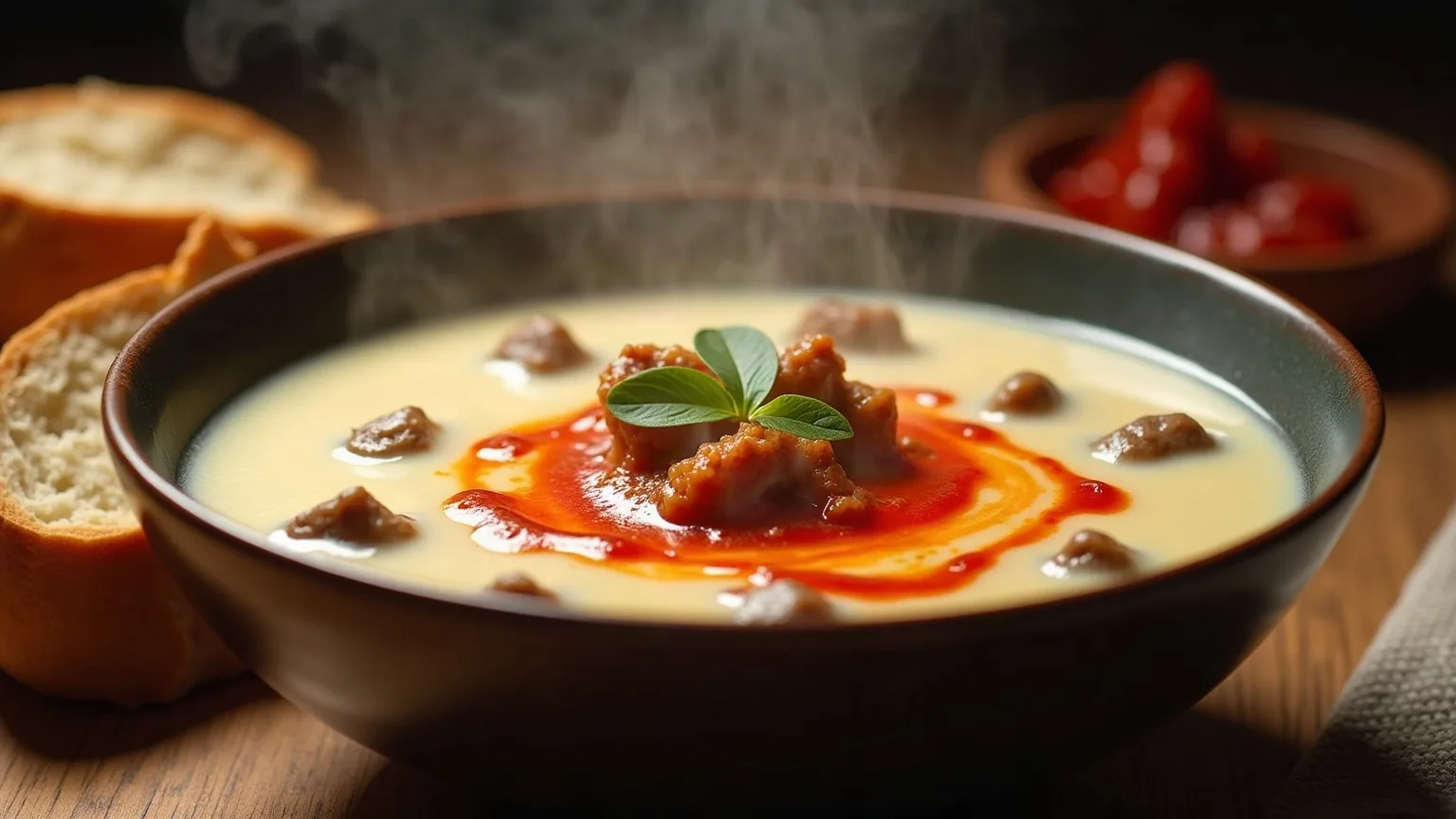
Wedding soup
Lamb broth, a liaison, and red pepper butter over the top: yayla soup’s richer cousin, built on stock instead of water.…
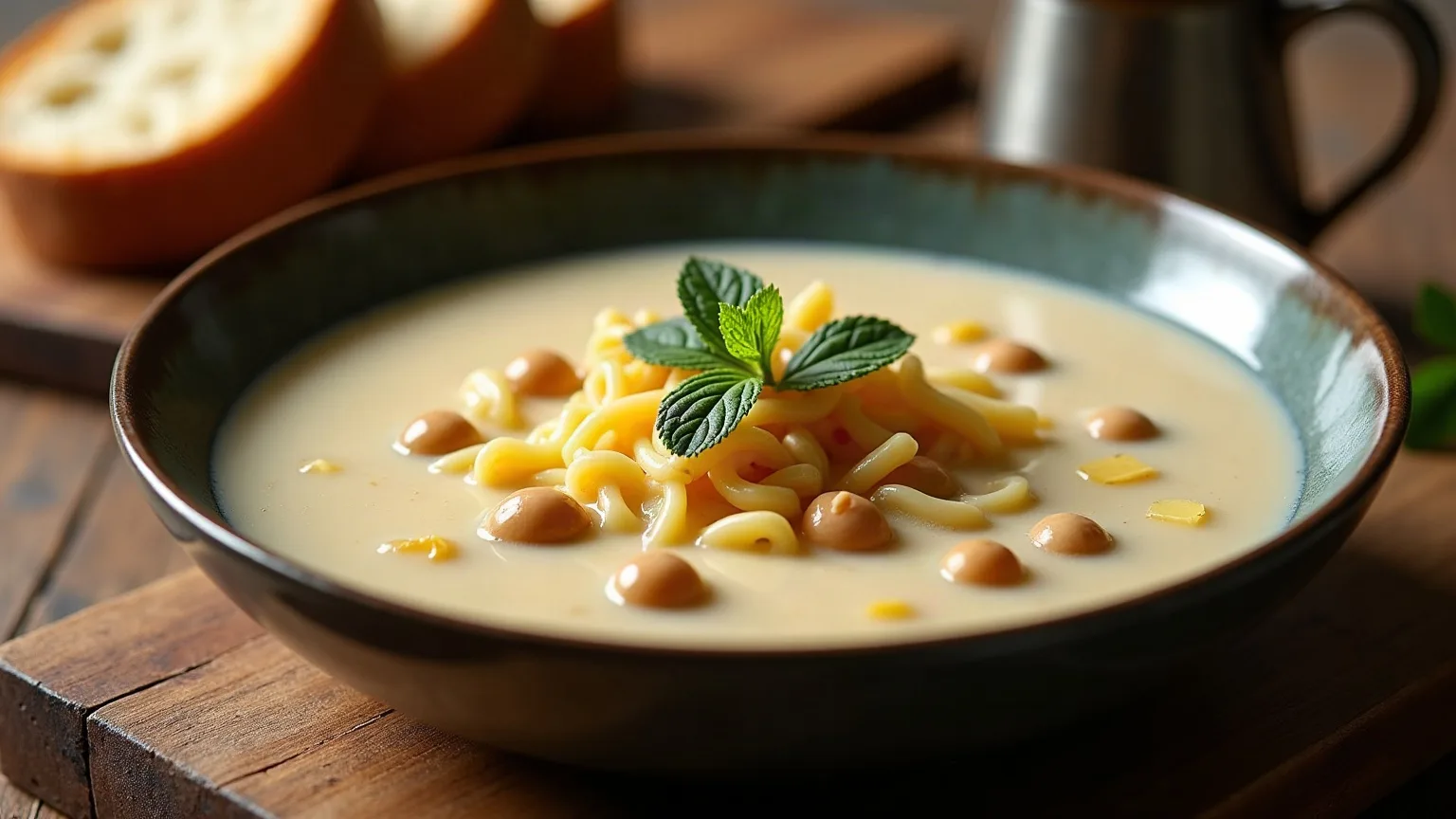
Tutmaç soup
Yoghurt, chickpeas and noodles cut into squares: a soup a thousand years old, named in Kaşgarlı Mahmud’s dictionary.…
Black-eyed pea salad
The one dried pulse that needs no soak: its skin is thin and it softens in twenty-five minutes.…