
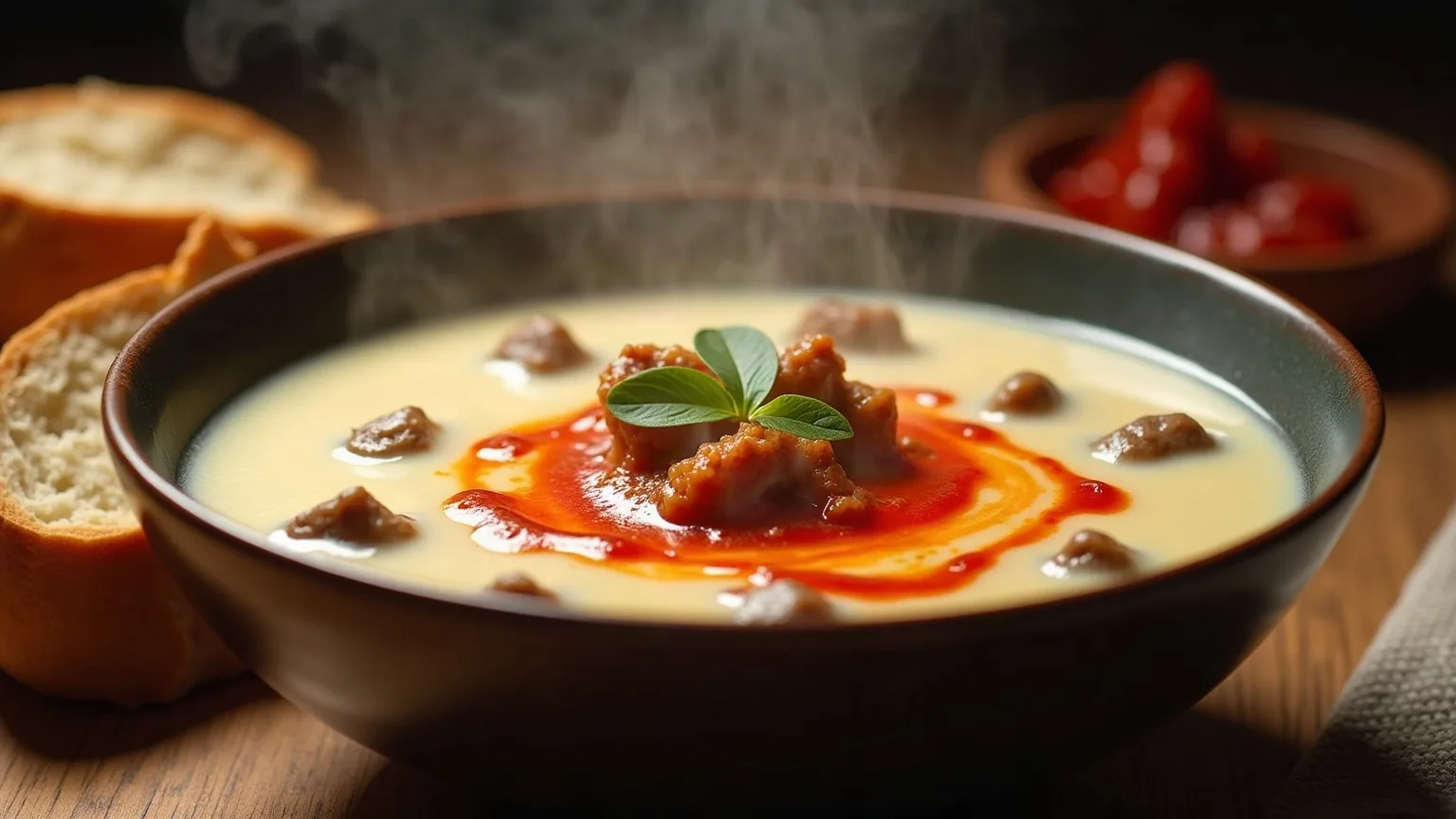
Wedding soup
Lamb broth, a liaison, and red pepper butter over the top: yayla soup’s richer cousin, built on stock instead of water.
This page says how to make it For what it is, where it comes from and the mechanism →
Soups · Central Anatolia · For guests · One pot · Weekend batch
- Preparation
- 15 min
- Cooking
- 75 min
- Difficulty
- Practised hand
- Cost
- Middling
- Season
- Autumn, Winter
Named for the weddings, feast days and crowded tables it is cooked for: one pan of lamb broth feeds twenty, and the liaison makes it filling. Common across central Anatolia and the Black Sea with small local differences. The lemon in the liaison matters: acid does not make casein more heat-tolerant, quite the reverse — but it opens the flavour, which is why it goes in last, after the pan is off.
Method
- Start the meat in cold water and be ready to skim.
- Combine the liaison in a bowl and keep it beside the pan.
You will need: A deep pan · A whisk · A small pan
-
Put the meat and onion in cold water and hold it below the boil for seventy minutes, skimming the foam in the first ten.
Look for The meat should come away from the bone and the broth turn a golden grey.
Why Lamb shank’s collagen becomes gelatin in seventy minutes and gives the soup its body; boiling both clouds the broth and contracts the muscle fibres, drying the meat.Starch gelatinised The granules soaked up water, swelled and burst into a network. It has thickened, and it will firm further as it cools. no way back
-
Lift the meat out and dice it small; strain the broth and return it to the pan.
Look for The strained broth should be clear and glossy with fat.
Why A liaison wants a smooth liquid: added to a broth full of onion and bone fragments it looks lumpy whether it is or not.Starch gelatinised The granules soaked up water, swelled and burst into a network. It has thickened, and it will firm further as it cools. no way back
-
Whisk the flour, yoghurt and egg yolks smooth in the bowl.
Look for The mixture should be the consistency of cream and completely smooth.
Why The flour’s starch gets between the casein particles and the lecithin in the yolk holds the emulsion. Without both, yoghurt curdles at 70 °C.If it went wrong
Sieve it if any lumps remain. A lumpy liaison never recovers once it is in the pan.
A gluten web is forming Gliadin and glutenin hydrated into an elastic net. This is what will hold the gas. no way back
-
Ladle five or six of hot broth into the liaison, whisking; pour it back and heat it five minutes WITHOUT boiling, stirring. Add the salt and the meat.
Look for It should coat the back of the spoon with no bubble breaking the surface.
Why The liaison has to climb gradually. A sudden difference coagulates the casein and the soup goes grainy; five or six ladles remove that difference.If it went wrong
If it splits, blitz it for twenty seconds and the look comes back. The meat itself is fine and the soup is perfectly edible.
Starch gelatinised The granules soaked up water, swelled and burst into a network. It has thickened, and it will firm further as it cools. no way back
A gluten web is forming Gliadin and glutenin hydrated into an elastic net. This is what will hold the gas. no way back
The egg is setting Proteins unfold and link up, binding everything together. This is where creaminess comes from. no way back
Salt · 0.28% Low. Everything reads flat and nothing steps forward.
-
Off the heat, stir in the lemon. Melt the butter, swirl the red pepper in it for ten seconds and pour it over.
Look for The butter should go deep red; more than ten seconds and the pepper darkens and turns bitter.
Why Lemon added on the heat loses its aroma and lowers the pH, raising the risk of splitting. Red pepper’s colour dissolves in fat: dropped into water it stays a red speck.Starch gelatinised The granules soaked up water, swelled and burst into a network. It has thickened, and it will firm further as it cools. no way back
A gluten web is forming Gliadin and glutenin hydrated into an elastic net. This is what will hold the gas. no way back
The egg is setting Too hot. The protein net over-tightened and pushed the water out: curdling and sponge. no way back
Salt · 0.27% Low. Everything reads flat and nothing steps forward.
Stay under 82 °C. Lower the heat or move to a bain-marie — a split custard never comes back.
If you want a crust, do not stay under 140 °C. Food cooks at this heat but never colours.
This recipe was run through the engine step by step — what goes in when, and at what temperature and for how long. The reactions above come from that run.
peak 130 °C · 85 minutes · engine 1.0.0 · confidence low
What can go wrong here
The yoghurt sauce curdled⌄
What happened
The yoghurt passed 85 °C. The casein micelles lost their charge, the protein clumped and released the water it was holding. Once split, it does not come back.
By the numbers
Stabilise 500 g of yoghurt with a tablespoon of starch and one yolk, stir in one direction, never boil.
Without a thermometer
Catch the threshold by eye: the moment a few large bubbles appear on the surface you are around 85 °C, take it off. The sauce is ready when it coats the back of a spoon — draw a line with your finger and the line should hold.
The meat came out dry and tough⌄
What happened
The meat passed 70 °C. Past that point the muscle fibres contract and wring out their water, while collagen never gets the time to turn into gelatine. It loses moisture and never tenderises.
By the numbers
Beef medium at 57 °C, chicken at 74 °C. Rest it for 10 minutes off the heat; unrested meat leaves its juice on the plate.
Without a thermometer
The palm test: touch thumb to index finger and press the pad below your thumb — that firmness is rare. Middle finger is medium, ring finger is well done. Watch the juice too: pinkish and clear means you are there, running white means you went too far.
After the heat goes off
Ladled into bowls with another spoon of the red butter over each. Bread beside it and nothing else.
Two days in the fridge. Yoghurt soups go on souring as they stand.
Lowest flame, stirring, never past 70 °C. A microwave will certainly split it.
Not once the liaison is in. Freeze the broth and the meat only, and make the liaison on the day.
Stirred into boiled rice and baked twenty minutes, the leftovers become a meat and rice bake.
Suitable from twelve months: soft meat and a soup that is not sour. For 12–36 months lift their share before the salt and serve the lemon and red butter separately. For a baby under one the yolk has to be fully cooked — the liaison reaches 75 °C, so hold their portion two minutes longer around 80 °C.
- Lamb → Chicken It is made with chicken too, and the seventy minutes drop to fifty; there is less gelatin, so the soup stays slightly thinner.
- Terbiye — tempering a sauce The method this recipe rests on
- Lamb What it does in heat, water and acid
- Yoghurt What it does in heat, water and acid
- Bulb onion What it does in heat, water and acid
- Yoghurt and rice soup Similar method, or something that sits on the same table
- Chicken broth soup Similar method, or something that sits on the same table
- Tutmaç soup Similar method, or something that sits on the same table
- For guests Other recipes that answer the same need
- One pot Other recipes that answer the same need
- Weekend batch Other recipes that answer the same need
What it tastes like
No axis sits clearly above the average: a balanced recipe.
This profile is computed rather than measured: the role-weighted average of its ingredients’ taste vectors, shifted by what the cooking does. The thin line is the database average on that axis.
Closest in taste
Not hand-picked: ranked by distance across the eight taste axes.
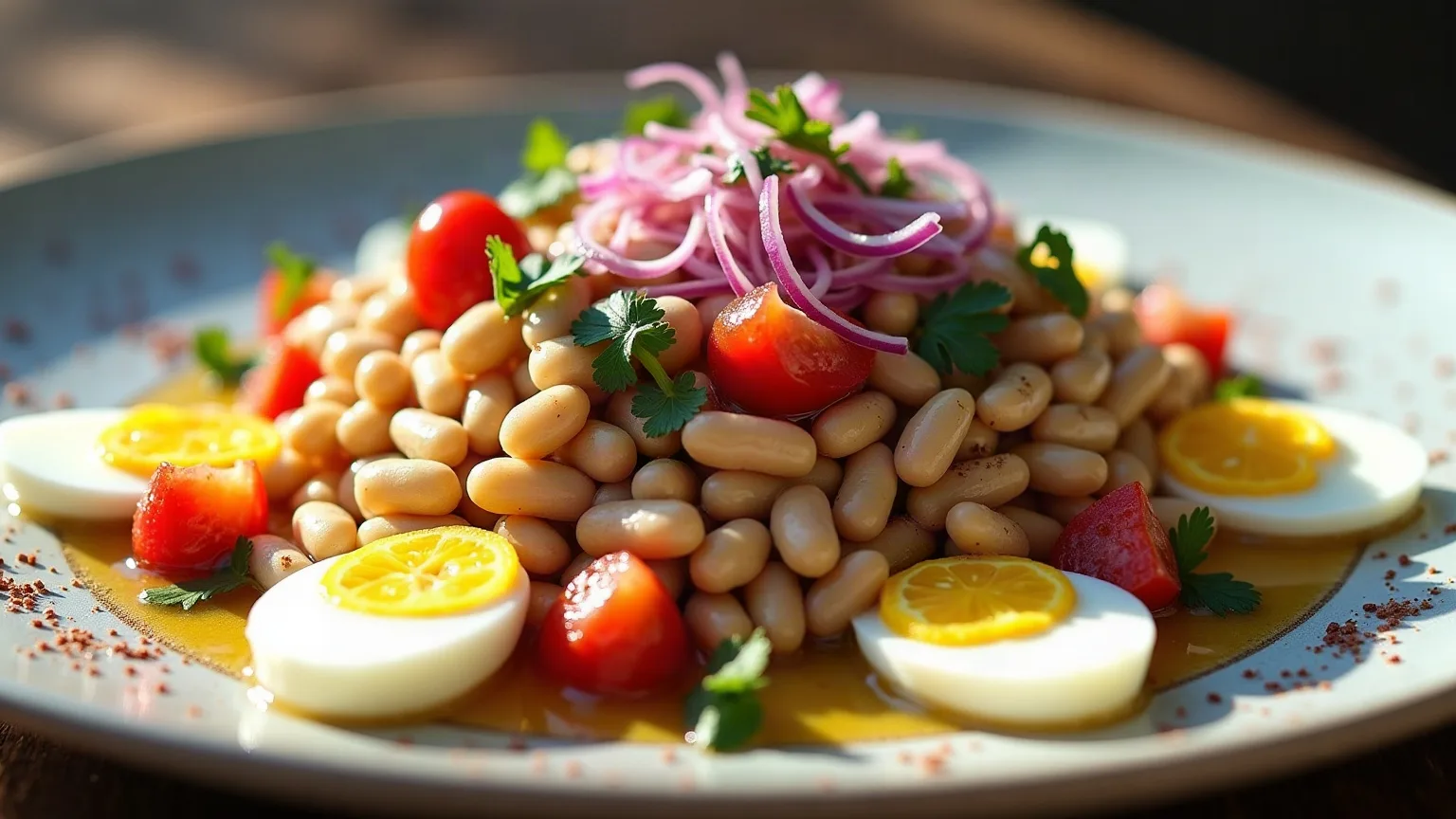
White bean salad
The dressing goes on while the beans are HOT. A cold bean takes nothing up; a hot one draws the dressing into its starch…
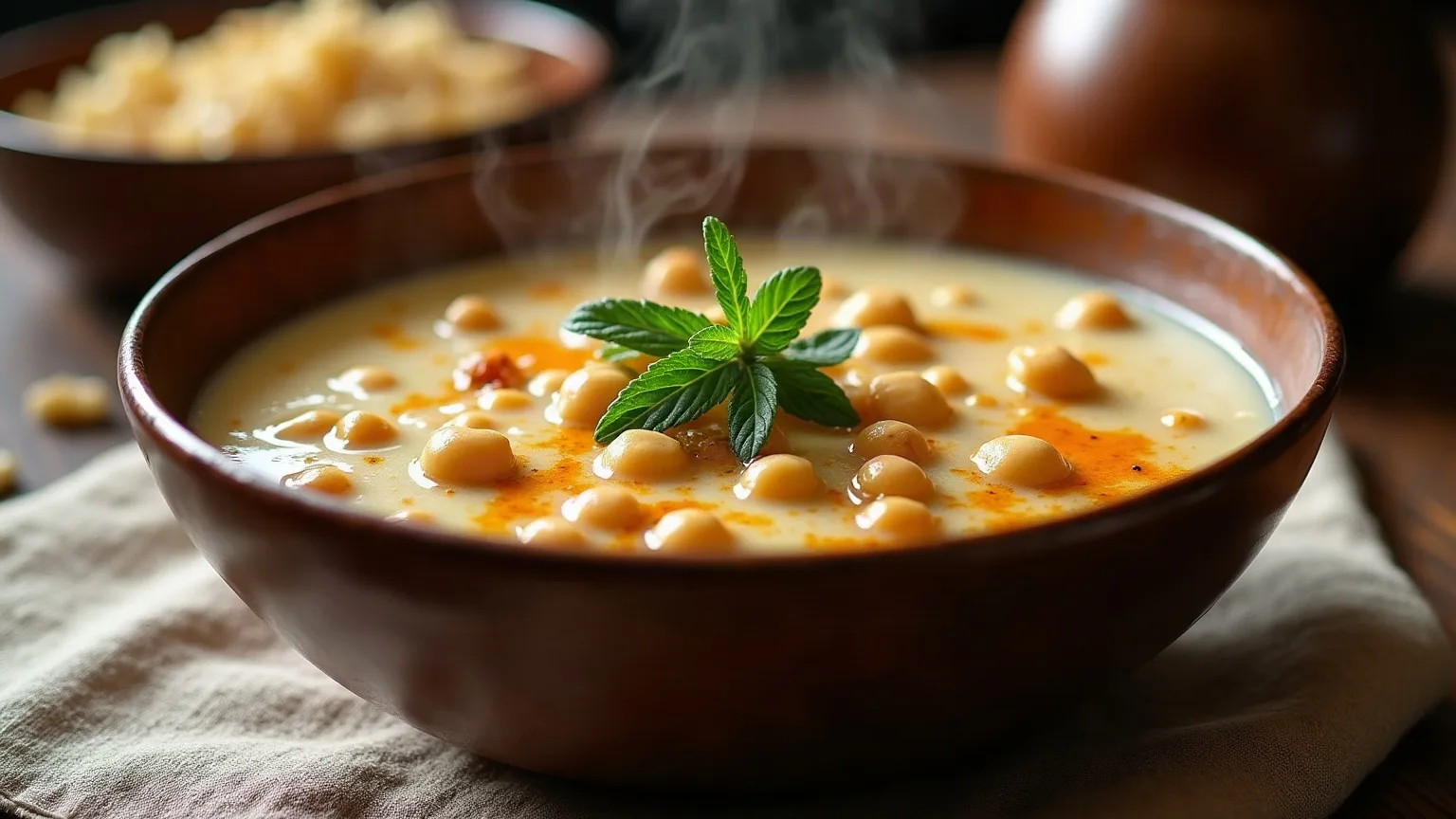
Lebeniye soup
A yoghurt soup thickened with chickpeas and hulled wheat, finished with garlic and mint in butter. The Antep version add…
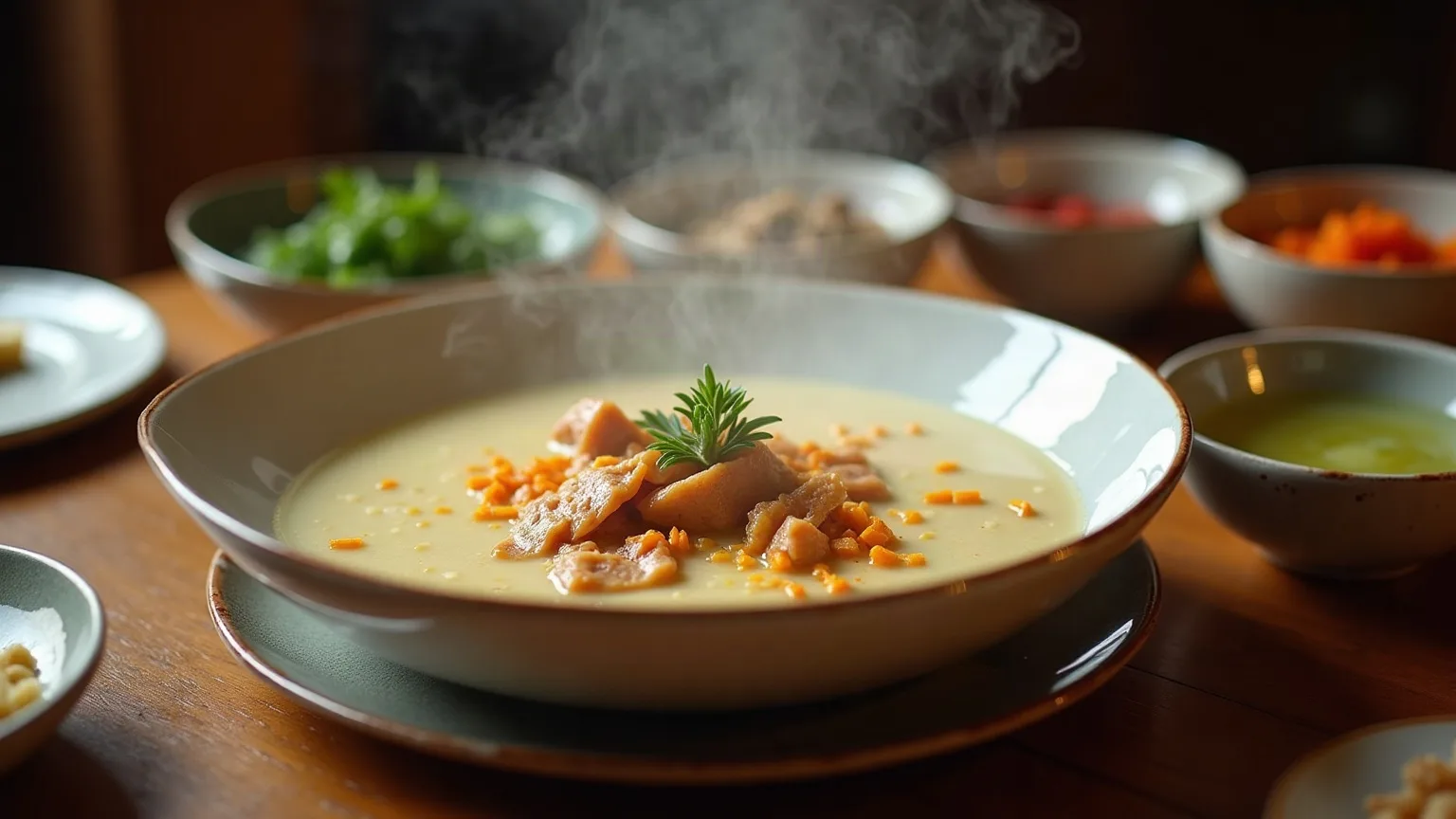
Tripe soup
Three hours of simmering and a liaison. What decides the smell is not the recipe but how well the tripe was cleaned.…
Ayran soup
A grain and pulse soup carried on thinned yoghurt. Wheat and chickpeas are soaked overnight, boiled separately, then fol…