
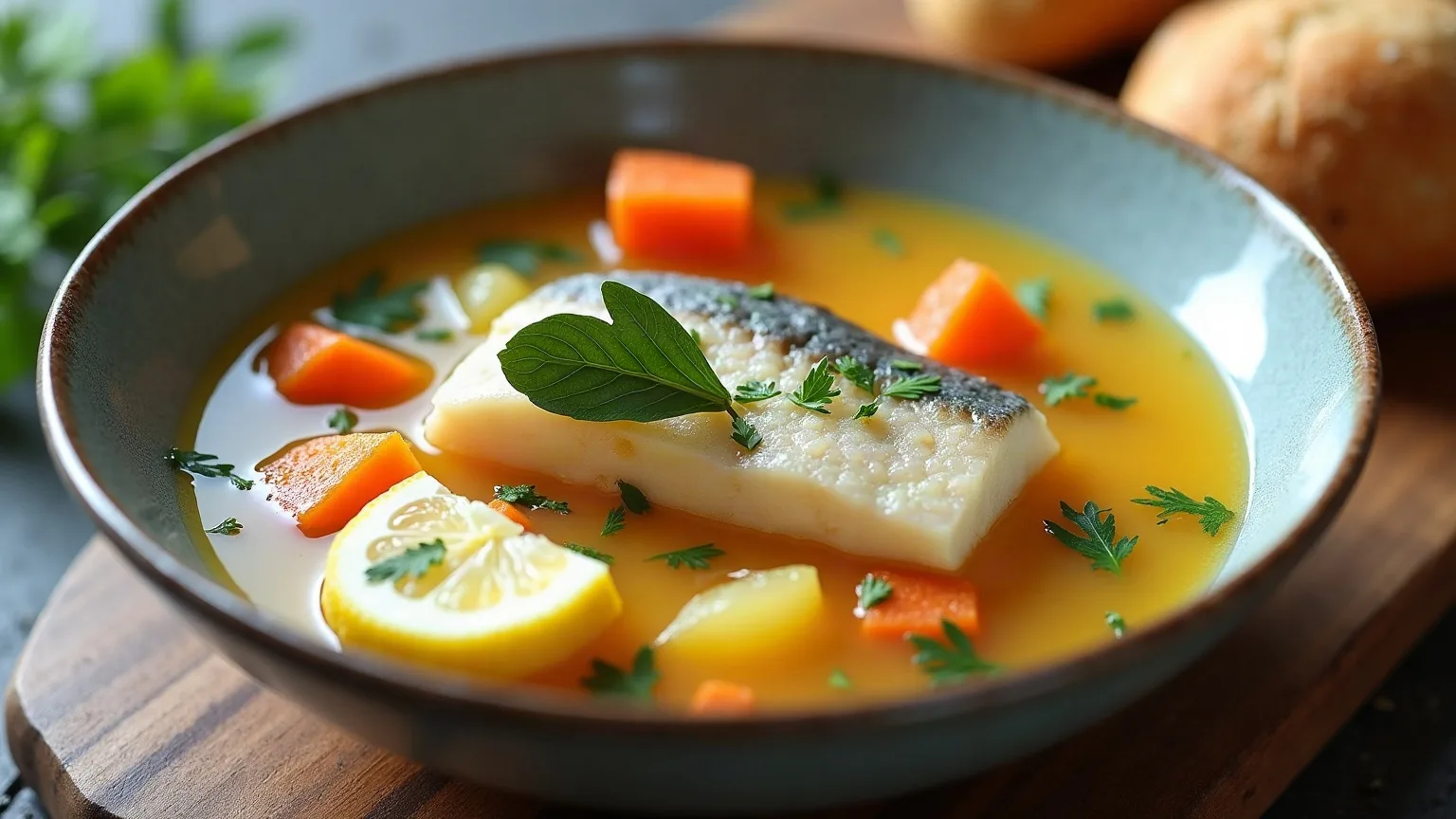
Fish soup
A fish stock is made in twenty minutes and ruined in twenty-five. Unlike meat stock, long cooking here does damage.
Soups · Aegean · Under 30 minutes · For guests · Seasonal
- Preparation
- 15 min
- Cooking
- 25 min
- Difficulty
- Practised hand
- Cost
- Middling
- Season
- Autumn, Winter
Fish differs from meat in the kind of collagen it carries: fish collagen becomes gelatin at 40–50 °C, while beef collagen wants hours above 70. That makes fish soup a quick job — boiled long, the gelatin starts breaking down, bitter compounds leave the bones, and the soup turns sticky in the mouth with a sharp smell.
Method
- Have the fish cleaned and ask for the bones separately: the stock comes from them.
- Cut the vegetables large so they do not disintegrate in twenty minutes.
You will need: A wide pan · A fine sieve
-
Put the bones and heads in the pan with cold water and the bay, and hold it below the boil for TWENTY MINUTES. Then strain it.
Look for The stock should be faintly cloudy and golden. Do not press the bones when straining: crushed bone gives bitterness.
Why Fish collagen dissolves at 40–50 °C and its work is done in twenty minutes. Past twenty-five, compounds from the bone turn the stock bitter: unlike meat stock, fish stock does not improve with time.If it went wrong
If it has been boiled too long the bitterness stays. Take 200 ml out, replace it with fresh water and balance with lemon and parsley — or throw it out and make another in twenty minutes.
Starch gelatinised The granules soaked up water, swelled and burst into a network. It has thickened, and it will firm further as it cools. no way back
-
Soften the onion and carrot in the oil for five minutes, add the strained stock and the potato and boil twelve minutes.
Look for The potato should still meet a fork with slight resistance: it has four minutes left after the fish goes in.
Why The potato brings both body and sweetness, and removes any need to thicken a fish soup with flour or cream.Starch gelatinised The granules soaked up water, swelled and burst into a network. It has thickened, and it will firm further as it cools. no way back
-
Add the fish in 3 cm pieces with the salt and cook FOUR MINUTES. Take it off.
Look for The flesh should turn from translucent to opaque and flake under a fork without falling apart.
Why Fish protein starts setting at 50 °C and is finished by 60; four minutes is enough. Overcooked, it shreds into fibres and disappears into the soup.If it went wrong
If the fish has broken up, the soup becomes a fish broth — perfectly good, only with nothing visible in it. Next time take it off at three minutes.
Starch gelatinised The granules soaked up water, swelled and burst into a network. It has thickened, and it will firm further as it cools. no way back
Salt · 0.27% Low. Everything reads flat and nothing steps forward.
-
Add the lemon and the parsley in the bowl.
Look for The smell of the soup should change noticeably as the lemon goes in.
Why Acid goes on cooking fish protein, so lemon in the pan toughens it. In the bowl it only opens the flavour.Starch gelatinised The granules soaked up water, swelled and burst into a network. It has thickened, and it will firm further as it cools. no way back
Salt · 0.27% Low. Everything reads flat and nothing steps forward.
This recipe was run through the engine step by step — what goes in when, and at what temperature and for how long. The reactions above come from that run.
peak 98 °C · 42 minutes · engine 1.0.0 · confidence low
What can go wrong here
The meat came out dry and tough⌄
What happened
The meat passed 70 °C. Past that point the muscle fibres contract and wring out their water, while collagen never gets the time to turn into gelatine. It loses moisture and never tenderises.
By the numbers
Beef medium at 57 °C, chicken at 74 °C. Rest it for 10 minutes off the heat; unrested meat leaves its juice on the plate.
Without a thermometer
The palm test: touch thumb to index finger and press the pad below your thumb — that firmness is rare. Middle finger is medium, ring finger is well done. Watch the juice too: pinkish and clear means you are there, running white means you went too far.
After the heat goes off
Hot, with lemon and parsley and fried bread beside it. The fish is divided evenly between the bowls.
One day covered in the fridge. Fish soups change their smell noticeably on the second day — not spoilage, but not appetising either.
Three minutes on a low flame without boiling. The fish will certainly break up on a second heating.
The soup does not freeze; the stock alone keeps three months and keeps well.
Lift the fish out of the leftovers, mash it with the potato and fry it like a patty: it becomes a fish cake.
Suitable from twelve months, provided every piece is checked for bones with the fingers. For 12–36 months lift their share before the salt. White fish can be given to a baby from six months, but because of the bones it should come from a separately cooked fillet rather than from this soup.
- European sea bass → Gilthead sea bream Sea bream behaves the same way; being oilier it makes the soup slightly richer.
- European sea bass → Fish Any white fish will do. Oily fish such as mackerel and anchovy will not: their fat sits heavy and sharp in a soup.
- Boiling & poaching The method this recipe rests on
- European sea bass What it does in heat, water and acid
- Potato What it does in heat, water and acid
- Bulb onion What it does in heat, water and acid
- Vegetable soup Similar method, or something that sits on the same table
- Chicken broth soup Similar method, or something that sits on the same table
- Celeriac soup Similar method, or something that sits on the same table
- Under 30 minutes Other recipes that answer the same need
- For guests Other recipes that answer the same need
- Seasonal Other recipes that answer the same need
What it tastes like
No axis sits clearly above the average: a balanced recipe.
This profile is computed rather than measured: the role-weighted average of its ingredients’ taste vectors, shifted by what the cooking does. The thin line is the database average on that axis.
Closest in taste
Not hand-picked: ranked by distance across the eight taste axes.
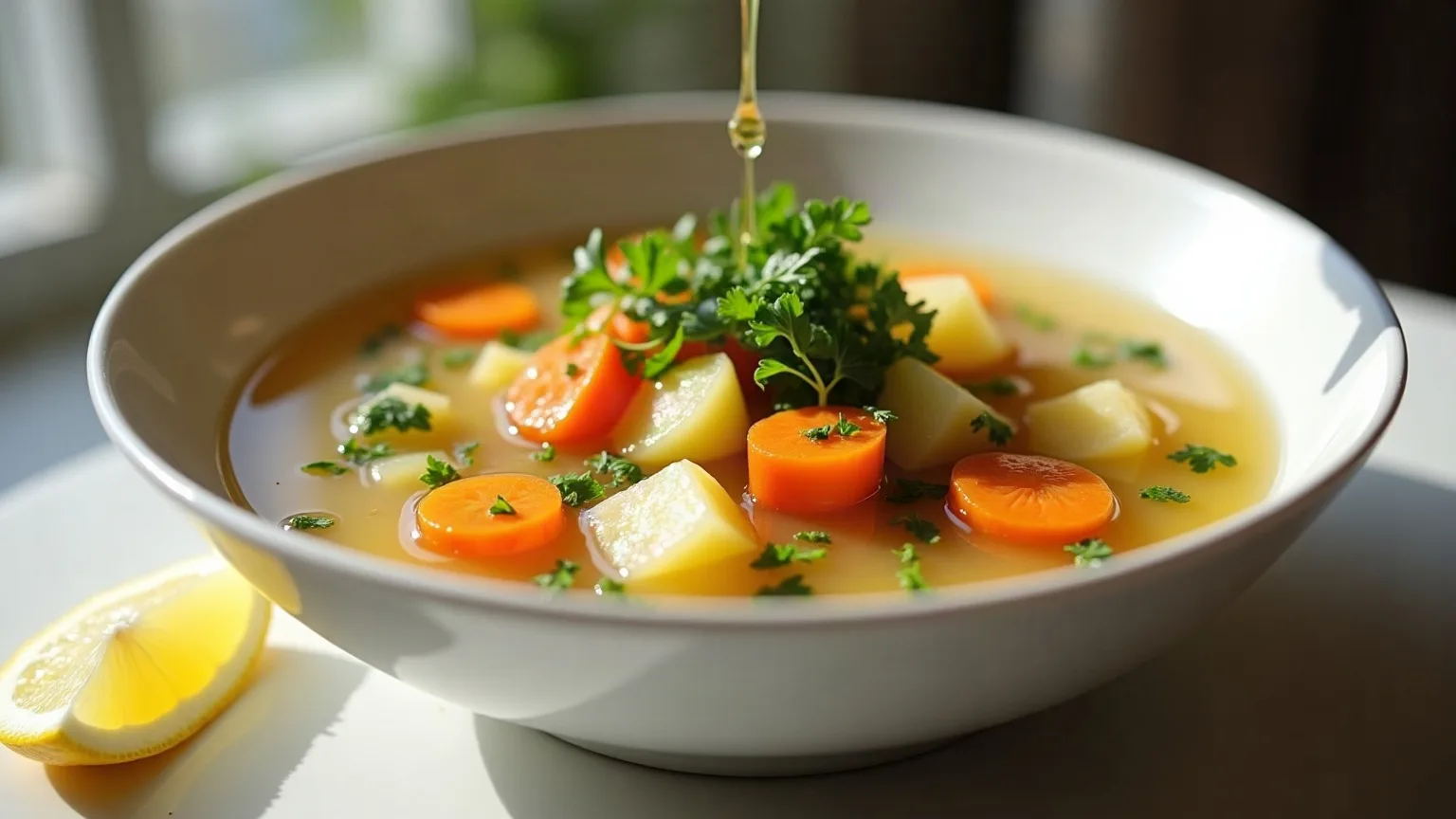
Vegetable soup
Throwing everything in at once is easy and wrong. These vegetables differ twofold in cooking time, and knowing the order…
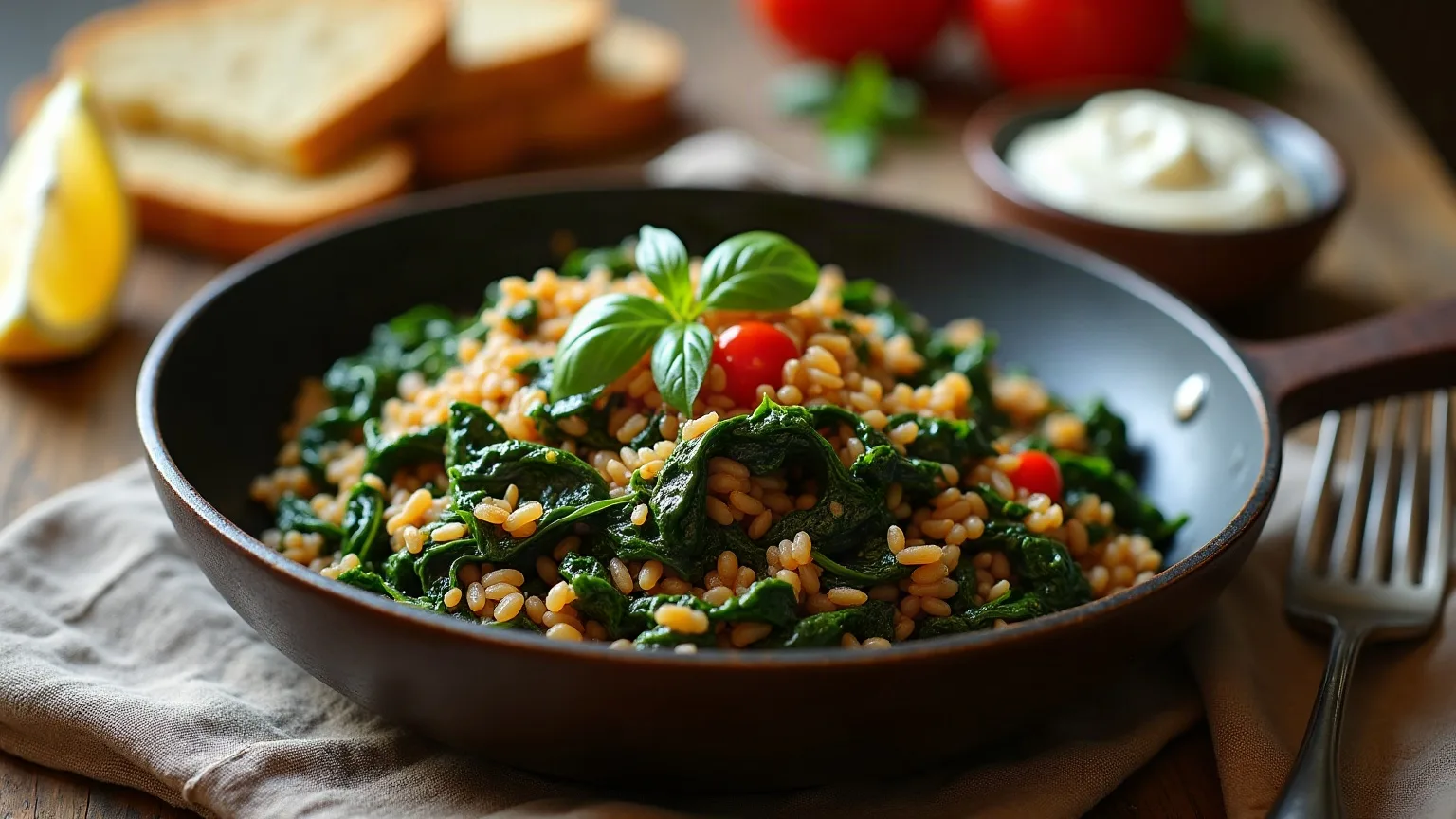
Spinach with rice
A kilo of spinach cooks down to a handful, which is why the size of the pan is part of the recipe.…

Red lentil patties
The bulgur goes onto the lentils while they are HOT, under a lid. Added to cold lentils it never swells and the patty fa…
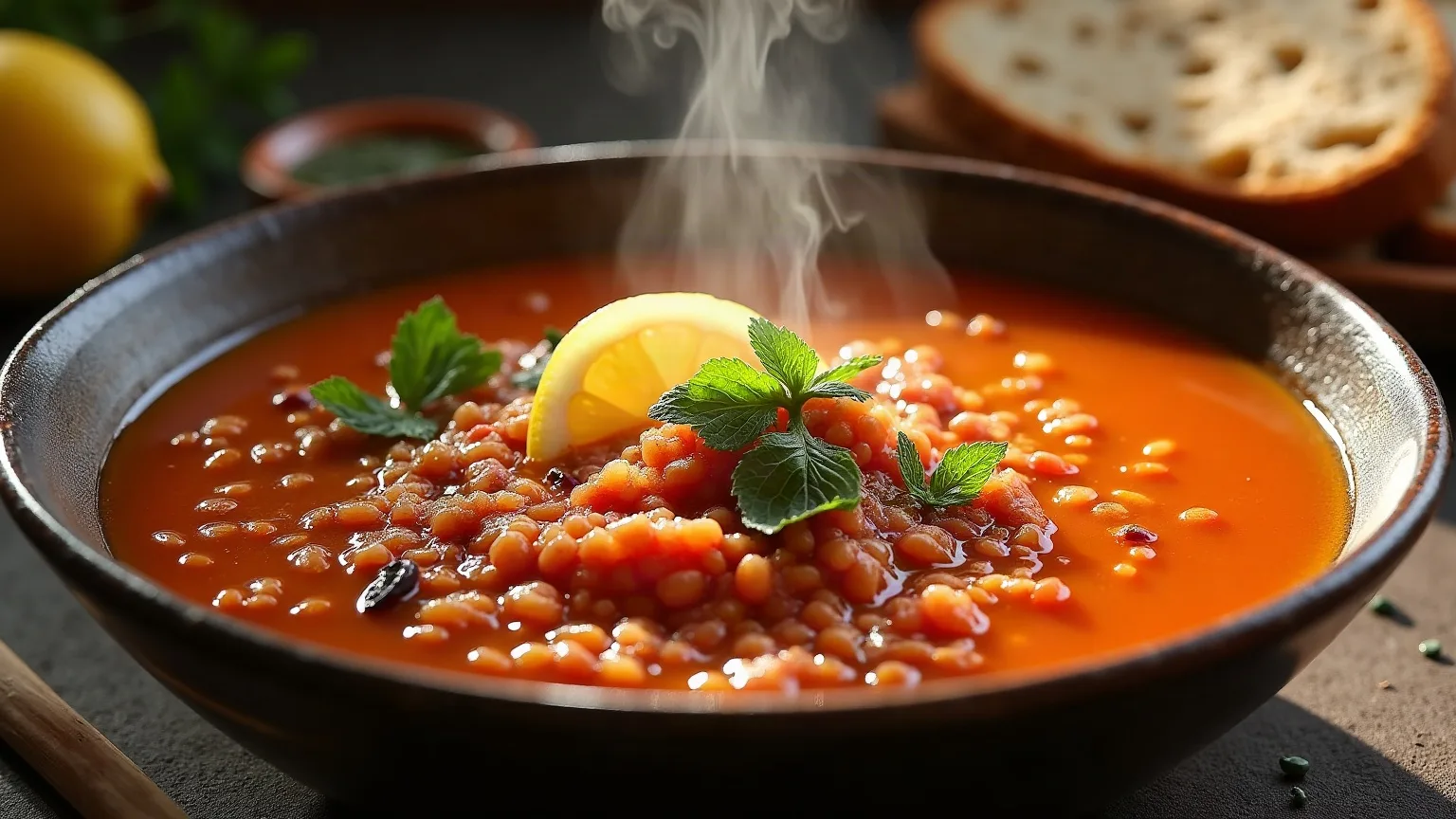
Ezogelin soup
The lentil soup’s cousin, with bulgur, tomato paste and mint. The difference is one step: the paste is fried in the fat.…