
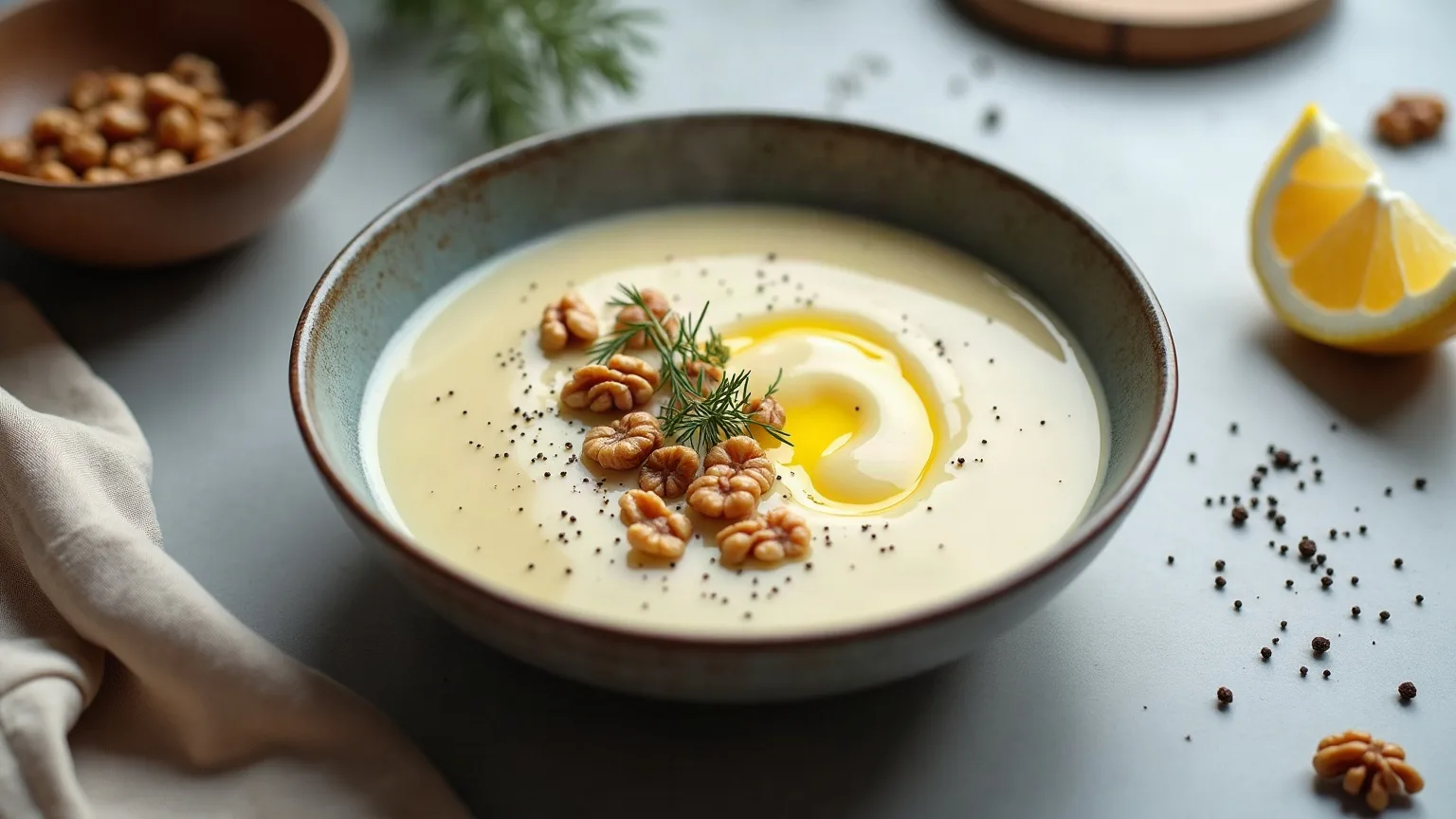
Celeriac soup
Celeriac starts browning the moment it is cut. Dropping it into acidulated water is a chemical intervention rather than a cosmetic one.
Soups · French · Seasonal · For guests · Vegan
- Preparation
- 15 min
- Cooking
- 25 min
- Difficulty
- Needs attention
- Cost
- Very cheap
- Season
- Winter
Celeriac is best known in Turkish cooking braised in olive oil; the soup is newer and came from Europe. The browning of a cut surface is polyphenol oxidase working with the oxygen in the air — the same thing that happens to an apple, a potato and an avocado. The enzyme does not work in acid, so lemon juice holds the colour, and boiling water shuts it down for good at 70 °C.
Method
- Put water in a bowl with half a lemon squeezed into it: the celeriac goes in as it is cut.
- Peel the celeriac thickly: the outer skin is woody and never softens.
You will need: A pan · A stick blender · A bowl for the acidulated water
-
Dice the celeriac into 2 cm cubes and drop them into the acidulated water as you go.
Look for The cubes should be white when lifted out. A grey patch means that piece waited too long in the air.
Why Polyphenol oxidase starts working the instant a cut surface meets oxygen and produces a grey-brown within minutes. Acid takes the enzyme outside the pH range it works in; the lemon is there for that rather than for flavour.If it went wrong
Browned pieces do not spoil the taste, only pull the soup’s colour towards grey. In a batch that has browned, another spoon of lemon juice and a few more walnuts even it out.
-
Soften the onion in the oil for five minutes, add the drained celeriac and the potato and turn them for three minutes.
Look for The cubes should gleam with oil without taking colour.
Why Turning the vegetables in fat before the water goes in drives the surface moisture off and partly opens the cell walls, so more flavour passes into the liquid afterwards.Starch gelatinised The granules soaked up water, swelled and burst into a network. It has thickened, and it will firm further as it cools. no way back
-
Add the water and the salt, cover and boil twenty minutes, then blend.
Look for A knife should meet no resistance in a cube of celeriac.
Why Celeriac is firmer than potato, and twenty minutes takes both far enough to blend smooth. A lid is no problem here: there is no green to protect.Starch gelatinised The granules soaked up water, swelled and burst into a network. It has thickened, and it will firm further as it cools. no way back
Salt · 0.34% Low. Everything reads flat and nothing steps forward.
-
Toast the walnuts three minutes in a dry pan, break them roughly, scatter them over and squeeze the rest of the lemon.
Look for The walnuts should smell toasted; more than three minutes turns them bitter.
Why Celeriac’s aniseed and earth sit well with walnut, and the lemon goes on at the table because its aroma is lost in a boiling pan.Starch gelatinised The granules soaked up water, swelled and burst into a network. It has thickened, and it will firm further as it cools. no way back
Frying dynamics Surface water is flashing to steam and pushing outward — that is the shield keeping the oil out. no way back
Salt · 0.33% Low. Everything reads flat and nothing steps forward.
The oil is under 170 °C. No shield forms, so the food soaks up fat and goes soggy.
This recipe was run through the engine step by step — what goes in when, and at what temperature and for how long. The reactions above come from that run.
peak 160 °C · 37 minutes · engine 1.0.0 · confidence low
After the heat goes off
Hot, with the walnuts, olive oil and lemon. On a winter table it sits well before something heavy.
Three days in the fridge. The colour greys a little further as it stands; the lemon slows that without stopping it.
Five minutes on a low flame with a little water.
Three months. It looks slightly grainy on thawing and ten seconds with a blender fixes it.
Reduced, it becomes a celeriac purée to go under fish or chicken.
From eight months for a baby: unsalted, without walnuts and blended smooth. For 12–36 months grind the walnuts. Celeriac’s aniseed note is unfamiliar to some children, and raising the proportion of potato softens it.
- Walnut → Hazelnut kernels (raw) Hazelnut works and brings a sweeter note; celeriac and walnut is the classic pairing, but hazelnut is not wrong.
- Lemon → Vinegar Vinegar prevents the browning just as well; it is less pleasant on the plate, so use it only in the water.
- Boiling & poaching The method this recipe rests on
- Celeriac What it does in heat, water and acid
- Potato What it does in heat, water and acid
- Bulb onion What it does in heat, water and acid
- Vegetable soup Similar method, or something that sits on the same table
- Pumpkin soup Similar method, or something that sits on the same table
- Broccoli soup Similar method, or something that sits on the same table
- Seasonal Other recipes that answer the same need
- For guests Other recipes that answer the same need
- Vegan Other recipes that answer the same need
What it tastes like
No axis sits clearly above the average: a balanced recipe.
This profile is computed rather than measured: the role-weighted average of its ingredients’ taste vectors, shifted by what the cooking does. The thin line is the database average on that axis.
Closest in taste
Not hand-picked: ranked by distance across the eight taste axes.
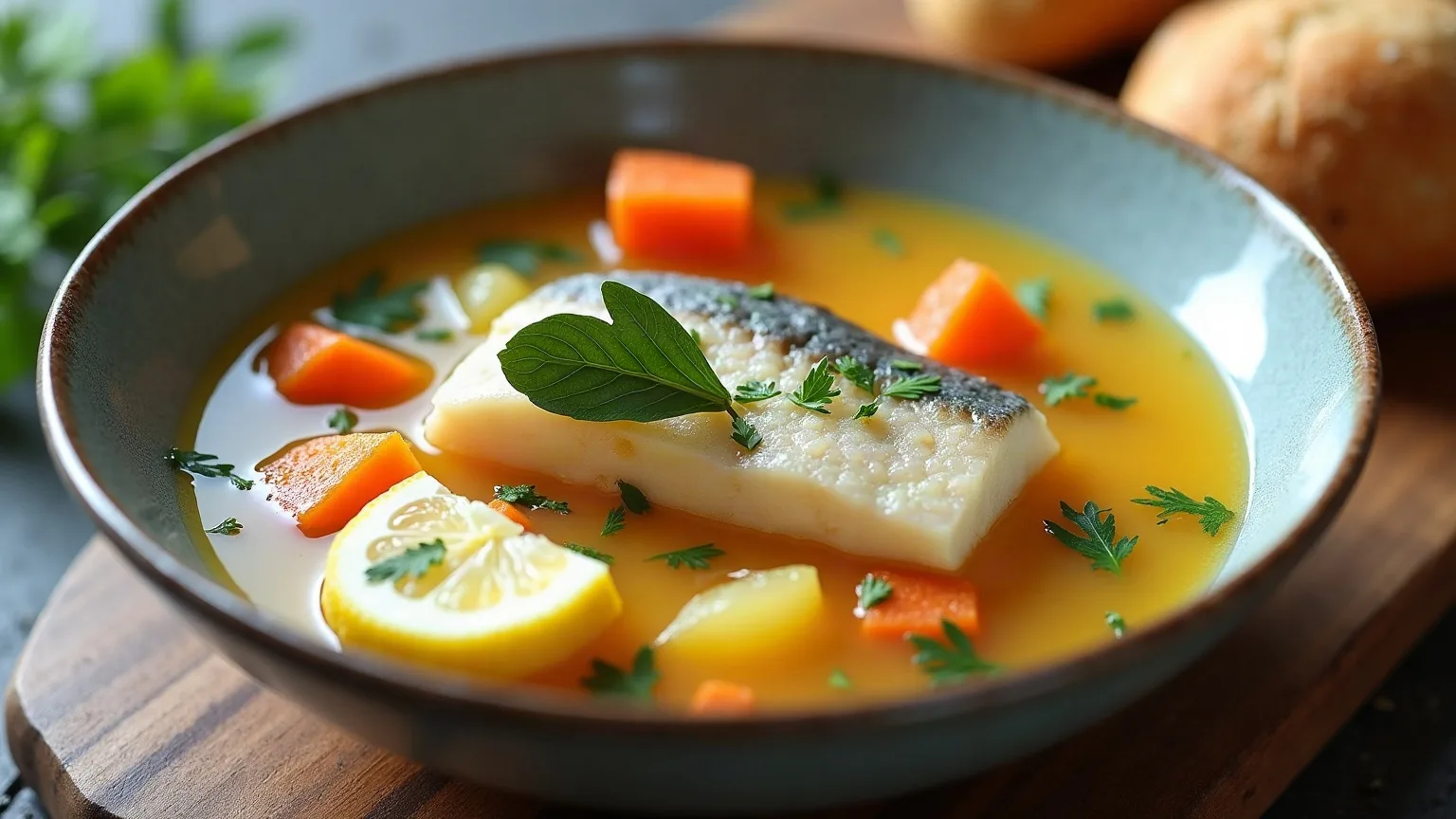
Fish soup
A fish stock is made in twenty minutes and ruined in twenty-five. Unlike meat stock, long cooking here does damage.…
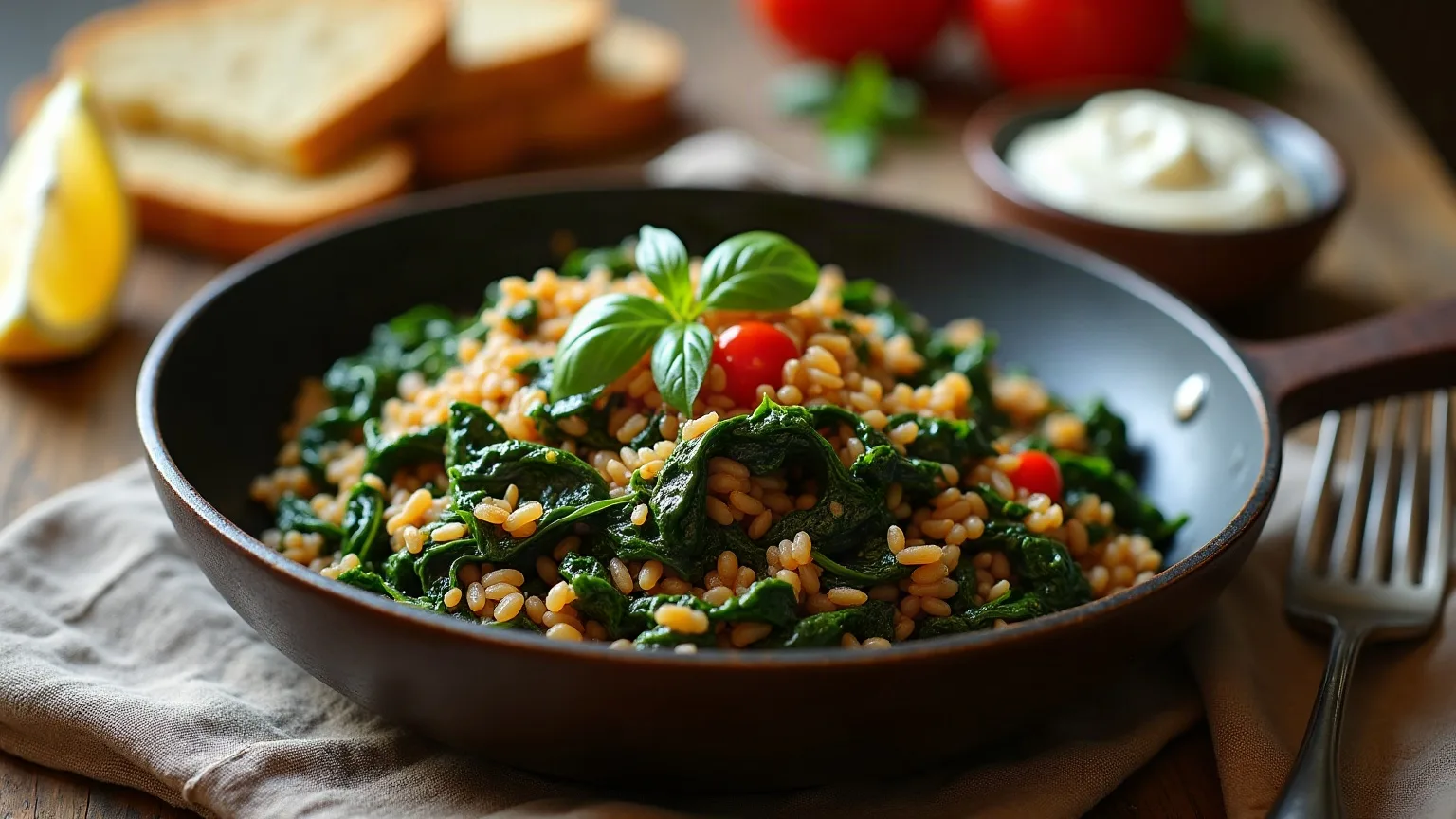
Spinach with rice
A kilo of spinach cooks down to a handful, which is why the size of the pan is part of the recipe.…

Yuvalama
Tiny balls of rice flour and minced lamb, rolled by hand, cooked with lamb shank and chickpeas, with a yoghurt and butte…
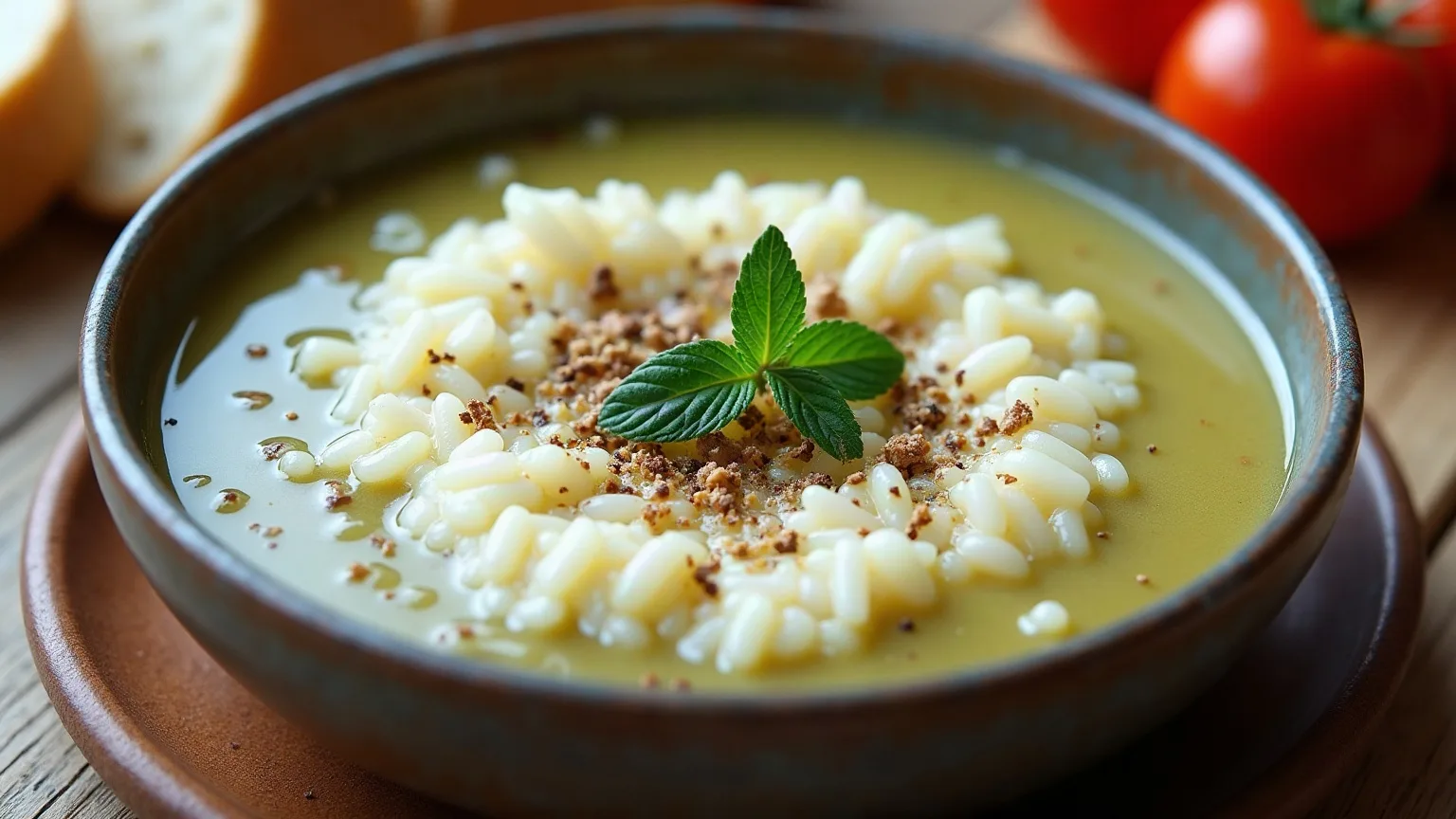
Yoghurt and rice soup
Every yoghurt soup has the same single problem: splitting. The answer is not the flour and the egg but the way the tempe…