
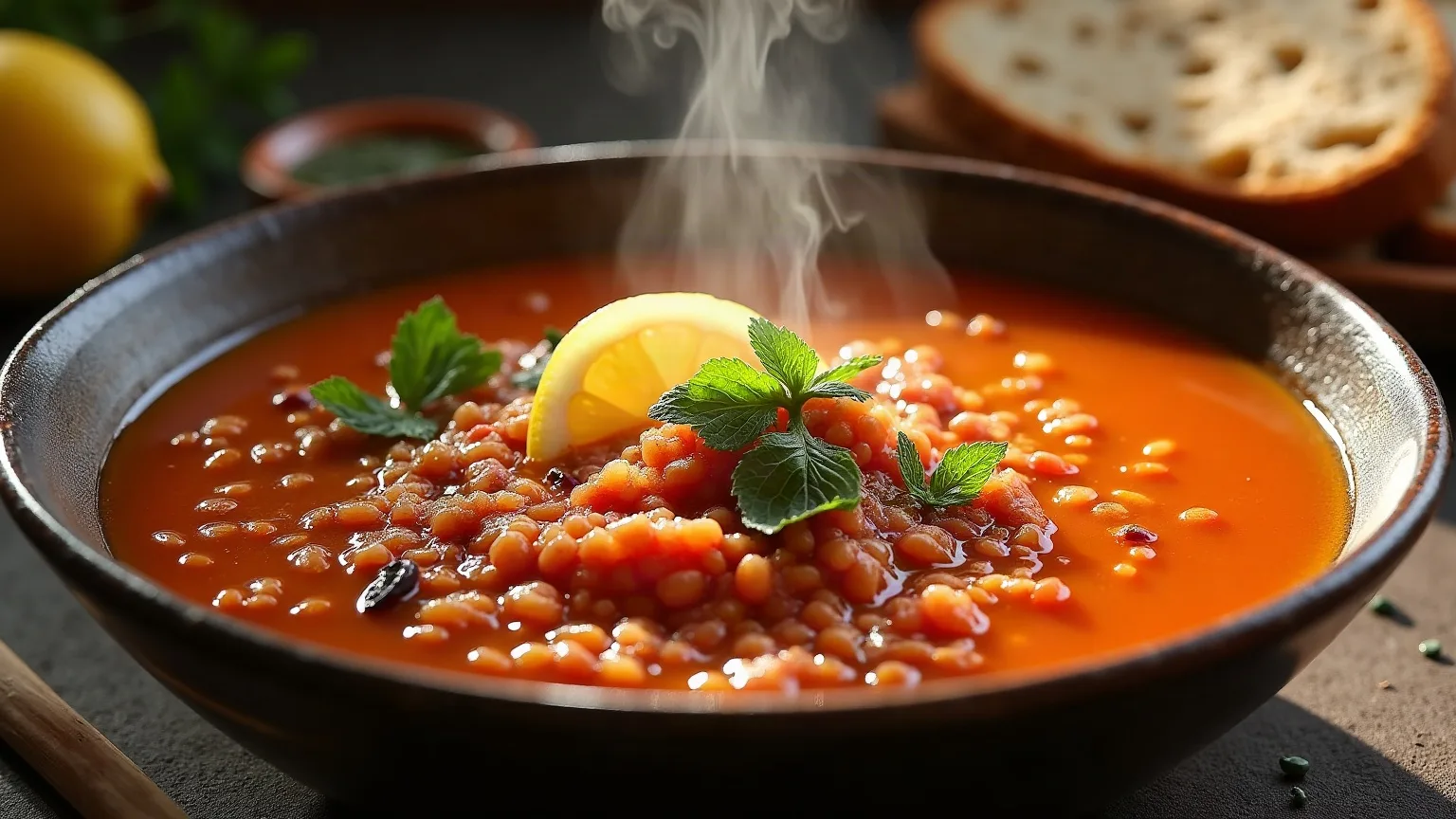
Ezogelin soup
The lentil soup’s cousin, with bulgur, tomato paste and mint. The difference is one step: the paste is fried in the fat.
Soups · South-eastern Anatolia · Budget · One pot · Freezes well · Weekend batch · Vegan
- Preparation
- 8 min
- Cooking
- 32 min
- Difficulty
- Needs attention
- Cost
- Very cheap
- Season
- Autumn, Winter
The name is attached to Ezo Gelin, a woman from the village of Dobo near Gaziantep, twice unhappily married, who is said to have cooked this for her mother-in-law. The story was probably fitted to the soup afterwards, but the soup is a real South-eastern recipe: bulgur, tomato paste and mint over the lentils, and it stays deliberately grainy. Blend it and it stops being ezogelin.
Method
- Rinse the lentils and the rice separately.
- Measure the fine bulgur and keep it aside: it goes in last.
- Rub the dried mint between your palms: rubbing releases the volatile oils.
You will need: A medium pan
-
Soften the onion in the butter for five minutes, then add the tomato paste and the chilli and fry them for two minutes more.
Look for The paste should go from bright red to a deep brick, and the fat should separate at the edges.
Why The raw taste of tomato paste is its acidity and its uncooked pectin; fried in fat its sugars caramelise and the lycopene dissolves into the fat where the body can use it. Skip this and the soup stays sour.If it went wrong
Burnt paste turns bitter and there is no way back: throw that out and begin again with fresh. Under-fried, give it another minute before the water goes in.
Starch gelatinised The granules soaked up water, swelled and burst into a network. It has thickened, and it will firm further as it cools. no way back
-
Add the lentils, the rice and the water; once it boils drop the heat and give it twenty minutes.
Look for Skim the foam. The rice grains should swell and turn opaque.
Why Rice takes longer than lentils and gives its starch up slowly; put in together they thicken the soup in one movement rather than two.Starch gelatinised The granules soaked up water, swelled and burst into a network. It has thickened, and it will firm further as it cools. no way back
-
Add the fine bulgur and the salt and cook for ten minutes more.
Look for You should see separate grains on the spoon: bulgur, rice and collapsed lentil as three distinct textures.
Why Bulgur is wheat that has already been boiled once and swells in ten minutes. Added at the start it disintegrates and the soup turns to paste — the grainy texture comes from this timing.Starch gelatinised The granules soaked up water, swelled and burst into a network. It has thickened, and it will firm further as it cools. no way back
A gluten web is forming Gliadin and glutenin hydrated into an elastic net. This is what will hold the gas. no way back
Salt · 0.38% Low. Everything reads flat and nothing steps forward.
-
Take it off the heat, stir in the rubbed mint, cover and wait two minutes.
Look for Lifting the lid, the smell of mint should come up at you.
Why The menthol in mint flashes off above 70 °C. Added off the heat it carries its smell to the bowl; added while boiling it leaves only its colour.Starch gelatinised The granules soaked up water, swelled and burst into a network. It has thickened, and it will firm further as it cools. no way back
A gluten web is forming Gliadin and glutenin hydrated into an elastic net. This is what will hold the gas. no way back
Salt · 0.38% Low. Everything reads flat and nothing steps forward.
This recipe was run through the engine step by step — what goes in when, and at what temperature and for how long. The reactions above come from that run.
peak 150 °C · 39 minutes · engine 1.0.0 · confidence low
After the heat goes off
Hot, with lemon. A spoon of sizzled butter and chilli over the top is the Antep way.
Three days in the fridge. The bulgur and rice keep drinking; on the second day you find porridge rather than soup, which is normal.
Five minutes on a low flame with 80 ml of water per portion. Refresh the mint after heating rather than before.
Three months. It thaws very thick and needs plenty of water; some of the grain texture is lost.
Thickened, mixed with flour and egg and dropped by the spoonful into a pan, it becomes a lentil fritter.
Good from twelve months: grainy but soft, with no heat. For 12–36 months leave the pepper paste out and lift their share before the salt. For a baby under one the bulgur and rice are heavy going; plain lentil soup suits better.
- Chilli flakes → Tomato paste In Antep a dessertspoon of pepper paste goes in instead, and the soup comes out darker and sweeter. The list carries chilli because no measured composition is held for pepper paste; use the paste and the calculated figures shift a little.
- Butter → Olive oil Olive oil makes it vegan, and the paste fries just as well in it.
- Boiling & poaching The method this recipe rests on
- Lentil What it does in heat, water and acid
- Bulb onion What it does in heat, water and acid
- Rice What it does in heat, water and acid
- Red lentil soup Similar method, or something that sits on the same table
- Tarhana soup Similar method, or something that sits on the same table
- Analı kızlı Similar method, or something that sits on the same table
- Budget Other recipes that answer the same need
- One pot Other recipes that answer the same need
- Freezes well Other recipes that answer the same need
- Weekend batch Other recipes that answer the same need
- Vegan Other recipes that answer the same need
What it tastes like
No axis sits clearly above the average: a balanced recipe.
This profile is computed rather than measured: the role-weighted average of its ingredients’ taste vectors, shifted by what the cooking does. The thin line is the database average on that axis.
Closest in taste
Not hand-picked: ranked by distance across the eight taste axes.
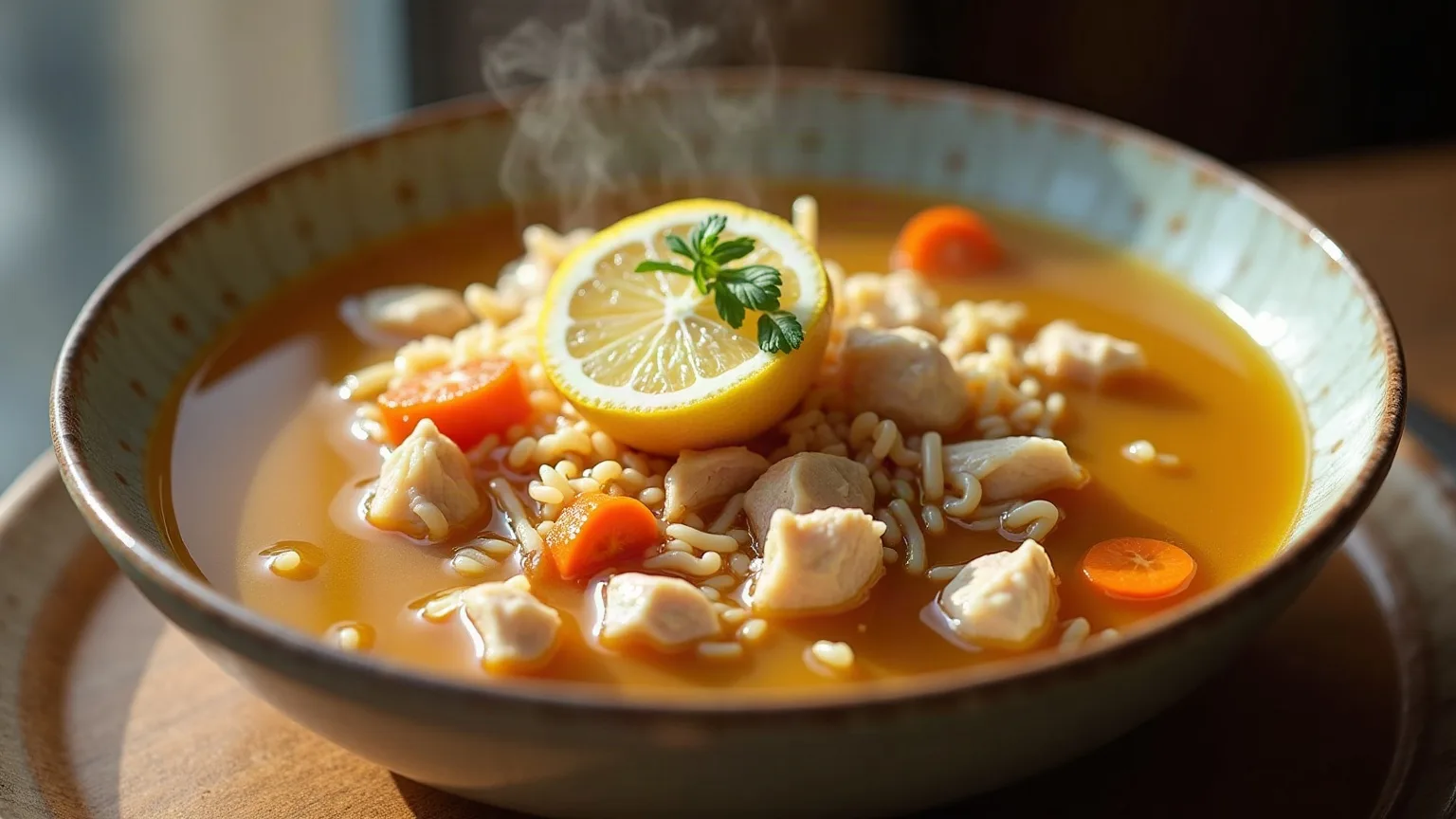
Chicken broth soup
What makes a broth clear is not the ingredients but the temperature: a pan that passes 95 °C guarantees a cloudy one.…
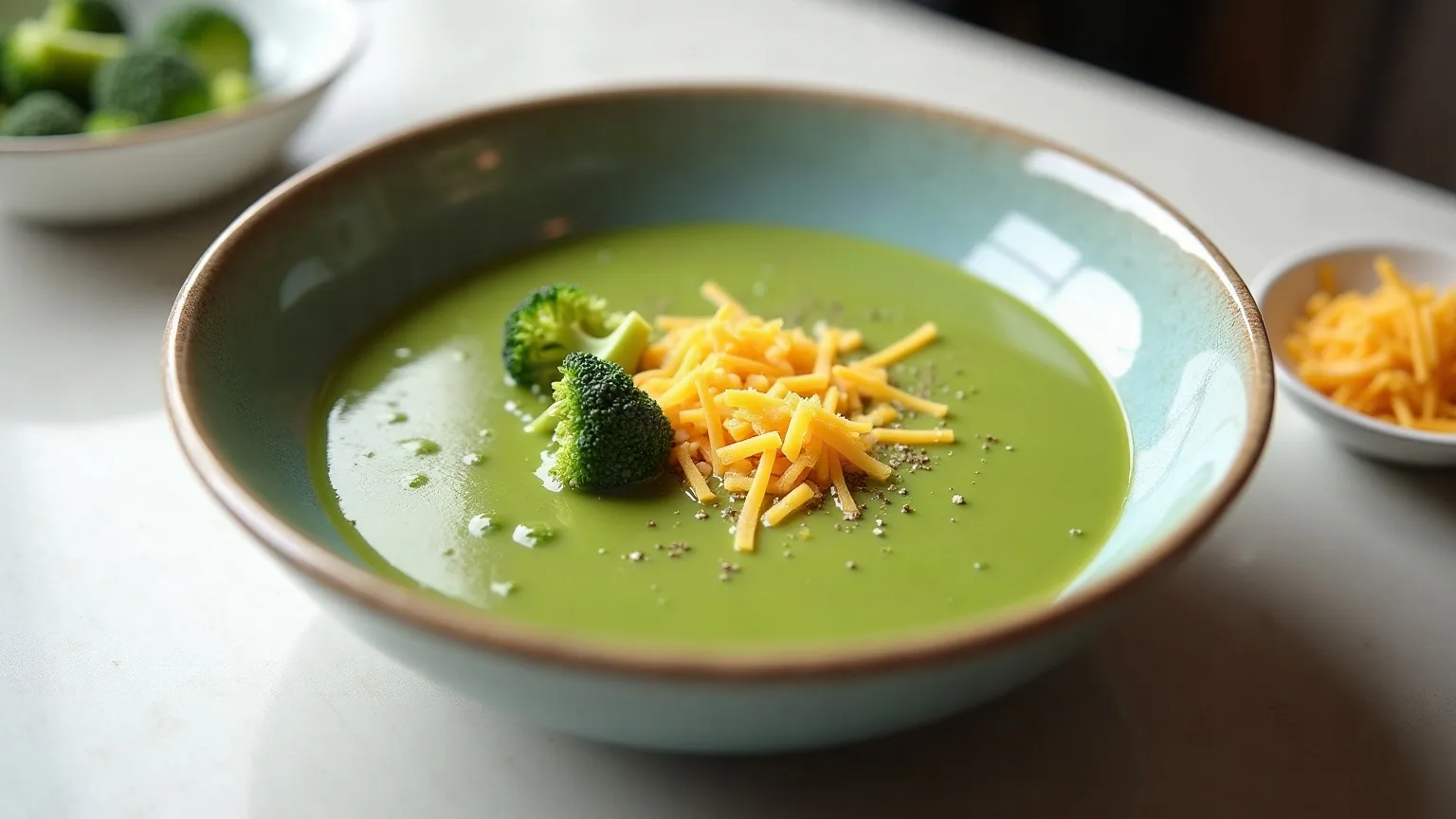
Broccoli soup
One rule for keeping it green: no lid, and not a minute over eight.…
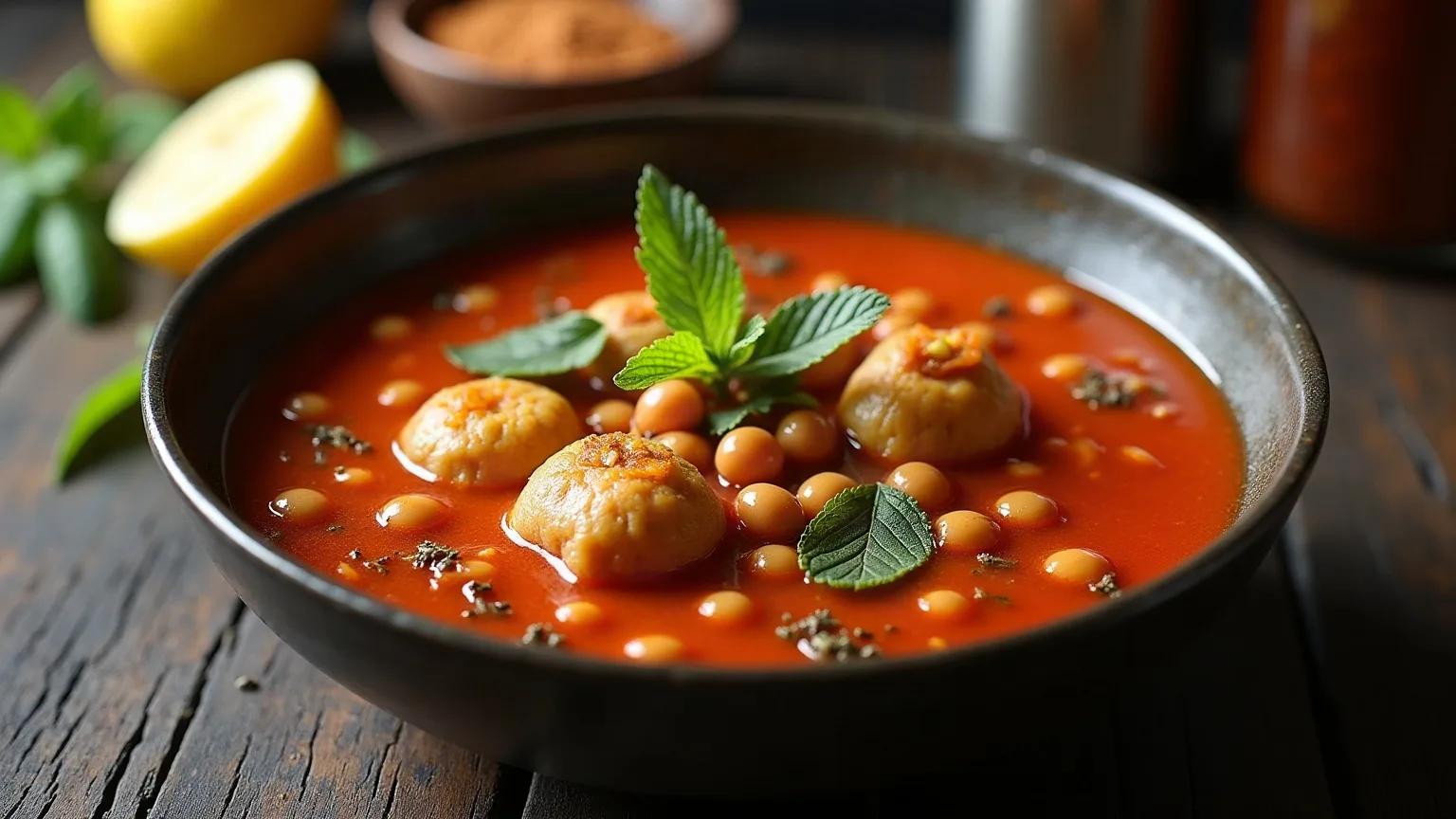
Analı kızlı
The big stuffed dumplings are the mothers, the small plain ones the daughters. Both are bulgur, both cook in the same pa…
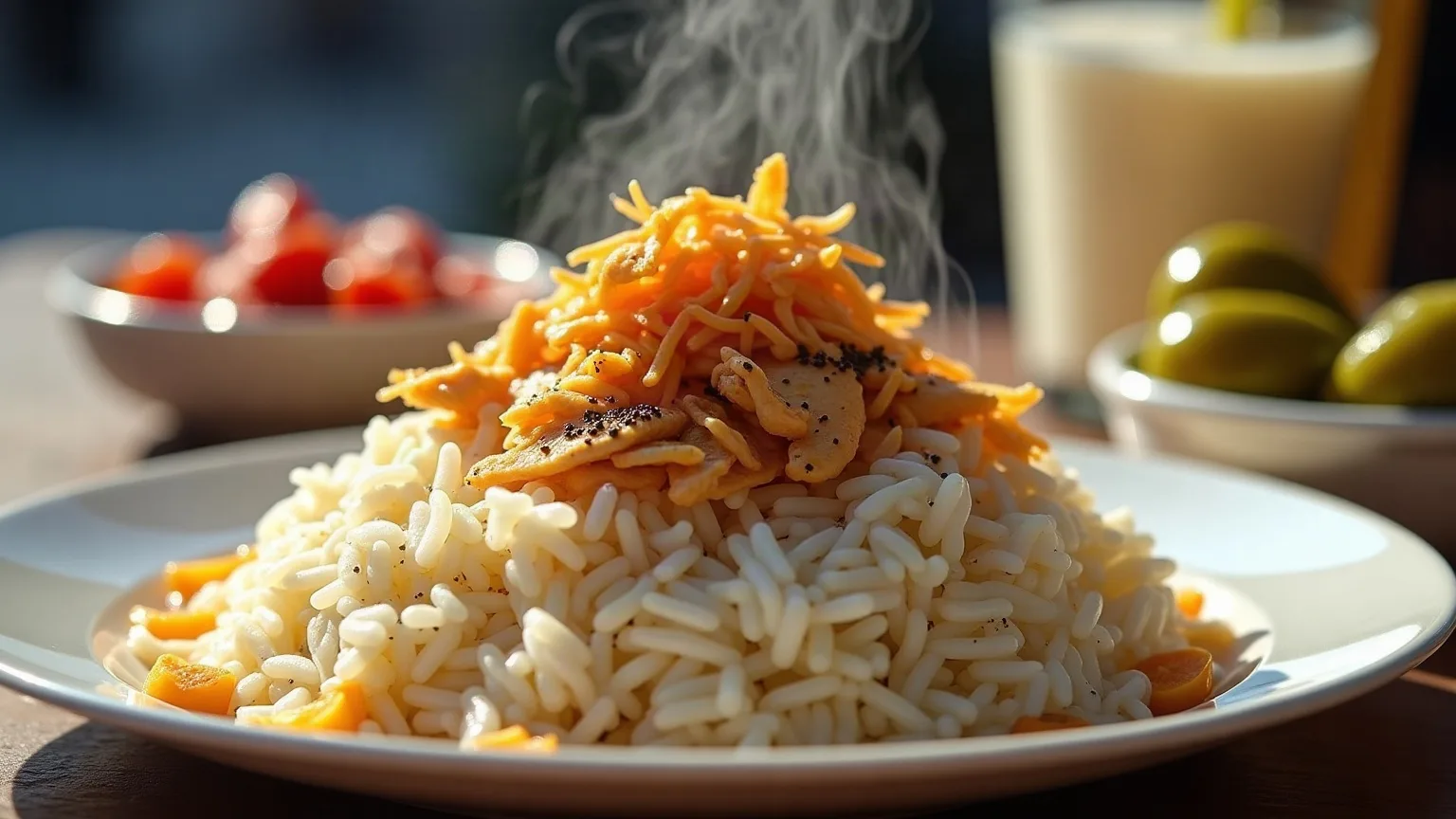
Chicken pilaf
When the water for the rice is the water the chicken cooked in, the dish becomes something else. Made with plain water, …