
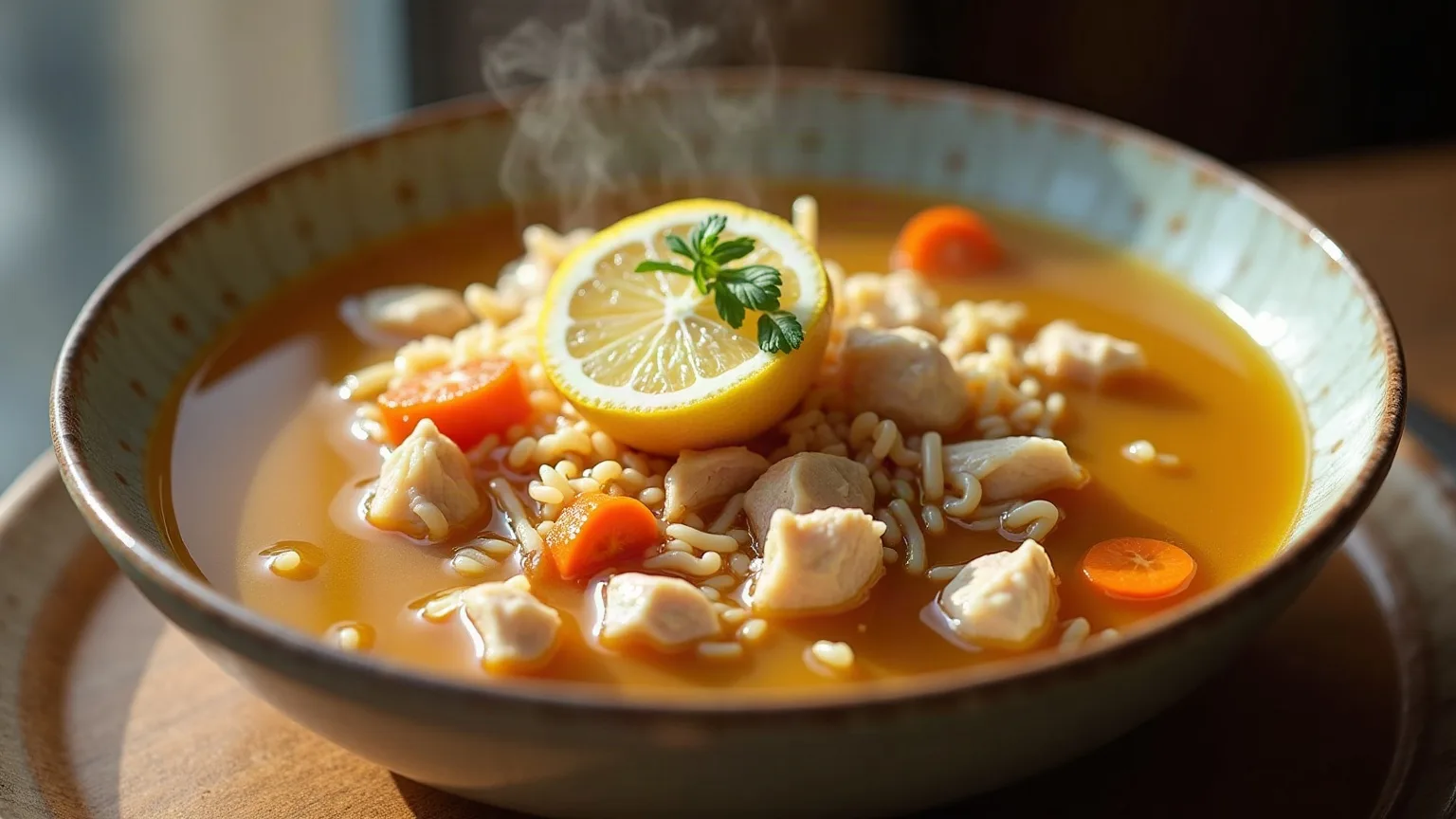
Chicken broth soup
What makes a broth clear is not the ingredients but the temperature: a pan that passes 95 °C guarantees a cloudy one.
Soups · Turkish · Weekend batch · Freezes well · Budget · One pot
- Preparation
- 10 min
- Cooking
- 70 min
- Difficulty
- Needs attention
- Cost
- Cheap
- Season
- Autumn, Winter
Chicken broth exists in every kitchen and is made wrong in every kitchen in the same way: by boiling it. A rolling boil acts as a mixer, endlessly redistributing the protein fragments that leak out and the fat that renders. At 90–95 °C the water is still, the particles rise to be skimmed, and a clear broth becomes possible.
Method
- Start the chicken in COLD water: dropped into hot water the meat seals at once and gives the broth nothing.
- Cut the carrot and onion large: chopped small they disintegrate over seventy minutes and cloud the broth.
You will need: A deep pan · A slotted spoon · A fine sieve
-
Put the chicken in the pan with cold water, heat it uncovered and DO NOT LET IT BOIL — drop the heat the moment the first bubbles appear.
Look for A bubble here and there on the surface, never a column rising from the base. The water should tremble rather than move.
Why Meat warming slowly in cold water releases its soluble proteins into the water, and that is flavour. A boil coagulates those same proteins into microscopic particles and the broth clouds permanently — no sieve takes that back.If it went wrong
Once it has boiled and clouded, clarity does not come back, but the soup is still good: blend it and call it a cream of chicken. For a clear broth, keep the flame low from the start next time.
-
Skim the grey foam that gathers in the first ten minutes and throw it away.
Look for The foam to remove is grey-brown and coarse. Fine white foam is fat and can stay.
Why That foam is coagulated blood protein and bone debris: tasteless, faintly smelly and the single thing that clouds the broth. It only appears in the first ten minutes and then stops. -
Add the onion, carrot and bay, and hold it at 90–95 °C uncovered for sixty minutes.
Look for After an hour the meat should come off the bone with a spoon.
Why A lid returns the steam and pushes the temperature to boiling; uncovered, the pan holds itself around 95 °C. Collagen converts slowly to gelatin at that temperature, and the broth setting to a jelly when cold is the proof of it.Starch gelatinised The granules soaked up water, swelled and burst into a network. It has thickened, and it will firm further as it cools. no way back
-
Lift the chicken out and strain the broth through a fine sieve. Shred the meat and discard the bones.
Look for The strained broth should be golden and clear enough to see the bottom of the bowl.
Why Straining removes solids but not cloudiness, which is suspended particles. The real work happened in the third step, not here.Starch gelatinised The granules soaked up water, swelled and burst into a network. It has thickened, and it will firm further as it cools. no way back
-
Return the broth to the pan with the butter and the vermicelli and boil seven minutes. Add the salt, pepper and shredded meat, then take it off.
Look for The vermicelli should swell and soften without breaking up.
Why The vermicelli gives its starch to the water and thickens it slightly, which is why it goes in last and in small quantity. The salt waits too: an hour of evaporation has taken about a fifth of the water, and broth salted at the start would now be too salty.Starch gelatinised The granules soaked up water, swelled and burst into a network. It has thickened, and it will firm further as it cools. no way back
A gluten web is forming Gliadin and glutenin hydrated into an elastic net. This is what will hold the gas. no way back
Salt · 0.26% Low. Everything reads flat and nothing steps forward.
This recipe was run through the engine step by step — what goes in when, and at what temperature and for how long. The reactions above come from that run.
peak 98 °C · 85 minutes · engine 1.0.0 · confidence low
After the heat goes off
Very hot, in a deep bowl, with lemon on the side and chilli for whoever wants it.
Three days in the fridge. If the broth sets to a jelly that is a good sign: the collagen became gelatin. The cap of fat that sets on top protects it from the air — leave it until you serve.
Five minutes on a low flame. The vermicelli disintegrates on reheating, so it is better to store the broth without it and add it at serving.
The broth alone freezes for six months; with vermicelli in it, it thaws as mush. Frozen in an ice tray it becomes ready liquid for other dishes.
The spare broth becomes the water for a pilaf, the base of another soup or the liquid in a vegetable dish, and it is markedly better than plain water in all three. The shredded meat goes into a salad or a sandwich.
The unsalted broth is very suitable for a baby under one: from eight months, without vermicelli and with the chicken shredded fine. For 12–36 months the vermicelli is fine but should be broken small. Make sure no bone fragment is left — that is what the sieve is for.
- Vermicelli → Rice Rice works too: it takes fifteen minutes, so it goes in eight minutes earlier.
- Chicken → Meat stock Ready-made stock saves seventy minutes and loses the gelatin and the flavour with them; no carton does what a chicken bone does.
- Boiling & poaching The method this recipe rests on
- Chicken What it does in heat, water and acid
- Bulb onion What it does in heat, water and acid
- Carrot What it does in heat, water and acid
- Vermicelli soup Similar method, or something that sits on the same table
- Wedding soup Similar method, or something that sits on the same table
- Vegetable soup Similar method, or something that sits on the same table
- Weekend batch Other recipes that answer the same need
- Freezes well Other recipes that answer the same need
- Budget Other recipes that answer the same need
- One pot Other recipes that answer the same need
What it tastes like
No axis sits clearly above the average: a balanced recipe.
This profile is computed rather than measured: the role-weighted average of its ingredients’ taste vectors, shifted by what the cooking does. The thin line is the database average on that axis.
Closest in taste
Not hand-picked: ranked by distance across the eight taste axes.
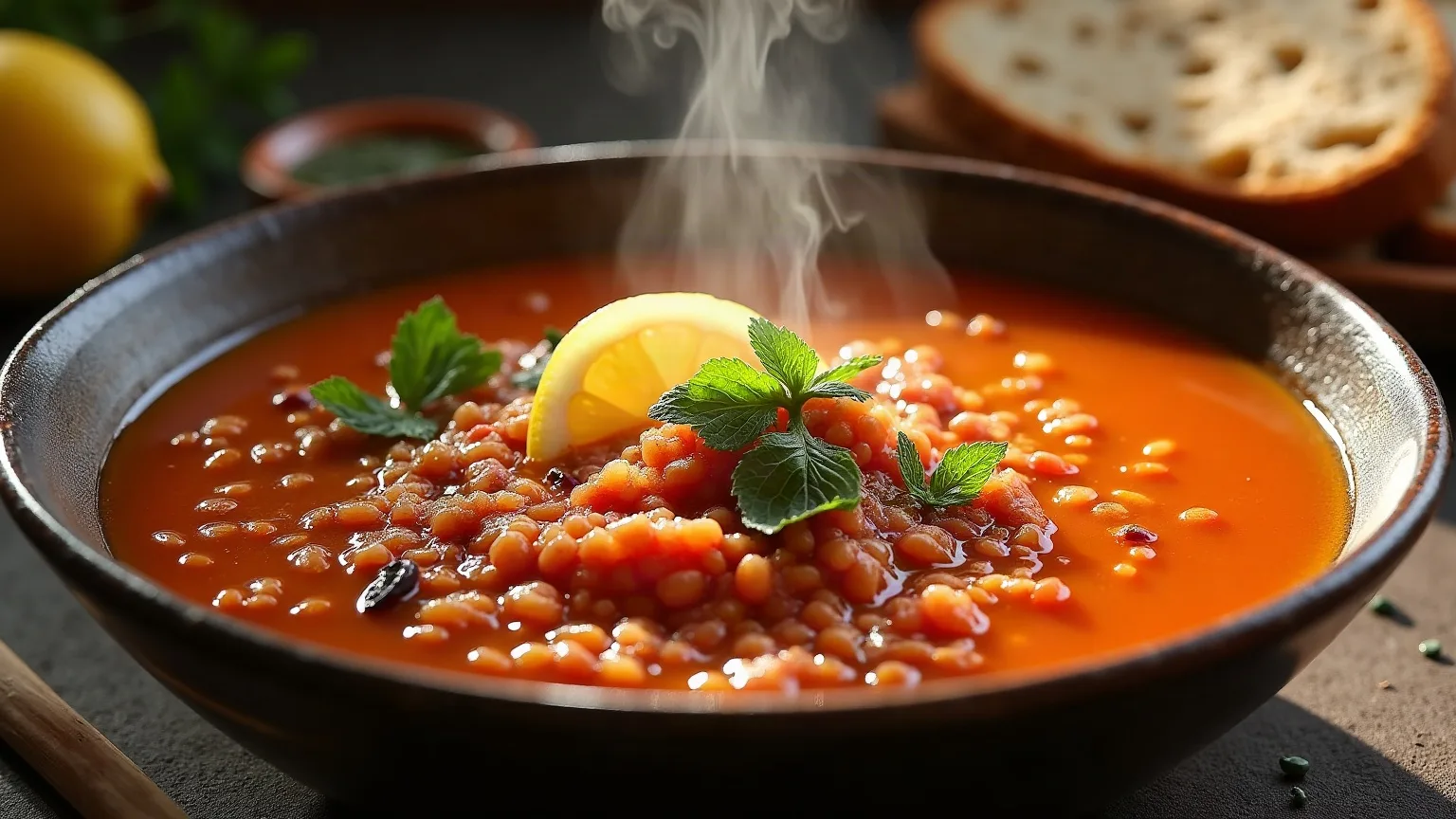
Ezogelin soup
The lentil soup’s cousin, with bulgur, tomato paste and mint. The difference is one step: the paste is fried in the fat.…
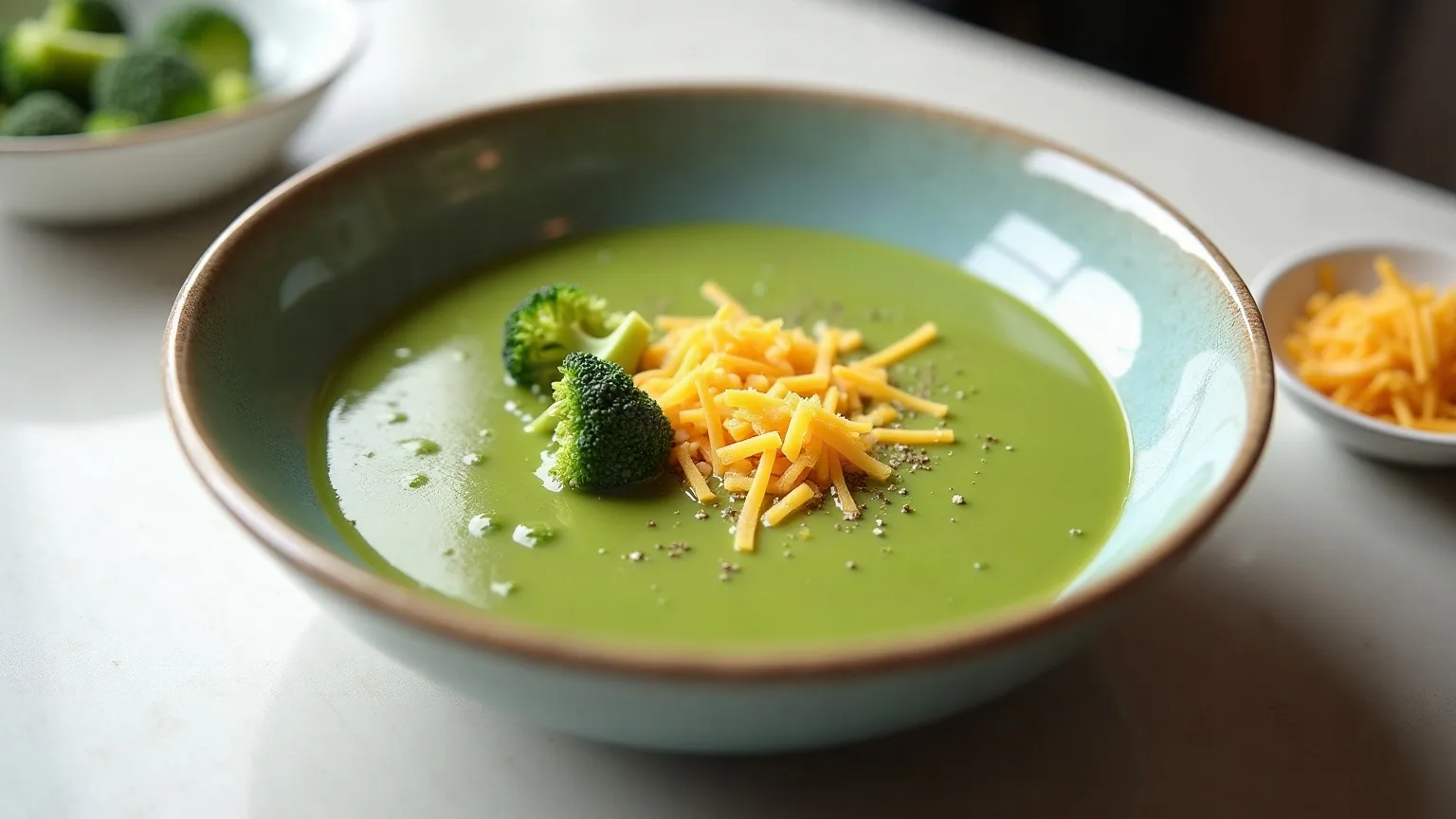
Broccoli soup
One rule for keeping it green: no lid, and not a minute over eight.…
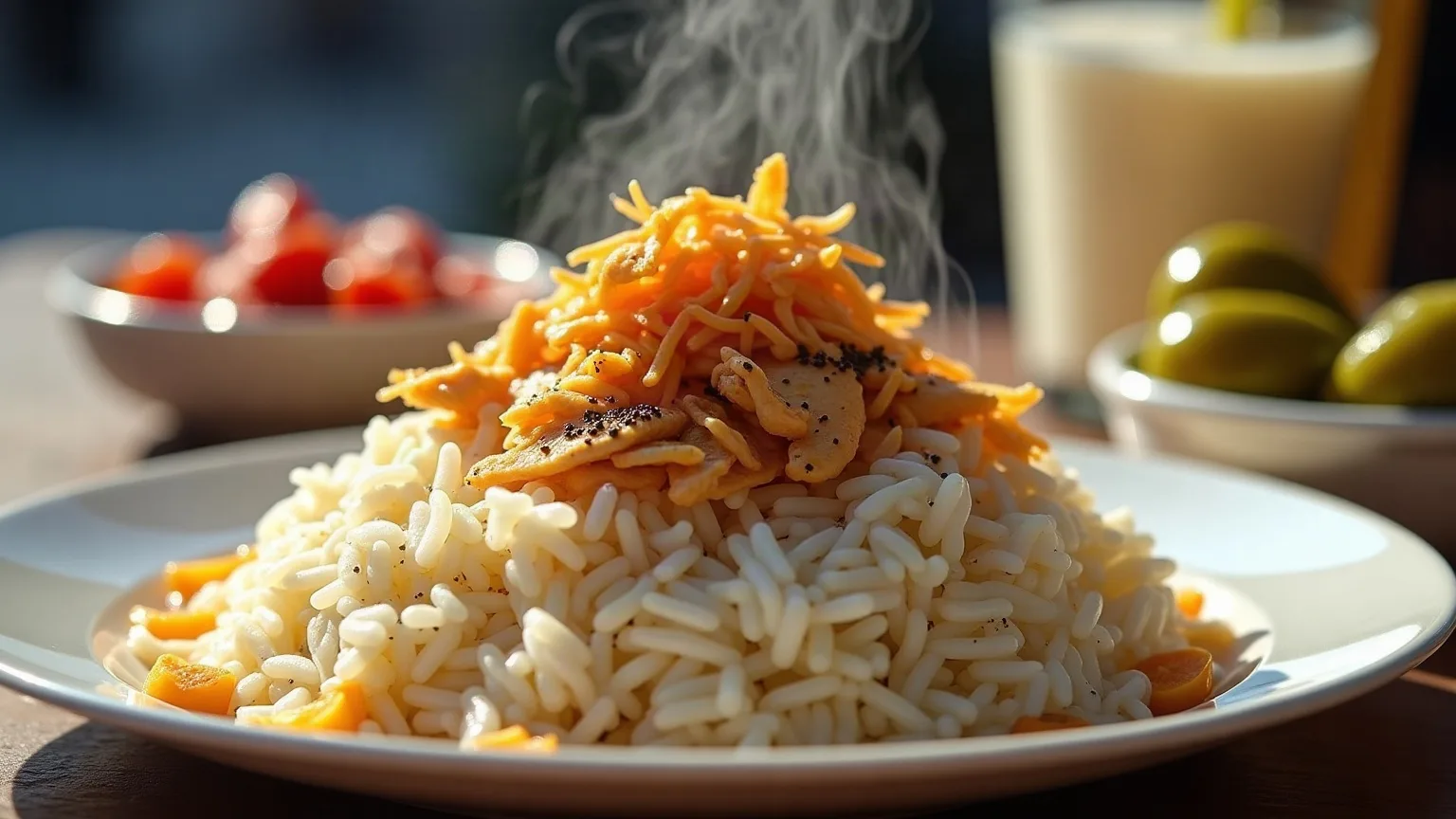
Chicken pilaf
When the water for the rice is the water the chicken cooked in, the dish becomes something else. Made with plain water, …
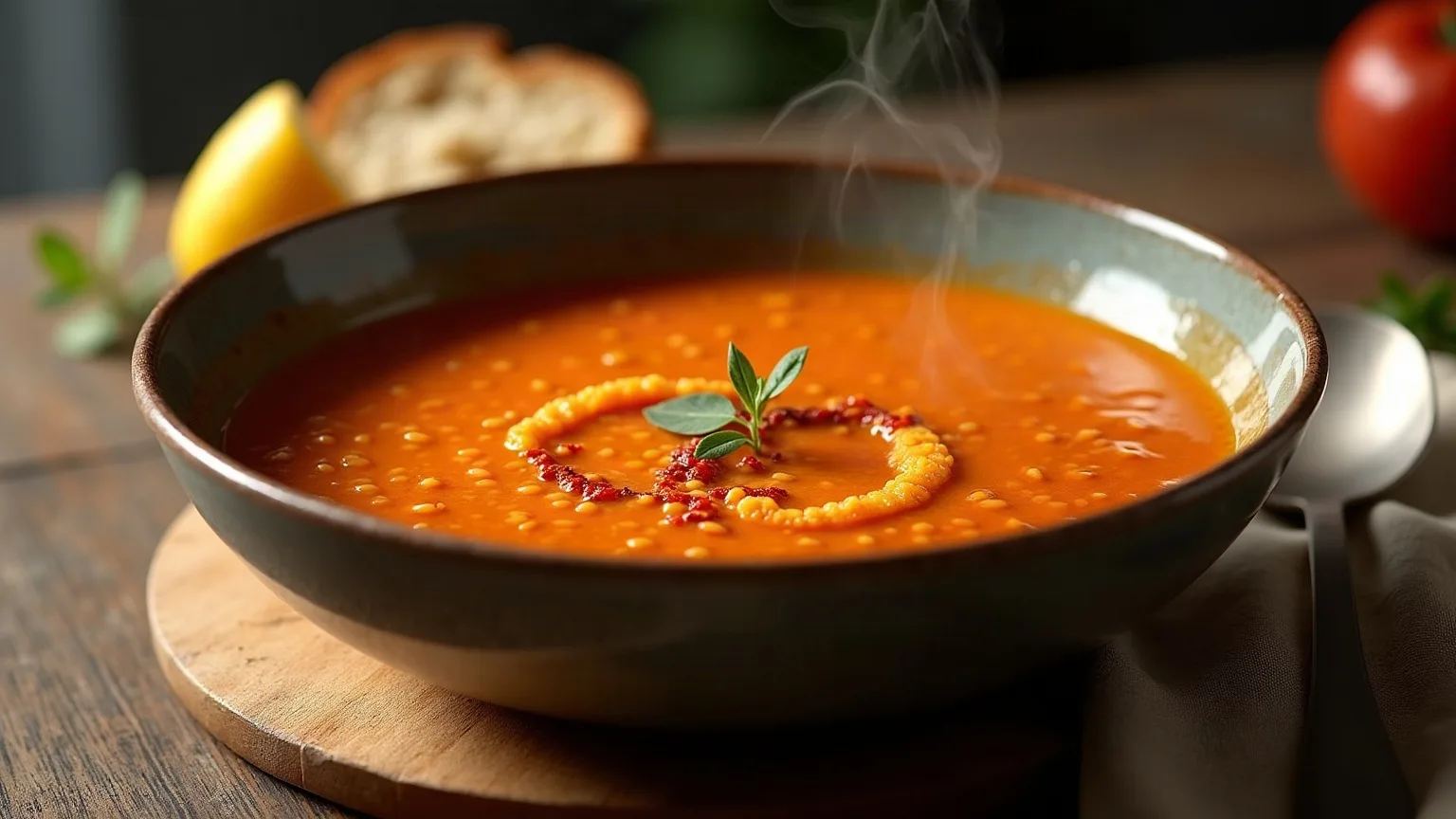
Red lentil soup
Turkey’s default soup. Four ingredients, thirty-five minutes and one rule: the lemon is squeezed at the table.…