
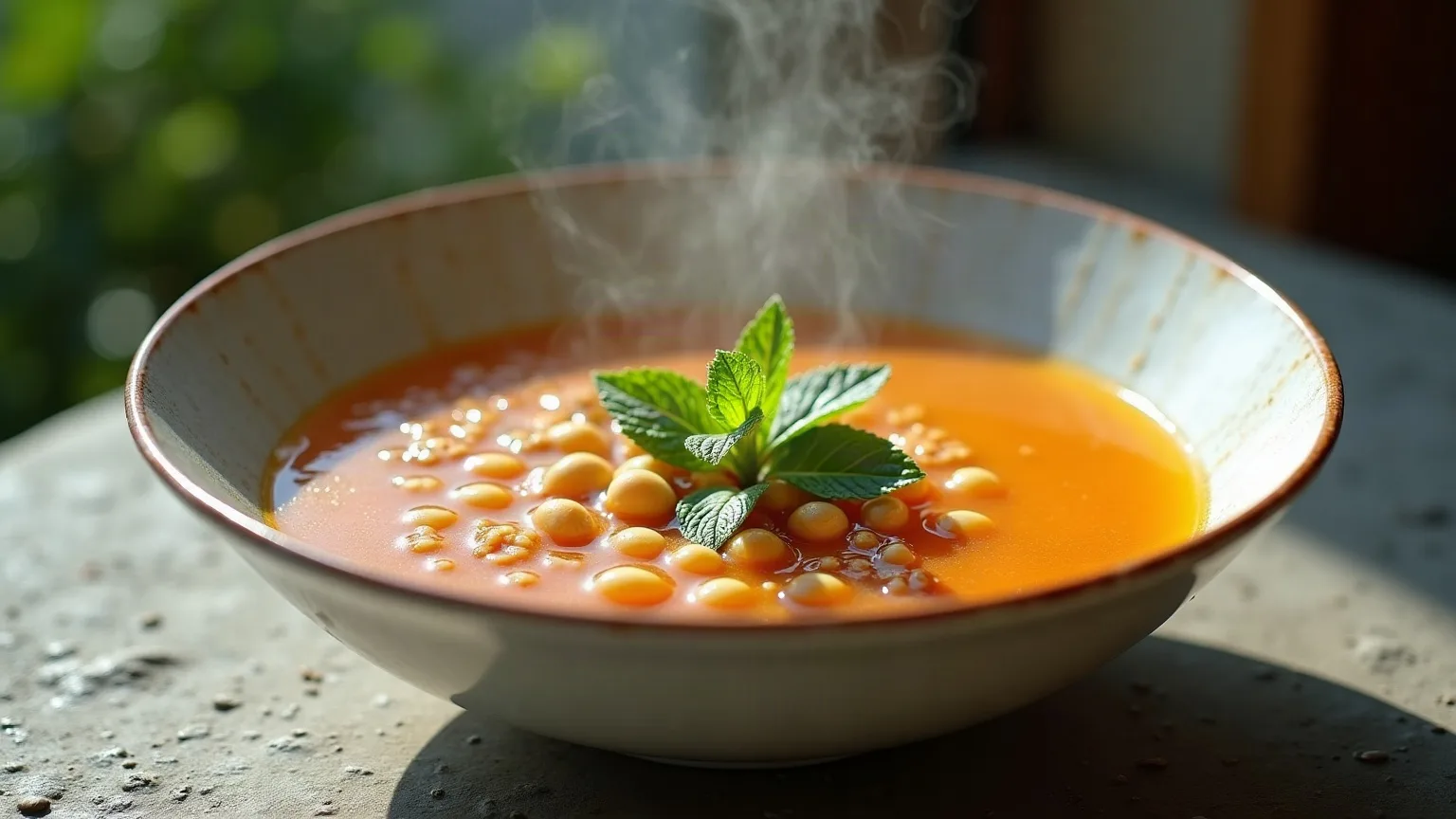
Ayran soup
A grain and pulse soup carried on thinned yoghurt. Wheat and chickpeas are soaked overnight, boiled separately, then folded into salted, watered yoghurt. Made hot in some regions and cold in others.
In the cold versions the curdling problem never arises: nothing is heated after the yoghurt goes in, so neither flour nor egg is needed. The hot versions rely instead on wheat and rice starch plus relentless stirring.
What it is made of
 Yoghurt
pH 4.4 · splits above 85 °C
Dairy: it brings creaminess, protein and calcium.
Temper it with a few spoons of the hot liquid before it goes in; added straight, it splits.
Ck
Yoghurt
pH 4.4 · splits above 85 °C
Dairy: it brings creaminess, protein and calcium.
Temper it with a few spoons of the hot liquid before it goes in; added straight, it splits.
Ck
 Chickpea
Protein 19% · skin dissolves in alkaline water
Gives body: the bulk of the plate and its starch.
A pinch of soda in the soaking water: the alkaline bath dissolves the skins and nearly halves the cooking time.
H2O
Chickpea
Protein 19% · skin dissolves in alkaline water
Gives body: the bulk of the plate and its starch.
A pinch of soda in the soaking water: the alkaline bath dissolves the skins and nearly halves the cooking time.
H2O
 Water
Starch only gelatinises above 60 °C with water
Liquid: it makes the medium and carries the heat.
Do not add water to a vegetable dish: it is already 90% water and makes its own liquid under a lid.
Mi
Water
Starch only gelatinises above 60 °C with water
Liquid: it makes the medium and carries the heat.
Do not add water to a vegetable dish: it is already 90% water and makes its own liquid under a lid.
Mi
 Mint
Menthol is volatile · add off the heat
Spice: it adds aroma and edge.
Fresh mint goes in off the heat; dried mint is bloomed in fat. They are not the same job.
Bt
Mint
Menthol is volatile · add off the heat
Spice: it adds aroma and edge.
Fresh mint goes in off the heat; dried mint is bloomed in fat. They are not the same job.
Bt
 Butter
Smoke point 150 °C · milk solids burn
Fat: it carries the aroma and softens the texture.
Add a spoon of neutral oil alongside it: the mix survives a higher temperature before the solids burn.
Sa2
Butter
Smoke point 150 °C · milk solids burn
Fat: it carries the aroma and softens the texture.
Add a spoon of neutral oil alongside it: the mix survives a higher temperature before the solids burn.
Sa2
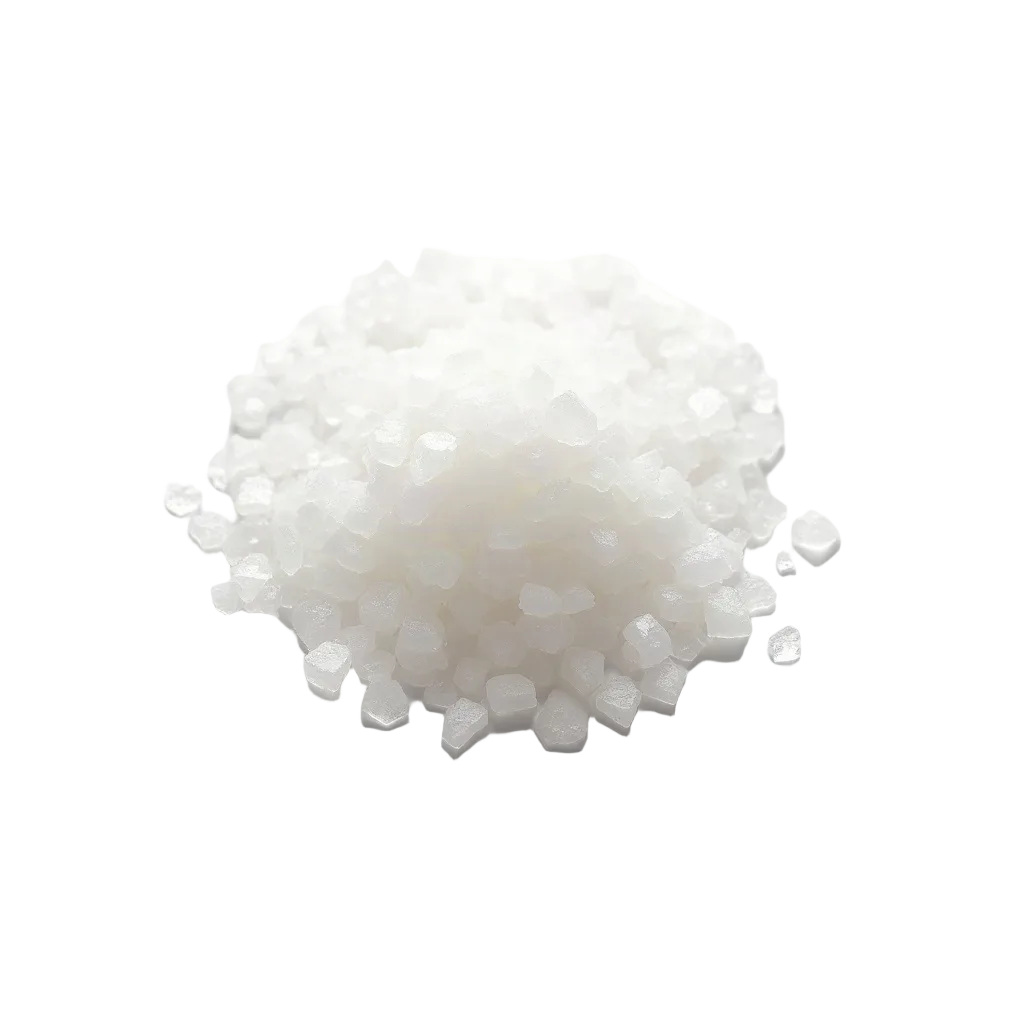 Salt
0.8–1.5% of the weight of the food
Seasoning: it sets the perception and balances the salt.
0.8–1.5% of the weight of the food. Coarse and fine salt do not weigh the same by the spoon, so weigh it.
Salt
0.8–1.5% of the weight of the food
Seasoning: it sets the perception and balances the salt.
0.8–1.5% of the weight of the food. Coarse and fine salt do not weigh the same by the spoon, so weigh it.
What it tastes like
No axis sits clearly above the average: a balanced dish without a sharp character.
This profile is computed rather than measured: the role-weighted average of its ingredients’ taste vectors, shifted by what the cooking does. The thin line is the database average on that axis.
How it is made
-
Soak the wheat and the chickpeas separately overnight and boil them separately.
Why Chickpea skins react to acid and calcium: cooked together with the yoghurt they stay hard. -
Whisk the yoghurt with flour and egg, then temper with the cooking water.
-
Thicken below the boil, add the grains and give it ten more minutes over a low flame.
-
Finish with mint and butter. It is served hot or warm.
Where it comes from
Evliya Çelebi’s 17th-century Seyahatnâme records it as *mastaba aşı*, the earliest known citation. The names Mastuva and Mastava connect it to the Central Asian and Persian mastava family.