
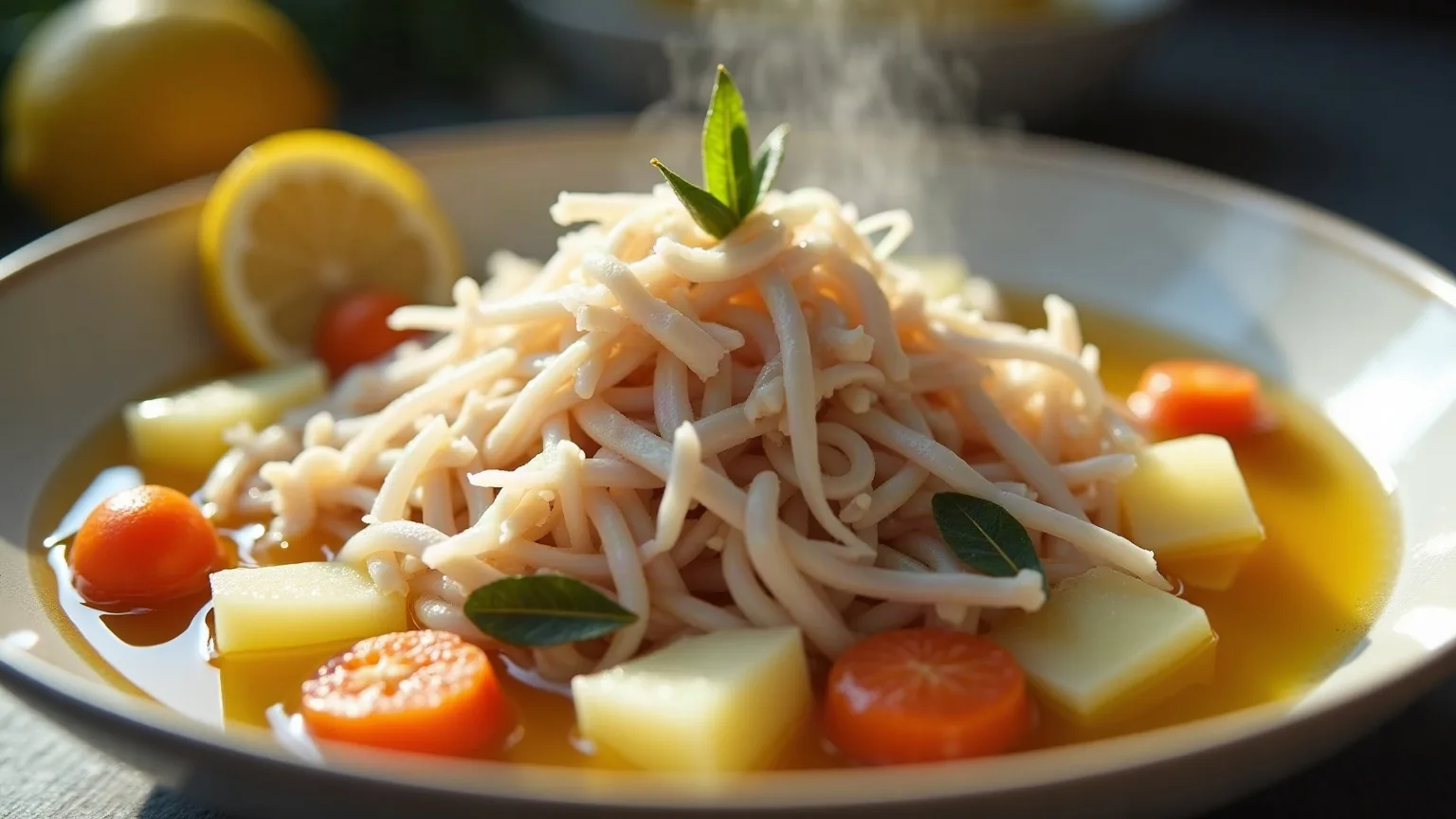
Poached chicken
There is one reason poached chicken comes out dry: the water was boiling. Poached at 80 °C it never does.
Chicken dishes · Turkish · Budget · Weekend batch · Adapts for a toddler · Freezes well
- Preparation
- 10 min
- Cooking
- 35 min
- Resting
- 10 min
- Difficulty
- Easy
- Cost
- Cheap
- Season
- All year
The word "haşlama" suggests boiling, and that is the commonest mistake in the recipe. In boiling water the fibres contract violently and give up their water; at 80 °C the same chicken cooks in the same time while the fibres set gently. The difference is visible on the plate: one is stringy and dry, the other whole and juicy. This is a classic of the sickbed and the baby’s kitchen, and in both texture is everything.
Method
- Start the chicken in cold water.
- Cut the vegetables large.
You will need: A pan with a lid · A thermometer, preferably
-
Put the chicken, onion and bay into cold water and heat it slowly; drop the flame as the first bubbles appear.
Look for A bubble here and there on the surface and no rolling boil.
Why Heating slowly shrinks the difference between the outside and the inside: dropped into hot water the surface sees 100 °C while the middle is still at 20, and that gap is where the dryness comes from.If it went wrong
If it has boiled, turn the heat off, add 100 ml of cold water to drop the temperature: the chicken has lost something, but the rest is recoverable.
Starch gelatinised The granules soaked up water, swelled and burst into a network. It has thickened, and it will firm further as it cools. no way back
-
Hold it at 80–85 °C for twenty-five minutes, adding the carrot and potato for the last fifteen.
Look for A knife into the thickest part should release clear juice.
Why Chicken is safe at 74 °C and in 80 °C water it reaches that gently over twenty-five minutes. The vegetables cook faster and would disintegrate if they went in together.Starch gelatinised The granules soaked up water, swelled and burst into a network. It has thickened, and it will firm further as it cools. no way back
-
Add the salt and pepper for the last ten minutes, then turn the heat off and let the chicken stand in its liquid for ten.
Look for The chicken should stay submerged and covered.
Why Resting in the liquid, the chicken takes some of it back as it cools; lifted out at once it dries in the air. The salt is late because thirty-five minutes of evaporation concentrates the broth.Starch gelatinised The granules soaked up water, swelled and burst into a network. It has thickened, and it will firm further as it cools. no way back
Salt · 0.28% Low. Everything reads flat and nothing steps forward.
This recipe was run through the engine step by step — what goes in when, and at what temperature and for how long. The reactions above come from that run.
peak 82 °C · 47 minutes · engine 1.0.0 · confidence low
What can go wrong here
The meat came out dry and tough⌄
What happened
The meat passed 70 °C. Past that point the muscle fibres contract and wring out their water, while collagen never gets the time to turn into gelatine. It loses moisture and never tenderises.
By the numbers
Beef medium at 57 °C, chicken at 74 °C. Rest it for 10 minutes off the heat; unrested meat leaves its juice on the plate.
Without a thermometer
The palm test: touch thumb to index finger and press the pad below your thumb — that firmness is rare. Middle finger is medium, ring finger is well done. Watch the juice too: pinkish and clear means you are there, running white means you went too far.
After the heat goes off
Warm, with a ladle of its liquid and the vegetables, finished with olive oil and lemon — or with garlic yoghurt beside it.
Three days in the fridge IN ITS LIQUID; lifted out and stored dry it goes hard in a day.
Five minutes at 70 °C in its own liquid. A microwave turns poached chicken to rubber.
Three months with its liquid. Shredded and portioned is the most useful form.
This recipe is already a beginning: the meat goes into salads, sandwiches, rice and börek, and the liquid becomes the base of a soup. One poach is three meals.
A staple of the baby kitchen: from six months, unsalted, with chicken and vegetables mashed together. For 12–36 months lift their share before the salt and pull the meat into strands. It is the best way to cook chicken for a child, because the texture stays soft rather than dry.
- Chicken → Chicken thigh (skin on) Thigh is even more forgiving: thirty minutes at 85 °C, and it does not dry.
- Boiling & poaching The method this recipe rests on
- Chicken What it does in heat, water and acid
- Potato What it does in heat, water and acid
- Bulb onion What it does in heat, water and acid
- Chicken pilaf Similar method, or something that sits on the same table
- Chicken broth soup Similar method, or something that sits on the same table
- Budget Other recipes that answer the same need
- Weekend batch Other recipes that answer the same need
- Adapts for a toddler Other recipes that answer the same need
- Freezes well Other recipes that answer the same need
What it tastes like
No axis sits clearly above the average: a balanced recipe.
This profile is computed rather than measured: the role-weighted average of its ingredients’ taste vectors, shifted by what the cooking does. The thin line is the database average on that axis.
Closest in taste
Not hand-picked: ranked by distance across the eight taste axes.
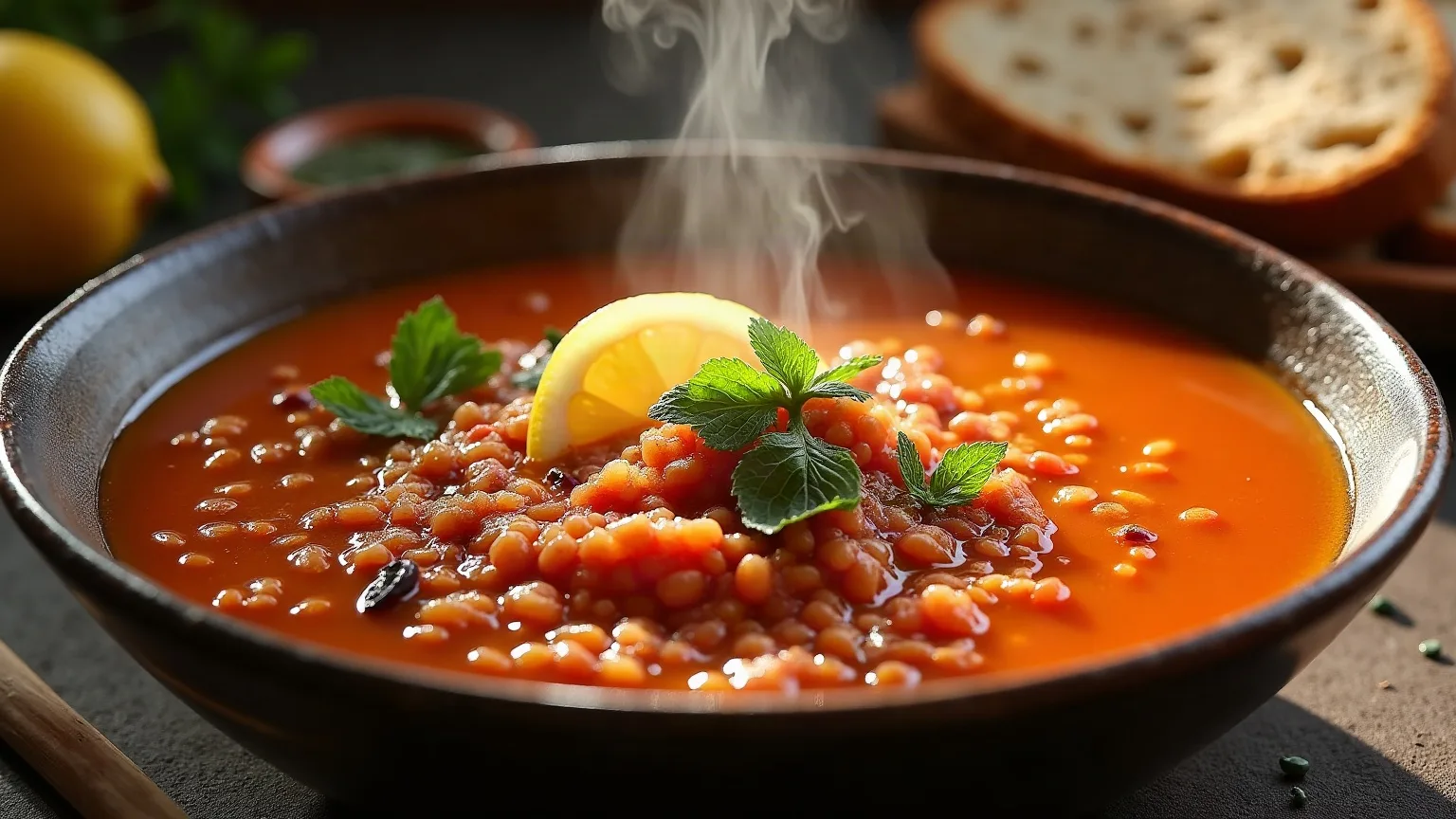
Ezogelin soup
The lentil soup’s cousin, with bulgur, tomato paste and mint. The difference is one step: the paste is fried in the fat.…
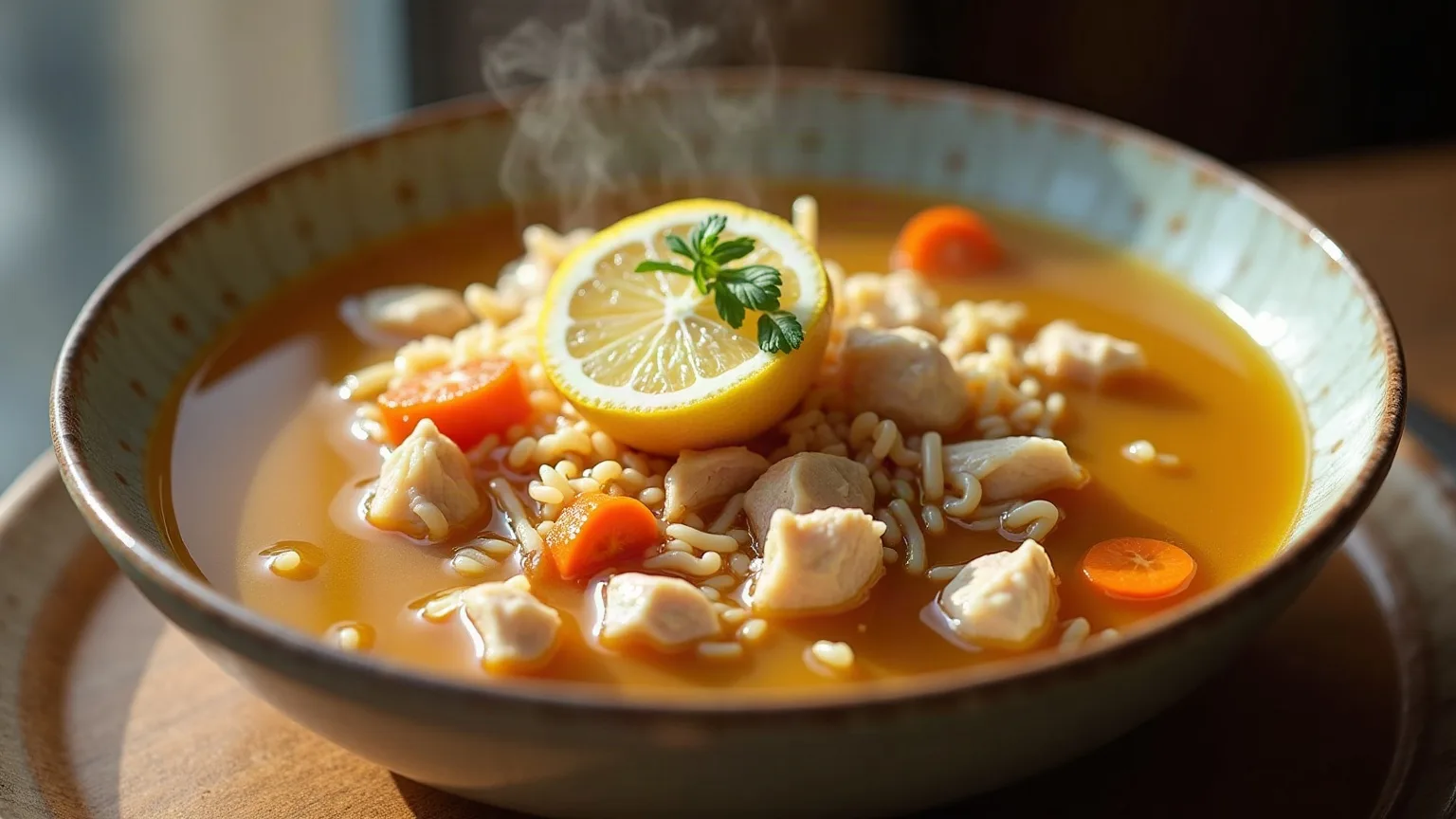
Chicken broth soup
What makes a broth clear is not the ingredients but the temperature: a pan that passes 95 °C guarantees a cloudy one.…
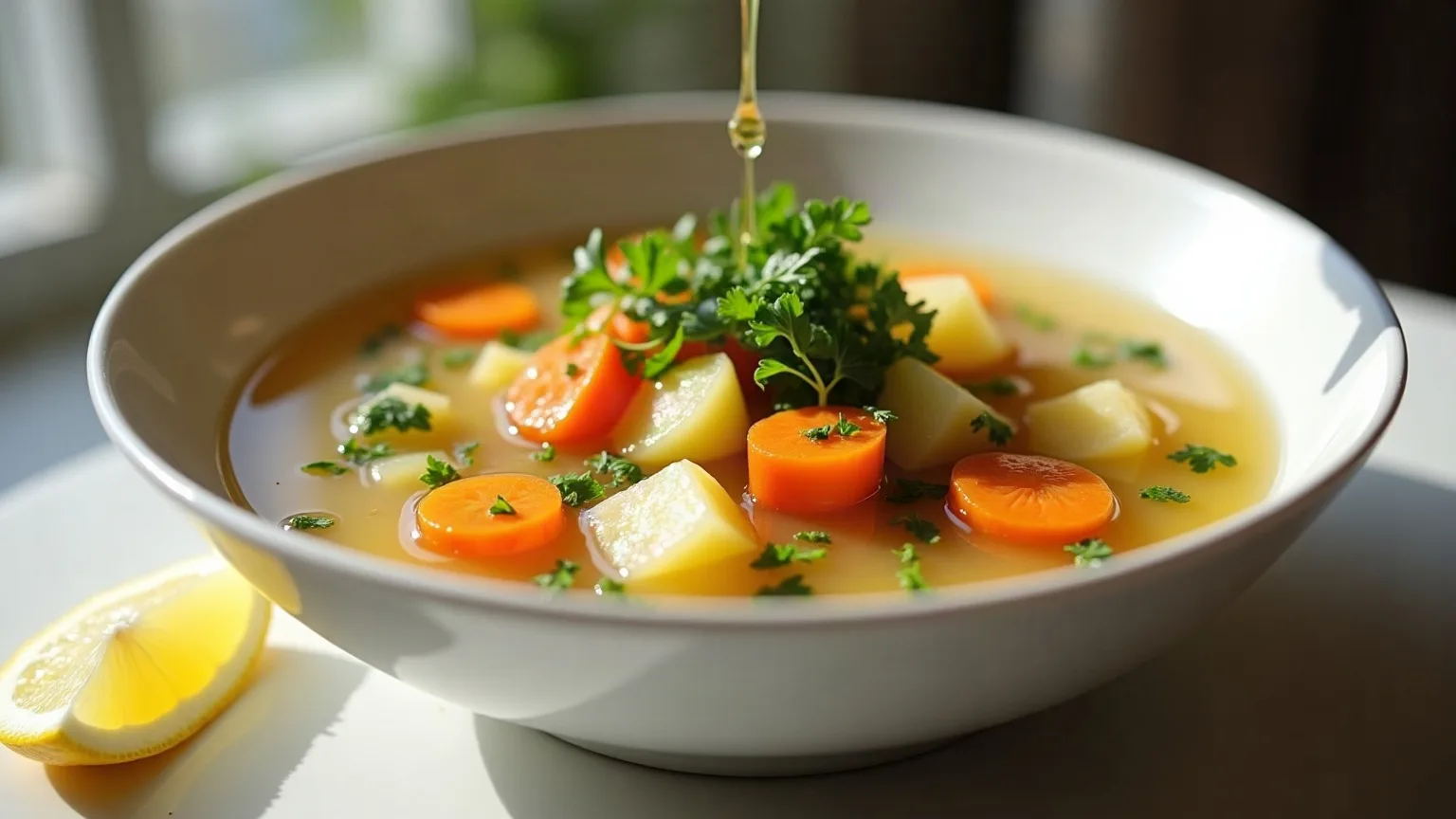
Vegetable soup
Throwing everything in at once is easy and wrong. These vegetables differ twofold in cooking time, and knowing the order…
Broccoli soup
One rule for keeping it green: no lid, and not a minute over eight.…