
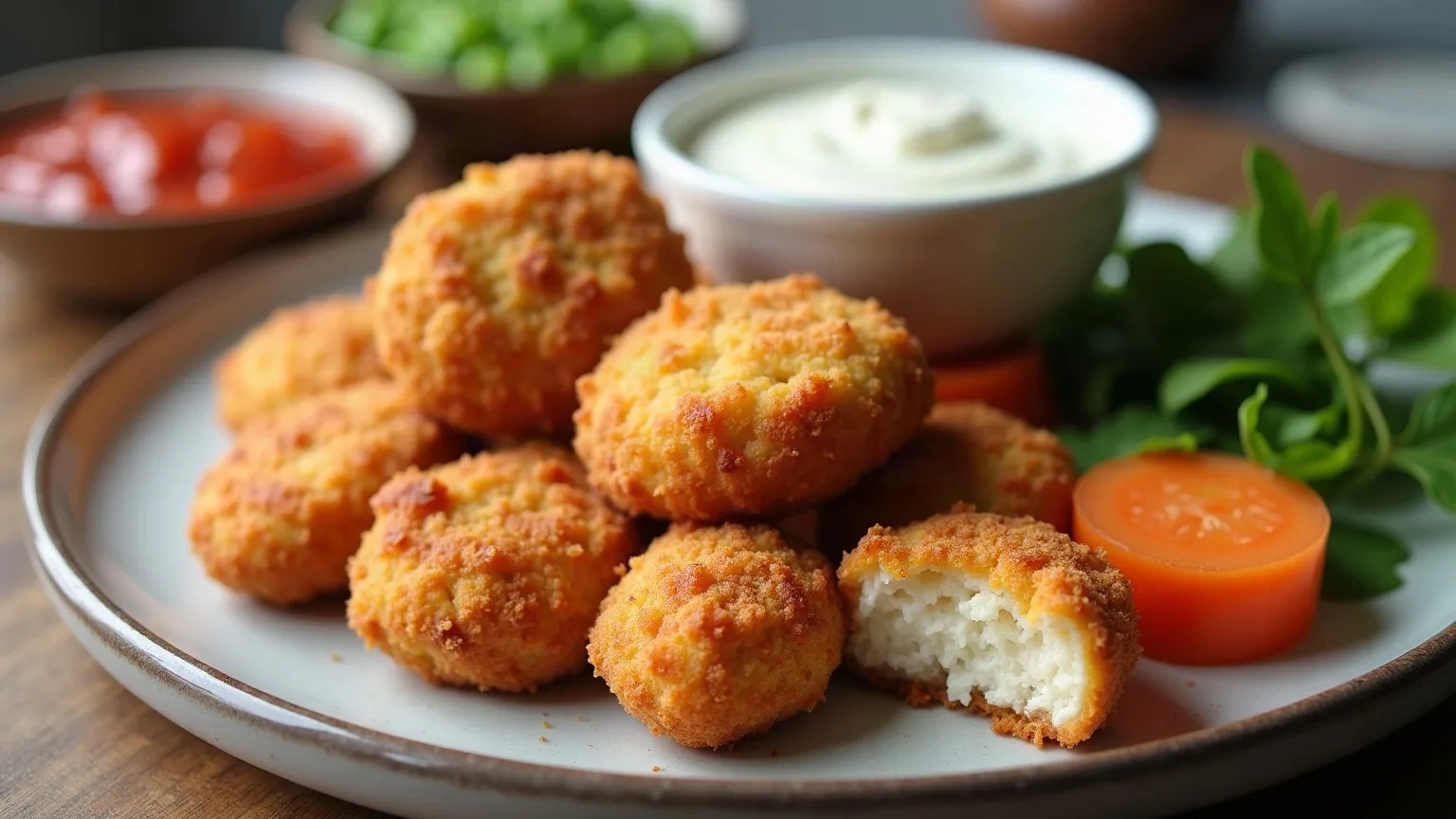
Home-made chicken nuggets
Half the meat in a shop nugget is skin, cartilage and water. At home you know what is in it, and the difference shows up in the salt.
Chicken dishes · International · Snacks for children · School lunchbox · Freezes well · Weekend batch
- Preparation
- 25 min
- Cooking
- 18 min
- Resting
- 30 min
- Difficulty
- Needs attention
- Cost
- Cheap
- Season
- All year
The most argued-over children’s food and one of the easiest to make at home. A shop nugget carries roughly 1.2 to 1.6 g of salt per 100 g; at home that comes down to about 0.4, and the difference is a third of a child’s daily allowance. The technical point is how far the meat is processed: over-blitzed it turns to a paste with a rubbery bite, under-blitzed it falls apart.
Method
- Cut the chicken into large cubes and give it twenty minutes in the freezer: cold meat does not turn to paste in a processor.
- Set out three plates: flour, egg, crumb.
You will need: A food processor · A tray with baking paper · Three plates
-
Blitz the chilled chicken in FOUR OR FIVE short pulses: it should look like mince rather than paste.
Look for You should still see pieces of meat two or three millimetres across.
Why A long blitz destroys the muscle fibres completely and the dissolved protein sets into a tight gel — which eats like rubber. Short pulses cut the fibres coarsely and the nugget stays soft inside.If it went wrong
If it has gone to paste, stir in 50 g of roughly chopped chicken by hand: some of the texture comes back.
-
Mix in the bread soaked in milk and squeezed, the salt and the red pepper by hand, and rest it thirty minutes in the fridge.
Look for It should take a shape in the hand without crumbling.
Why The bread and milk hold moisture in the mixture and stop it drying in the oven, and the rest lets the dissolved protein gel in the cold and bind the nugget.Starch still asleep The granules are just floating there doing nothing. No body arrives before 62 °C.
Salt · 0.69% Right in the window. Flavours sharpen, bitterness retreats, water is held.
-
Shape flat nuggets and coat them in flour, then egg, then crumb.
Look for They want to be 1 cm thick: any thicker and the middle will not cook in eighteen minutes.
Why The three layers are needed in the oven too: flour holds the moisture, egg glues, crumb gives the surface that browns.Starch still asleep The granules are just floating there doing nothing. No body arrives before 62 °C.
A gluten web is forming Gliadin and glutenin hydrated into an elastic net. This is what will hold the gas. no way back
Salt · 0.47% Low. Everything reads flat and nothing steps forward.
-
Lay them on the tray, drizzle the oil over and bake eighteen minutes at 200 °C, turning them once.
Look for Both faces golden, and the nugget springing back when pressed.
Why The oil stands in for frying: where the crumb meets fat it reaches 180 °C and browns, and where it stays dry it only dries. Turning them lets both faces meet the oil.Starch gelatinised The granules soaked up water, swelled and burst into a network. It has thickened, and it will firm further as it cools. no way back
A gluten web is forming Gliadin and glutenin hydrated into an elastic net. This is what will hold the gas. no way back
The egg is setting Too hot. The protein net over-tightened and pushed the water out: curdling and sponge. no way back
Maillard is running Amino acids have met reducing sugars. The crust, the roasted flavour and that smell all come from here. no way back
Salt · 0.45% Low. Everything reads flat and nothing steps forward.
Stay under 82 °C. Lower the heat or move to a bain-marie — a split custard never comes back.
This recipe was run through the engine step by step — what goes in when, and at what temperature and for how long. The reactions above come from that run.
Not simulated: Breadcrumbs. The engine currently measures the chemistry of sixteen ingredients; the others count as weight in the pot but their composition does not enter the arithmetic. That is not "nothing happens", it is "nobody looked". In this recipe about 87% of the weight can be characterised that way, which makes every share above a lower bound.
peak 200 °C · 63 minutes · engine 1.0.0 · confidence low
After the heat goes off
Hot, with a yoghurt dip or a home-made ketchup, and boiled vegetables beside them.
Three days in the fridge, and cold nuggets are good in a lunchbox.
Eight minutes at 200 °C; a microwave softens the coating.
Coated and unbaked, frozen on a tray then bagged, they keep three months and go straight into the oven with six minutes added. This is how the recipe is really used.
Leftovers get chopped into pasta, rice or a sandwich.
The recipe was written for children. For 12–36 months you can leave the salt out entirely, since the bread and milk already give flavour, and shape them as finger strips. For a baby under one, without salt or pepper, they suit from eight months.
- Chicken → Fish White fish works and drops the time to fourteen minutes, because fish protein sets at a lower temperature.
- The oven The method this recipe rests on
- Chicken What it does in heat, water and acid
- Breadcrumbs What it does in heat, water and acid
- Egg What it does in heat, water and acid
- Chicken schnitzel Similar method, or something that sits on the same table
- Kadınbudu köfte Similar method, or something that sits on the same table
- Pan-fried meatballs Similar method, or something that sits on the same table
- Snacks for children Other recipes that answer the same need
- School lunchbox Other recipes that answer the same need
- Freezes well Other recipes that answer the same need
- Weekend batch Other recipes that answer the same need
What it tastes like
No axis sits clearly above the average: a balanced recipe.
This profile is computed rather than measured: the role-weighted average of its ingredients’ taste vectors, shifted by what the cooking does. The thin line is the database average on that axis.
Closest in taste
Not hand-picked: ranked by distance across the eight taste axes.
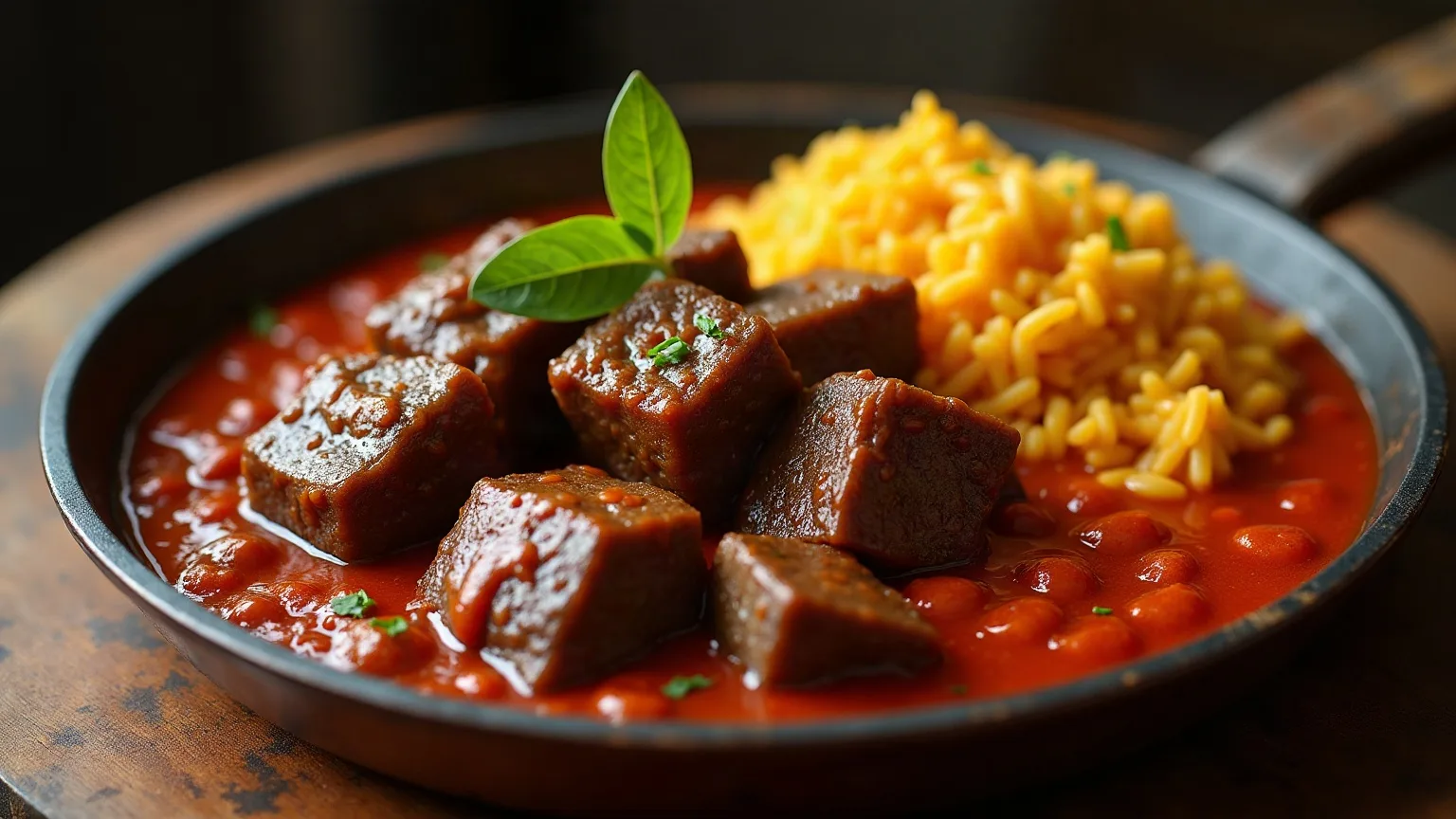
Taş kebabı
It is called a kebab and there is no fire in it: two hours in a covered pan in its own juice. Collagen becoming gelatin …
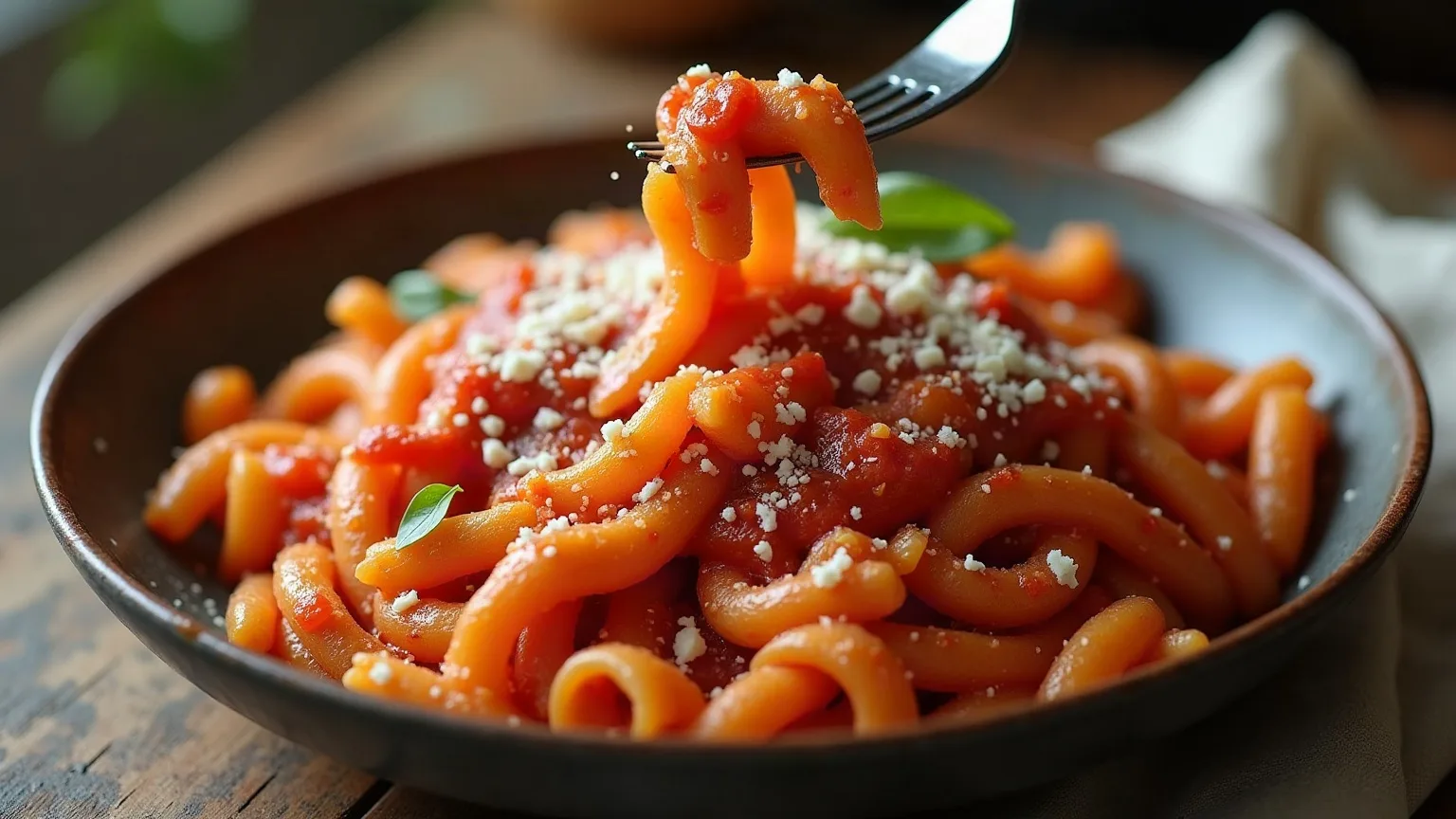
Pasta with tomato paste
There is no sauce until the paste has been fried: raw paste stays sour and metallic.…
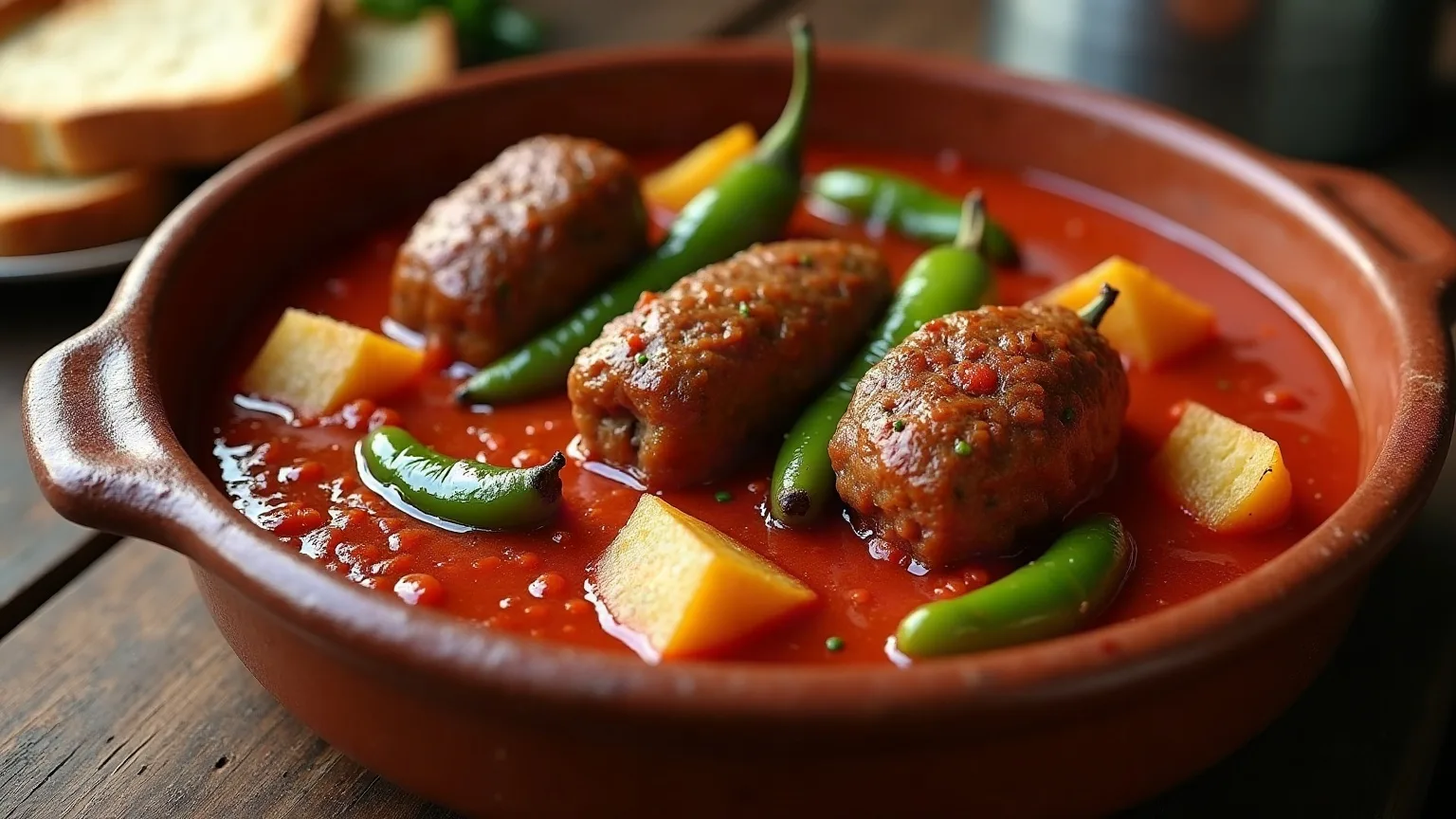
İzmir meatballs
Searing the meatballs and then baking them in sauce is two dishes in one: the crust stays outside while the inside drink…
Vegetable gratin
A lump-free béchamel is not a knack but a question of temperature difference: hot milk into hot roux, or cold into cold.…