
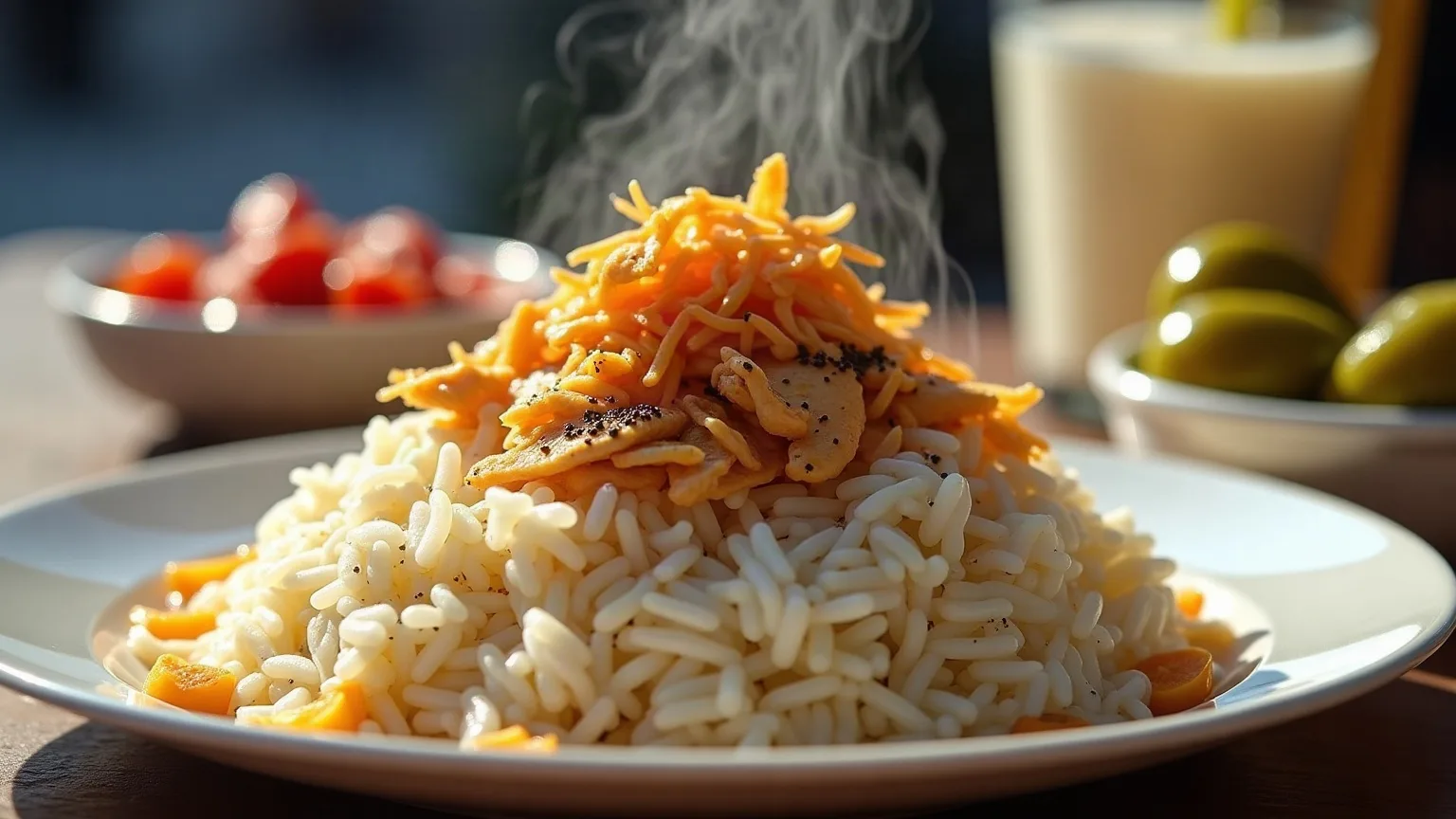
Chicken pilaf
When the water for the rice is the water the chicken cooked in, the dish becomes something else. Made with plain water, the same recipe is only rice.
Chicken dishes · Marmara · Budget · One pot · Uses leftovers · Weekend batch
- Preparation
- 15 min
- Cooking
- 55 min
- Resting
- 15 min
- Difficulty
- Needs attention
- Cost
- Cheap
- Season
- All year
A street food of Istanbul and at the same time a recipe for using something up: the water the chicken boiled in goes into the rice and the meat goes on top. What the rice takes up with that liquid is gelatin, dissolved protein and fat — three things that are simply absent from rice made with water. Pouring the broth away is pouring half this dish away.
Method
- Soak the rice twenty minutes in warm salted water, then rinse it until the water runs clear.
- Start the chicken in cold water: dropped into hot water it gives the broth nothing.
You will need: A pan · A sieve
-
Put the chicken in cold water with the onion and bay, hold it below the boil for forty minutes and skim the foam.
Look for A bubble here and there on the surface, and the meat coming easily off the bone.
Why Boiling clouds the broth and contracts the chicken fibres. At 90–95 °C you get both a clear broth and tender meat.Starch gelatinised The granules soaked up water, swelled and burst into a network. It has thickened, and it will firm further as it cools. no way back
-
Lift the chicken out, strain the broth and measure out 600 ml. Shred the meat.
Look for The strained broth should be golden and clear.
Why The rice-to-liquid ratio is about 1 to 1.7 by volume, so 600 ml is right for 350 g. Guessing the water is the commonest mistake in a pilaf.Starch gelatinised The granules soaked up water, swelled and burst into a network. It has thickened, and it will firm further as it cools. no way back
-
Melt the butter in the pan and toast the rinsed rice for three minutes, until the grains turn glassy.
Look for The grains should go translucent and move separately in the pan.
Why Toasting coats each grain in fat and slows the starch leaching out; that is the second condition for separate grains, after the rinsing.Starch gelatinised The granules soaked up water, swelled and burst into a network. It has thickened, and it will firm further as it cools. no way back
-
Add the measured HOT broth with the salt and pepper, stir once, cover and cook thirteen minutes on a low flame.
Look for At thirteen minutes lift the lid: no liquid on the surface and small craters showing in the rice.
Why Cold liquid shocks the rice and gels it from outside. One stir distributes the salt; more releases starch and turns the pilaf to porridge.If it went wrong
Hard rice with no liquid left: add 50 ml of hot broth and five covered minutes. Liquid left but the rice done: take the lid off and drive it off over two minutes of high heat.
Starch gelatinised The granules soaked up water, swelled and burst into a network. It has thickened, and it will firm further as it cools. no way back
Salt · 0.36% Low. Everything reads flat and nothing steps forward.
-
Take it off, spread the shredded chicken over it, put a cloth under the lid and let it stand fifteen minutes.
Look for Lifting the lid, the rice should have risen and the grains stand apart.
Why The rest redistributes the steam through the grains, and the cloth absorbs the condensation so it does not drip back onto the rice. The chicken warms through in the same steam.Starch gelatinised The granules soaked up water, swelled and burst into a network. It has thickened, and it will firm further as it cools. no way back
Salt · 0.36% Low. Everything reads flat and nothing steps forward.
This recipe was run through the engine step by step — what goes in when, and at what temperature and for how long. The reactions above come from that run.
peak 150 °C · 76 minutes · engine 1.0.0 · confidence low
What can go wrong here
The rice turned to mush⌄
What happened
Too much water gelatinised the starch, the granules burst and glued together. Stirring only pushed more starch out.
By the numbers
Rinse the rice until the water runs clear. One part rice to one and a half parts water. Do not lift the lid or stir while it steams.
Without a thermometer
No measuring cup? Use your knuckle: rest a finger on the levelled rice and let the water come up to the first joint. When you leave it to steam, trap a clean cloth under the lid so condensation cannot drip back onto the grains.
After the heat goes off
Hot, with the chicken on top, and pickles and ayran beside it: that is the street version.
Three days in the fridge. Rice hardens as it cools, because the starch retrogrades, and heat reverses most of it.
Six minutes covered on a low flame with two tablespoons of water: the steam opens the rice again.
Two months. Rice freezes well, and steaming is the best way back.
The next day it goes into a pan with an egg, or becomes the filling for stuffed peppers and tomatoes.
Very suitable from twelve months. For 12–36 months shred the chicken finely and check for bone, and lift their share before the salt. For a baby under one, a small separate portion can be made with unsalted broth.
- Rice → Orzo pasta Orzo works: the time drops to nine minutes and the liquid ratio to 1 to 1.5.
- Boiling & poaching The method this recipe rests on
- Chicken What it does in heat, water and acid
- Rice What it does in heat, water and acid
- Bulb onion What it does in heat, water and acid
- Buttered pilaf Similar method, or something that sits on the same table
- Poached chicken Similar method, or something that sits on the same table
- Chicken casserole Similar method, or something that sits on the same table
- Budget Other recipes that answer the same need
- One pot Other recipes that answer the same need
- Uses leftovers Other recipes that answer the same need
- Weekend batch Other recipes that answer the same need
What it tastes like
No axis sits clearly above the average: a balanced recipe.
This profile is computed rather than measured: the role-weighted average of its ingredients’ taste vectors, shifted by what the cooking does. The thin line is the database average on that axis.
Closest in taste
Not hand-picked: ranked by distance across the eight taste axes.
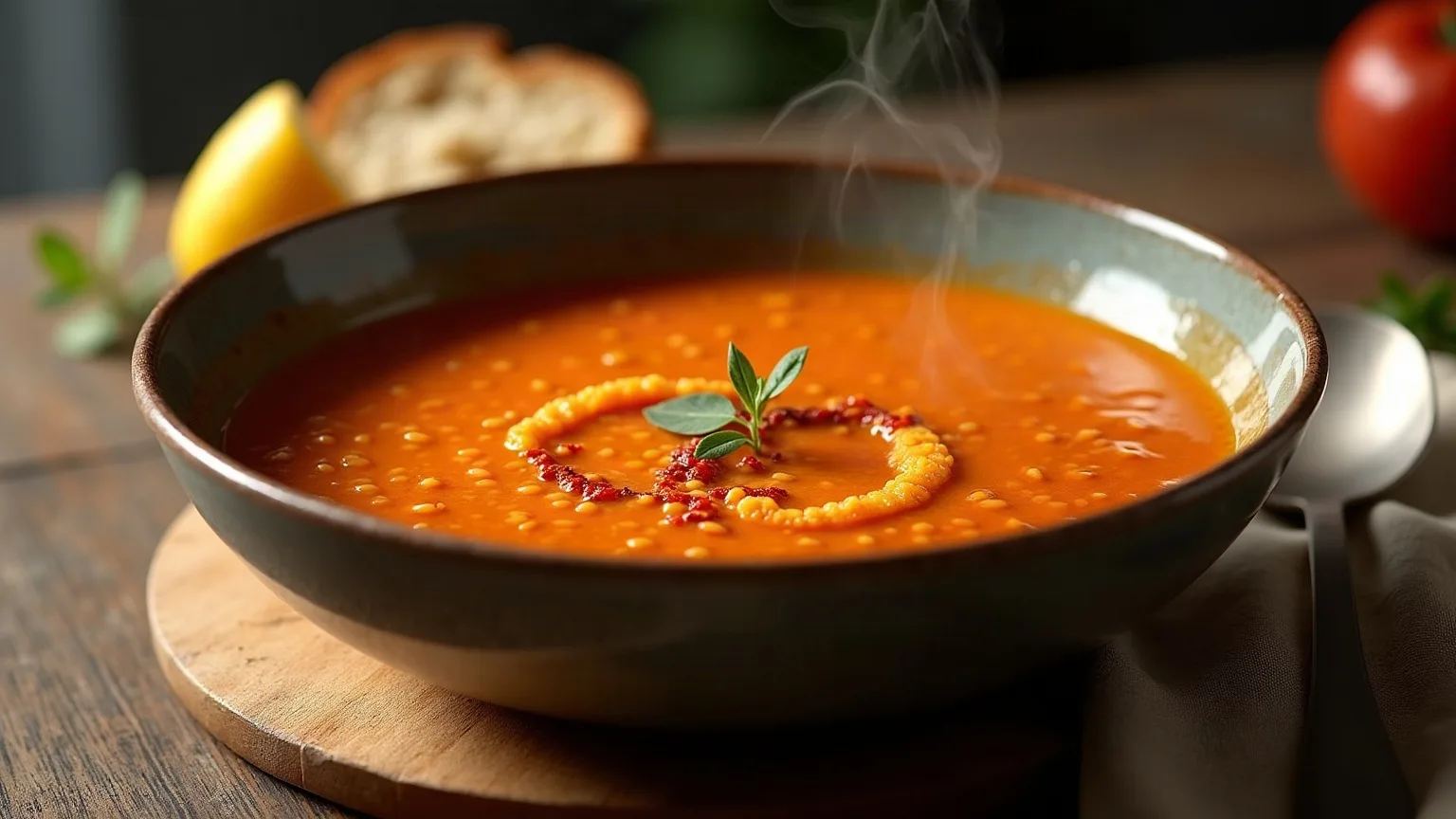
Red lentil soup
Turkey’s default soup. Four ingredients, thirty-five minutes and one rule: the lemon is squeezed at the table.…
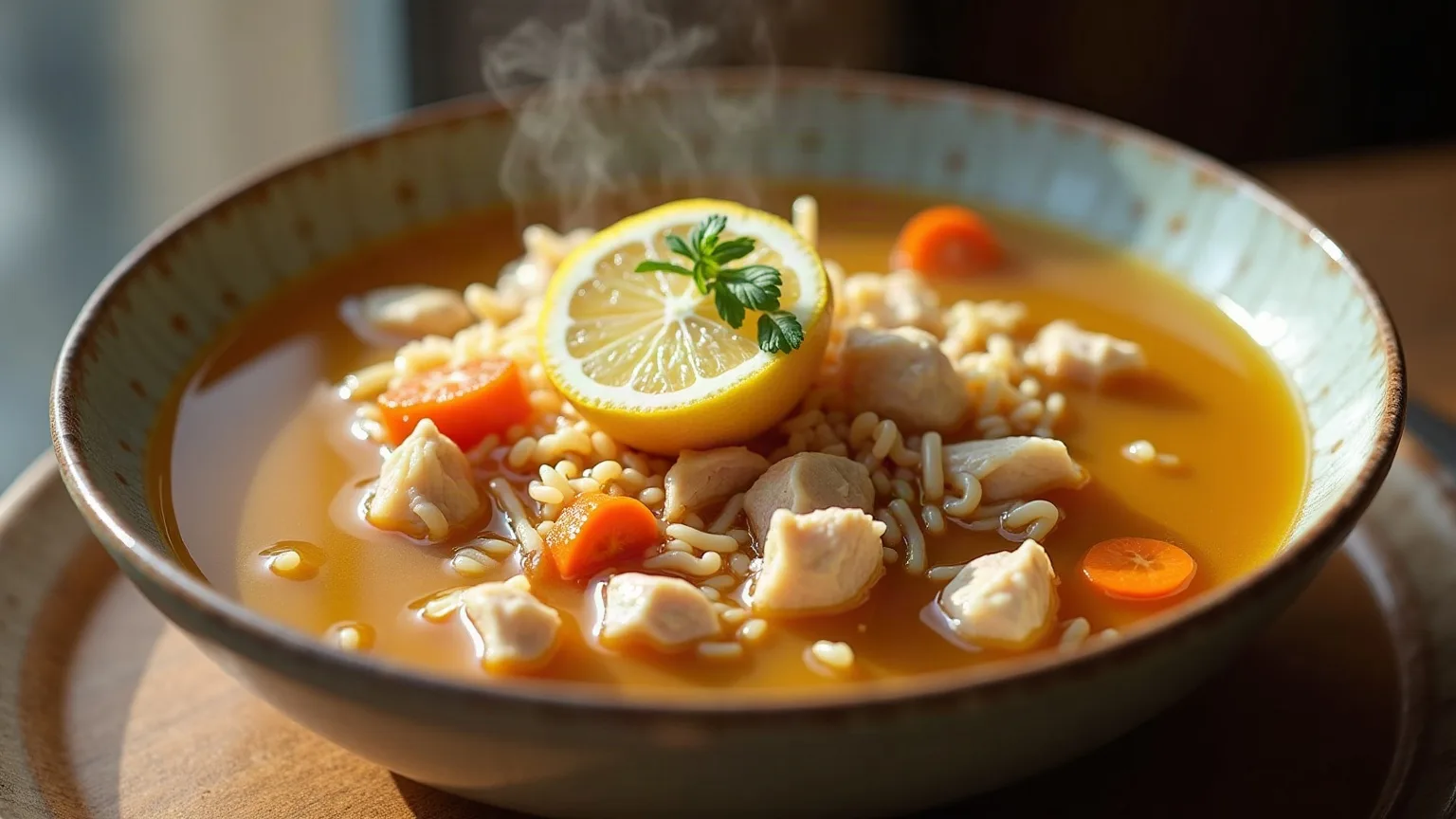
Chicken broth soup
What makes a broth clear is not the ingredients but the temperature: a pan that passes 95 °C guarantees a cloudy one.…
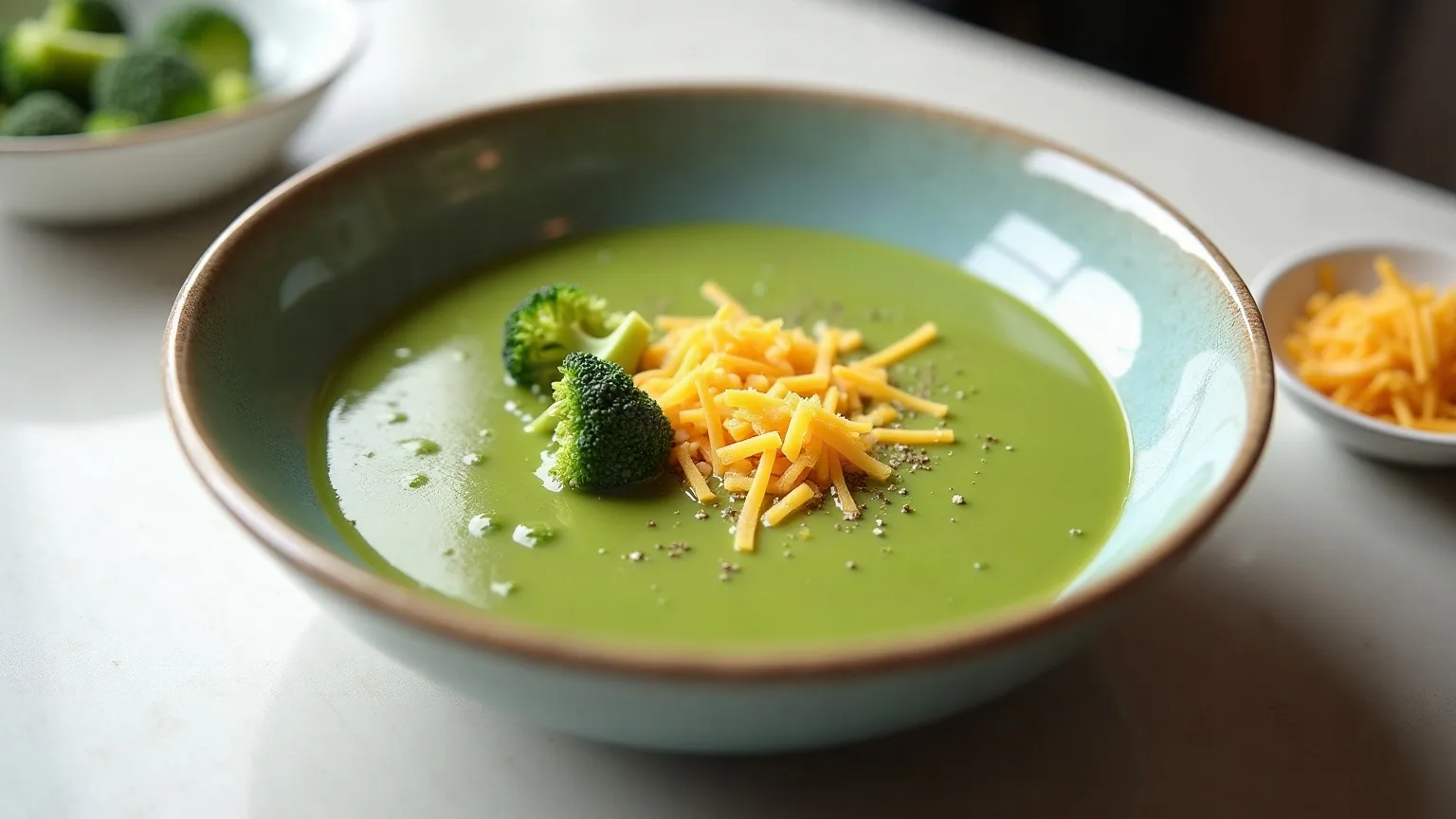
Broccoli soup
One rule for keeping it green: no lid, and not a minute over eight.…
Ezogelin soup
The lentil soup’s cousin, with bulgur, tomato paste and mint. The difference is one step: the paste is fried in the fat.…