
Cabbage stew
The smell of cabbage comes from long cooking. Kept under forty minutes, it never develops.
Vegetable dishes · Black Sea · Budget · One pot · Seasonal · Freezes well
- Preparation
- 15 min
- Cooking
- 40 min
- Difficulty
- Easy
- Cost
- Very cheap
- Season
- Winter
Kapuska takes its name from the Slavic kapusta and is the winter dish of the Black Sea and Thrace. Cabbage’s sulphur compounds break down with heat and the products accumulate with time: up to forty minutes it is sweet and soft, past sixty it develops that familiar sharpness. The secret of a kapuska is not long cooking but stopping early.
Method
- Shred the cabbage finely: a thick piece will not cook in forty minutes.
- Take the mince out of the fridge.
You will need: A large pan with a lid
-
Soften the onion in the oil for six minutes, add the mince and cook eight until its water has gone.
Look for The grains of mince separating and browning.
Why If the paste goes in before the mince’s water has gone it dissolves rather than fries, and the dish stays sour.Starch gelatinised The granules soaked up water, swelled and burst into a network. It has thickened, and it will firm further as it cools. no way back
Maillard is running Amino acids have met reducing sugars. The crust, the roasted flavour and that smell all come from here. no way back
Frying dynamics Surface water is flashing to steam and pushing outward — that is the shield keeping the oil out. no way back
-
Fry the paste for a minute, add the cabbage and turn it for five.
Look for It should come down to about half its volume.
Why Turned briefly in fat the cabbage collapses enough to fit the pan, and its surface is coated so it releases water more slowly.Starch gelatinised The granules soaked up water, swelled and burst into a network. It has thickened, and it will firm further as it cools. no way back
-
Add the rice, hot water, salt and chilli; cover and cook TWENTY-FIVE MINUTES on a low flame. No longer.
Look for The cabbage soft but its shreds still distinguishable, and the rice swollen.
Why Cabbage glucosinolates break down markedly past forty minutes and produce the sulphurous smell. Twenty-five minutes is enough to soften it and stays under that line.If it went wrong
Still firm: eight minutes more, but do not pass forty. If it stays firm the shreds were cut too thick — cut finer next time.
Starch gelatinised The granules soaked up water, swelled and burst into a network. It has thickened, and it will firm further as it cools. no way back
Salt · 0.42% Low. Everything reads flat and nothing steps forward.
This recipe was run through the engine step by step — what goes in when, and at what temperature and for how long. The reactions above come from that run.
peak 170 °C · 45 minutes · engine 1.0.0 · confidence low
After the heat goes off
Hot with bread, and chilli butter over it for whoever wants it.
Three days in the fridge. The cabbage gives a little more of its smell on the second day, so cover it tightly.
Six minutes on a low flame with a little water.
Three months; cabbage freezes well.
Into a pan with eggs the next day, or a börek filling.
Suitable from twelve months: soft and sweet. For 12–36 months leave the chilli out, shred the cabbage very fine and lift their share before the salt. Because cabbage can cause wind, start a baby under one on small portions.
- Beef mince (15% fat) → Chickpea Cooked chickpeas make it vegan; add them for the last ten minutes.
- Boiling & poaching The method this recipe rests on
- White cabbage What it does in heat, water and acid
- Beef mince (15% fat) What it does in heat, water and acid
- Bulb onion What it does in heat, water and acid
- Türlü Similar method, or something that sits on the same table
- Spinach with rice Similar method, or something that sits on the same table
- Lamb and pea stew Similar method, or something that sits on the same table
- Budget Other recipes that answer the same need
- One pot Other recipes that answer the same need
- Seasonal Other recipes that answer the same need
- Freezes well Other recipes that answer the same need
What it tastes like
No axis sits clearly above the average: a balanced recipe.
This profile is computed rather than measured: the role-weighted average of its ingredients’ taste vectors, shifted by what the cooking does. The thin line is the database average on that axis.
Closest in taste
Not hand-picked: ranked by distance across the eight taste axes.
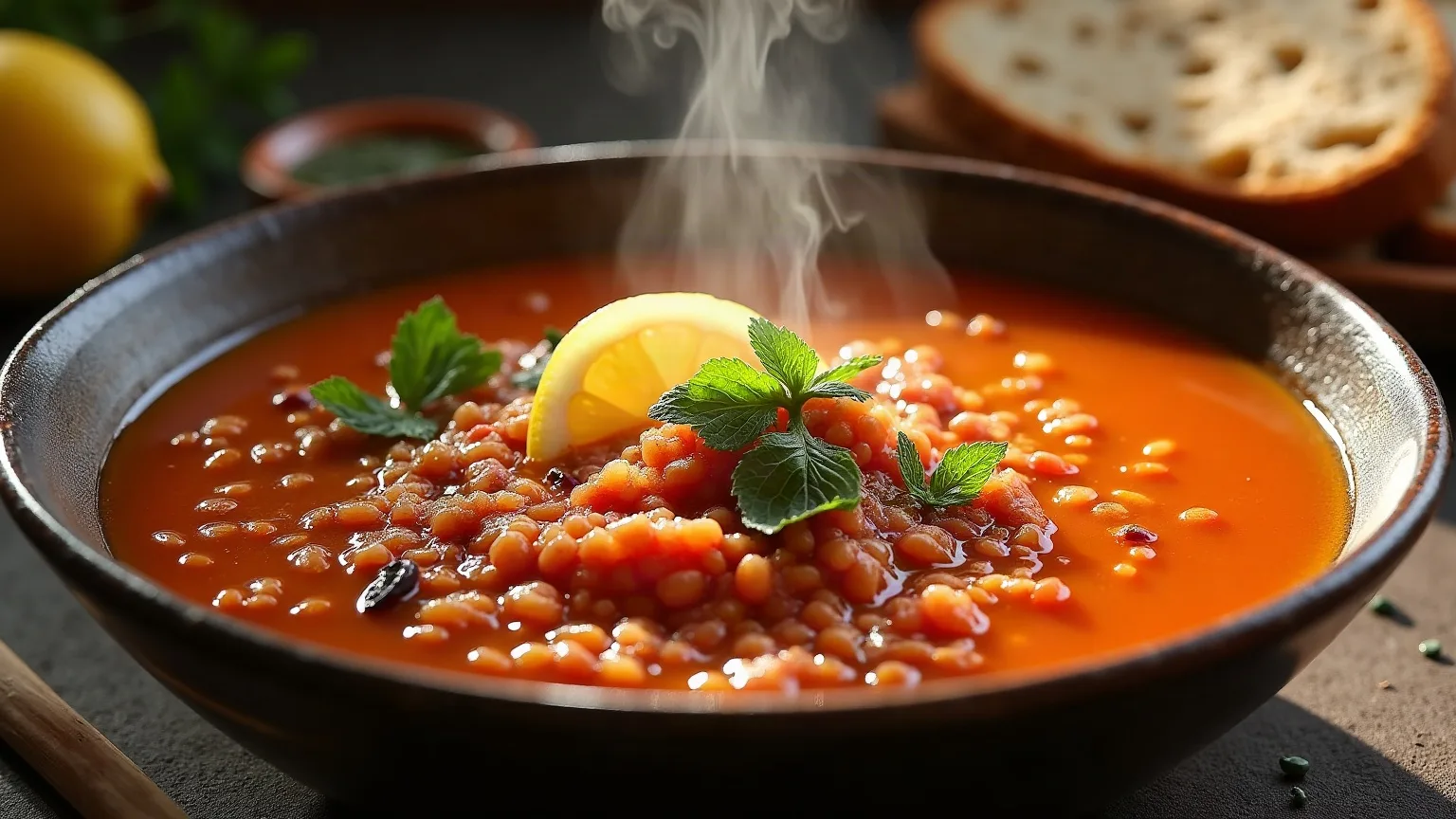
Ezogelin soup
The lentil soup’s cousin, with bulgur, tomato paste and mint. The difference is one step: the paste is fried in the fat.…
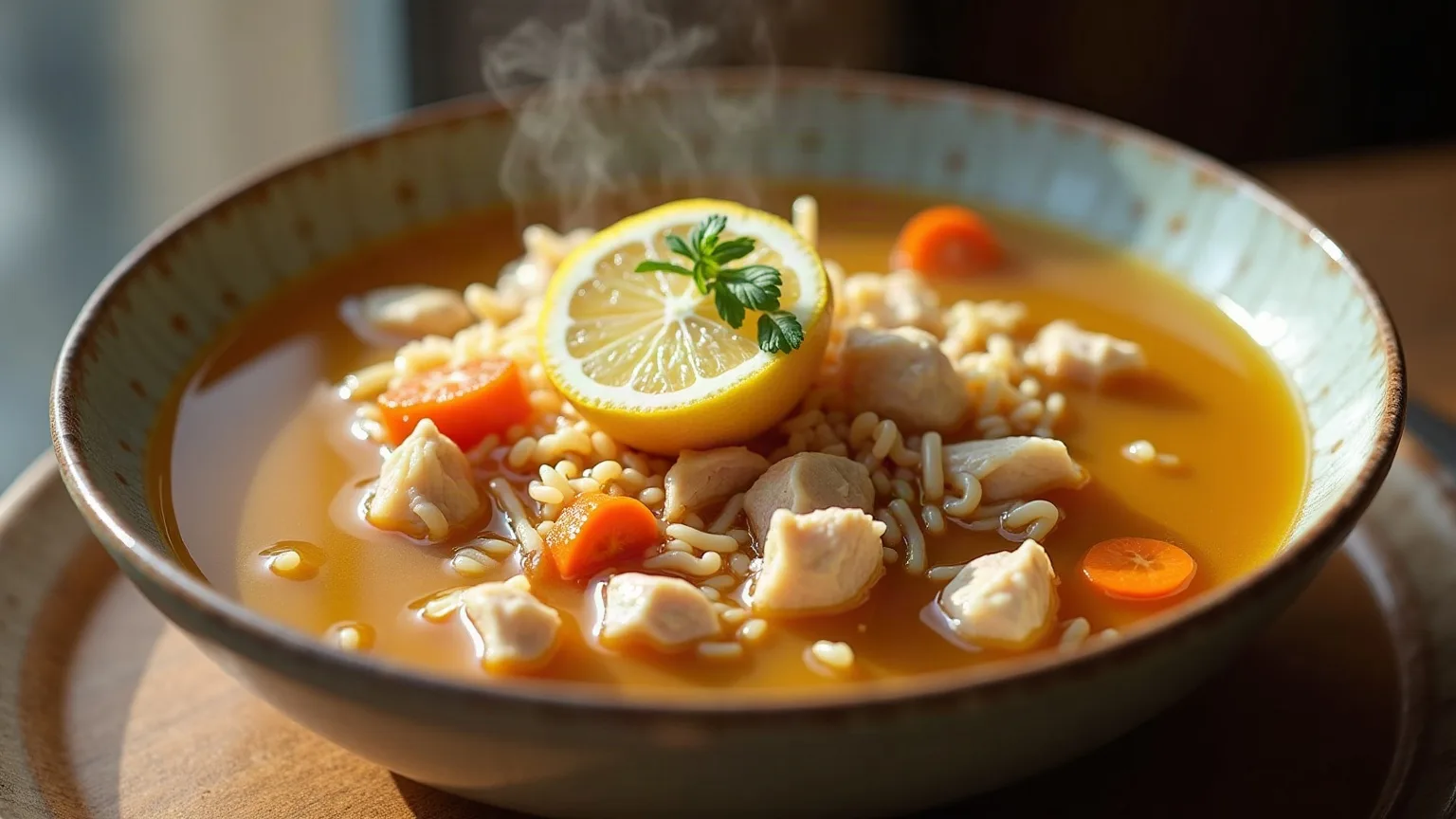
Chicken broth soup
What makes a broth clear is not the ingredients but the temperature: a pan that passes 95 °C guarantees a cloudy one.…
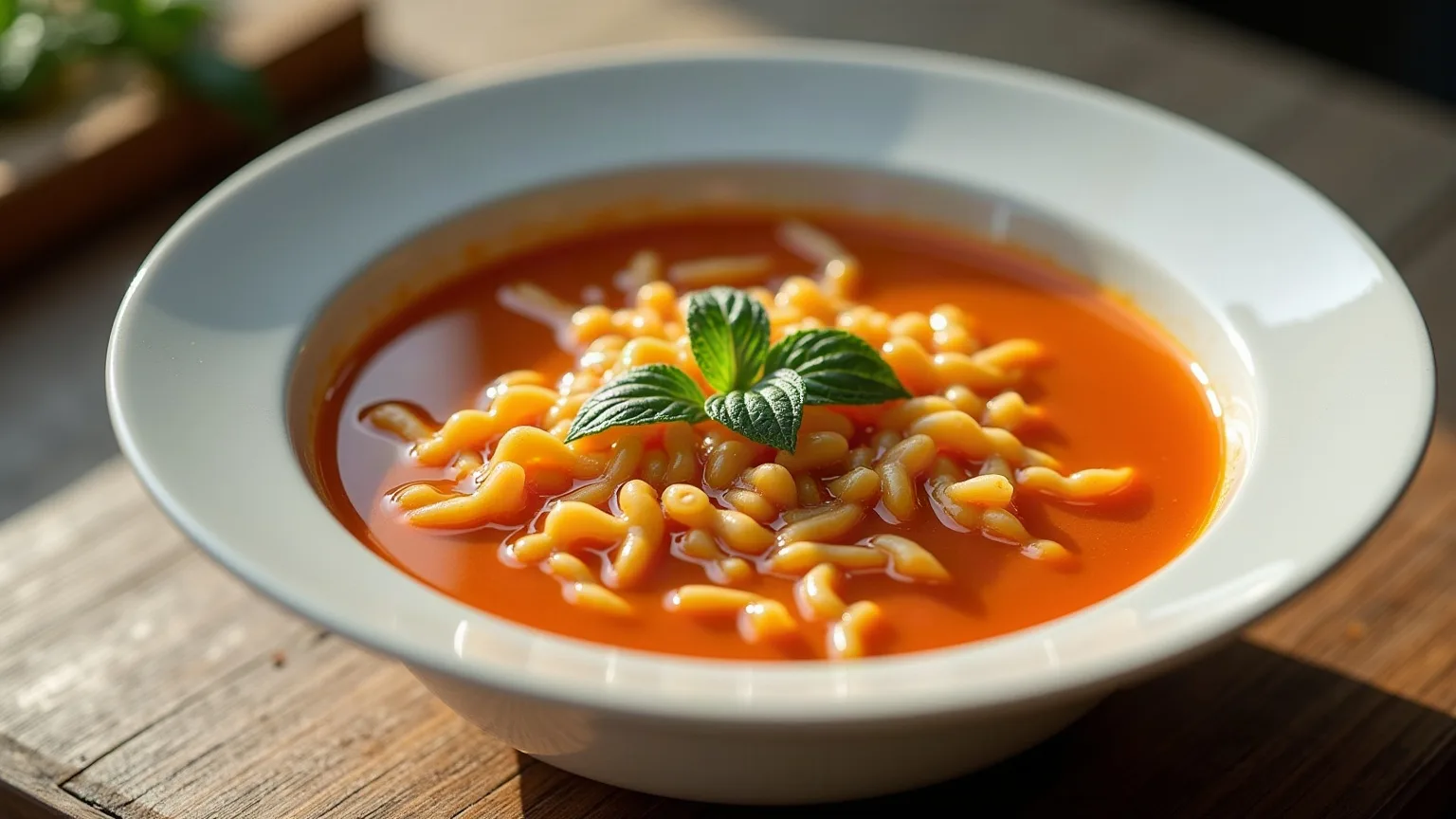
Vermicelli soup
A childhood soup and a fifteen-minute rescue. Toasting the vermicelli is the whole recipe.…
Analı kızlı
The big stuffed dumplings are the mothers, the small plain ones the daughters. Both are bulgur, both cook in the same pa…