
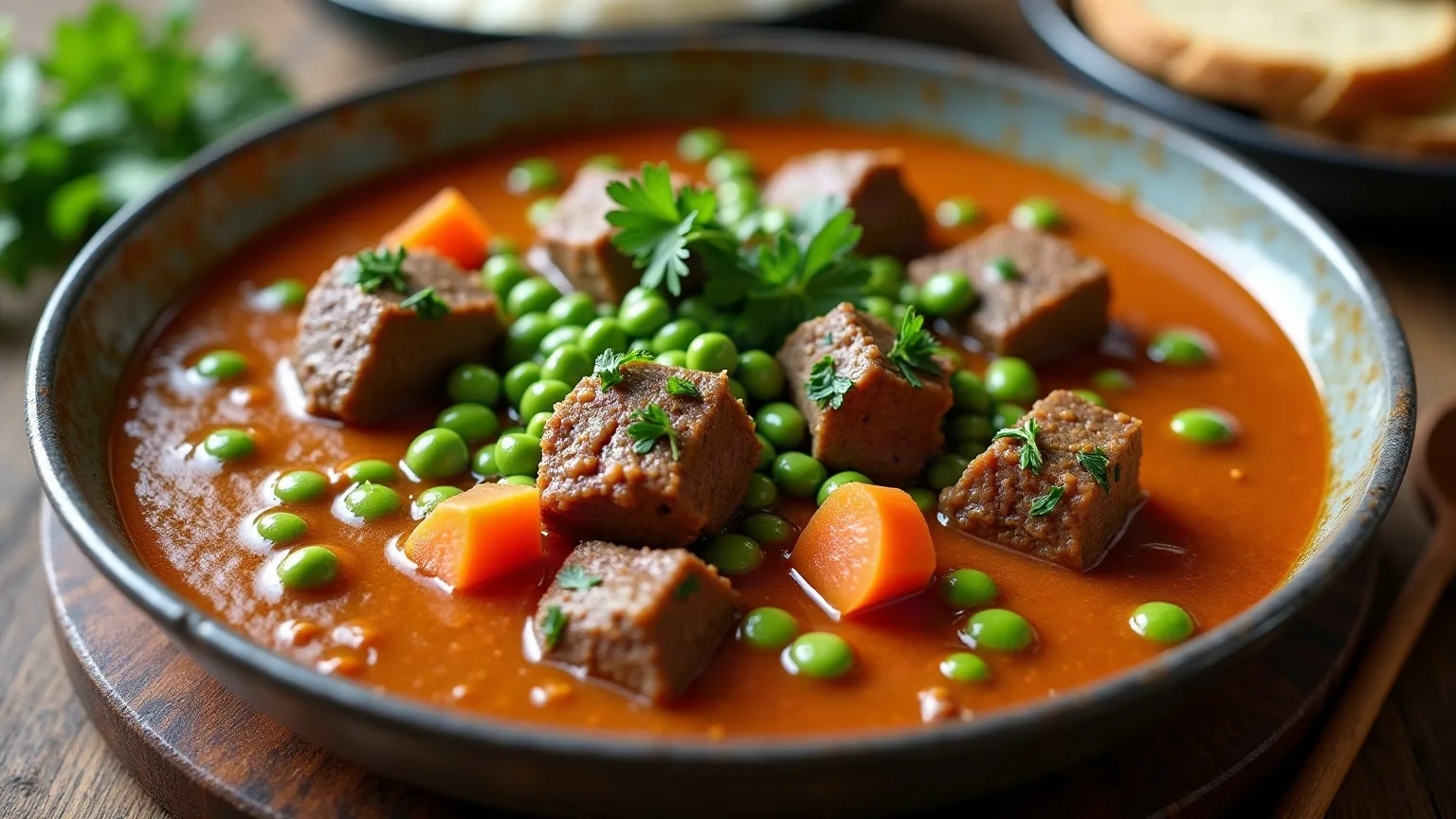
Lamb and pea stew
The peas go in last. Boiled with the meat from the start they lose both their colour and their texture.
Meat dishes · Turkish · One pot · Seasonal · Freezes well
- Preparation
- 15 min
- Cooking
- 100 min
- Difficulty
- Needs attention
- Cost
- Middling
- Season
- Spring
The common rule of meat-and-vegetable dishes is at its most visible here: the meat’s time is not the vegetable’s. Peas cook in eight minutes and lamb in ninety. Put in together, the peas cook for ninety and lose both their chlorophyll and their cell structure — what is left is grey and floury. The separate timing is a requirement rather than a refinement.
Method
- Pat the meat dry.
- Shell fresh peas if you are using them; frozen peas go in without thawing.
You will need: A pan with a lid
-
Sear the meat in the butter in batches, then add the onion and turn it for six minutes.
Look for A brown layer should build on the base of the pan.
Why The searing lays the flavour base for the ninety minutes that follow; without it the dish stays pale.Starch gelatinised The granules soaked up water, swelled and burst into a network. It has thickened, and it will firm further as it cools. no way back
Maillard is running Amino acids have met reducing sugars. The crust, the roasted flavour and that smell all come from here. no way back
Frying dynamics Surface water is flashing to steam and pushing outward — that is the shield keeping the oil out. no way back
-
Fry the paste for a minute, add the tomato and hot water, cover and cook eighty minutes on a low flame.
Look for The meat should pull apart easily with a fork.
Why The lamb’s collagen converts over this time. Boiling does not shorten it, and a slow blip at 85–90 °C gives the best result.If it went wrong
If the meat is tough, do not add the peas: give it thirty minutes more. Adding peas to tough meat compounds two mistakes.
Starch gelatinised The granules soaked up water, swelled and burst into a network. It has thickened, and it will firm further as it cools. no way back
-
Add the carrot for ten minutes, then the peas and the salt for EIGHT MINUTES more.
Look for The peas should stay bright green and give a little resistance to the tooth.
Why Past ten minutes the chlorophyll in a pea turns to pheophytin and drifts grey, while the cell walls collapse into a floury texture. Eight minutes is enough to cook them and to keep the colour.If it went wrong
Once grey, the colour does not come back. Bring green back to the plate with plenty of parsley, and time the eight minutes next time.
Starch gelatinised The granules soaked up water, swelled and burst into a network. It has thickened, and it will firm further as it cools. no way back
Salt · 0.38% Low. Everything reads flat and nothing steps forward.
This recipe was run through the engine step by step — what goes in when, and at what temperature and for how long. The reactions above come from that run.
peak 210 °C · 110 minutes · engine 1.0.0 · confidence low
What can go wrong here
The meat came out dry and tough⌄
What happened
The meat passed 70 °C. Past that point the muscle fibres contract and wring out their water, while collagen never gets the time to turn into gelatine. It loses moisture and never tenderises.
By the numbers
Beef medium at 57 °C, chicken at 74 °C. Rest it for 10 minutes off the heat; unrested meat leaves its juice on the plate.
Without a thermometer
The palm test: touch thumb to index finger and press the pad below your thumb — that firmness is rare. Middle finger is medium, ring finger is well done. Watch the juice too: pinkish and clear means you are there, running white means you went too far.
After the heat goes off
Hot, with rice or bread and a pinch of fresh parsley.
Three days in the fridge. The peas lose their colour on the second day; the flavour stays.
Eight minutes on a low flame: longer breaks the peas down completely.
Three months. Peas suffer in the freezer, so freeze the meat without them and add fresh peas when you reheat.
Crushed, the leftovers become a börek filling, or a bake under a cap of purée.
Peas are sweet and soft and a good vegetable for children. For 12–36 months shred the meat and crush the peas with a fork: a whole pea is a choking risk. Lift their share before the salt. For a baby under one, mashed pea and carrot suit from seven months.
- Green peas → Green beans Green beans take the same place but want twenty minutes: add them for the last twenty.
- Lamb → Chicken thigh (skin on) With chicken thigh the first cooking drops from eighty minutes to thirty-five.
- Boiling & poaching The method this recipe rests on
- Lamb What it does in heat, water and acid
- Green peas What it does in heat, water and acid
- Tomato What it does in heat, water and acid
- Lamb casserole Similar method, or something that sits on the same table
- Taş kebabı Similar method, or something that sits on the same table
- Chickpea stew Similar method, or something that sits on the same table
- One pot Other recipes that answer the same need
- Seasonal Other recipes that answer the same need
- Freezes well Other recipes that answer the same need
What it tastes like
No axis sits clearly above the average: a balanced recipe.
This profile is computed rather than measured: the role-weighted average of its ingredients’ taste vectors, shifted by what the cooking does. The thin line is the database average on that axis.
Closest in taste
Not hand-picked: ranked by distance across the eight taste axes.
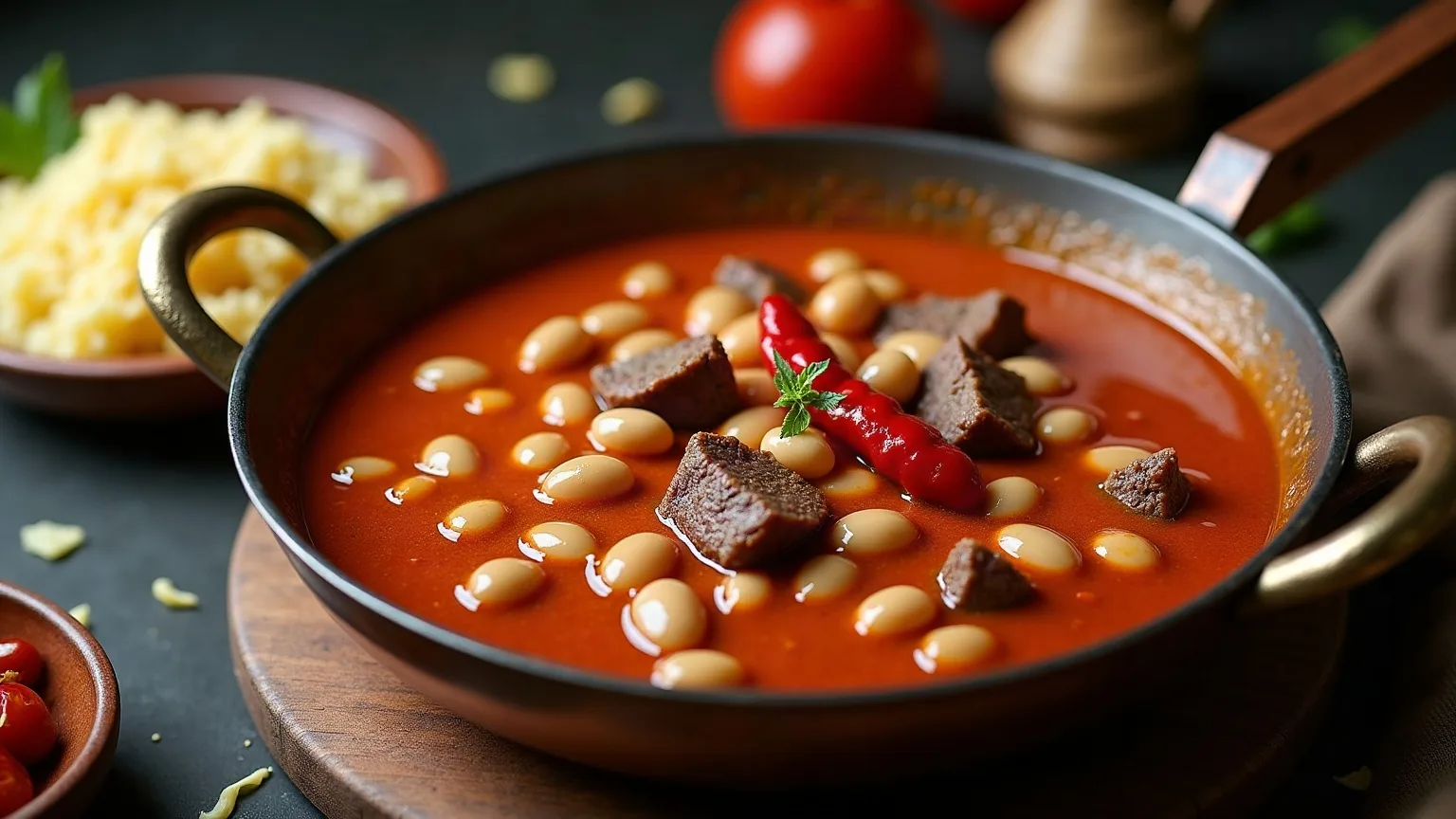
White beans
Beans stay hard for almost always the same reason: the tomato paste went in early. Acid locks the pectin in the skin.…
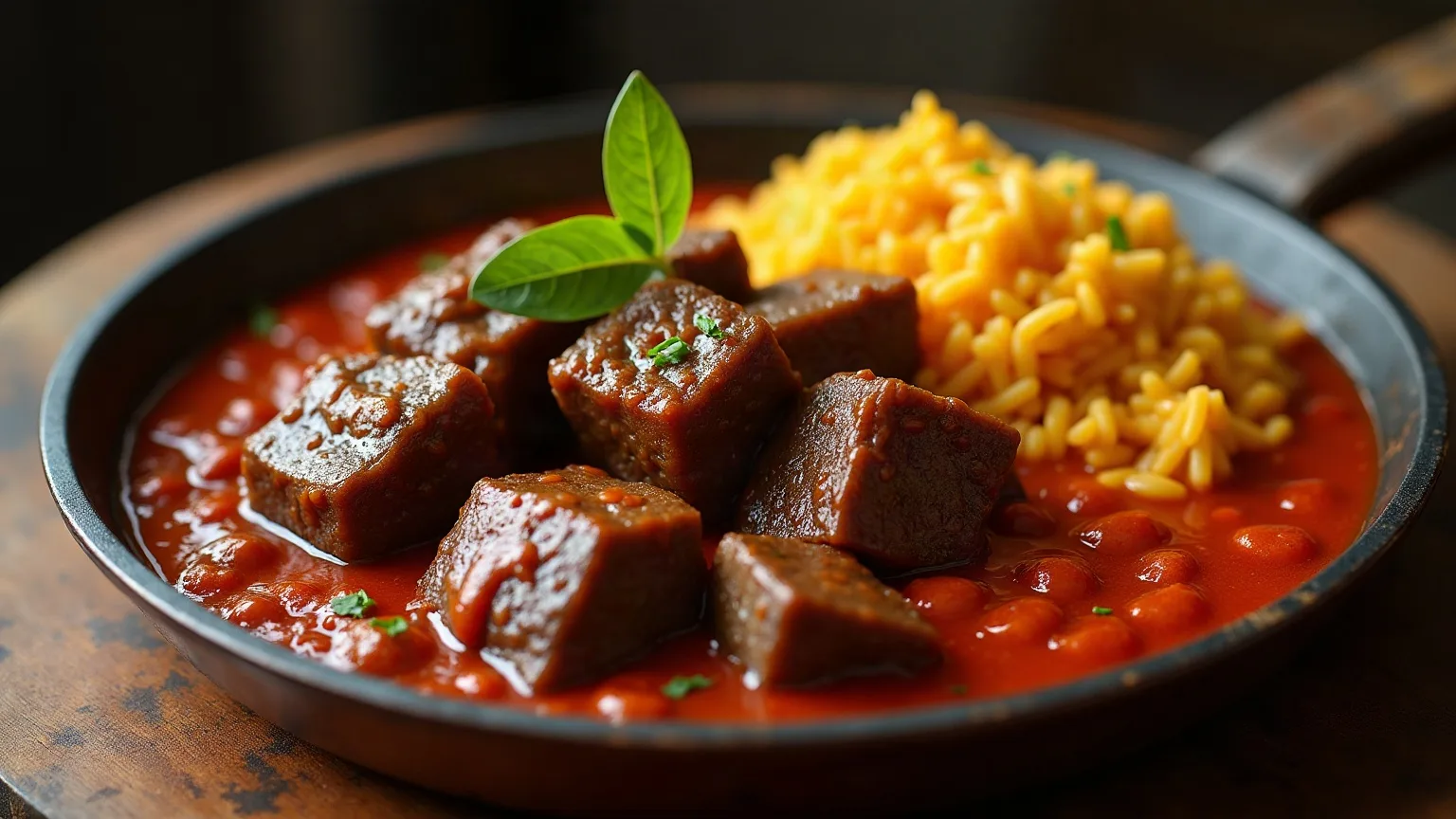
Taş kebabı
It is called a kebab and there is no fire in it: two hours in a covered pan in its own juice. Collagen becoming gelatin …
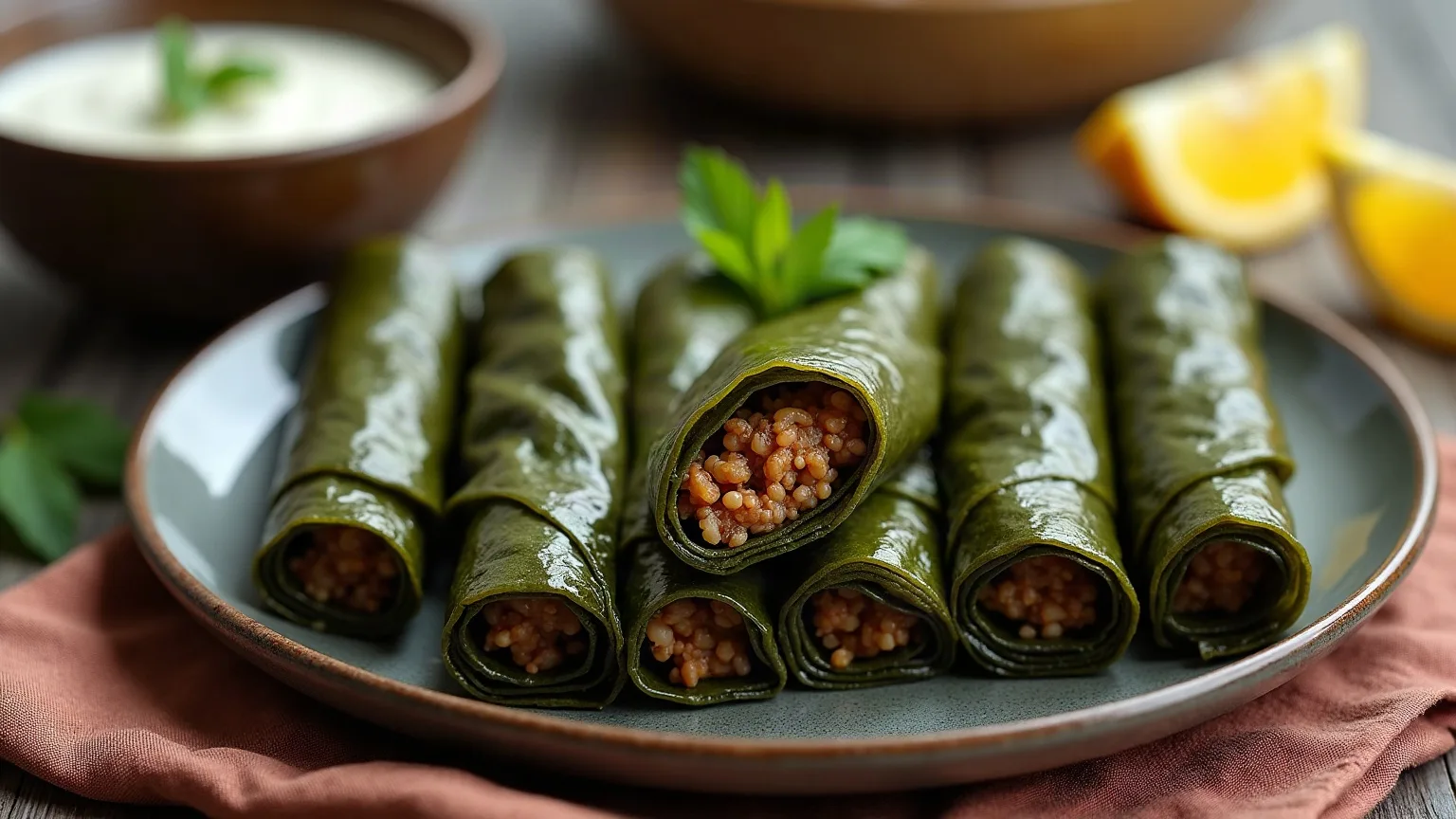
Vine leaves stuffed with meat
Sarma holds together because the pan is packed, not because the roll is tight. Leave gaps and every one of them opens.…
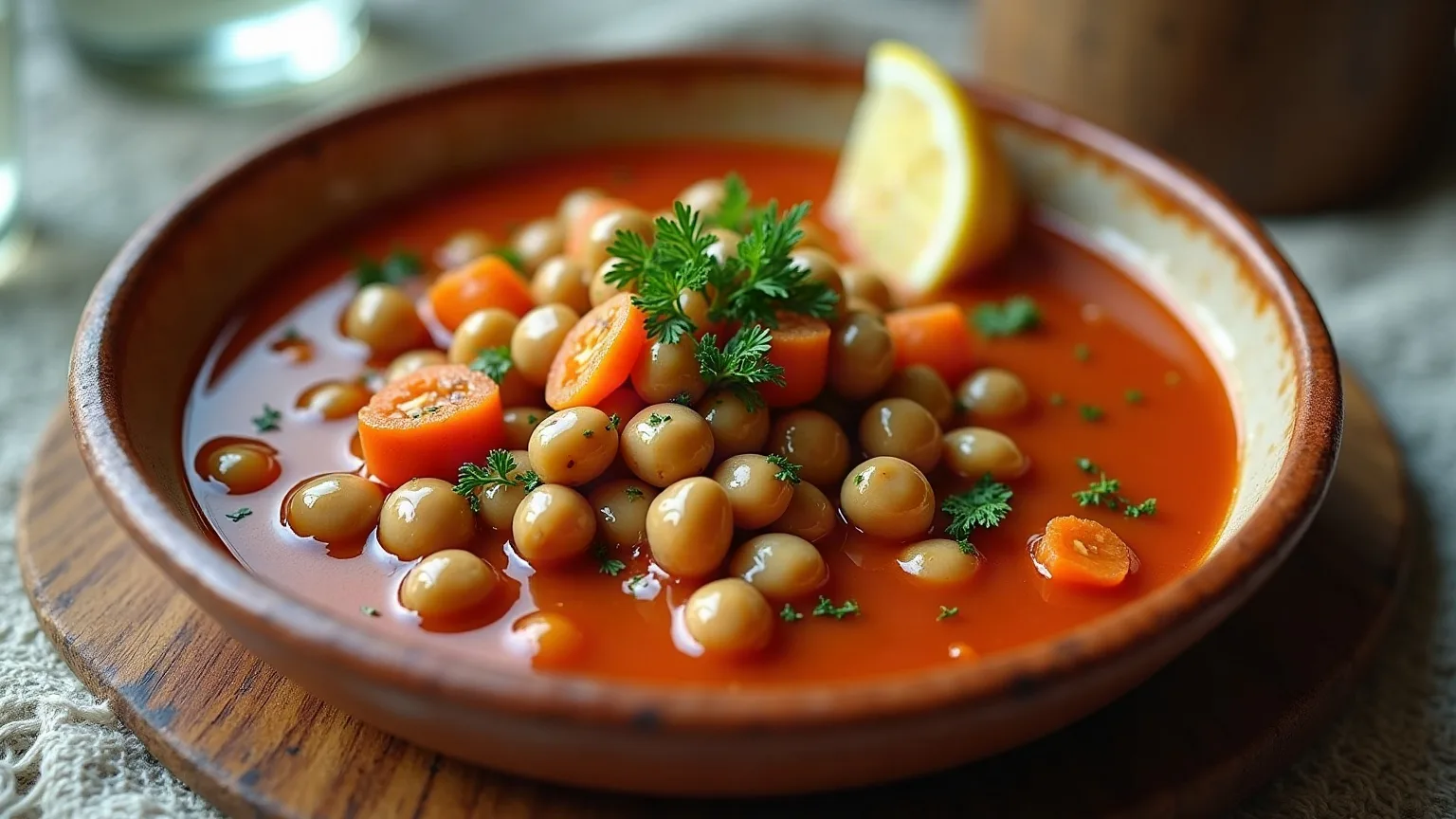
Black-eyed pea stew
The one common dried pulse that needs no soaking: its coat is thin and permeable, so it goes from dry seed to tender in …