
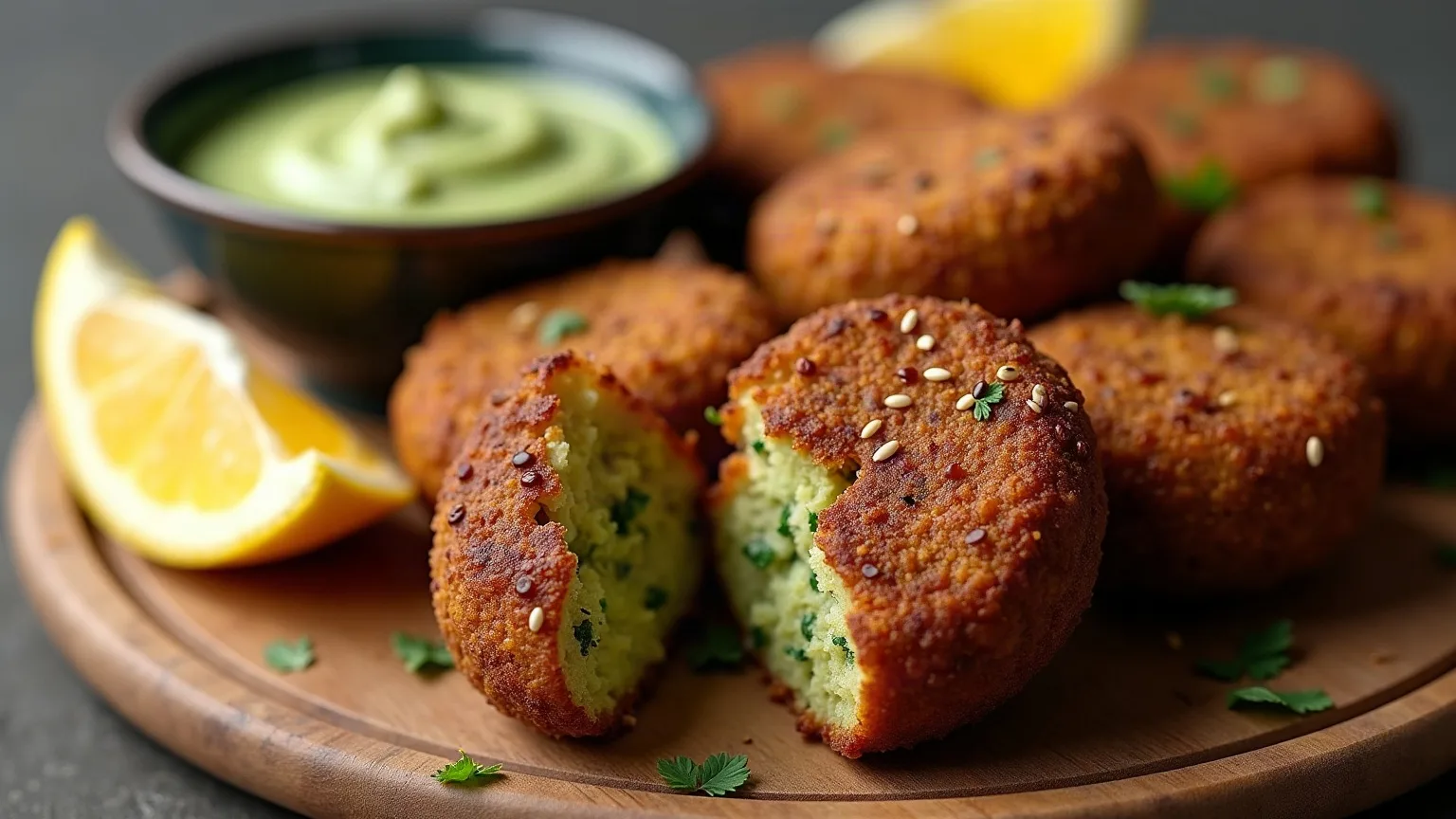
Falafel
The chickpeas are never boiled, only soaked. Falafel made with cooked chickpeas disintegrates in the oil, and nothing rescues it.
Pulses · Levantine · Budget · Vegan · Weekend batch · For guests
- Preparation
- 30 min
- Cooking
- 15 min
- Resting
- 60 min
- Difficulty
- Practised hand
- Cost
- Very cheap
- Season
- All year
This is very nearly the only reason falafel fails at home: the recipe says "chickpeas" and the chickpeas in the kitchen are tinned or boiled. What holds the fritter together is the ungelatinised starch and the undenatured protein inside a raw chickpea, both of which cook in the first seconds in the oil and set a shell. In a boiled chickpea that starch has already taken up water and gelled, and the protein has already coagulated; what is left is a purée with nothing to bind it. From Egypt to the Levant, whether it is made with broad beans, chickpeas or both, that rule does not change.
Method
- Soak the chickpeas twelve hours in plenty of cold water. Do not boil them.
- Spread them on a cloth after draining and dry the surface well.
You will need: A mincer or a sturdy food processor · A deep pan · An oil thermometer
-
Soak the chickpeas twelve hours in cold water, drain, rinse and dry them on a cloth. DO NOT BOIL THEM.
Look for They should double, and split in half should look matt and still firm inside, not creamy.
Why Soaking only carries water to the middle of the seed; the starch is still raw and the protein still folded, and those two are exactly what hold the fritter together in the oil. Surface water is a separate matter: a wet mix spits violently at 175 °C.If it went wrong
If all you have is boiled or tinned chickpeas this recipe cannot be saved: bound with flour and egg it becomes a chickpea patty, not falafel, and it still risks falling apart. Make hummus with them and leave the falafel for tomorrow.
-
Mince the chickpeas with the onion, garlic, parsley, coriander, cumin and salt. You want the texture of damp sand, not a purée.
Look for Squeezed in the hand it should hold its shape and keep the marks of your fingers.
Why The grain leaves air and surface area inside the fritter; a mix taken all the way to purée goes pasty as it fries. A mincer with a medium plate does this better than a processor, which crushes rather than cuts.Starch still asleep The granules are just floating there doing nothing. No body arrives before 62 °C.
Salt · 1.65% High. Osmosis is pulling water out, the texture is tightening and the flavour is closing.
-
Rest the mix an hour in the fridge, and stir the flour and bicarbonate through it just before frying.
Look for The mix should leave the spoon in one piece rather than flowing.
Why In the cold the starch takes up a little water and firms the mix. Bicarbonate, put in early, does its work in the bowl: if the gas leaves before the fritter meets the oil there is no open texture inside and the result is heavy.Starch still asleep The granules are just floating there doing nothing. No body arrives before 62 °C.
A gluten web is forming Gliadin and glutenin hydrated into an elastic net. This is what will hold the gas. no way back
The soda has no acid Without acid it only partly breaks down. What is left tastes soapy and metallic, and yellows the crumb. no way back
Salt · 1.58% Right in the window. Flavours sharpen, bitterness retreats, water is held.
Give it an acid: lemon, yoghurt, vinegar or molasses. Soda alone does not leaven.
-
Shape walnut-sized patties about 2 cm thick and dip one face in the sesame.
Look for They should not crack at the edges; cracking means the mix is too dry.
Why The thickness is a measurement rather than a preference: thicker than 2 cm the outside darkens before the middle is cooked, thinner and it dries out. The sesame goes on one face only, because it burns on the side that sits on the bottom of the pan.Starch still asleep The granules are just floating there doing nothing. No body arrives before 62 °C.
A gluten web is forming Gliadin and glutenin hydrated into an elastic net. This is what will hold the gas. no way back
The soda has no acid Without acid it only partly breaks down. What is left tastes soapy and metallic, and yellows the crumb. no way back
Salt · 1.53% Right in the window. Flavours sharpen, bitterness retreats, water is held.
Give it an acid: lemon, yoghurt, vinegar or molasses. Soda alone does not leaven.
-
Fry at 175 °C, six to eight at a time, for three to four minutes.
Look for It should rise to the surface by itself within forty to fifty seconds and come out the colour of a hazelnut shell.
Why Below and above this range are two different faults: at 160 °C the fritter drinks oil before a crust forms, at 195 °C the outside darkens while the middle is still raw. A crowded pan does the same thing, because every fritter takes a few degrees out of the oil.If it went wrong
If the first one breaks up, work another spoon of flour into the mix and test a second. If that breaks up too the chickpeas were cooked and there is no point continuing: spread the mix in a tin and bake it twenty-five minutes at 190 °C — it will not be falafel, but it is good food.
The soda has no acid Without acid it only partly breaks down. What is left tastes soapy and metallic, and yellows the crumb. no way back
Maillard is running Amino acids have met reducing sugars. The crust, the roasted flavour and that smell all come from here. no way back
Frying dynamics Surface water is flashing to steam and pushing outward — that is the shield keeping the oil out. no way back
Salt · 0.82% Right in the window. Flavours sharpen, bitterness retreats, water is held.
Give it an acid: lemon, yoghurt, vinegar or molasses. Soda alone does not leaven.
This recipe was run through the engine step by step — what goes in when, and at what temperature and for how long. The reactions above come from that run.
peak 175 °C · 809 minutes · engine 1.0.0 · confidence low
After the heat goes off
Hot, with tahini sauce and lemon, or in flatbread with tomato and pickles.
Fried falafel keeps two days in the fridge. The raw mix keeps one: on the second day the onion gives up its water and loosens it.
Six minutes in a 200 °C oven. A microwave takes the crust away completely.
Shaped raw patties freeze on a tray, go into a bag, keep three months and fry from frozen with a minute added.
Crushed and mixed with tahini it becomes a sandwich spread, or it breaks over a salad.
For 12–36 months crush the patty and lift a salt-free portion while the mix is being made, because the salt goes into the mix and cannot be taken out later. A whole falafel is a choking risk for a small child. Baked twenty minutes at 190 °C instead of fried suits a school-age child better. The fried version is not suitable for a baby under one.
A portion carries about 14 g of plant protein. After training it balances better with yoghurt and bread than with tahini sauce.
- Chickpea → Fava beans (dry) Egyptian taameya is made with dried broad beans under exactly the same rule: soaked, never boiled. The inside comes out softer.
- Sesame seeds (unhulled) → Nigella seeds Nigella gives a sharper, less oily outside.
- Deep frying The method this recipe rests on
- Sunflower oil (linoleic) What it does in heat, water and acid
- Chickpea What it does in heat, water and acid
- Bulb onion What it does in heat, water and acid
- Hummus Similar method, or something that sits on the same table
- Red lentil patties Similar method, or something that sits on the same table
- Chickpea stew Similar method, or something that sits on the same table
- Budget Other recipes that answer the same need
- Vegan Other recipes that answer the same need
- Weekend batch Other recipes that answer the same need
- For guests Other recipes that answer the same need
What it tastes like
The axes that define this recipe: aroma 60, richness 42.
This profile is computed rather than measured: the role-weighted average of its ingredients’ taste vectors, shifted by what the cooking does. The thin line is the database average on that axis.
Closest in taste
Not hand-picked: ranked by distance across the eight taste axes.
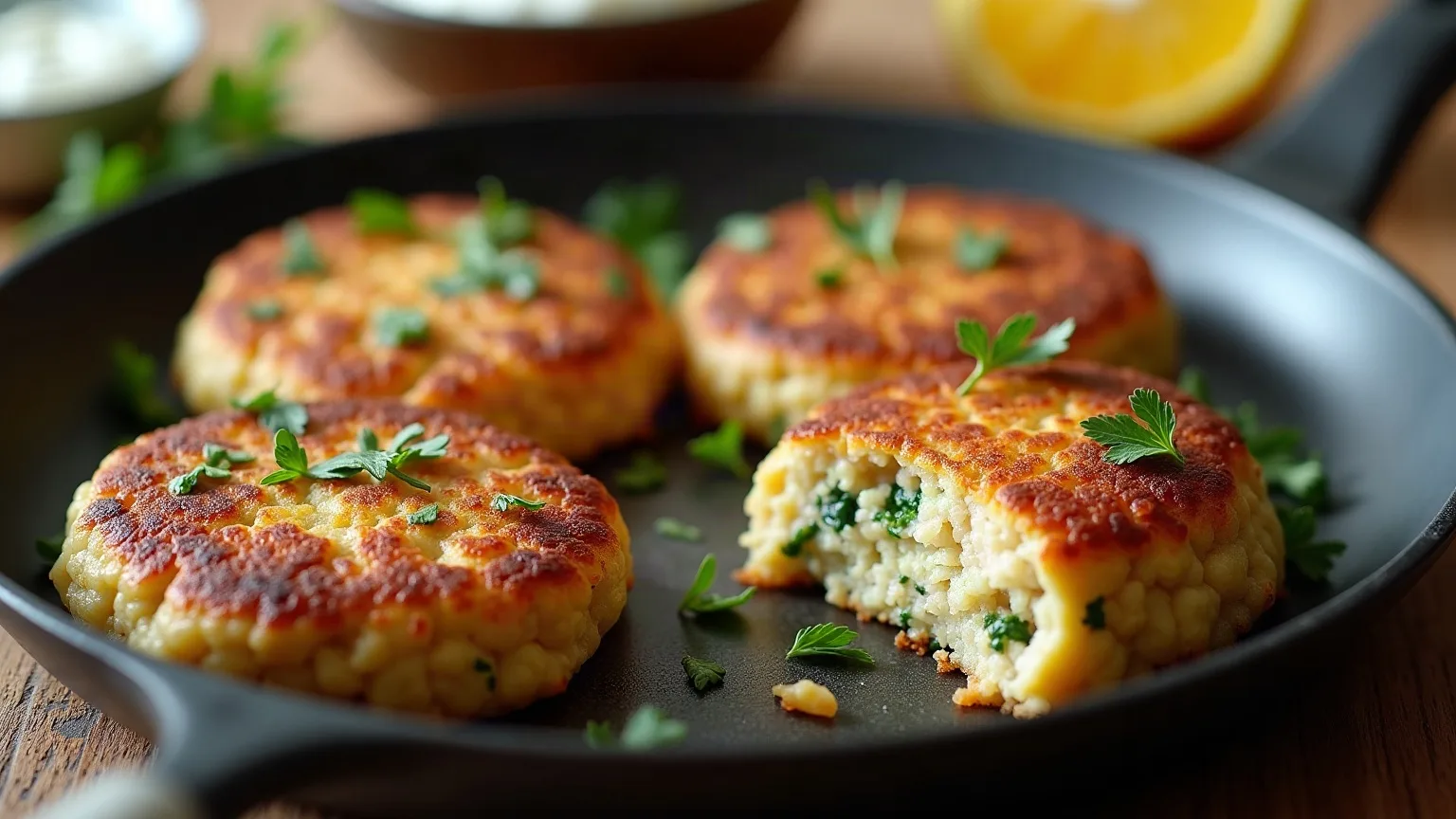
White bean patties
There is no protein network here to bind the patty. What takes its place is gelatinised starch, which firms as it cools:…
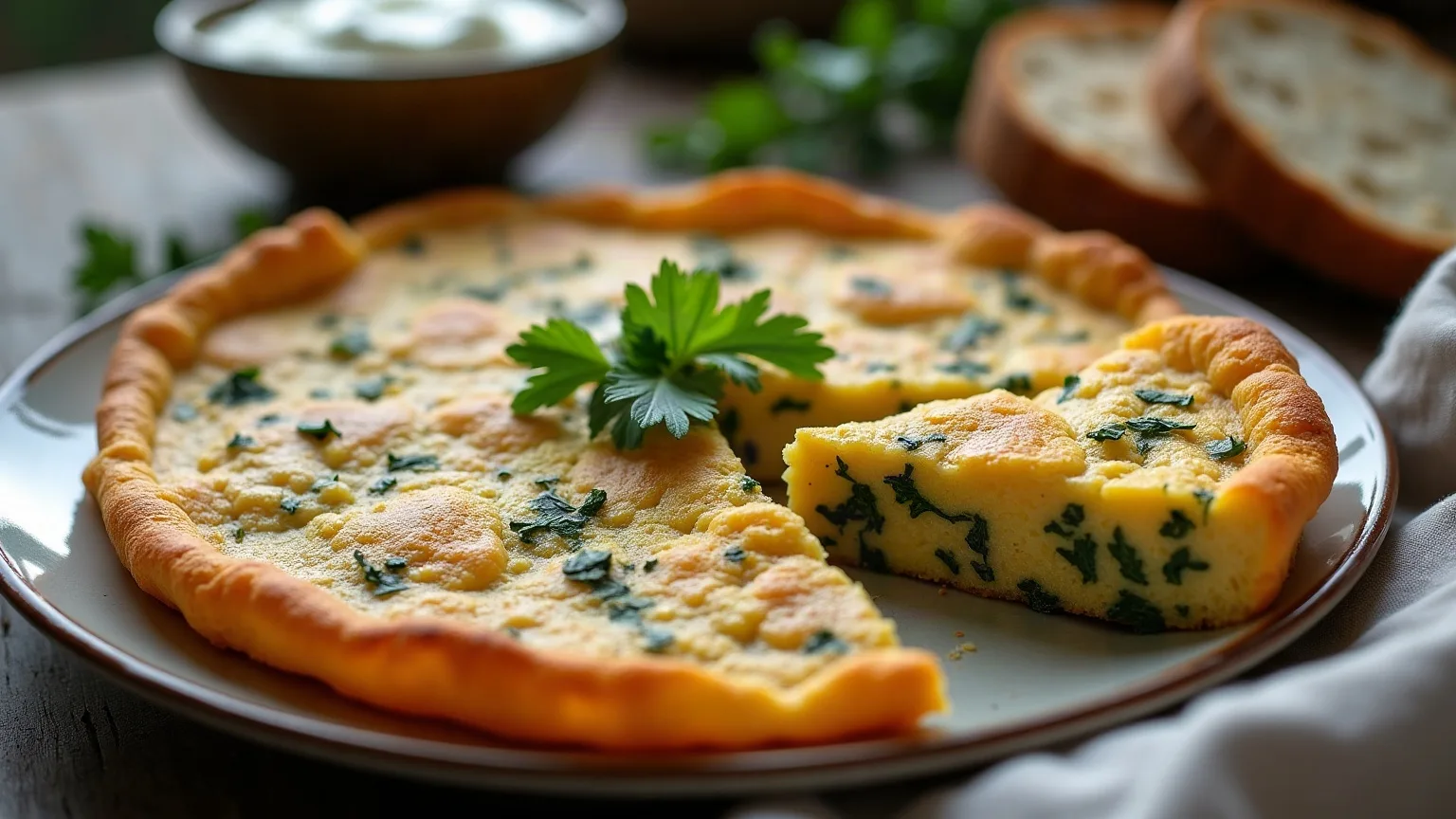
Kaygana
The Black Sea’s herb omelette, bound with flour. The flour holds the egg into a sheet that folds instead of breaking.…
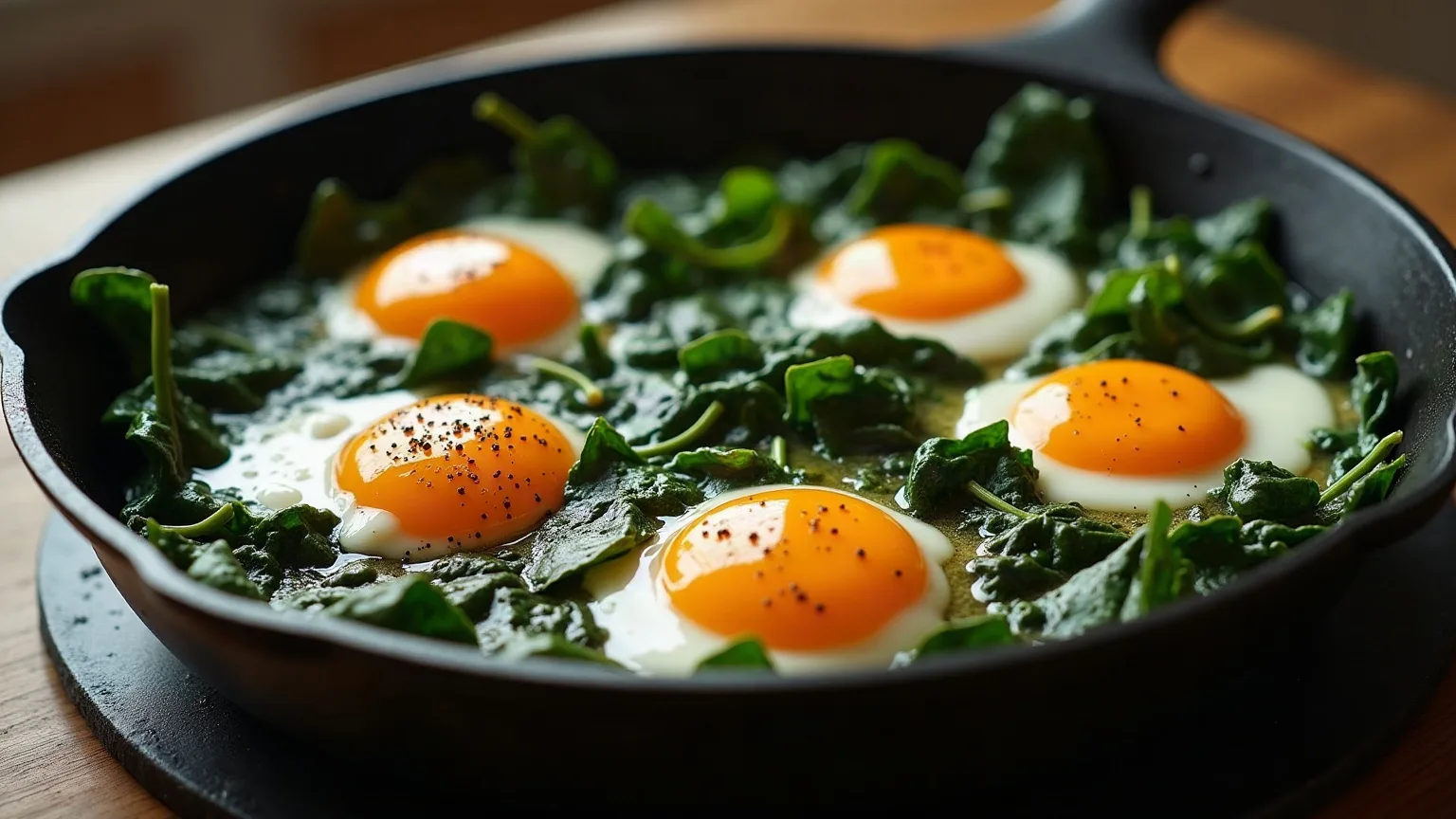
Spinach and eggs
Crack the eggs before the spinach has given up its water and a green puddle collects on the plate.…
Mushroom soup
Mushrooms taste of something once they have browned. Dropped straight into water they give a soup colour and no flavour.…