
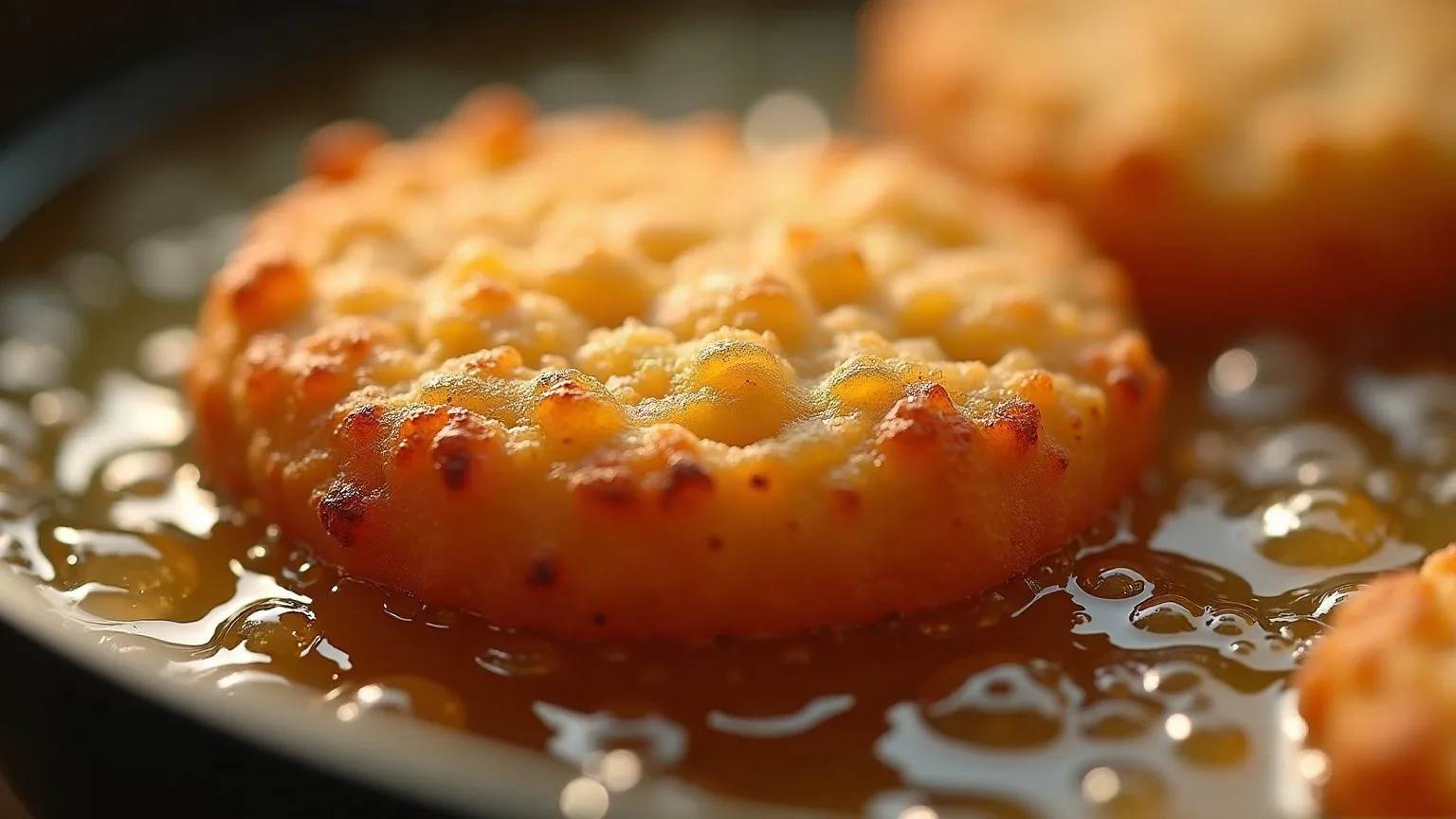
Deep frying
Surface water flashes to steam and pushes outward — that is the shield keeping oil out. Cold oil never builds it, and the food drinks the fat instead.
The mechanism
Oil carries heat roughly twenty times faster than air, and that is the whole difference between frying and baking. The moment the food goes in, the water at its surface boils and streams outward. That outward flow is what keeps oil from moving inward — “not absorbing oil” is really just that steam continuing to escape. Once the surface dries and passes 100 °C, Maillard browning and starch gelatinisation set the crust, while the inside still cooks in its own steam at 100 °C. Cold oil never builds the pressure and the piece simply soaks; oil that is too hot darkens the crust before the middle is done.
The thresholds that define it
“Medium heat” is not a technique. Every line below is a point where something starts or stops.
- 100 °C Surface water boils. Below this the crust never dries and the food poaches in oil.
- 140 °C Maillard begins: colour, aroma and the taste of the crust all start above this line.
- 170–190 °C The working window. The crust dries in two to three minutes while the inside steams through.
- 190 °C üstü The oil breaks down fast: free fatty acids and polar compounds climb and it begins to smoke.
- %25 polar madde Turkey’s legal ceiling for frying oil. Past it the oil no longer fries, it taints.
How to read it by hand
Drop in a cube of bread: golden in 60 seconds means 175–180 °C. Dark in 30 seconds is too hot; still pale after two minutes is too cold. Dip the handle of a wooden spoon and fine, lively bubbles should gather around it — a furious boil means the oil has gone too far.
The three mistakes people make
01 The fry came out heavy and oily ⌄
Why
The oil was below 170 °C, or too many pieces went in at once — both drop the temperature.
What to do
Bring the oil to 180 °C and fry in batches covering no more than a third of the surface, letting it recover between them.
02 Dark outside, raw inside ⌄
Why
The oil is above 190 °C or the piece is too thick: the crust darkens before the middle can cook.
What to do
Drop to 170 °C and cut no thicker than two fingers. For thick pieces fry twice: 160 °C to cook through, rest, then 190 °C for one minute of colour.
03 The coating fell off in the oil ⌄
Why
The surface was wet. Water sits between the flour and the food, and the crust never bonds.
What to do
Pat dry, flour it, wait ten minutes, then egg and crumb. The wait lets the flour take up moisture and grip.
- Maillard
- Protein meeting sugar above 140 °C to produce crust, colour and that roasted smell.
Where it comes from
Deep frying began around the Mediterranean with olive oil, and in both Roman and Ottoman palace kitchens it was a finishing technique — colour and texture added to something already cooked. It holds a particular place in Turkish cooking: fried aubergine, mücver, paçanga böreği and lokma look nothing alike yet all do the same job, drying the surface so the inside can steam. Even dipping lokma in syrup is a technical choice: hot dough draws in cold syrup, while the reverse leaves it sodden.
Giving the heat another way
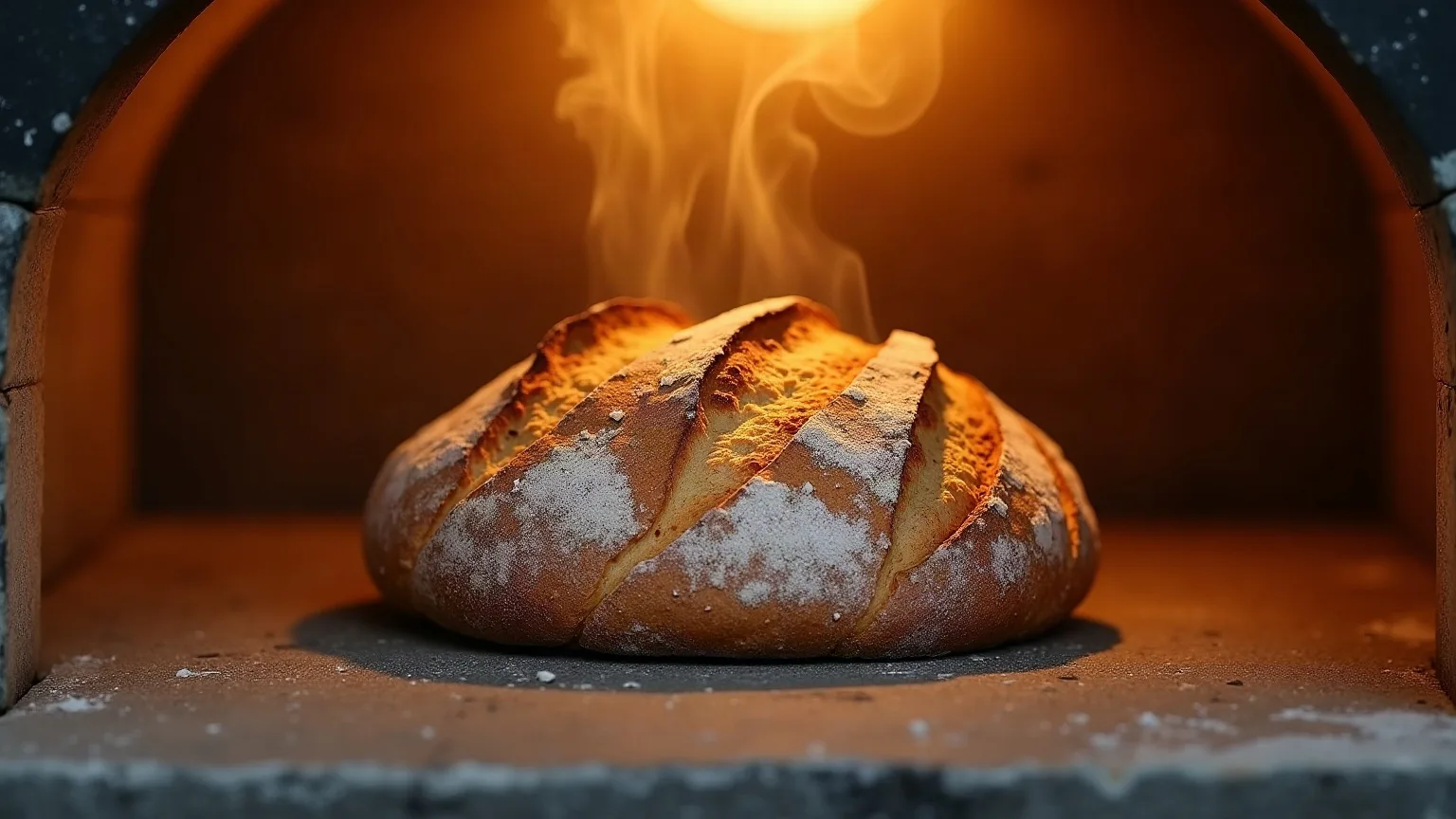
The oven
Air carries heat badly, so a 200 °C oven does not make 200 °C food. The inside stays where water boils, at 100 °C.
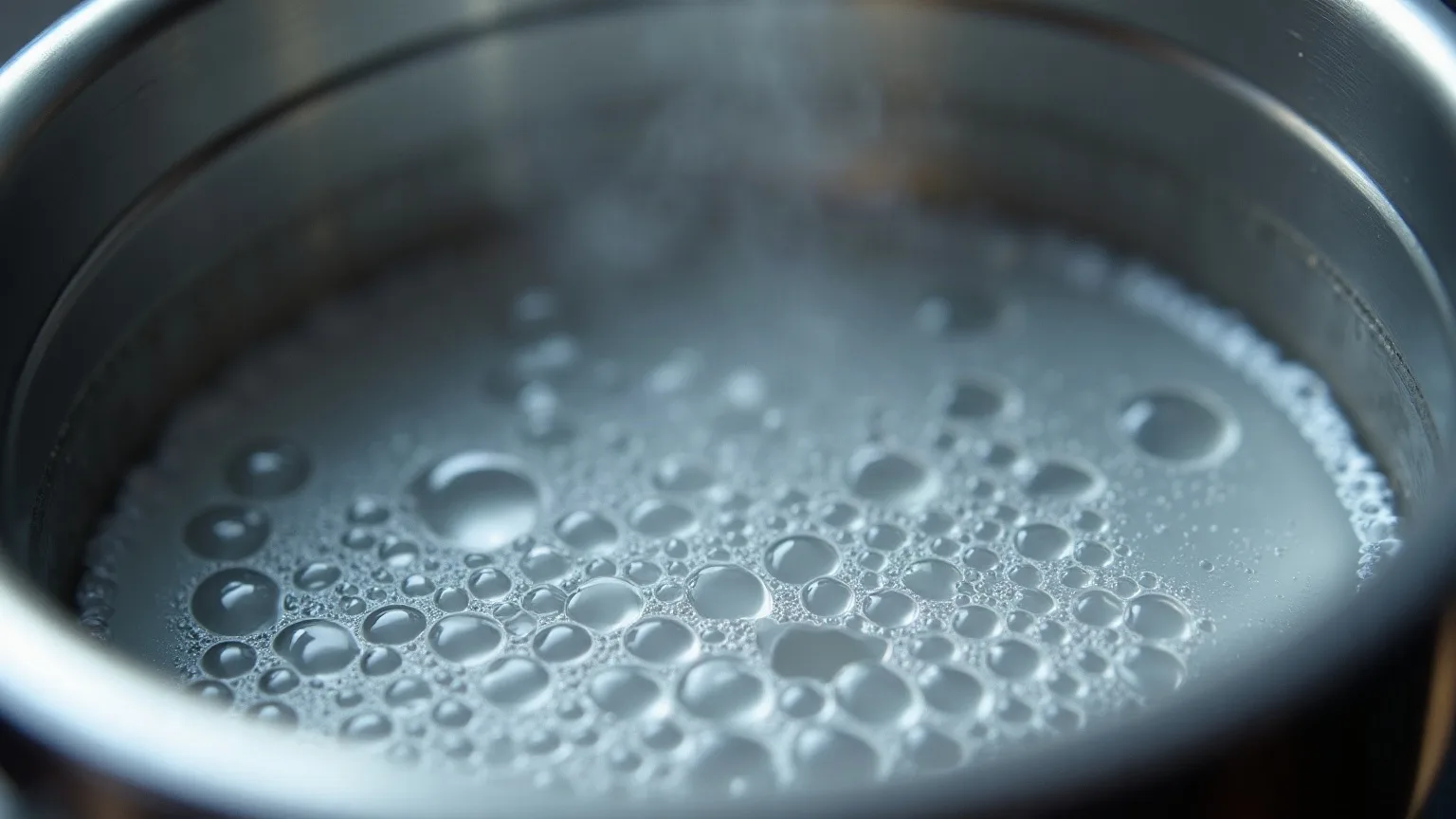
Boiling & poaching
Water cannot pass 100 °C, so turning the flame up changes nothing. Boiling is set by time and salt, not by temperature.
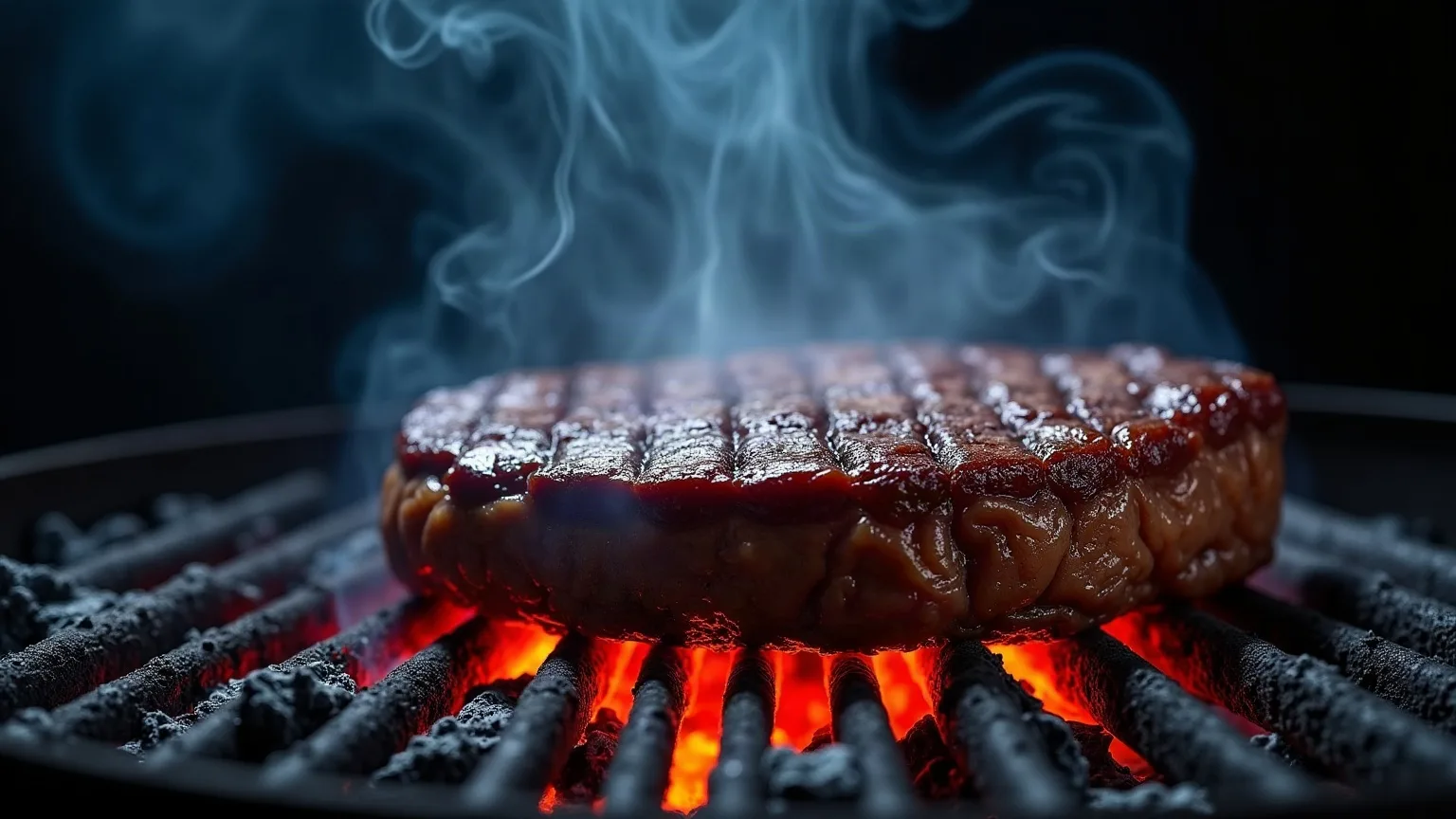
Grill & BBQ
Embers deliver heat by radiation and the surface passes 200 °C in seconds. Smoke phenols bind to the meat, and that is where the flavour comes from.