
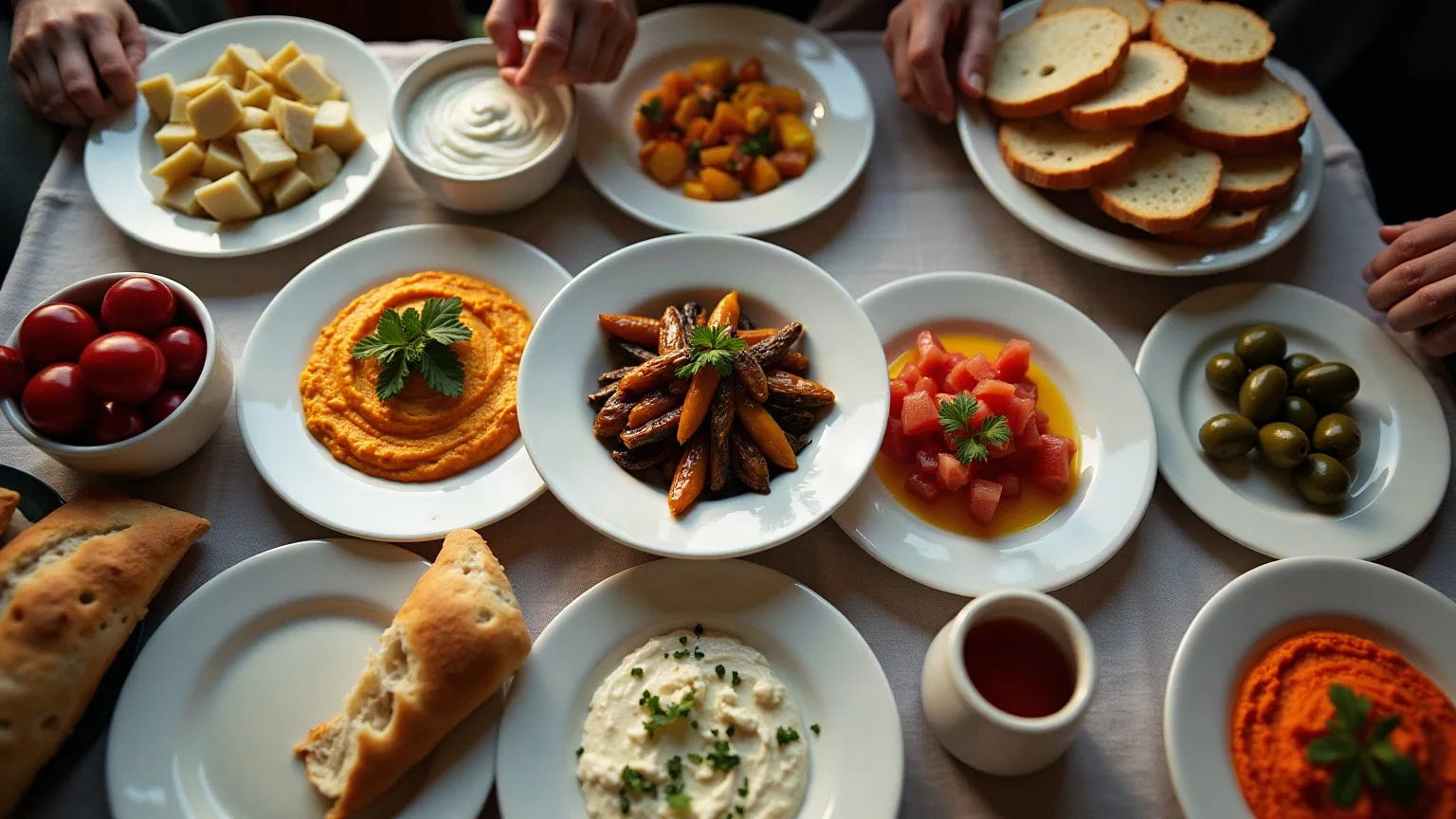
Meze
A meze table is a composition rather than a plate: acid, fat, salt and freshness sit side by side. Each dish is designed against its neighbour, never alone.
The mechanism
Meze is a technique of the table rather than of a plate, and the mechanism it works on is sensory. The palate dulls to a constant stimulus within minutes — sensory adaptation — so a single intense flavour is weaker at the third bite than at the first. Meze solves that by adjacency: an acidic dish beside a fatty one strips the fat from the palate and makes the next mouthful feel like the first again. Temperature is technique too: meze straight from the fridge gives no aroma, because volatile compounds barely leave the food below 10 °C. The window is 12–16 °C — cold, but not ice cold.
The thresholds that define it
“Medium heat” is not a technique. Every line below is a point where something starts or stops.
- 12–16 °C Serving temperature: colder and the aroma never lifts, warmer and the fatty dishes slump.
- %1–1,2 tuz Salt in a purée-style meze. This is the band the palate reads as correct.
- pH 3,5–4 Where an acidic meze works — the range that clears fat from the palate.
- 3 doku At least three textures on a table: smooth, coarse, crisp. An all-purée table dies by the third bite.
- 2 saat How long a yoghurt meze should rest after the garlic goes in, for the sharpness to settle.
How to read it by hand
Once the table is set, look at the plates together rather than one by one and ask three questions. Colour: is there at least one green, one white and one red-brown? Texture: something for a spoon, something for a fork, something for the fingers? Acid: one acidic plate for every two fatty ones? A no to any of them means the table is short of an axis, not of another recipe. Order matters too: light before heavy, acid before fat.
The three mistakes people make
01 A generous table that turns dull by the third bite ⌄
Why
Most plates sit on the same axis: all yoghurt, all purée, all cold.
What to do
Add one acid (pickles, purslane with pomegranate molasses), one crunch (raw radish rather than roasted pepper) and one hot plate. Add axes, not dishes.
02 The yoghurt meze went watery ⌄
Why
Salt drew water out of the cucumber and the yoghurt by osmosis, and the yoghurt was not strained.
What to do
Use strained yoghurt, salt the grated cucumber for fifteen minutes and squeeze it out, and salt the dish last.
03 The garlic took over everything ⌄
Why
Crushed raw garlic releases allicin and the sharpness grows with time, so a meze made early only gets fiercer.
What to do
Grate the garlic finely and work it with salt rather than crushing it, or steep some in milk or yoghurt to take the edge off. Make the meze two hours ahead, not a day.
Where it comes from
The word comes from Persian *mazze*, to taste, and took its shape as a table in Ottoman urban culture. Its origin is a drinking tradition: the anise in rakı leaves a persistent taste, and fatty, salty and acidic plates keep resetting it — so meze was a technical requirement rather than an accompaniment. White cheese beside melon is no accident either: salt, fat and sugar fire three different receptors in one mouthful. To treat meze as merely a starter is to miss that the table itself is the technique.
Giving the heat another way
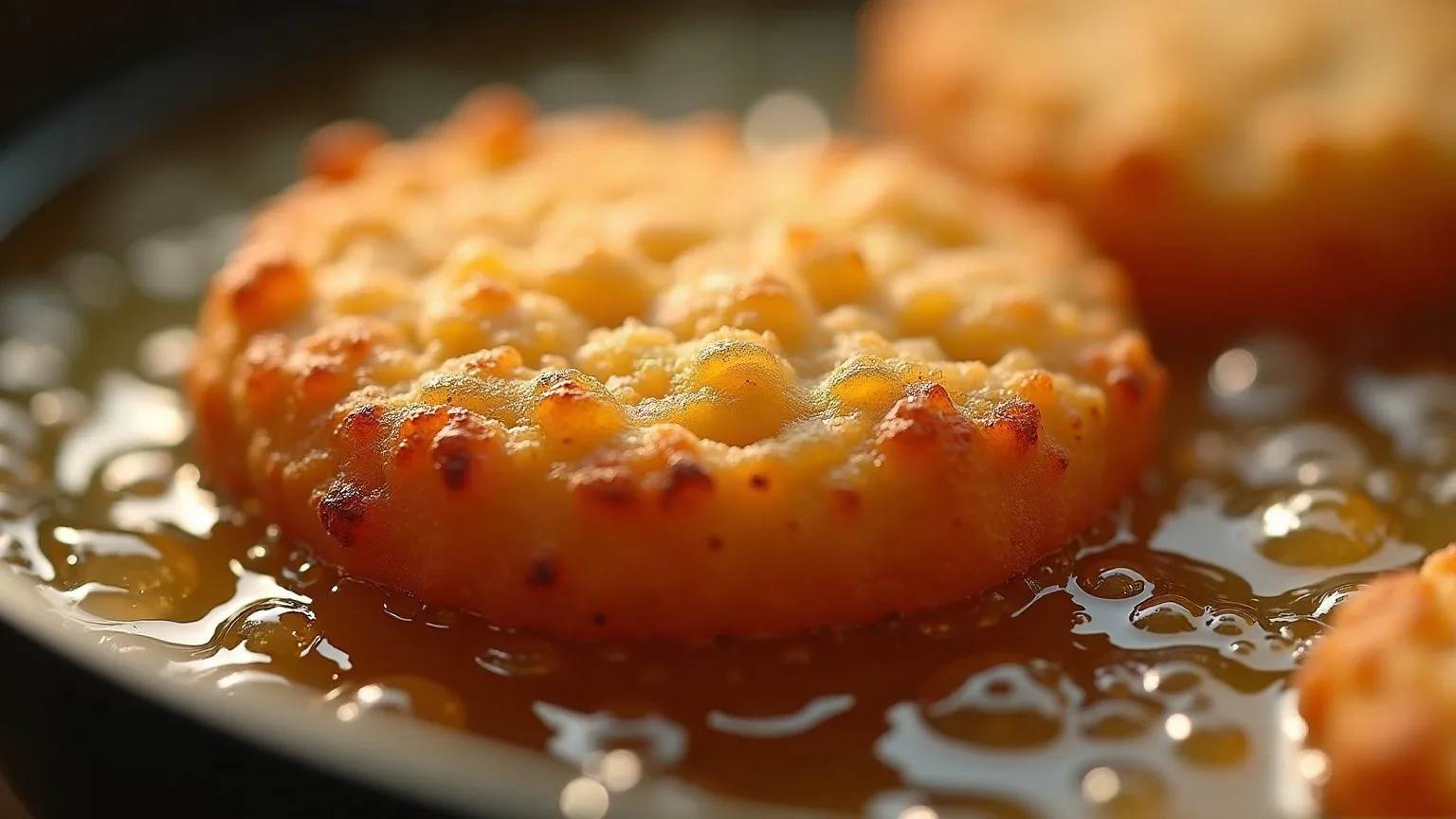
Deep frying
Surface water flashes to steam and pushes outward — that is the shield keeping oil out. Cold oil never builds it, and the food drinks the fat instead.
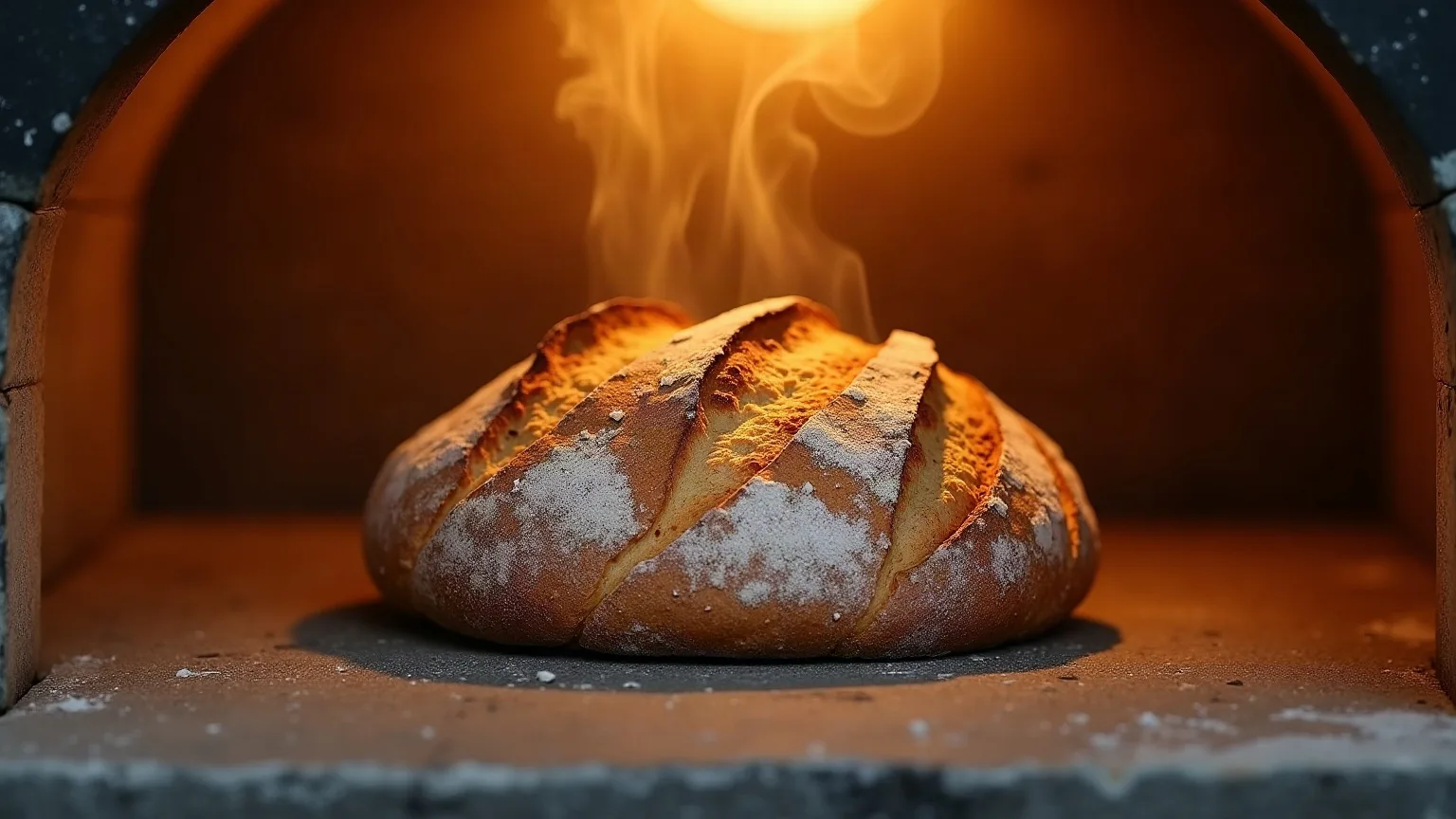
The oven
Air carries heat badly, so a 200 °C oven does not make 200 °C food. The inside stays where water boils, at 100 °C.
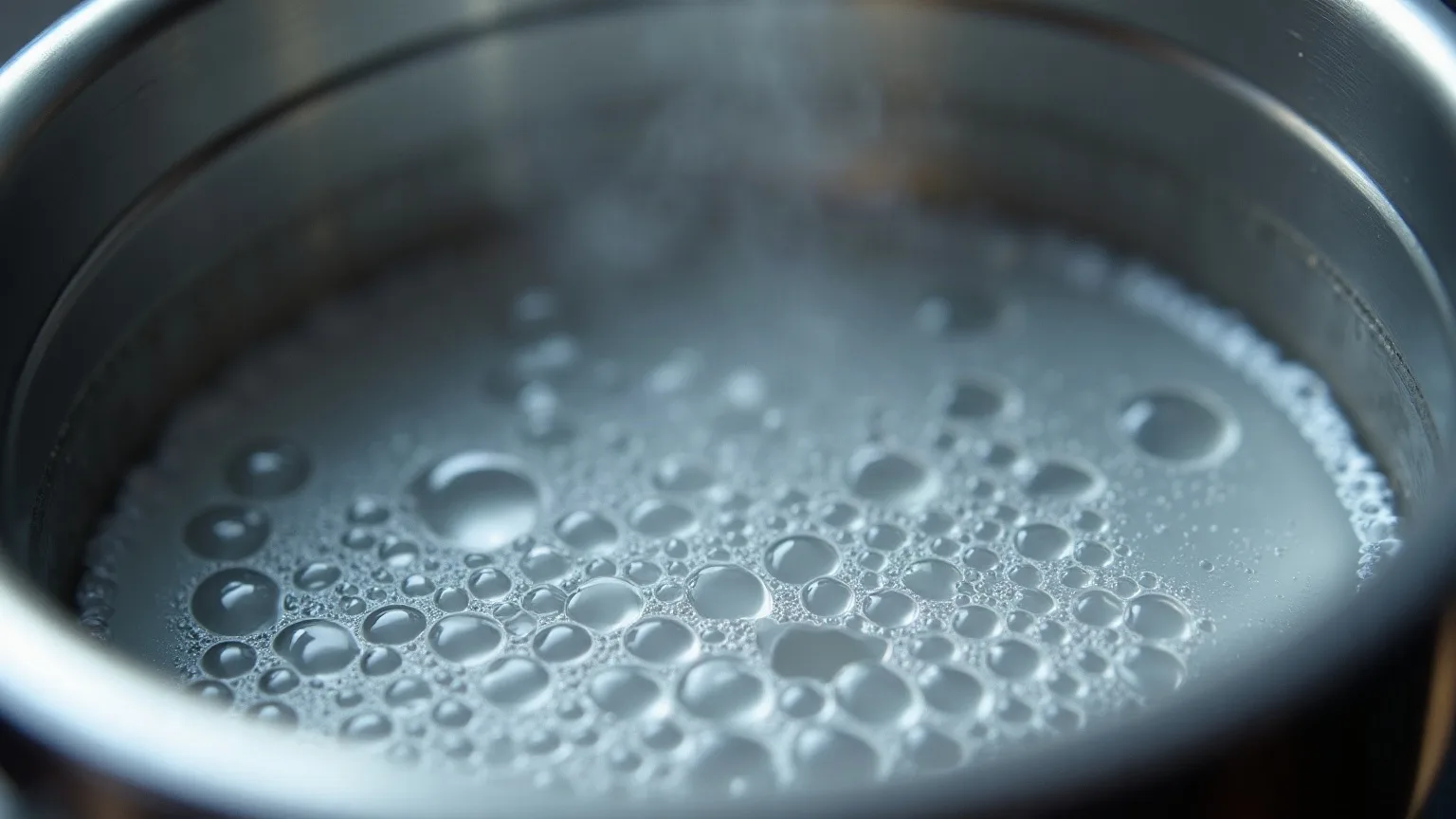
Boiling & poaching
Water cannot pass 100 °C, so turning the flame up changes nothing. Boiling is set by time and salt, not by temperature.