
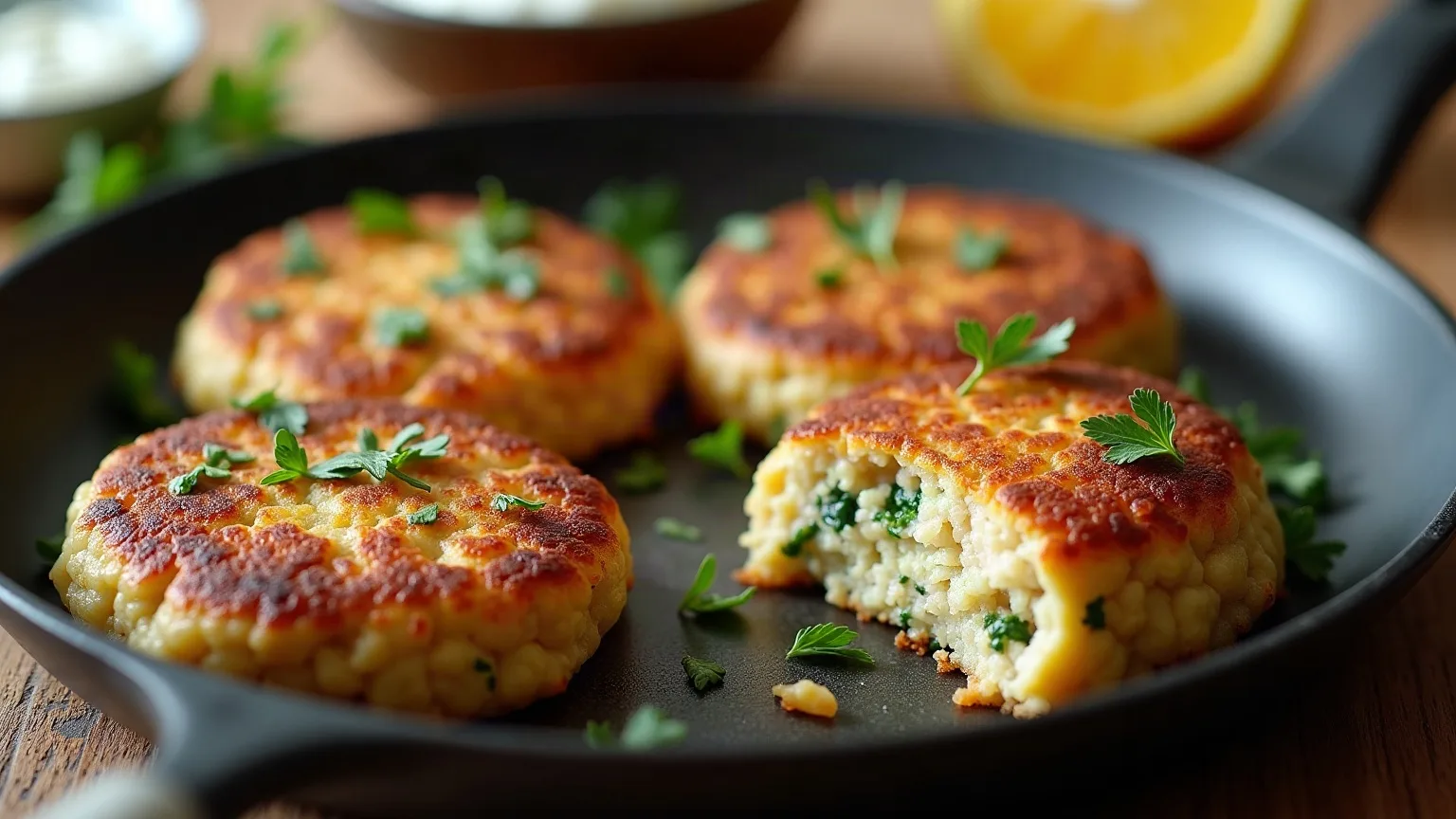
White bean patties
There is no protein network here to bind the patty. What takes its place is gelatinised starch, which firms as it cools: the fridge is what holds these together.
Pulses · Turkish · Budget · Weekend batch · Freezes well · Snacks for children
- Preparation
- 25 min
- Cooking
- 62 min
- Resting
- 45 min
- Difficulty
- Needs attention
- Cost
- Very cheap
- Season
- All year
Meatballs go sticky when worked with salt because of myosin: a salt-soluble muscle protein builds a network as the mixture is kneaded, and that network holds the ball together when it cooks. A bean has no such protein. What holds a bean patty together is starch that gelatinised during boiling and then recrystallises as it cools — the same process that makes bread go stale, put to work. Which is why the most important step in this recipe happens in the fridge and not on the hob.
Method
- Soak the beans overnight.
- Make room in the fridge: the mix waits there forty-five minutes.
You will need: A pan · A wide pan · A potato masher
-
Boil the soaked beans fifty minutes without salt and drain them thoroughly.
Look for Leave them ten minutes in the colander; the dripping should stop completely.
Why The beans have to be properly soft: a half-cooked one does not mash and stays as a hard point inside the patty. The draining matters as much as the boiling, because water left behind raises the moisture of the mix and stops it binding. -
Fry the onion and garlic in half the oil for ten minutes, then let them cool.
Look for The onion should be golden and no water left in the pan.
Why Raw onion put into the mix releases water inside the patty and that is what makes it break up in the pan; frying takes the water out beforehand. Cooling matters too, because hot onion sets the egg.Starch gelatinised The granules soaked up water, swelled and burst into a network. It has thickened, and it will firm further as it cools. no way back
Maillard is running Amino acids have met reducing sugars. The crust, the roasted flavour and that smell all come from here. no way back
Too much starch. It will set into a rubbery gel once cool — add more liquid.
-
Mash the beans and mix them with the onion, parsley, egg, breadcrumbs, cumin, chilli and salt.
Look for The mix should take a shape in the hand without sticking to the fingers.
Why Do not take it all the way to a purée: leave a third of the beans whole, because those pieces give the patty texture and resistance to falling apart. The egg and the crumbs are secondary binders — the real binding happens in the next step.Salt · 1.18% Right in the window. Flavours sharpen, bitterness retreats, water is held.
-
Rest the mix in the fridge for forty-five minutes.
Look for Pressed with a spoon the mix should resist: cold and tight.
Why The starch that gelatinised during the boiling recrystallises at 4 °C and the mix visibly firms up. Skip this and the patties split in the pan at exactly the moment you turn them. The forty-five minutes is not a suggestion, it is the job.If it went wrong
If you have no time, spread the mix on a tray and give it fifteen minutes in the freezer: it does the same work. If you mean to carry on with no resting at all, add another 30 g of breadcrumbs, cook the patties on one side only in the pan and finish them twelve minutes at 190 °C.
Salt · 1.18% Right in the window. Flavours sharpen, bitterness retreats, water is held.
-
Shape the patties and cook them in the rest of the oil over a medium flame, four minutes a side.
Look for The underside should be deep gold and a spatula should slide beneath it easily; if it does not, the crust is not ready.
Why A medium flame matters: over a high one the surface dries into a crust fast, and the moisture inside turns to steam and bursts that crust from within. Turn them once — a patty turned twice falls apart.Starch gelatinised The granules soaked up water, swelled and burst into a network. It has thickened, and it will firm further as it cools. no way back
The egg is setting Proteins unfold and link up, binding everything together. This is where creaminess comes from. no way back
Maillard is running Amino acids have met reducing sugars. The crust, the roasted flavour and that smell all come from here. no way back
Frying dynamics Surface water is flashing to steam and pushing outward — that is the shield keeping the oil out. no way back
Salt · 1.18% Right in the window. Flavours sharpen, bitterness retreats, water is held.
Too much starch. It will set into a rubbery gel once cool — add more liquid.
The oil is under 170 °C. No shield forms, so the food soaks up fat and goes soggy.
This recipe was run through the engine step by step — what goes in when, and at what temperature and for how long. The reactions above come from that run.
Not simulated: Breadcrumbs. The engine currently measures the chemistry of sixteen ingredients; the others count as weight in the pot but their composition does not enter the arithmetic. That is not "nothing happens", it is "nobody looked". In this recipe about 91% of the weight can be characterised that way, which makes every share above a lower bound.
peak 165 °C · 123 minutes · engine 1.0.0 · confidence low
After the heat goes off
Hot with yoghurt and lemon, or in bread with tomato and pickles.
Cooked patties keep three days in the fridge and eat perfectly well cold, without falling apart.
Eight minutes at 180 °C. Reheating in a pan makes them drink oil.
Shaped raw patties keep three months and go straight from the freezer into the pan with two minutes added. Thawing them first is what makes them break up.
Crumbled into a salad, crushed into a sandwich spread, or dropped into soup like dumplings.
It contains egg and wheat, in the breadcrumbs — both common allergens. For 12–36 months leave the chilli out, halve the salt and quarter the patty, since a whole one is a choking risk. For a baby under one a portion can be set aside without egg or salt, but that mix will not hold in a pan and has to be baked.
A patty carries about 6 g of protein and brings carbohydrate with it; after training it balances better with yoghurt.
- White beans (dry) → Chickpea Chickpeas work and give a firmer patty; the boiling comes down to forty minutes.
- Egg → Flour To make it vegan, two tablespoons of flour and three of the cooking water in place of the egg — and the resting goes to an hour.
- Deep frying The method this recipe rests on
- White beans (dry) What it does in heat, water and acid
- Bulb onion What it does in heat, water and acid
- Olive oil What it does in heat, water and acid
- Red lentil patties Similar method, or something that sits on the same table
- Falafel Similar method, or something that sits on the same table
- White beans Similar method, or something that sits on the same table
- Budget Other recipes that answer the same need
- Weekend batch Other recipes that answer the same need
- Freezes well Other recipes that answer the same need
- Snacks for children Other recipes that answer the same need
What it tastes like
The axes that define this recipe: aroma 61, richness 40.
This profile is computed rather than measured: the role-weighted average of its ingredients’ taste vectors, shifted by what the cooking does. The thin line is the database average on that axis.
Closest in taste
Not hand-picked: ranked by distance across the eight taste axes.
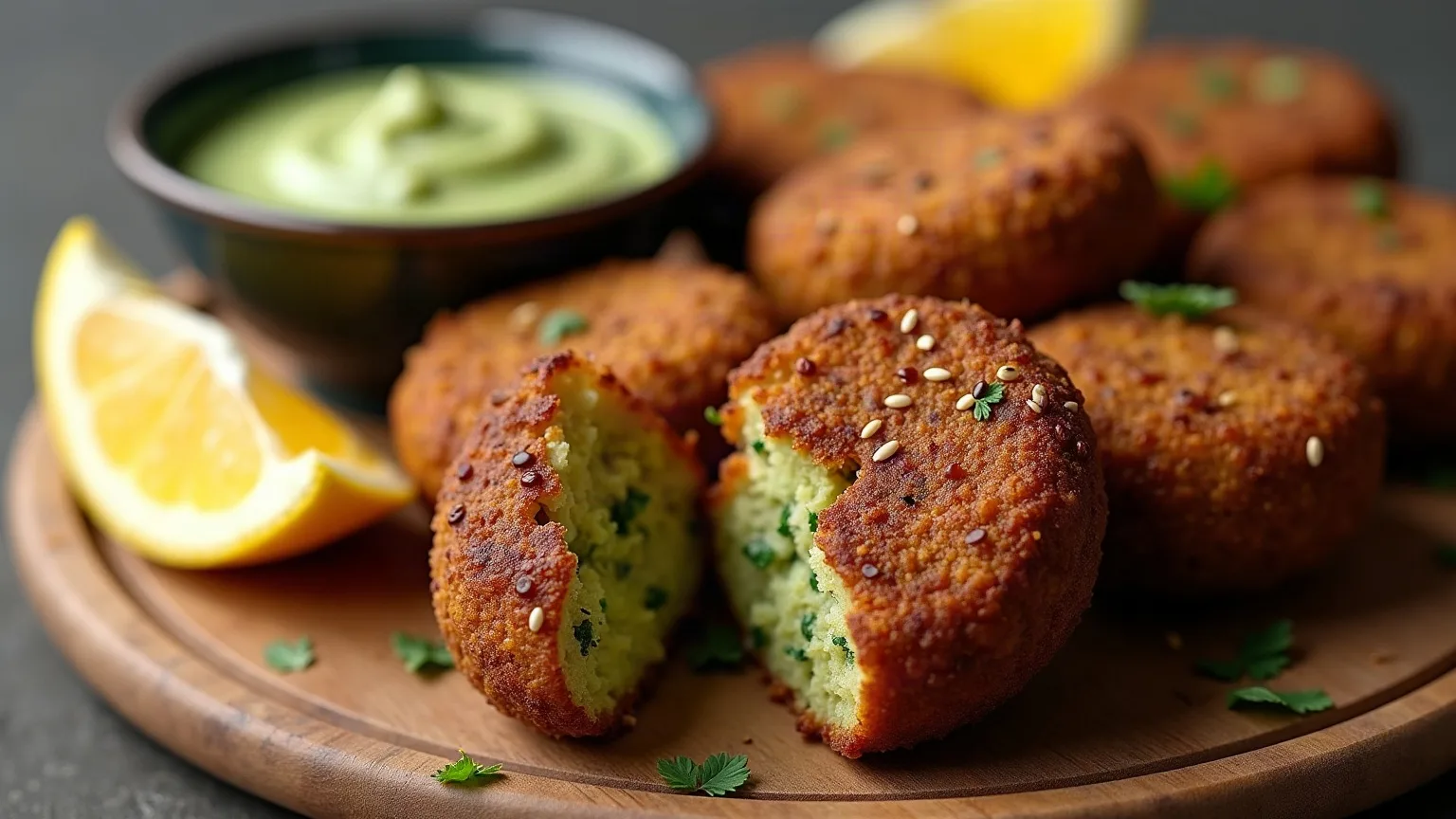
Falafel
The chickpeas are never boiled, only soaked. Falafel made with cooked chickpeas disintegrates in the oil, and nothing re…
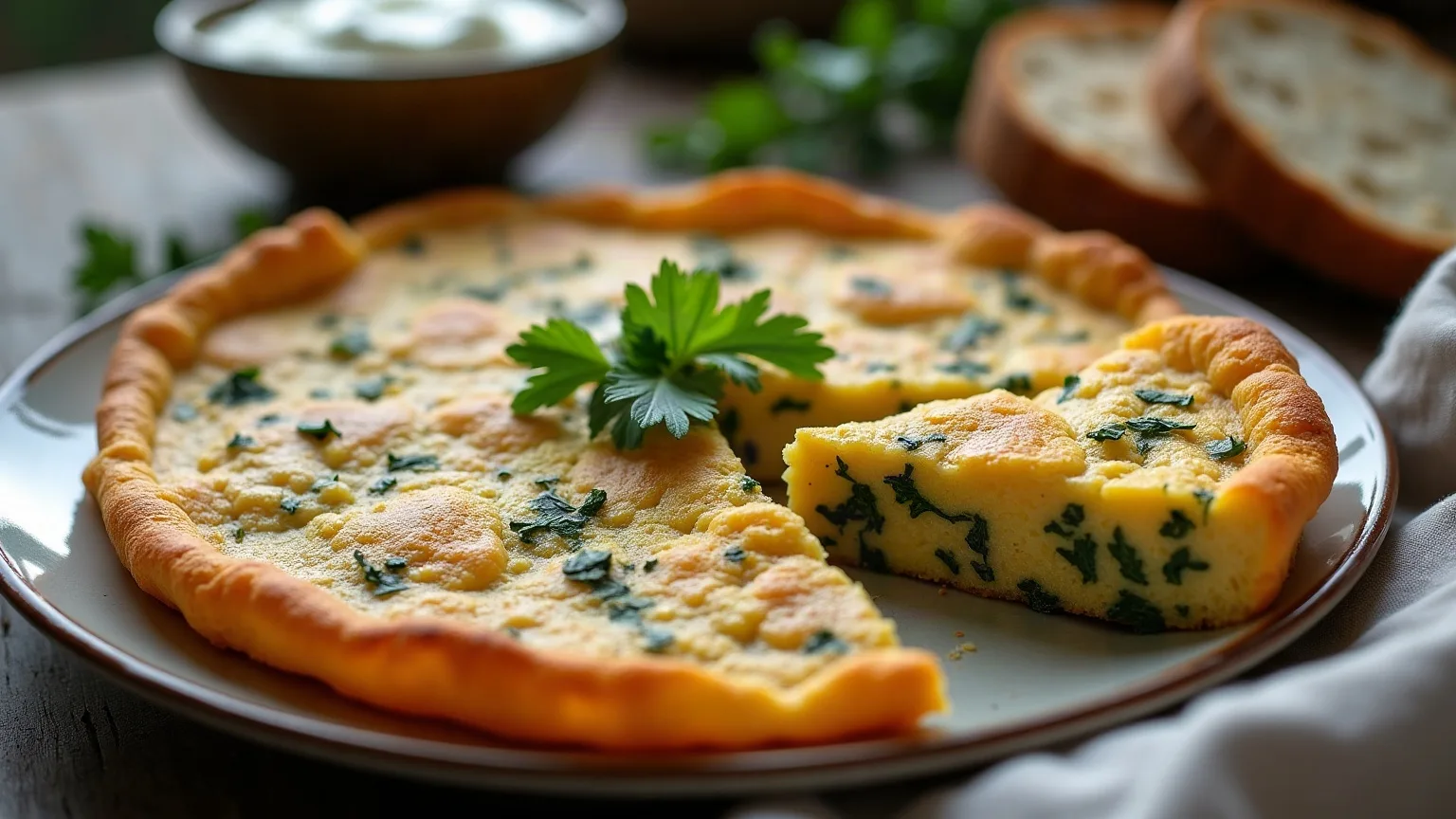
Kaygana
The Black Sea’s herb omelette, bound with flour. The flour holds the egg into a sheet that folds instead of breaking.…
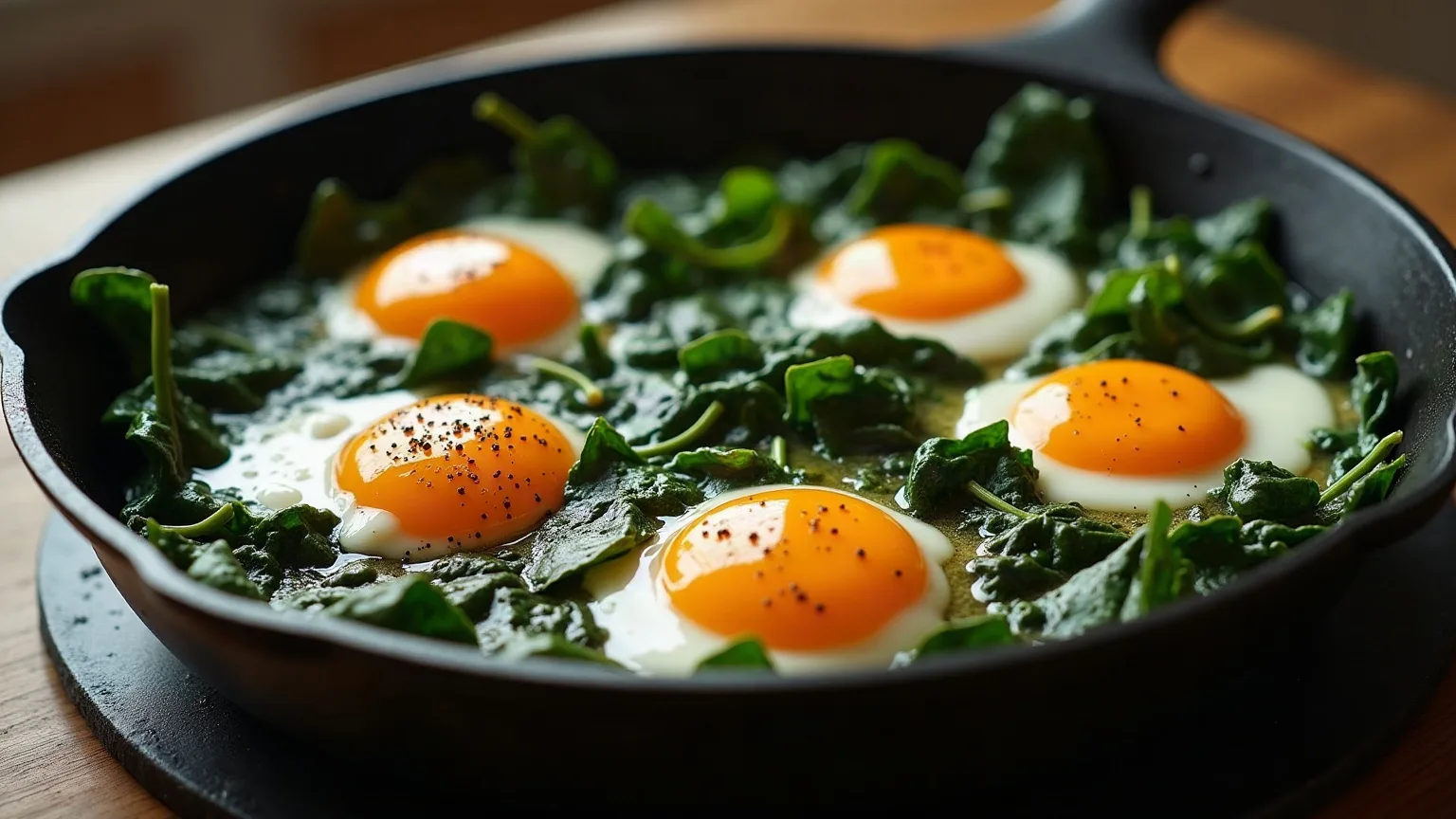
Spinach and eggs
Crack the eggs before the spinach has given up its water and a green puddle collects on the plate.…
Mushroom soup
Mushrooms taste of something once they have browned. Dropped straight into water they give a soup colour and no flavour.…