
Shepherd’s salad
Tomato, cucumber, pepper, onion and parsley. The salt goes in last, just before it goes to the table: salted tomato gives up its juice within ten minutes.
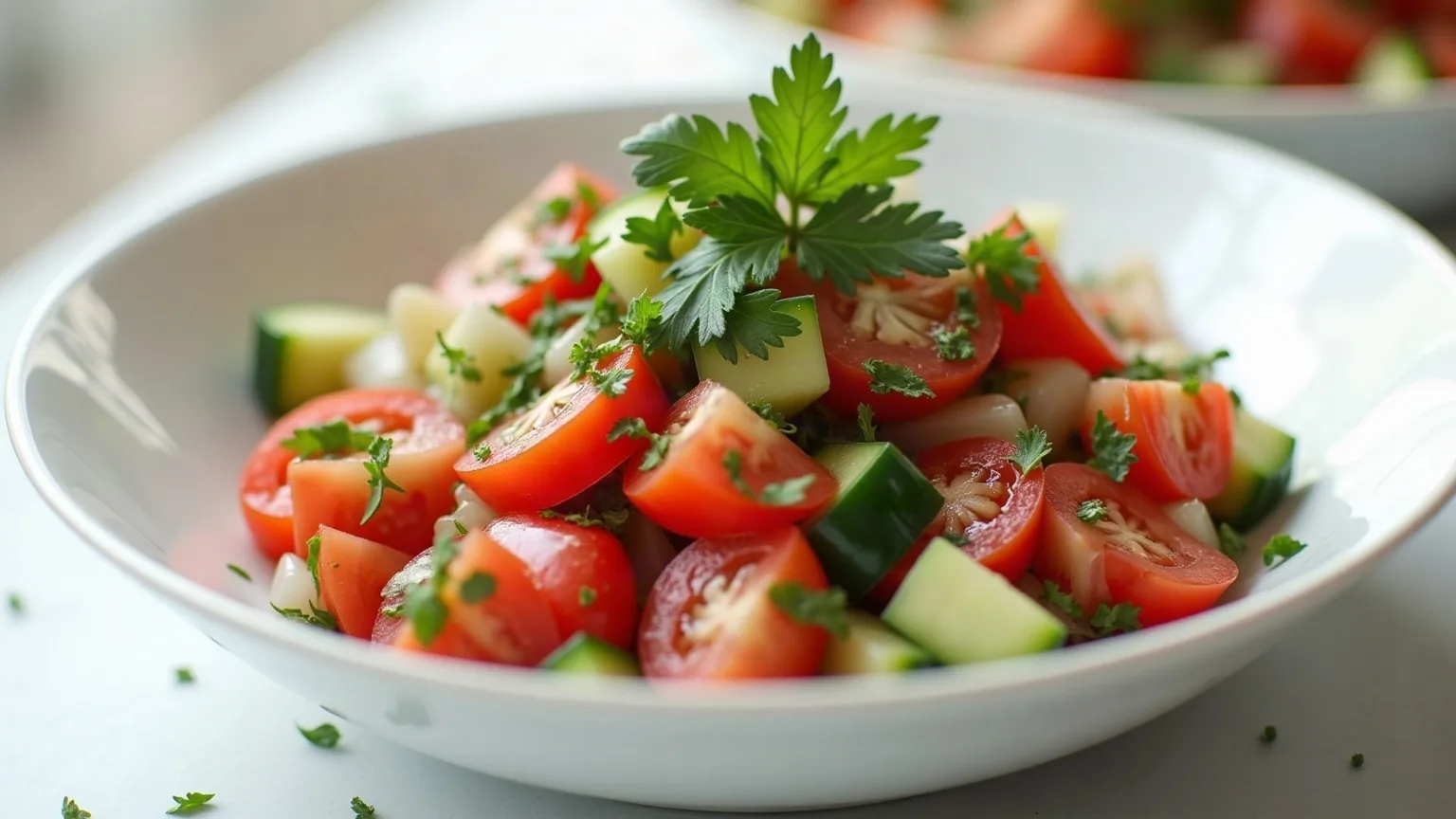
The salad that goes with almost everything on a Turkish table — kebabs, white beans, fish. The name comes from how simple it is: something a shepherd could make in a field with a knife and a few vegetables. That simplicity is why the technique matters: the size of the cut, taking the bite out of the onion and the timing of the salt decide the plate.
Method
- Wash the vegetables and dry them well: water left on them thins the dressing.
You will need: A sharp knife · A chopping board · A wide bowl
-
Slice the onion into thin half moons, rub it with the sumac and leave it for ten minutes.
Look for The onion should soften slightly and turn a purple-red.
Why Onion’s bite comes from sulphur compounds that form when its cells are cut. Rubbing with sumac releases and spreads them, and the sumac’s acid softens the taste.Starch still asleep The granules are just floating there doing nothing. No body arrives before 62 °C.
-
Cut the tomato, cucumber and pepper into 1–1.5 cm cubes, chop the parsley finely and put everything in the bowl with the onion.
Look for Tomato juice should not pool on the board — if it does, the knife is blunt.
Why An even size brings every vegetable into every forkful. Tomato cut smaller than 1 cm gives up water quickly, while in larger pieces the inside holds together for longer.Starch still asleep The granules are just floating there doing nothing. No body arrives before 62 °C.
-
Just before it goes to the table, add the olive oil, lemon juice and salt, turn it gently twice and serve at once.
Look for The vegetables should shine with oil, with no water in the bottom of the bowl.
Why Salt draws water out of the vegetable cells by osmosis. Salted shepherd’s salad leaves a finger of water in the bottom of the bowl within 10 to 15 minutes and the vegetables lose their crunch. Salted last, the salad reaches the table crisp.If it went wrong
If it was salted too early, pour off the liquid in the bottom and add another spoon of oil — and that liquid, mopped up with bread, is a good dressing in its own right.
Starch still asleep The granules are just floating there doing nothing. No body arrives before 62 °C.
Salt · 0.44% Low. Everything reads flat and nothing steps forward.
This recipe was run through the engine step by step — what goes in when, and at what temperature and for how long. The reactions above come from that run.
peak 20 °C · 16 minutes · engine 1.0.0 · confidence low
After the heat goes off
To the table with the main dish, in its own bowl, with bread.
Once salted it does not keep. Chopped vegetables without the dressing will hold for 12 hours in a closed box in the fridge.
It is not heated.
It does not freeze: raw tomato and cucumber go to mush on thawing.
With the juice from the bottom of the bowl, into a menemen the next morning, or spooned onto slices of bread.
Raw onion and pepper are tastes small children often dislike; take their share before those go in. For 12–36 months, cut the tomato and cucumber smaller, and peel them if you like.
- Lemon → Vinegar A tablespoon of vinegar works instead of the lemon; the taste is sharper.
- Cold The method this recipe rests on
- Tomato What it does in heat, water and acid
- Cucumber What it does in heat, water and acid
- Bulb onion What it does in heat, water and acid
- Gavurdağı salad Similar method, or something that sits on the same table
- Spoon salad Similar method, or something that sits on the same table
- White bean salad Similar method, or something that sits on the same table
- Under 30 minutes Other recipes that answer the same need
- Budget Other recipes that answer the same need
- Vegan Other recipes that answer the same need
- Seasonal Other recipes that answer the same need
What it tastes like
The axes that define this recipe: sour 26.
This profile is computed rather than measured: the role-weighted average of its ingredients’ taste vectors, shifted by what the cooking does. The thin line is the database average on that axis.
Closest in taste
Not hand-picked: ranked by distance across the eight taste axes.
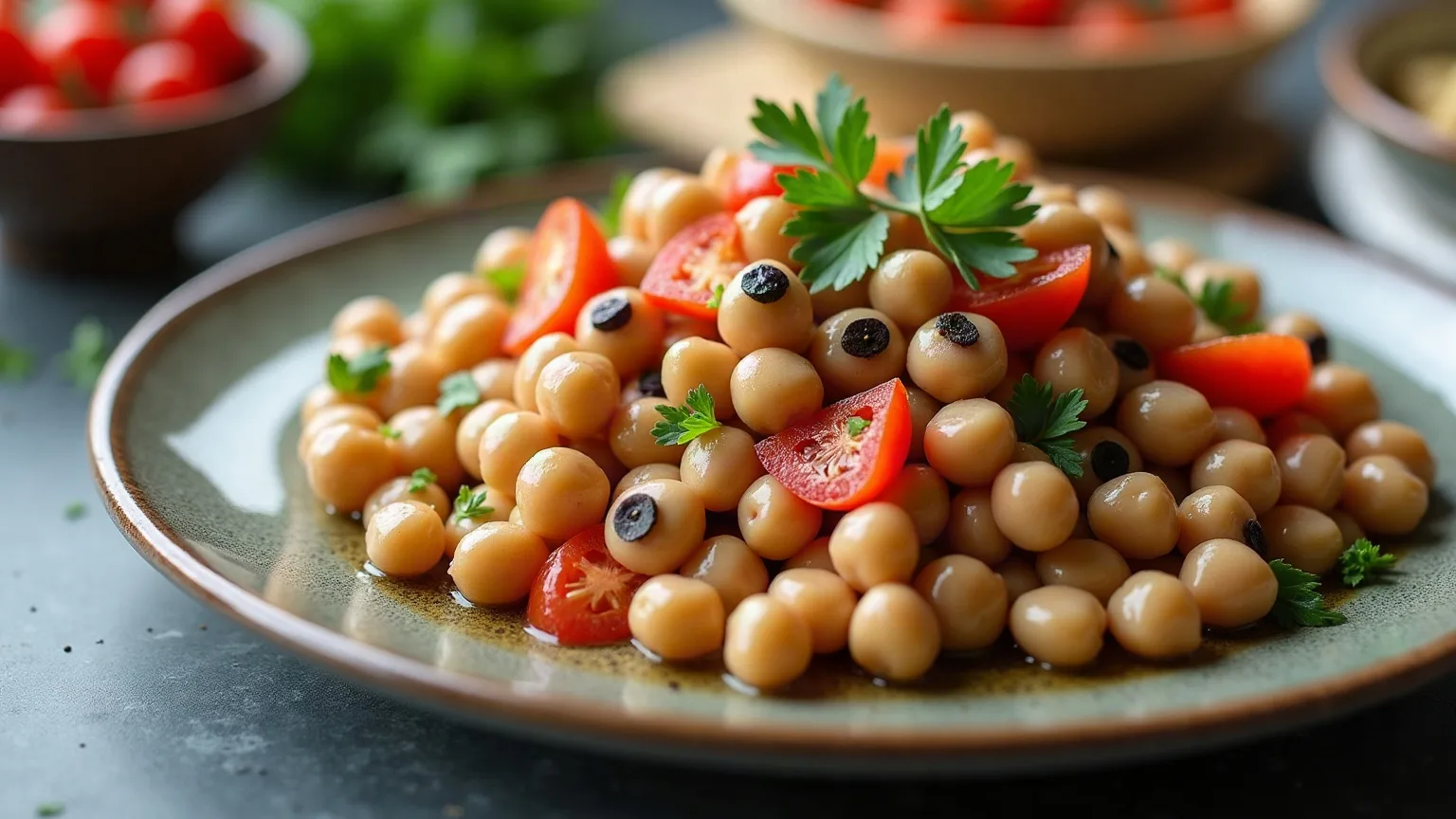
Black-eyed pea salad
The one dried pulse that needs no soak: its skin is thin and it softens in twenty-five minutes.…
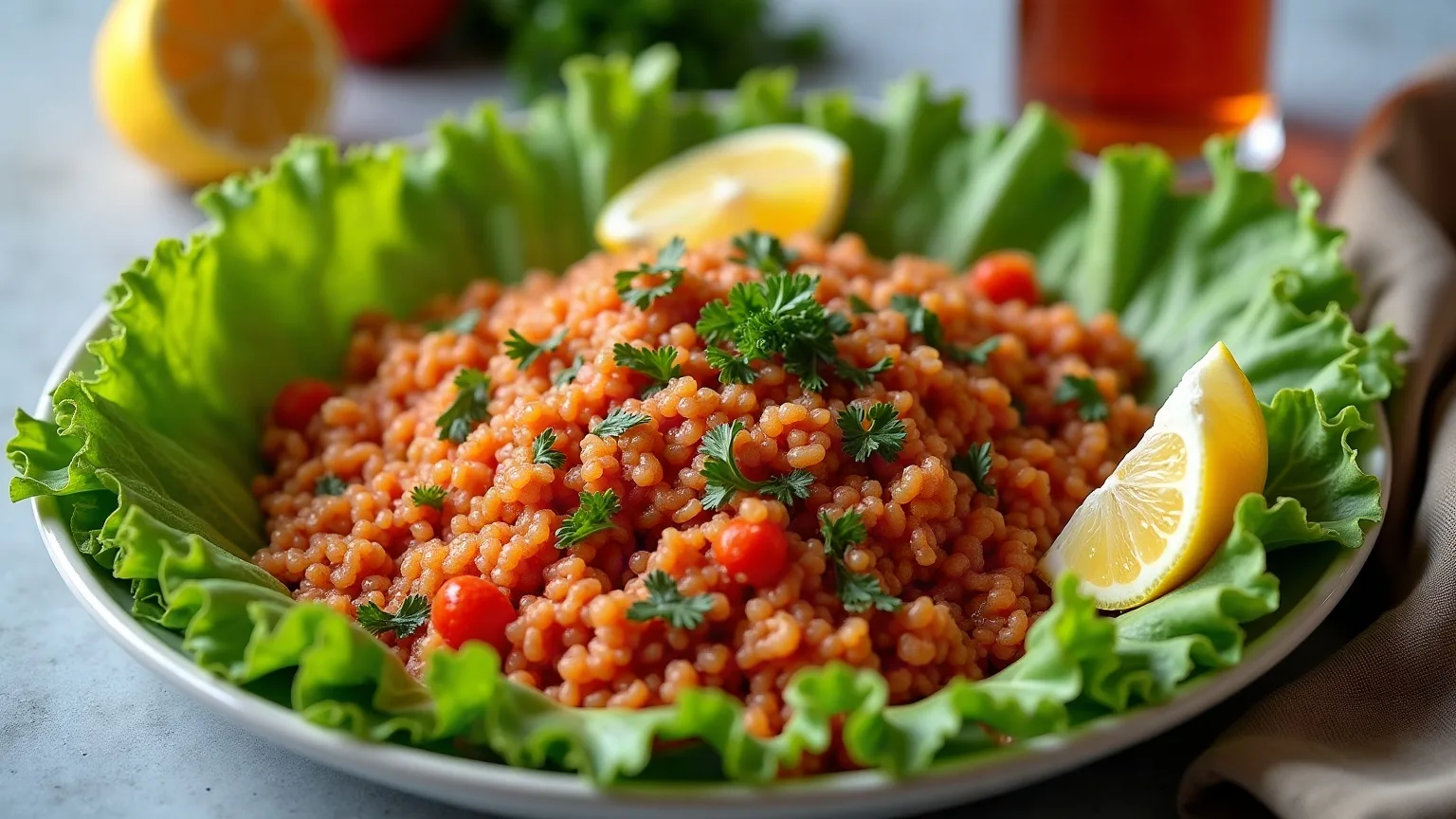
Kısır
It never meets a flame: fine bulgur swells by itself in boiling water. The pomegranate molasses and lemon go in after th…
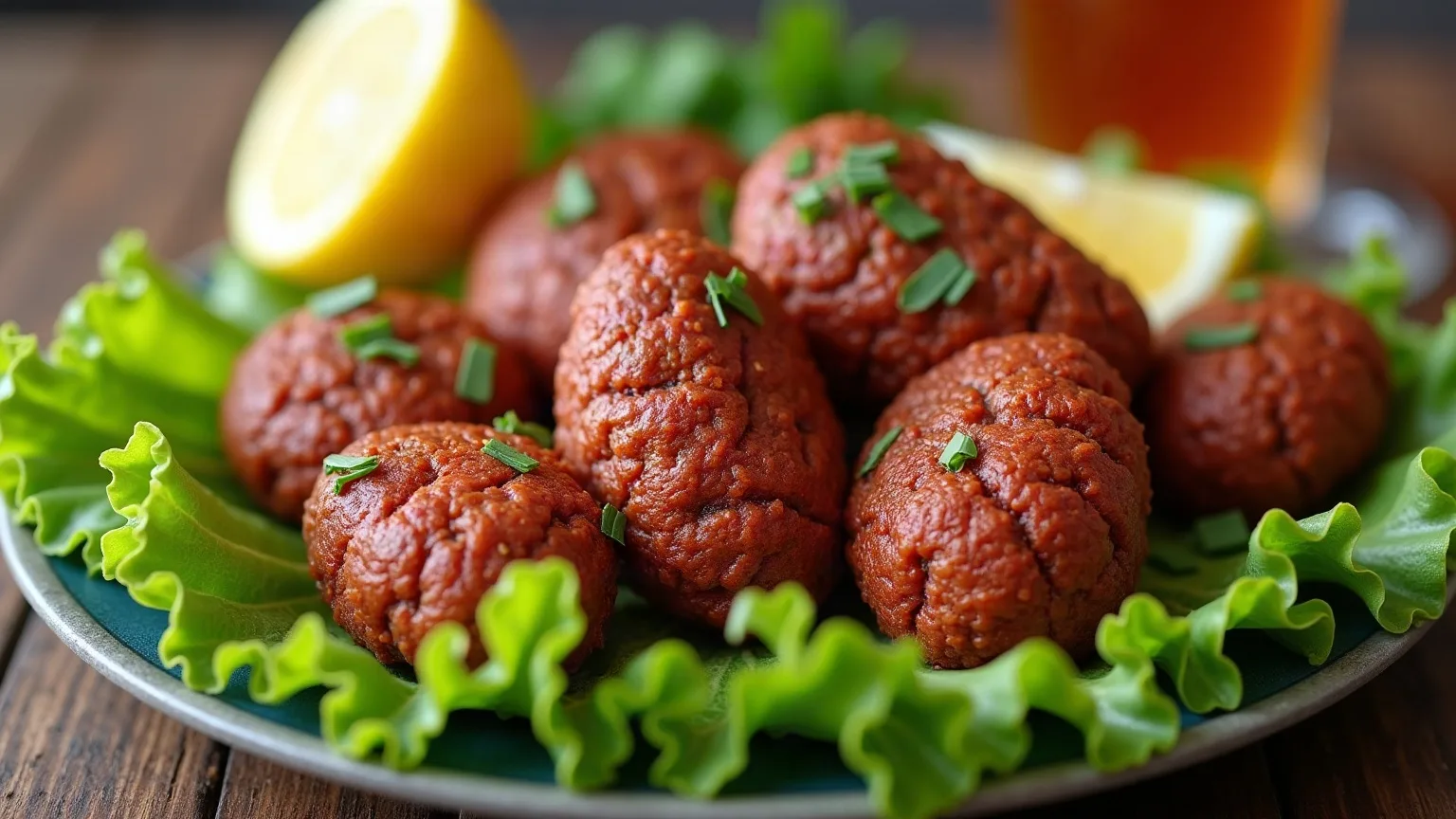
Çiğ köfte, without meat
The name says raw, but the bulgur is not: bulgur is wheat that has already been boiled, and here it is only soaked.…
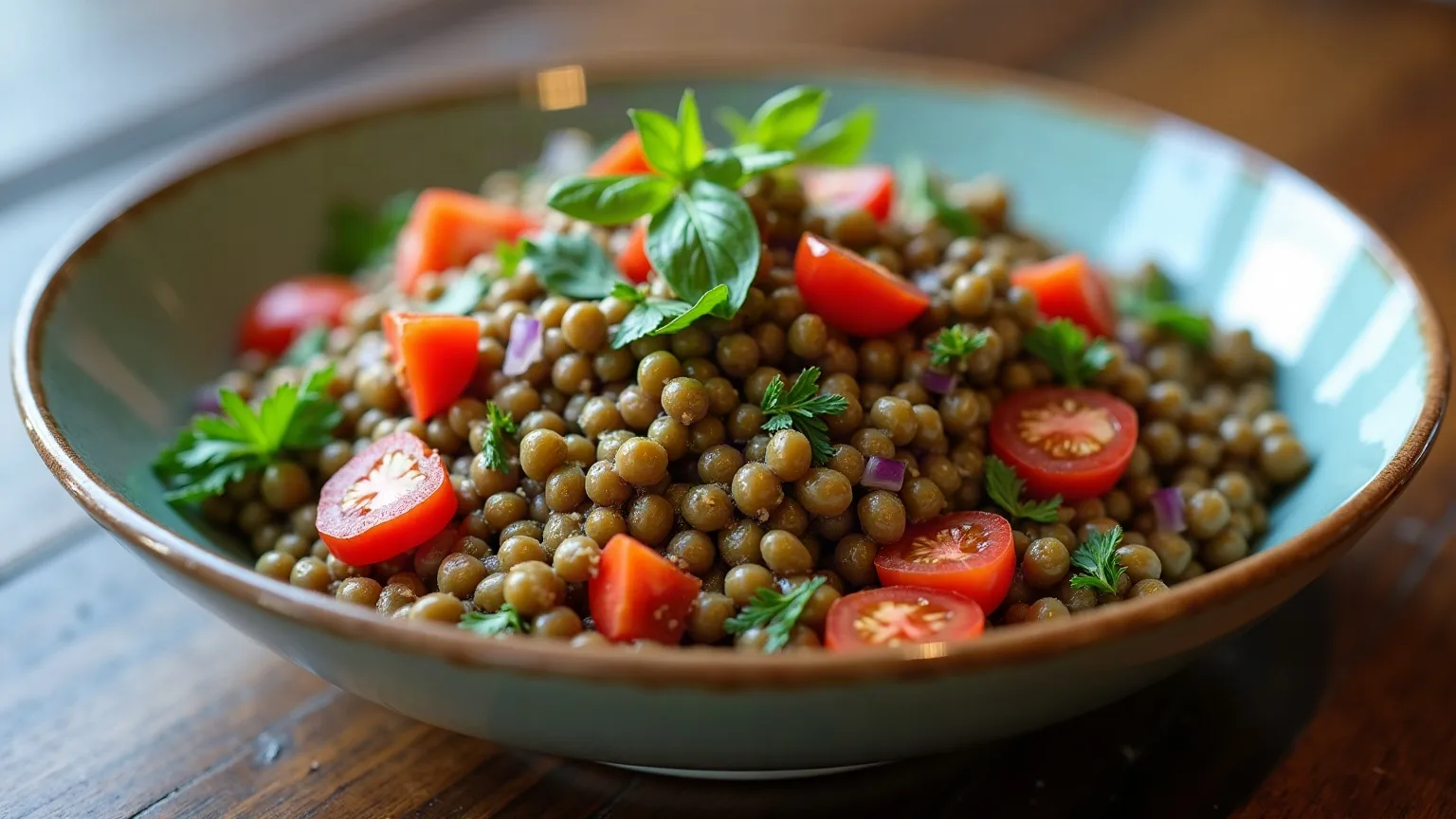
Green lentil salad
A lentil goes on cooking in its own heat for three or four minutes after the pan comes off. The eighteen minutes in this…