
Gavurdağı salad
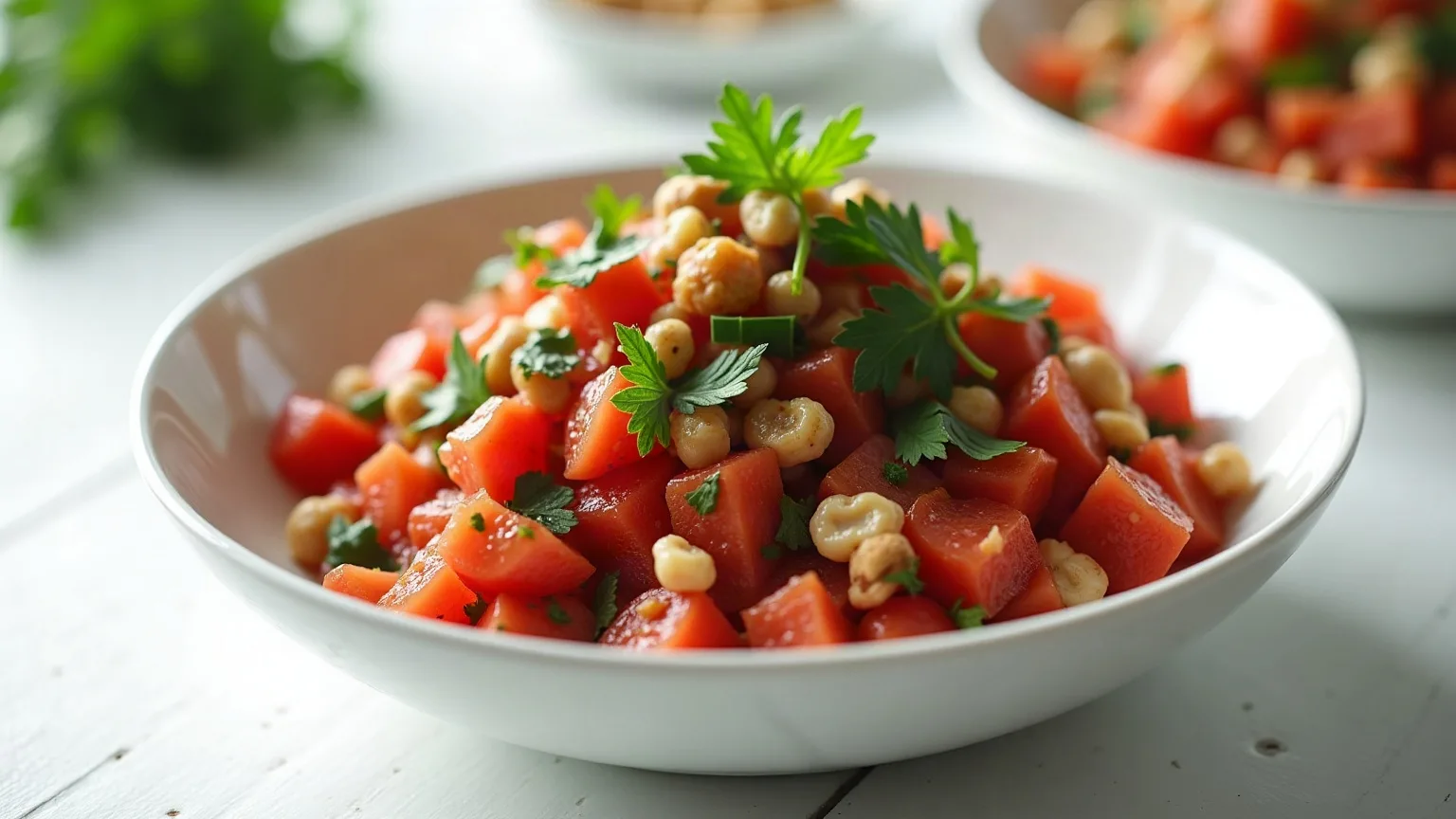
The Gaziantep form of shepherd’s salad, with walnuts, pomegranate molasses and sumac. The molasses goes in last, with the salt.
Meze · South-eastern Anatolia · Under 30 minutes · Vegan · Seasonal · For guests
- Preparation
- 20 min
- Cooking
- 0 min
- Difficulty
- Easy
- Cost
- Cheap
- Season
- Summer, Autumn
It takes its name from Gavurdağı, the local name for the Nur mountains between Gaziantep and Hatay. In the kebab houses of the south-east it takes the place of shepherd’s salad. What sets it apart is the fatty richness of walnut and the sweet-sour taste of pomegranate molasses, and the tomato here is cut very small.
Method
- Break the walnuts into coarse pieces: crushed to a powder they cloud the dressing.
You will need: A sharp knife · A chopping board · A sieve
-
Scoop out the seedy middle of the tomatoes and cut the flesh into 5–7 mm dice; chop the onion, pepper and parsley finely.
Look for The diced tomato should be dry, with clear corners.
Why The seedy middle holds most of a tomato’s water. In a finely cut salad that water runs straight into the bowl and dilutes the molasses.Starch still asleep The granules are just floating there doing nothing. No body arrives before 62 °C.
-
Put the vegetables in the bowl and add the walnuts, sumac and isot.
Look for The walnut pieces should be spread evenly.
Why The walnuts soak up some of the dressing and give the salad body; the sumac and isot go in before the salt so their taste is counted when the salt is decided.Starch still asleep The granules are just floating there doing nothing. No body arrives before 62 °C.
-
Just before serving, add the olive oil, pomegranate molasses and salt, mix and taste.
Look for The dressing should not pool at the bottom but cling to the vegetables as a glossy dark film.
Why Pomegranate molasses is both sugary and acidic, and like salt it draws water out of the vegetables by osmosis. Left dressed for more than ten minutes, the salad goes watery and the walnuts soften.If it went wrong
If it went watery, drain it for a minute in a sieve and add half a spoon more molasses and a few more walnuts.
Starch still asleep The granules are just floating there doing nothing. No body arrives before 62 °C.
Salt · 0.47% Low. Everything reads flat and nothing steps forward.
This recipe was run through the engine step by step — what goes in when, and at what temperature and for how long. The reactions above come from that run.
peak 18 °C · 15 minutes · engine 1.0.0 · confidence low
After the heat goes off
Beside kebabs, lahmacun or grilled meat.
Once dressed it does not keep. Undressed, the mix holds 12 hours in the fridge.
It is not heated.
It does not freeze.
The next day, spoon what is left over a plate of bulgur pilaf.
Walnuts are fine for older children, but whole or large pieces of nut are a choking risk under five; grind the walnuts finely or leave them out for a small child. Not for anyone with a tree nut allergy.
- Pomegranate molasses → Lemon Without molasses, half a lemon and a teaspoon of honey; flatter, but the balance holds.
- Cold The method this recipe rests on
- Tomato What it does in heat, water and acid
- Bulb onion What it does in heat, water and acid
- Pepper What it does in heat, water and acid
- Shepherd’s salad Similar method, or something that sits on the same table
- Spoon salad Similar method, or something that sits on the same table
- Kısır Similar method, or something that sits on the same table
- Under 30 minutes Other recipes that answer the same need
- Vegan Other recipes that answer the same need
- Seasonal Other recipes that answer the same need
- For guests Other recipes that answer the same need
What it tastes like
The axes that define this recipe: sour 25.
This profile is computed rather than measured: the role-weighted average of its ingredients’ taste vectors, shifted by what the cooking does. The thin line is the database average on that axis.
Closest in taste
Not hand-picked: ranked by distance across the eight taste axes.
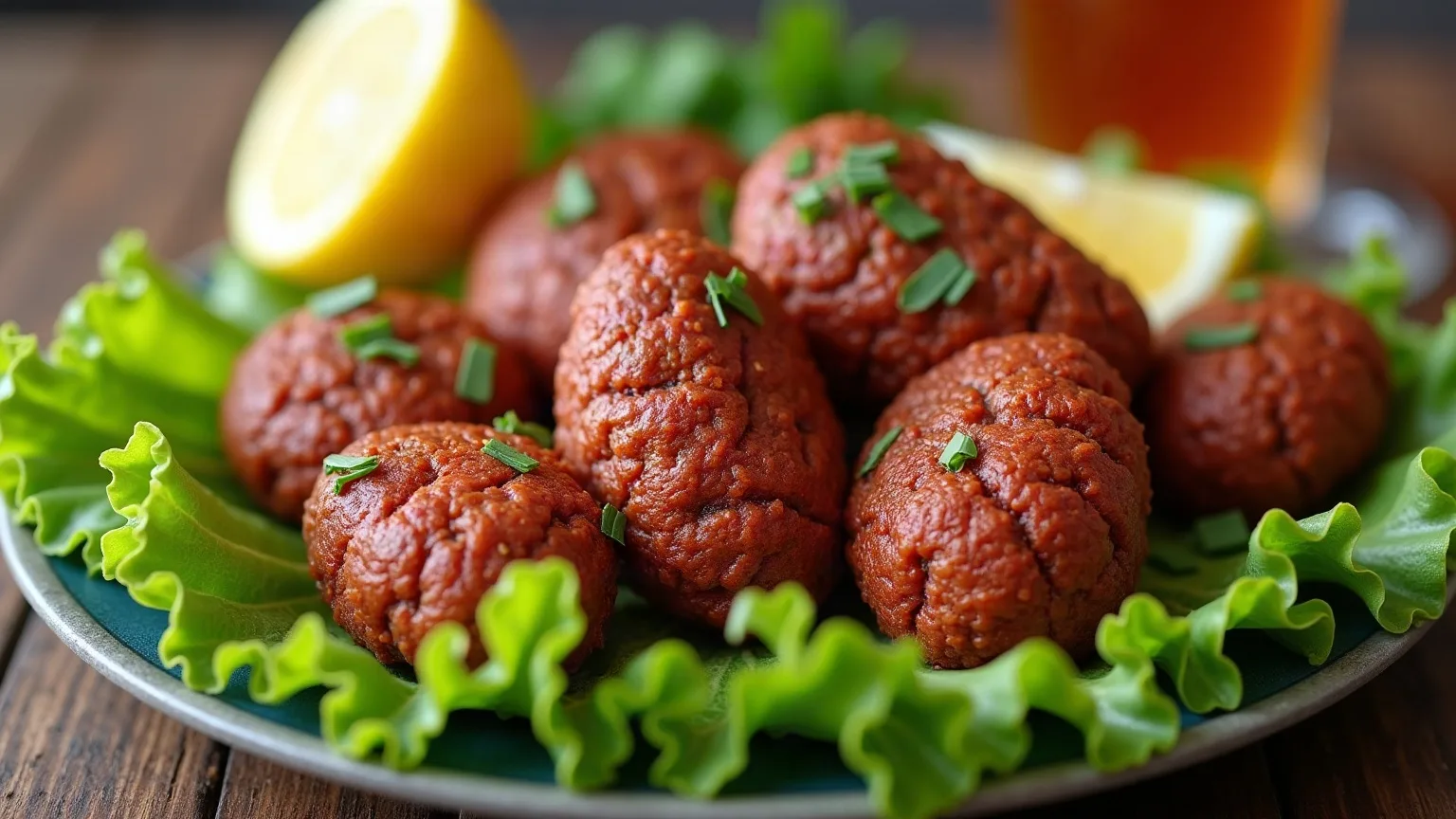
Çiğ köfte, without meat
The name says raw, but the bulgur is not: bulgur is wheat that has already been boiled, and here it is only soaked.…
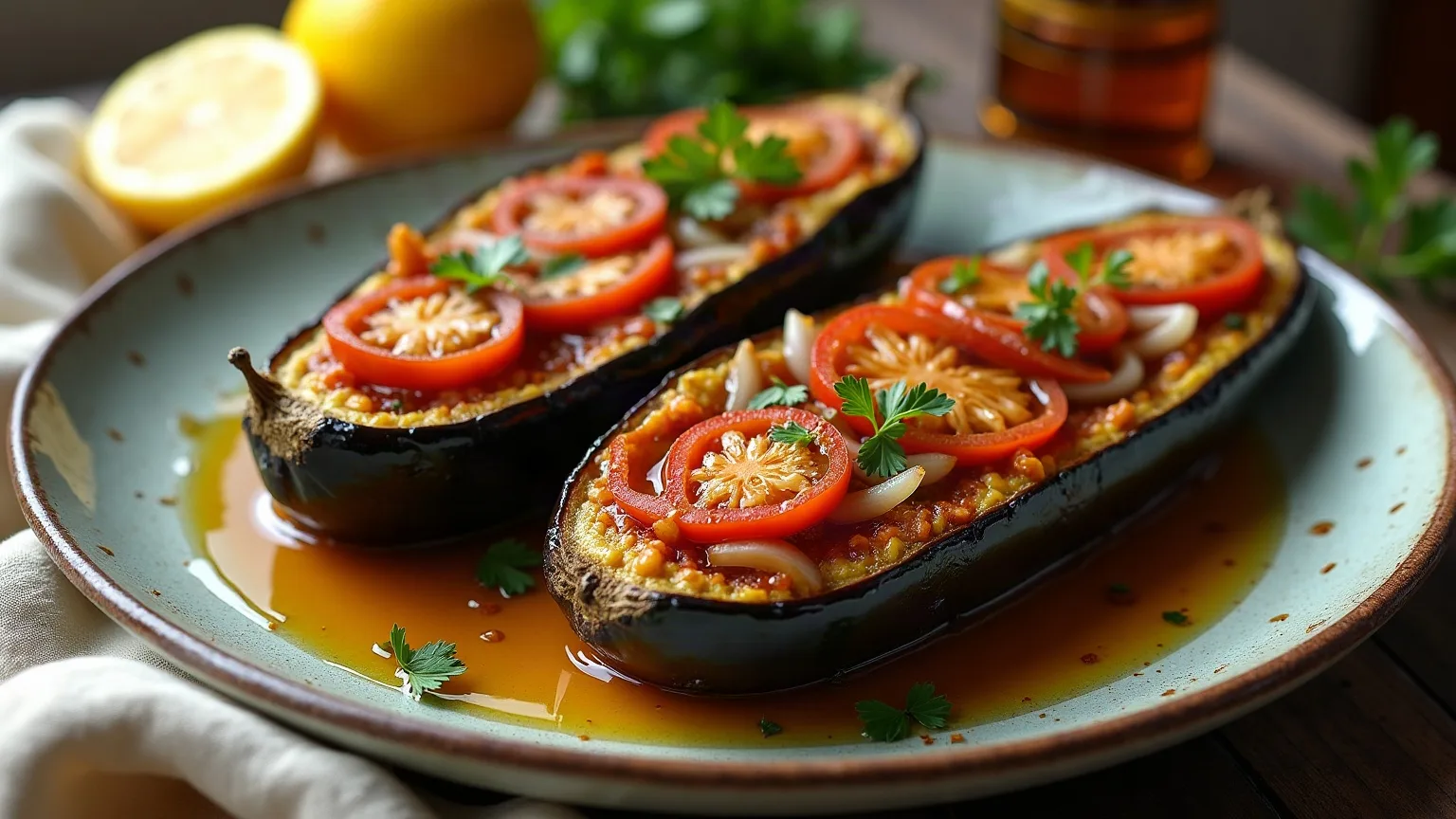
İmam bayıldı
Karnıyarık’s sibling: no meat, olive oil, eaten cold. The quantity of onion is not excessive — this is a dish about onio…
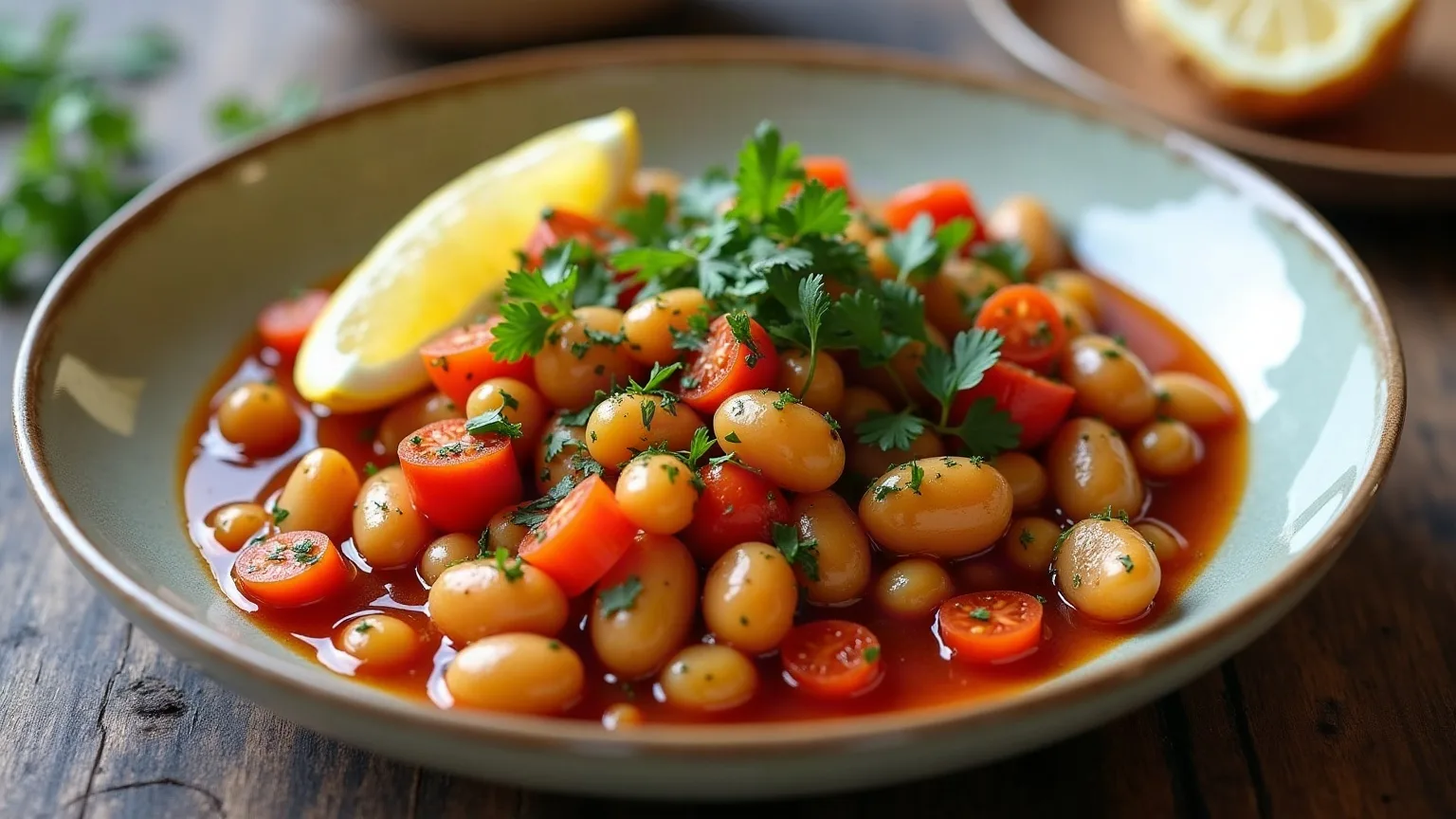
Borlotti bean pilaki
A pilaki is eaten cold, and that is why there is sugar in it: perception of sweetness drops as food cools, so what taste…
Black-eyed pea salad
The one dried pulse that needs no soak: its skin is thin and it softens in twenty-five minutes.…