
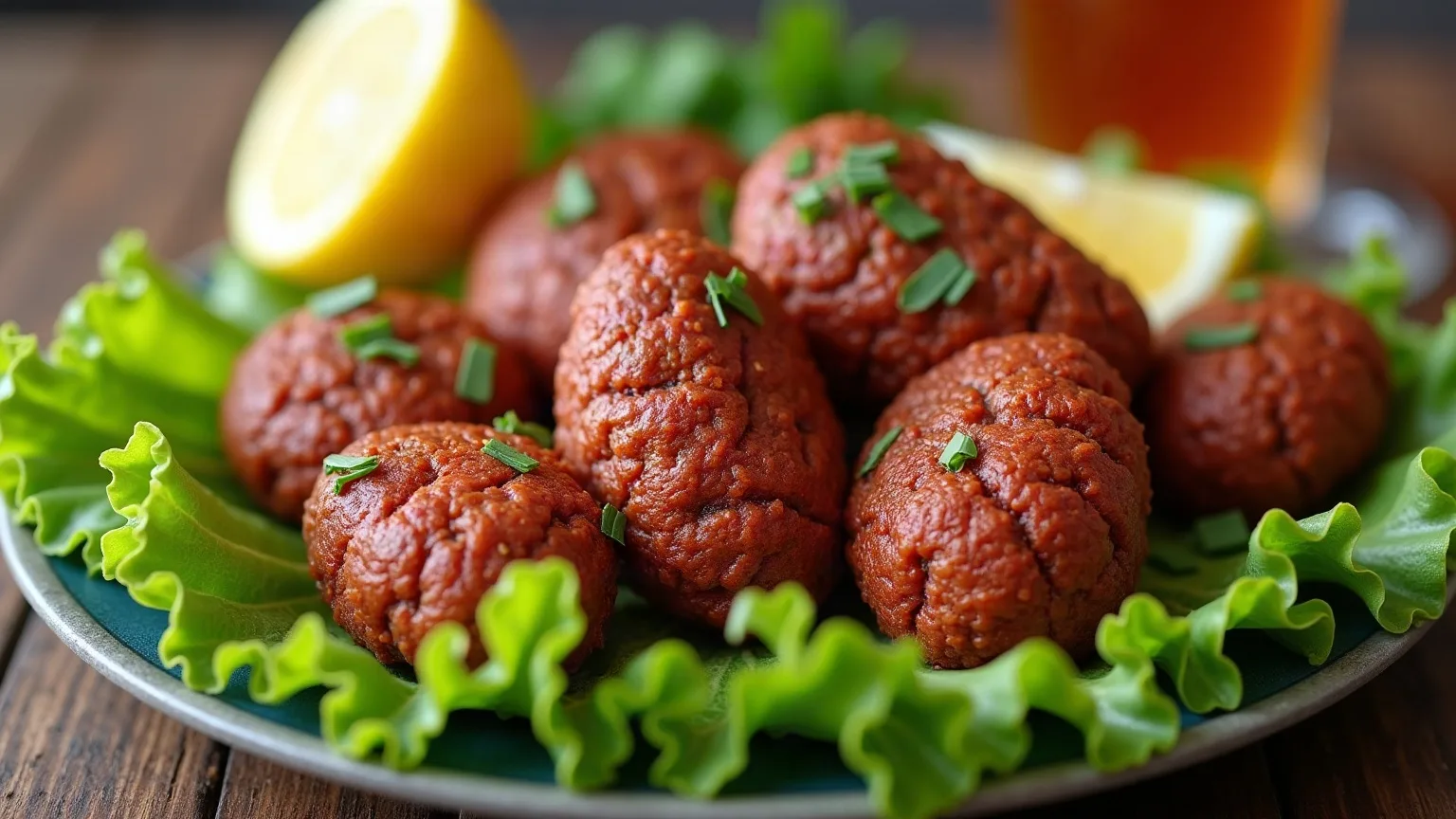
Çiğ köfte, without meat
The name says raw, but the bulgur is not: bulgur is wheat that has already been boiled, and here it is only soaked.
Meat dishes · South-eastern Anatolia · Budget · For guests · Vegan
- Preparation
- 55 min
- Cooking
- 0 min
- Resting
- 30 min
- Difficulty
- Practised hand
- Cost
- Very cheap
- Season
- All year
Çiğ köfte belongs to Şanlıurfa and Adıyaman and was traditionally made with raw mince. Commercial sale with raw meat was banned in Turkey in 2008, and nearly everything made and sold today is meatless. The ban looks like a loss, but the physics of the recipe is unchanged: the whole of it is forty minutes of kneading bulgur with paste and spice, and the starch opening into a paste as you knead.
Method
- Soak the bulgur in 300 ml of hot water for thirty minutes.
- Chop the onion and garlic almost to a grate: a coarse piece does not break down in the kneading.
- Free your arms up: this recipe means forty minutes of kneading.
You will need: A wide, deep basin · A covered container
-
Soak the bulgur in hot water for thirty minutes, until all of it has gone.
Look for No free water should remain in the basin, and squeezed in the hand the bulgur should hold together.
Why Bulgur is wheat that was already boiled and dried, and soaking swells it again. Too much water and the köfte will not hold; too little and the grains stay hard — which is why the ratio of 300 ml to 500 g is written down.Starch still asleep The granules are just floating there doing nothing. No body arrives before 62 °C.
A gluten web is forming Gliadin and glutenin hydrated into an elastic net. This is what will hold the gas. no way back
-
Add the paste, isot, cumin, salt and the grated onion and garlic, and knead for THIRTY TO FORTY MINUTES.
Look for It should turn deep red-brown, cling to the palm and hold the print of your fingers when squeezed.
Why Kneading opens the bulgur’s starch mechanically and builds a sticky gel between the grains; that gel is what holds a çiğ köfte together. Ten minutes and the mixture crumbles, forty and it takes a shape in the hand. There is no short version and no ingredient that substitutes for it.If it went wrong
If it crumbles, knead ten minutes more; if it still crumbles, add 50 ml of warm water and carry on. Do not add flour or egg — in a çiğ köfte the binder is the bulgur itself.
Starch still asleep The granules are just floating there doing nothing. No body arrives before 62 °C.
A gluten web is forming Gliadin and glutenin hydrated into an elastic net. This is what will hold the gas. no way back
Salt · 0.83% Right in the window. Flavours sharpen, bitterness retreats, water is held.
-
Add the pomegranate molasses and the olive oil and knead five minutes more.
Look for It should turn glossy and come away cleanly from the side of the basin.
Why Acid and fat go in last: acid added early slows the starch gelling, and fat added early coats the grains and stops them taking up water.Starch still asleep The granules are just floating there doing nothing. No body arrives before 62 °C.
A gluten web is forming Gliadin and glutenin hydrated into an elastic net. This is what will hold the gas. no way back
Salt · 0.77% Right in the window. Flavours sharpen, bitterness retreats, water is held.
-
Fold in the chopped parsley and spring onion, squeeze the mixture into finger-marked köfte and serve with lettuce leaves and lemon.
Look for Each one should keep the marks of your fingers clearly; if it does not, the kneading was not enough.
Why The greens go in last: kneaded long they crush and release water into the mixture. The lettuce is not a garnish but the vehicle — the water in the leaf is what balances the heat and the fat.Starch still asleep The granules are just floating there doing nothing. No body arrives before 62 °C.
A gluten web is forming Gliadin and glutenin hydrated into an elastic net. This is what will hold the gas. no way back
Salt · 0.56% Low. Everything reads flat and nothing steps forward.
This recipe was run through the engine step by step — what goes in when, and at what temperature and for how long. The reactions above come from that run.
Not simulated: Urfa pepper. The engine currently measures the chemistry of sixteen ingredients; the others count as weight in the pot but their composition does not enter the arithmetic. That is not "nothing happens", it is "nobody looked". In this recipe about 99% of the weight can be characterised that way, which makes every share above a lower bound.
peak 45 °C · 80 minutes · engine 1.0.0 · confidence low
After the heat goes off
Cold, wrapped in a lettuce leaf with plenty of lemon, and ayran beside it: milk protein is the only thing that cuts the heat.
Two days covered in the fridge. Being meatless there is no safety question; it firms up on the second day and a little water kneaded in opens it again.
Never reheated: çiğ köfte is eaten cold.
Not for the freezer: thawed, the bulgur releases its water and the mixture falls apart.
The leftovers, mixed with tomato and cucumber the next day, are eaten as a sort of kısır.
The isot makes it hot, so a child wants a separate batch. For 12–36 months leave the isot out entirely, halve the paste and lift their share before the salt: what is left is a bulgur and tomato paste that children usually like. Not suitable for a baby under one.
- Urfa pepper → Chilli flakes Without isot, chilli flakes with a pinch of sweet paprika come close, minus the smoke. No measured composition is held for isot, so the calculated figures do not count that line.
- Cold The method this recipe rests on
- Fine bulgur What it does in heat, water and acid
- Bulb onion What it does in heat, water and acid
- Romaine lettuce What it does in heat, water and acid
- İçli köfte Similar method, or something that sits on the same table
- Analı kızlı Similar method, or something that sits on the same table
- Budget Other recipes that answer the same need
- For guests Other recipes that answer the same need
- Vegan Other recipes that answer the same need
What it tastes like
No axis sits clearly above the average: a balanced recipe.
This profile is computed rather than measured: the role-weighted average of its ingredients’ taste vectors, shifted by what the cooking does. The thin line is the database average on that axis.
Closest in taste
Not hand-picked: ranked by distance across the eight taste axes.
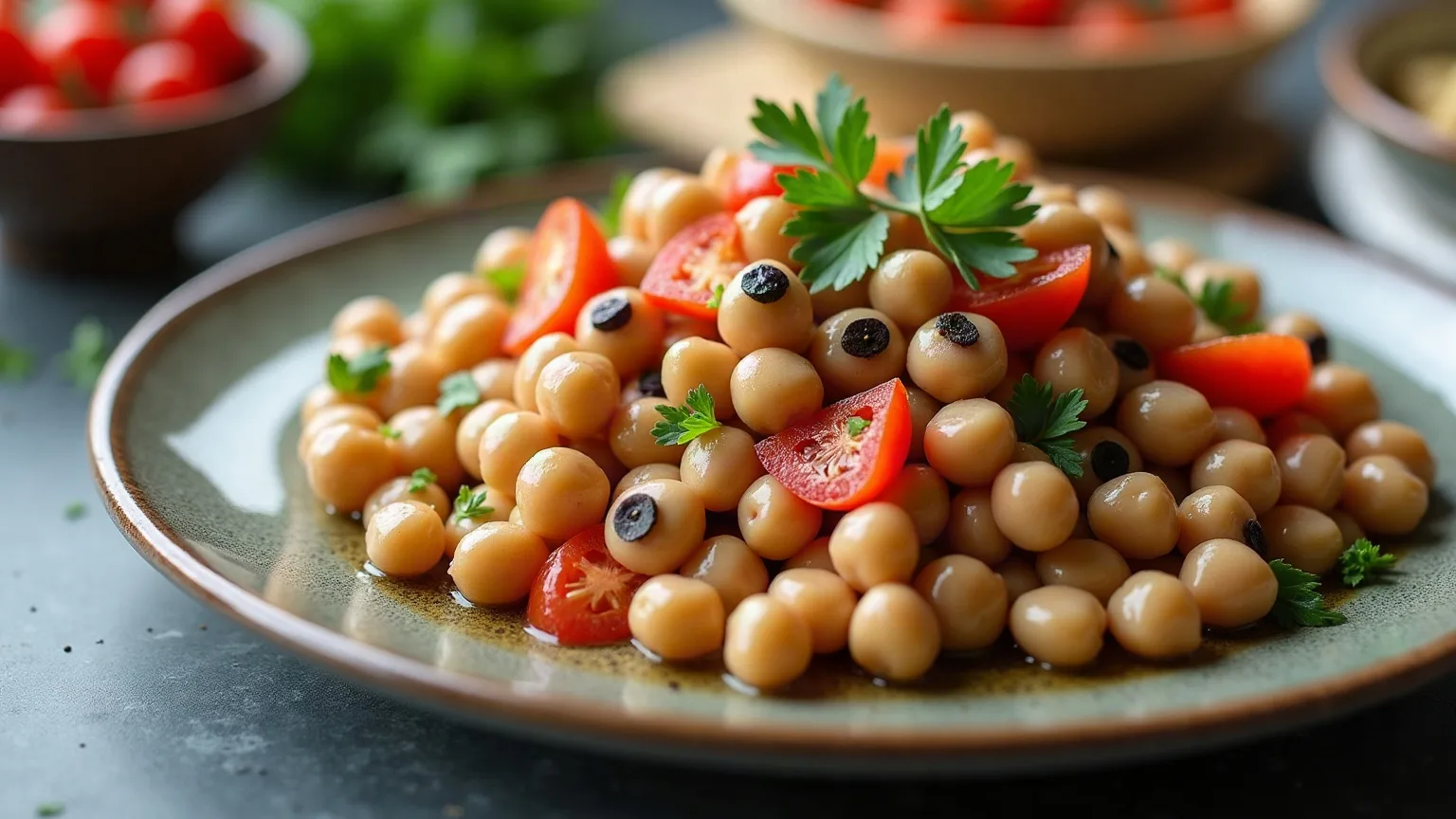
Black-eyed pea salad
The one dried pulse that needs no soak: its skin is thin and it softens in twenty-five minutes.…
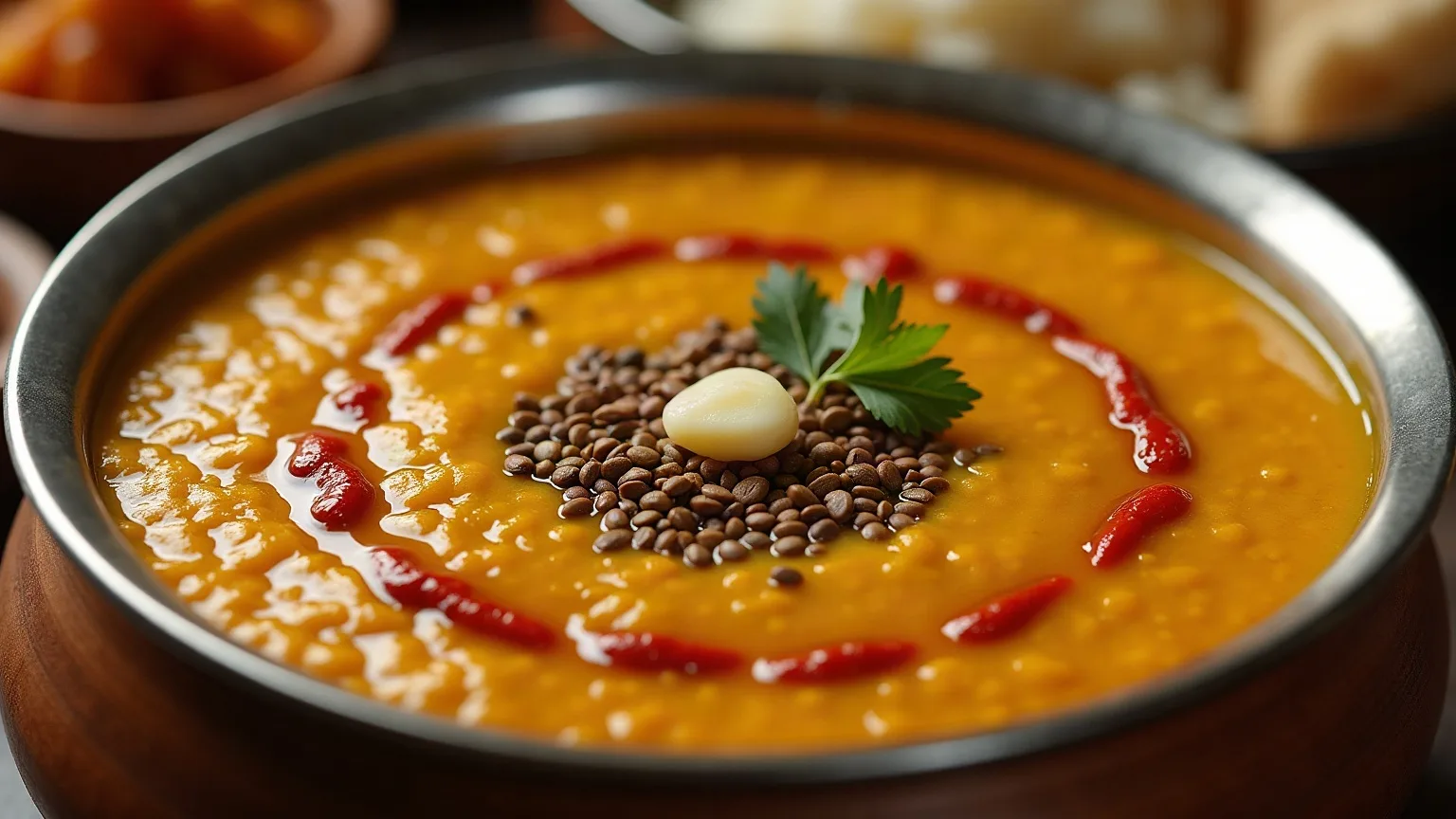
Red lentil dal
Twenty minutes of boiling lentils tastes of very little; almost all of the flavour is made in the last forty-five second…
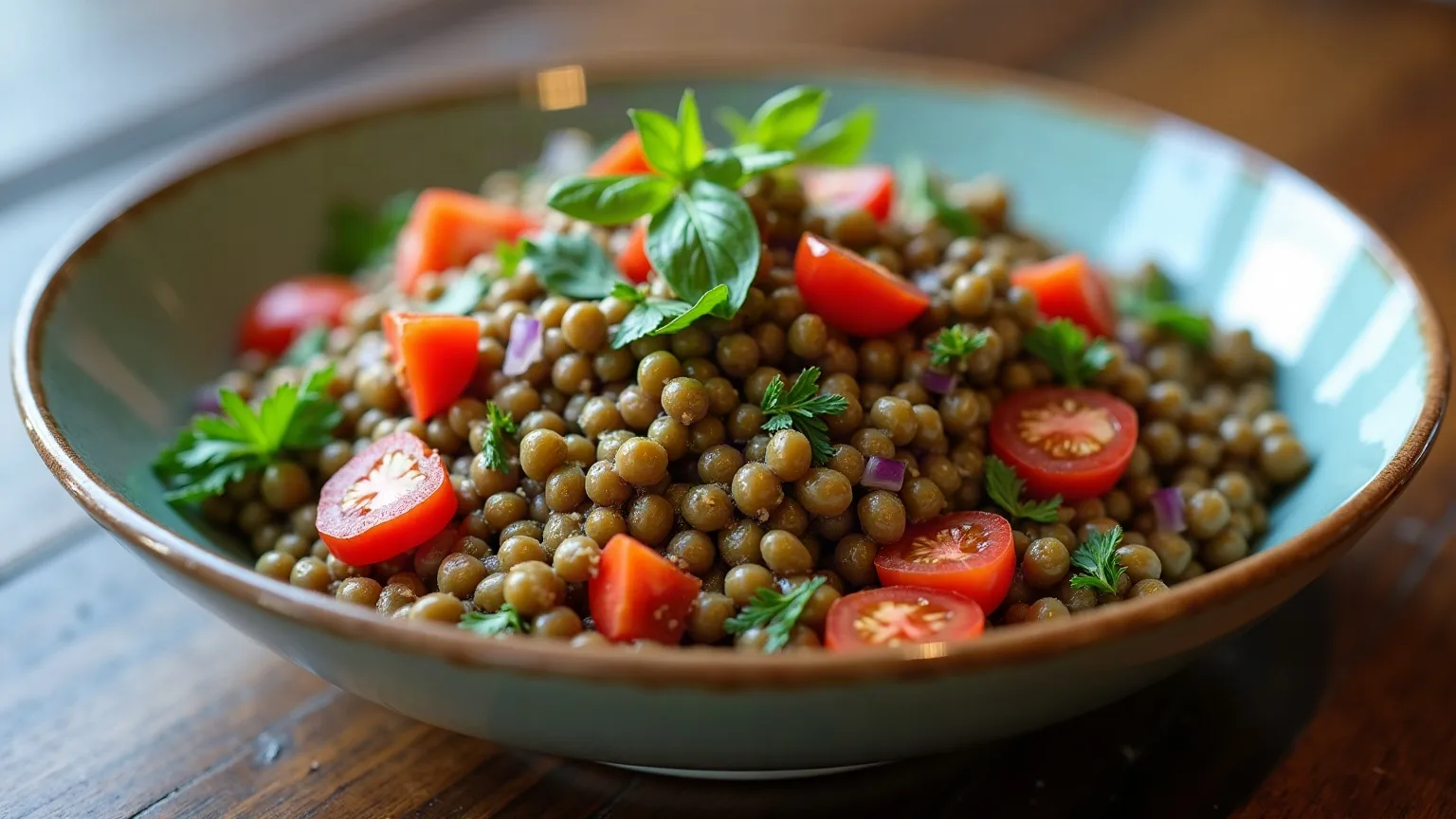
Green lentil salad
A lentil goes on cooking in its own heat for three or four minutes after the pan comes off. The eighteen minutes in this…
Chicken curry
Frying the spices in fat is not a step but half the recipe: their aromas dissolve in oil and not in water.…