
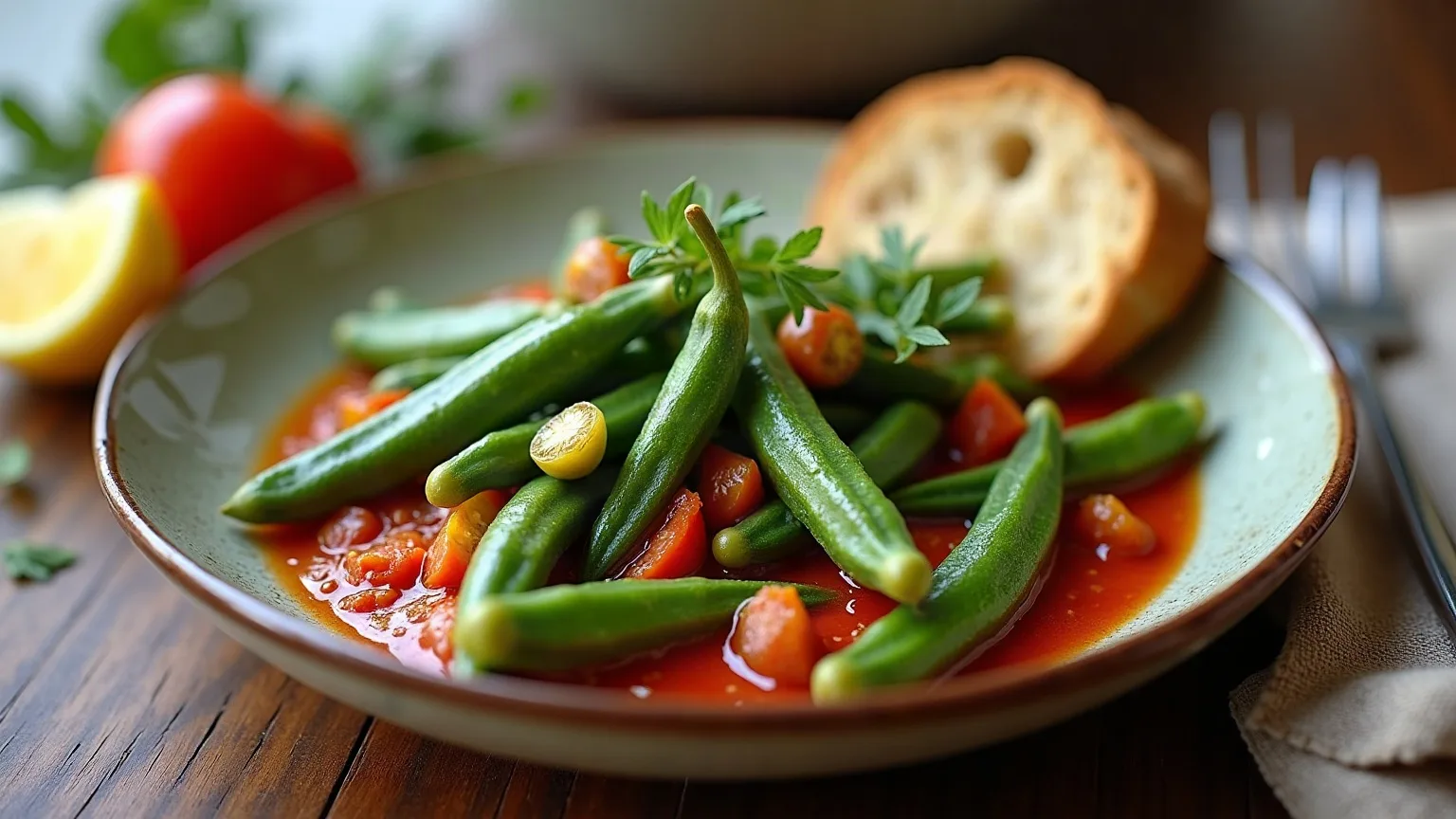
Okra in olive oil
Okra goes slimy for one reason: it was cut. Cooked without breaching the pod, it does not go slimy at all.
Vegetable dishes · Turkish · Seasonal · Vegan · One pot
- Preparation
- 25 min
- Cooking
- 30 min
- Resting
- 60 min
- Difficulty
- Practised hand
- Cost
- Cheap
- Season
- Summer
The mucilage in okra is a polysaccharide trapped in the cell walls. Cut the pod and it goes into the liquid, giving the familiar texture. The traditional instruction is to pare the stem in a cone without breaching the pod, and that is not a nicety: every cut surface means slime. Lemon or vinegar also partly precipitates the mucilage.
Method
- Pare the stems into a cone; the knife must NOT enter the pod.
- Soak the pared okra ten minutes in water with half a lemon squeezed into it, then drain.
You will need: A pan with a lid · A paring knife
-
Pare the stems into cones and soak them ten minutes in acidulated water.
Look for No cut anywhere on the pods, and the water going slightly cloudy.
Why Breaching the pod while paring releases the mucilage. The acidulated water precipitates and washes away what is on the surface; both do the same job.If it went wrong
If the pods were cut the dish will be slimy but not inedible: add another spoon of lemon at the end, since acid partly breaks the texture.
-
Soften the onion in the oil for eight minutes, add the garlic and tomato for six.
Look for The tomato should collapse into a thick sauce.
Why The tomato’s acid also helps precipitate the mucilage: cooking okra with tomato is as much a texture decision as a flavour one.Starch gelatinised The granules soaked up water, swelled and burst into a network. It has thickened, and it will firm further as it cools. no way back
-
Add the okra and spread it by SHAKING the pan rather than stirring; add the water, sugar, salt and the juice of one lemon, cover and cook twenty minutes on a low flame.
Look for The pods staying whole, and a sauce that is clear rather than stringy.
Why Stirring rubs the pods against each other and tears their surfaces, releasing the mucilage; shaking the pan does the same job without the tearing. The sugar balances okra’s slight bitterness.If it went wrong
If the sauce has gone stringy, add the juice of another lemon and boil three minutes: the acid precipitates the mucilage and the texture improves noticeably.
Starch gelatinised The granules soaked up water, swelled and burst into a network. It has thickened, and it will firm further as it cools. no way back
Salt · 0.49% Low. Everything reads flat and nothing steps forward.
-
Take it off, cool it uncovered for an hour and serve it at room temperature.
Look for Cooled, the sauce should be glossy and fluid.
Why The rule of olive-oil dishes: as it cools the oil coats the vegetable and the texture comes together. With okra, cooling also settles the mucilage further.Salt · 0.49% Low. Everything reads flat and nothing steps forward.
This recipe was run through the engine step by step — what goes in when, and at what temperature and for how long. The reactions above come from that run.
peak 140 °C · 106 minutes · engine 1.0.0 · confidence low
After the heat goes off
At room temperature with plenty of lemon and bread.
Three days in the fridge.
Not reheated: an olive-oil dish is eaten cold.
Not once cooked. Raw okra freezes, and frozen okra is actually less slimy, because the ice crystals break the mucilage first.
Stirred through rice or bulgur the next day as a cold plate.
Okra’s texture is unfamiliar to children, and okra cooked without being cut is far more acceptable. For 12–36 months halve the pods and lift their share before the salt. For a baby under one it can be mashed with the tomato sauce.
- Okra → Green beans Green beans give a similar dish with no mucilage problem at all; the cooking goes to twenty-five minutes.
- Olive oil dishes The method this recipe rests on
- Okra What it does in heat, water and acid
- Tomato What it does in heat, water and acid
- Bulb onion What it does in heat, water and acid
- Green beans in olive oil Similar method, or something that sits on the same table
- İmam bayıldı Similar method, or something that sits on the same table
- Türlü Similar method, or something that sits on the same table
- Seasonal Other recipes that answer the same need
- Vegan Other recipes that answer the same need
- One pot Other recipes that answer the same need
What it tastes like
The axes that define this recipe: sweet 30, aroma 54.
This profile is computed rather than measured: the role-weighted average of its ingredients’ taste vectors, shifted by what the cooking does. The thin line is the database average on that axis.
Closest in taste
Not hand-picked: ranked by distance across the eight taste axes.
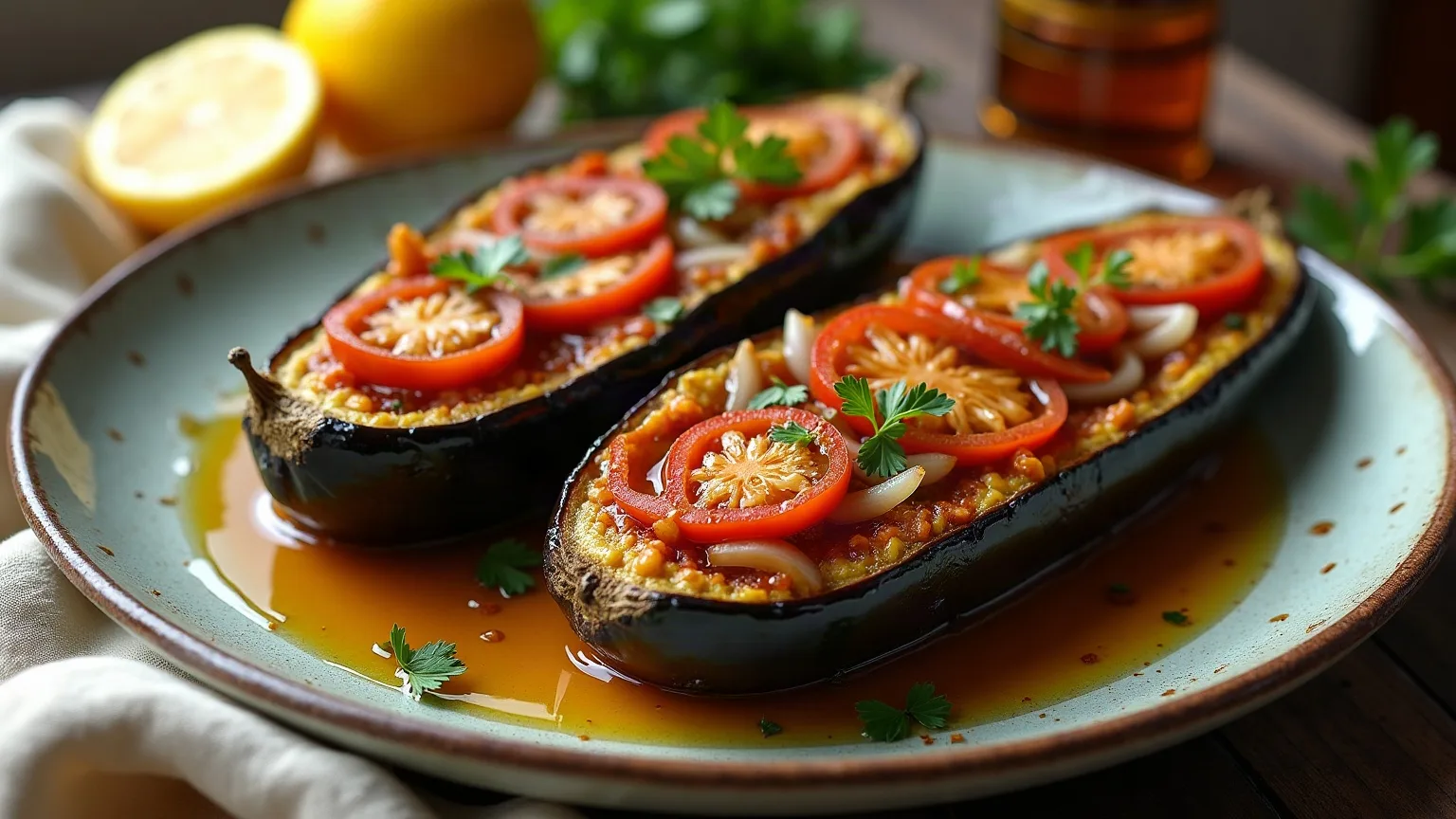
İmam bayıldı
Karnıyarık’s sibling: no meat, olive oil, eaten cold. The quantity of onion is not excessive — this is a dish about onio…
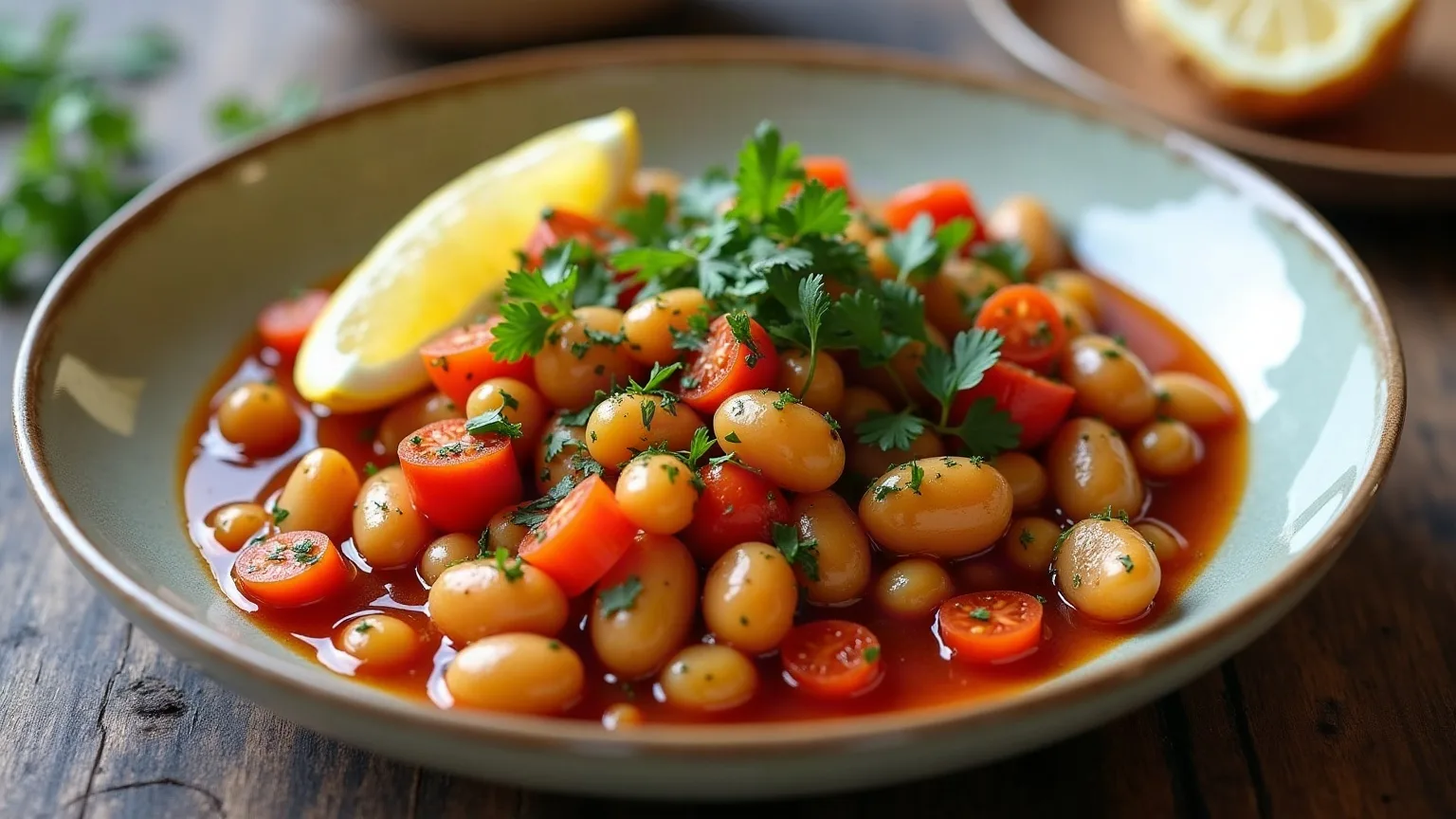
Borlotti bean pilaki
A pilaki is eaten cold, and that is why there is sugar in it: perception of sweetness drops as food cools, so what taste…
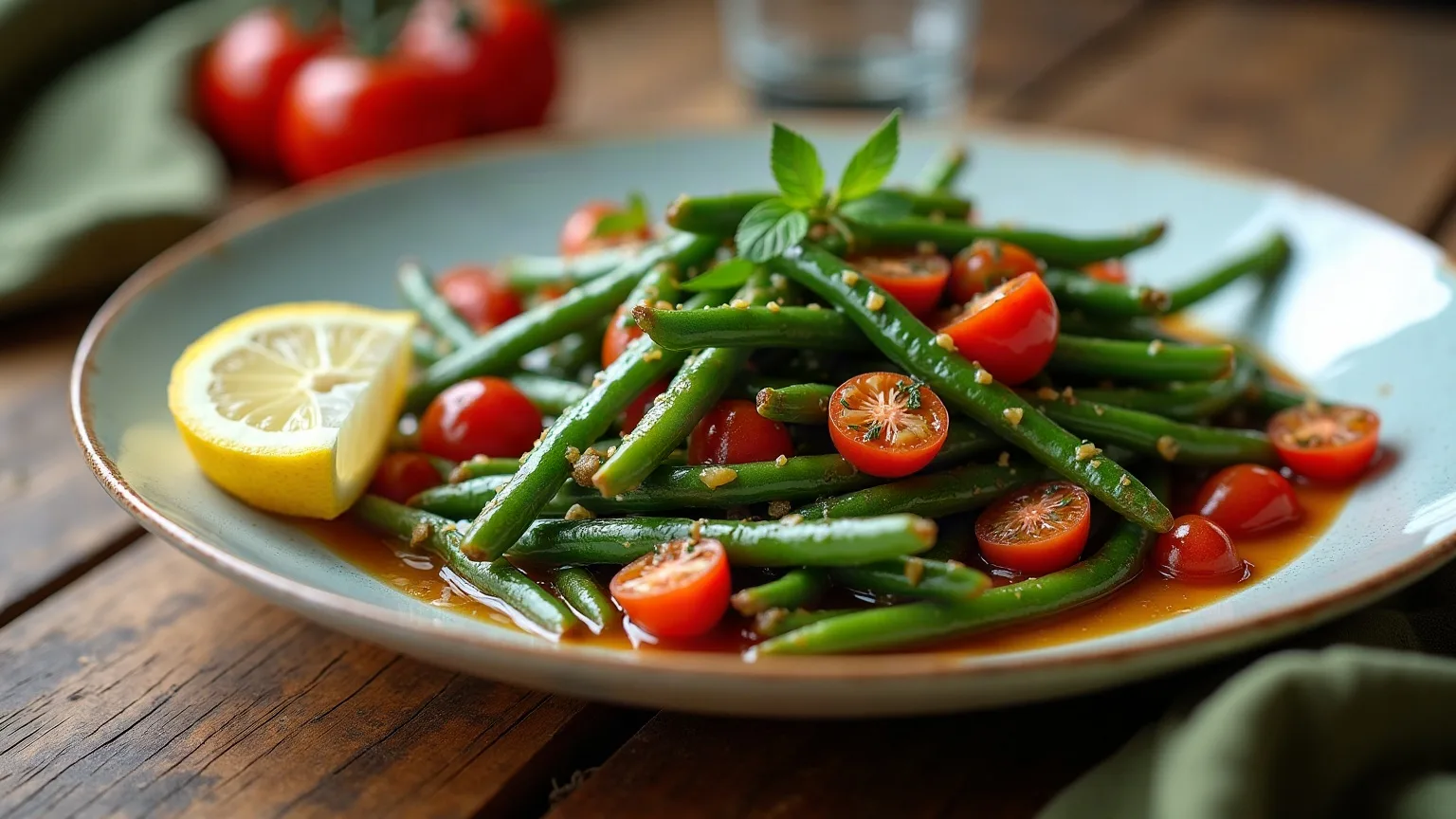
Green beans in olive oil
A classic that cooks in the vegetable’s own water, with none added. The secret is patience and a low flame: the beans sw…
Leeks in olive oil
Leek grit hides between the layers and rinsing does not reach it: it has to be cut first and soaked after.…