
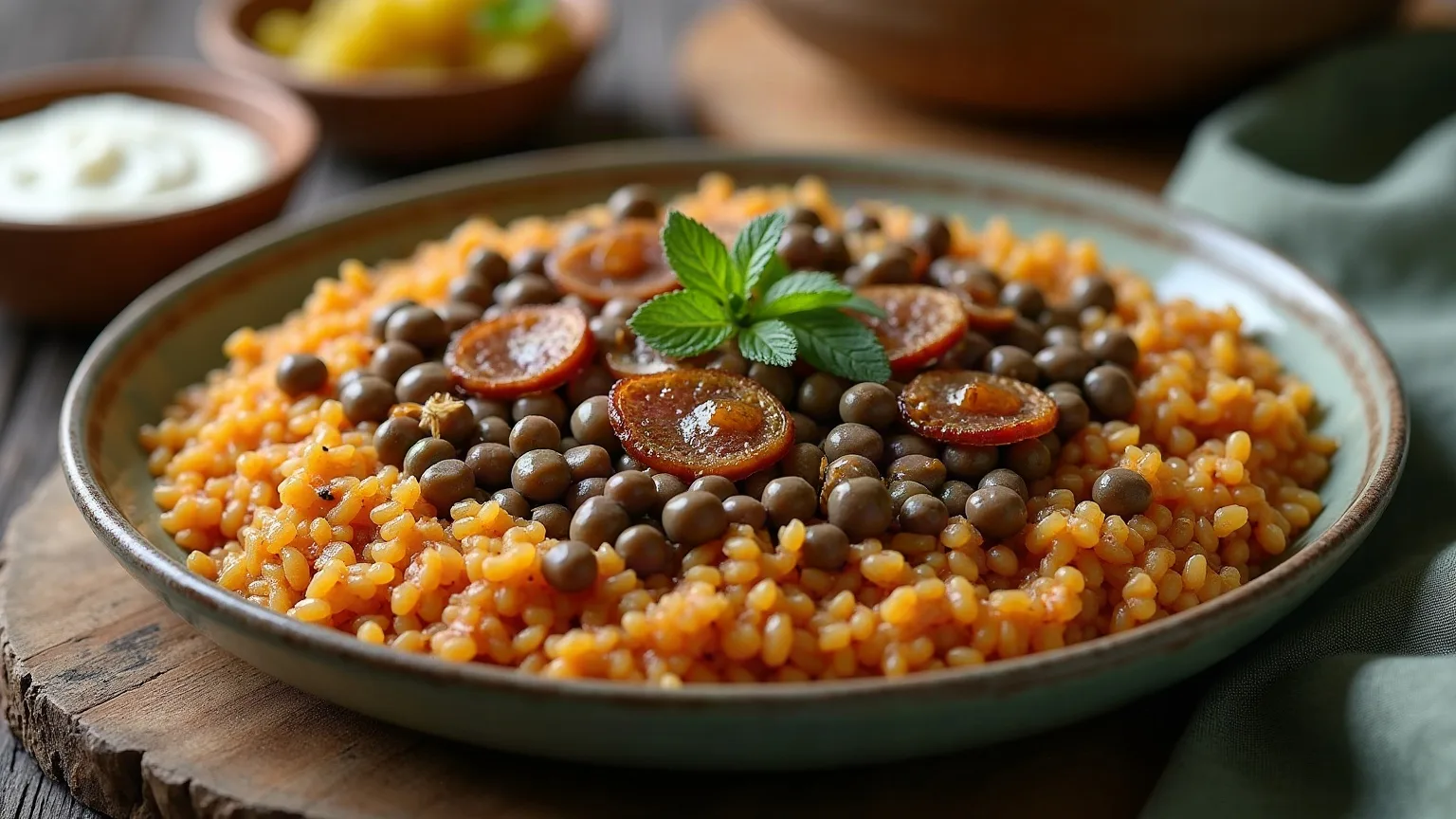
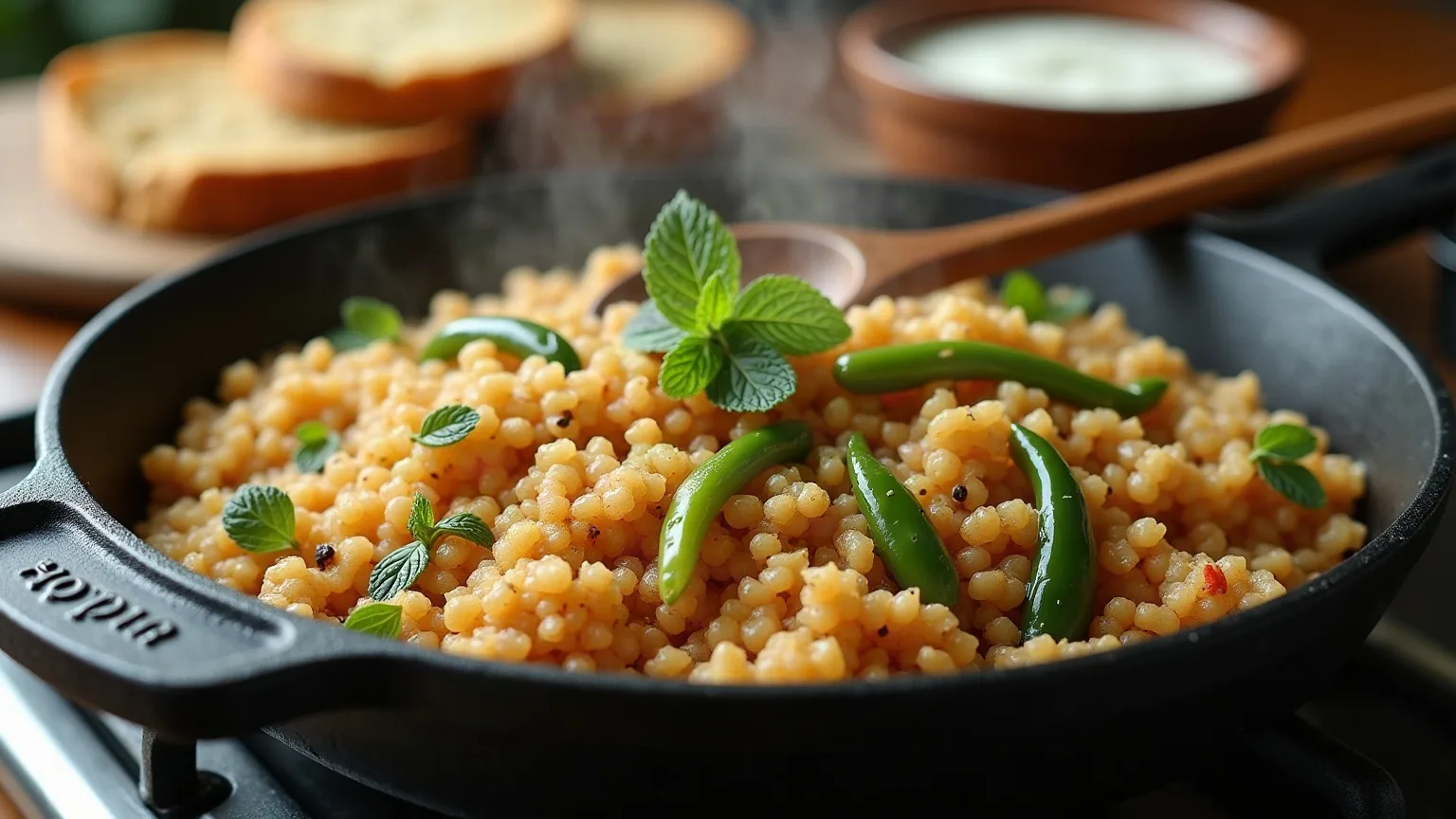
Bulgur pilaf with lentils
Two grains, two rules: the lentils must boil, the bulgur only absorbs. Put them in together and one collapses while the other stays hard.
Rice, bulgur and grains · Central Anatolia · Budget · One pot · Vegan · Weekend batch
- Preparation
- 10 min
- Cooking
- 35 min
- Resting
- 15 min
- Difficulty
- Needs attention
- Cost
- Very cheap
- Season
- Autumn, Winter
Bulgur with lentils is one of Anatolia’s oldest complete-protein plates, and it manages this without knowing it: the pulse brings lysine, the wheat brings methionine, and together they approach the amino acid profile of meat. The same pairing was found independently as *khichdi* in India, *mujaddara* in the Levant, and beans with maize in Mexico. Wherever meat was expensive the same answer appeared, long before anyone could describe the biochemistry. Serving it with ayran and pickles in Turkey continues the same instinct.
Method
- Rinse the green lentils and throw away any that float.
- Do not rinse the bulgur.
You will need: A pan with a lid · A sieve
-
Boil the lentils in 600 ml of unsalted water for twenty-two minutes, drain them and keep 375 ml of the liquid.
Look for The seeds should stay whole and give a little resistance when crushed.
Why Lentils do not soften without boiling and bulgur swells without ever boiling, which is why the two cannot go into the pan together. Keeping the cooking liquid is not optional either: most of the lentils’ taste and colour is in it.If it went wrong
If the lentils have collapsed, add the bulgur at once and present the plate as lentils with bulgur rather than the other way round: it is thicker, and it tastes right.
Starch gelatinised The granules soaked up water, swelled and burst into a network. It has thickened, and it will firm further as it cools. no way back
-
In another pan, fry the onions in the olive oil for eight minutes until the edges colour, then stir the paste in for a minute.
Look for Brown at the edges, still soft in the middle.
Why Browning the edges caramelises the onion’s sugars, and that is where the only savoury depth in this pilaf comes from. Onion cooked merely to translucency is not enough for these plates.Starch gelatinised The granules soaked up water, swelled and burst into a network. It has thickened, and it will firm further as it cools. no way back
Frying dynamics Surface water is flashing to steam and pushing outward — that is the shield keeping the oil out. no way back
The oil is under 170 °C. No shield forms, so the food soaks up fat and goes soggy.
-
Add the bulgur and turn it for two minutes, then add the drained lentils, the 375 ml of reserved liquid, the salt and the cumin.
Look for The liquid should stand about a finger above the bulgur.
Why The ratio is 1:1.5 again, but this time the moisture the lentils carry counts too — hence 375 ml rather than the 450 of a plain bulgur pilaf.Starch gelatinised The granules soaked up water, swelled and burst into a network. It has thickened, and it will firm further as it cools. no way back
A gluten web is forming Gliadin and glutenin hydrated into an elastic net. This is what will hold the gas. no way back
Maillard is running Amino acids have met reducing sugars. The crust, the roasted flavour and that smell all come from here. no way back
Salt · 0.47% Low. Everything reads flat and nothing steps forward.
Too much starch. It will set into a rubbery gel once cool — add more liquid.
-
Cover it, cook ten minutes over a low flame, take it off, scatter the mint and rest it fifteen minutes under a cloth.
Look for A fork should show the bulgur and the lentils as separate things.
Why The mint goes in off the heat: the menthol in dried mint evaporates fast at 100 °C, and mint boiled in the pan has lost its taste within ten minutes.Starch gelatinised The granules soaked up water, swelled and burst into a network. It has thickened, and it will firm further as it cools. no way back
A gluten web is forming Gliadin and glutenin hydrated into an elastic net. This is what will hold the gas. no way back
Salt · 0.47% Low. Everything reads flat and nothing steps forward.
Too much starch. It will set into a rubbery gel once cool — add more liquid.
This recipe was run through the engine step by step — what goes in when, and at what temperature and for how long. The reactions above come from that run.
peak 160 °C · 60 minutes · engine 1.0.0 · confidence low
After the heat goes off
Hot with yoghurt and pickles, and a pinch of cumin over it.
Four days in the fridge, and better on the second day.
Sprinkle water over it and steam it covered for six minutes.
Three months. This is one of the best pilafs for the freezer: neither the bulgur nor the lentils lose texture.
A ladle of water turns it into soup; fried in a pan it becomes something crisp.
A good plate for protein and iron. Suitable mashed for a baby from eight months, starting small because the fibre is high. Fine as it is for 12–36 months, with the cumin added at the table. It contains gluten.
A portion carries about 19 g of protein and a good deal of fibre, and because the amino acids of the two grains complete each other it stands up as a meat-free training meal.
- Green lentils (dry) → Chickpea Boiled chickpeas work; they take forty minutes and their liquid is starchier, so the pilaf comes out more bound.
- Boiling & poaching The method this recipe rests on
- Bulb onion What it does in heat, water and acid
- Coarse bulgur What it does in heat, water and acid
- Green lentils (dry) What it does in heat, water and acid
- Bulgur pilaf Similar method, or something that sits on the same table
- Green lentil stew Similar method, or something that sits on the same table
- Tomato bulgur pilaf Similar method, or something that sits on the same table
- Budget Other recipes that answer the same need
- One pot Other recipes that answer the same need
- Vegan Other recipes that answer the same need
- Weekend batch Other recipes that answer the same need
What it tastes like
No axis sits clearly above the average: a balanced recipe.
This profile is computed rather than measured: the role-weighted average of its ingredients’ taste vectors, shifted by what the cooking does. The thin line is the database average on that axis.
Closest in taste
Not hand-picked: ranked by distance across the eight taste axes.
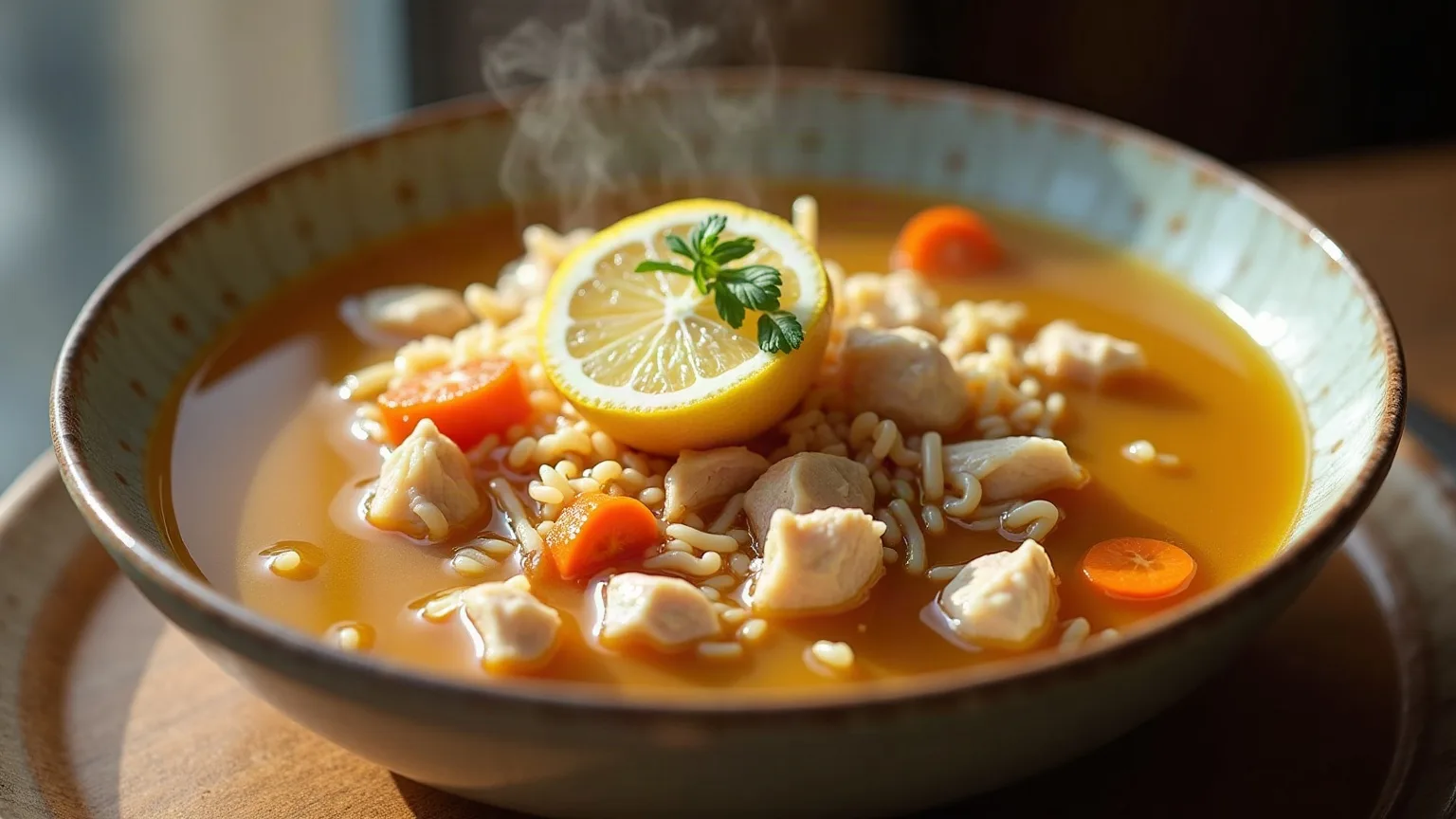
Chicken broth soup
What makes a broth clear is not the ingredients but the temperature: a pan that passes 95 °C guarantees a cloudy one.…
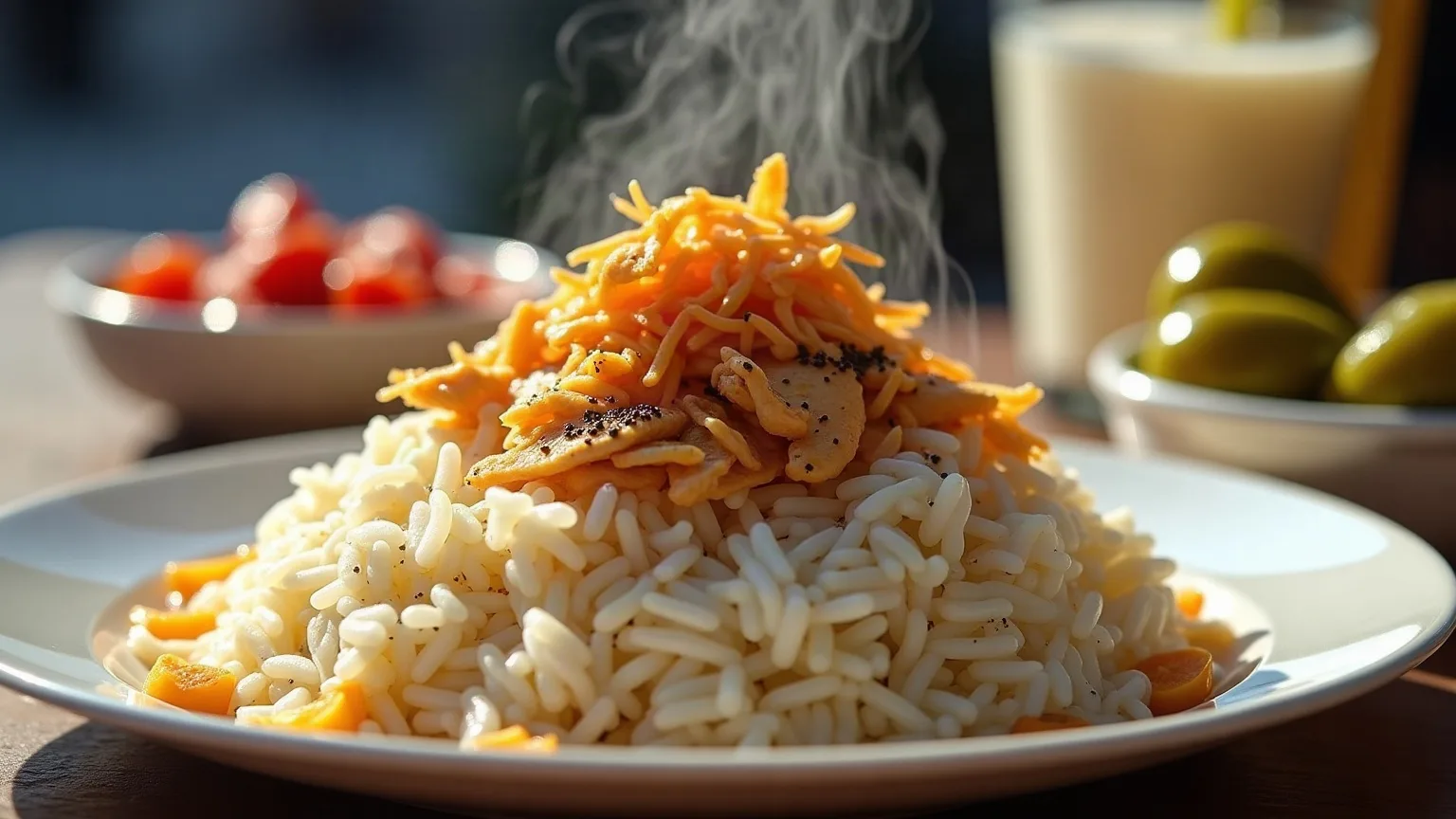
Chicken pilaf
When the water for the rice is the water the chicken cooked in, the dish becomes something else. Made with plain water, …
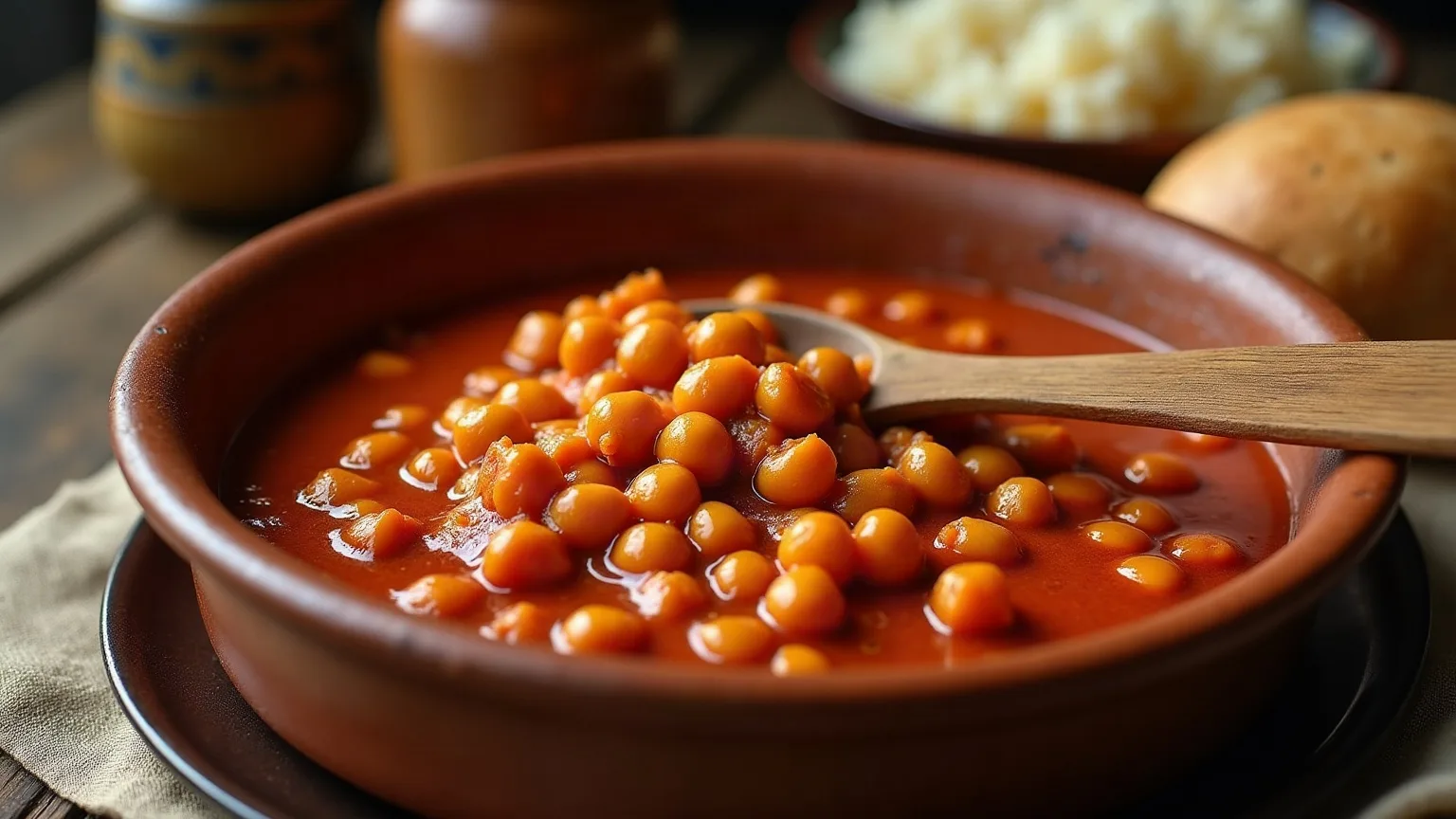
Chickpea stew
Dried chickpeas, tomato paste and olive oil — and a pinch of bicarbonate that halves the cooking time.…
Bulgur pilaf
Bulgur does not cook, it takes up water. It is wheat that has already been boiled, so what matters is not the time on th…