
Bulgur pilaf
Bulgur does not cook, it takes up water. It is wheat that has already been boiled, so what matters is not the time on the flame but the time under the lid.
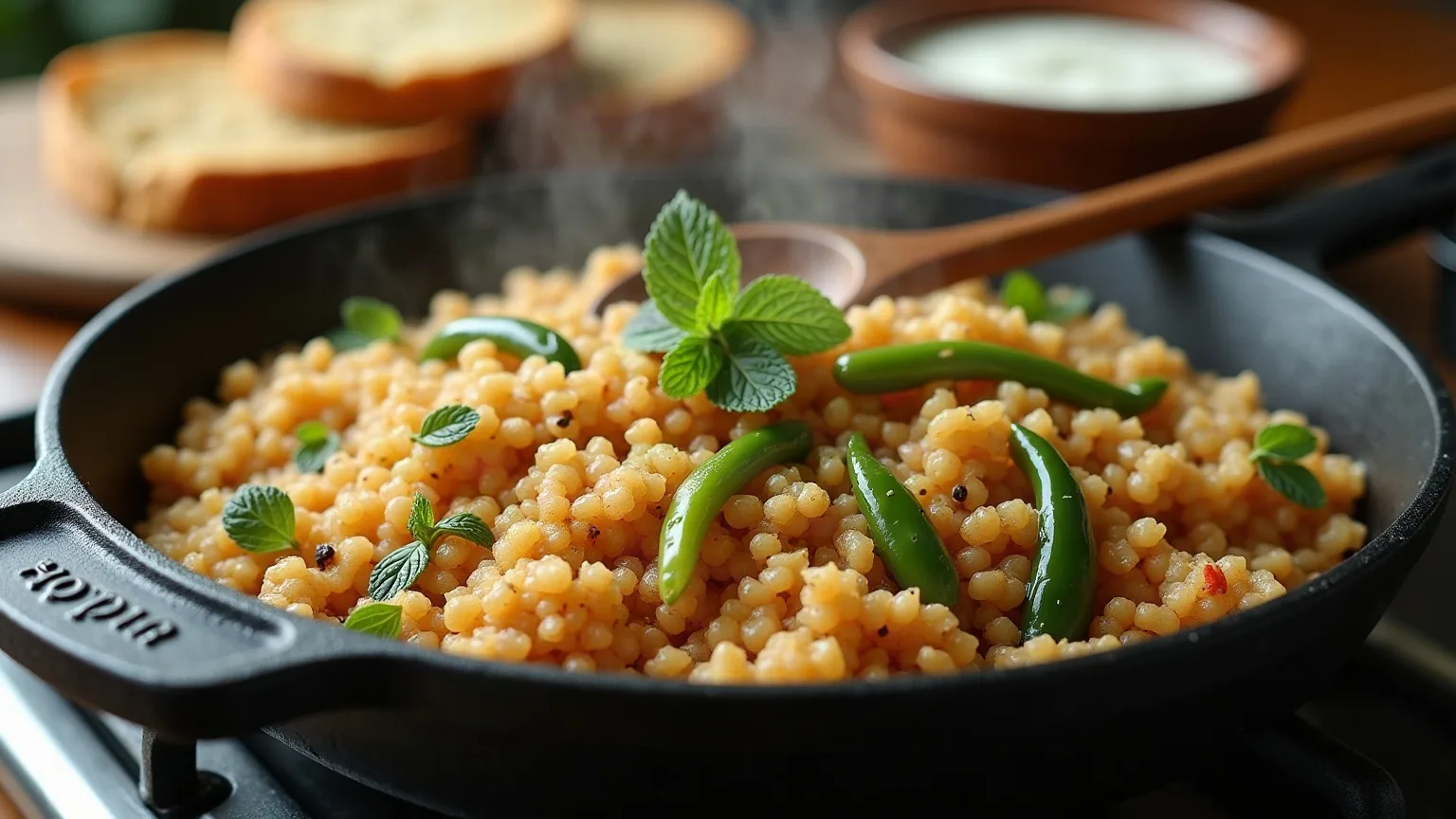
Rice, bulgur and grains · South-eastern Anatolia · Under 30 minutes · Budget · One pot · Vegan
- Preparation
- 10 min
- Cooking
- 12 min
- Resting
- 15 min
- Difficulty
- Easy
- Cost
- Very cheap
- Season
- All year
Bulgur is wheat boiled, dried and cracked, and those three steps are a preservation technology at least four thousand years old. The boiling gelatinises the starch, the drying lowers the water activity and the cracking shortens the cooking — bulgur is one of history’s first convenience foods. Through the centuries when rice was expensive it was the everyday grain of Anatolia, and in the southeast pilaf still means bulgur first. It behaves differently from rice for a technological reason: rice is a raw seed and bulgur a half-cooked product.
Method
- Do not rinse the bulgur: rinsing washes its already gelatinised starch into the water and the pilaf goes pasty.
- Boil the water. Bulgur takes up warm water slowly and ends up wet outside and hard in the middle.
You will need: A pan with a lid · A clean cloth
-
Soften the onion and pepper in the olive oil for six minutes, then stir the tomato paste in for a minute.
Look for The paste should turn deep brick and the oil separate at the edge.
Why That minute takes the raw edge off the paste, and the fat takes up its lycopene so the colour spreads right through the pilaf.Starch gelatinised The granules soaked up water, swelled and burst into a network. It has thickened, and it will firm further as it cools. no way back
Maillard is running Amino acids have met reducing sugars. The crust, the roasted flavour and that smell all come from here. no way back
-
Add the bulgur and turn it for two minutes until it is coated in the fat.
Look for The grains should shine and pour separately in the pan.
Why As with rice, the film of fat slows how fast water enters — and it matters more here, because bulgur takes water far faster than rice and in a dry pan the outside swells and collapses at once.Starch gelatinised The granules soaked up water, swelled and burst into a network. It has thickened, and it will firm further as it cools. no way back
A gluten web is forming Gliadin and glutenin hydrated into an elastic net. This is what will hold the gas. no way back
Maillard is running Amino acids have met reducing sugars. The crust, the roasted flavour and that smell all come from here. no way back
Too much starch. It will set into a rubbery gel once cool — add more liquid.
-
Add the boiling water and salt, stir once, cover and cook ten minutes over a low flame.
Look for By the tenth minute there should be no free water on the surface.
Why The ratio is 1:1.5. It looks like the rice ratio but is not the same thing: rice takes that water by cooking, bulgur only absorbs it. Which is why excess water cannot be recovered here — the starch has already gelled and what is left pools in the bottom.If it went wrong
If water is left in the bottom, take the lid off and give it three minutes on the lowest flame. If the bulgur has taken too much and collapsed there is no way back: put yoghurt over it and serve it as a different dish.
Starch gelatinised The granules soaked up water, swelled and burst into a network. It has thickened, and it will firm further as it cools. no way back
A gluten web is forming Gliadin and glutenin hydrated into an elastic net. This is what will hold the gas. no way back
Salt · 0.69% Right in the window. Flavours sharpen, bitterness retreats, water is held.
Too much starch. It will set into a rubbery gel once cool — add more liquid.
-
Off the heat, scatter the mint over, lay a cloth between pan and lid and rest it fifteen minutes.
Look for Split a grain: the inside should be the same colour and the same softness as the outside.
Why The rest is longer than for rice, because the grain is coarse and the moisture needs time to reach its centre. Cut it at ten minutes and the middle of the grain stays a little hard.Starch gelatinised The granules soaked up water, swelled and burst into a network. It has thickened, and it will firm further as it cools. no way back
A gluten web is forming Gliadin and glutenin hydrated into an elastic net. This is what will hold the gas. no way back
Salt · 0.69% Right in the window. Flavours sharpen, bitterness retreats, water is held.
Too much starch. It will set into a rubbery gel once cool — add more liquid.
This recipe was run through the engine step by step — what goes in when, and at what temperature and for how long. The reactions above come from that run.
peak 150 °C · 34 minutes · engine 1.0.0 · confidence low
After the heat goes off
Hot with yoghurt or cacık. It does the same job beside lamb or chicken.
Three days in the fridge. Bulgur pilaf keeps better than rice: less of its starch retrogrades in the cold.
Sprinkle water over it and steam it covered for five minutes. Frying it in a pan works too and crisps the edges.
Three months. Bulgur takes the freezer better than rice: the texture does not noticeably suffer on thawing.
Pressed into patties and fried, tossed into a salad, or used to stuff peppers.
Bulgur is a whole grain and high in fibre. It suits a baby from eight months, mashed and starting with a small portion. Fine as it is for 12–36 months. Being wheat, it contains gluten.
Bulgur has a markedly lower glycaemic index than white rice and more fibre: better than rice for a meal two or three hours before training, too heavy immediately before it.
- Tomato paste → Tomato Two grated tomatoes work; then drop the water to 380 ml, because the tomato brings its own.
- Coarse bulgur → Rice With rice you have to rinse, and the time goes to fifteen minutes — the opposite of bulgur.
- Boiling & poaching The method this recipe rests on
- Coarse bulgur What it does in heat, water and acid
- Bulb onion What it does in heat, water and acid
- Olive oil What it does in heat, water and acid
- Bulgur pilaf with lentils Similar method, or something that sits on the same table
- Tomato bulgur pilaf Similar method, or something that sits on the same table
- Buttered pilaf Similar method, or something that sits on the same table
- Under 30 minutes Other recipes that answer the same need
- Budget Other recipes that answer the same need
- One pot Other recipes that answer the same need
- Vegan Other recipes that answer the same need
What it tastes like
No axis sits clearly above the average: a balanced recipe.
This profile is computed rather than measured: the role-weighted average of its ingredients’ taste vectors, shifted by what the cooking does. The thin line is the database average on that axis.
Closest in taste
Not hand-picked: ranked by distance across the eight taste axes.
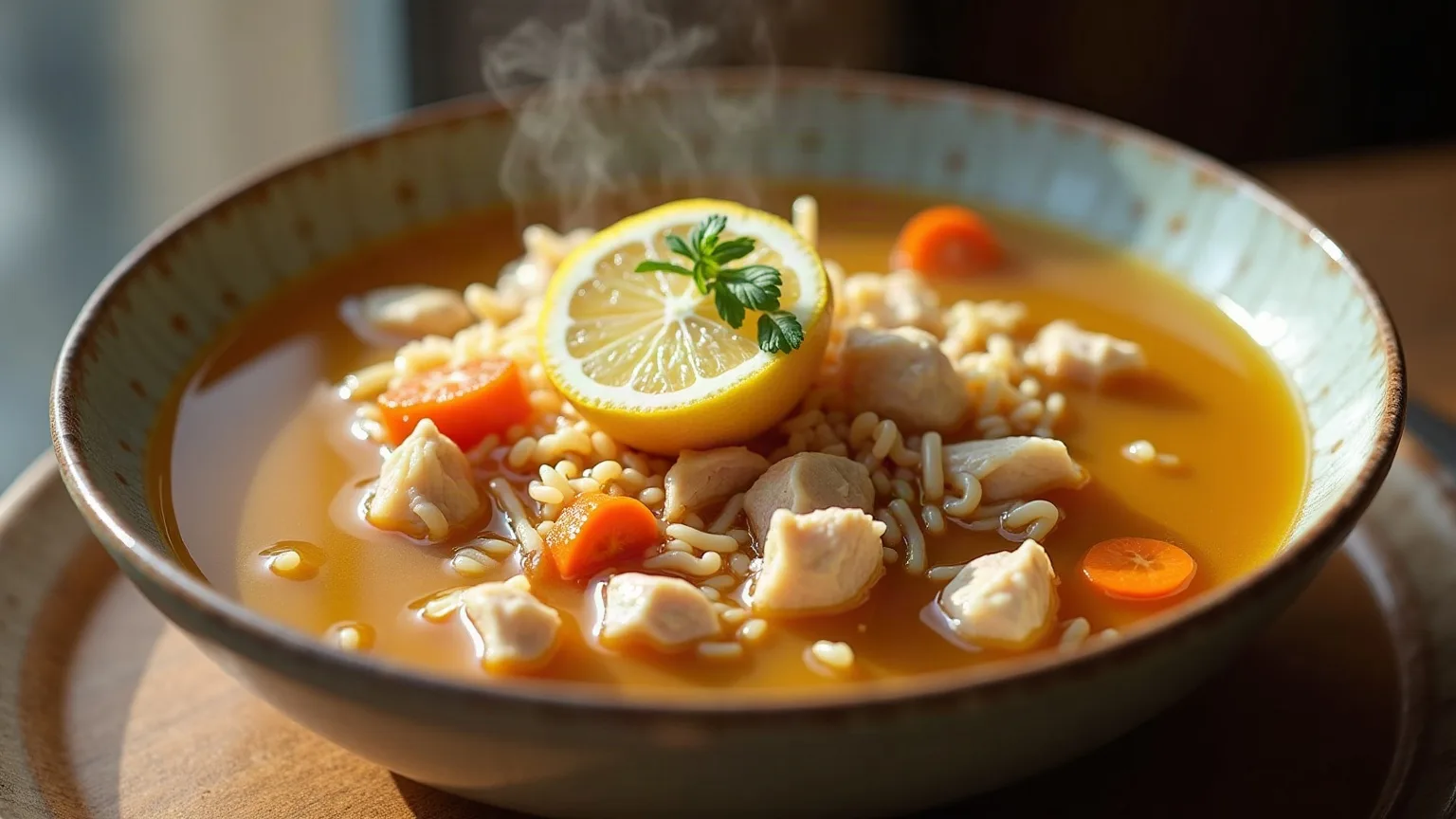
Chicken broth soup
What makes a broth clear is not the ingredients but the temperature: a pan that passes 95 °C guarantees a cloudy one.…
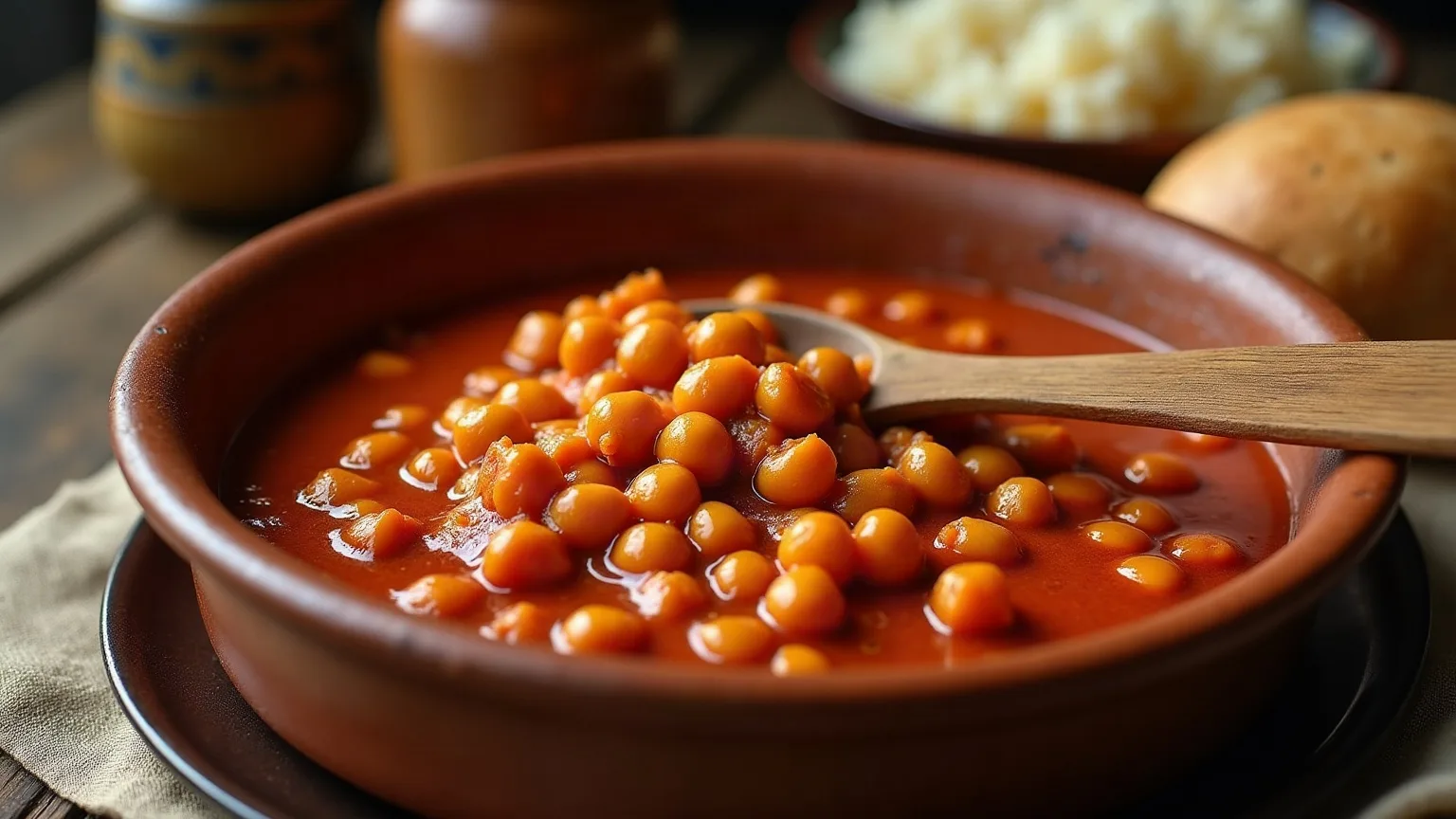
Chickpea stew
Dried chickpeas, tomato paste and olive oil — and a pinch of bicarbonate that halves the cooking time.…
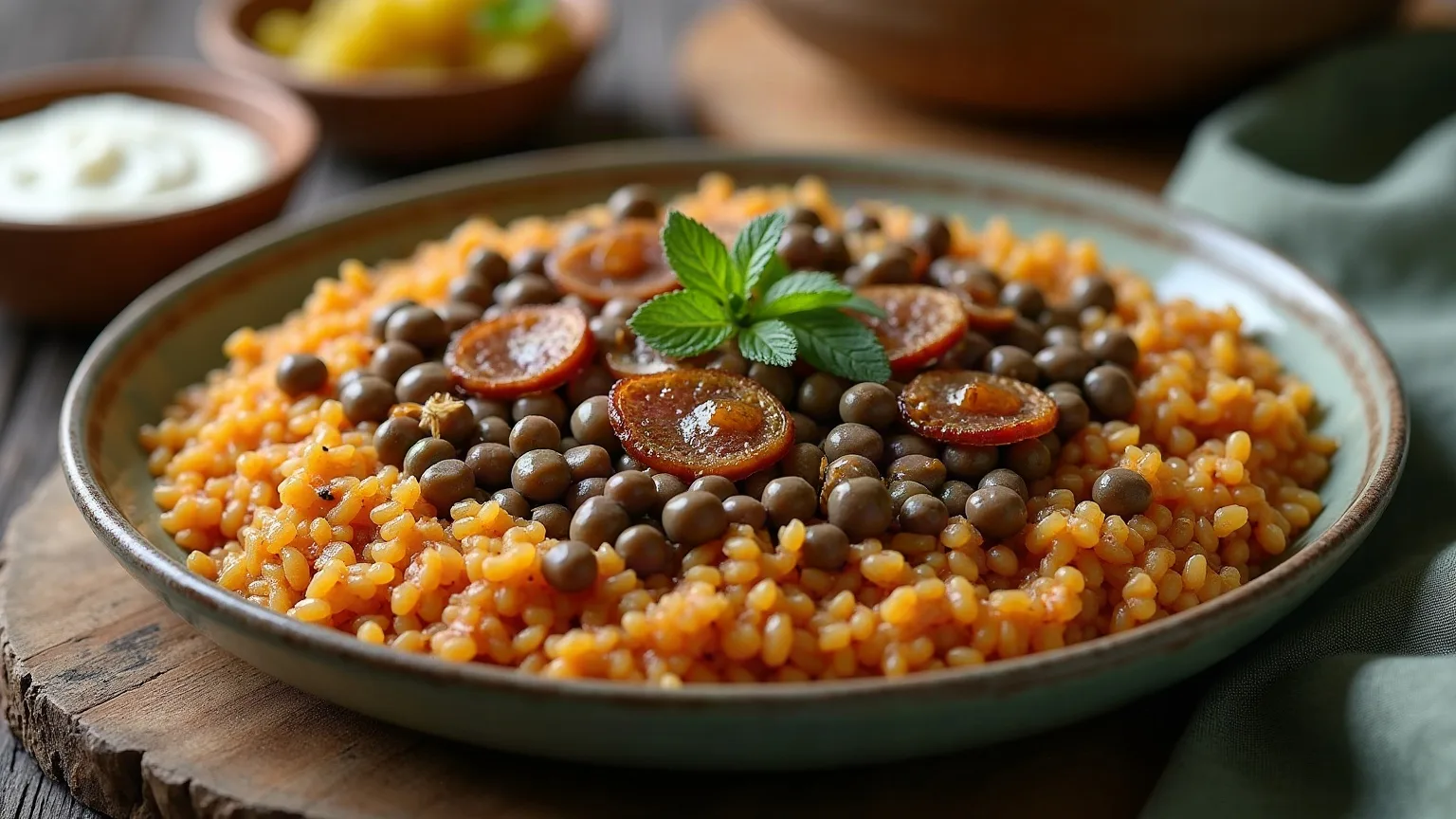
Bulgur pilaf with lentils
Two grains, two rules: the lentils must boil, the bulgur only absorbs. Put them in together and one collapses while the …
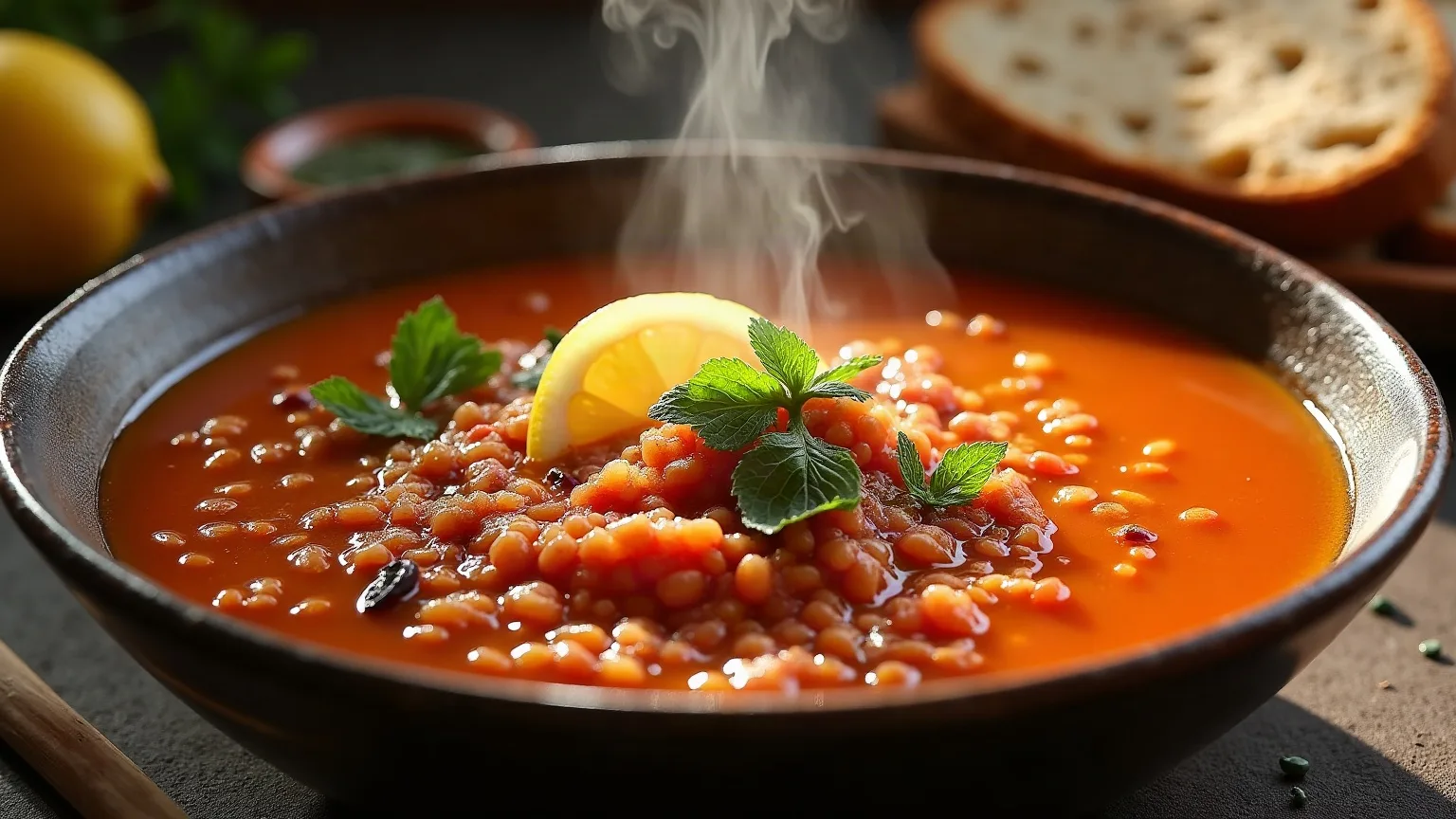
Ezogelin soup
The lentil soup’s cousin, with bulgur, tomato paste and mint. The difference is one step: the paste is fried in the fat.…