
Vine leaves stuffed with meat
Sarma holds together because the pan is packed, not because the roll is tight. Leave gaps and every one of them opens.
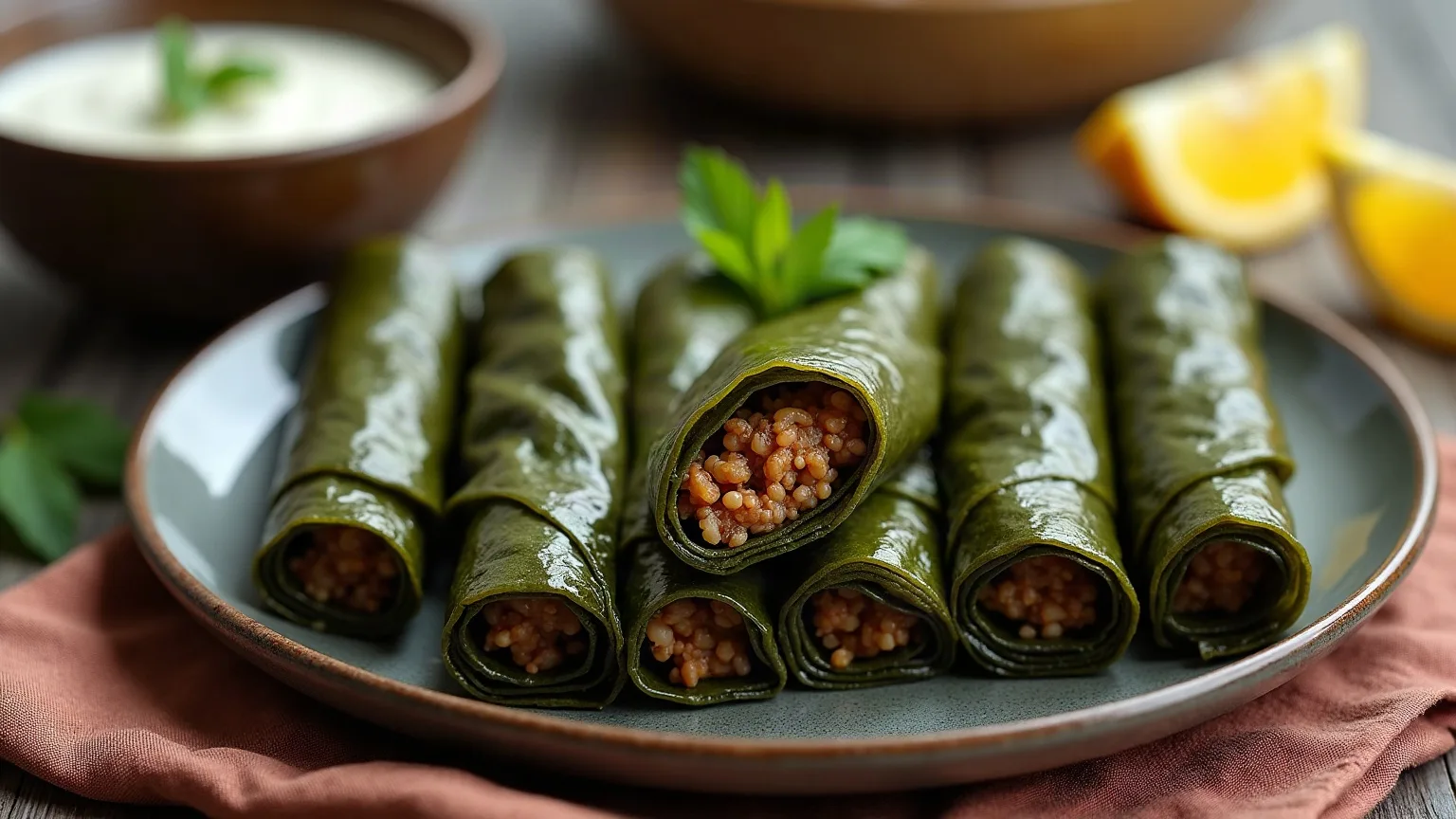
Meat dishes · Turkish · For guests · Weekend batch · Freezes well
- Preparation
- 50 min
- Cooking
- 50 min
- Resting
- 15 min
- Difficulty
- Hard
- Cost
- Middling
- Season
- Spring, Summer
Stuffed vine leaves belong to a shared kitchen running from Anatolia through the Balkans to the Levant; every country has its own name and filling and the same technique. The brine matters: salt loosens the leaf’s cell walls and stops it tearing as you roll. With fresh leaves, thirty seconds in boiling water first does the same thing with heat.
Method
- Soak brined leaves ten minutes in hot water and rinse them, to take the excess salt out.
- Set the torn leaves aside: they will line the base of the pan.
You will need: A wide, heavy-based pan · A plate to weigh it down
-
Mix the mince, rinsed rice, finely chopped onion, paste, mint, pepper, salt and half the olive oil.
Look for The filling should be moist: a dry one gives the rice no water to swell in.
Why The rice goes in RAW: it swells in the pan and tightens the roll from inside as it does. Made with pre-cooked rice the sarma stays slack and falls apart.Starch still asleep The granules are just floating there doing nothing. No body arrives before 62 °C.
Salt · 0.94% Right in the window. Flavours sharpen, bitterness retreats, water is held.
-
Lay a leaf vein-side up, cut the stem, put a dessertspoon of filling on it, fold the sides in and roll it — not tightly.
Look for Each roll should be as thick as a finger and give a little when squeezed.
Why A tightly rolled sarma bursts when the rice swells. Rice doubles in volume and that expansion needs room; rolled loosely, it tightens itself as it cooks.If it went wrong
If they burst they were rolled too tight or overfilled. Use less filling in the rest; the burst ones are still perfectly good, only untidy.
Starch still asleep The granules are just floating there doing nothing. No body arrives before 62 °C.
Salt · 0.80% Right in the window. Flavours sharpen, bitterness retreats, water is held.
-
Line the base with the torn leaves, pack the rolls in TIGHTLY with no gaps, and put a plate on top.
Look for Shaken, the pan’s contents should not move at all.
Why The rolls hold each other: with gaps in the pan they move as the rice swells and unwind. The plate stops them floating as it boils.Starch still asleep The granules are just floating there doing nothing. No body arrives before 62 °C.
Salt · 0.80% Right in the window. Flavours sharpen, bitterness retreats, water is held.
-
Add the hot water, the rest of the oil and the lemon juice; once it boils, lower the heat and cook COVERED for forty-five minutes. Rest fifteen.
Look for After forty-five minutes cut one open: the rice should be fully swollen and soft.
Why The lemon’s acid firms the pectin in the leaf and helps the roll hold — the same acid that toughens a bean skin works in your favour here. The water should come 1 cm over the rolls: more and they boil apart, less and the bottom catches.Starch gelatinised The granules soaked up water, swelled and burst into a network. It has thickened, and it will firm further as it cools. no way back
Salt · 0.49% Low. Everything reads flat and nothing steps forward.
This recipe was run through the engine step by step — what goes in when, and at what temperature and for how long. The reactions above come from that run.
peak 96 °C · 95 minutes · engine 1.0.0 · confidence low
What can go wrong here
The rice turned to mush⌄
What happened
Too much water gelatinised the starch, the granules burst and glued together. Stirring only pushed more starch out.
By the numbers
Rinse the rice until the water runs clear. One part rice to one and a half parts water. Do not lift the lid or stir while it steams.
Without a thermometer
No measuring cup? Use your knuckle: rest a finger on the levelled rice and let the water come up to the first joint. When you leave it to steam, trap a clean cloth under the lid so condensation cannot drip back onto the grains.
After the heat goes off
Warm or at room temperature with garlic yoghurt and lemon. Not served hot: sarma gathers itself as it cools.
Four days in the fridge, and better on the second.
Eight minutes in a pan with 50 ml of water on a low flame, or not at all: they are eaten cold too.
Three months cooked. Thawed, ten minutes over steam is the best way back.
Leftover rolls fried in olive oil until crisp become a meze of their own.
From twelve months halve each roll: whole, they are a choking risk. For 12–36 months it is safer to take the rice and mince out and serve that alone, because the leaf is hard for a toddler to chew. Lift their share before the salt. For a baby under one the leaf does not suit, though the filling does.
- Grape leaves (fresh) → White cabbage Cabbage leaves work and are what winter uses; blanch them three minutes first and add fifteen minutes to the cooking.
- Boiling & poaching The method this recipe rests on
- Beef mince (15% fat) What it does in heat, water and acid
- Bulb onion What it does in heat, water and acid
- Grape leaves (fresh) What it does in heat, water and acid
- İçli köfte Similar method, or something that sits on the same table
- Lamb casserole Similar method, or something that sits on the same table
- Green beans in olive oil Similar method, or something that sits on the same table
- For guests Other recipes that answer the same need
- Weekend batch Other recipes that answer the same need
- Freezes well Other recipes that answer the same need
What it tastes like
No axis sits clearly above the average: a balanced recipe.
This profile is computed rather than measured: the role-weighted average of its ingredients’ taste vectors, shifted by what the cooking does. The thin line is the database average on that axis.
Closest in taste
Not hand-picked: ranked by distance across the eight taste axes.
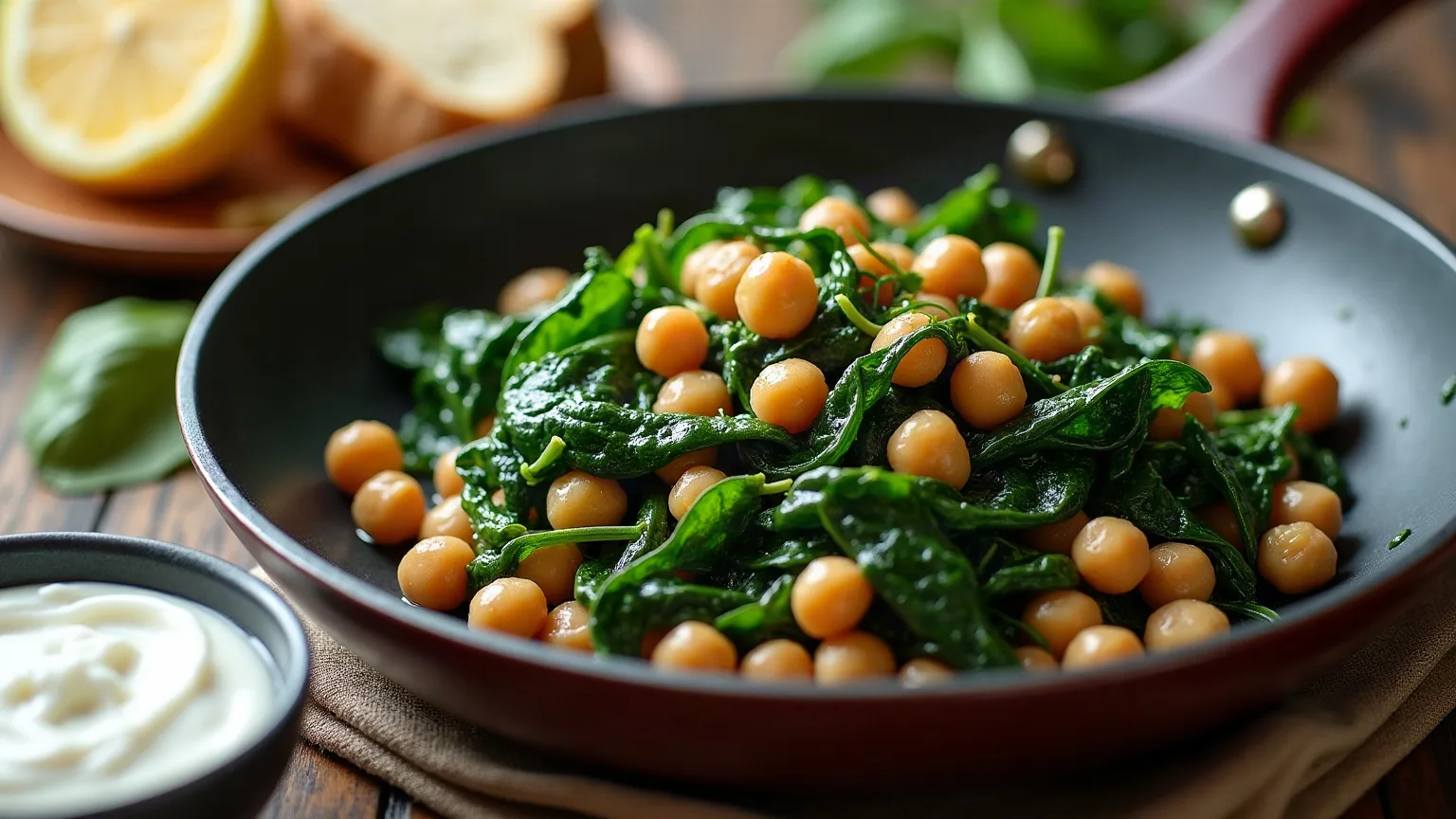
Spinach with chickpeas
Under a lid, spinach turns olive-drab in its own acid. With the lid off, the colour and the taste both stay where they w…
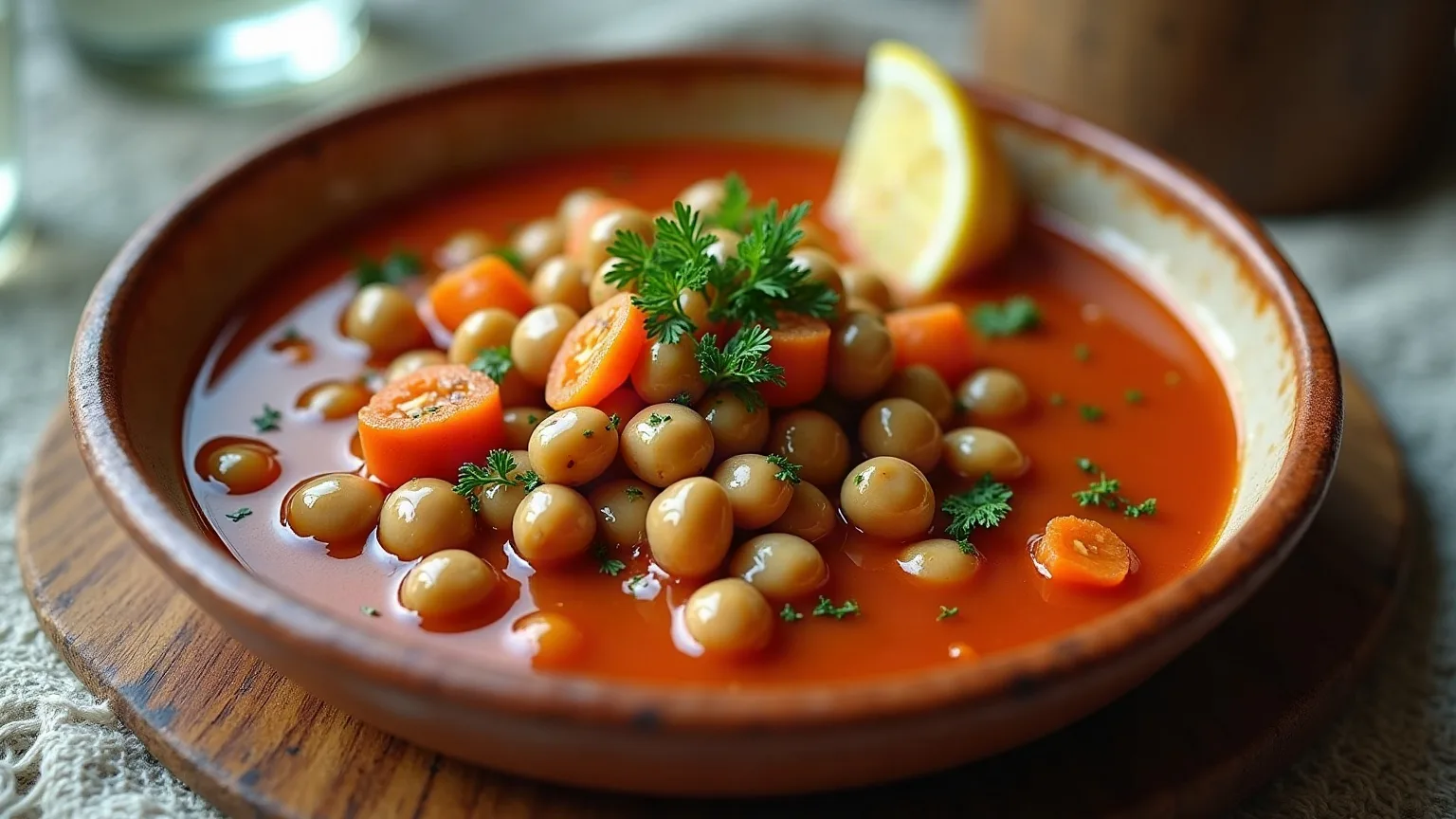
Black-eyed pea stew
The one common dried pulse that needs no soaking: its coat is thin and permeable, so it goes from dry seed to tender in …
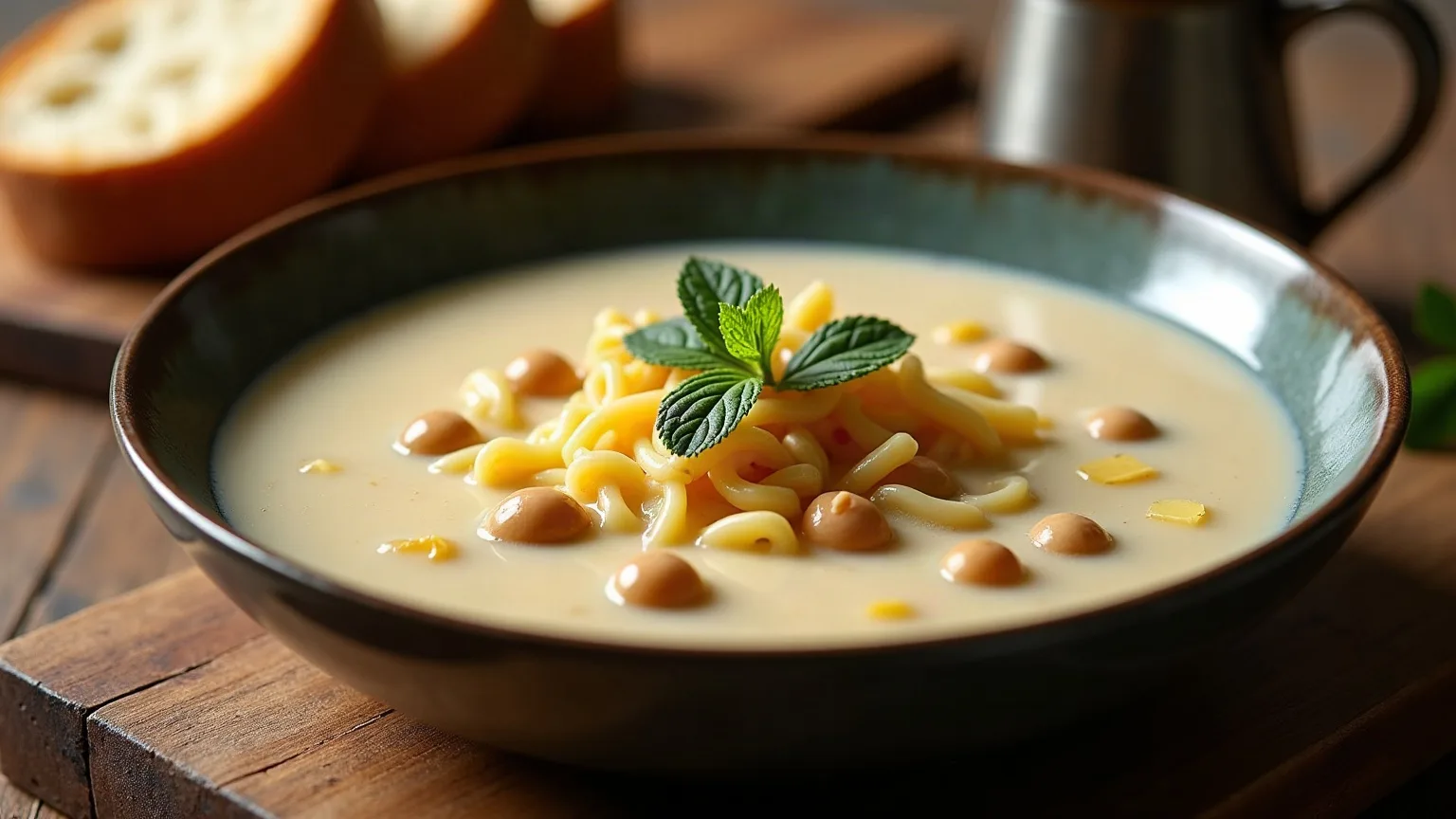
Tutmaç soup
Yoghurt, chickpeas and noodles cut into squares: a soup a thousand years old, named in Kaşgarlı Mahmud’s dictionary.…
Steamed fish
In a buğulama the fish never touches water: it cooks in the steam the vegetables give off and never sees 100 °C.…