
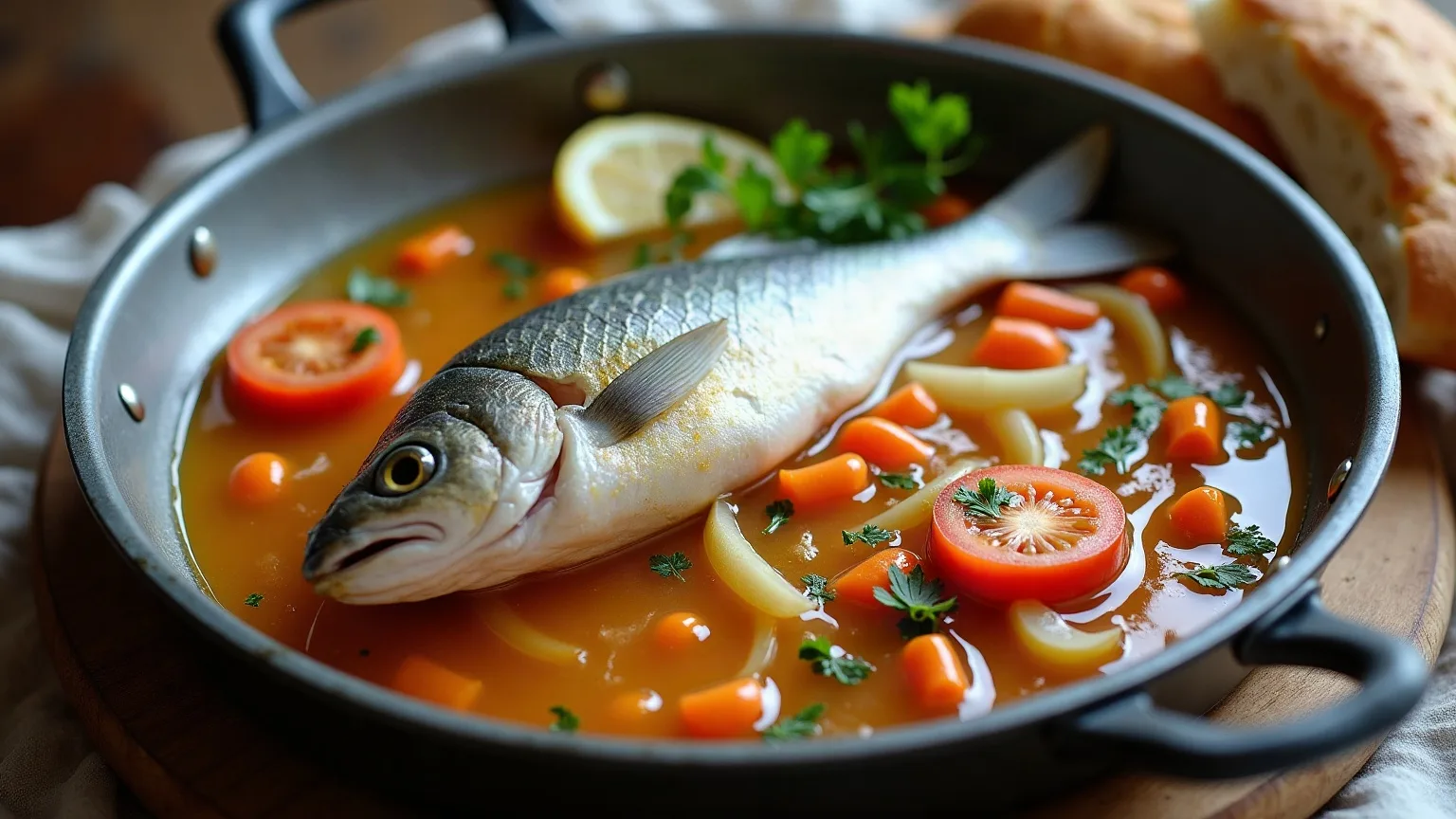
Steamed fish
In a buğulama the fish never touches water: it cooks in the steam the vegetables give off and never sees 100 °C.
Fish and seafood · Turkish · Under 30 minutes · One pot · For guests
- Preparation
- 15 min
- Cooking
- 20 min
- Resting
- 5 min
- Difficulty
- Needs attention
- Cost
- Middling
- Season
- Autumn, Winter, Spring
Buğulama is the gentlest method the Turkish kitchen has and the best suited to fish. The vegetables in the base release their water, that water becomes steam, and under a lid the fish cooks at about 90 °C. Submerged in water it would see 100, and those ten degrees are the difference between flesh that shreds and flesh that holds together.
Method
- Have the fish cleaned and cut into portions.
- Slice the vegetables into rounds, enough to cover the base in one layer.
You will need: A wide pan with a lid
-
Put the oil in the pan and soften the onion, carrot and garlic for six minutes.
Look for The onion should turn translucent without colouring.
Why The vegetables are softened first because twenty minutes of steaming will not cook them: the fish’s time is short and the vegetables cannot be made to fit it.Starch gelatinised The granules soaked up water, swelled and burst into a network. It has thickened, and it will firm further as it cools. no way back
-
Add the tomato and peppers, lay the fish ON TOP of them, and add the bay, salt and water.
Look for The liquid should stay below the fish, whose surface should look dry.
Why The fish sits on the vegetables and never touches the liquid: 100 ml is enough to make steam and not enough to poach. That single difference is what separates a buğulama from a boil.Salt · 0.44% Low. Everything reads flat and nothing steps forward.
-
Cover and cook fourteen to sixteen minutes on a low flame. DO NOT lift the lid.
Look for A thin steady wisp of steam at the edge of the lid; none means the flame is too low.
Why Lifting the lid lets the steam out and the pan drops from 90 °C to about 75; the fish pays that difference in cooking time. One look adds four minutes.If it went wrong
Still translucent at sixteen minutes: four more. If it has broken up it is overcooked — fold the pieces through the vegetables and serve it as a fish casserole.
Starch gelatinised The granules soaked up water, swelled and burst into a network. It has thickened, and it will firm further as it cools. no way back
Salt · 0.44% Low. Everything reads flat and nothing steps forward.
-
Take it off, squeeze the lemon, scatter the parsley and rest it covered for five minutes.
Look for Pushed with a fork it should flake while staying in one piece.
Why Lemon last: acid goes on cooking fish protein, and added early in the pan it firms the flesh.Starch gelatinised The granules soaked up water, swelled and burst into a network. It has thickened, and it will firm further as it cools. no way back
Salt · 0.43% Low. Everything reads flat and nothing steps forward.
This recipe was run through the engine step by step — what goes in when, and at what temperature and for how long. The reactions above come from that run.
peak 140 °C · 29 minutes · engine 1.0.0 · confidence low
What can go wrong here
The meat came out dry and tough⌄
What happened
The meat passed 70 °C. Past that point the muscle fibres contract and wring out their water, while collagen never gets the time to turn into gelatine. It loses moisture and never tenderises.
By the numbers
Beef medium at 57 °C, chicken at 74 °C. Rest it for 10 minutes off the heat; unrested meat leaves its juice on the plate.
Without a thermometer
The palm test: touch thumb to index finger and press the pad below your thumb — that firmness is rare. Middle finger is medium, ring finger is well done. Watch the juice too: pinkish and clear means you are there, running white means you went too far.
After the heat goes off
In its pan or on a plate with the vegetables and liquid under it, and bread to take up the sauce.
One day in the fridge.
Four minutes covered on a low flame. It breaks up on a second heating, so aim at warming rather than cooking.
Not for the freezer: cooked fish shreds on thawing.
The leftover fish and vegetables, mashed, become a fish cake or a börek filling.
Steaming is the best way to cook fish for a child: soft texture, little fat, and easy to check for bones. A piece can be set aside unsalted for a baby from six months. For 12–36 months take the peppers out and check every piece for bone.
- Gilthead sea bream → Fish Any white fish will do; thick portions want four minutes more.
- Boiling & poaching The method this recipe rests on
- Gilthead sea bream What it does in heat, water and acid
- Tomato What it does in heat, water and acid
- Bulb onion What it does in heat, water and acid
- Baked sea bass Similar method, or something that sits on the same table
- Fish soup Similar method, or something that sits on the same table
- Grilled sea bream Similar method, or something that sits on the same table
- Under 30 minutes Other recipes that answer the same need
- One pot Other recipes that answer the same need
- For guests Other recipes that answer the same need
What it tastes like
No axis sits clearly above the average: a balanced recipe.
This profile is computed rather than measured: the role-weighted average of its ingredients’ taste vectors, shifted by what the cooking does. The thin line is the database average on that axis.
Closest in taste
Not hand-picked: ranked by distance across the eight taste axes.
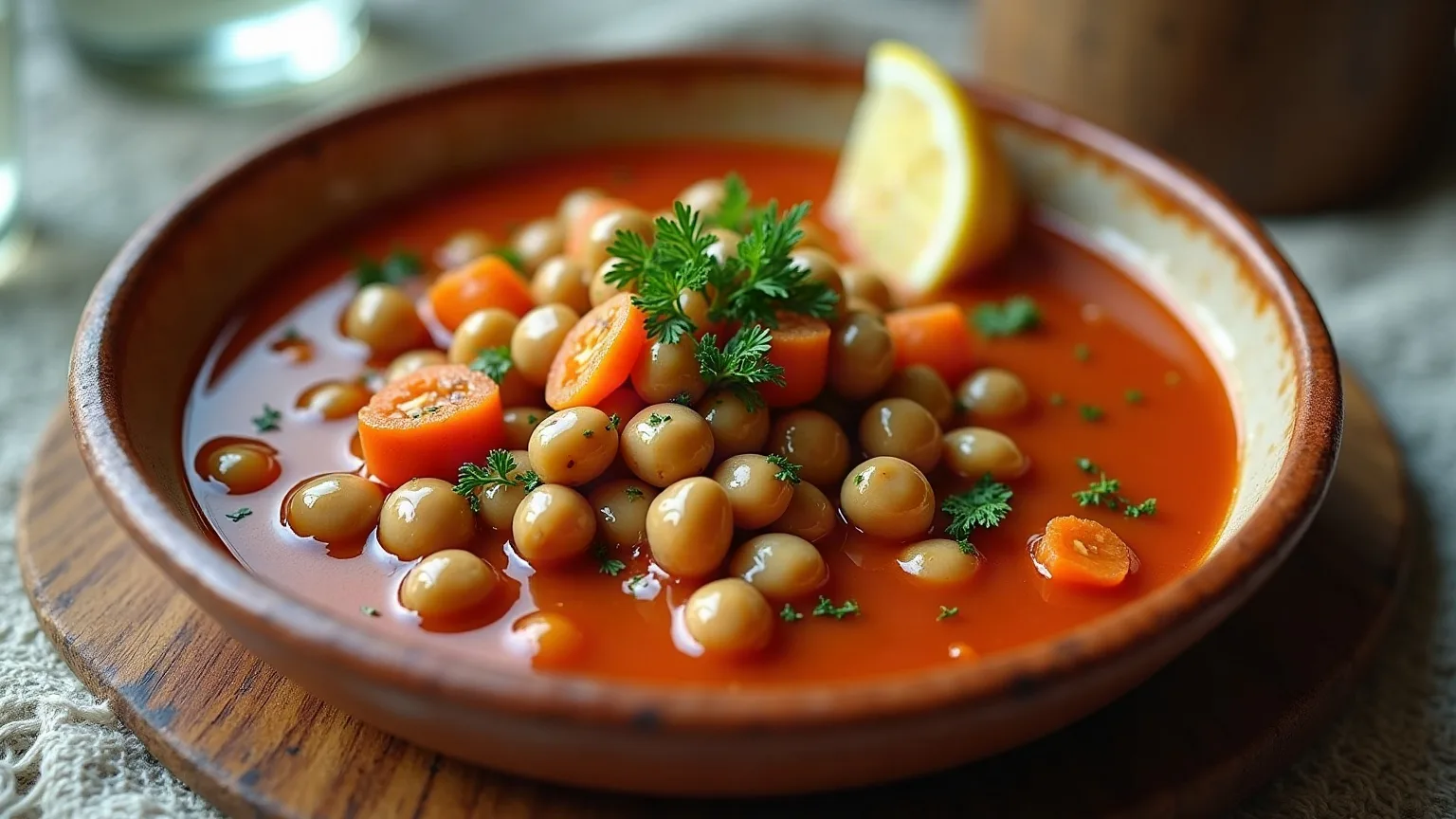
Black-eyed pea stew
The one common dried pulse that needs no soaking: its coat is thin and permeable, so it goes from dry seed to tender in …
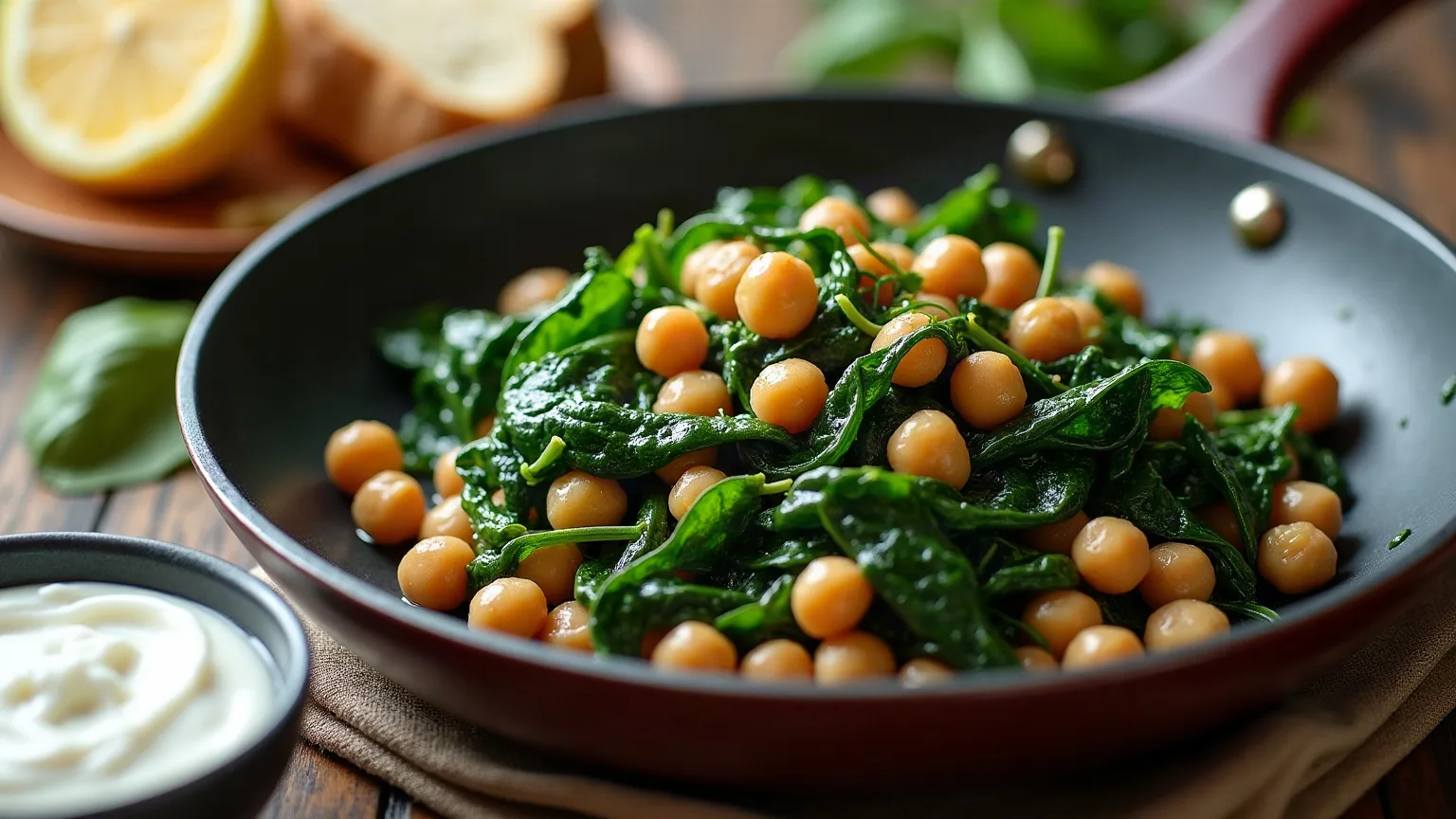
Spinach with chickpeas
Under a lid, spinach turns olive-drab in its own acid. With the lid off, the colour and the taste both stay where they w…
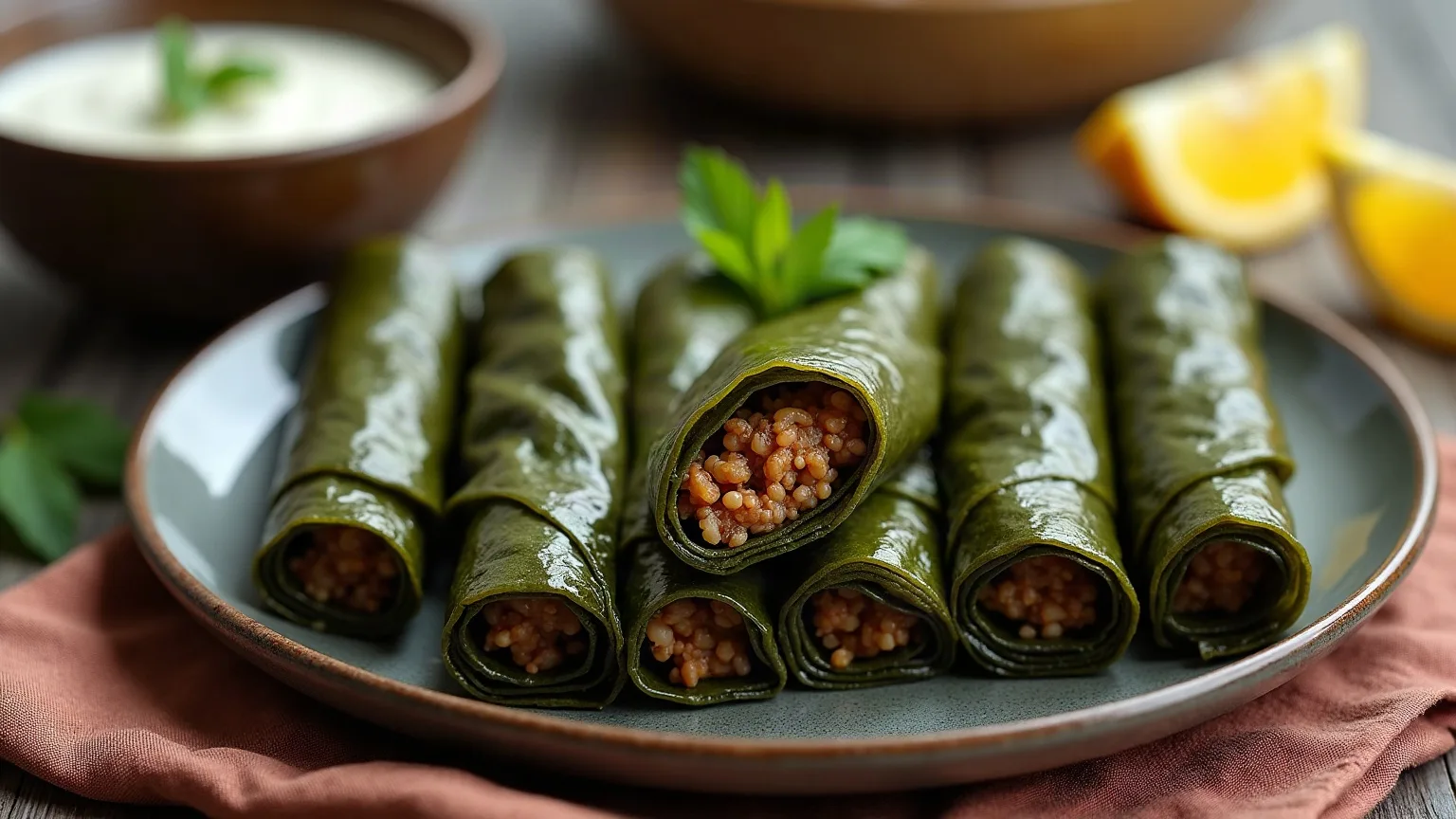
Vine leaves stuffed with meat
Sarma holds together because the pan is packed, not because the roll is tight. Leave gaps and every one of them opens.…
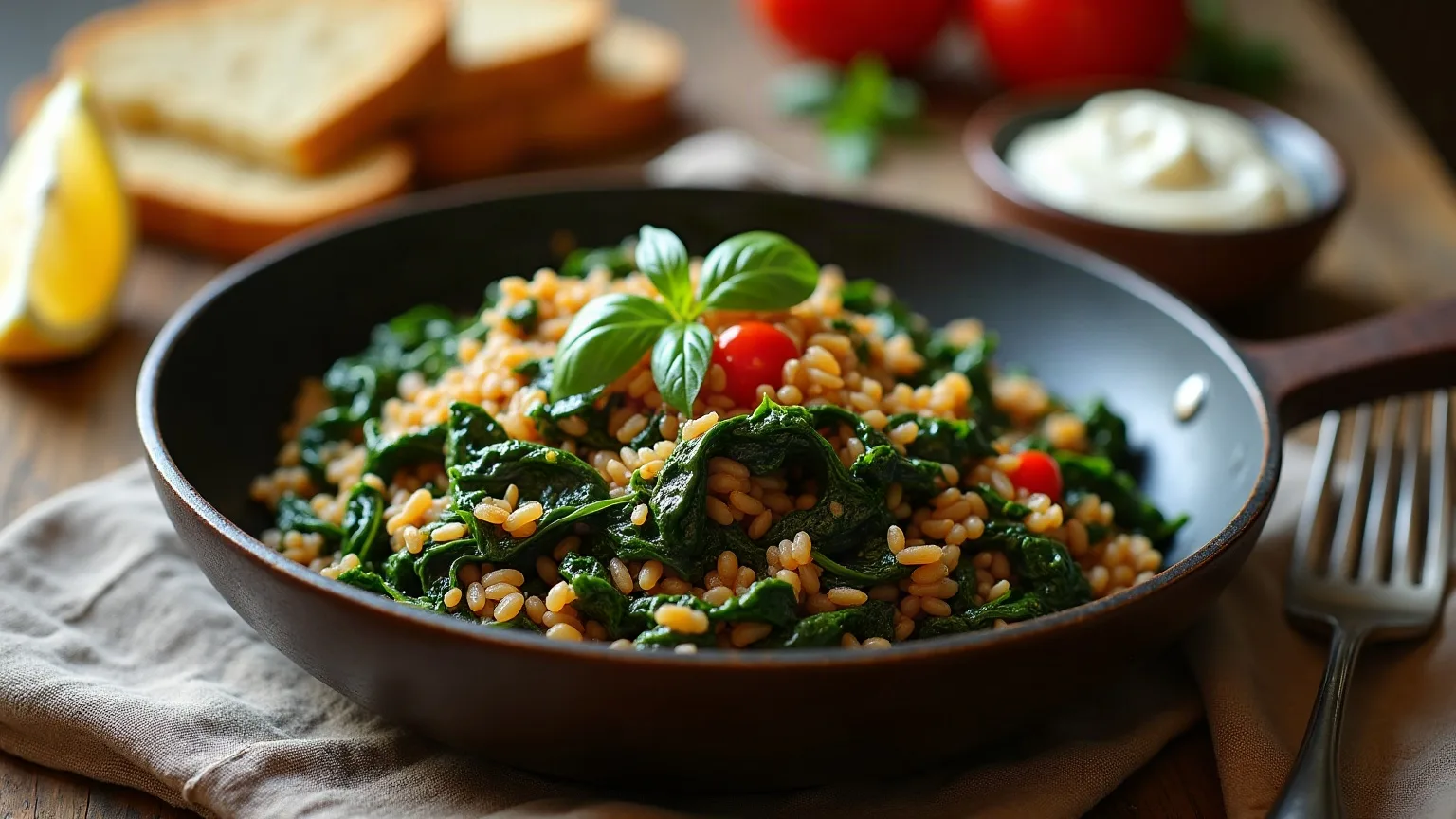
Spinach with rice
A kilo of spinach cooks down to a handful, which is why the size of the pan is part of the recipe.…