
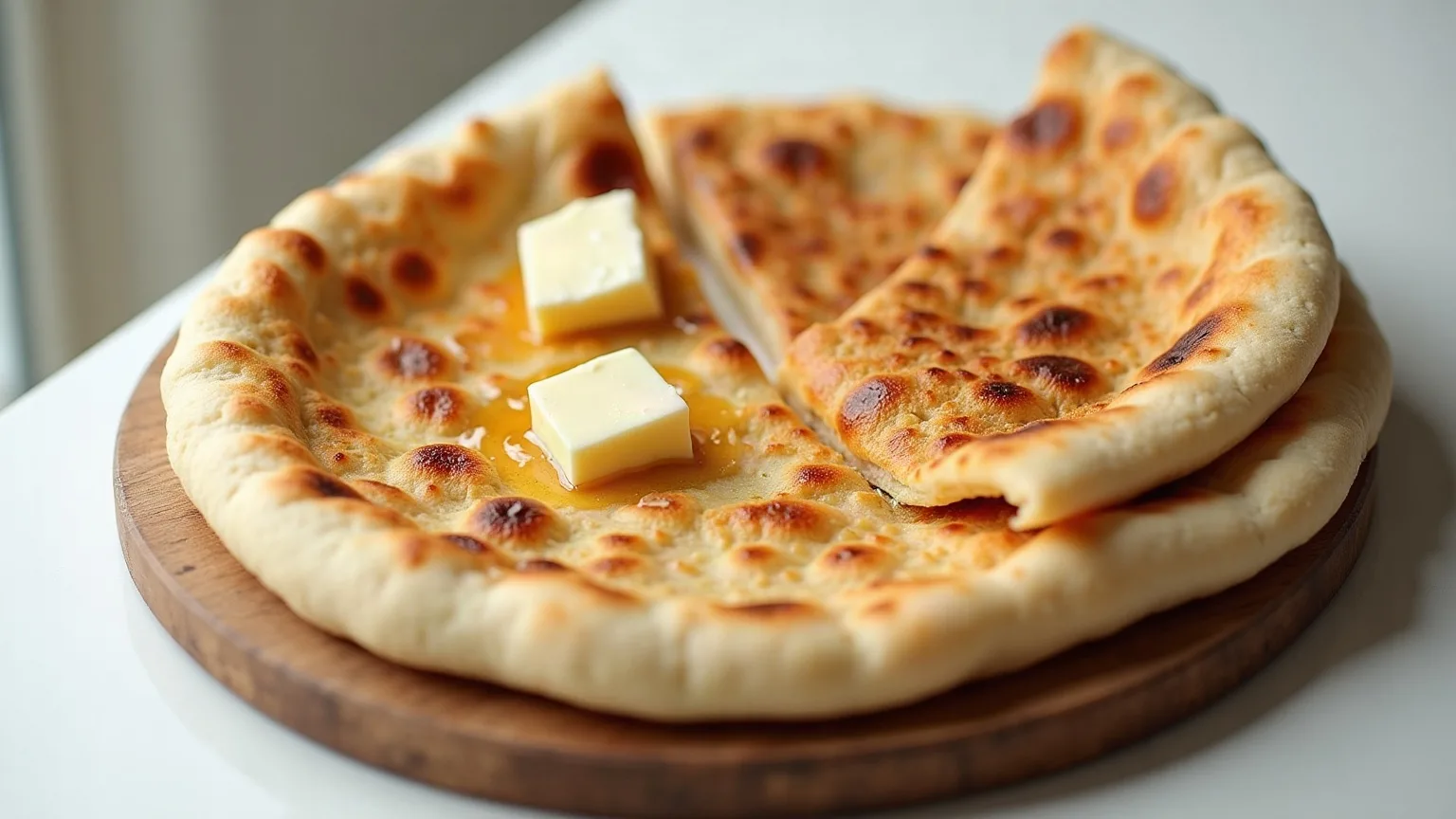
Bazlama in a pan
A yeasted yoghurt dough 1.5 cm thick on a dry pan at 200 °C. A bazlama that balloons in the first minute is cooking on its own steam.
This page says how to make it For what it is, where it comes from and the mechanism →
Doughs and pastries · Turkish · Budget · Weekend batch · Freezes well
- Preparation
- 20 min
- Cooking
- 30 min
- Resting
- 60 min
- Difficulty
- Needs attention
- Cost
- Very cheap
- Season
- All year
Bazlama is the griddle bread of Anatolian villages, made in any home because it needs no oven. Yoghurt gives the dough a light tang and softness, and yeast makes the crumb open. On a hot dry pan the underside sets fast, the water inside turns to steam and the bread swells. That swelling makes the pocket in the middle and the tender crumb.
Method
- Warm the water to 35–40 °C.
- Heat the pan over medium-high heat for 5 minutes.
You will need: A cast-iron pan or sac · A clean cloth
-
Dissolve the yeast and sugar in the warm water; add the flour, yoghurt and salt and knead 8 minutes. Prove at 24–27 °C until doubled, about 50 minutes.
Look for The dough should have doubled with bubbles showing on top.
Why The acid in yoghurt softens the gluten slightly and keeps the dough supple; water and yoghurt together give about 70% moisture, which is where the softness comes from.Starch still asleep The granules are just floating there doing nothing. No body arrives before 62 °C.
A gluten web is forming Gliadin and glutenin hydrated into an elastic net. This is what will hold the gas. no way back
The yeast is working It is eating sugar and making carbon dioxide plus aroma compounds. Slow work, but this is where depth comes from.
Salt · 1.12% Right in the window. Flavours sharpen, bitterness retreats, water is held.
-
Divide into 6, rest 10 minutes and pat each into a round 1.5 cm thick and 18 cm across.
Look for The rounds should stay the size they are rolled.
Why The short rest relaxes the gluten so the rounds do not shrink back. 1.5 cm is about as thick as can cook through in five minutes in a pan.Starch still asleep The granules are just floating there doing nothing. No body arrives before 62 °C.
A gluten web is forming Gliadin and glutenin hydrated into an elastic net. This is what will hold the gas. no way back
The yeast is working It is eating sugar and making carbon dioxide plus aroma compounds. Slow work, but this is where depth comes from.
Salt · 1.12% Right in the window. Flavours sharpen, bitterness retreats, water is held.
-
Cook in the dry pan at about 200 °C, 2 to 3 minutes a side; brush with butter as it comes off and wrap in a cloth.
Look for It should puff in the first minute with brown spots on both sides; the centre should reach 90 °C.
Why Once the underside sets, the steam inside cannot escape and inflates the bread. The cloth holds the steam leaving the crust and keeps the bazlama soft.If it went wrong
If it browns but the middle is doughy, lower the heat, cover and give it two more minutes a side. If it will not puff, the pan is too cool: heat it two more minutes.
Starch gelatinised The granules soaked up water, swelled and burst into a network. It has thickened, and it will firm further as it cools. no way back
A gluten web is forming Gliadin and glutenin hydrated into an elastic net. This is what will hold the gas. no way back
The yeast is working Wrong temperature. Outside 24–40 °C it stalls, and past 55 °C it dies.
Maillard is running Amino acids have met reducing sugars. The crust, the roasted flavour and that smell all come from here. no way back
Frying dynamics Surface water is flashing to steam and pushing outward — that is the shield keeping the oil out. no way back
Salt · 1.08% Right in the window. Flavours sharpen, bitterness retreats, water is held.
Too much starch. It will set into a rubbery gel once cool — add more liquid.
This recipe was run through the engine step by step — what goes in when, and at what temperature and for how long. The reactions above come from that run.
peak 200 °C · 103 minutes · engine 1.0.0 · confidence low
After the heat goes off
Warm, with butter and honey or cheese, or beside menemen.
Once cool, two days in a bag at room temperature.
Thirty seconds a side in a dry pan.
Two months, with paper between them.
Stale bazlama is toasted in strips or turned into tirit.
From 9 months the soft crumb can be given in strips to hold. Honey is not given to a child under one (NHS).
- Deep frying The method this recipe rests on
- Yoghurt What it does in heat, water and acid
- Butter What it does in heat, water and acid
- Yeast What it does in heat, water and acid
- Pişi Similar method, or something that sits on the same table
- Gözleme with spinach and cheese Similar method, or something that sits on the same table
- Pide with minced meat Similar method, or something that sits on the same table
- Budget Other recipes that answer the same need
- Weekend batch Other recipes that answer the same need
- Freezes well Other recipes that answer the same need
What it tastes like
The axes that define this recipe: richness 44, sweet 28.
This profile is computed rather than measured: the role-weighted average of its ingredients’ taste vectors, shifted by what the cooking does. The thin line is the database average on that axis.
Closest in taste
Not hand-picked: ranked by distance across the eight taste axes.
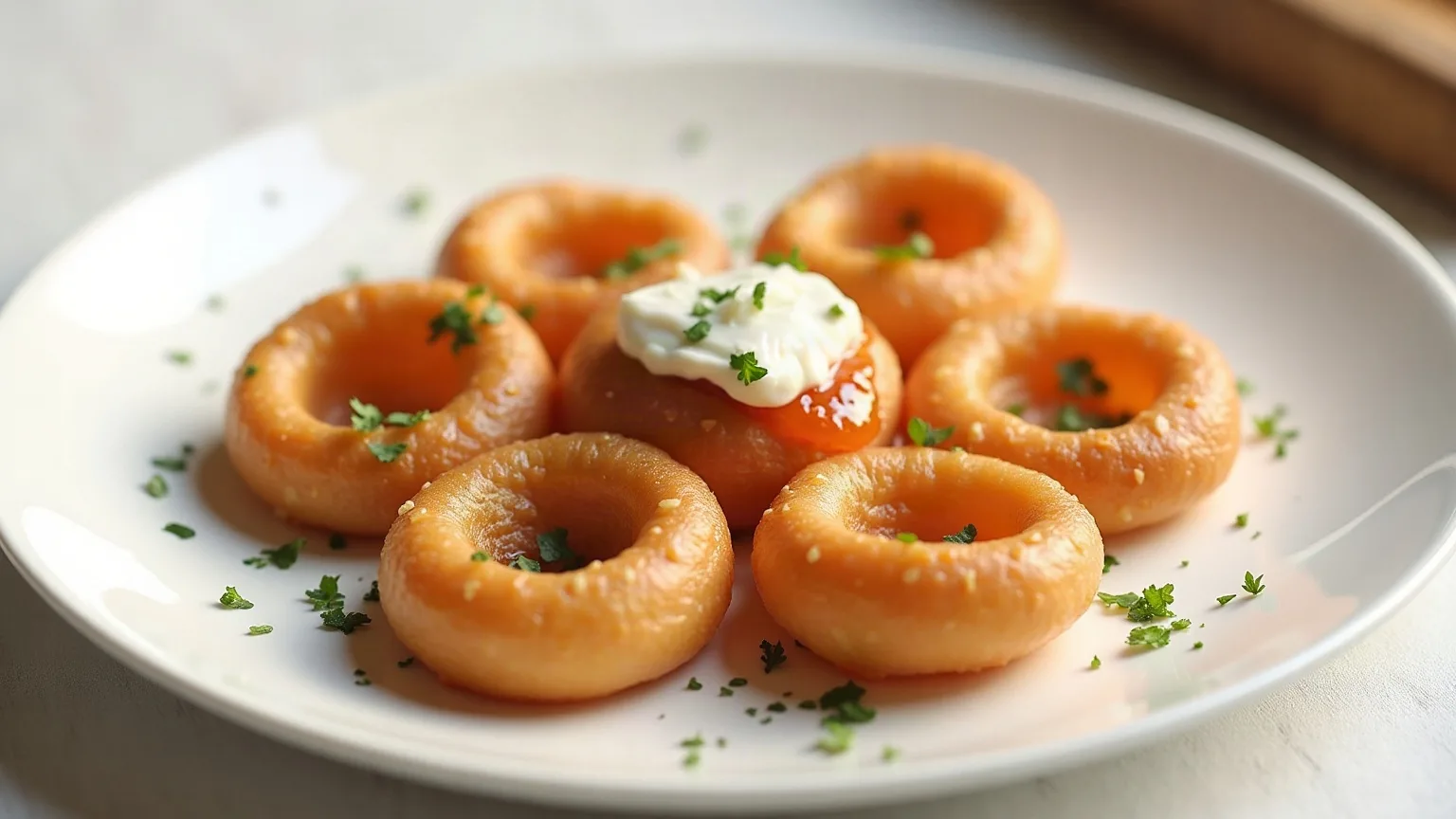
Pişi
A soft yeasted dough fried at 170–175 °C, one minute a side. The hole in the middle lets the centre cook in step with th…
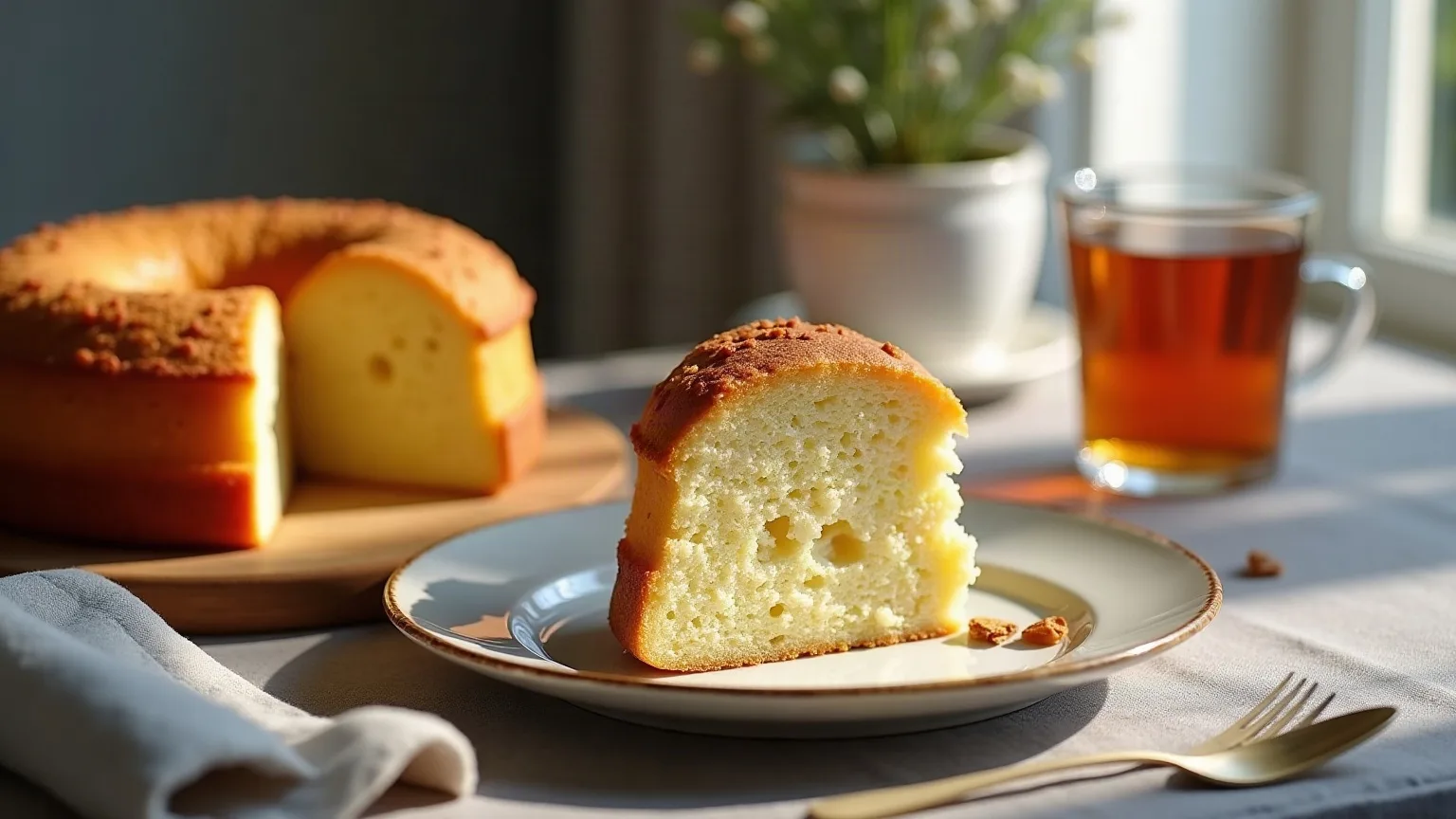
Yoghurt cake
Turkey’s everyday tea cake. The yoghurt is both the liquid phase and the acid half of the chemical leavening.…

Menemen
Pepper, tomato and egg. Know the order and the heat and it takes fifteen minutes; miss them and you get a watery omelett…
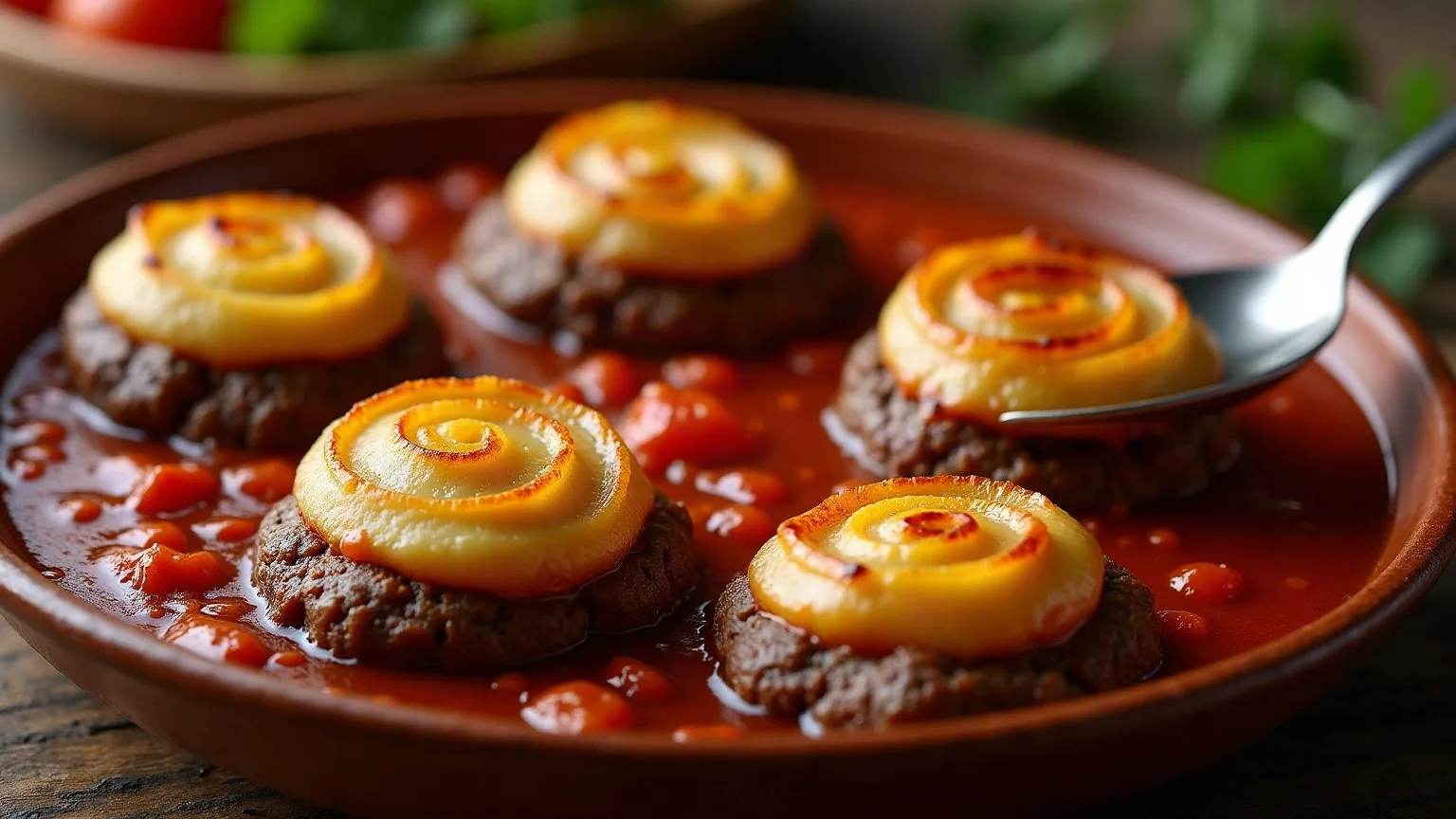
Hasanpaşa köfte
The purée on top is a lid rather than a decoration: in the oven it keeps the meat’s juice in.…