
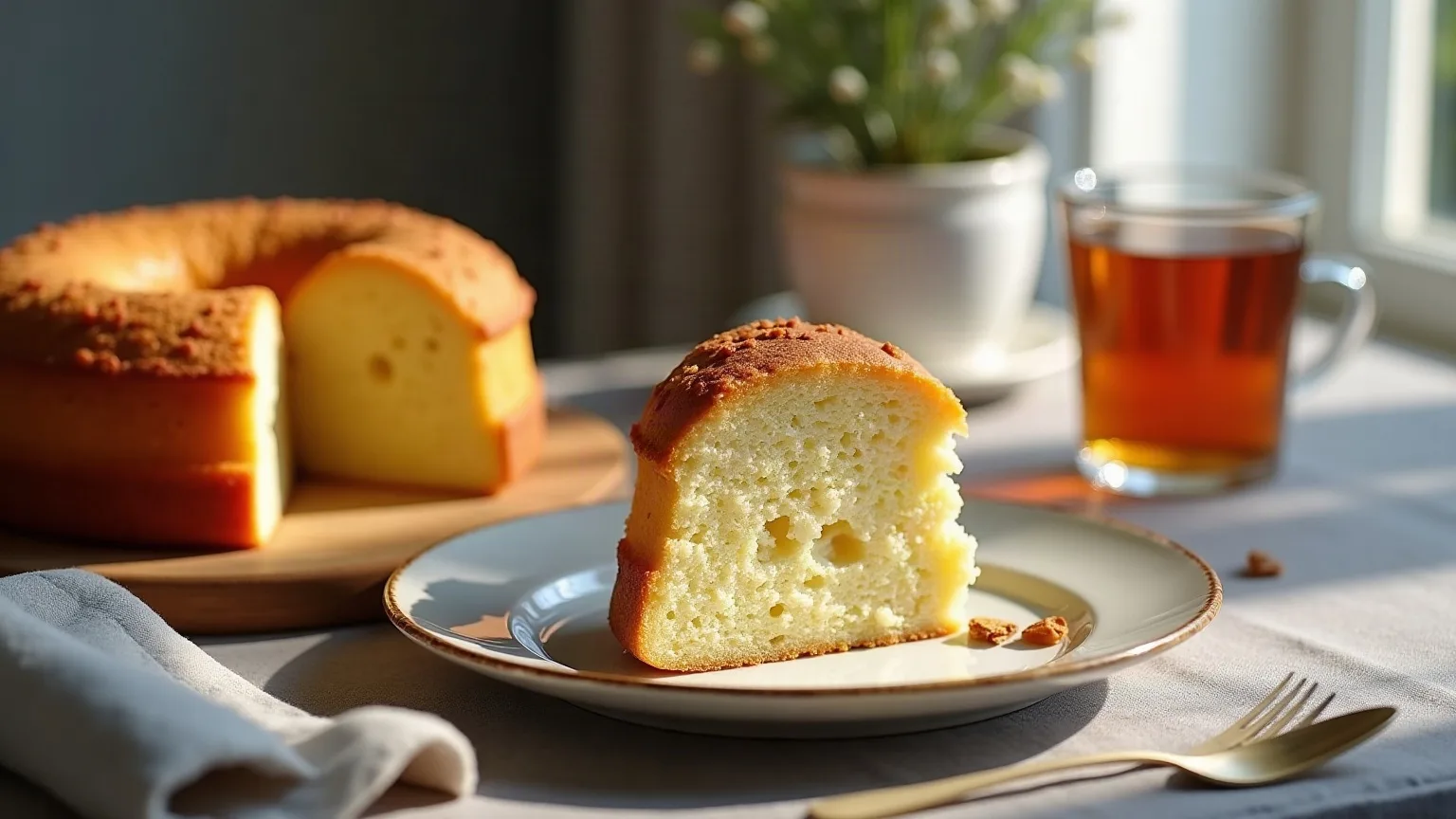
Yoghurt cake
Turkey’s everyday tea cake. The yoghurt is both the liquid phase and the acid half of the chemical leavening.
Soda and lactic acid react 1:1 by mole: 1 g of bicarbonate neutralises 1.07 g of lactic acid and liberates 0.524 g of CO₂. The traditional ratio turns out to be near exact — half a cup of yoghurt (≈122 g) at 1% acidity carries ≈1.22 g of lactic acid and needs ≈1.14 g of soda, and a quarter teaspoon is ≈1.2 g. Made with milk instead, unreacted soda is left behind and that famous soapy taste appears.
What it is made of
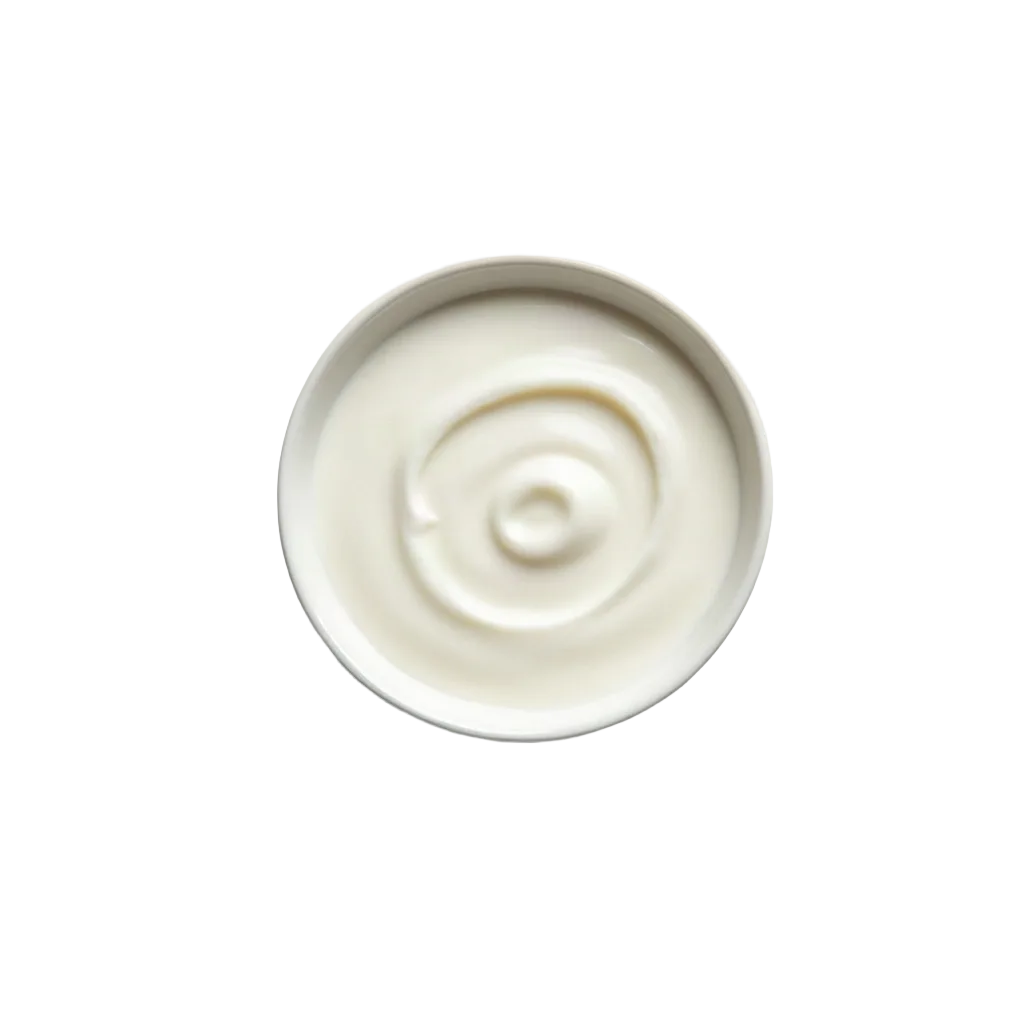 Yoghurt
pH 4.4 · splits above 85 °C
Dairy: it brings creaminess, protein and calcium.
Temper it with a few spoons of the hot liquid before it goes in; added straight, it splits.
Eg
Yoghurt
pH 4.4 · splits above 85 °C
Dairy: it brings creaminess, protein and calcium.
Temper it with a few spoons of the hot liquid before it goes in; added straight, it splits.
Eg
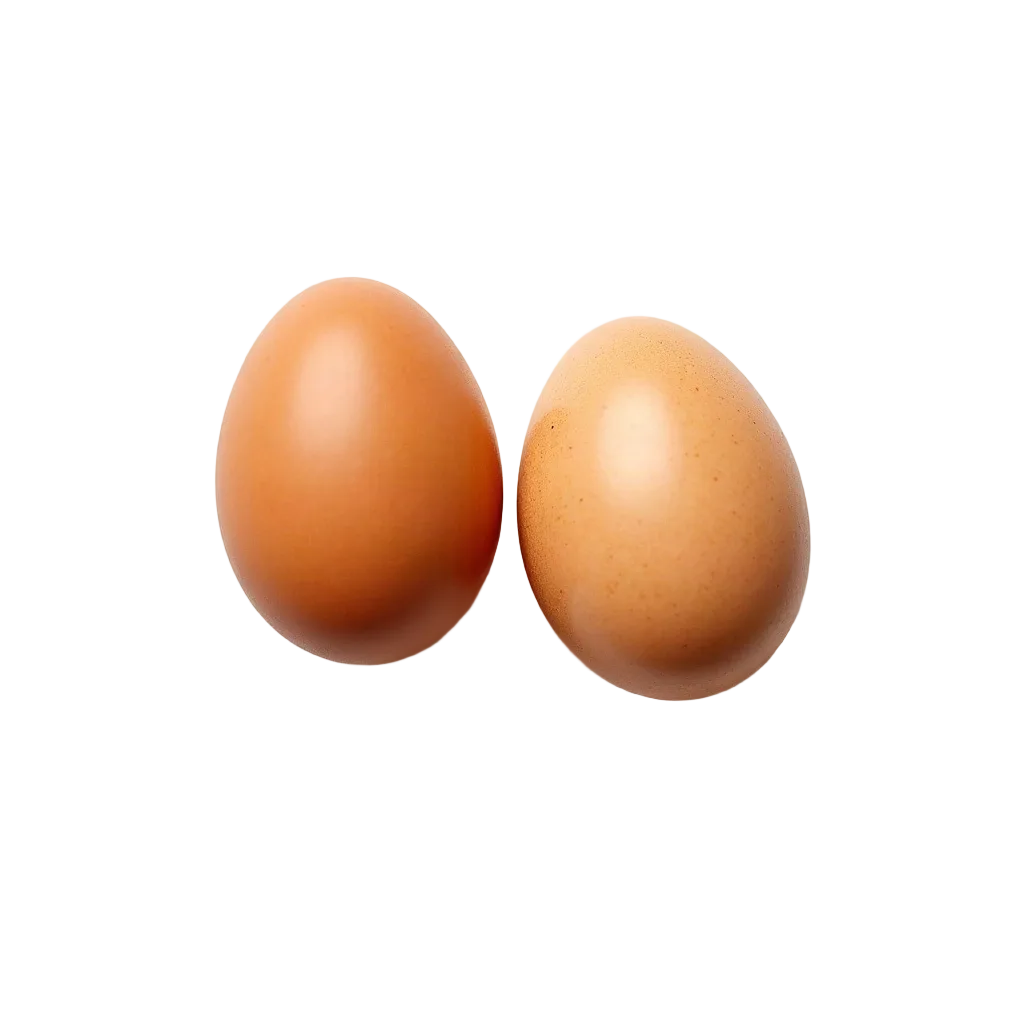 Egg
White 62 °C · yolk 65 °C
Gives body: the bulk of the plate and its starch.
Crack it on a flat surface, not the rim of the bowl: a sharp edge drives shell into the egg.
Sg
Egg
White 62 °C · yolk 65 °C
Gives body: the bulk of the plate and its starch.
Crack it on a flat surface, not the rim of the bowl: a sharp edge drives shell into the egg.
Sg
 Sugar
Caramelises at 160 °C
Sweetens: it binds water and caramelises.
A teaspoon in a tomato dish does not sweeten it; it takes the edge off the acid.
Fl
Sugar
Caramelises at 160 °C
Sweetens: it binds water and caramelises.
A teaspoon in a tomato dish does not sweeten it; it takes the edge off the acid.
Fl
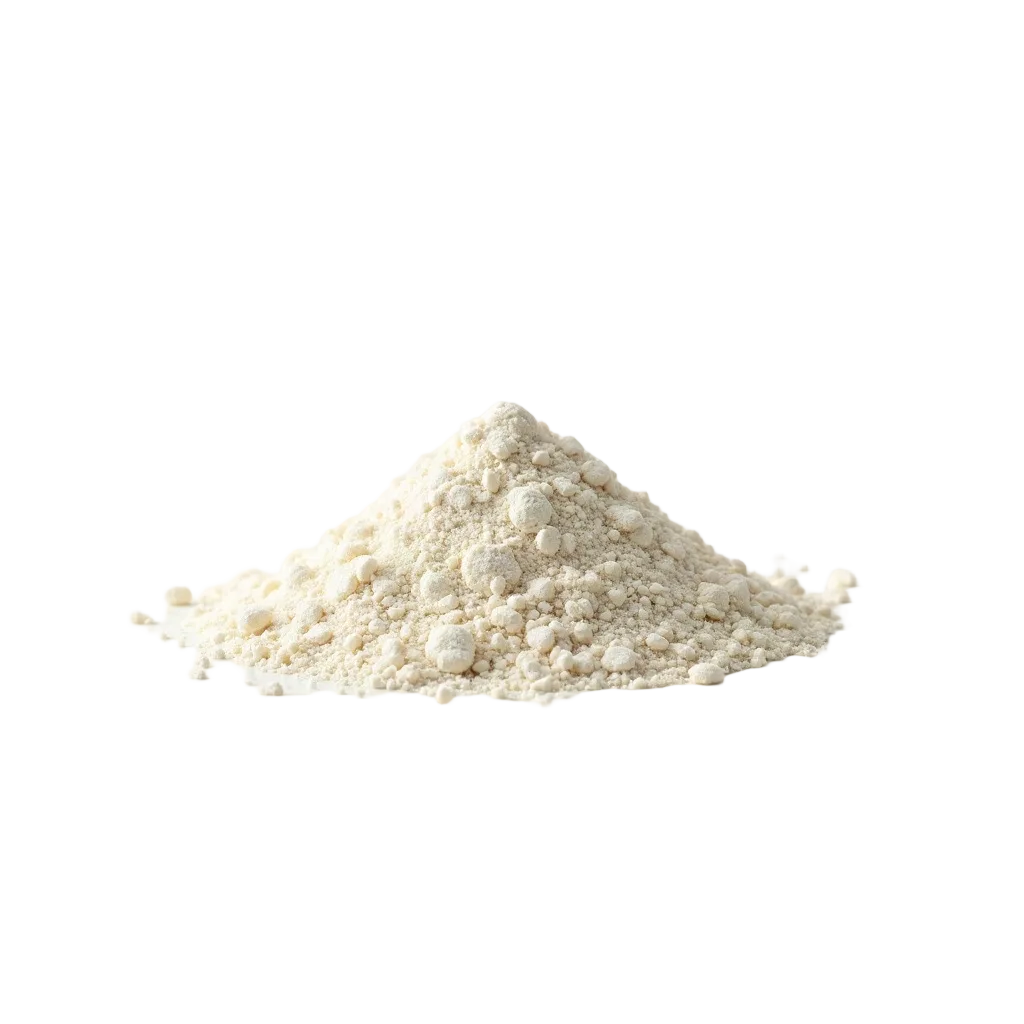 Flour
Protein 10–12% · builds gluten
Binds: it builds the structure and holds the water.
Sifting does not remove lumps, it aerates: the same weight takes more space. Weigh it, never scoop it.
Bs
Flour
Protein 10–12% · builds gluten
Binds: it builds the structure and holds the water.
Sifting does not remove lumps, it aerates: the same weight takes more space. Weigh it, never scoop it.
Bs
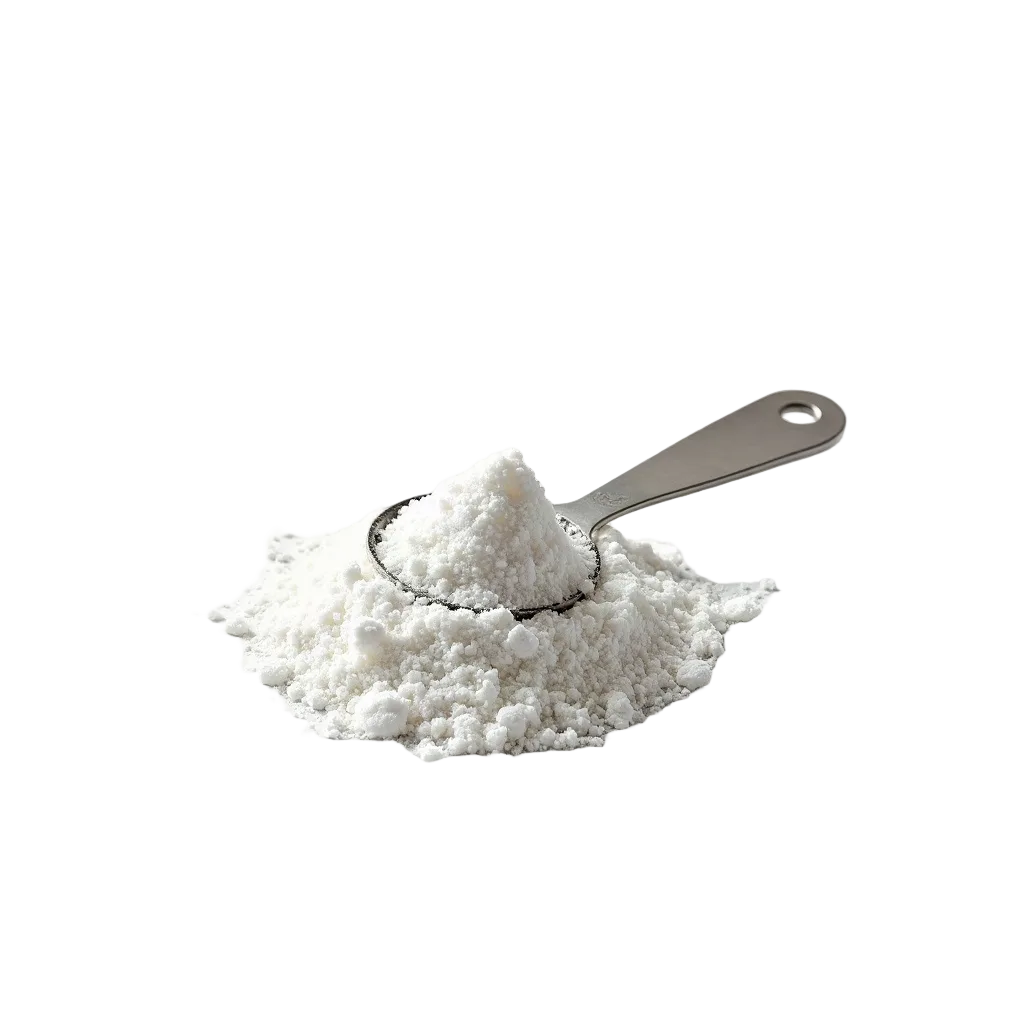 Baking soda
pH 8.4 · does nothing without acid
Leavens: it makes gas and lifts the dough.
A teaspoon is about 4 g, and it always needs an acid beside it; without one it leaves a soapy taste.
Oo
Baking soda
pH 8.4 · does nothing without acid
Leavens: it makes gas and lifts the dough.
A teaspoon is about 4 g, and it always needs an acid beside it; without one it leaves a soapy taste.
Oo
 Olive oil
Smoke point 190–210 °C (EVOO)
Fat: it carries the aroma and softens the texture.
Do not burn extra virgin on high heat; use it as a finishing oil and leave the frying to a plain one.
Olive oil
Smoke point 190–210 °C (EVOO)
Fat: it carries the aroma and softens the texture.
Do not burn extra virgin on high heat; use it as a finishing oil and leave the frying to a plain one.
What it tastes like
The axes that define this dish: sweet 32 — the ones sitting clearly above the average.
This profile is computed rather than measured: the role-weighted average of its ingredients’ taste vectors, shifted by what the cooking does. The thin line is the database average on that axis.
How it is made
-
Beat the eggs and sugar for five minutes, until pale.
-
Mix in the yoghurt and the oil.
-
Sift in the flour and bicarbonate and fold only until combined.
Why The leaven is bicarbonate rather than baking powder: the yoghurt’s acid already triggers it. -
Pour into a greased tin and bake at 175 °C for 35 to 40 minutes.
-
Do not open the door for the first 25 minutes.
Why Cold air before the structure has set drops the middle of the cake.
Where it comes from
A standard of modern home baking.