
Baked sea bass
A whole fish is more forgiving than a fillet: the bones and skin slow the heat and the flesh cooks without drying.
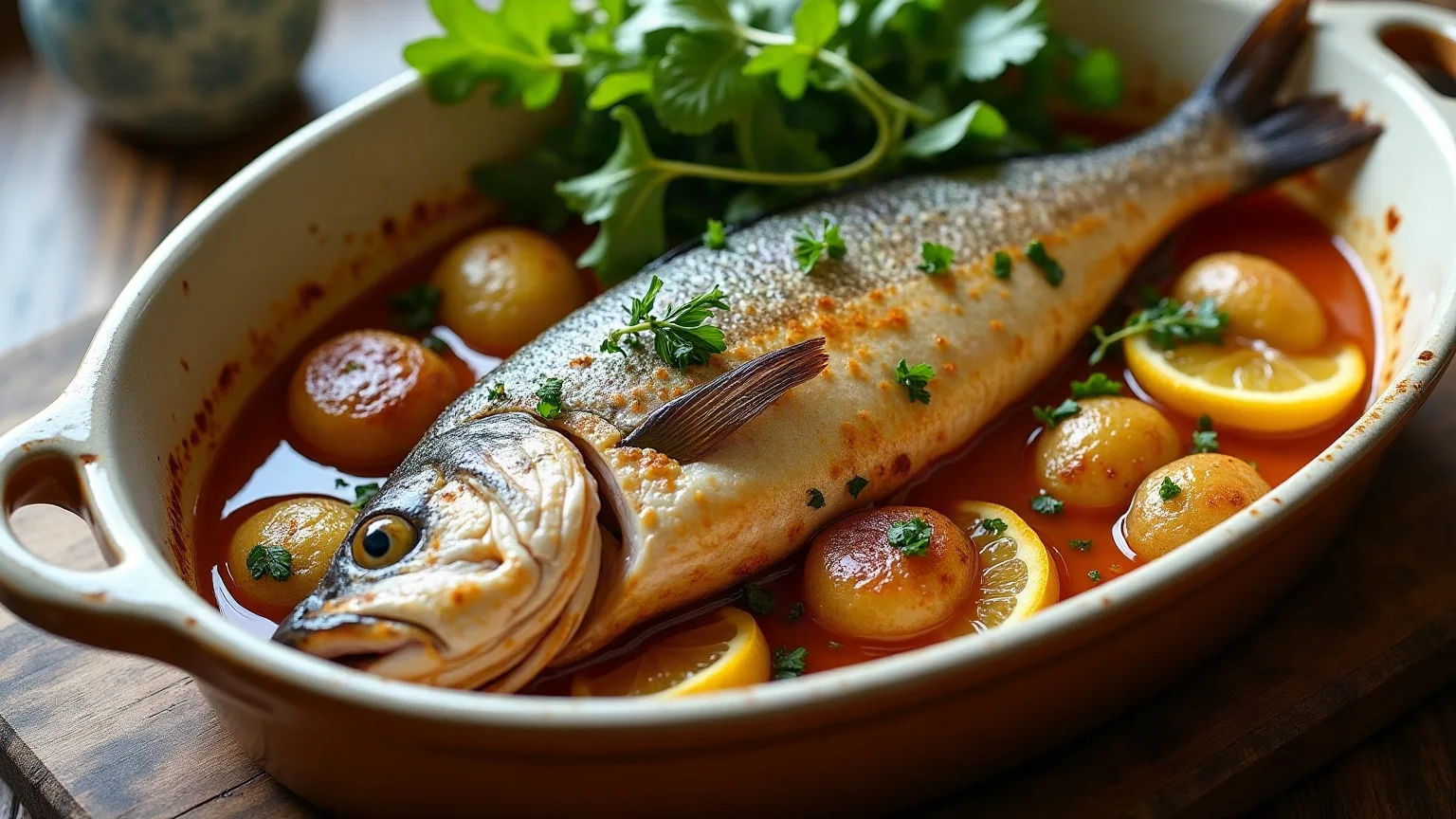
Fish and seafood · Aegean · Under 30 minutes · For guests
- Preparation
- 15 min
- Cooking
- 25 min
- Resting
- 5 min
- Difficulty
- Needs attention
- Cost
- Dear
- Season
- Autumn, Winter
Cooking a fish whole is a technical choice rather than a tradition. Bone conducts heat slowly and skin is a vapour barrier; together they soften the heat reaching the centre. In the same oven for the same time a fillet dries and a whole fish does not. And the collagen around the bones melts into the flesh, which keeps the texture moist.
Method
- Have the fish cleaned; rinse the cavity in cold water and dry the inside.
- Slash the skin diagonally three times on each side.
- Heat the oven to 200 °C.
You will need: An oven dish or tray · Baking paper
-
Slice the potatoes thin, toss them with oil and half the salt, spread them in a single layer and bake twelve minutes at 200 °C.
Look for The edges of the slices should just start to curl.
Why Potato takes twice as long as fish. Starting it first makes the two finish together; put in at the same time, the fish would dry while the potato was still raw.Starch gelatinised The granules soaked up water, swelled and burst into a network. It has thickened, and it will firm further as it cools. no way back
Maillard is running Amino acids have met reducing sugars. The crust, the roasted flavour and that smell all come from here. no way back
Salt · 2.21% High. Osmosis is pulling water out, the texture is tightening and the flavour is closing.
Too much starch. It will set into a rubbery gel once cool — add more liquid.
-
Fill the cavity with lemon slices, garlic, parsley and thyme; rub the skin with salt and oil.
Look for The skin should be oiled and salted all over, with the slashes left open.
Why The cavity is the only way to season a fish from inside — the flesh is dense and a marinade does not penetrate. The lemon and herbs there give off steam as it cooks and moisten the flesh from within.Salt · 0.80% Right in the window. Flavours sharpen, bitterness retreats, water is held.
-
Lay the fish on the potatoes and bake eighteen to twenty minutes at 200 °C.
Look for Slide a knife in beside the dorsal fin and twist: the flesh should lift off the bone easily and be opaque white rather than translucent.
Why Fish is ready at 55–60 °C, and a 400 g whole bass reaches that in eighteen to twenty minutes at 200 °C. The rule is per thickness: roughly four minutes for every centimetre at the thickest point.If it went wrong
Still translucent: four minutes more and look again. Overdone means dry, and there is no way back — serve it with plenty of oil and lemon.
Starch gelatinised The granules soaked up water, swelled and burst into a network. It has thickened, and it will firm further as it cools. no way back
Maillard is running Amino acids have met reducing sugars. The crust, the roasted flavour and that smell all come from here. no way back
Salt · 0.80% Right in the window. Flavours sharpen, bitterness retreats, water is held.
-
Take it out, squeeze the rest of the lemon over and rest it five minutes.
Look for A little clear liquid should collect on the plate; a lot of cloudy liquid is a sign of overcooking.
Why Five minutes lets carryover finish and the flesh settle. The lemon goes on now because acid in the oven goes on cooking the fish and toughens it.Salt · 0.74% Right in the window. Flavours sharpen, bitterness retreats, water is held.
This recipe was run through the engine step by step — what goes in when, and at what temperature and for how long. The reactions above come from that run.
peak 200 °C · 42 minutes · engine 1.0.0 · confidence low
What can go wrong here
The meat came out dry and tough⌄
What happened
The meat passed 70 °C. Past that point the muscle fibres contract and wring out their water, while collagen never gets the time to turn into gelatine. It loses moisture and never tenderises.
By the numbers
Beef medium at 57 °C, chicken at 74 °C. Rest it for 10 minutes off the heat; unrested meat leaves its juice on the plate.
Without a thermometer
The palm test: touch thumb to index finger and press the pad below your thumb — that firmness is rare. Middle finger is medium, ring finger is well done. Watch the juice too: pinkish and clear means you are there, running white means you went too far.
After the heat goes off
Hot with its potatoes and plenty of lemon and olive oil, with a rocket and onion salad beside it.
One day in the fridge, off the bone. Cooked fish changes its smell noticeably on the second day.
Do not reheat it: a second pass over 60 °C shreds the fibres, and it is better cold.
Not once cooked. Raw fish keeps three months and thaws in the fridge.
The flesh off the bone goes into a salad, a sandwich or a fish cake, and the bones make stock in twenty minutes.
White fish can be given to a baby from six months, but not off a whole fish because of the bones: take their share aside and check every piece with your fingers. For 12–36 months cut the salt. Fish is valuable for omega-3 and vitamin D, and two portions a week is the usual advice.
- European sea bass → Gilthead sea bream Sea bream cooks in the same time and, being oilier, is slightly more forgiving.
- The oven The method this recipe rests on
- European sea bass What it does in heat, water and acid
- Potato What it does in heat, water and acid
- Lemon What it does in heat, water and acid
- Grilled sea bream Similar method, or something that sits on the same table
- Steamed fish Similar method, or something that sits on the same table
- Baked salmon Similar method, or something that sits on the same table
- Under 30 minutes Other recipes that answer the same need
- For guests Other recipes that answer the same need
What it tastes like
The axes that define this recipe: aroma 66.
This profile is computed rather than measured: the role-weighted average of its ingredients’ taste vectors, shifted by what the cooking does. The thin line is the database average on that axis.
Closest in taste
Not hand-picked: ranked by distance across the eight taste axes.
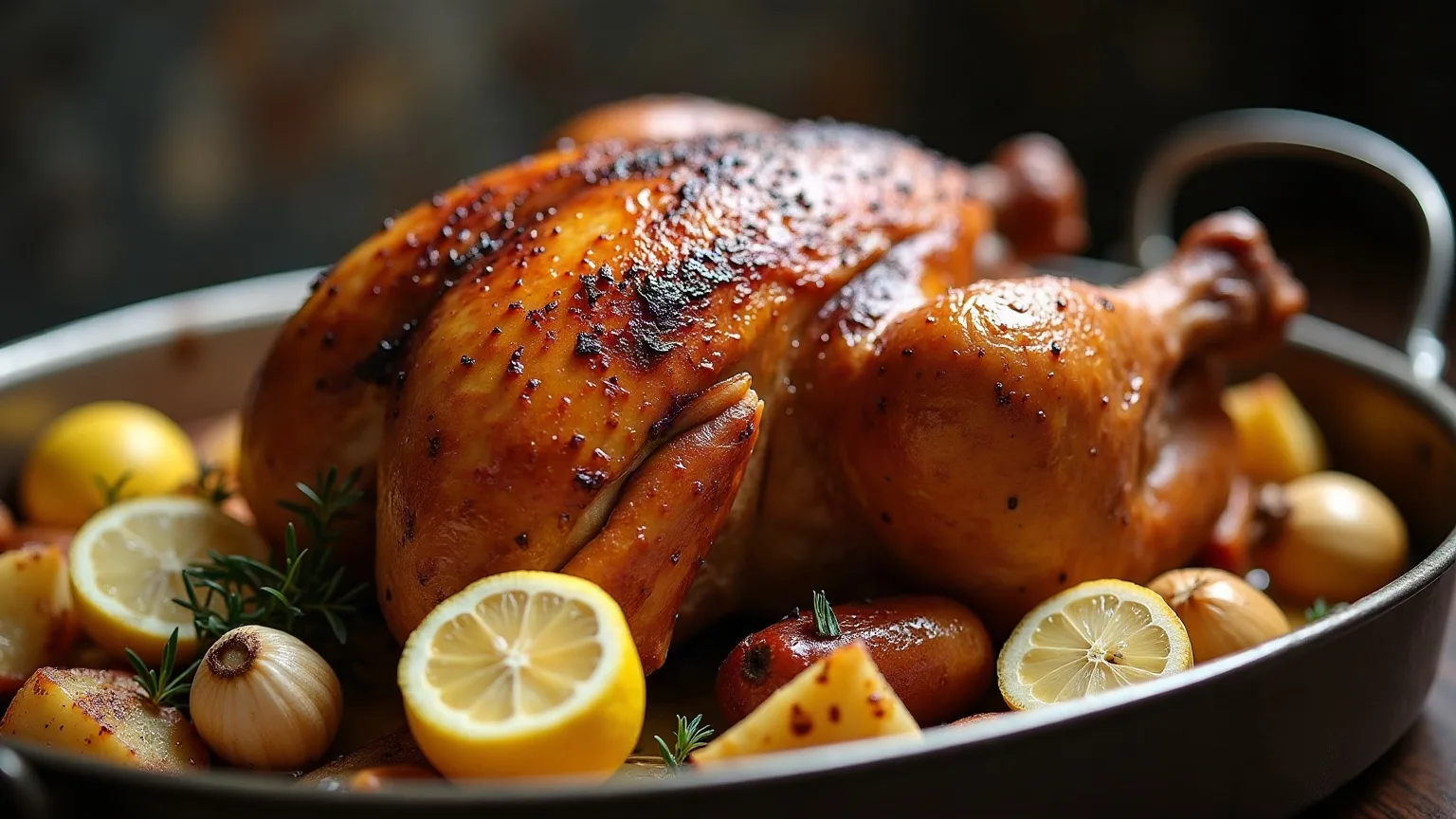
Whole roast chicken
The breast is ready at 65 °C and the leg at 75. Roasting a whole bird is entirely the business of hitting both at once.…
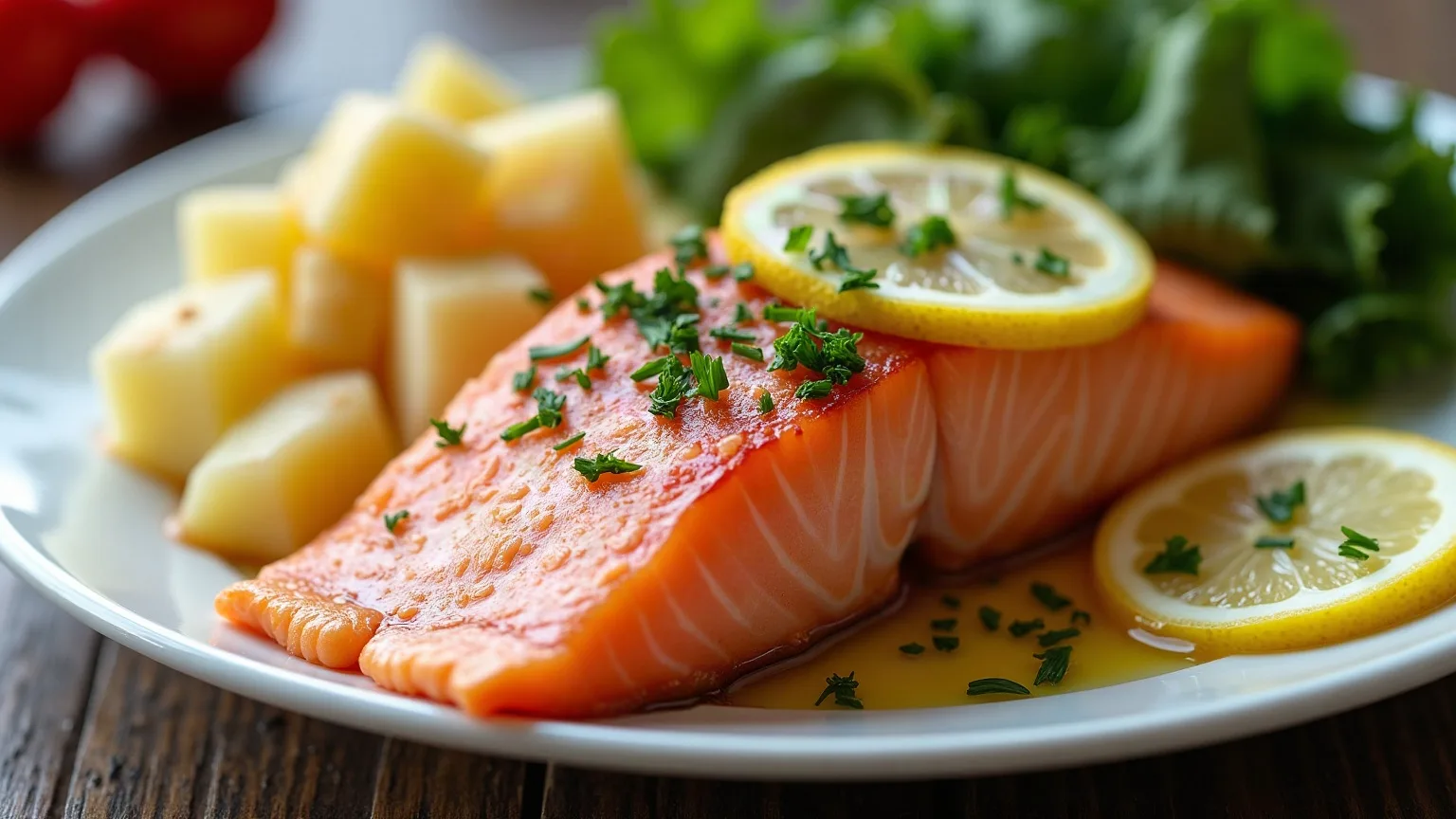
Baked salmon
The white stuff on baked salmon is a sign of too much heat rather than of freshness. Pulled at 52 °C it never appears.…
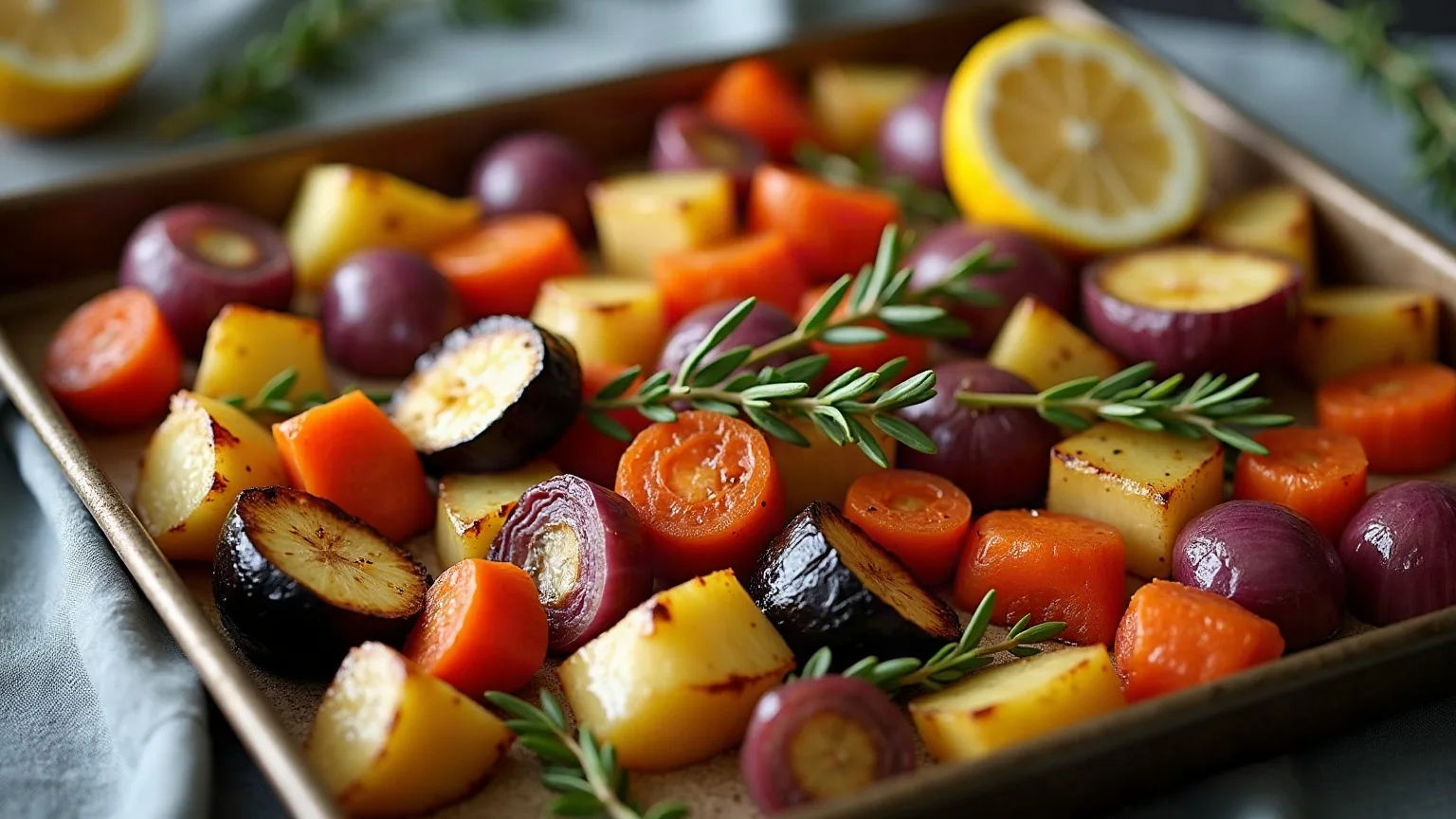
Tray-roasted vegetables
A vegetable that does not fit on the tray does not roast, it steams. Using two trays instead of one is the only trick in…
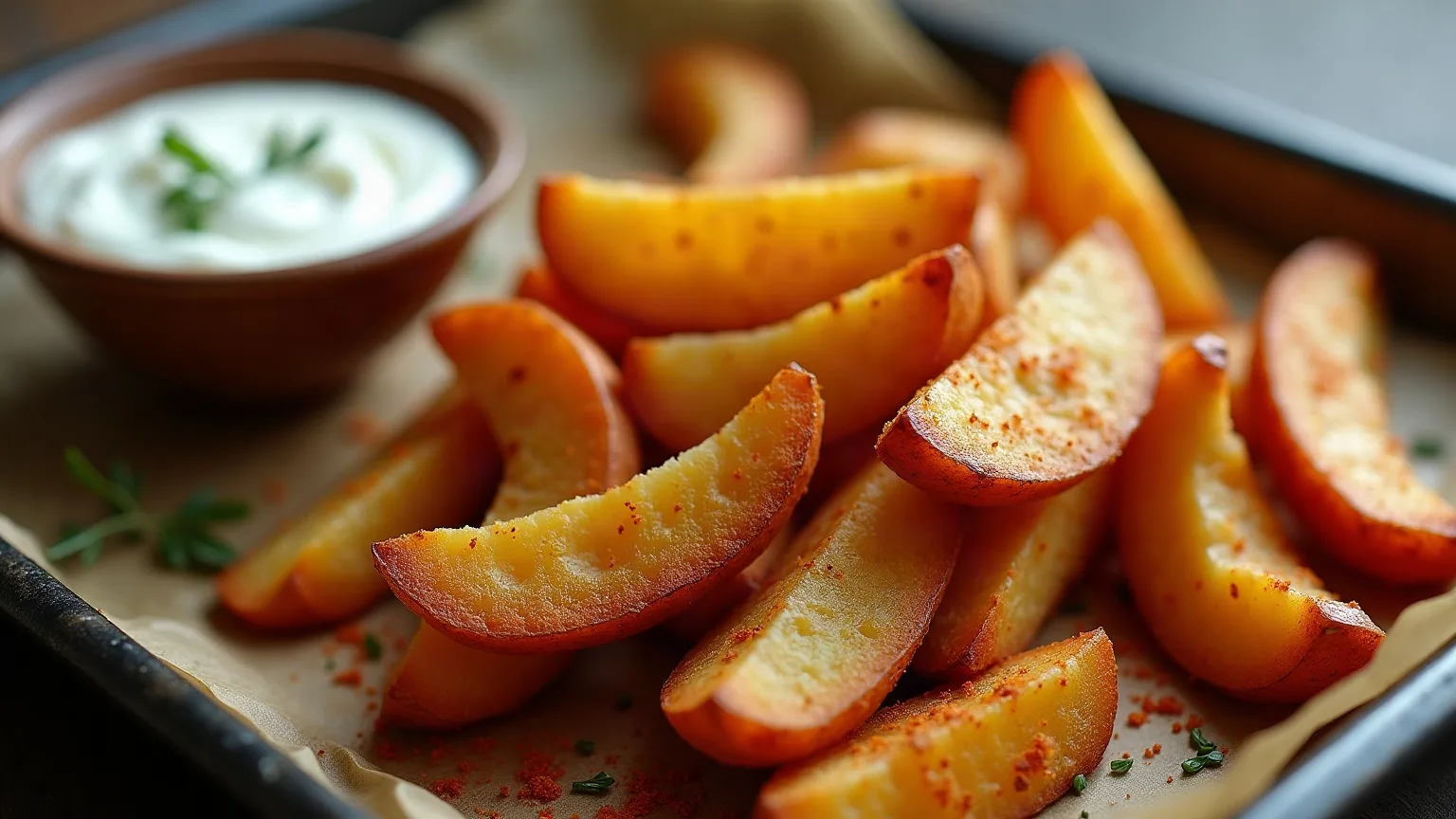
Oven potato wedges
The secret of a crisp wedge is not in the oven but before it: a boil and a shake. Without roughening the surface there i…