
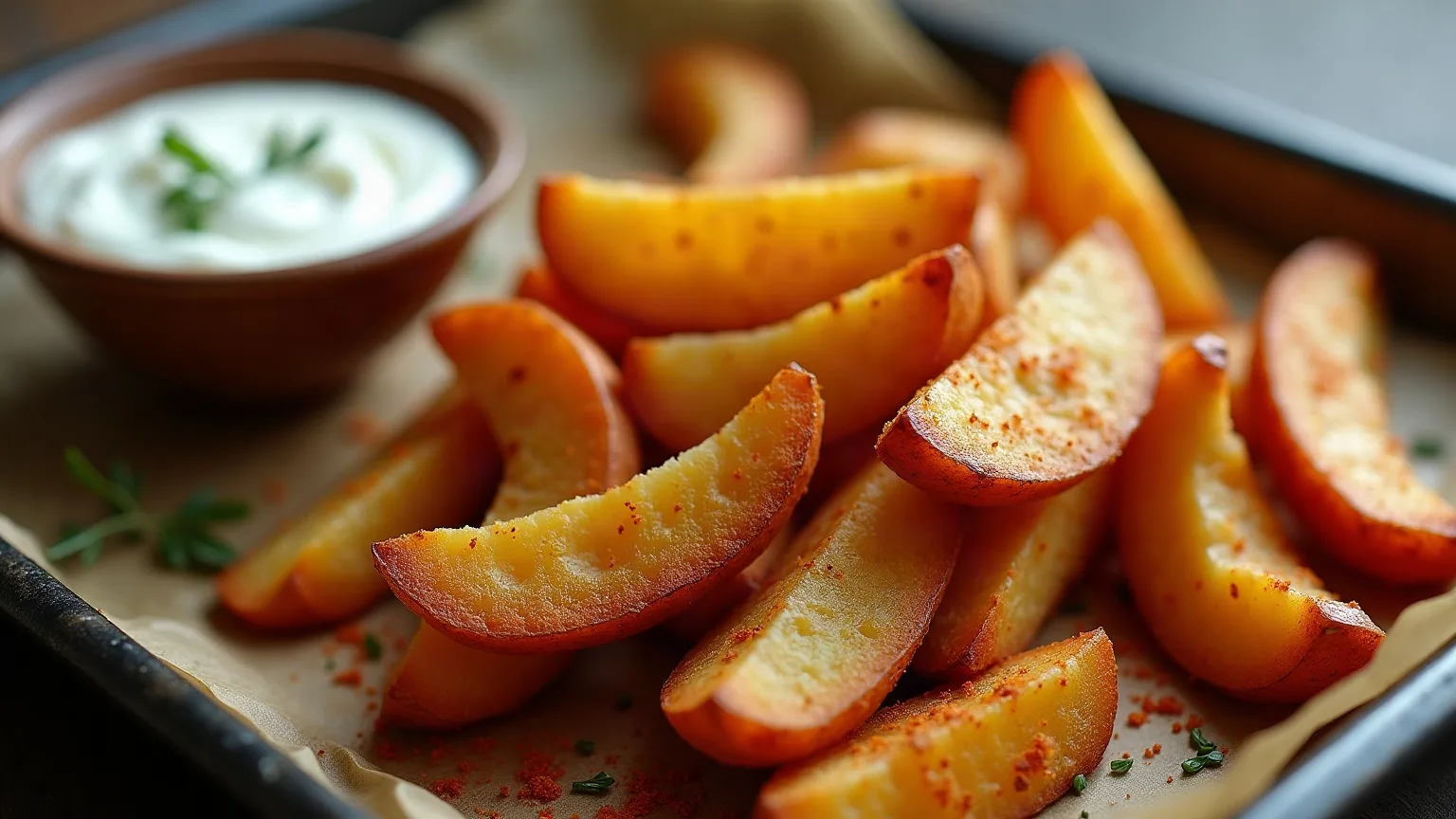
Oven potato wedges
The secret of a crisp wedge is not in the oven but before it: a boil and a shake. Without roughening the surface there is no crust.
Vegetable dishes · International · Budget · Snacks for children · Vegan
- Preparation
- 15 min
- Cooking
- 45 min
- Difficulty
- Needs attention
- Cost
- Very cheap
- Season
- All year
A smooth potato surface limits browning to its own area. Boiled and shaken in a colander, the outer layer turns to a starch slurry and the surface area rises markedly; in the oven that slurry dries into a glassy crust. It is the entire difference between a restaurant potato and a home one, and it takes two minutes.
Method
- Cut the potatoes, skin on, into six lengthways wedges.
- Heat the oven to 220 °C with the tray inside it.
You will need: A pan · A colander · An oven tray
-
Put the wedges in cold water, bring it to the boil and cook eight minutes.
Look for A knife going in easily while the wedge keeps its shape.
Why Starting cold lets the outside and the inside cook together; dropped into boiling water the outside disintegrates while the middle stays raw.Starch gelatinised The granules soaked up water, swelled and burst into a network. It has thickened, and it will firm further as it cools. no way back
Too much starch. It will set into a rubbery gel once cool — add more liquid.
-
Drain them and SHAKE the colander hard three or four times, until the surfaces roughen.
Look for The edges should look fluffy and matte; a wedge that stays smooth and shiny will not crisp.
Why The shaking turns the outer layer into a starch slurry and raises the surface area markedly. In the oven that slurry dries into a glassy crust, and all of the crispness comes from it.If it went wrong
Skipped, the wedges cook without a crust. Scratch the rest with a fork: not as good as shaking, but it helps.
Starch gelatinised The granules soaked up water, swelled and burst into a network. It has thickened, and it will firm further as it cools. no way back
Too much starch. It will set into a rubbery gel once cool — add more liquid.
-
Toss them with the oil, red pepper, thyme and salt, spread them on the HOT tray in one layer and roast twenty-five minutes at 220 °C.
Look for They should stick to the tray at first and release by themselves after twenty-five minutes.
Why A hot tray takes the face that touches it straight to 200 °C; on a cold tray the potato first heats the metal and steams while it does.Starch gelatinised The granules soaked up water, swelled and burst into a network. It has thickened, and it will firm further as it cools. no way back
Maillard is running Amino acids have met reducing sugars. The crust, the roasted flavour and that smell all come from here. no way back
Salt · 0.56% Low. Everything reads flat and nothing steps forward.
Too much starch. It will set into a rubbery gel once cool — add more liquid.
-
Turn them, add the crushed garlic and roast fifteen minutes more.
Look for Both faces deep gold and crusted.
Why The garlic goes in late because forty minutes chars it; fifteen is enough for it to give its smell.Starch gelatinised The granules soaked up water, swelled and burst into a network. It has thickened, and it will firm further as it cools. no way back
Maillard is running Amino acids have met reducing sugars. The crust, the roasted flavour and that smell all come from here. no way back
Salt · 0.55% Low. Everything reads flat and nothing steps forward.
Too much starch. It will set into a rubbery gel once cool — add more liquid.
This recipe was run through the engine step by step — what goes in when, and at what temperature and for how long. The reactions above come from that run.
peak 220 °C · 54 minutes · engine 1.0.0 · confidence low
After the heat goes off
Hot, with a yoghurt dip or a home-made ketchup, beside meat, chicken or fish.
Two days in the fridge, with the crispness gone.
Eight minutes at 220 °C: most of the crispness returns.
Three months boiled and shaken but not roasted, which is how commercial frozen chips are made. Straight from the freezer into the oven with ten minutes added.
Crushed into a meatball mixture, an omelette or a soup.
The best potato a child can have instead of a fried one. For 12–36 months leave the red pepper out, halve the wedges and cut the salt. For a baby under one, set aside a few wedges without salt or spice.
- Potato → Celeriac Celeriac crisps with the same technique, though with less starch the crust is thinner; cut the boiling to five minutes.
- The oven The method this recipe rests on
- Potato What it does in heat, water and acid
- Olive oil What it does in heat, water and acid
- Garlic What it does in heat, water and acid
- Tray-roasted vegetables Similar method, or something that sits on the same table
- Crushed potatoes with yoghurt Similar method, or something that sits on the same table
- Potato and mince bake Similar method, or something that sits on the same table
- Budget Other recipes that answer the same need
- Snacks for children Other recipes that answer the same need
- Vegan Other recipes that answer the same need
What it tastes like
The axes that define this recipe: aroma 68.
This profile is computed rather than measured: the role-weighted average of its ingredients’ taste vectors, shifted by what the cooking does. The thin line is the database average on that axis.
Closest in taste
Not hand-picked: ranked by distance across the eight taste axes.
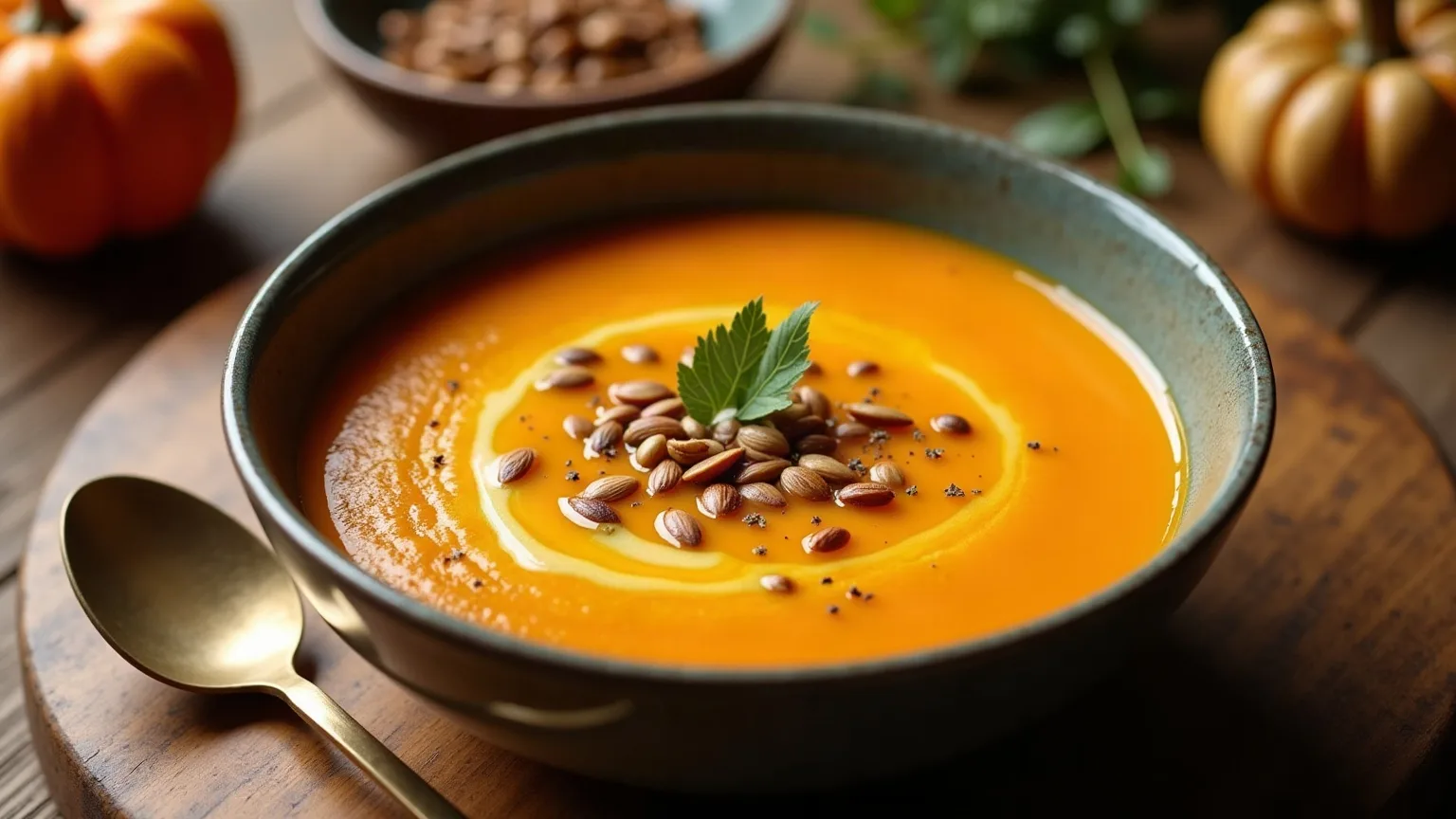
Pumpkin soup
Boiled pumpkin gives a watery, flat soup. Roasted pumpkin is the same vegetable and a completely different soup.…
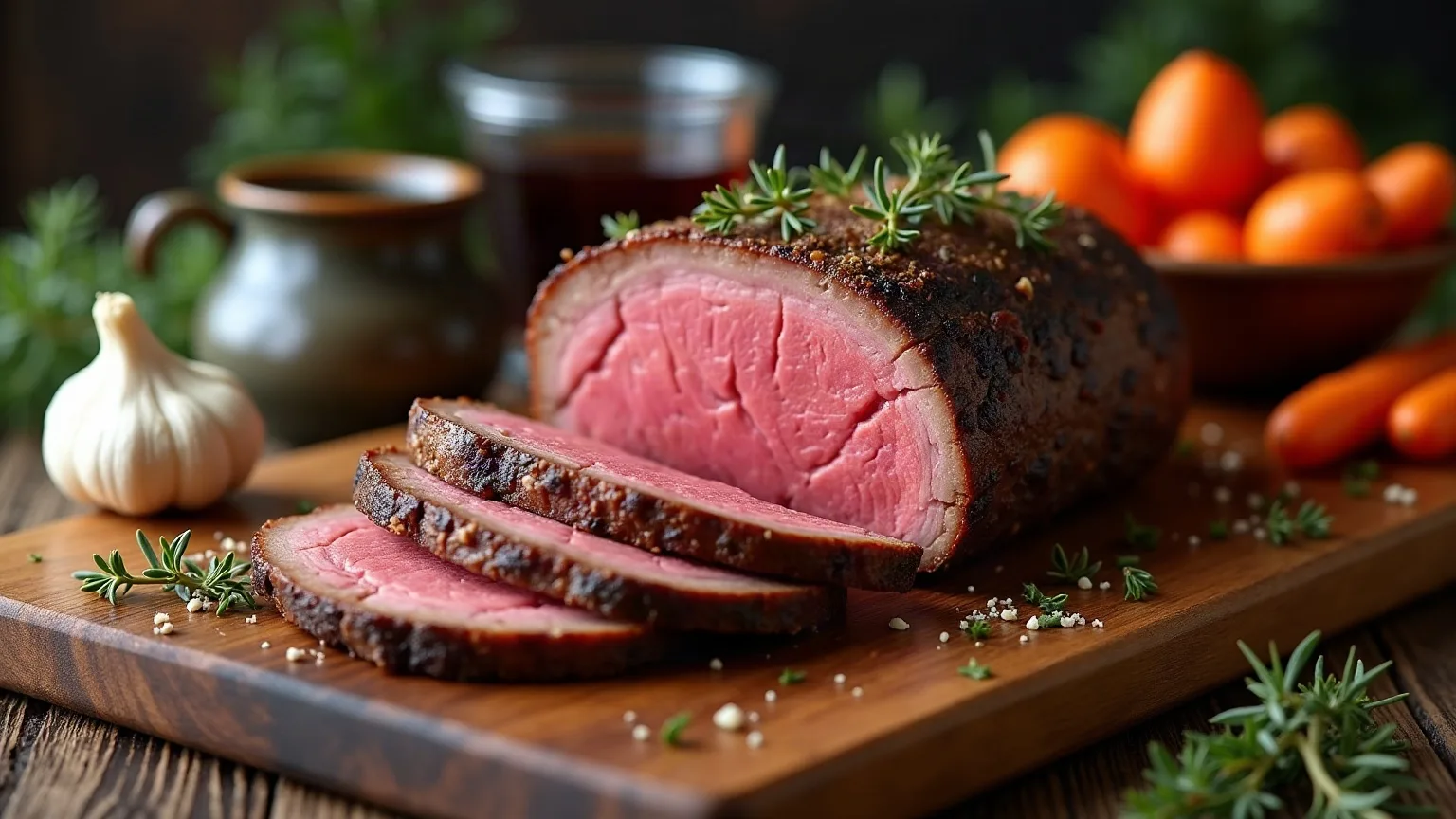
Roast beef
Not a dish to make without a thermometer. The answer to "how many minutes" depends on the temperature at the centre, not…
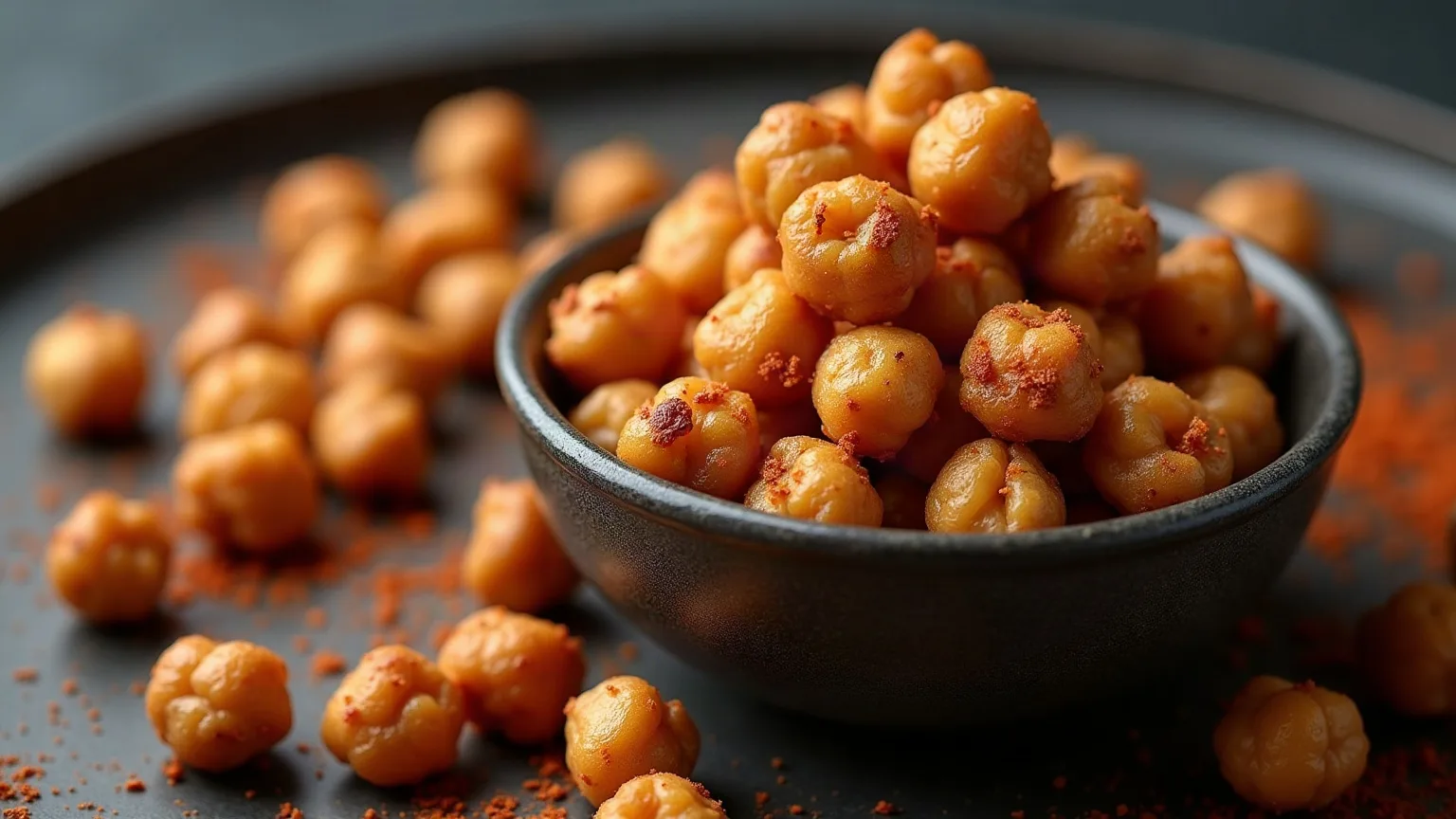
Roasted chickpeas
The crunch is drying, not browning: while there is free water on the surface the chickpea stays soft. The spices wait un…
Oven lamb tandır
Four hours at 140 °C, then fifteen minutes at 240. Without the second number the meat is tender and pale.…