
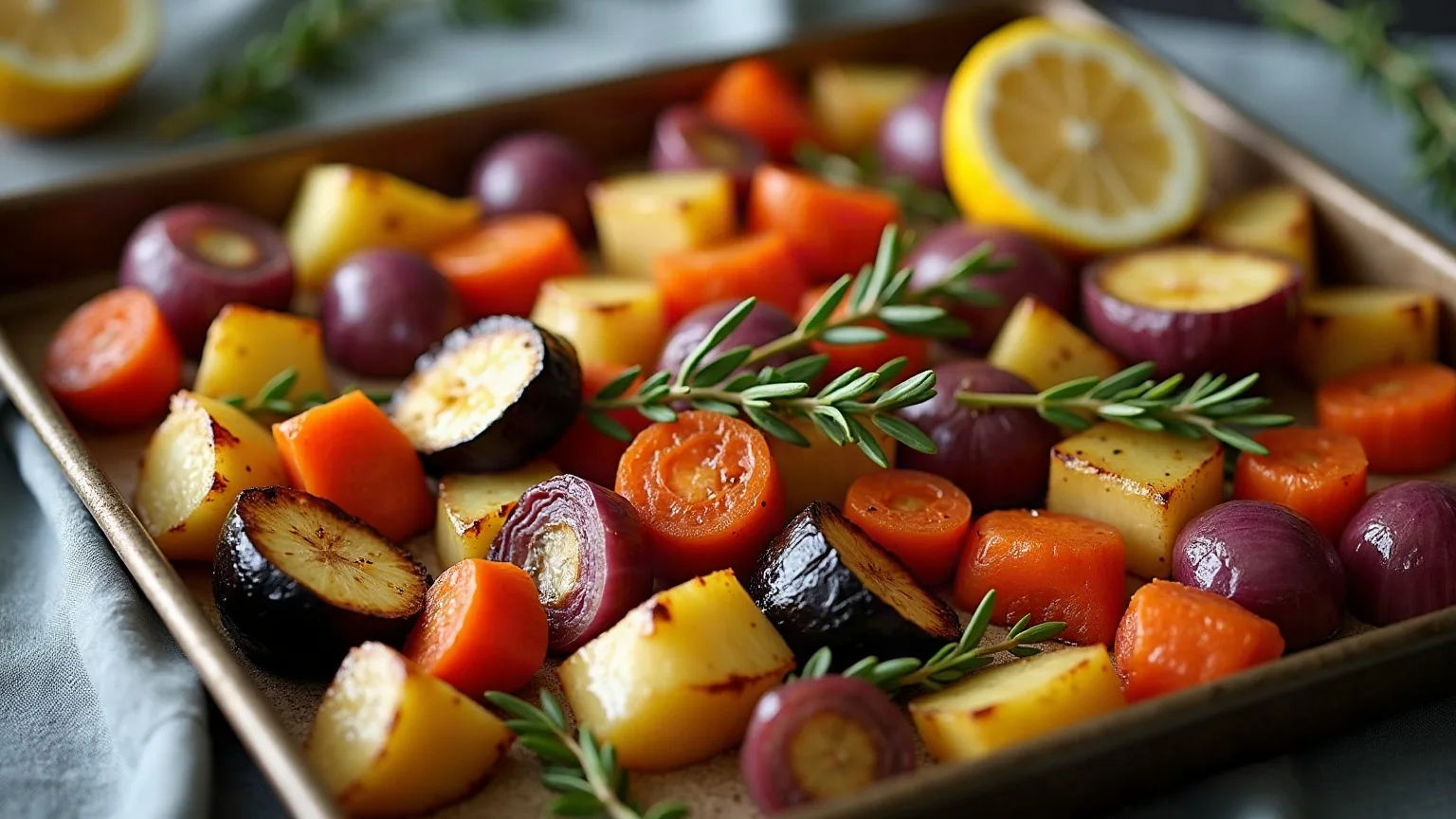
Tray-roasted vegetables
A vegetable that does not fit on the tray does not roast, it steams. Using two trays instead of one is the only trick in this recipe.
Vegetable dishes · International · Weekend batch · Budget · One pot · Vegan · Seasonal · Uses leftovers
- Preparation
- 20 min
- Cooking
- 40 min
- Difficulty
- Easy
- Cost
- Very cheap
- Season
- Autumn, Winter
The sweetness of roasted vegetables is caramelisation and Maillard, and both begin above 140 °C. The vegetables release water onto the tray, and if that water cannot evaporate the tray locks at 100 °C — they cook and never brown. The difference between one crowded tray and two is two different dishes from the same vegetables.
Method
- Heat the oven to 220 °C: lower and the vegetables cook without browning.
- Sort the vegetables into two groups by firmness and give each group its own tray.
You will need: TWO oven trays · Baking paper
-
Cut the potato, carrot and onion into 2.5 cm pieces, toss them with half the oil, half the salt and the thyme, and spread them in a single layer on the FIRST tray.
Look for You should see the tray between the pieces. If you cannot, use a third tray.
Why A single layer with space between the pieces, because the steam escapes through those gaps. Piled up, the vegetables boil in their own steam.If it went wrong
If the tray is crowded, move half to another one, even late. Without that you will have boiled vegetables in forty minutes.
Starch still asleep The granules are just floating there doing nothing. No body arrives before 62 °C.
Salt · 0.87% Right in the window. Flavours sharpen, bitterness retreats, water is held.
-
Roast the first tray twenty minutes at 220 °C.
Look for The edges of the potato should start to colour.
Why Roots take twice as long as courgette and pepper; starting them first makes the two finish together.Starch gelatinised The granules soaked up water, swelled and burst into a network. It has thickened, and it will firm further as it cools. no way back
Salt · 0.87% Right in the window. Flavours sharpen, bitterness retreats, water is held.
-
Toss the aubergine, courgette, peppers and unpeeled garlic with the rest of the oil and salt, spread them on the SECOND tray and roast both for twenty minutes more.
Look for The courgette and peppers should darken at the edges and the aubergine collapse to a golden brown.
Why Wet vegetables on the same tray as roots raise the humidity and spoil the roots’ browning as well. Separate trays separate both the timing and the moisture.Starch gelatinised The granules soaked up water, swelled and burst into a network. It has thickened, and it will firm further as it cools. no way back
Salt · 0.51% Low. Everything reads flat and nothing steps forward.
-
Combine the trays and squeeze the garlic out of its skins over them.
Look for The cloves should come out like a paste.
Why Roasted in its skin the garlic does not burn but steams into a sweet paste; peeled, it would have charred over forty minutes.Starch gelatinised The granules soaked up water, swelled and burst into a network. It has thickened, and it will firm further as it cools. no way back
Salt · 0.51% Low. Everything reads flat and nothing steps forward.
This recipe was run through the engine step by step — what goes in when, and at what temperature and for how long. The reactions above come from that run.
peak 220 °C · 50 minutes · engine 1.0.0 · confidence low
After the heat goes off
Hot or warm with oil and lemon, and yoghurt or bulgur beside it.
Four days in the fridge. The recipe was written for the week ahead.
Eight minutes at 200 °C: a pan softens them and the oven brings the edges back.
Two months, though the texture softens noticeably: send frozen ones to a soup or a purée.
Blended into a soup, mashed as a börek filling, chopped into a pasta sauce, or eaten as a salad. That was the point of the recipe.
Roasting is where a vegetable’s sweetness shows most, and children eat roasted vegetables noticeably more readily than boiled ones. For 12–36 months take the peppers out, cut the pieces to 1 cm and lift their share before the salt. For a baby under one, cook an unsalted corner and mash it.
- Potato → Pumpkin Pumpkin belongs to the same group but is higher in sugar: add it five minutes later or the edges blacken.
- The oven The method this recipe rests on
- Potato What it does in heat, water and acid
- Courgette What it does in heat, water and acid
- Red onion What it does in heat, water and acid
- Pumpkin soup Similar method, or something that sits on the same table
- Türlü Similar method, or something that sits on the same table
- Roasted cauliflower Similar method, or something that sits on the same table
- Weekend batch Other recipes that answer the same need
- Budget Other recipes that answer the same need
- One pot Other recipes that answer the same need
- Vegan Other recipes that answer the same need
- Seasonal Other recipes that answer the same need
- Uses leftovers Other recipes that answer the same need
What it tastes like
The axes that define this recipe: aroma 60.
This profile is computed rather than measured: the role-weighted average of its ingredients’ taste vectors, shifted by what the cooking does. The thin line is the database average on that axis.
Closest in taste
Not hand-picked: ranked by distance across the eight taste axes.
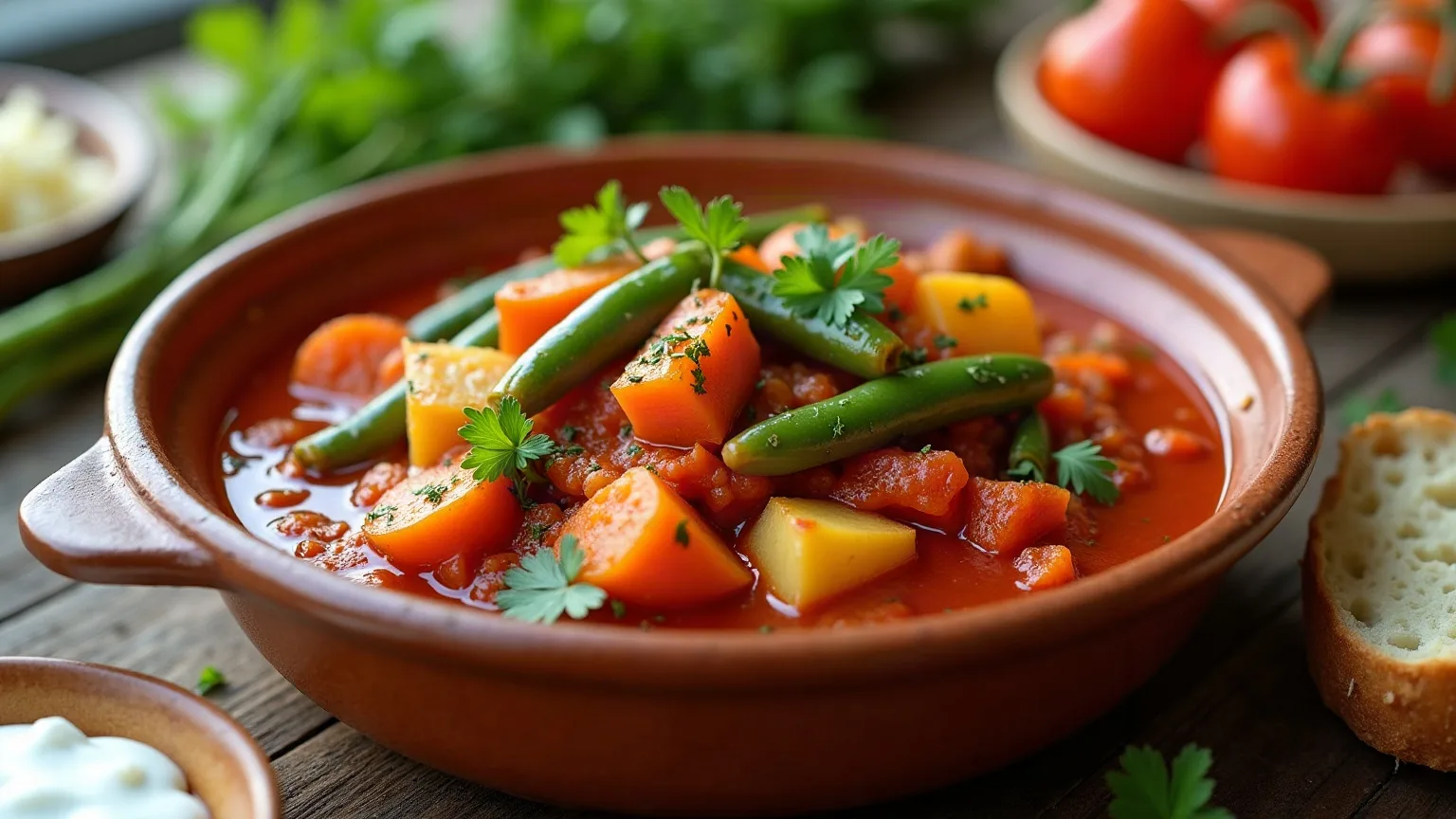
Türlü
The name means "all sorts" and the recipe means it: whatever is in the house goes in. The one rule is the order they coo…
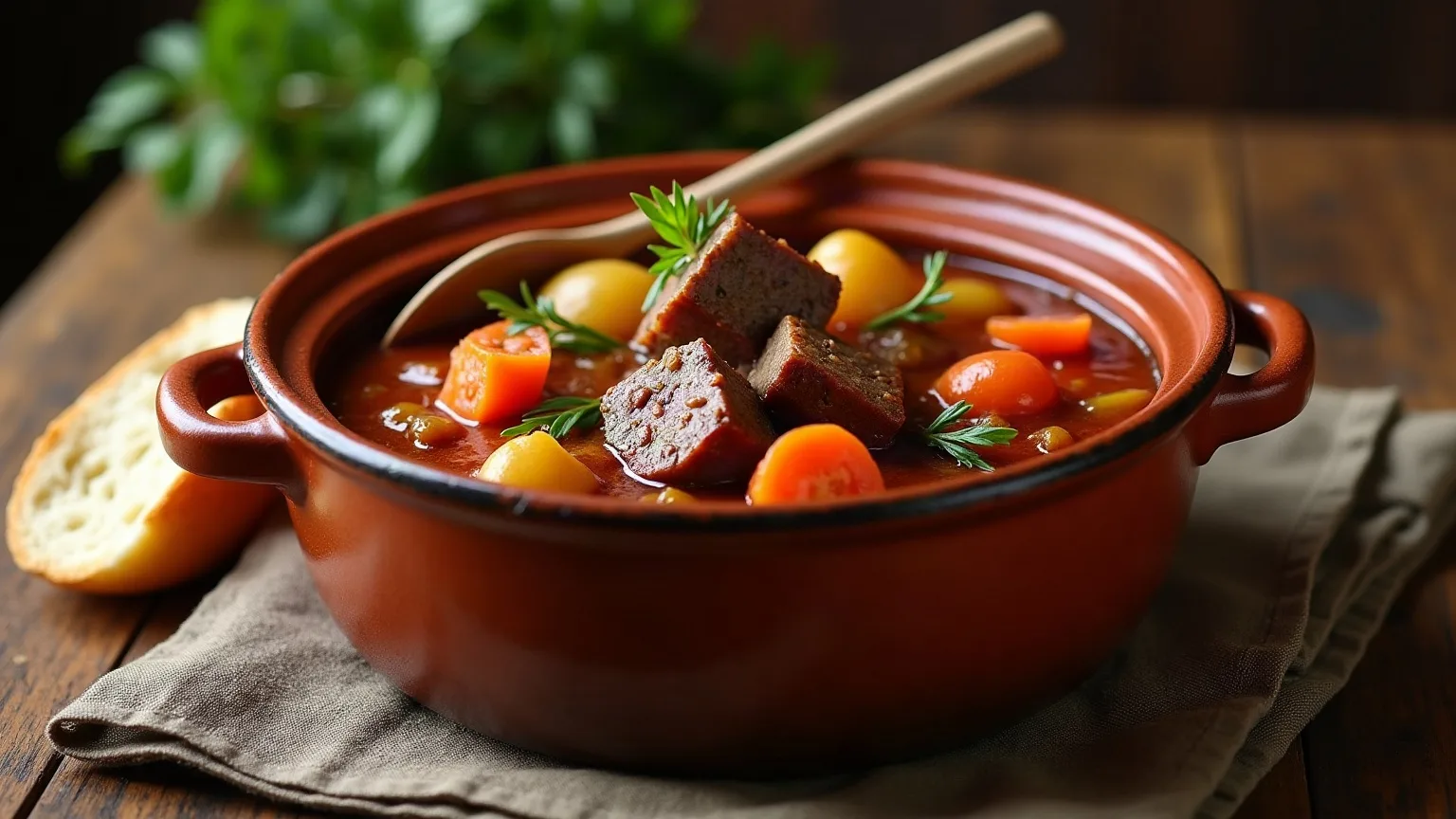
Lamb casserole
The meat has two hours and the vegetables have forty minutes. Put them in together and the vegetables vanish while the m…
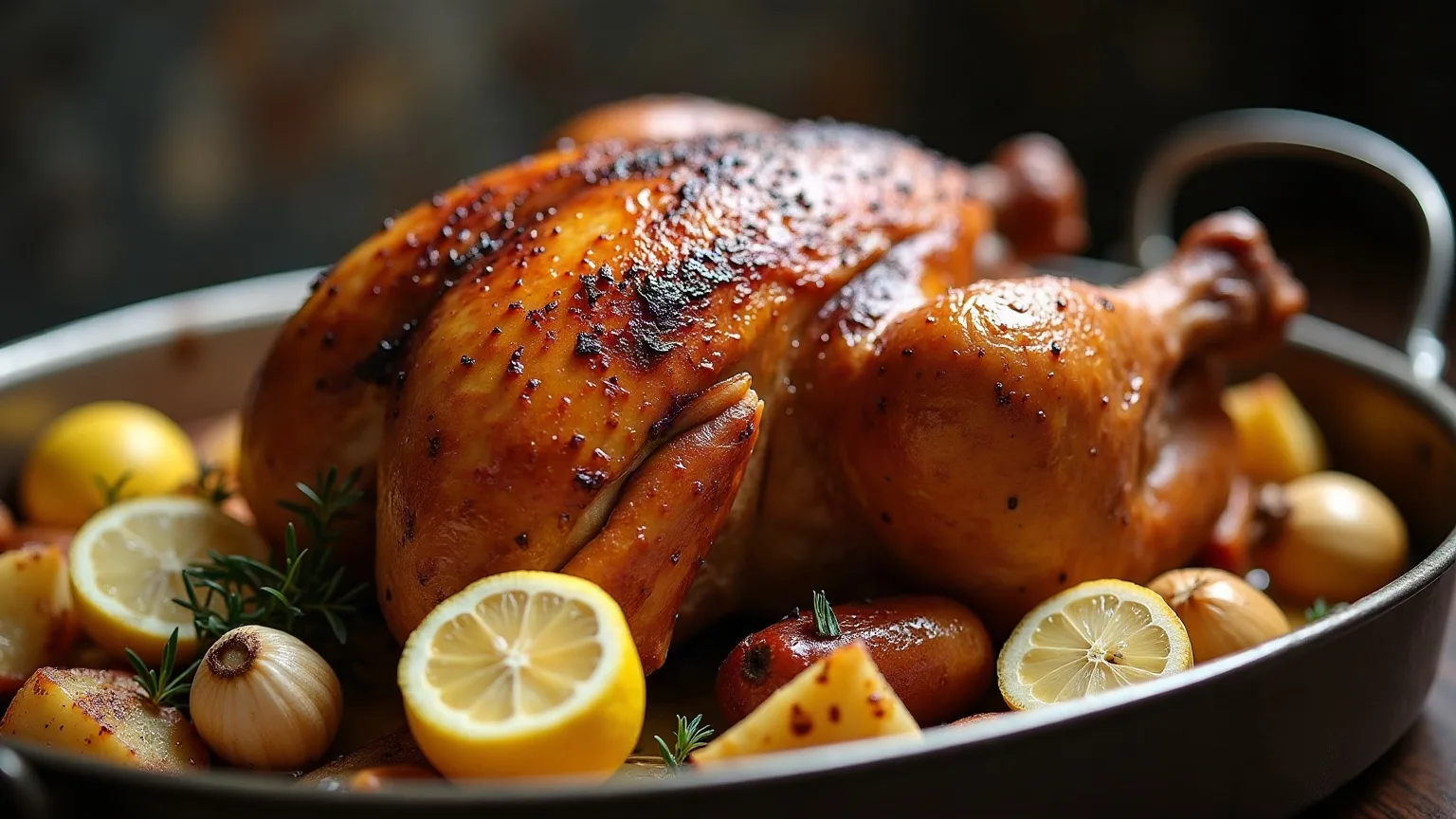
Whole roast chicken
The breast is ready at 65 °C and the leg at 75. Roasting a whole bird is entirely the business of hitting both at once.…
Oven chicken wings
Crisp wings without a fryer are possible, on one condition: a night uncovered in the fridge to dry the skin.…