
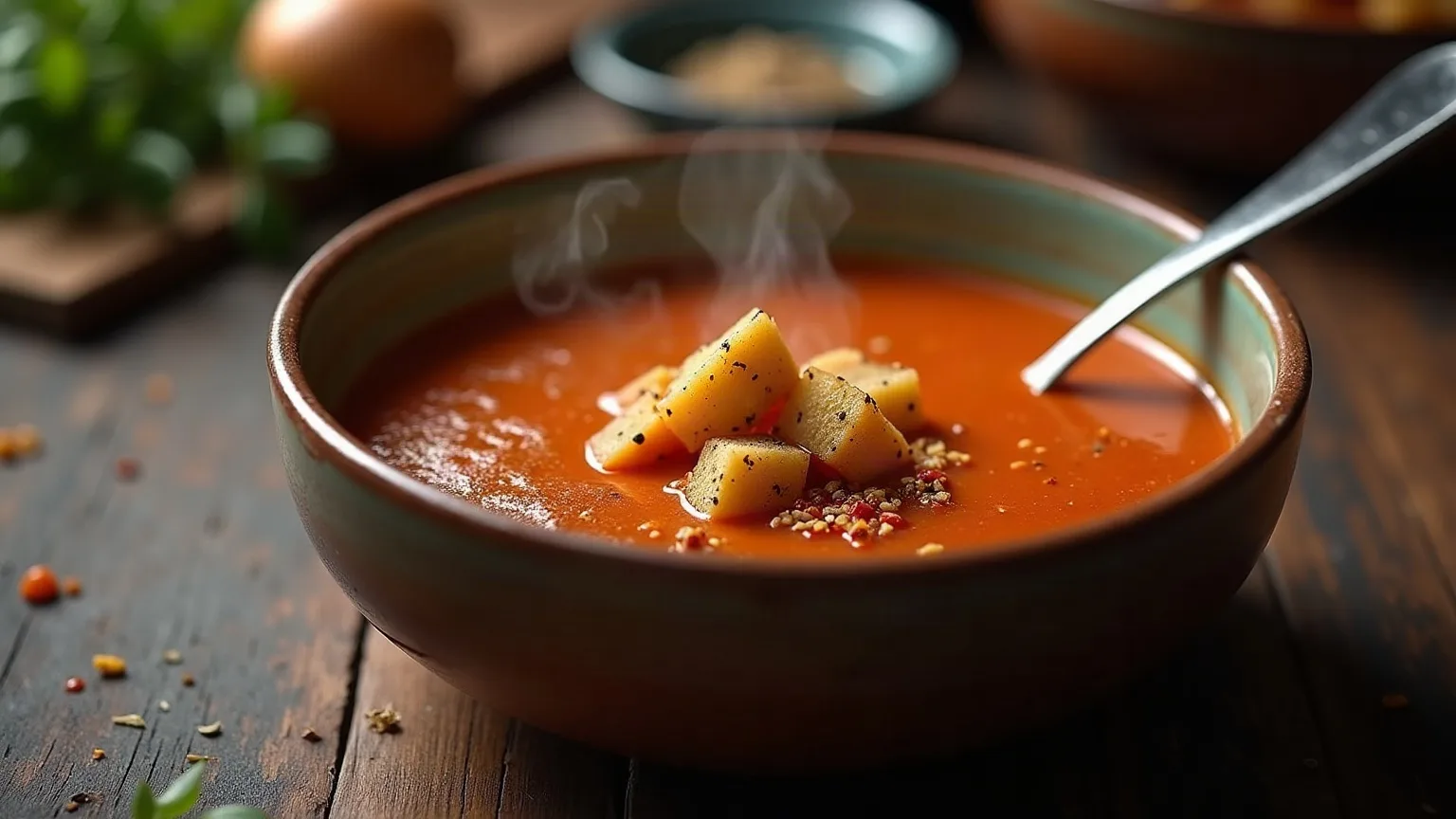
Tarhana soup
A yoghurt-and-vegetable mixture fermented through a summer, dried and powdered. Ten minutes to a soup — at the end of a year’s work.
Soups · Aegean · Under 30 minutes · Budget · One pot
- Preparation
- 5 min
- Cooking
- 15 min
- Resting
- 10 min
- Difficulty
- Needs attention
- Cost
- Very cheap
- Season
- Autumn, Winter
Tarhana is one of Anatolia’s oldest preserving techniques and probably the world’s first instant soup: yoghurt, flour, tomato, pepper and onion mixed, fermented for days, then sun-dried and crumbled. Lactic acid bacteria take the pH below 4 and drying drops the water activity; the two barriers together keep it for a year. Every household’s tarhana is different, because every household’s ferment is.
Method
- Soak the tarhana in 200 ml of COLD water for ten minutes and whisk it.
- Have the tomato paste and butter ready.
You will need: A pan · A whisk
-
Whisk the tarhana into 200 ml of cold water and leave it ten minutes.
Look for It should become a thick slurry with no dry powder left in it.
Why Tarhana is dried flour and yoghurt: dropped into hot water its surface gelatinises at once into lumps with dry centres. In cold water each particle wets separately.If it went wrong
If lumps remain, sieve it or blitz it for ten seconds. Lumpy tarhana never opens out in the pan.
-
Melt the butter in the pan, fry the tomato paste for a minute, add the rest of the water and bring it to the boil.
Look for The paste should darken and the fat separate at the edges.
Why The paste is here for colour and depth; there is already tomato in the tarhana and this is a second layer of it.Starch gelatinised The granules soaked up water, swelled and burst into a network. It has thickened, and it will firm further as it cools. no way back
A gluten web is forming Gliadin and glutenin hydrated into an elastic net. This is what will hold the gas. no way back
-
Whisk the soaked tarhana in and cook it gently for twelve to fifteen minutes, stirring constantly. Salt at the end.
Look for It should coat the back of the spoon and throw thick, slow bubbles; that "blop" is tarhana telling you it is ready.
Why Tarhana catches on the base very easily because it is dense with flour. Constant stirring is not optional: leave it and it burns in five minutes. The salt waits because tarhana carries its own, and how much varies with every batch.If it went wrong
If it has caught, DO NOT STIR: lift the clean top into another pan. Stirring spreads the burnt taste through all of it and that taste never leaves.
Starch gelatinised The granules soaked up water, swelled and burst into a network. It has thickened, and it will firm further as it cools. no way back
A gluten web is forming Gliadin and glutenin hydrated into an elastic net. This is what will hold the gas. no way back
Salt · 0.36% Low. Everything reads flat and nothing steps forward.
This recipe was run through the engine step by step — what goes in when, and at what temperature and for how long. The reactions above come from that run.
peak 150 °C · 27 minutes · engine 1.0.0 · confidence low
After the heat goes off
Very hot, with a pinch of chilli and cubes of fried bread. Its sourness comes forward as it cools, which is why it is drunk hot.
Three days in the fridge. Dry tarhana is another matter: a year in a sealed jar somewhere cool and dark.
Five minutes on a low flame with added water, stirring. It catches on reheating too.
Three months. It looks separated on thawing and comes back together with a stir, because what separated is water released by the starch rather than a broken emulsion.
Thickened, with cheese grated over it and ten minutes in the oven, it becomes a sort of savoury pudding; in the Aegean it also goes inside a börek.
Tarhana is sour and salty: not for a baby under one. For 12–36 months a home-made, low-salt tarhana will do, softened with a spoon of yoghurt. Shop-bought tarhana is usually high in salt — read the label.
- Butter → Olive oil Olive oil works, though butter rounds tarhana’s sourness better.
- Fermentation The method this recipe rests on
- Tarhana (dry) What it does in heat, water and acid
- Butter What it does in heat, water and acid
- Tomato paste What it does in heat, water and acid
- Red lentil soup Similar method, or something that sits on the same table
- Ezogelin soup Similar method, or something that sits on the same table
- Flour soup Similar method, or something that sits on the same table
- Under 30 minutes Other recipes that answer the same need
- Budget Other recipes that answer the same need
- One pot Other recipes that answer the same need
What it tastes like
The axes that define this recipe: sour 60, umami 68, aroma 70.
This profile is computed rather than measured: the role-weighted average of its ingredients’ taste vectors, shifted by what the cooking does. The thin line is the database average on that axis.
Closest in taste
Not hand-picked: ranked by distance across the eight taste axes.
Tarhana
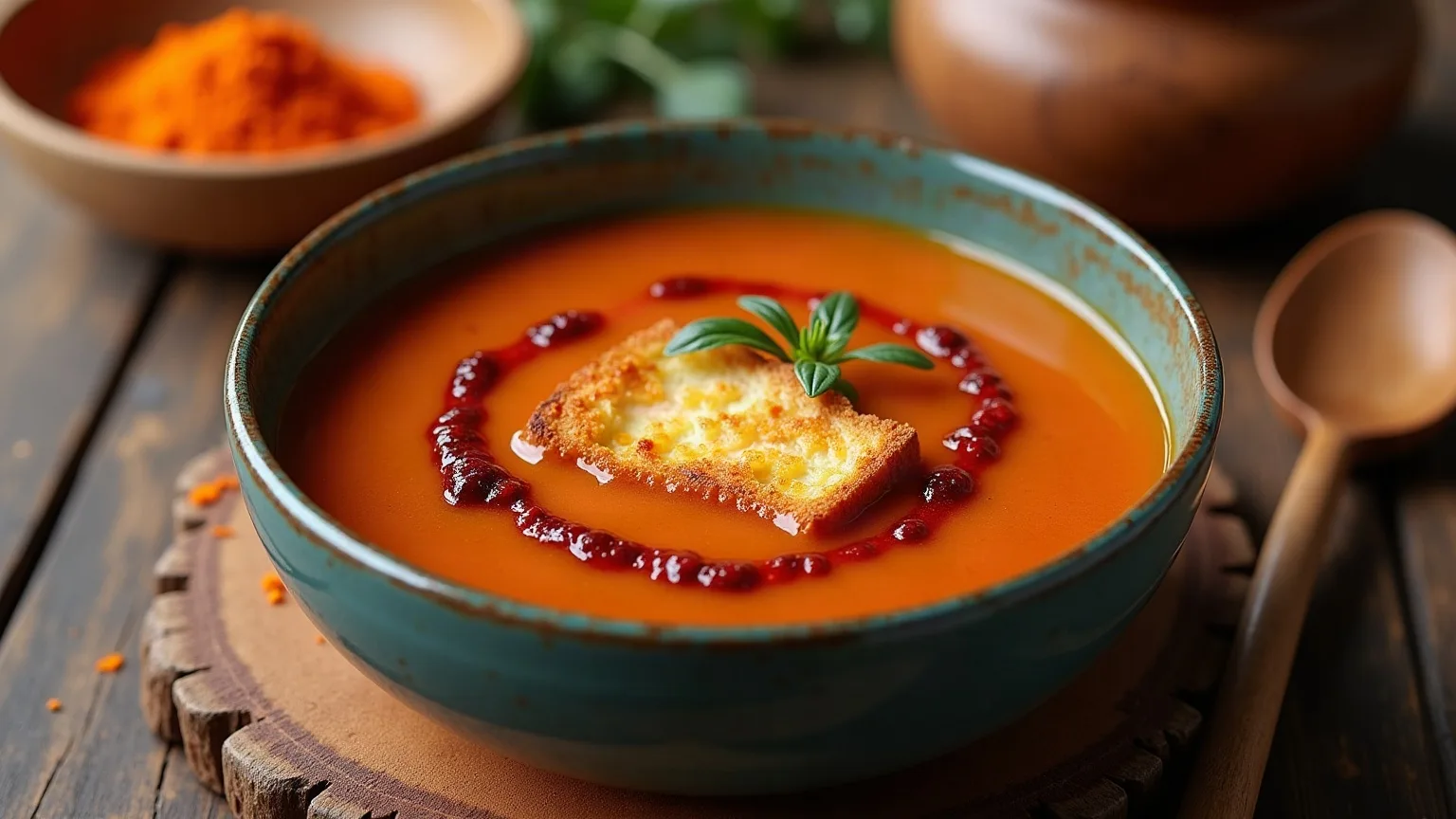
A winter store made by fermenting, drying and milling a dough of flour, yoghurt, vegetables and spices. One of the few d…
Ali Nazik
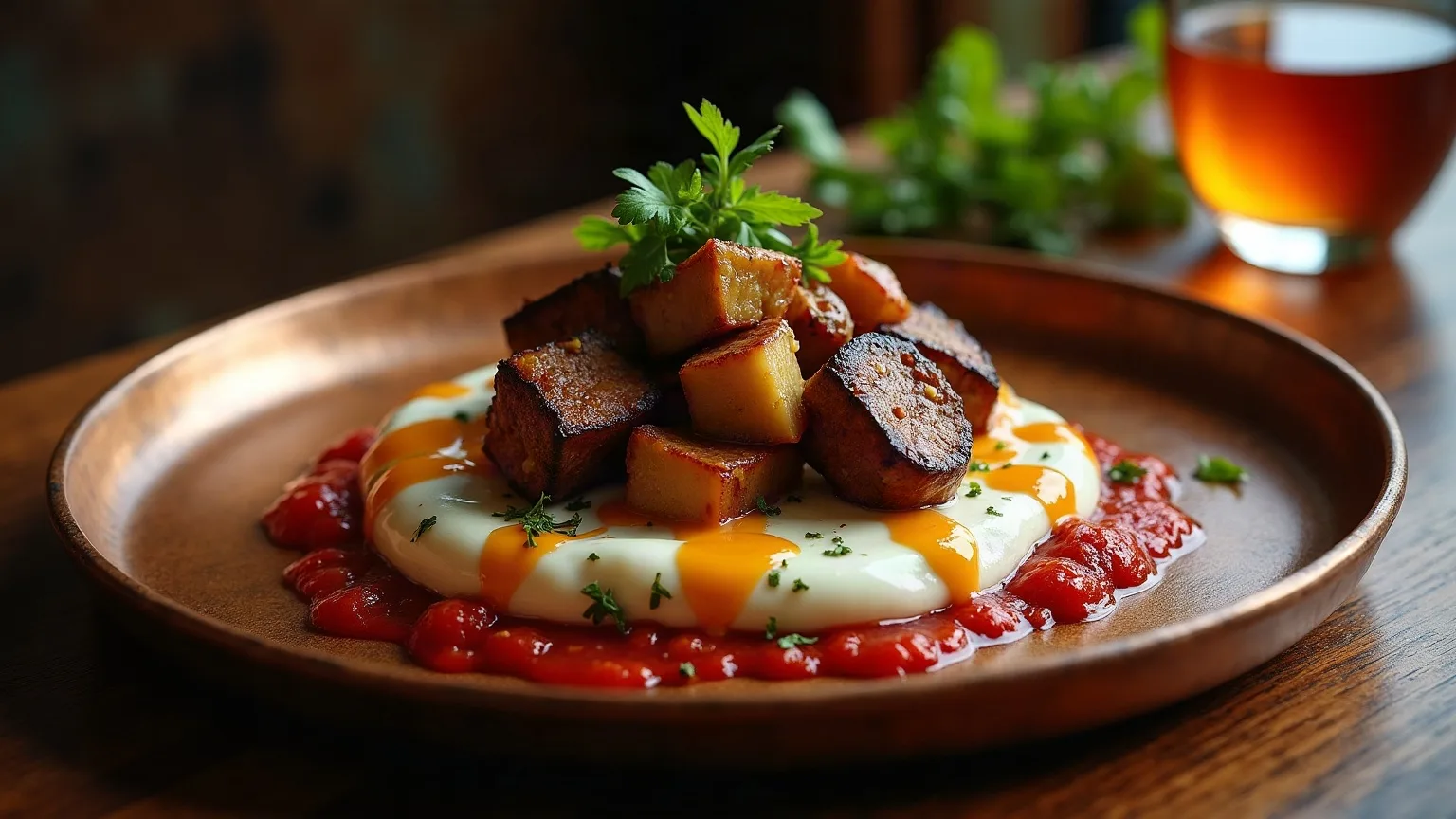
The Gaziantep classic: charred aubergine crushed with garlicky yoghurt under sautéed lamb. Everything rests on properly …
Ali Nazik
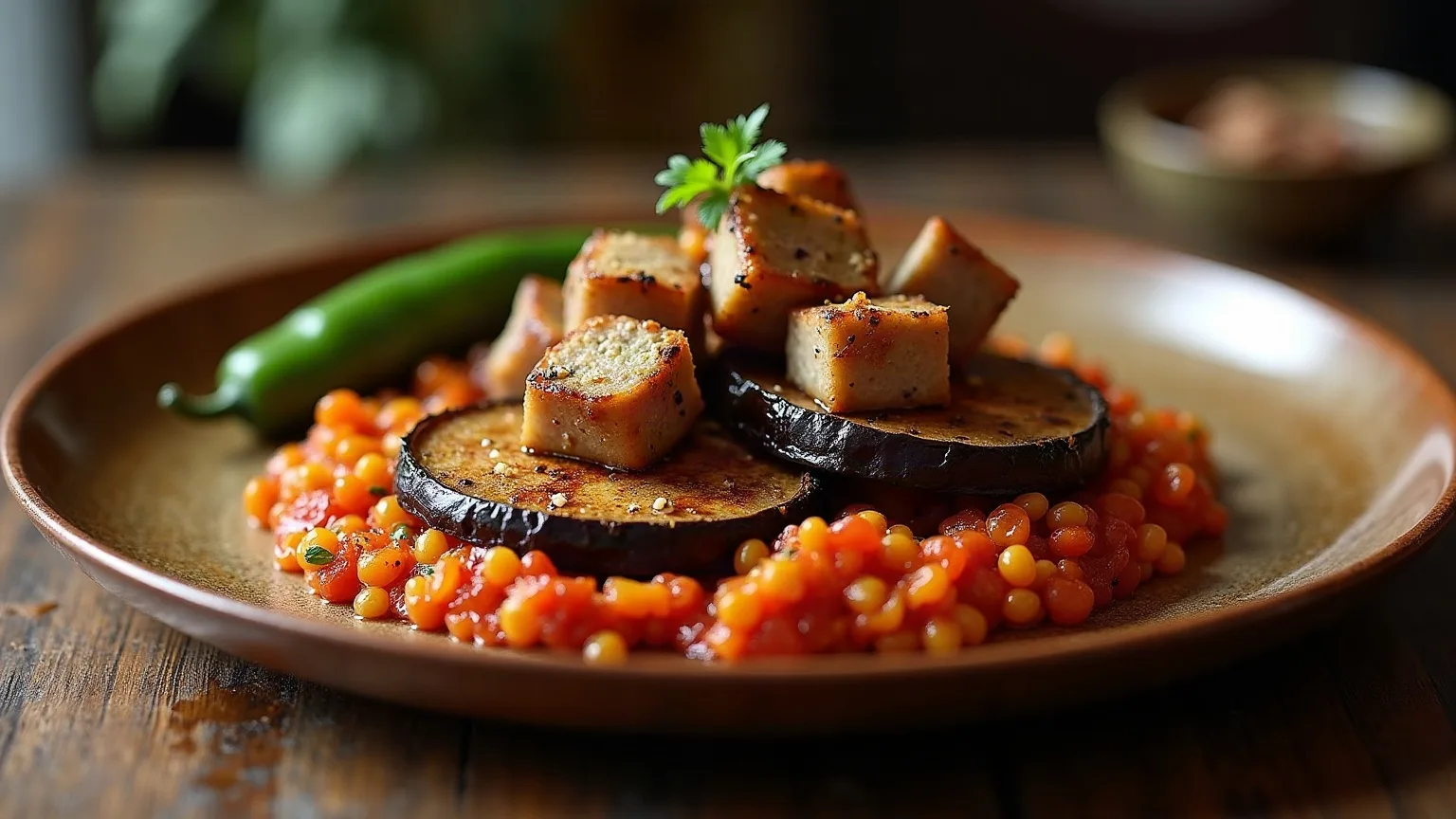
The Gaziantep classic: charred aubergine crushed with garlicky yoghurt under sautéed lamb. The aubergine must meet fire;…
Chicken shish
A yoghurt marinade is a mechanism rather than a tradition: its calcium and lactic acid loosen the meat’s protein.…