
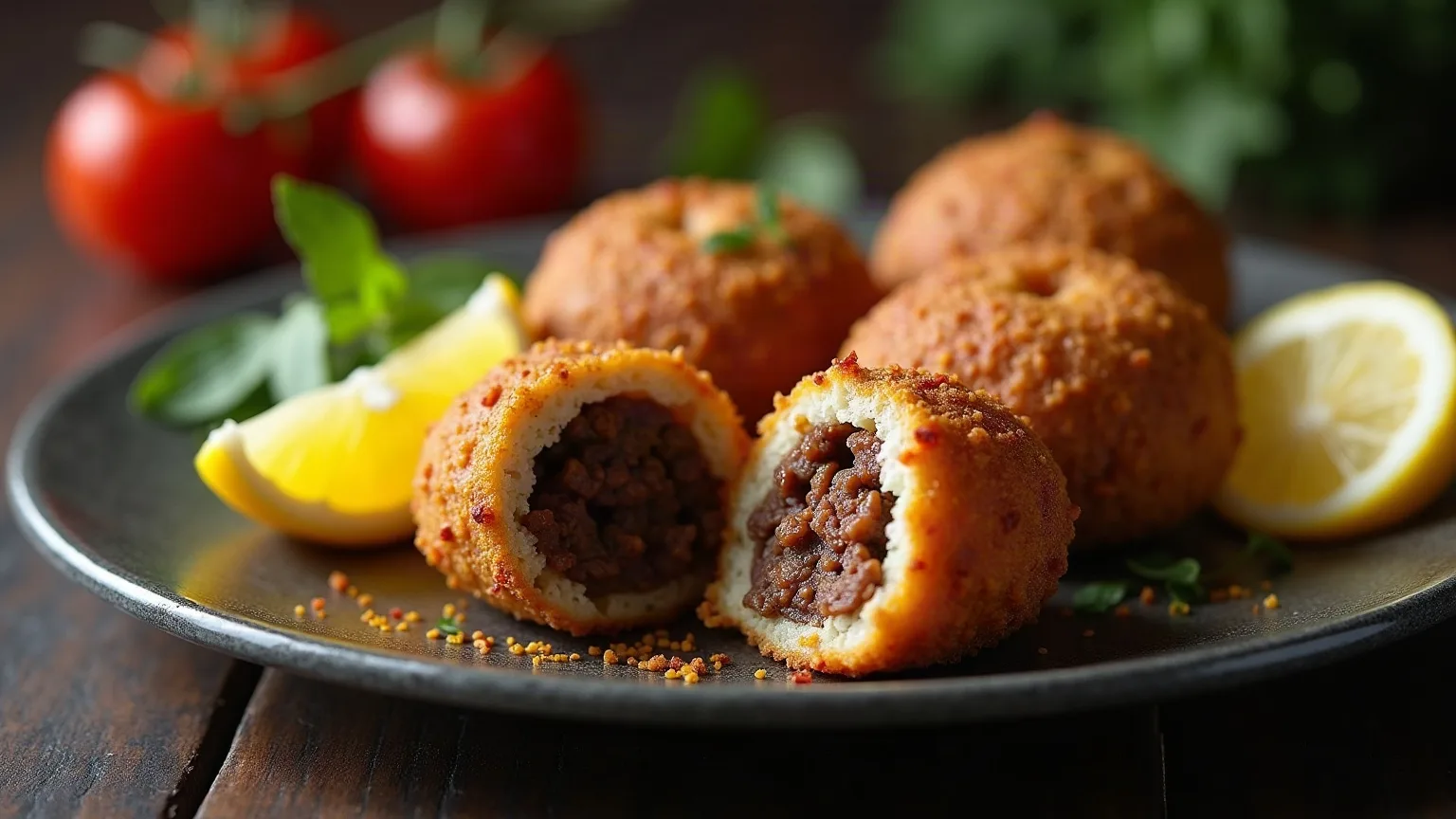
İçli köfte
Whether the shell thins without splitting depends on its temperature: cold bulgur cracks and warm bulgur stretches.
Meat dishes · South-eastern Anatolia · For guests · Freezes well · Weekend batch
- Preparation
- 75 min
- Cooking
- 20 min
- Resting
- 25 min
- Difficulty
- Hard
- Cost
- Middling
- Season
- All year
The most laborious thing the South-east and Hatay cook, and all of the labour is in the shell. Soaked in warm water, fine bulgur’s starch gelatinises and the kneaded dough behaves like a plastic: it stretches and does not tear where it thins. As it cools that gel firms up and the same dough starts to crack, which is why practised hands keep the dough warm in a covered bowl and take it a piece at a time.
Method
- Soak the fine bulgur in 400 ml of WARM water for twenty-five minutes, covered.
- Make the filling first and cool it completely: warm filling softens the shell from inside.
- Put the bowl of water for your hands on the counter.
You will need: A deep pan for boiling or frying · A covered mixing bowl · A bowl of water for your hands
-
Fry the onion in the butter for eight minutes, add the mince and cook ten minutes until its water has gone; stir in the walnuts, chilli, cumin and half the salt, and cool it.
Look for Pressed with a spoon the filling should hold together without weeping.
Why The filling must be DRY: a wet one wets the shell from inside and the köfte bursts in the water or the oil. The walnuts are there for the same reason — they give fat while binding moisture.If it went wrong
If it is wet, cook it five minutes more to drive the water off, then cool it. Making shells around a wet filling is wasted time.
Starch gelatinised The granules soaked up water, swelled and burst into a network. It has thickened, and it will firm further as it cools. no way back
Maillard is running Amino acids have met reducing sugars. The crust, the roasted flavour and that smell all come from here. no way back
Frying dynamics Surface water is flashing to steam and pushing outward — that is the shield keeping the oil out. no way back
The oil is under 170 °C. No shield forms, so the food soaks up fat and goes soggy.
-
Knead the swollen bulgur with the semolina and the rest of the salt for fifteen minutes, until the dough is warm, smooth and elastic.
Look for Pull off a piece and flatten it in the palm: it should reach 2 mm without cracking at the edges.
Why The semolina’s starch fills the gaps between the bulgur and gives the dough its ability to thin without tearing. The fifteen minutes cannot be shortened: the kneading time decides directly how thin the shell will go.If it went wrong
If it cracks, add two tablespoons of warm water and knead five minutes more. If it has cooled, stand the bowl in warm water: temperature is half of the dough’s elasticity.
A gluten web is forming Gliadin and glutenin hydrated into an elastic net. This is what will hold the gas. no way back
Salt · 0.96% Right in the window. Flavours sharpen, bitterness retreats, water is held.
-
With wet hands take a walnut-sized piece, hollow it with your thumb into a cup, fill it and close the top.
Look for There should be no crack at all, and held up to the light the shell should look the same thickness all over.
Why Wet hands keep the dough from sticking and leave the surface smooth; a cracked surface always opens in the oil or the water.A gluten web is forming Gliadin and glutenin hydrated into an elastic net. This is what will hold the gas. no way back
Salt · 0.96% Right in the window. Flavours sharpen, bitterness retreats, water is held.
-
Fry the köfte at 170 °C for six or seven minutes, or boil them in salted water for ten.
Look for A fried one should be deep gold and floating; a boiled one is ready when it rises to the surface.
Why Frying crisps the shell and boiling leaves it soft; both are done in Hatay and both are correct. The 170 °C matters because hotter oil colours the shell before the inside has warmed.If it went wrong
If one bursts, clean the oil and boil the rest: water is more forgiving than frying. The filling from a burst one is still good to eat.
Starch gelatinised The granules soaked up water, swelled and burst into a network. It has thickened, and it will firm further as it cools. no way back
Maillard is running Amino acids have met reducing sugars. The crust, the roasted flavour and that smell all come from here. no way back
Frying dynamics Surface water is flashing to steam and pushing outward — that is the shield keeping the oil out. no way back
Salt · 0.74% Right in the window. Flavours sharpen, bitterness retreats, water is held.
Too much starch. It will set into a rubbery gel once cool — add more liquid.
This recipe was run through the engine step by step — what goes in when, and at what temperature and for how long. The reactions above come from that run.
peak 170 °C · 100 minutes · engine 1.0.0 · confidence low
What can go wrong here
The fried food went soggy and oily⌄
What happened
The oil was not hot enough. Surface water never flashed to steam and never pushed outward, so no shield formed and the oil walked straight in.
By the numbers
Hold the oil at 170–190 °C. Do not crowd the pan; every batch drops the oil 10–15 °C, so let it recover in between.
Without a thermometer
Drop in a cube of stale bread: golden in 30–40 seconds means 180 °C. Dark in 15 seconds is too hot; longer than a minute is too cold. Or stand a wooden spoon handle in the oil — a steady stream of small bubbles around it means you are there.
After the heat goes off
Hot, with a wedge of lemon: the boiled version with yoghurt, the fried one plain.
Two days cooked in the fridge. The shell hardens on the second day and reheating partly reverses it.
Ten minutes at 180 °C. A microwave turns the shell doughy.
Raw, frozen on a tray then bagged, they keep four months and go straight into oil or boiling water with three minutes added. This is the best use of the freezer in the archive: a day’s work spread over three meals.
Leftovers halved and fried in butter, with the filling turned outwards, become a quite different plate.
From twelve months halve them and crush the shell: whole, they are a choking risk. For 12–36 months leave out the chilli and the walnuts and halve the salt. The texture does not suit a baby under one.
- Walnut → Pine nuts Pine nuts are the classic alternative: softer and dearer, and they bind the moisture just as well.
- Deep frying The method this recipe rests on
- Fine bulgur What it does in heat, water and acid
- Sunflower oil (linoleic) What it does in heat, water and acid
- Beef mince (15% fat) What it does in heat, water and acid
- Çiğ köfte, without meat Similar method, or something that sits on the same table
- Analı kızlı Similar method, or something that sits on the same table
- Kadınbudu köfte Similar method, or something that sits on the same table
- For guests Other recipes that answer the same need
- Freezes well Other recipes that answer the same need
- Weekend batch Other recipes that answer the same need
What it tastes like
The axes that define this recipe: richness 56, aroma 57, umami 37.
This profile is computed rather than measured: the role-weighted average of its ingredients’ taste vectors, shifted by what the cooking does. The thin line is the database average on that axis.
Closest in taste
Not hand-picked: ranked by distance across the eight taste axes.
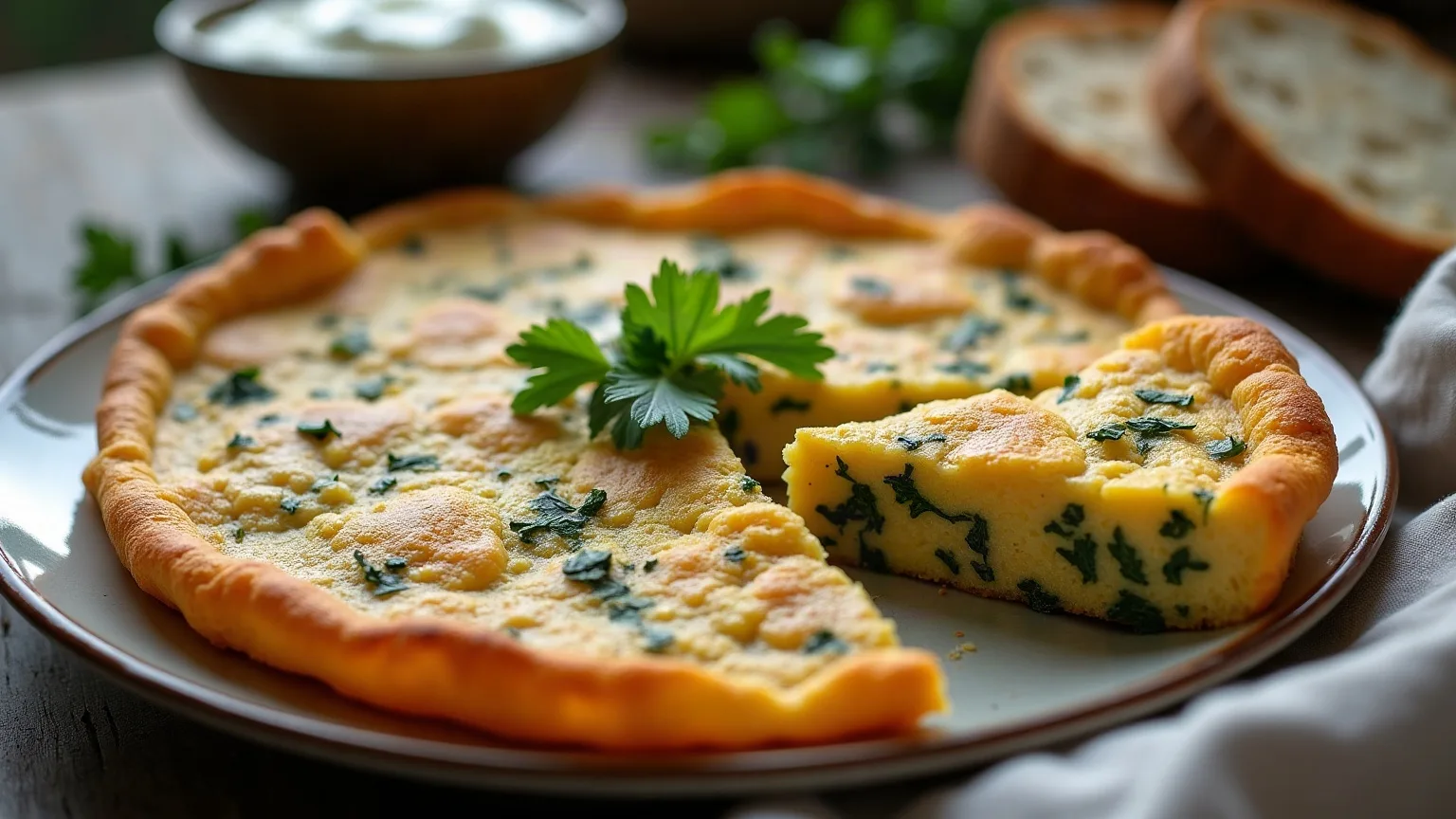
Kaygana
The Black Sea’s herb omelette, bound with flour. The flour holds the egg into a sheet that folds instead of breaking.…

Spinach and eggs
Crack the eggs before the spinach has given up its water and a green puddle collects on the plate.…
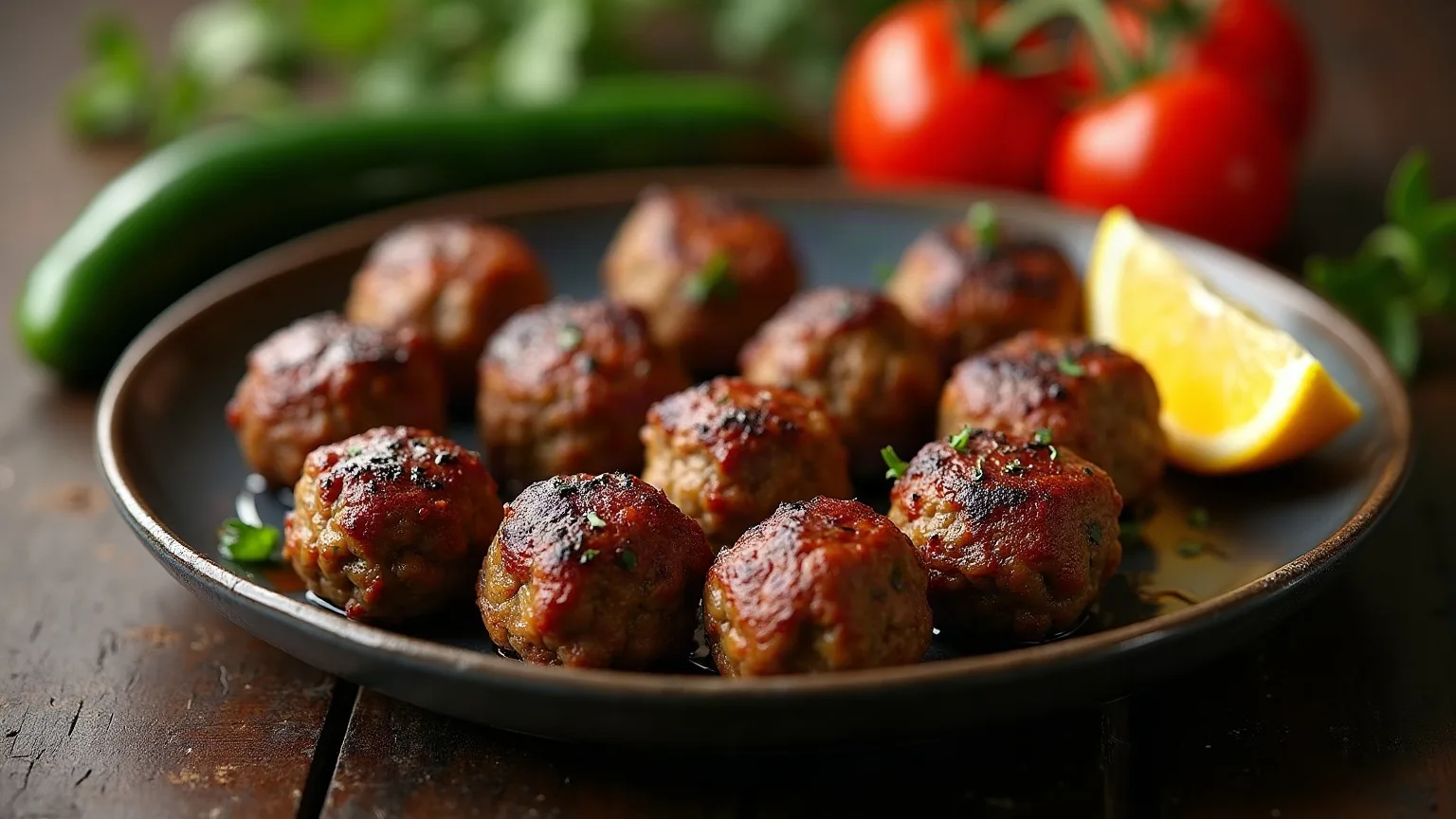
Pan-fried meatballs
A meatball holds together because it rested, not because of what went into it. Kneaded mince does not meet the pan witho…
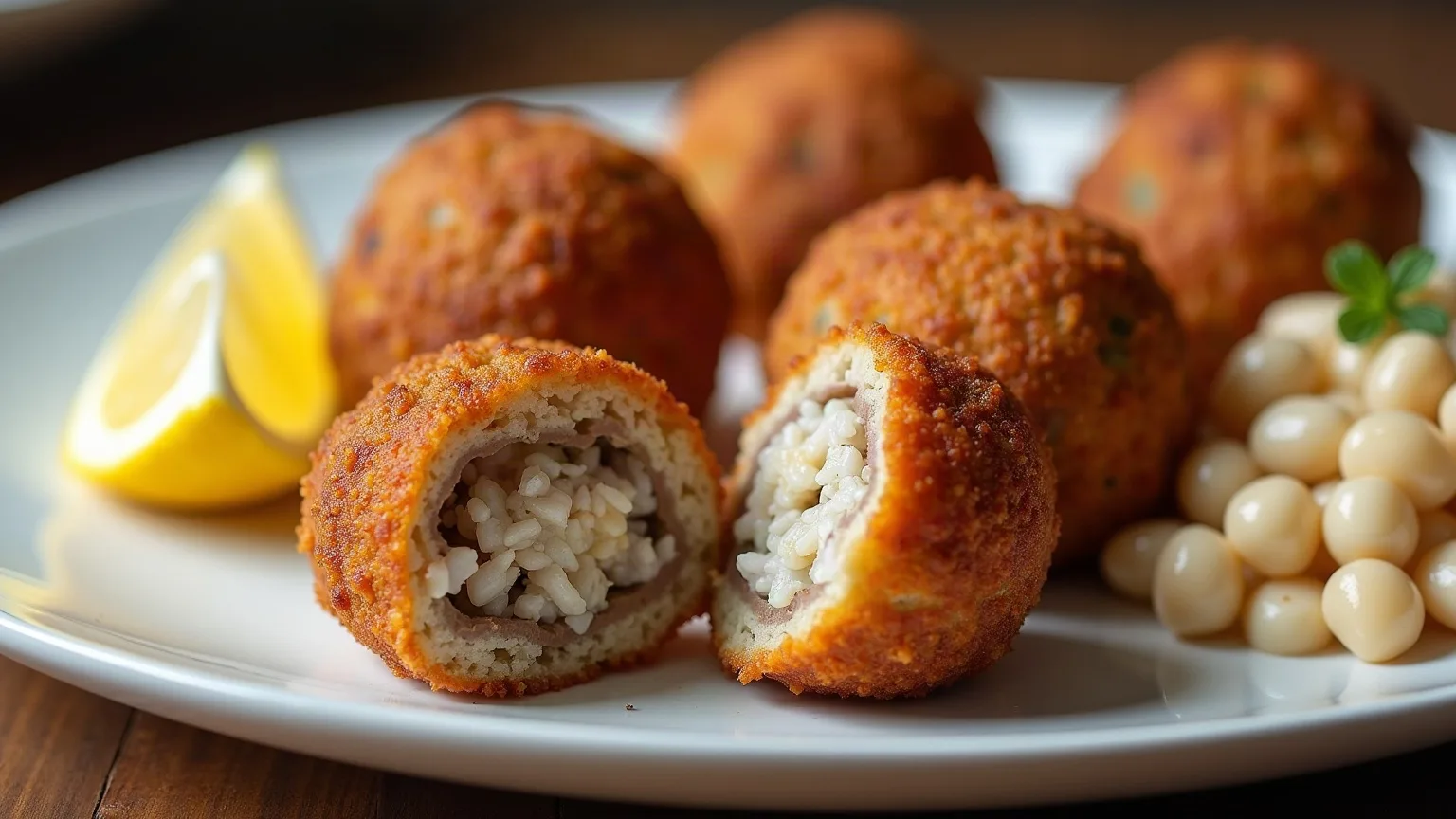
Kadınbudu köfte
Half the mince is cooked and half is raw. The cooked half stops it collapsing and the raw half is what binds it.…