

Çılbır
Poached eggs on garlicky yoghurt, finished with butter sizzled with chilli. Three temperatures stacked: warm yoghurt, running yolk, scalding fat.
Breakfasts · Turkish · Under 30 minutes · For guests
- Preparation
- 5 min
- Cooking
- 10 min
- Difficulty
- Practised hand
- Cost
- Very cheap
- Season
- All year
Çılbır appears in fifteenth-century Ottoman palace records — a version of the yoghurt-and-egg plates that became fashionable five hundred years later. The origin of the name is disputed; the usual account is that "çılbır" meant a kind of cord in old Turkish, and that the white trailing in the water looked like one. The yoghurt being warm is not a refinement but a requirement: cold yoghurt kills the egg instantly and boiling yoghurt splits.
Method
- Put the yoghurt in a bowl and leave it out: straight from the fridge it chills the egg.
- Crush the garlic with the salt in a mortar.
- Crack each egg into its own small bowl.
You will need: A deep pan holding at least 8 cm of water · A slotted spoon · A small pan for the butter
-
Stir the crushed garlic into the yoghurt and stand the bowl in warm water until it is a little above room temperature.
Look for The outside of the bowl should feel warm, never hot. Water gathering on the surface means it has gone too far.
Why Above 85 °C the casein network contracts and the whey separates; between 20 and 35 °C there is no risk of splitting and it will not chill the egg.Starch still asleep The granules are just floating there doing nothing. No body arrives before 62 °C.
Salt · 0.96% Right in the window. Flavours sharpen, bitterness retreats, water is held.
-
Bring the water to just below a boil, add the vinegar, stir a vortex and drop the egg into the middle of it.
Look for A bubble or two on the surface and nothing rolling below. The white should gather round the egg within twenty seconds.
Why A rolling boil shreds the white. At 80–85 °C the water is still while the white, which sets at 62 °C, has more than enough heat; the vinegar lowers the pH so the protein coagulates faster.If it went wrong
If the white has shredded, lift the egg out, strain the water and start again: it was too hot, or the egg was old. An old egg’s white has thinned and no technique will gather it — turn that one into an omelette.
Starch gelatinised The granules soaked up water, swelled and burst into a network. It has thickened, and it will firm further as it cools. no way back
The egg is setting Proteins unfold and link up, binding everything together. This is where creaminess comes from. no way back
Salt · 0.58% Low. Everything reads flat and nothing steps forward.
-
Lift it out after three minutes with a slotted spoon and drain it on a cloth.
Look for Shaken gently on the spoon it should wobble without running; to the finger the white is firm and the yolk soft.
Why The water clinging to the egg collects on the yoghurt and waters the plate down. Cloth rather than paper, because paper sticks.Salt · 0.58% Low. Everything reads flat and nothing steps forward.
-
Melt the butter in a small pan, take it off as the foam subsides and stir the chilli into the hot fat.
Look for The fat should go deep red rather than brown, and the chilli should hiss faintly as it lands rather than froth.
Why The colour and heat of chilli dissolve in fat rather than water, but above 160 °C the capsanthin burns and goes brown. Taking the pan off keeps it under that line.Starch gelatinised The granules soaked up water, swelled and burst into a network. It has thickened, and it will firm further as it cools. no way back
The egg is setting Too hot. The protein net over-tightened and pushed the water out: curdling and sponge. no way back
Salt · 0.54% Low. Everything reads flat and nothing steps forward.
Stay under 82 °C. Lower the heat or move to a bain-marie — a split custard never comes back.
If you want a crust, do not stay under 140 °C. Food cooks at this heat but never colours.
-
Spread the yoghurt on the plate, lay the eggs on it and pour the chilli butter over.
Look for The fat should sit as its own pool on the yoghurt rather than stirring itself in.
Why Three temperatures stacked and meeting on the plate: warm yoghurt, a 63 °C egg, 120 °C fat. When the yolk breaks all three combine, and that is the moment the sauce is made.Salt · 0.54% Low. Everything reads flat and nothing steps forward.
This recipe was run through the engine step by step — what goes in when, and at what temperature and for how long. The reactions above come from that run.
peak 130 °C · 11 minutes · engine 1.0.0 · confidence low
What can go wrong here
The yoghurt sauce curdled⌄
What happened
The yoghurt passed 85 °C. The casein micelles lost their charge, the protein clumped and released the water it was holding. Once split, it does not come back.
By the numbers
Stabilise 500 g of yoghurt with a tablespoon of starch and one yolk, stir in one direction, never boil.
Without a thermometer
Catch the threshold by eye: the moment a few large bubbles appear on the surface you are around 85 °C, take it off. The sauce is ready when it coats the back of a spoon — draw a line with your finger and the line should hold.
After the heat goes off
At once, with warm bread. Eaten with bread rather than a fork — the bread is what brings yoghurt, yolk and fat into the same mouthful.
It does not keep. A poached egg firms up as it stands and the yolk sets; the yoghurt takes on its water too.
Not reheated. The only way to warm a poached egg is thirty seconds in 60 °C water, and that only works for one chilled and stored on its own.
Never frozen: both the yoghurt and the egg weep on thawing.
Leftover garlic yoghurt goes under boiled vegetables, roast potatoes or mantı the next day. It keeps two days in the fridge.
Because of the running yolk this is not for a baby under one or a 12–36 month old as it stands: their egg needs to reach 70 °C, so poach it six minutes or hard-boil it. Keep the chilli butter on a separate plate; the garlic yoghurt itself is fine for a child.
- Vinegar → Lemon Lemon juice lowers the white’s pH just as well and does the same job — a direct answer for anybody who dislikes the smell of vinegar.
- Strained yoghurt → Labneh Labneh is thicker and wants a tablespoon of water loosening it, or you get a wall under the egg rather than a cushion.
- Boiling & poaching The method this recipe rests on
- Strained yoghurt What it does in heat, water and acid
- Egg What it does in heat, water and acid
- Butter What it does in heat, water and acid
- Fried eggs in butter Similar method, or something that sits on the same table
- Menemen Similar method, or something that sits on the same table
- Under 30 minutes Other recipes that answer the same need
- For guests Other recipes that answer the same need
What it tastes like
No axis sits clearly above the average: a balanced recipe.
This profile is computed rather than measured: the role-weighted average of its ingredients’ taste vectors, shifted by what the cooking does. The thin line is the database average on that axis.
Closest in taste
Not hand-picked: ranked by distance across the eight taste axes.

Wedding soup
A ceremonial soup cooked in meat broth whose identity is its terbiye: strained yoghurt, egg yolk, flour and lemon juice …
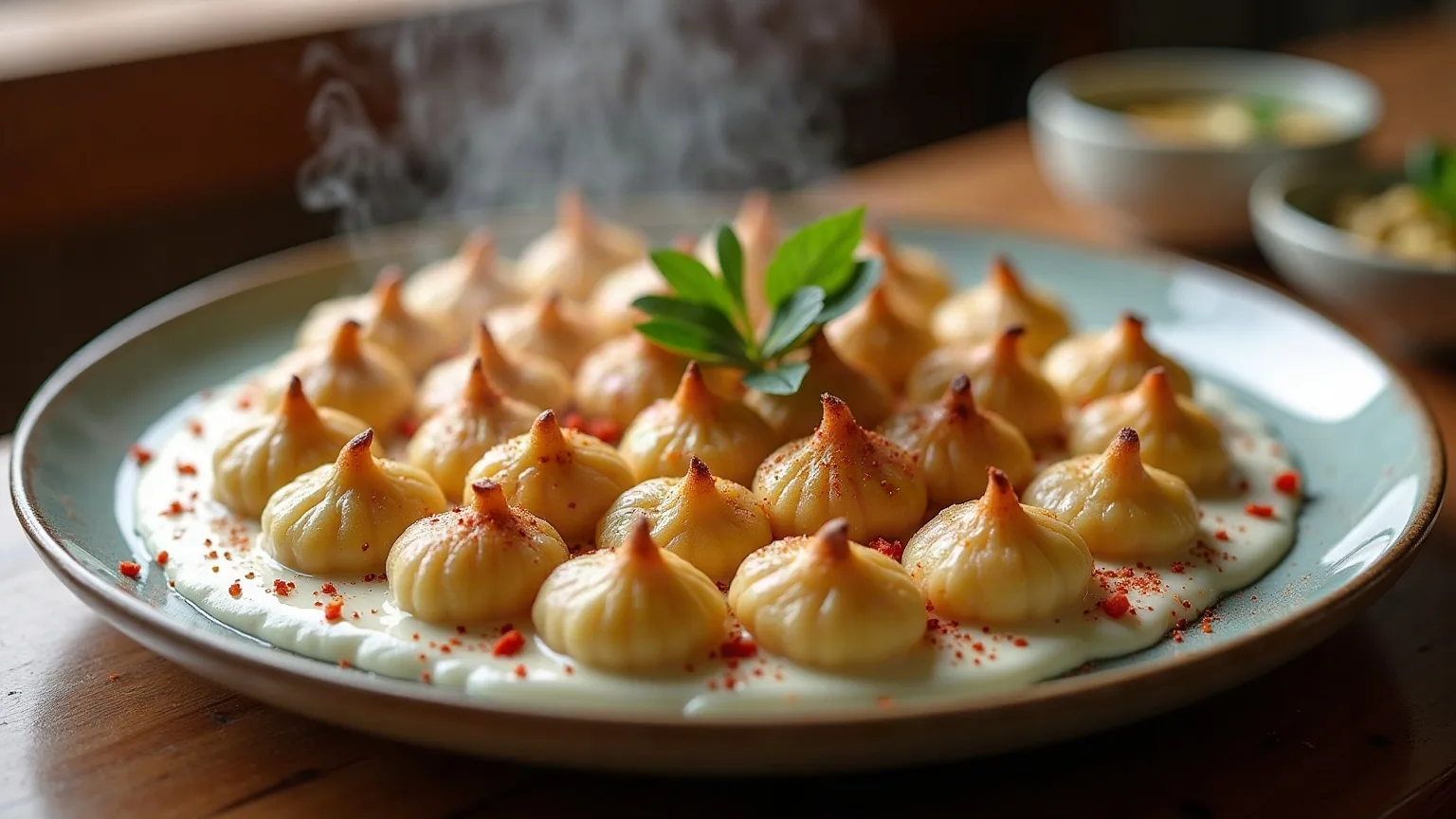
Mantı
Tiny dough parcels are boiled, laid over garlic yoghurt and finished with sizzled butter and chilli. Dried mint and suma…
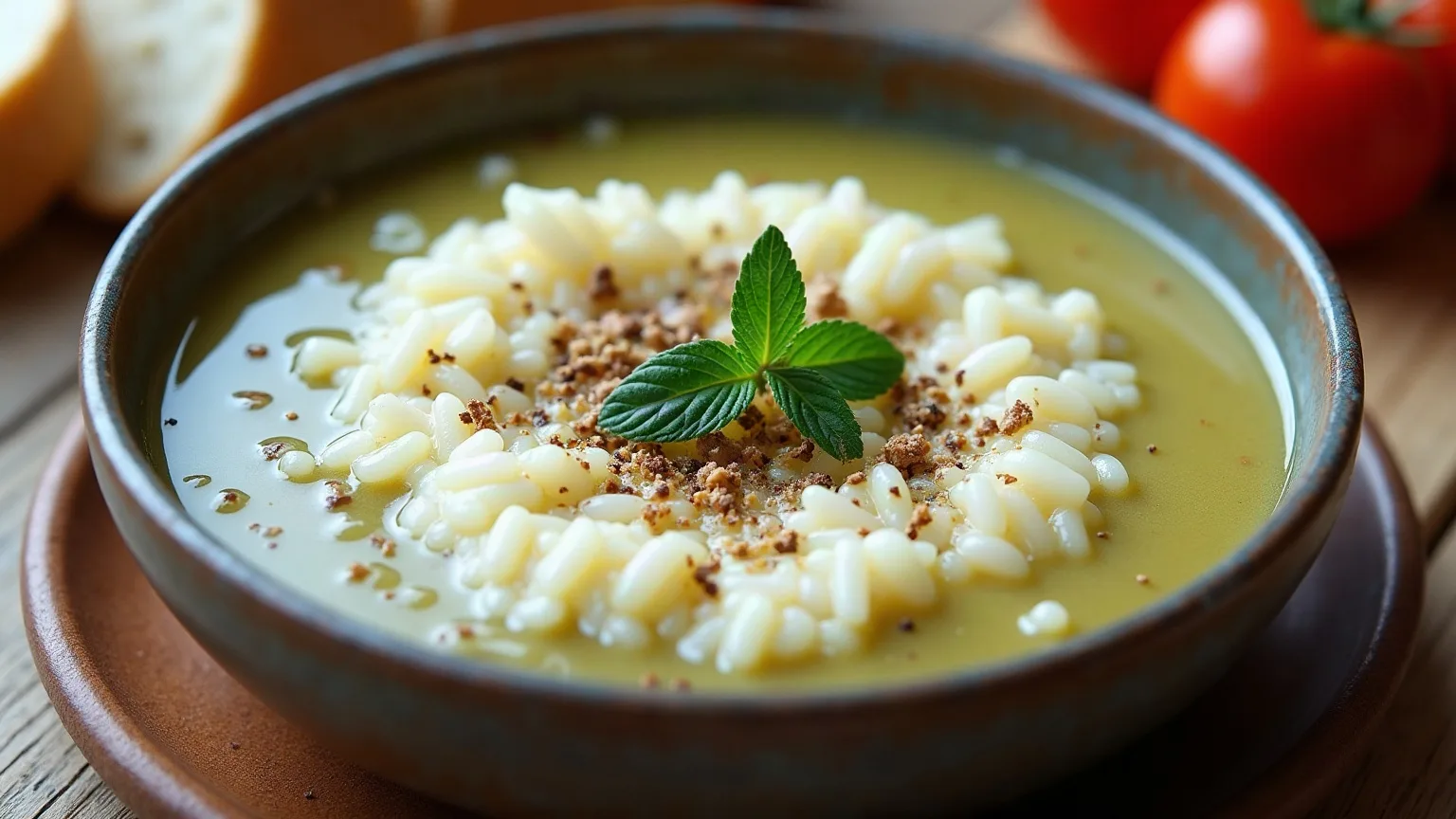
Yoghurt and rice soup
Every yoghurt soup has the same single problem: splitting. The answer is not the flour and the egg but the way the tempe…
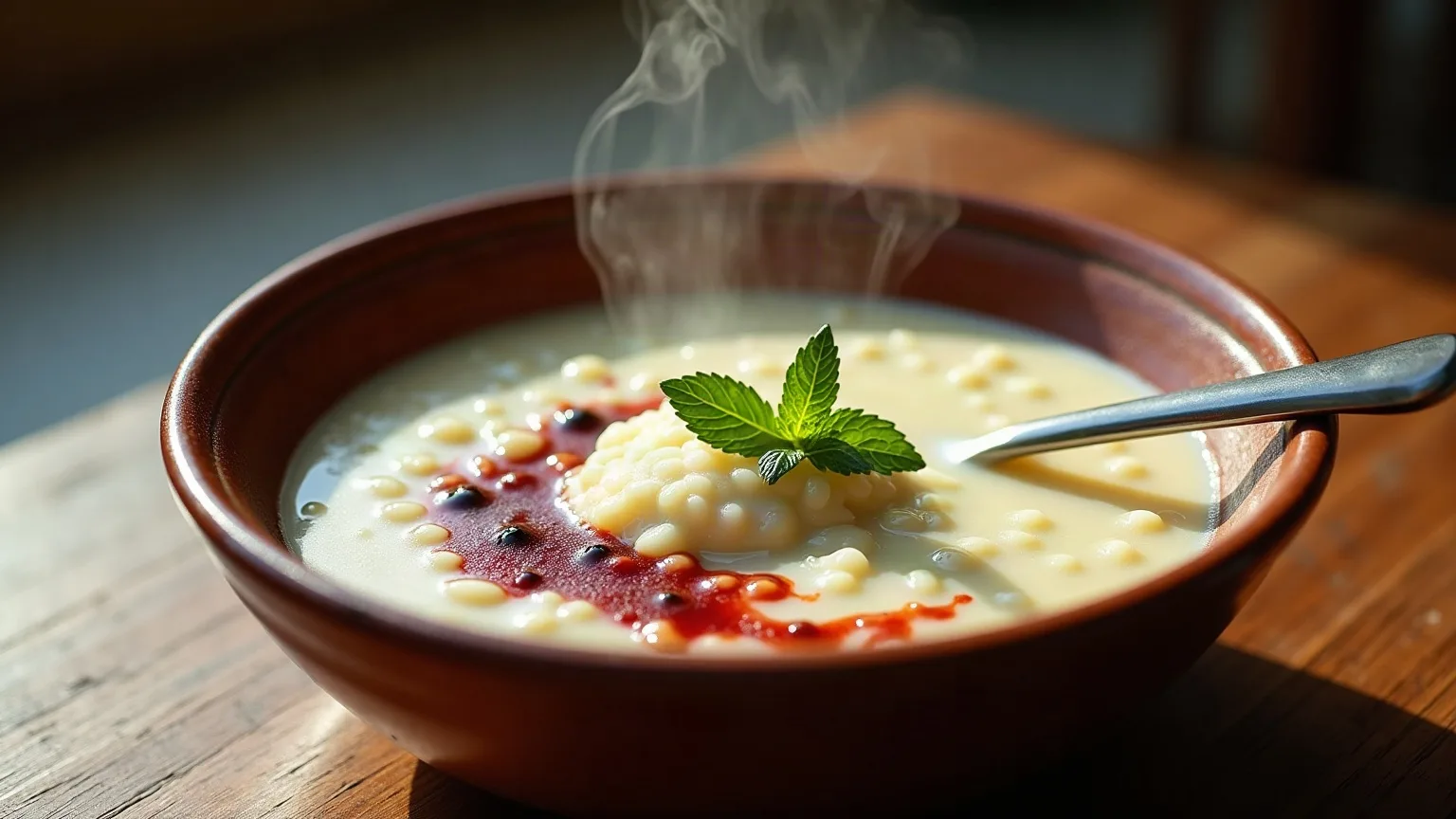
Highland yoghurt soup
The default Turkish yoghurt soup and the textbook terbiyeli çorba. Rice simmers in water, yoghurt, flour and egg yolk ar…