
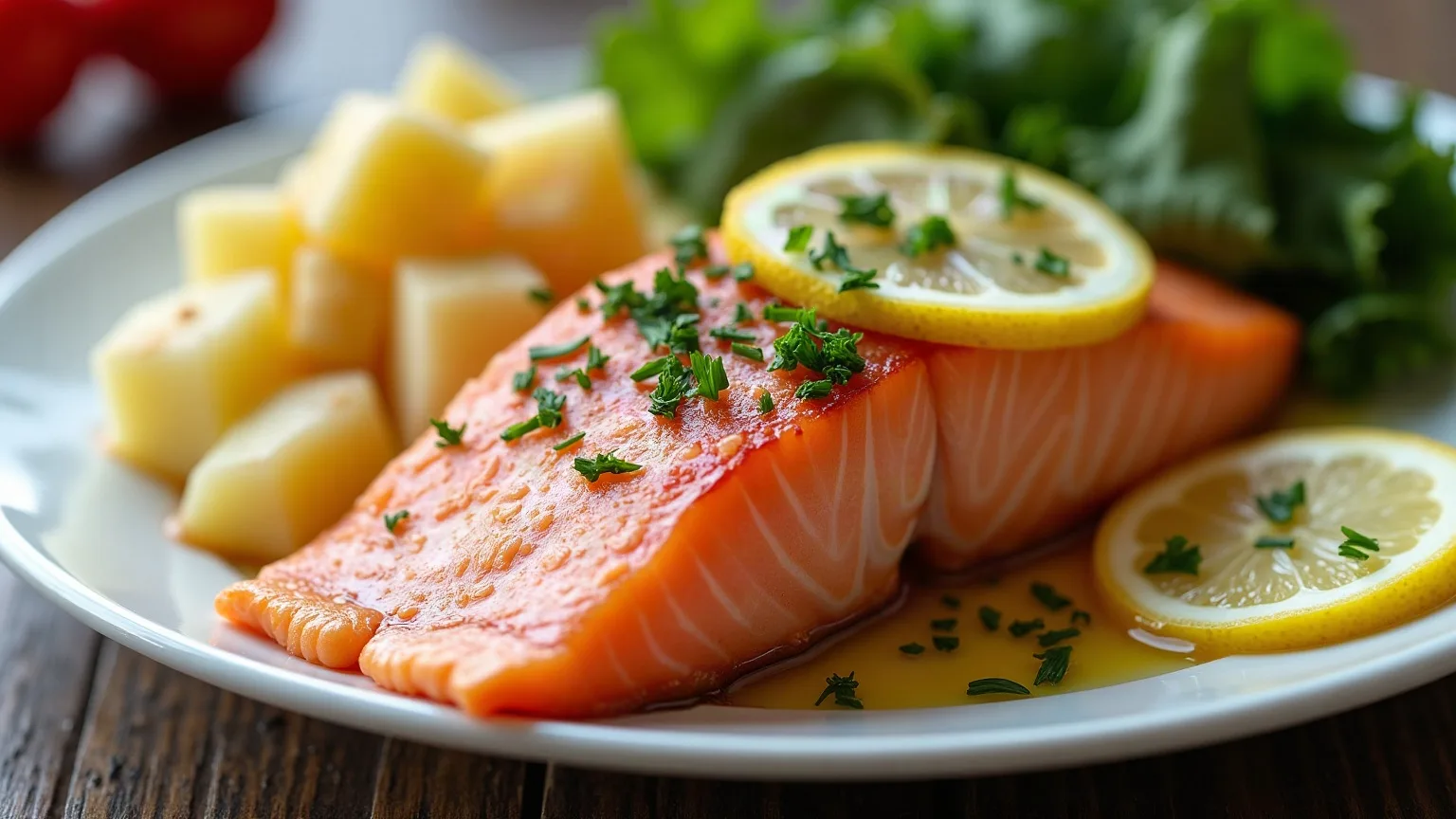
Baked salmon
The white stuff on baked salmon is a sign of too much heat rather than of freshness. Pulled at 52 °C it never appears.
Fish and seafood · International · Under 30 minutes · For guests · Post-workout
- Preparation
- 10 min
- Cooking
- 18 min
- Resting
- 4 min
- Difficulty
- Needs attention
- Cost
- Dear
- Season
- All year
The white weep on salmon is albumin, the soluble protein between the muscle fibres. Above 60 °C the fibres contract and squeeze it out, and on contact with air it coagulates white. That whiteness is therefore visible proof that the fish has lost water. A low oven and an early pull solve both at once.
Method
- Take the salmon out twenty minutes ahead.
- Heat the oven to 160 °C: the low temperature is the whole recipe.
You will need: A tray and baking paper · A thermometer, preferably
-
Salt the salmon, leave it fifteen minutes and dry the moisture that comes out.
Look for A film of moisture should appear, and the fish look matte once dried.
Why A short salting partly dissolves the surface protein into a gel, and that gel reduces the albumin weep during cooking. Do not exceed fifteen minutes, or it begins to cure the fish.Salt · 0.96% Right in the window. Flavours sharpen, bitterness retreats, water is held.
-
Mix the oil, crushed garlic, pepper and dill and spread it over the salmon.
Look for The top should be completely covered.
Why The layer of fat slows water loss from the surface and stands between the fish and the oven’s dry air.Starch still asleep The granules are just floating there doing nothing. No body arrives before 62 °C.
Salt · 0.88% Right in the window. Flavours sharpen, bitterness retreats, water is held.
-
Bake sixteen to eighteen minutes at 160 °C, until the centre reads 50–52 °C.
Look for It should just begin to flake under a fork while the centre stays deep orange and translucent.
Why A low oven shrinks the gap between the outside and the centre: at 220 °C, by the time the middle reads 52 the outer layer is at 75 and has given up its albumin. At 160 the gap narrows to a few degrees.If it went wrong
White albumin means it passed 60 °C and there is no way back. Scrape it off with a spoon and pour lemon and olive oil over, which covers the dryness to a degree.
Starch gelatinised The granules soaked up water, swelled and burst into a network. It has thickened, and it will firm further as it cools. no way back
Maillard is running Amino acids have met reducing sugars. The crust, the roasted flavour and that smell all come from here. no way back
Salt · 0.88% Right in the window. Flavours sharpen, bitterness retreats, water is held.
-
Take it out, squeeze the lemon over and rest it four minutes.
Look for No white curd on the plate.
Why Carryover raises the centre another two or three degrees during the rest, so it reaches the plate around 55 °C, which is where salmon is at its best.Salt · 0.83% Right in the window. Flavours sharpen, bitterness retreats, water is held.
This recipe was run through the engine step by step — what goes in when, and at what temperature and for how long. The reactions above come from that run.
peak 160 °C · 39 minutes · engine 1.0.0 · confidence low
What can go wrong here
The meat came out dry and tough⌄
What happened
The meat passed 70 °C. Past that point the muscle fibres contract and wring out their water, while collagen never gets the time to turn into gelatine. It loses moisture and never tenderises.
By the numbers
Beef medium at 57 °C, chicken at 74 °C. Rest it for 10 minutes off the heat; unrested meat leaves its juice on the plate.
Without a thermometer
The palm test: touch thumb to index finger and press the pad below your thumb — that firmness is rare. Middle finger is medium, ring finger is well done. Watch the juice too: pinkish and clear means you are there, running white means you went too far.
After the heat goes off
Warm, with lemon and dill, and boiled potatoes or a green salad beside it.
Two days in the fridge. Cold salmon is very good in a salad, which is a second reason not to overcook it.
Do not reheat it: a second pass over 60 °C releases the albumin. It is better cold.
Not once cooked. Raw salmon keeps three months.
Cold salmon crushed with a fork with lemon, oil and dill becomes a spread for bread.
Salmon is among the most valuable fish for omega-3 and children usually like it. Suitable for a baby from six months: set an unsalted piece aside and check it for bones. For 12–36 months leave the pepper out. Salmon is low in mercury, so two portions a week is safe.
- Salmon → European sea bass Sea bass fillet takes the same technique; being thinner, the time drops to twelve minutes.
- Dill → Parsley Parsley works; what goes is dill’s particular affinity with salmon, which comes from its aniseed note.
- The oven The method this recipe rests on
- Salmon What it does in heat, water and acid
- Olive oil What it does in heat, water and acid
- Lemon What it does in heat, water and acid
- Baked sea bass Similar method, or something that sits on the same table
- Steamed fish Similar method, or something that sits on the same table
- Grilled sea bream Similar method, or something that sits on the same table
- Under 30 minutes Other recipes that answer the same need
- For guests Other recipes that answer the same need
- Post-workout Other recipes that answer the same need
What it tastes like
The axes that define this recipe: aroma 75.
This profile is computed rather than measured: the role-weighted average of its ingredients’ taste vectors, shifted by what the cooking does. The thin line is the database average on that axis.
Closest in taste
Not hand-picked: ranked by distance across the eight taste axes.
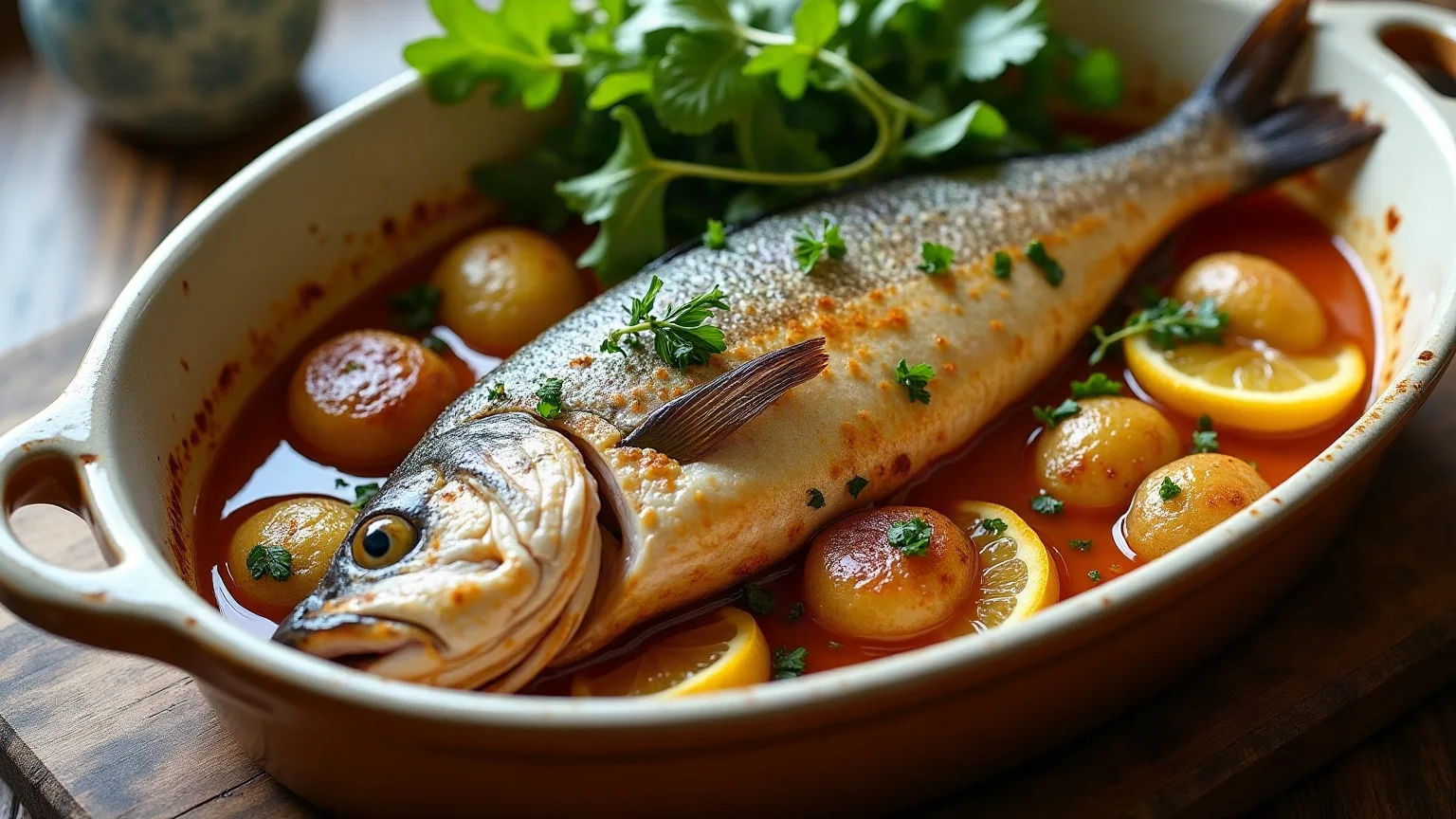
Baked sea bass
A whole fish is more forgiving than a fillet: the bones and skin slow the heat and the flesh cooks without drying.…
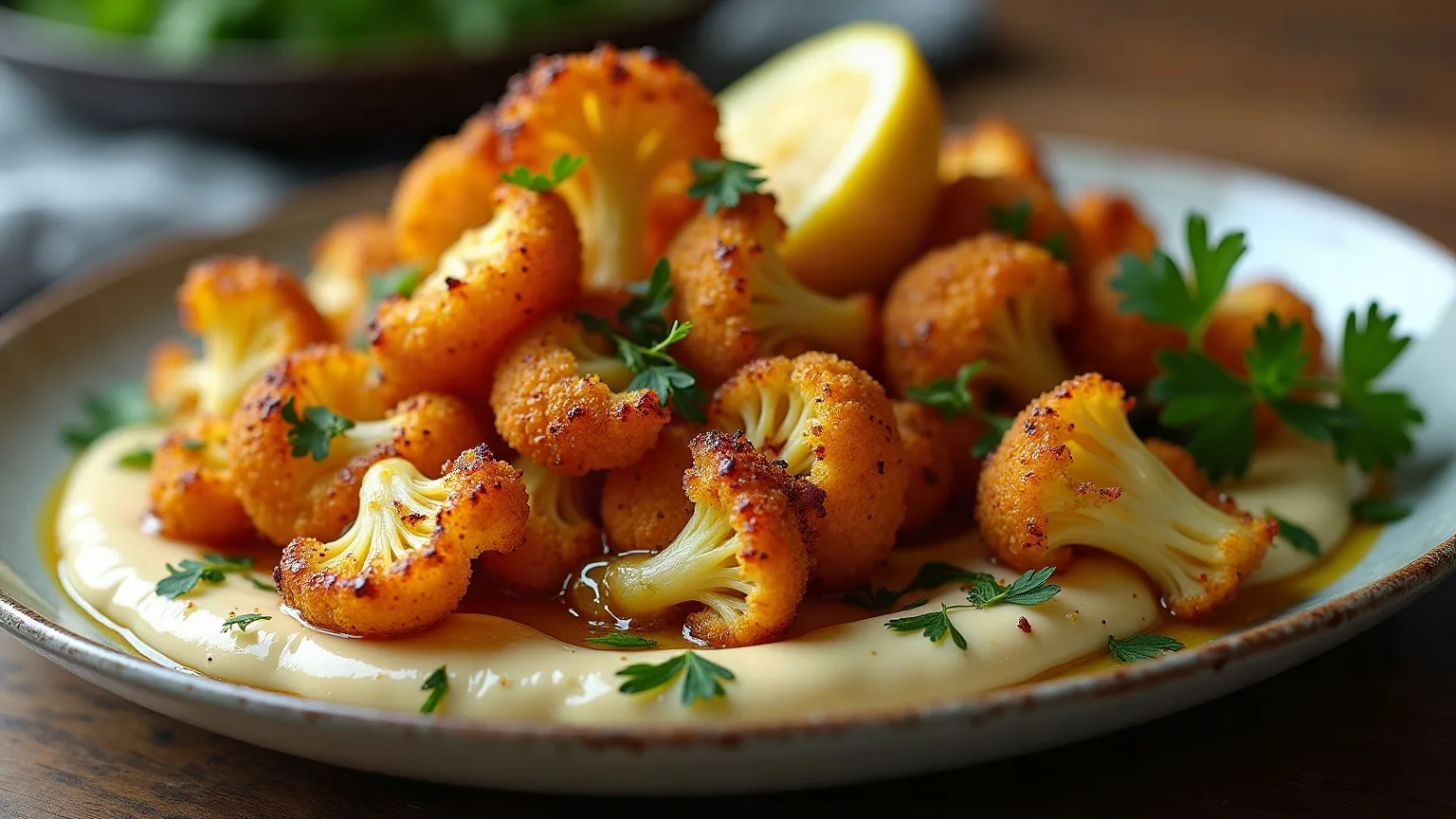
Roasted cauliflower
Boiled, cauliflower’s sulphur smell goes into the water; roasted, the same compounds turn into a toasted flavour.…
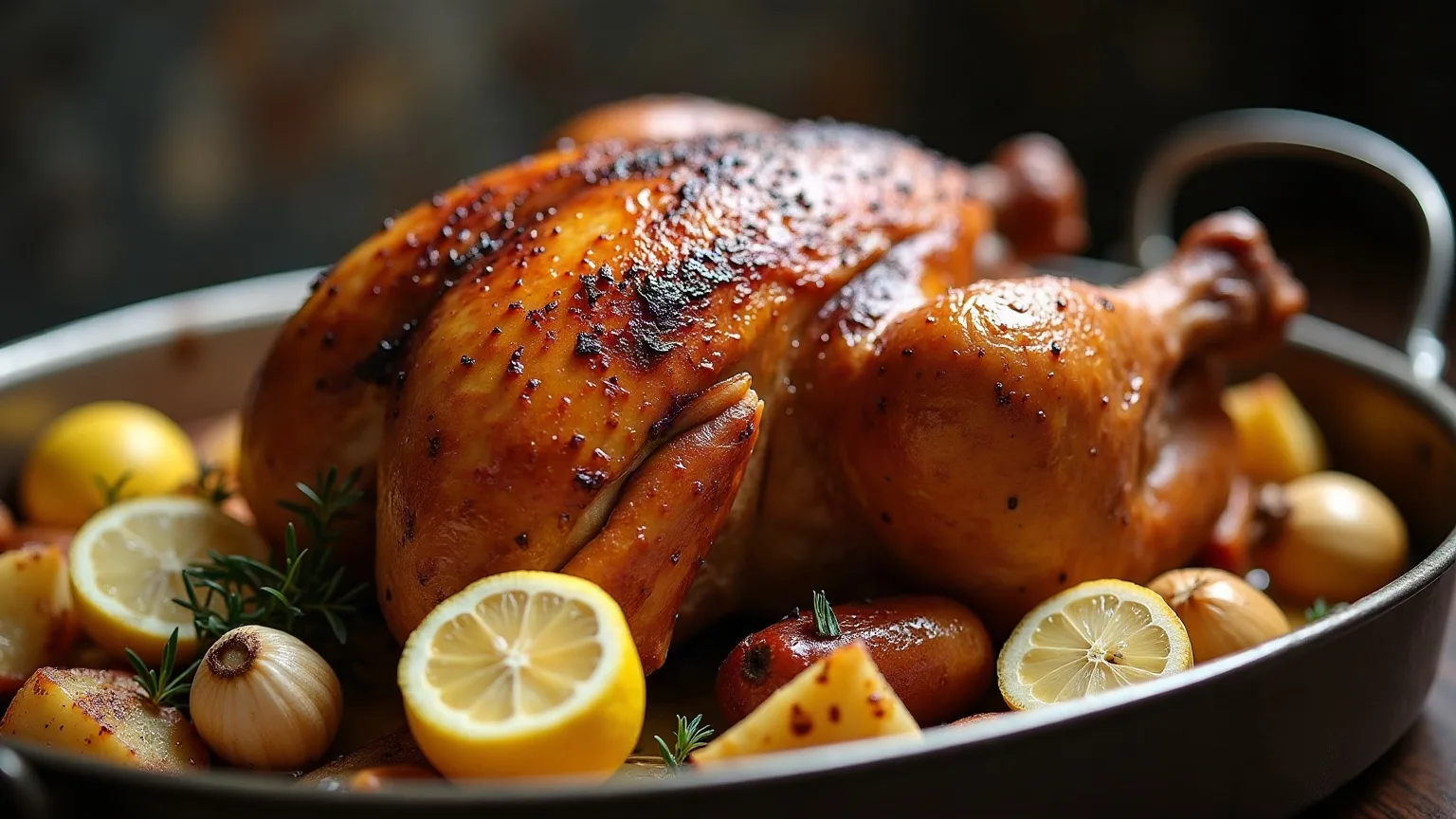
Whole roast chicken
The breast is ready at 65 °C and the leg at 75. Roasting a whole bird is entirely the business of hitting both at once.…
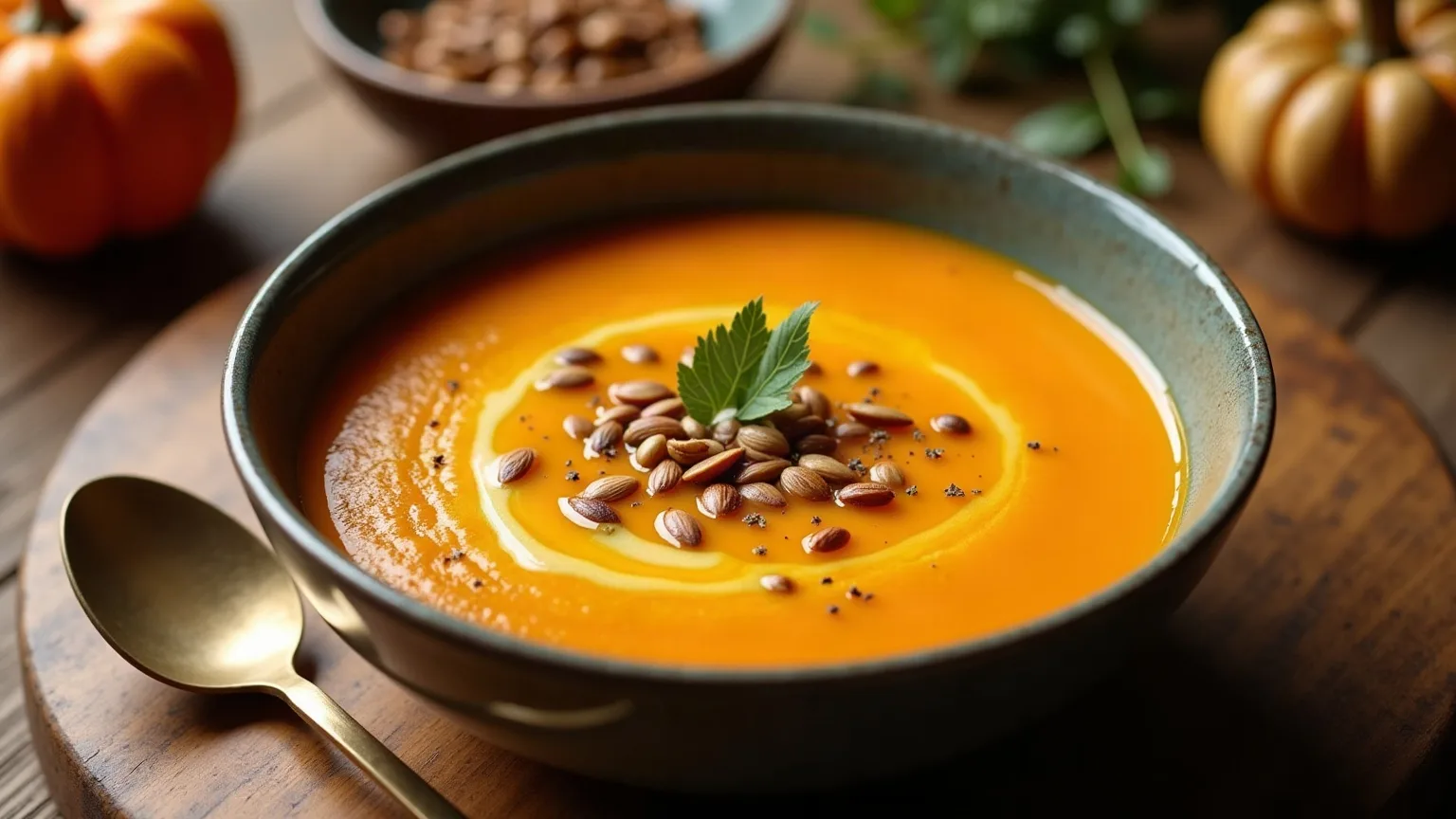
Pumpkin soup
Boiled pumpkin gives a watery, flat soup. Roasted pumpkin is the same vegetable and a completely different soup.…