
Tabbouleh
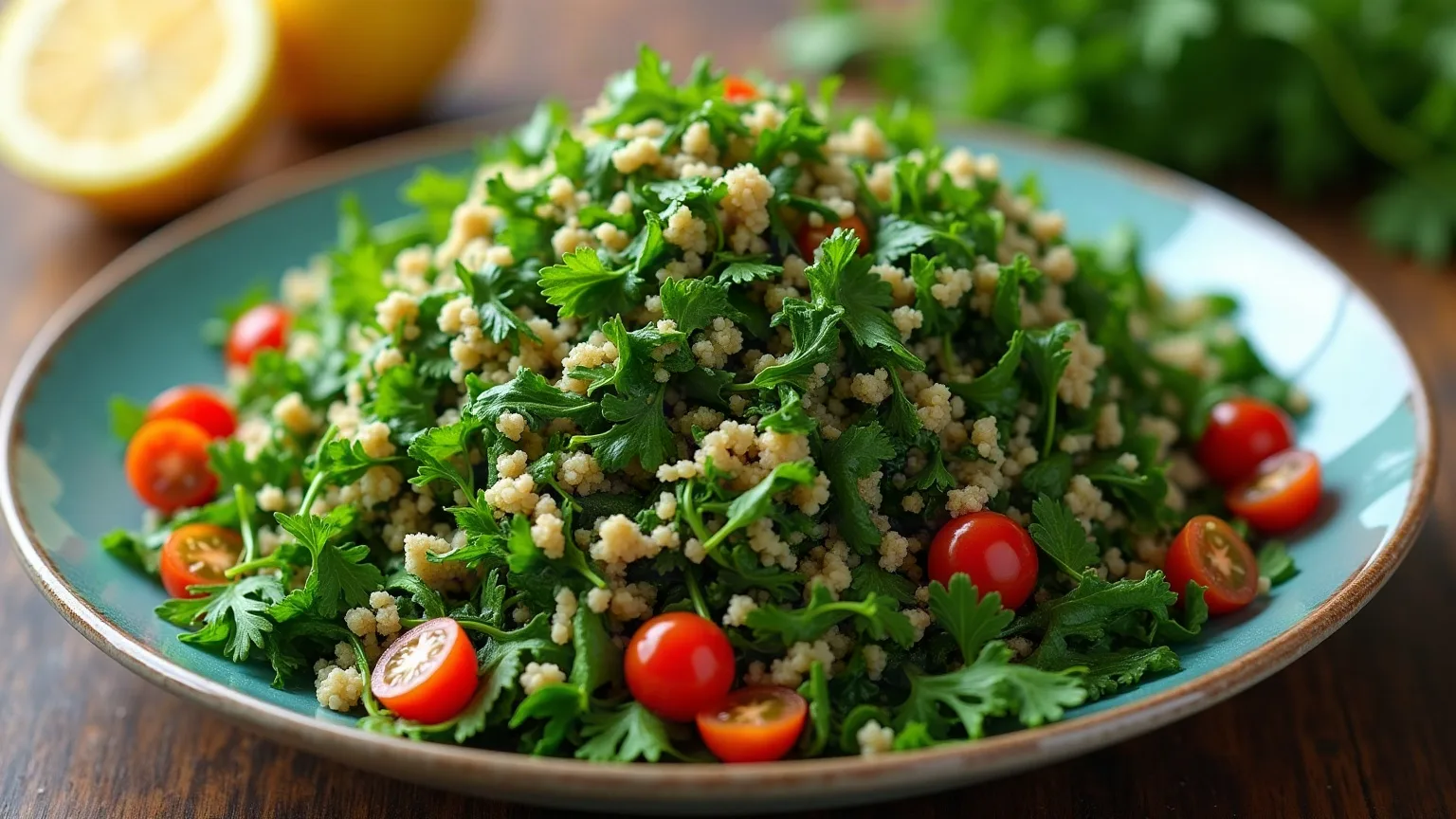
Tabbouleh is not a bulgur salad but a parsley salad: the bulgur is under a tenth of the whole. And what swells it is not water but the juice of the tomato.
Rice, bulgur and grains · Levantine · Vegan · Under 30 minutes · For guests · Seasonal
- Preparation
- 30 min
- Cooking
- 0 min
- Resting
- 20 min
- Difficulty
- Needs attention
- Cost
- Very cheap
- Season
- Spring, Summer
Tabbouleh belongs to the Levant — Lebanon, Syria, Palestine — and there the bulgur plays the opposite role to the one it plays in Turkey. In kısır the bulgur is the body and the greens the accent; in tabbouleh the parsley is the body and the bulgur the accent. Most of what is sold as tabbouleh in the West is closer to kısır, because bulgur is cheap and parsley is expensive and slow to pick over. In Lebanon the quality of a tabbouleh is judged by how finely and how dryly the parsley is chopped: wet parsley turns the salad into soup within an hour.
Method
- Wash the parsley and dry it THOROUGHLY: wet parsley is the one real enemy of tabbouleh.
- Measure the bulgur: it will look like too little, and that is correct.
You will need: A sharp knife · A wide bowl · A salad spinner, or a clean cloth
-
Dice the tomatoes very small, scatter half the salt over them and leave them in a bowl for ten minutes.
Look for A visible pool should gather in the bottom of the bowl.
Why Salt draws the water out of the tomato by osmosis, and in this recipe that water is not waste but the very liquid that will swell the bulgur. No water is added to the bulgur in a tabbouleh — add it and the salad goes watery.Salt · 1.64% High. Osmosis is pulling water out, the texture is tightening and the flavour is closing.
-
Stir the fine bulgur into the tomato liquid and leave it twenty minutes.
Look for Split a grain: the inside should match the outside.
Why Sixty grams of fine bulgur can swell in that much liquid in twenty minutes precisely because there is so little of it. The tomato’s acid does slow the swelling — which is no problem for 60 g and would be for 350. The low proportion of bulgur in a tabbouleh is not only a matter of taste, then; it is also what makes the method work.If it went wrong
If the tomatoes did not give enough liquid, add one tablespoon of boiling water and no more. If the bulgur is still firm, give it ten more minutes rather than more water.
Starch still asleep The granules are just floating there doing nothing. No body arrives before 62 °C.
A gluten web is forming Gliadin and glutenin hydrated into an elastic net. This is what will hold the gas. no way back
Salt · 1.41% Right in the window. Flavours sharpen, bitterness retreats, water is held.
-
Chop the parsley as finely as you can on a dry board with a sharp knife. Do not use a processor.
Look for No green liquid should be left on the board.
Why A processor blade crushes rather than cuts; torn cell walls let the parsley bleed, and both the colour and the taste end up in the bottom of the bowl. A sharp knife parts the cells instead of bruising them.Starch still asleep The granules are just floating there doing nothing. No body arrives before 62 °C.
A gluten web is forming Gliadin and glutenin hydrated into an elastic net. This is what will hold the gas. no way back
Salt · 0.89% Right in the window. Flavours sharpen, bitterness retreats, water is held.
-
Add the parsley, mint, spring onion, lemon juice, olive oil, remaining salt and pepper to the bulgur and tomato, and fold gently.
Look for The salad should sit light in the bowl rather than slumping as a wet heap.
Why The oil goes in after the lemon: put in first, it coats the leaves and the acid can no longer open up the taste of the parsley.Starch still asleep The granules are just floating there doing nothing. No body arrives before 62 °C.
A gluten web is forming Gliadin and glutenin hydrated into an elastic net. This is what will hold the gas. no way back
Salt · 0.66% Right in the window. Flavours sharpen, bitterness retreats, water is held.
This recipe was run through the engine step by step — what goes in when, and at what temperature and for how long. The reactions above come from that run.
peak 20 °C · 49 minutes · engine 1.0.0 · confidence low
After the heat goes off
At once, at room temperature, with lettuce or fresh vine leaves, among the meze.
One day in the fridge, and markedly worse on the second: the parsley gives up water to the salt and the salad collapses. This is a dish designed to be eaten the day it is made.
It is not reheated.
It does not freeze.
The next day it rolls into flatbread with tahini sauce, or gets scattered over lentil soup.
With parsley dominating, small children mostly do not take to this; a "child’s tabbouleh" with more bulgur in it goes down better. For 12–36 months halve the lemon. Not suitable for a baby under one, because of the salt. It contains gluten.
- Fine bulgur → Semolina For a gluten-free version, cooked and cooled quinoa or rice replaces the bulgur; semolina is too sticky for this.
- Cold The method this recipe rests on
- Tomato What it does in heat, water and acid
- Parsley What it does in heat, water and acid
- Lemon What it does in heat, water and acid
- Kısır Similar method, or something that sits on the same table
- Green lentil salad Similar method, or something that sits on the same table
- White bean salad Similar method, or something that sits on the same table
- Vegan Other recipes that answer the same need
- Under 30 minutes Other recipes that answer the same need
- For guests Other recipes that answer the same need
- Seasonal Other recipes that answer the same need
What it tastes like
No axis sits clearly above the average: a balanced recipe.
This profile is computed rather than measured: the role-weighted average of its ingredients’ taste vectors, shifted by what the cooking does. The thin line is the database average on that axis.
Closest in taste
Not hand-picked: ranked by distance across the eight taste axes.
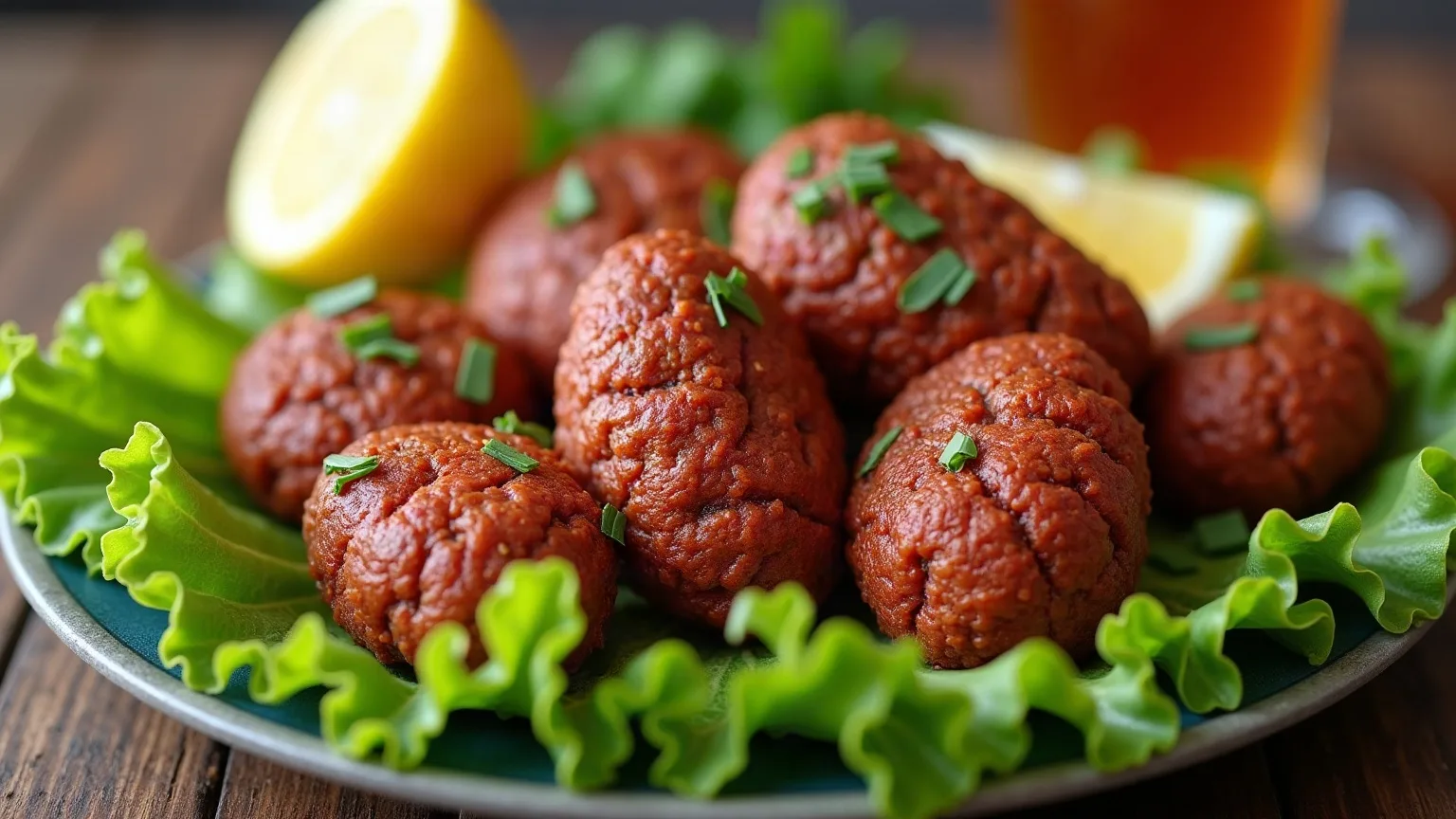
Çiğ köfte, without meat
The name says raw, but the bulgur is not: bulgur is wheat that has already been boiled, and here it is only soaked.…
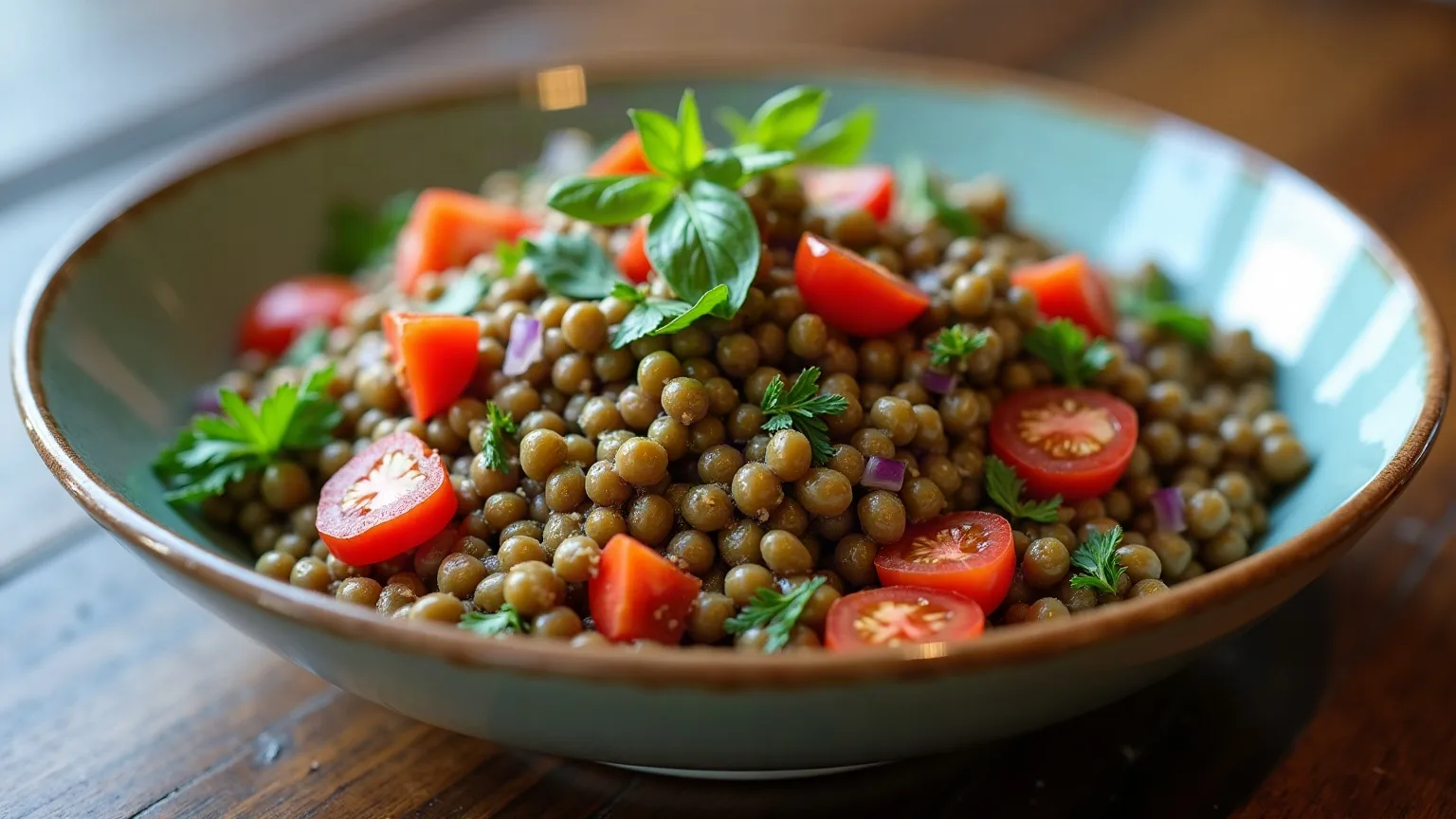
Green lentil salad
A lentil goes on cooking in its own heat for three or four minutes after the pan comes off. The eighteen minutes in this…
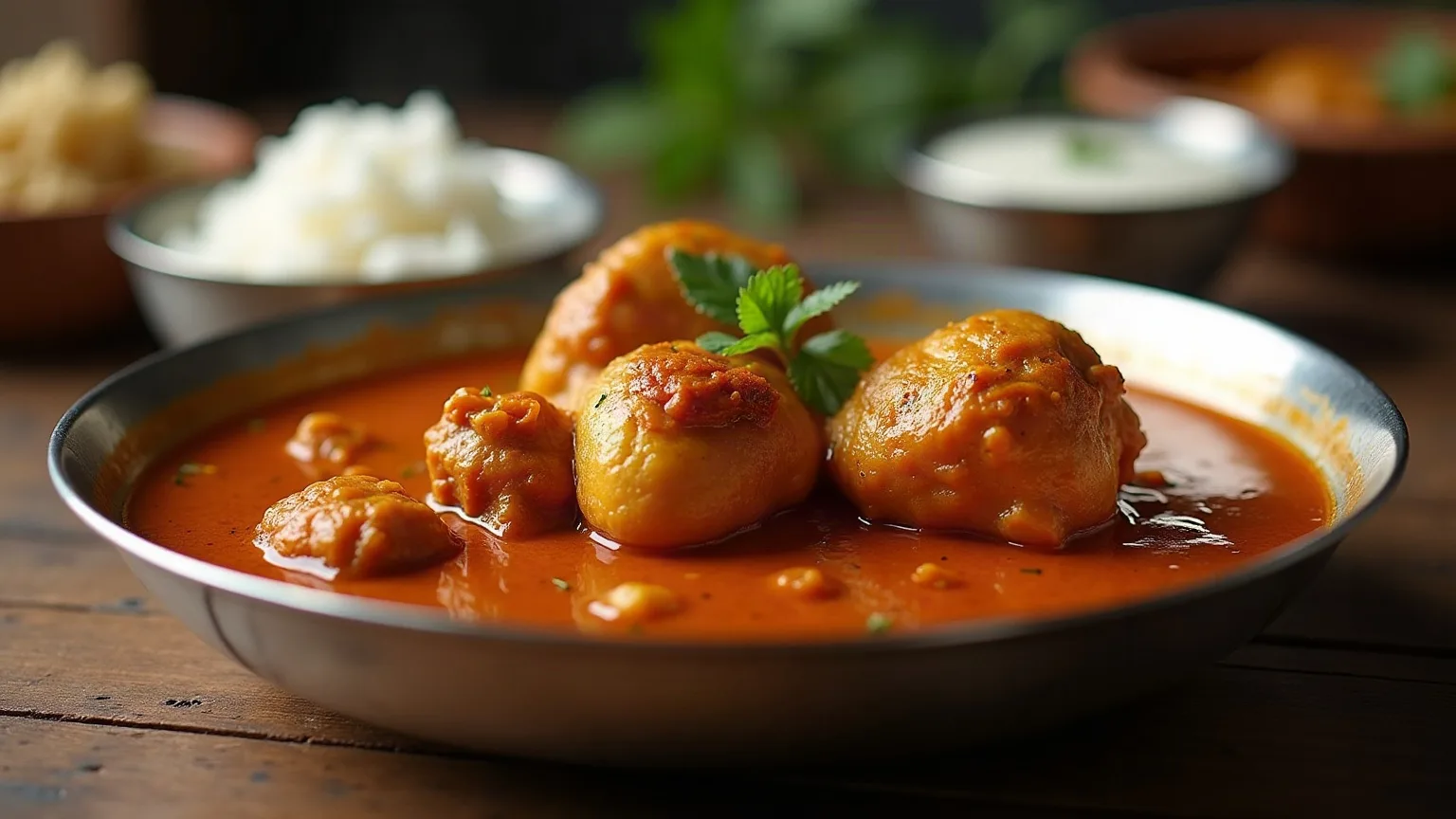
Chicken curry
Frying the spices in fat is not a step but half the recipe: their aromas dissolve in oil and not in water.…
Black-eyed pea salad
The one dried pulse that needs no soak: its skin is thin and it softens in twenty-five minutes.…