
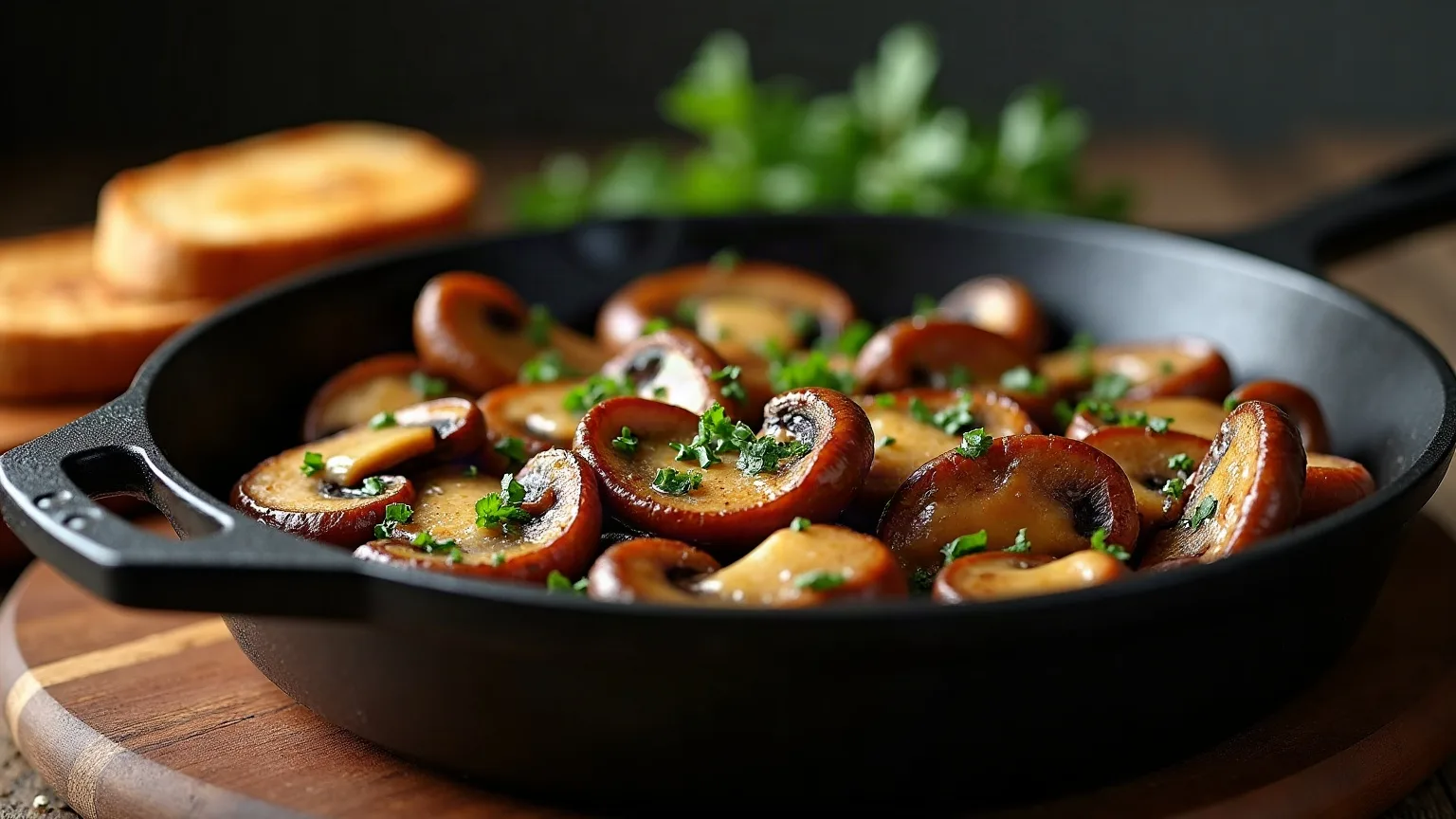
Sautéed mushrooms
Mushrooms are wiped, not washed. And the salt goes in last: early salt draws their water out and makes browning impossible.
Vegetable dishes · International · Under 30 minutes · One pot · Vegan
- Preparation
- 10 min
- Cooking
- 12 min
- Difficulty
- Easy
- Cost
- Cheap
- Season
- Autumn, Winter
A mushroom takes up water like a sponge — washed, it can gain 10% of its weight, and that water is the first thing to come out in the pan. Salt does the same by osmosis. Either way the pan locks at 100 °C and the Maillard reaction that produces the umami never begins. A mushroom tastes of something when it browns, not when it boils.
Method
- Do NOT wash the mushrooms: wipe them with a damp cloth and slice them thick.
- Heat the pan empty for two minutes.
You will need: A wide pan · A damp cloth
-
Heat the pan hard, add the fats and lay the mushrooms in a SINGLE layer with no salt; leave them ALONE for six minutes.
Look for The water comes out first and the pan goes quiet; when it has gone the sizzle returns and the real browning starts only then.
Why Mushrooms are 92% water and in a single layer that water can leave. Stirring keeps breaking the contact between the surface and the hot metal, and the browning restarts each time.If it went wrong
If they have stewed, raise the heat, drive the water off completely and brown them three minutes more. Nothing browns while there is water in the pan.
Frying dynamics Surface water is flashing to steam and pushing outward — that is the shield keeping the oil out. no way back
-
Turn them and brown four minutes more, then add the garlic and thyme for one.
Look for The mushrooms deep gold and shrunken, and the garlic only releasing its smell.
Why Garlic goes in last because more than five minutes turns it bitter, and at that point the mushrooms have not finished browning.Starch gelatinised The granules soaked up water, swelled and burst into a network. It has thickened, and it will firm further as it cools. no way back
Frying dynamics Surface water is flashing to steam and pushing outward — that is the shield keeping the oil out. no way back
-
Add the salt, pepper and parsley after the pan comes off the heat.
Look for No liquid should gather in the pan.
Why Salt draws out whatever water is left; added at the end that water never reaches the pan, and the mushrooms keep the browning they earned.Starch gelatinised The granules soaked up water, swelled and burst into a network. It has thickened, and it will firm further as it cools. no way back
Salt · 0.86% Right in the window. Flavours sharpen, bitterness retreats, water is held.
This recipe was run through the engine step by step — what goes in when, and at what temperature and for how long. The reactions above come from that run.
peak 195 °C · 12 minutes · engine 1.0.0 · confidence low
After the heat goes off
Hot, on fried bread or beside meat and chicken.
Three days in the fridge.
Two minutes in a hot pan.
Two months. Browned mushrooms freeze well because most of their water has already gone.
Into pasta, an omelette, rice or soup.
Mushroom texture is unfamiliar to some children, and finely sliced and well browned it is more acceptable. For 12–36 months cut the slices very small and lift their share before the salt. Mushrooms suit a baby from eight months, well cooked and mashed.
- Butter → Olive oil Olive oil alone works and makes it vegan; what goes is the nutty note the butter brings.
- Deep frying The method this recipe rests on
- White button mushroom What it does in heat, water and acid
- Butter What it does in heat, water and acid
- Garlic What it does in heat, water and acid
- Mushroom soup Similar method, or something that sits on the same table
- Beef sauté Similar method, or something that sits on the same table
- Tray-roasted vegetables Similar method, or something that sits on the same table
- Under 30 minutes Other recipes that answer the same need
- One pot Other recipes that answer the same need
- Vegan Other recipes that answer the same need
What it tastes like
The axes that define this recipe: aroma 77, richness 51, umami 45.
This profile is computed rather than measured: the role-weighted average of its ingredients’ taste vectors, shifted by what the cooking does. The thin line is the database average on that axis.
Closest in taste
Not hand-picked: ranked by distance across the eight taste axes.
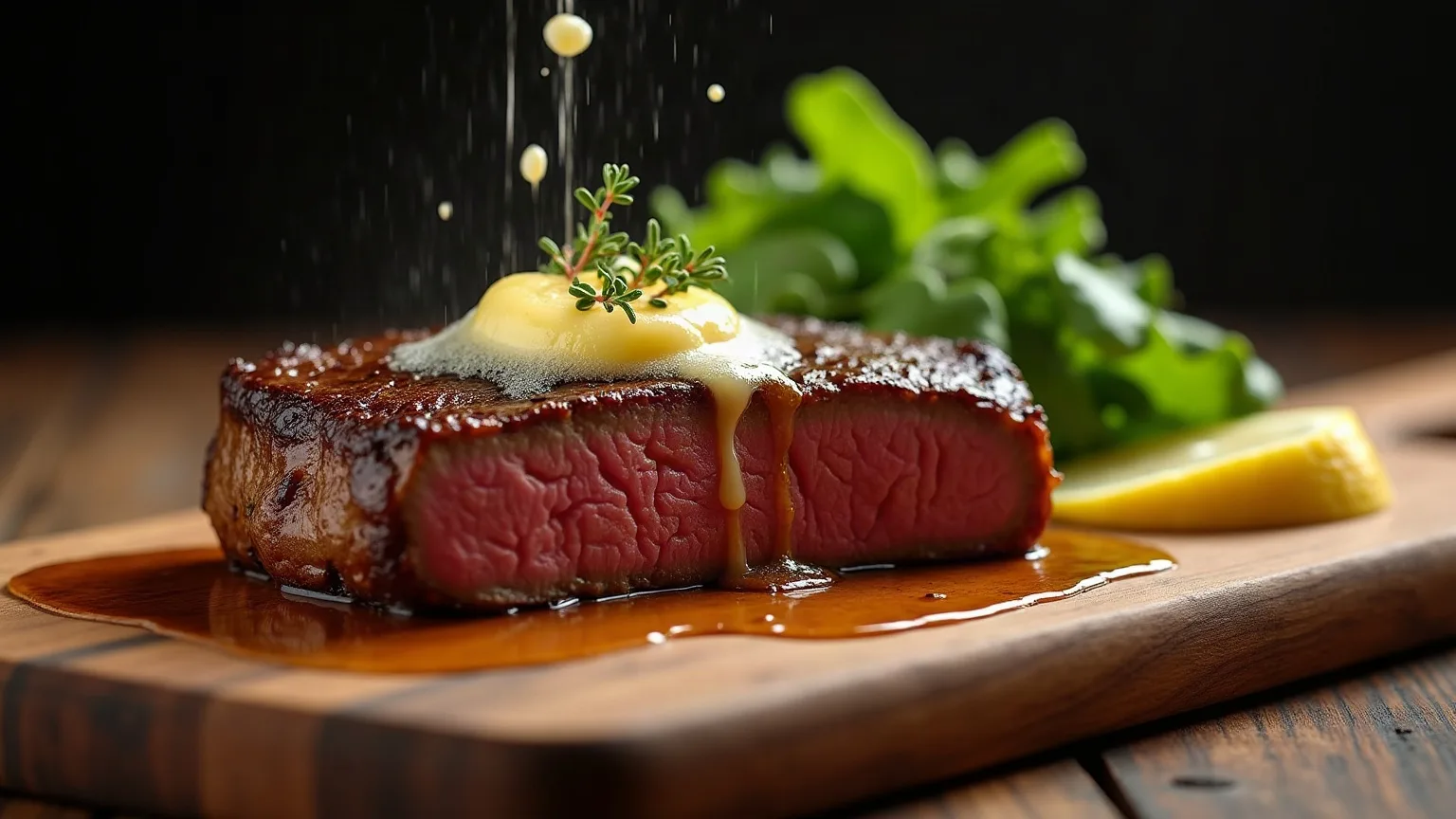
Pan-seared steak
Thickness decides the cooking time, not weight. A 2 cm steak always takes the same time whatever it weighs.…
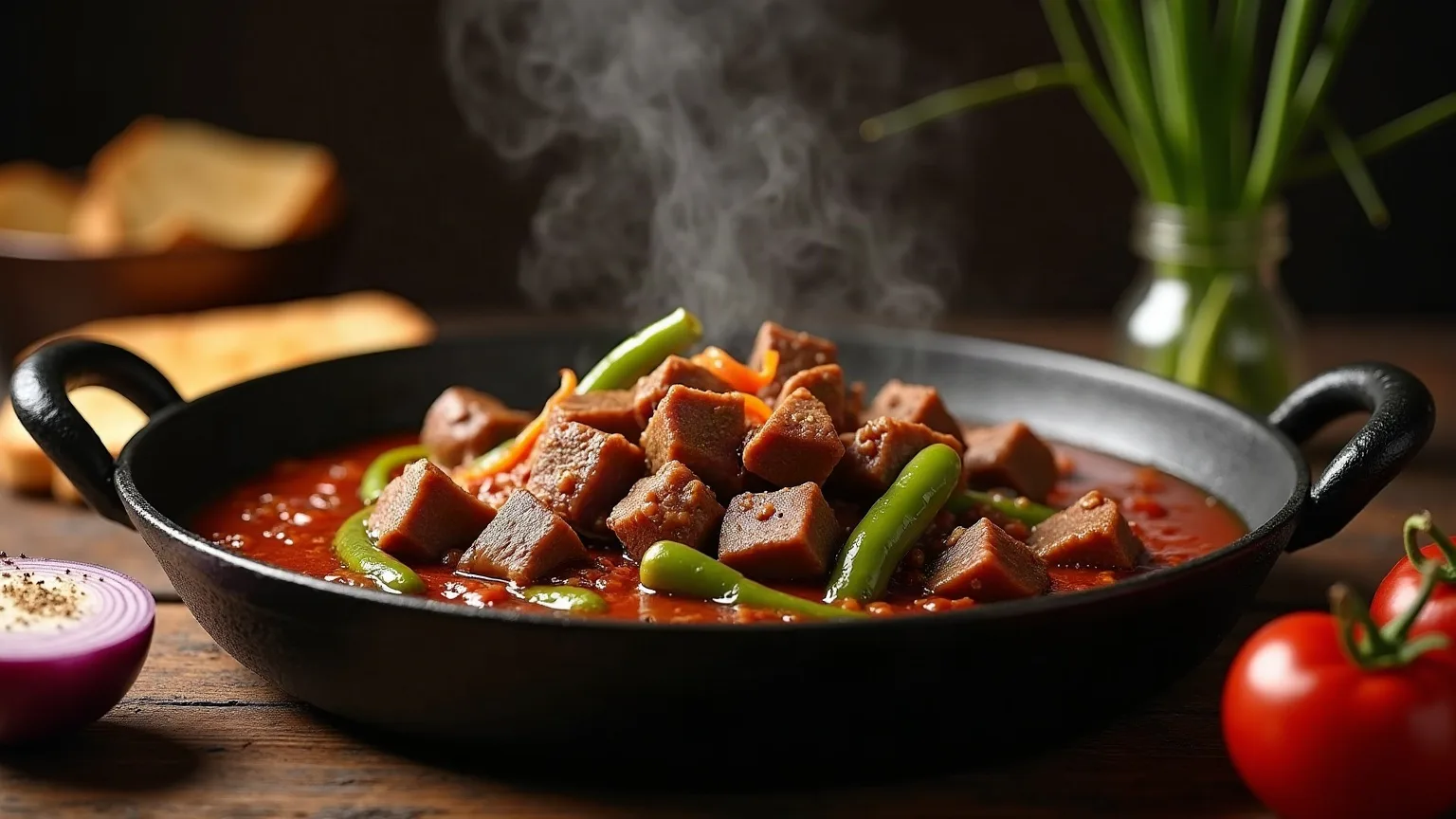
Saç kavurma
High heat, small pieces, an uncrowded pan. Miss any one of the three and it is not a sauté but a stew.…
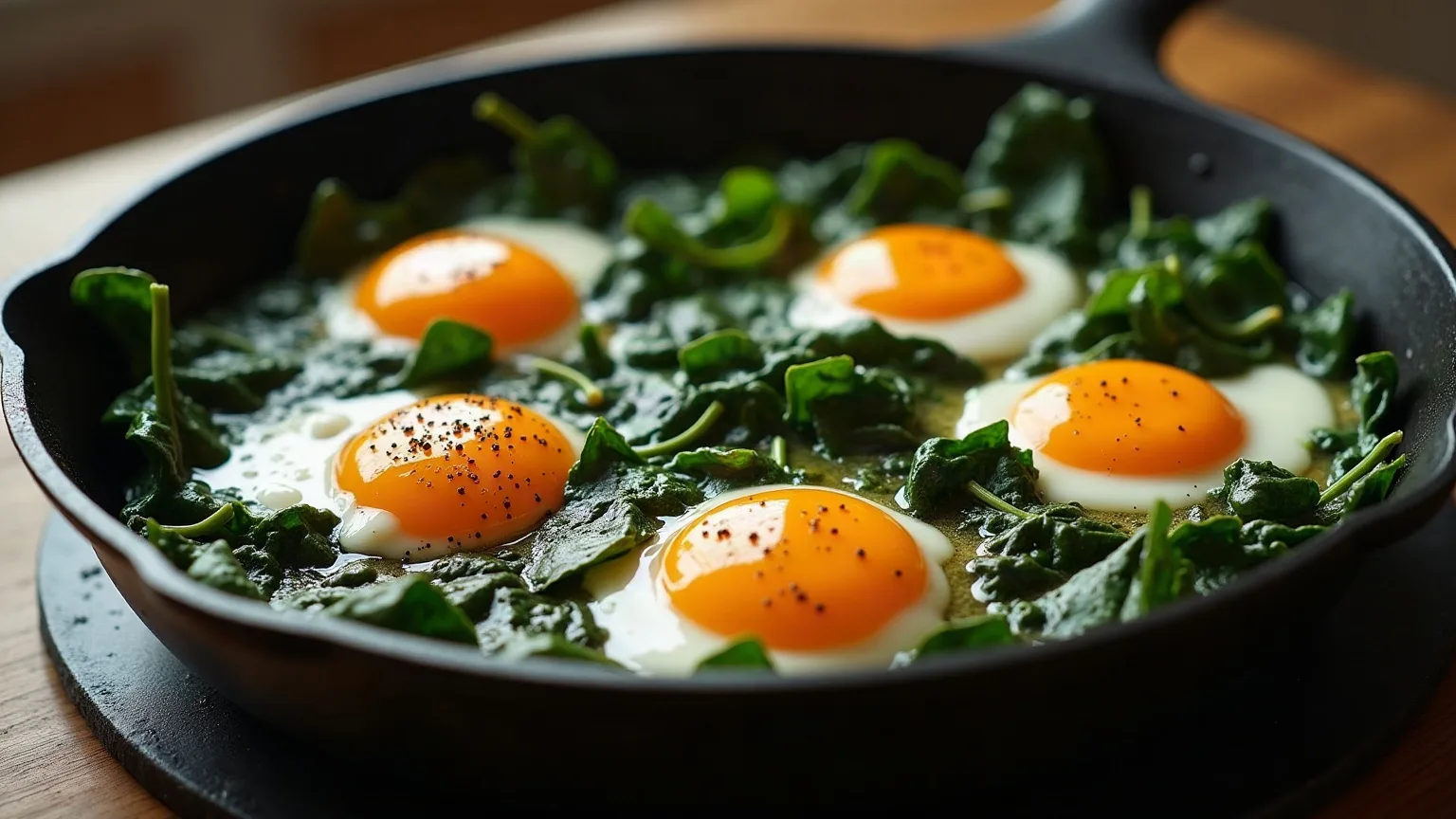
Spinach and eggs
Crack the eggs before the spinach has given up its water and a green puddle collects on the plate.…
Chicken sauté
Chicken breast is done at 65 °C and dry at 72. Those seven degrees are the whole recipe.…