
Liver skewers
Lamb’s liver in small cubes, close embers, three minutes. Overcooked liver turns grainy and bitter; the whole recipe is about taking it off in time.
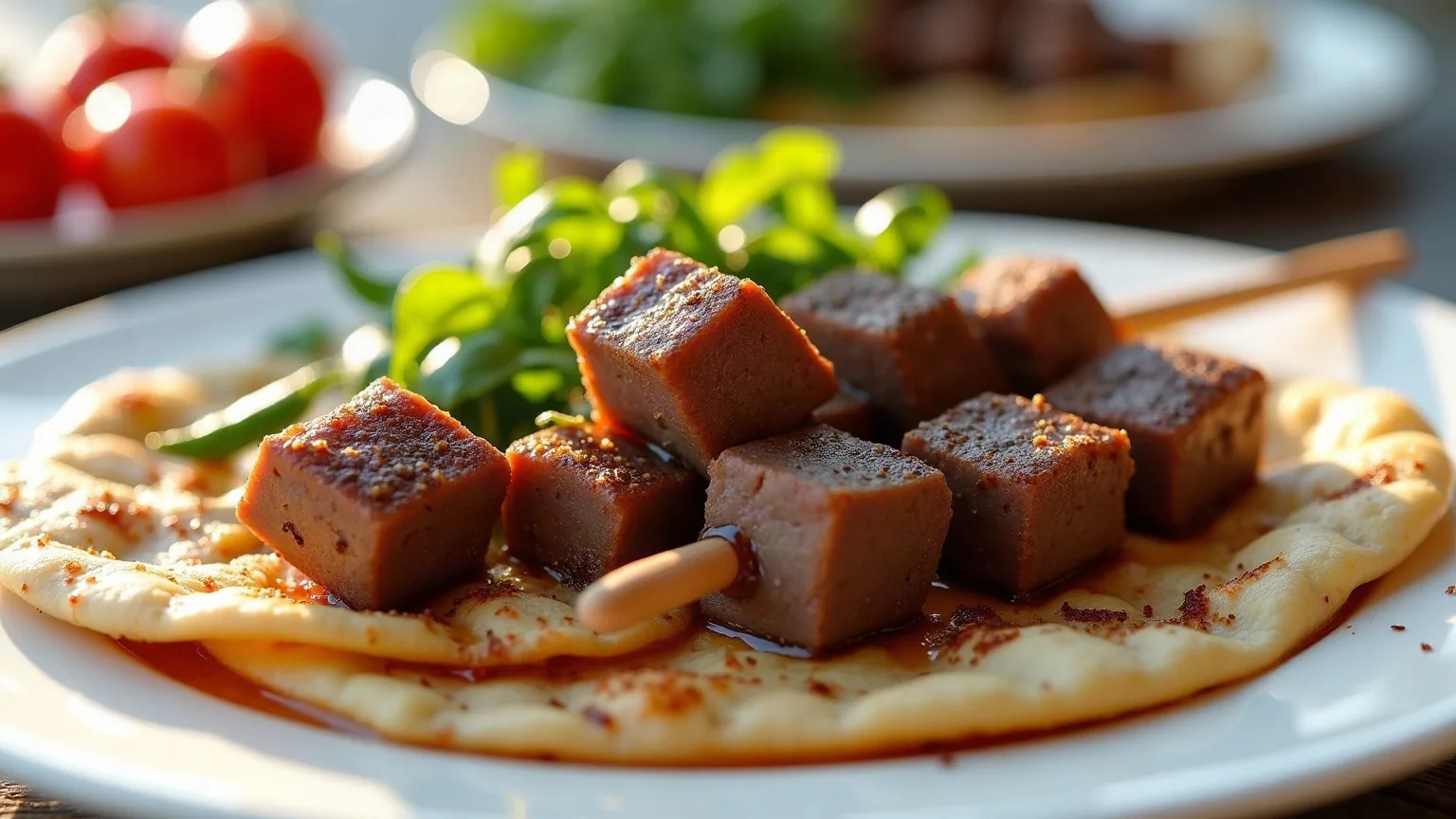
Grill and barbecue · South-eastern Anatolia · Under 30 minutes
- Preparation
- 25 min
- Cooking
- 4 min
- Difficulty
- Practised hand
- Cost
- Cheap
- Season
- All year
Diyarbakır’s breakfast: liver, fat and onion on the grill at seven in the morning. Liver is an organ rather than a muscle, with very little connective tissue, which is why it forgives no long cooking at all.
Method
- Peel the outer membrane from the liver and cut out the veins.
- Light the charcoal; the embers need to be at full strength.
You will need: A charcoal grill · Thin skewers · A sharp knife
-
Cut the liver and fat into 2 cm cubes; thread them with one piece of fat to every two of liver.
Look for The cubes all the same size.
Why Liver carries almost no fat; the melting tail fat keeps it from drying.Starch still asleep The granules are just floating there doing nothing. No body arrives before 62 °C.
-
Grill 5–8 cm over the embers, turning every 45 seconds, three to four minutes in all. Salt only once the skewers come off.
Look for The thickest cube should read 71 °C at its centre (the USDA FSIS threshold for offal); cut open it should be moist and grey-brown, never bloody.
Why Liver proteins set very fast, so every half-minute past done makes it grainier. Early salt draws out its water and toughens it.If it went wrong
If the middle is still bloody, return the skewers in 30-second bursts and cut a cube each time; never add two minutes at once.
Starch gelatinised The granules soaked up water, swelled and burst into a network. It has thickened, and it will firm further as it cools. no way back
Maillard is running Amino acids have met reducing sugars. The crust, the roasted flavour and that smell all come from here. no way back
Frying dynamics Surface water is flashing to steam and pushing outward — that is the shield keeping the oil out. no way back
-
Slice the onion and rub it with the sumac and parsley; salt and pepper the skewers and serve with lavash.
Look for The onion tinged pink and softened.
Why The sourness of sumac cuts the heavy, iron-rich taste of liver.Salt · 0.52% Low. Everything reads flat and nothing steps forward.
This recipe was run through the engine step by step — what goes in when, and at what temperature and for how long. The reactions above come from that run.
peak 280 °C · 22 minutes · engine 1.0.0 · confidence low
After the heat goes off
In hot lavash with sumac onion and green pepper.
Cooked liver only a day; reheated, it goes grainy.
Do not reheat; it is better cold, in a wrap.
Raw, cleaned liver three months.
Cold, in a wrap.
Liver is very rich in vitamin A; ask your doctor how often and how much a small child should have. If given, it should be cooked through and chopped fine.
- Grill & BBQ The method this recipe rests on
- Lamb liver What it does in heat, water and acid
- Red onion What it does in heat, water and acid
- Bread What it does in heat, water and acid
- Albanian liver Similar method, or something that sits on the same table
- Çöp şiş Similar method, or something that sits on the same table
- Adana kebab Similar method, or something that sits on the same table
- Under 30 minutes Other recipes that answer the same need
What it tastes like
The axes that define this recipe: aroma 70, umami 39, bitter 25.
This profile is computed rather than measured: the role-weighted average of its ingredients’ taste vectors, shifted by what the cooking does. The thin line is the database average on that axis.
Closest in taste
Not hand-picked: ranked by distance across the eight taste axes.
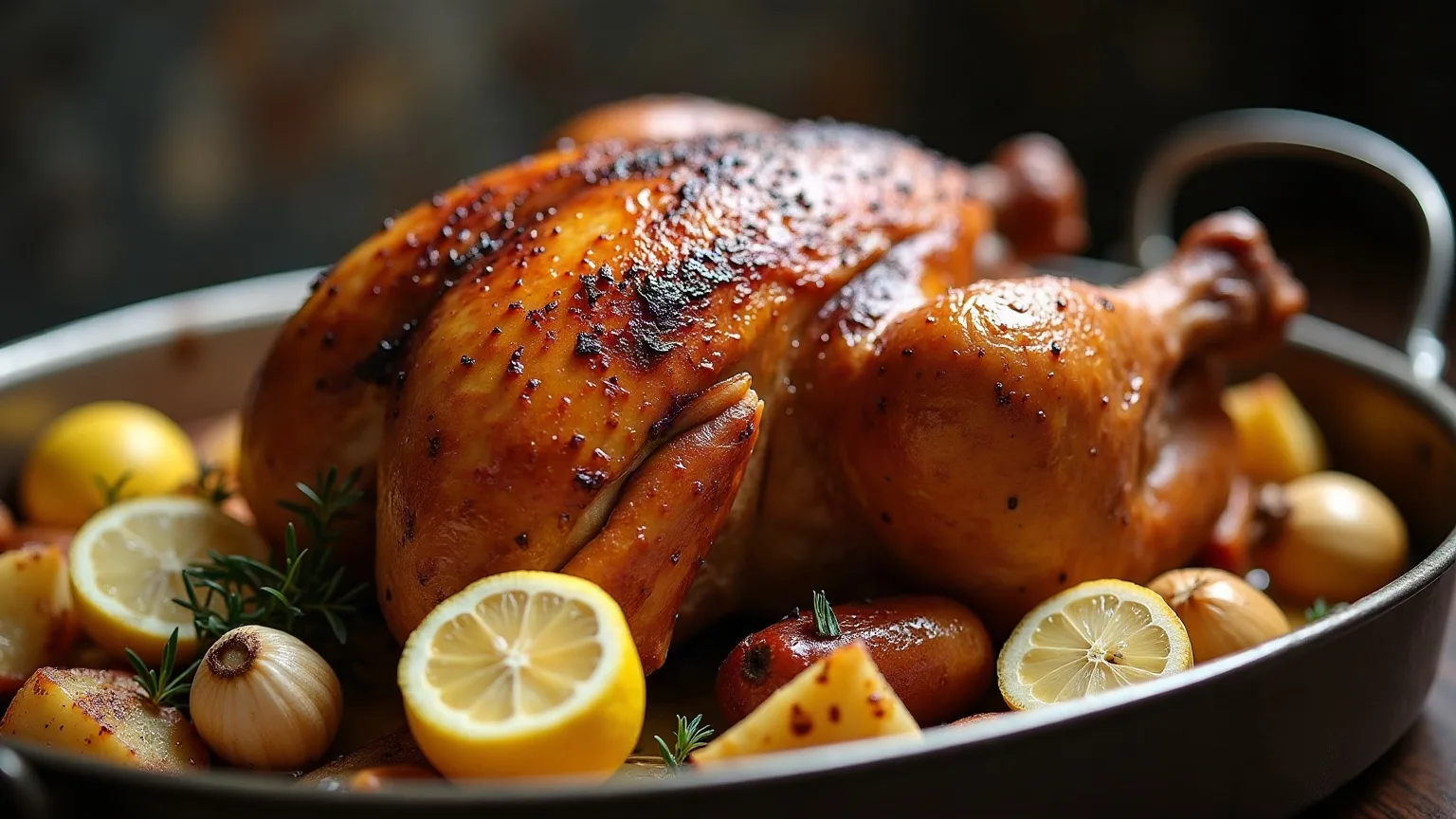
Whole roast chicken
The breast is ready at 65 °C and the leg at 75. Roasting a whole bird is entirely the business of hitting both at once.…
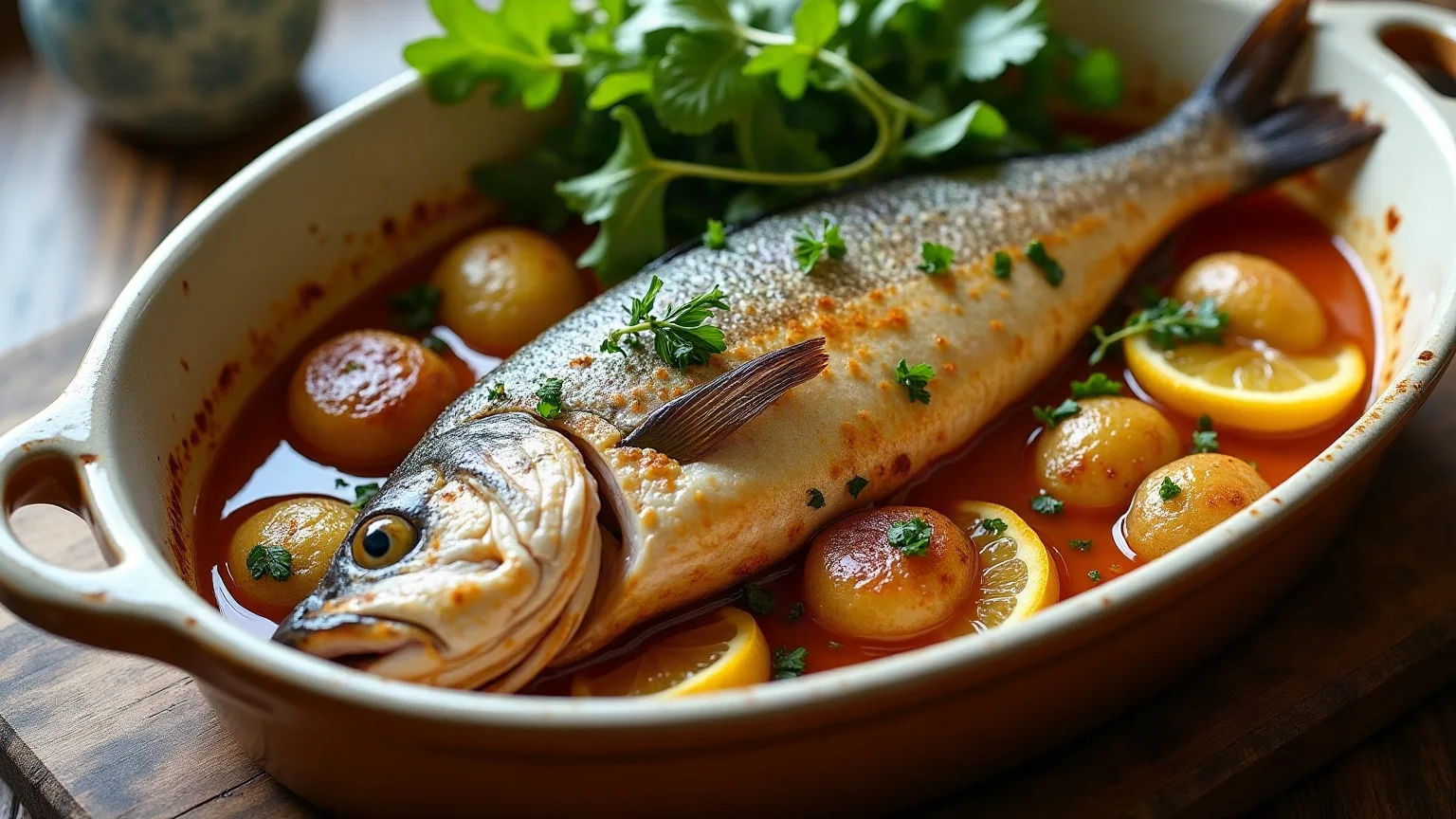
Baked sea bass
A whole fish is more forgiving than a fillet: the bones and skin slow the heat and the flesh cooks without drying.…
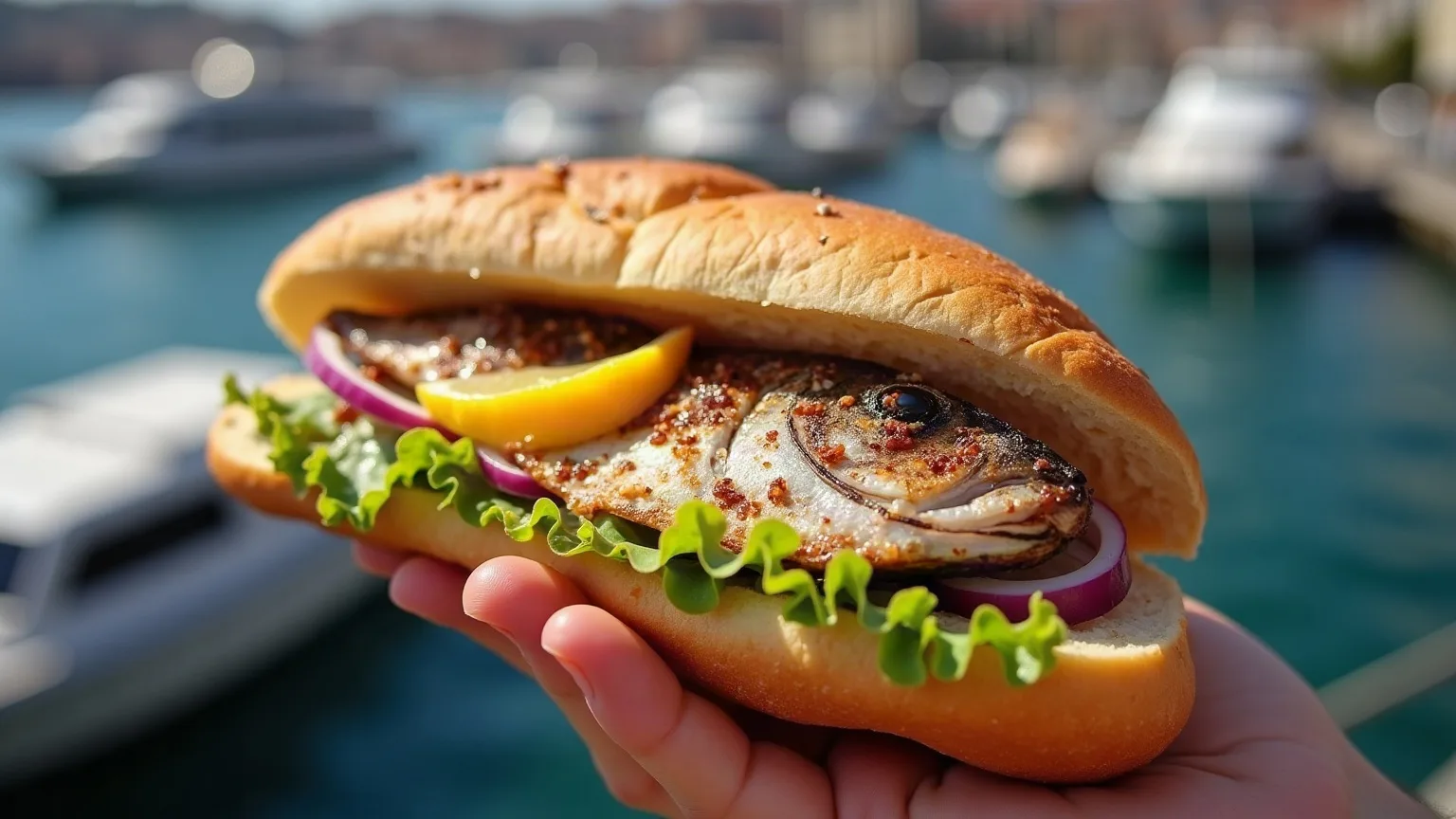
Fish sandwich
Mackerel is an oily fish, and the whole recipe is about balancing that fat: onion, sumac, lemon.…
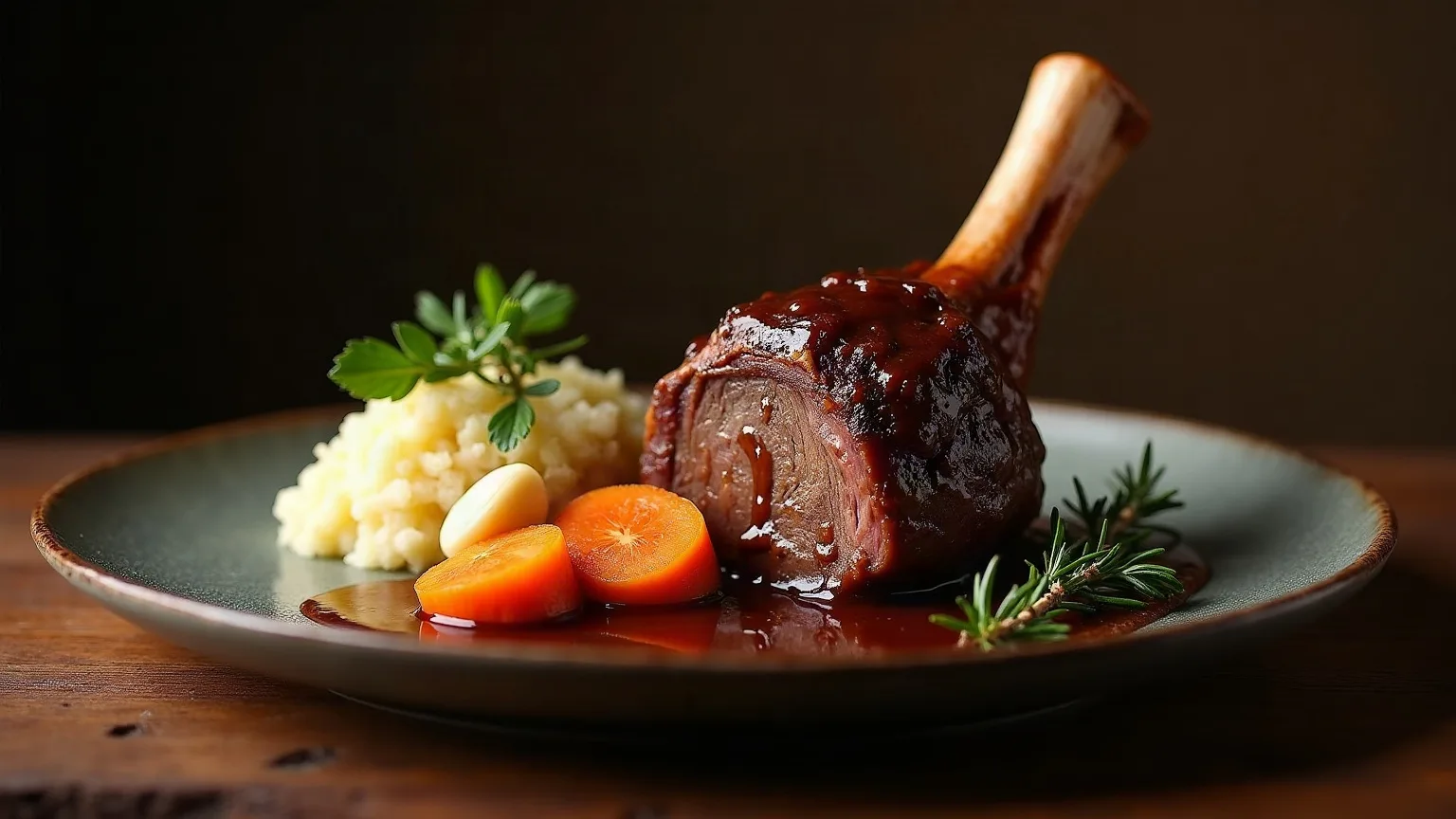
Slow-roast lamb shank
Three hours at 150 °C. There is no way to shorten it: collagen becomes gelatin with time rather than with temperature.…