
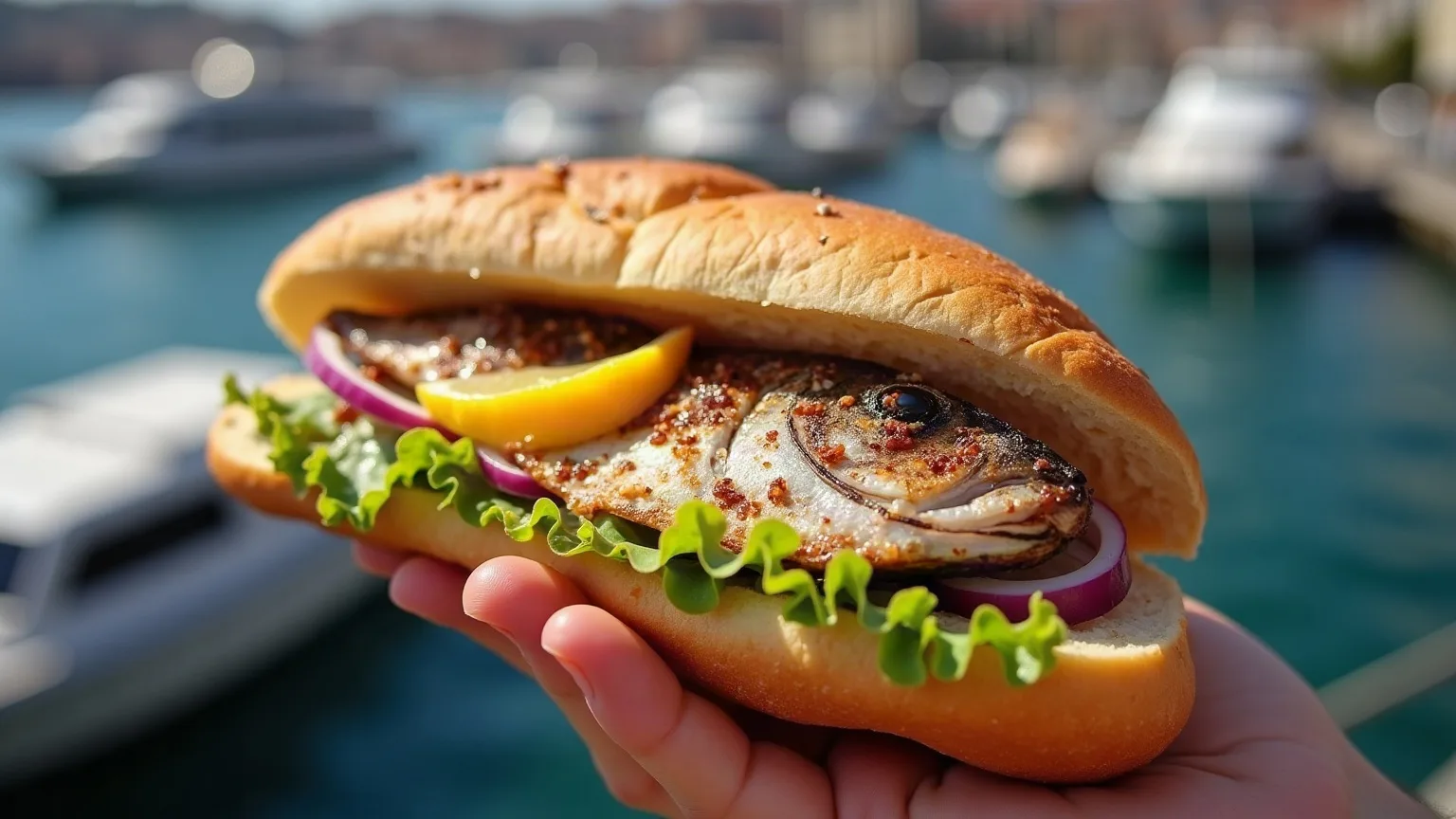
Fish sandwich
Mackerel is an oily fish, and the whole recipe is about balancing that fat: onion, sumac, lemon.
Fish and seafood · Marmara · Under 30 minutes · Budget · Seasonal
- Preparation
- 15 min
- Cooking
- 10 min
- Difficulty
- Needs attention
- Cost
- Cheap
- Season
- Autumn
The sandwich of Eminönü and the best known street food in Istanbul. Mackerel’s fat, up to 13%, is both the source of the flavour and the problem — it coats the mouth and is heavy on its own. The bite of the onion, the acid of the sumac and the lemon cut it, and none of the three is an accident: it is a hundred-year-old balance. An oily fish also grills in its own fat, so you oil the bars and not the fish.
Method
- Have the mackerel filleted and pull the pin bones out with tweezers.
- Slice the onion fine, rub it with salt, wait ten minutes and squeeze it dry.
- Heat the grill and oil the BARS, not the fish.
You will need: A grill or ridged pan
-
Rub the onion with salt, leave it ten minutes, squeeze it dry and toss it with the sumac.
Look for The liquid squeezed out should be cloudy and sharp-smelling: that is the pungency leaving.
Why Salt draws the onion’s cell water out by osmosis, and the pungent sulphur compounds leave with it. Squeezed onion is both milder and does not wet the bread.Starch still asleep The granules are just floating there doing nothing. No body arrives before 62 °C.
Salt · 2.23% High. Osmosis is pulling water out, the texture is tightening and the flavour is closing.
-
Salt the fillets, lay them skin-side down and leave them four minutes; turn them and give two more.
Look for Crisp dark skin, opaque white flesh, and clear fat weeping out of it.
Why A mackerel fillet is thin and cooks in six minutes in all. The skin side gets longer because the skin is both a heat barrier and the surface that crisps; the flesh side is more than done in two.If it went wrong
If it sticks, wait another thirty seconds: it releases once the crust forms. Forcing it tears the fillet.
Starch gelatinised The granules soaked up water, swelled and burst into a network. It has thickened, and it will firm further as it cools. no way back
Maillard is running Amino acids have met reducing sugars. The crust, the roasted flavour and that smell all come from here. no way back
Frying dynamics Surface water is flashing to steam and pushing outward — that is the shield keeping the oil out. no way back
Salt · 0.49% Low. Everything reads flat and nothing steps forward.
-
Split the bread, layer in the lettuce, the squeezed onion and the fish, squeeze the lemon and pour the oil over.
Look for The inside of the bread should stay dry; if it wets, the lettuce layer is missing.
Why The lettuce goes between the fish and the bread as a barrier: the fish’s fat does not soak the loaf and the sandwich does not collapse in the hand. That is why the street always puts it underneath.Salt · 0.36% Low. Everything reads flat and nothing steps forward.
This recipe was run through the engine step by step — what goes in when, and at what temperature and for how long. The reactions above come from that run.
peak 235 °C · 20 minutes · engine 1.0.0 · confidence low
What can go wrong here
The meat came out dry and tough⌄
What happened
The meat passed 70 °C. Past that point the muscle fibres contract and wring out their water, while collagen never gets the time to turn into gelatine. It loses moisture and never tenderises.
By the numbers
Beef medium at 57 °C, chicken at 74 °C. Rest it for 10 minutes off the heat; unrested meat leaves its juice on the plate.
Without a thermometer
The palm test: touch thumb to index finger and press the pad below your thumb — that firmness is rare. Middle finger is medium, ring finger is well done. Watch the juice too: pinkish and clear means you are there, running white means you went too far.
After the heat goes off
At once, in the hand, with pickle juice or şalgam beside it — both bring the same acid.
It does not keep: eaten the minute it is made, or the bread wets and the fish goes cold.
Never reheated.
Not for the freezer. Raw mackerel fillets keep two months.
Leftover grilled mackerel, cooled and crushed with a fork with lemon and oil, becomes a fish paste.
Mackerel is an oily fish and valuable for omega-3; suitable from twelve months. Checking for bones is essential, because even tweezered fillets miss some. For 12–36 months leave the onion and sumac out and break the bread small. Because of mackerel’s histamine risk the fish must be very fresh.
- Mackerel → Atlantic bonito Bonito works and, being thicker, wants nine minutes; it is leaner, so cut the onion back.
- Grill & BBQ The method this recipe rests on
- Mackerel What it does in heat, water and acid
- Red onion What it does in heat, water and acid
- Romaine lettuce What it does in heat, water and acid
- Grilled sea bream Similar method, or something that sits on the same table
- Fried anchovies Similar method, or something that sits on the same table
- Under 30 minutes Other recipes that answer the same need
- Budget Other recipes that answer the same need
- Seasonal Other recipes that answer the same need
What it tastes like
The axes that define this recipe: aroma 66, bitter 26, umami 36.
This profile is computed rather than measured: the role-weighted average of its ingredients’ taste vectors, shifted by what the cooking does. The thin line is the database average on that axis.
Closest in taste
Not hand-picked: ranked by distance across the eight taste axes.
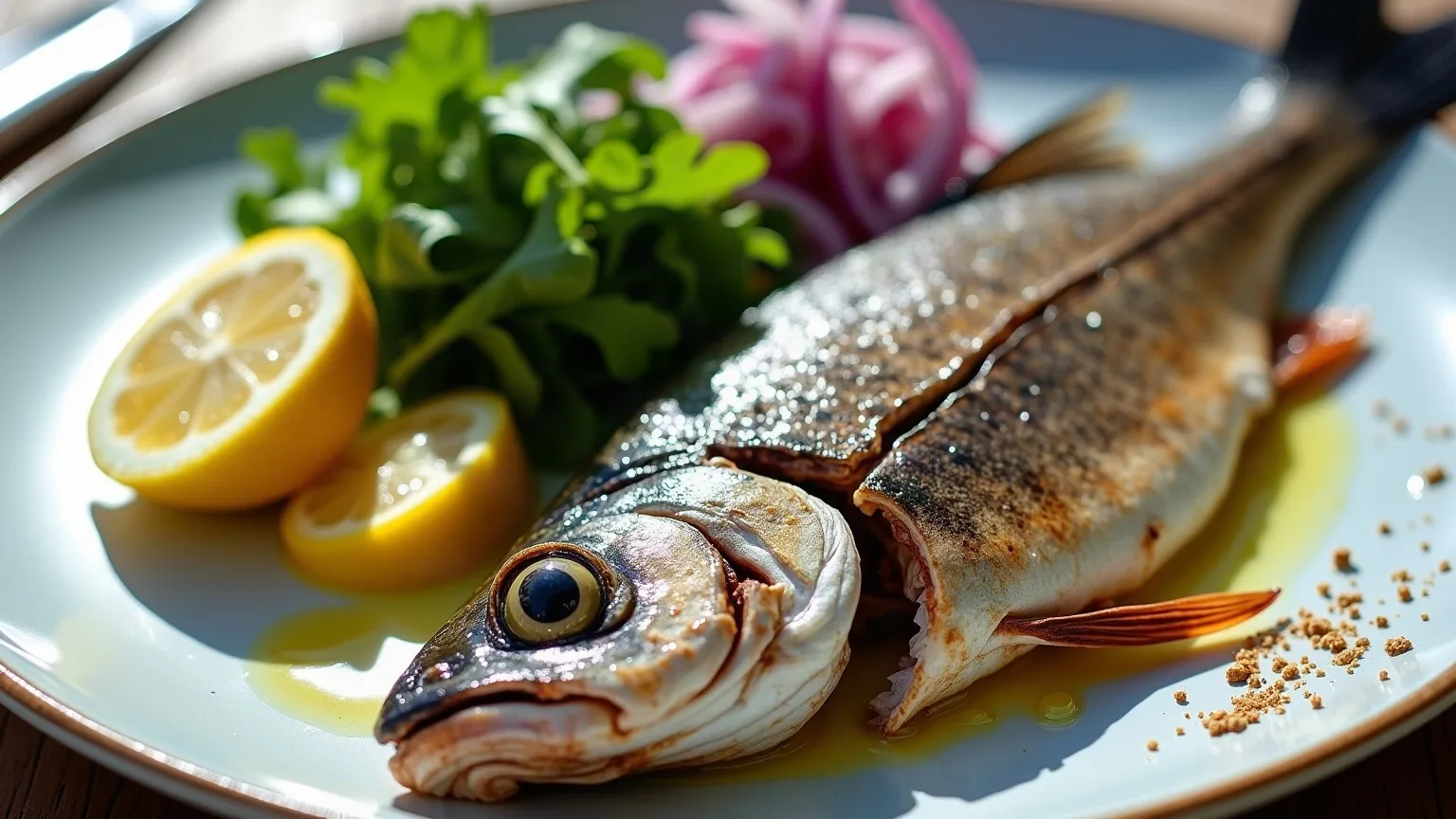
Grilled sea bream
Fish sticks to a grill because of its skin, not the bars: wet skin welds and dry skin releases in thirty seconds.…
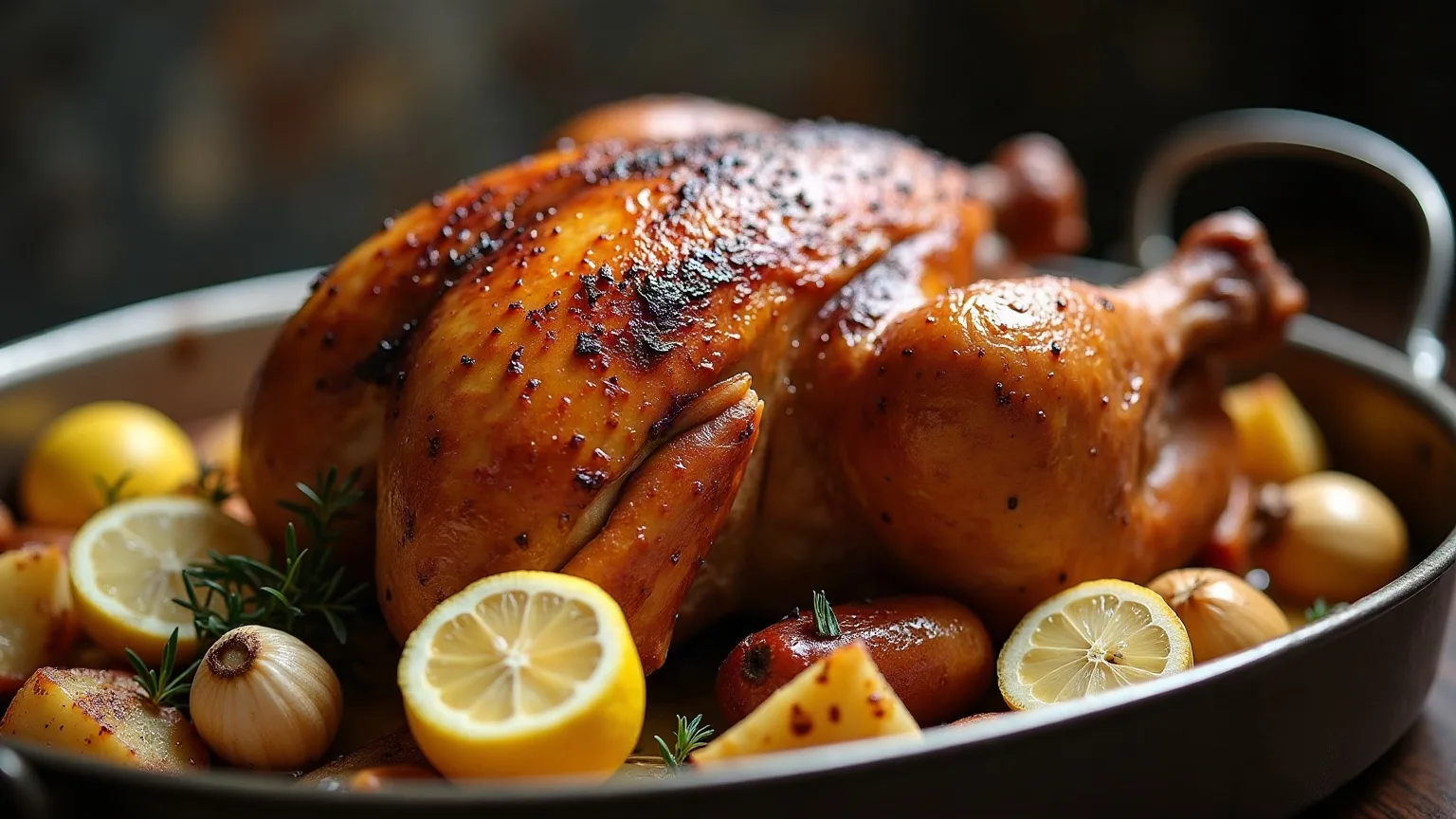
Whole roast chicken
The breast is ready at 65 °C and the leg at 75. Roasting a whole bird is entirely the business of hitting both at once.…
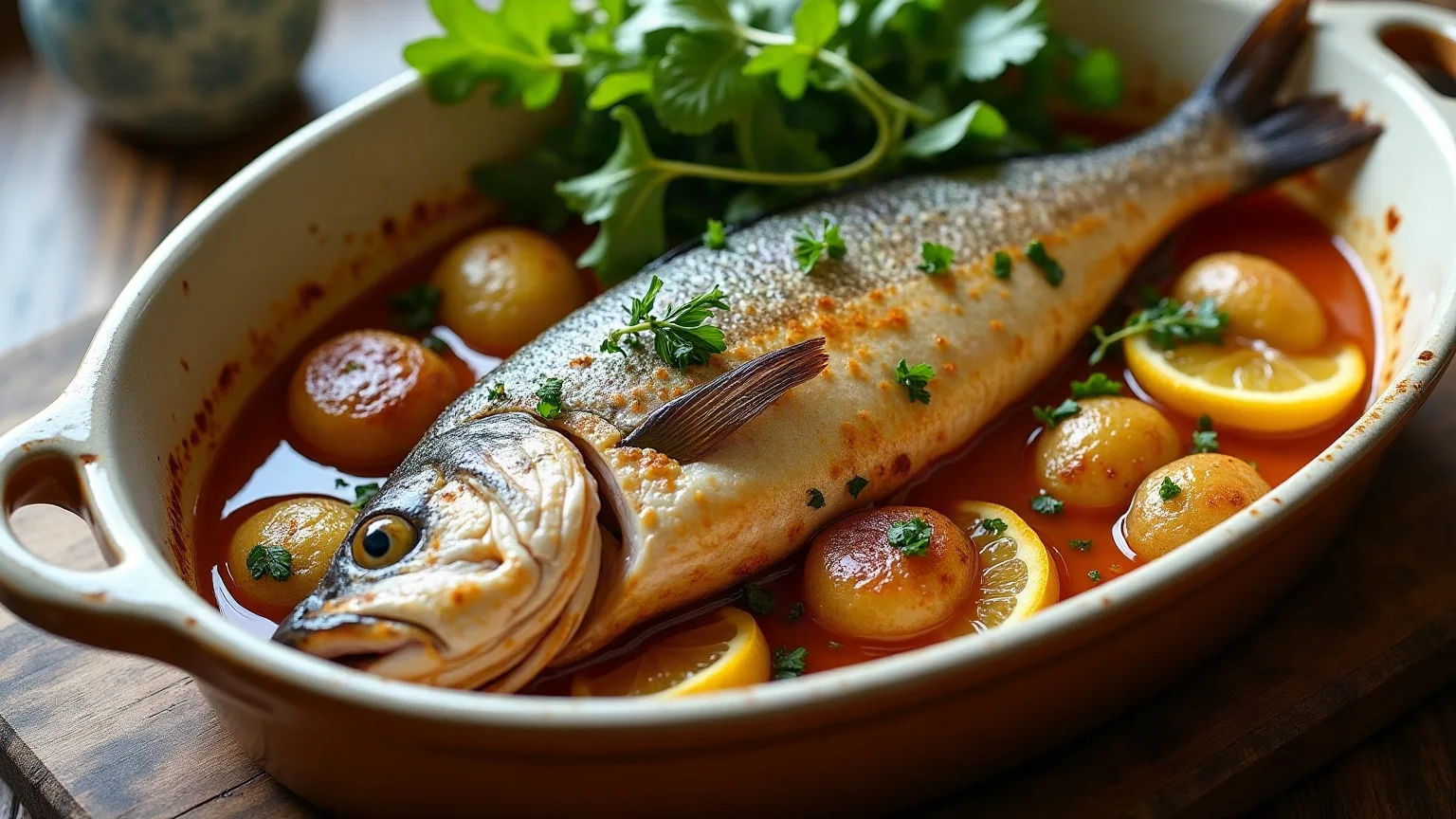
Baked sea bass
A whole fish is more forgiving than a fillet: the bones and skin slow the heat and the flesh cooks without drying.…
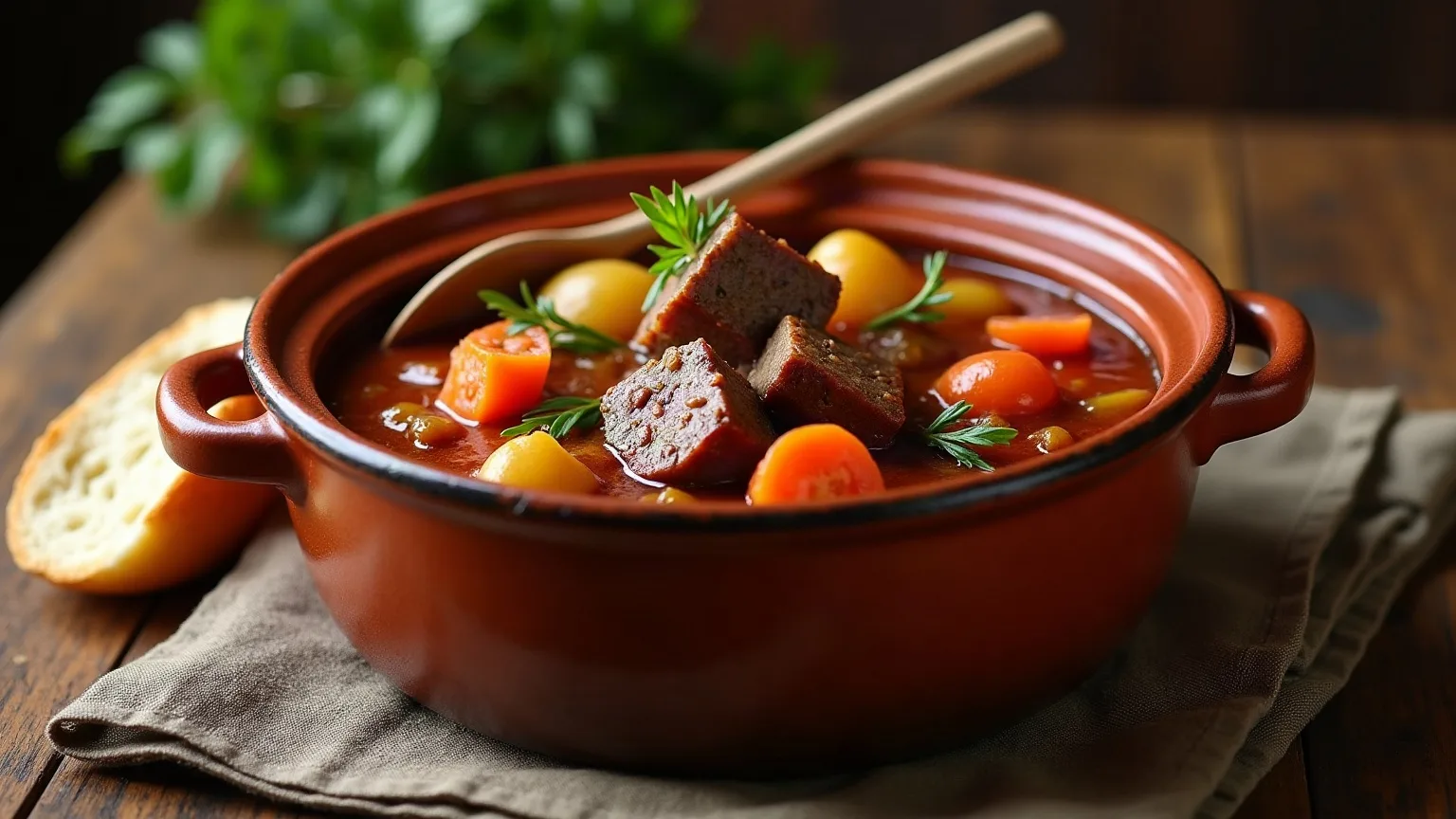
Lamb casserole
The meat has two hours and the vegetables have forty minutes. Put them in together and the vegetables vanish while the m…