
Çöp şiş
Hazelnut-sized pieces of lamb on thin wooden skewers, close to the embers, four minutes. Small pieces mean a great deal of surface: every bite is crust.
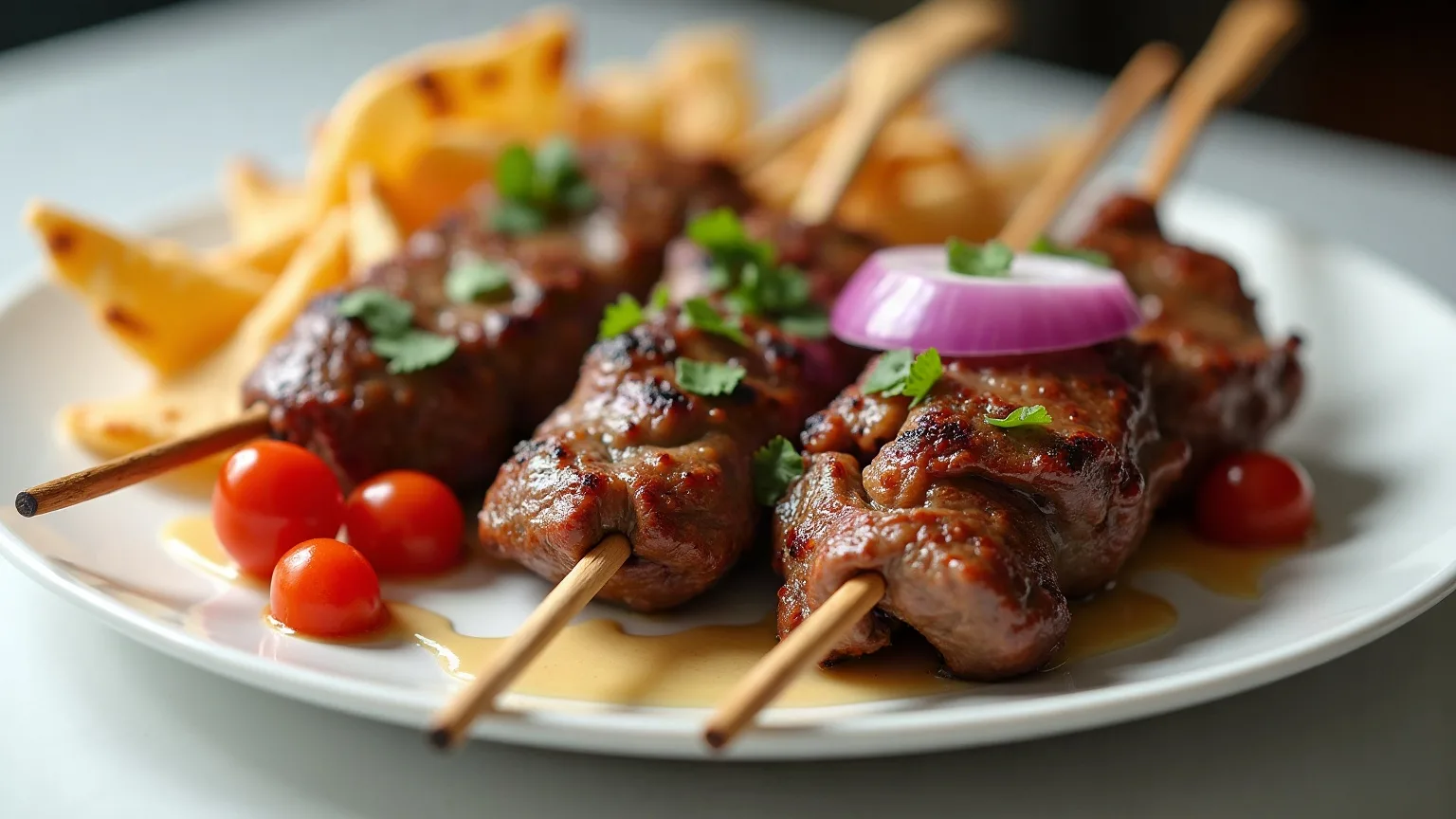
Grill and barbecue · Aegean · Under 30 minutes · For guests
- Preparation
- 40 min
- Cooking
- 5 min
- Resting
- 3 min
- Difficulty
- Needs attention
- Cost
- Dear
- Season
- Spring, Summer, Autumn
Çöp şiş from Selçuk and Tire is named for skewers as thin as toothpicks. With pieces this small no marinade is needed; its only seasoning is salt, pepper and tail fat rubbed on as it cooks. The small size is what keeps the time short and carries the middle to 63 °C quickly.
Method
- Soak the wooden skewers in water for 30 minutes.
- Light the charcoal: 20–30 minutes until the ash is grey.
You will need: A charcoal grill · Thin wooden skewers, about 30 · A meat thermometer
-
Cut the meat and half the fat into 1.5 cm cubes; thread five or six pieces of meat on each skewer with a piece of fat between.
Look for Pieces packed snug but not crushed.
Why The fat between melts and bastes its neighbours; a 1.5 cm cube reaches 63 °C inside in four minutes. -
Salt the skewers and grill them 5–8 cm over the embers, turning every minute, for four to five minutes; spear the remaining fat on a fork and rub it over the meat.
Look for Edges brown and crisp; the core at least 63 °C.
Why On small pieces the crust and the middle finish together, so the heat is close and strong: you should manage your hand there for two to three seconds. Salt goes on at the last moment, because small pieces salted early weep.If it went wrong
If the wooden skewers catch, pull their ends out beyond the coals; if the flare continues, raise them to 12 cm.
Maillard is running Amino acids have met reducing sugars. The crust, the roasted flavour and that smell all come from here. no way back
Frying dynamics Surface water is flashing to steam and pushing outward — that is the shield keeping the oil out. no way back
Salt · 1.27% Right in the window. Flavours sharpen, bitterness retreats, water is held.
-
Lay the skewers on the lavash, grind over pepper and rest three minutes; serve with sliced onion and tomato.
Look for The lavash should take up the juices.
Why USDA FSIS asks 63 °C for whole cuts of red meat and at least three minutes’ rest, during which the core climbs another 2–3 °C.Starch still asleep The granules are just floating there doing nothing. No body arrives before 62 °C.
Salt · 0.77% Right in the window. Flavours sharpen, bitterness retreats, water is held.
This recipe was run through the engine step by step — what goes in when, and at what temperature and for how long. The reactions above come from that run.
peak 280 °C · 28 minutes · engine 1.0.0 · confidence low
After the heat goes off
Stripped off with the bread, with onion and tomato.
Two days in the fridge.
One to two minutes in a hot pan; any longer and the small pieces dry out.
Raw on the skewer, three months.
Over rice or in a wrap.
A cube of meat is a choking risk from 12 to 36 months: take it off the skewer and chop it fine. Never hand a small child a wooden skewer.
- Grill & BBQ The method this recipe rests on
- Lamb What it does in heat, water and acid
- Tomato What it does in heat, water and acid
- Red onion What it does in heat, water and acid
- Grilled lamb chops Similar method, or something that sits on the same table
- Cağ kebab at home Similar method, or something that sits on the same table
- Liver skewers Similar method, or something that sits on the same table
- Under 30 minutes Other recipes that answer the same need
- For guests Other recipes that answer the same need
What it tastes like
The axes that define this recipe: aroma 73, umami 54.
This profile is computed rather than measured: the role-weighted average of its ingredients’ taste vectors, shifted by what the cooking does. The thin line is the database average on that axis.
Closest in taste
Not hand-picked: ranked by distance across the eight taste axes.
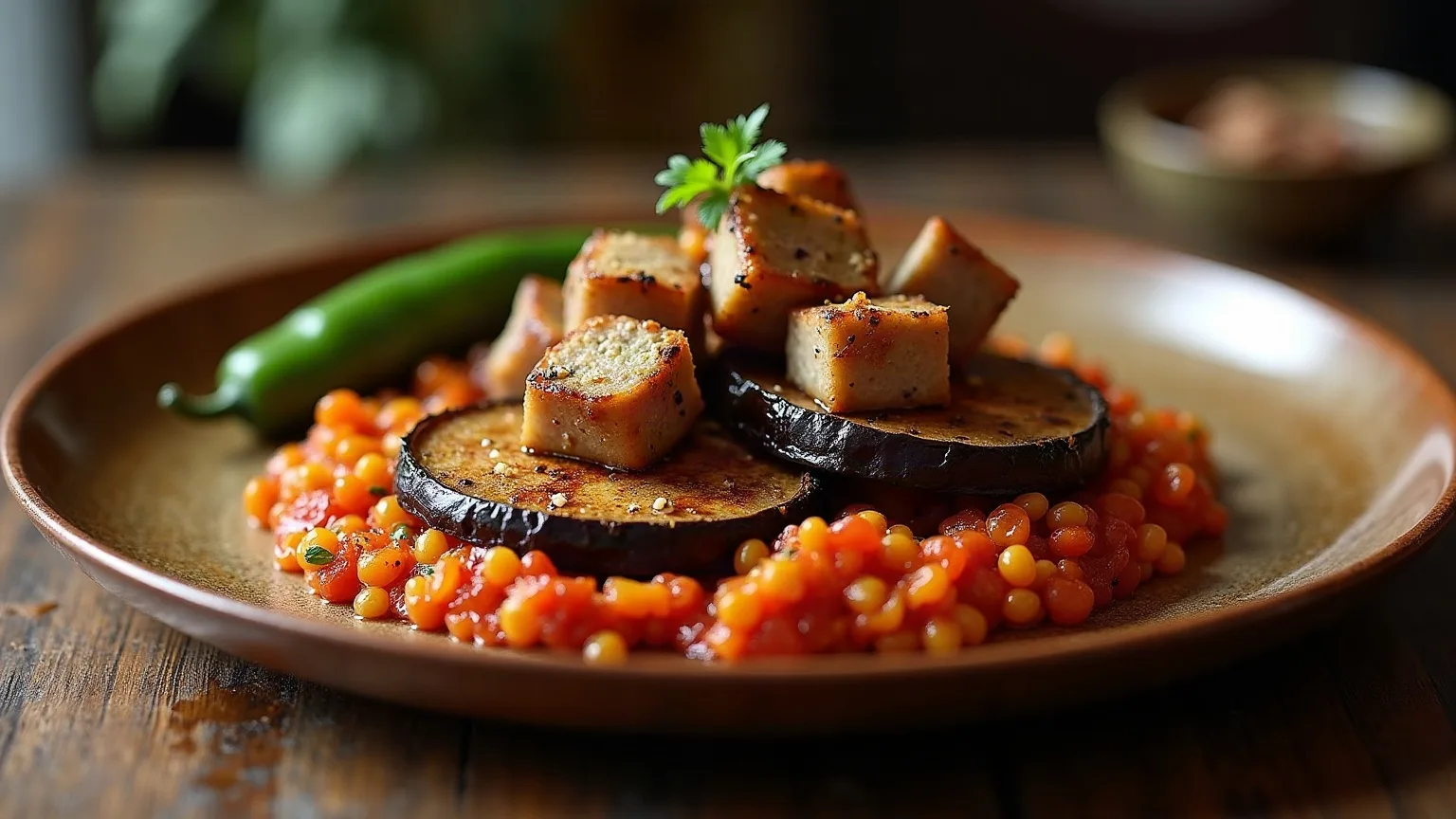
Ali Nazik
The Gaziantep classic: charred aubergine crushed with garlicky yoghurt under sautéed lamb. The aubergine must meet fire;…
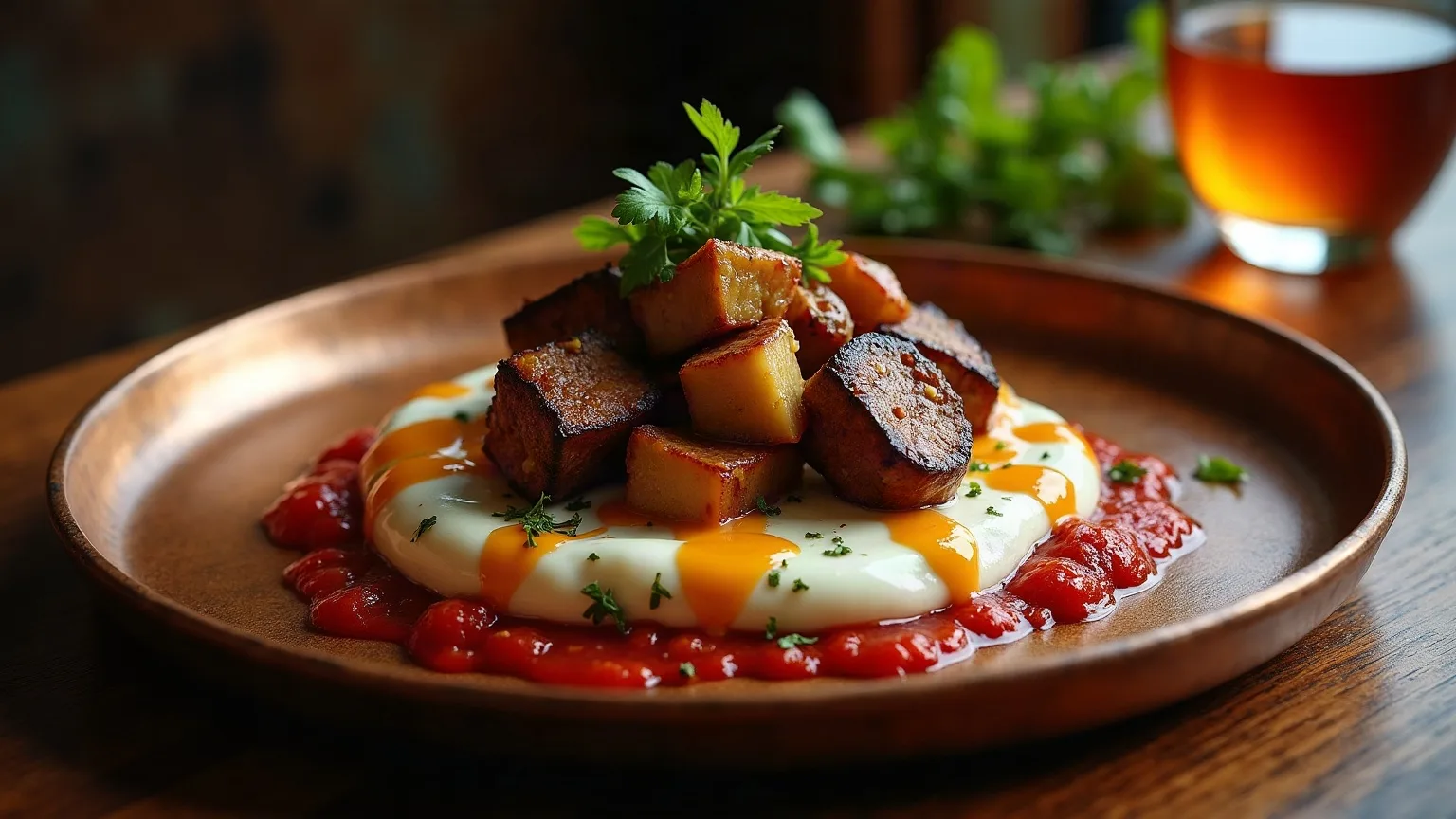
Ali Nazik
The Gaziantep classic: charred aubergine crushed with garlicky yoghurt under sautéed lamb. Everything rests on properly …
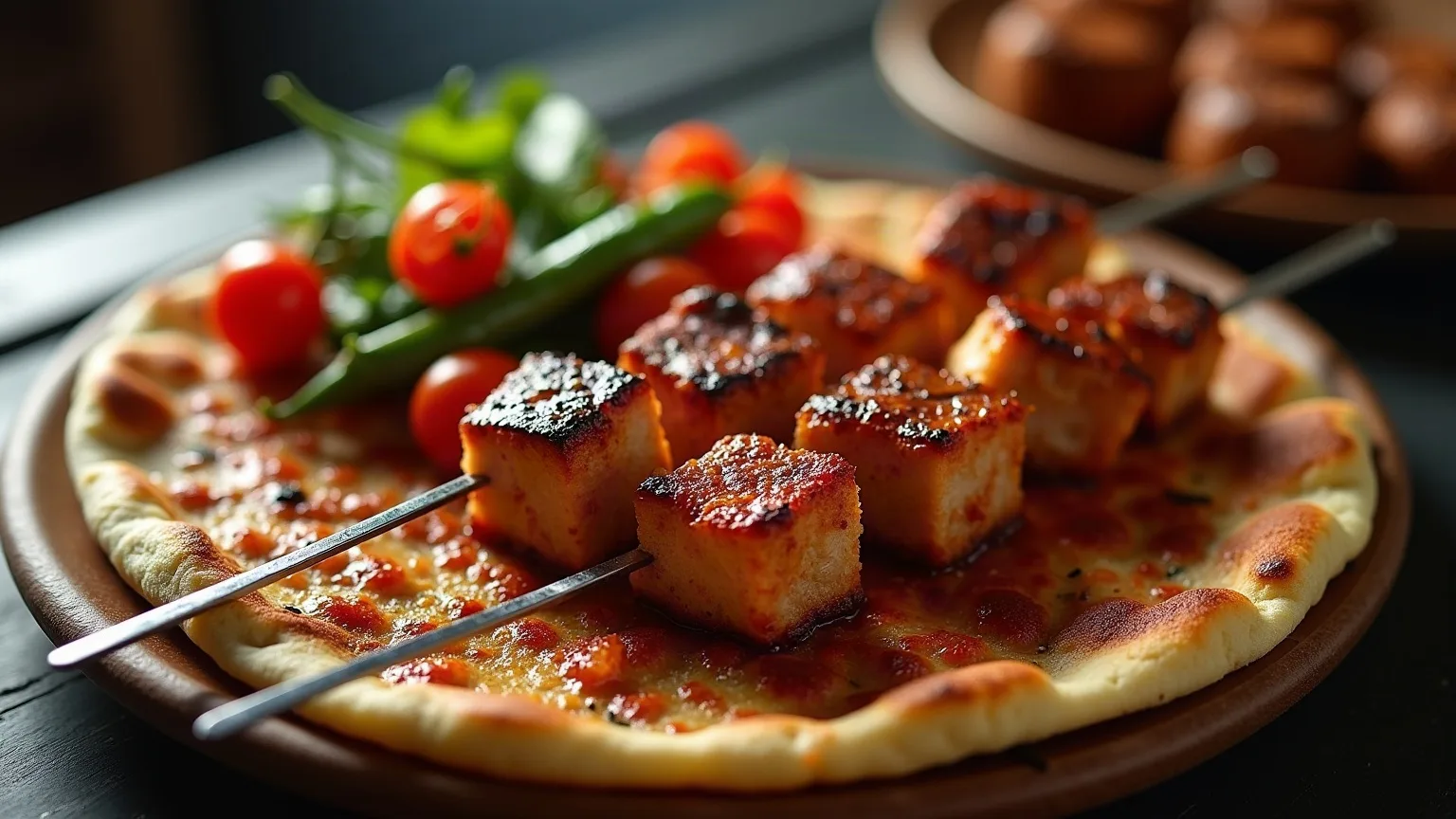
Chicken shish
A yoghurt marinade is a mechanism rather than a tradition: its calcium and lactic acid loosen the meat’s protein.…
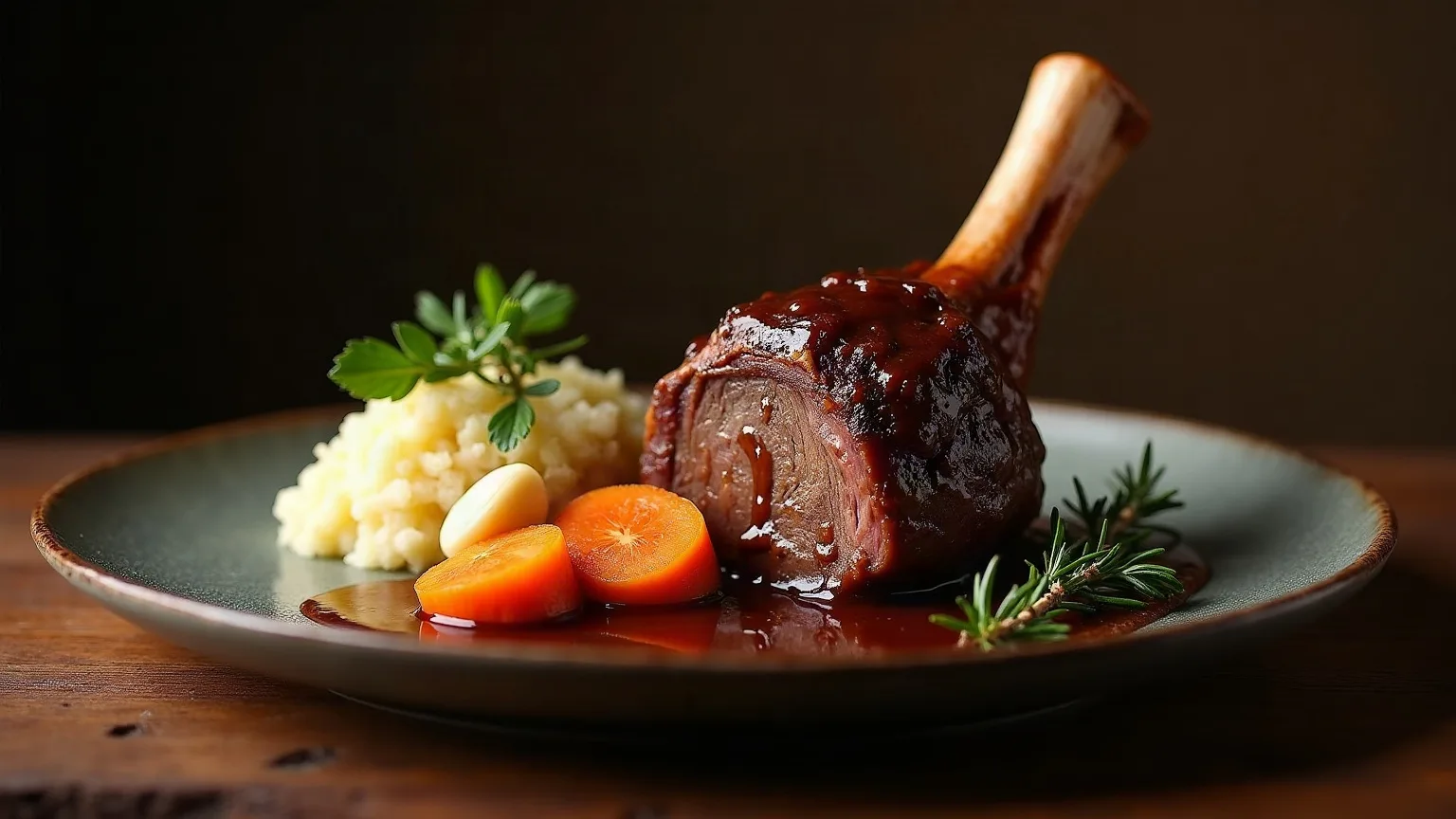
Slow-roast lamb shank
Three hours at 150 °C. There is no way to shorten it: collagen becomes gelatin with time rather than with temperature.…