
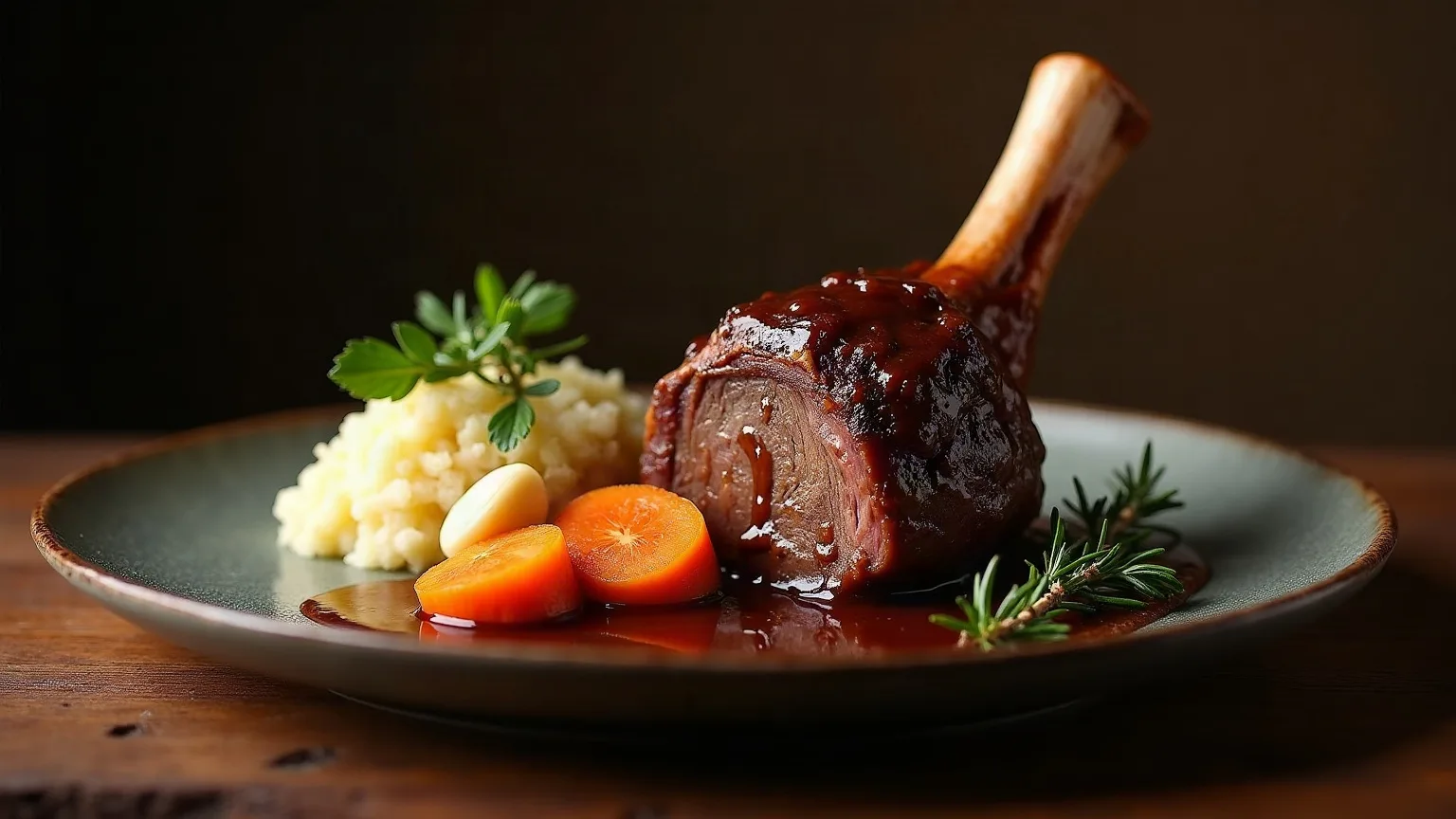
Slow-roast lamb shank
Three hours at 150 °C. There is no way to shorten it: collagen becomes gelatin with time rather than with temperature.
Meat dishes · Turkish · For guests · Weekend batch · Freezes well
- Preparation
- 20 min
- Cooking
- 190 min
- Resting
- 15 min
- Difficulty
- Practised hand
- Cost
- Dear
- Season
- Autumn, Winter
The shank is the hardest-working muscle on the animal, and therefore the cheapest, the toughest and — cooked properly — the best. Muscle fibres contract at 60 °C and squeeze out their water; at that point the meat is dry. But over hours above 70 °C the collagen turns to gelatin and begins to wet the fibres again, and the meat goes tender a second time. That second phase completes in about three hours, and anyone who stops at two and a half is eating the meat at its worst.
Method
- Pat the shanks dry and salt them an hour ahead: the salt works into the meat in that time.
- Heat the oven to 150 °C.
You will need: A deep oven dish with a lid or foil · A wide pan
-
Sear the shanks in the oil, three minutes a side, to a deep brown.
Look for Deep brown with a crust; a grey surface means no searing happened.
Why No Maillard happens in three hours of moist cooking — inside a covered dish nothing passes 100 °C. All the roasted flavour comes from these first twelve minutes.If it went wrong
If the pan was not hot enough the meat weeps. Drive the water off completely and carry on searing: you have only lost time.
Maillard is running Amino acids have met reducing sugars. The crust, the roasted flavour and that smell all come from here. no way back
Frying dynamics Surface water is flashing to steam and pushing outward — that is the shield keeping the oil out. no way back
Salt · 0.83% Right in the window. Flavours sharpen, bitterness retreats, water is held.
-
Turn the vegetables in the same pan for eight minutes and fry the paste for one.
Look for The base of the pan should come clean.
Why The vegetables dissolve the brown layer on the base, and that layer is the foundation of the sauce.Starch gelatinised The granules soaked up water, swelled and burst into a network. It has thickened, and it will firm further as it cools. no way back
Maillard is running Amino acids have met reducing sugars. The crust, the roasted flavour and that smell all come from here. no way back
Frying dynamics Surface water is flashing to steam and pushing outward — that is the shield keeping the oil out. no way back
Salt · 0.62% Right in the window. Flavours sharpen, bitterness retreats, water is held.
The oil is under 170 °C. No shield forms, so the food soaks up fat and goes soggy.
-
Move everything to the oven dish with the hot water, thyme and bay, cover it and cook THREE HOURS at 150 °C.
Look for After three hours the bone should pull out of the meat with no resistance.
Why At 150 °C the inside of a covered dish holds around 95 °C: hot enough for collagen to convert and low enough not to contract the fibres further. Taking the oven to 200 does not shorten it, it only dries the outside.If it went wrong
If it is still tough, give it another thirty to forty-five minutes. Do not worry about overcooking: this cut is tough at two and a half hours and still good at three and a half.
Starch gelatinised The granules soaked up water, swelled and burst into a network. It has thickened, and it will firm further as it cools. no way back
Salt · 0.49% Low. Everything reads flat and nothing steps forward.
-
Lift the shanks out, strain the sauce and reduce it uncovered for ten minutes. Rest the meat fifteen minutes.
Look for The sauce should coat the back of a spoon and look glossy, and the gloss is the gelatin.
Why As it rests the fibres relax and the gelatinous juice redistributes between them; cut at once, the meat leaves that juice on the plate.Starch gelatinised The granules soaked up water, swelled and burst into a network. It has thickened, and it will firm further as it cools. no way back
Salt · 0.49% Low. Everything reads flat and nothing steps forward.
This recipe was run through the engine step by step — what goes in when, and at what temperature and for how long. The reactions above come from that run.
peak 210 °C · 226 minutes · engine 1.0.0 · confidence low
What can go wrong here
The meat came out dry and tough⌄
What happened
The meat passed 70 °C. Past that point the muscle fibres contract and wring out their water, while collagen never gets the time to turn into gelatine. It loses moisture and never tenderises.
By the numbers
Beef medium at 57 °C, chicken at 74 °C. Rest it for 10 minutes off the heat; unrested meat leaves its juice on the plate.
Without a thermometer
The palm test: touch thumb to index finger and press the pad below your thumb — that firmness is rare. Middle finger is medium, ring finger is well done. Watch the juice too: pinkish and clear means you are there, running white means you went too far.
After the heat goes off
One shank to a plate with the sauce over it, and mashed potato or bulgur beside: both soak the sauce up.
Four days in the fridge in its sauce. The sauce sets as it cools, which is the proof of the gelatin.
Twenty minutes at 160 °C in its sauce under foil. Long-cooked meat takes no harm from reheating.
Four months in its sauce. Frozen without it the meat dries out; the sauce protects it.
The meat pulled off the bone goes into pasta, a börek or a pide, and the bone makes the stock for the next soup.
Long-cooked lamb suits children very well: the fibres have separated. For 12–36 months shred it and watch the salt — the shanks are salted before cooking, so a child’s portion wants to be cooked separately without it. The same, separately and unsalted, for a baby under one.
- Lamb foreshank → Red meat Beef shin cooks the same way and takes forty-five minutes longer: beef collagen is more stubborn.
- Water → Meat stock Stock deepens the sauce noticeably, though water is fine because the gelatin is coming from the meat anyway.
- The oven The method this recipe rests on
- Lamb foreshank What it does in heat, water and acid
- Bulb onion What it does in heat, water and acid
- Carrot What it does in heat, water and acid
- Taş kebabı Similar method, or something that sits on the same table
- Lamb casserole Similar method, or something that sits on the same table
- Roast beef Similar method, or something that sits on the same table
- For guests Other recipes that answer the same need
- Weekend batch Other recipes that answer the same need
- Freezes well Other recipes that answer the same need
What it tastes like
The axes that define this recipe: aroma 72, umami 43.
This profile is computed rather than measured: the role-weighted average of its ingredients’ taste vectors, shifted by what the cooking does. The thin line is the database average on that axis.
Closest in taste
Not hand-picked: ranked by distance across the eight taste axes.
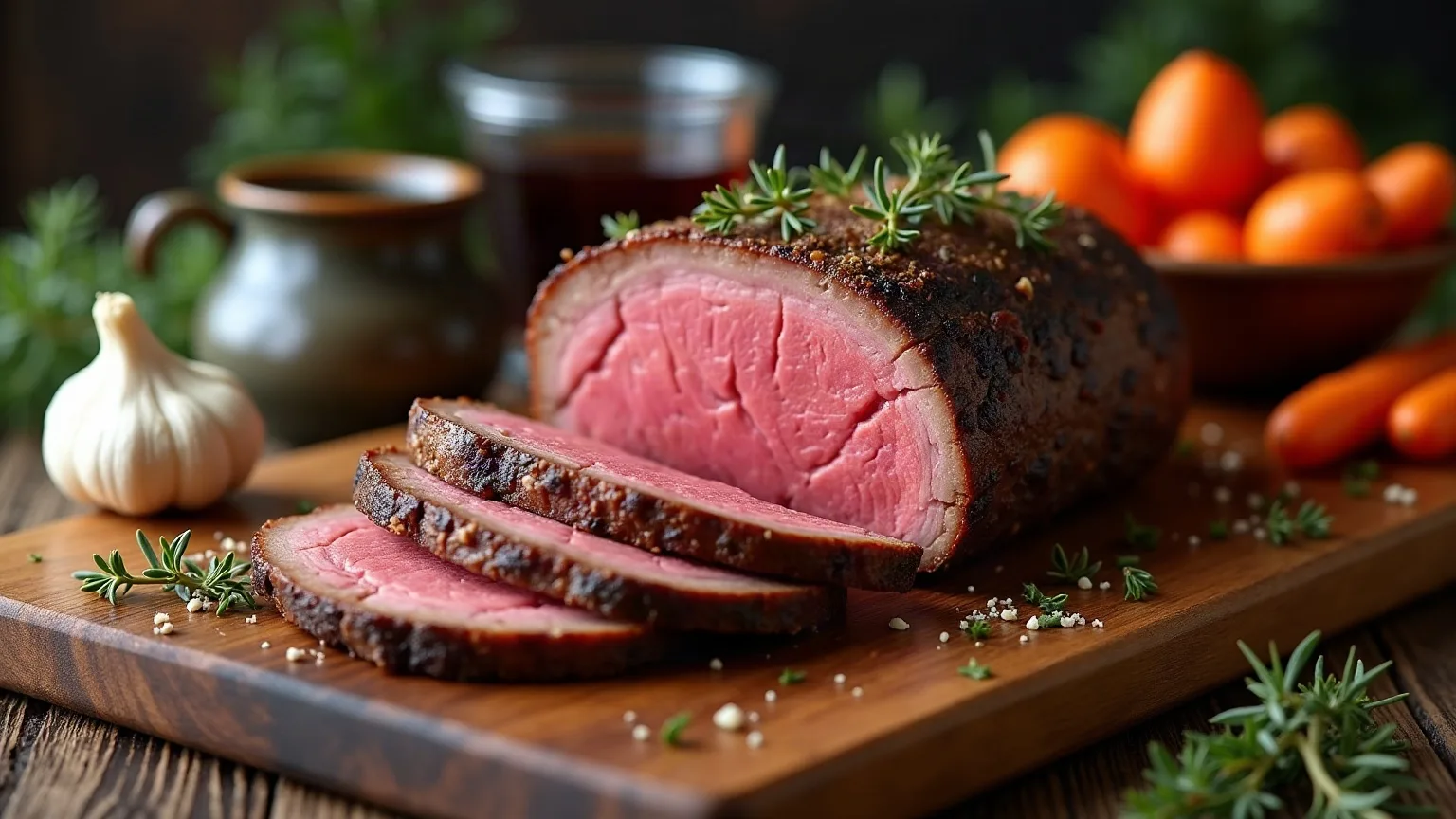
Roast beef
Not a dish to make without a thermometer. The answer to "how many minutes" depends on the temperature at the centre, not…
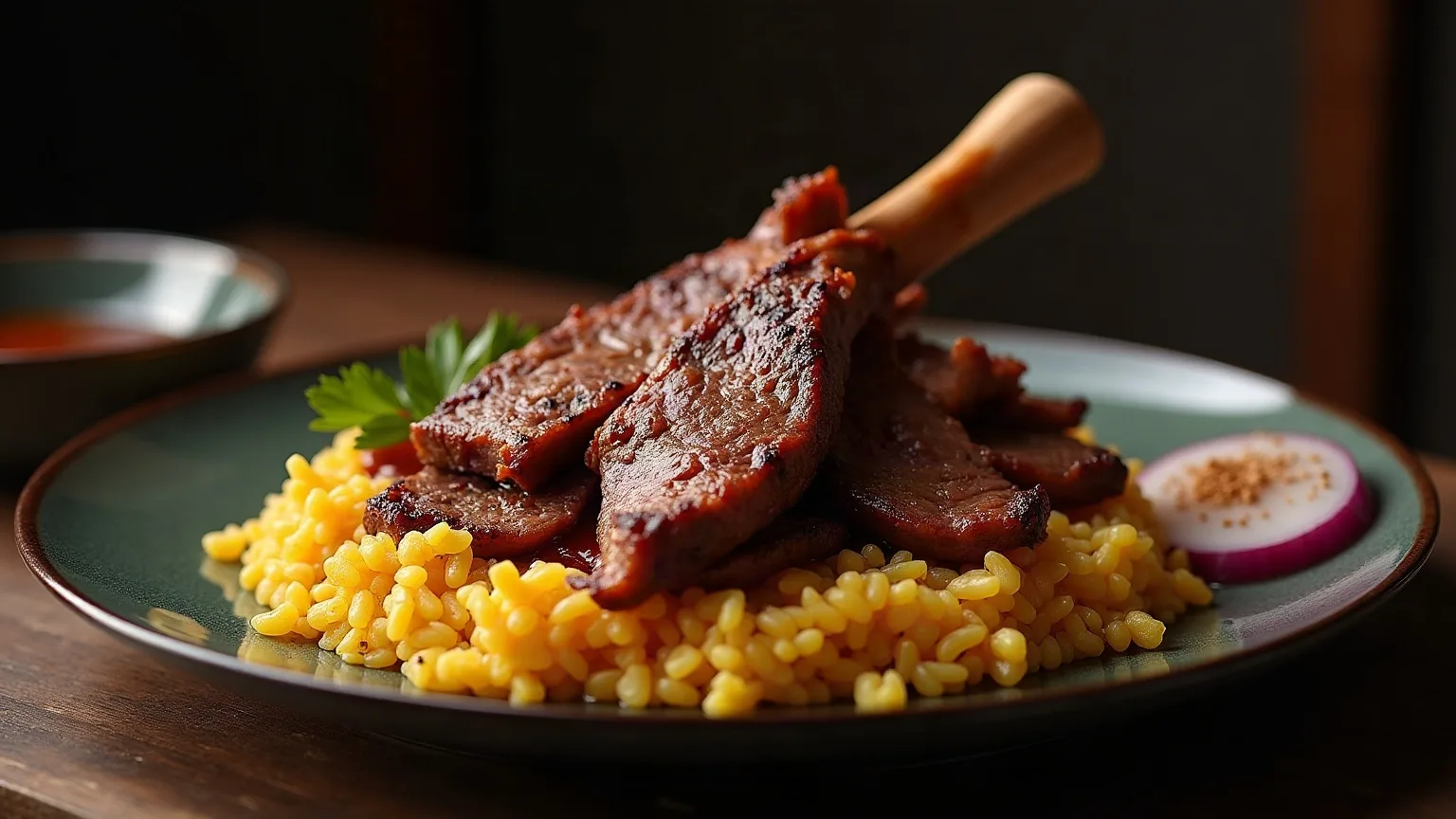
Oven lamb tandır
Four hours at 140 °C, then fifteen minutes at 240. Without the second number the meat is tender and pale.…
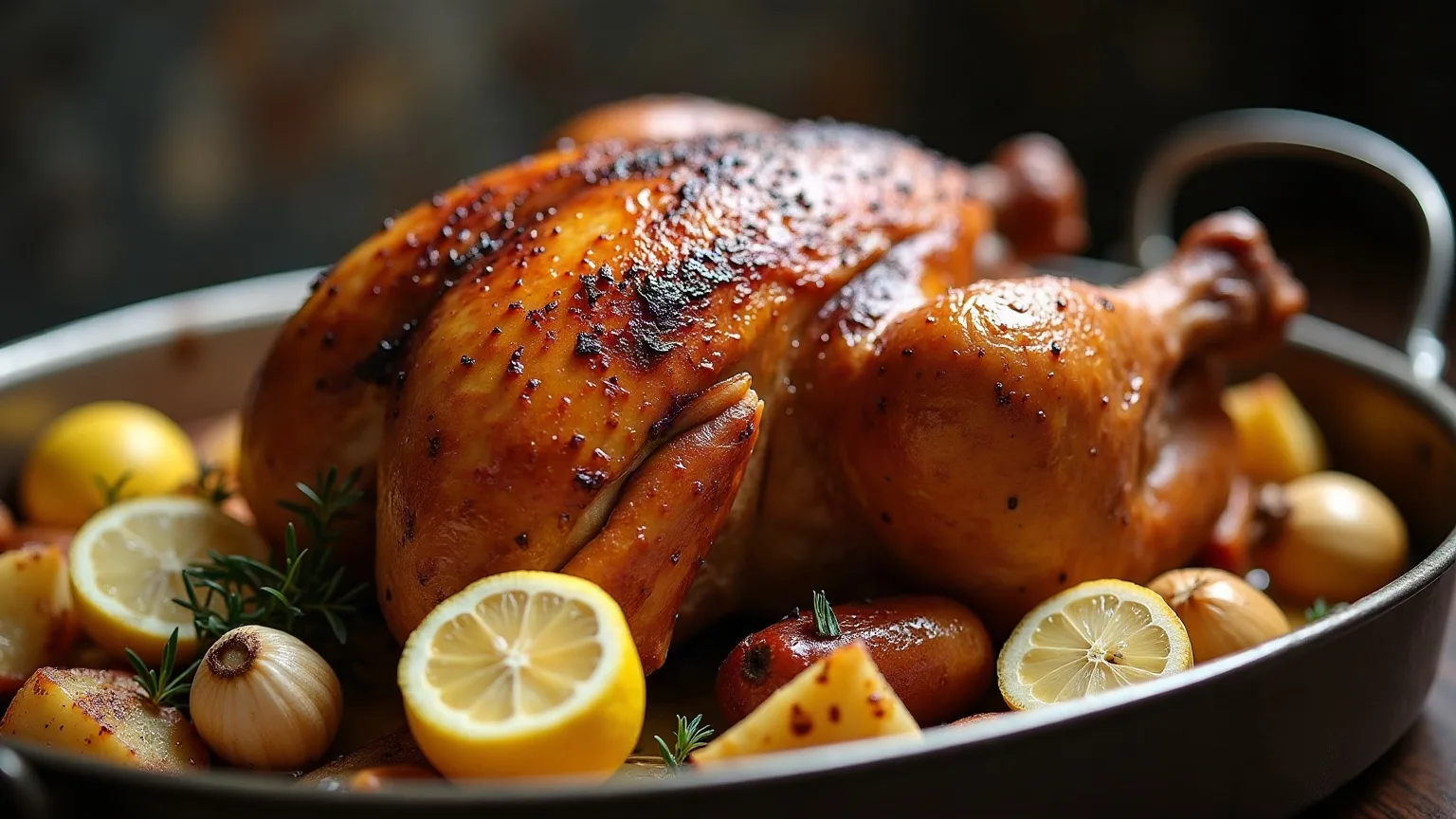
Whole roast chicken
The breast is ready at 65 °C and the leg at 75. Roasting a whole bird is entirely the business of hitting both at once.…
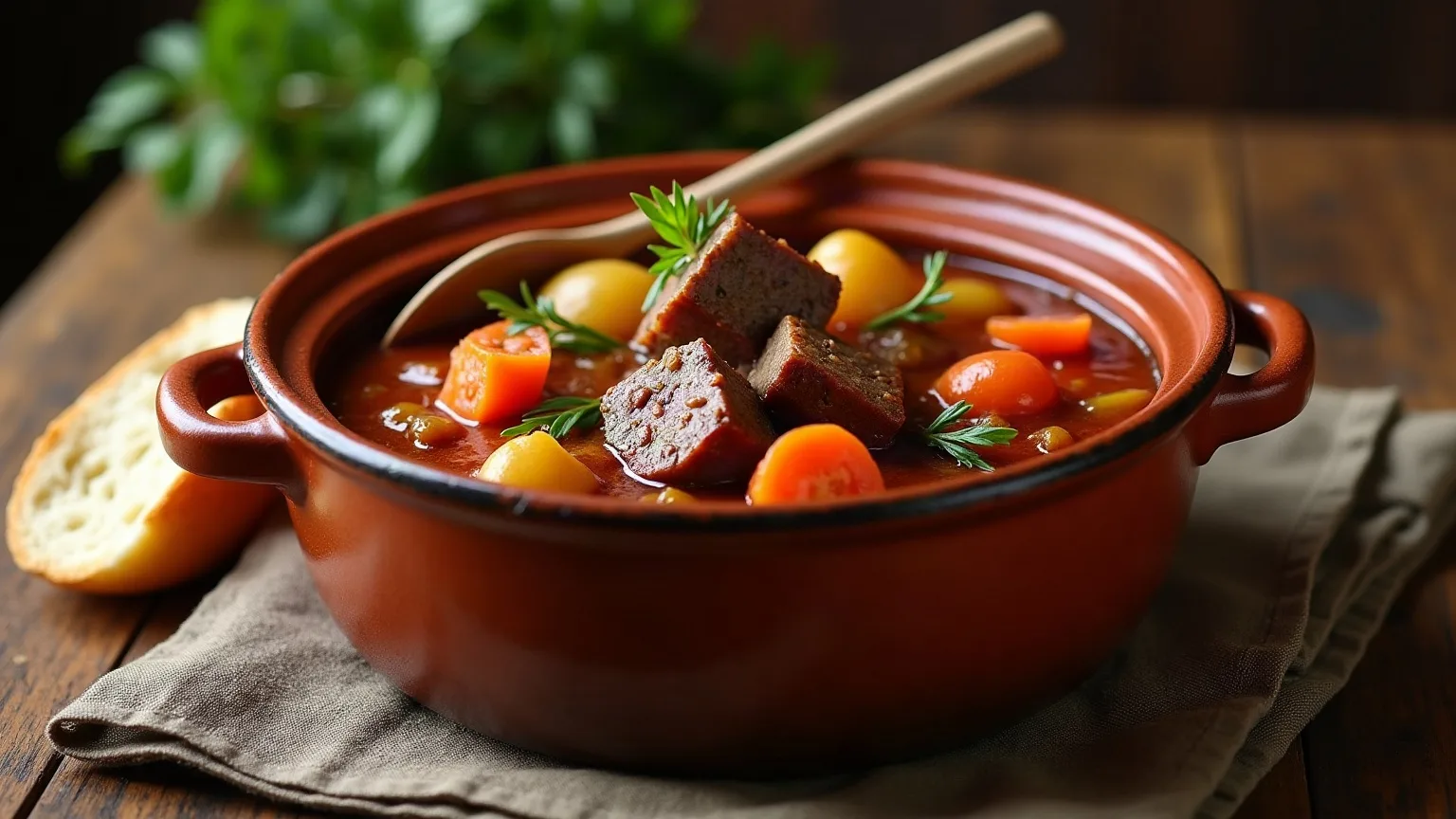
Lamb casserole
The meat has two hours and the vegetables have forty minutes. Put them in together and the vegetables vanish while the m…