
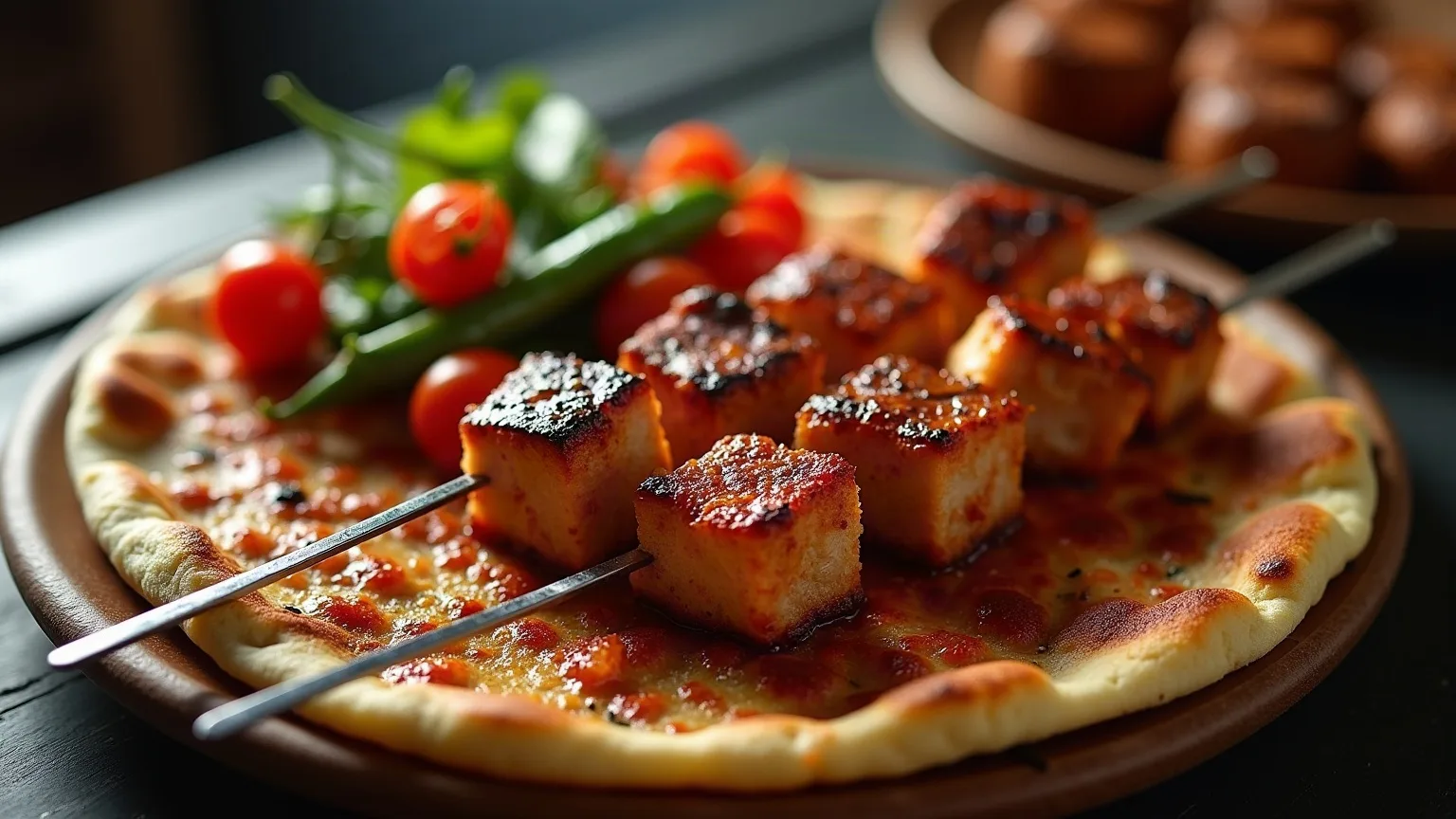
Chicken shish
A yoghurt marinade is a mechanism rather than a tradition: its calcium and lactic acid loosen the meat’s protein.
Chicken dishes · Turkish · For guests · Weekend batch · Post-workout
- Preparation
- 20 min
- Cooking
- 14 min
- Resting
- 240 min
- Difficulty
- Needs attention
- Cost
- Middling
- Season
- Summer
A yoghurt marinade is a technique shared by the Anatolian and Indian kitchens, and the difference from a lemon or vinegar one matters. Strong acid coagulates the protein on the surface and firms it; yoghurt’s lactic acid is far weaker, and its calcium penetrates and speeds the meat’s own enzymatic tenderising. So a yoghurt marinade really does soften, while a lemon one left too long does the opposite.
Method
- Cut the chicken into 3 cm cubes: smaller dries on the grill and larger stays raw inside.
- If the skewers are wooden, soak them thirty minutes.
You will need: Skewers or a grill rack · A covered bowl
-
Mix the yoghurt, paste, crushed garlic, oil, thyme, red pepper, black pepper and salt; turn the chicken in it and refrigerate for AT LEAST four hours.
Look for The marinade should coat the chicken completely with no loose liquid in the bowl.
Why The calcium in yoghurt penetrates and activates the meat’s own calpain enzymes, which slowly break down the muscle proteins, while the lactic acid lowers the pH slightly and raises the water-holding capacity. Under four hours the effect is not noticeable; over twelve the surface softens to a paste.If it went wrong
Past twelve hours do not wash the chicken: scrape the excess off and cut the grilling by two minutes, because a softened surface burns faster.
Starch still asleep The granules are just floating there doing nothing. No body arrives before 62 °C.
Salt · 0.91% Right in the window. Flavours sharpen, bitterness retreats, water is held.
-
Thread the chicken onto skewers with about 5 mm between the pieces.
Look for The pieces should turn freely on the skewer.
Why Pieces packed against each other never see the grill where they touch and steam there instead; the gaps let every face meet the heat.Starch still asleep The granules are just floating there doing nothing. No body arrives before 62 °C.
Salt · 0.91% Right in the window. Flavours sharpen, bitterness retreats, water is held.
-
Grill over embers or a very hot rack, three or four minutes a side, fourteen minutes in all.
Look for Charred in patches outside, no pink at all inside, and the juice running clear.
Why Thigh has to pass 75 °C: unlike breast it contains collagen, and until that dissolves the texture stays rubbery. Because it does not dry until 90, thigh is far more forgiving on a grill.If it went wrong
If the outside burned while the inside is raw, the embers are too close: move the skewers to the edge of the grill and give them five minutes of indirect heat.
Starch gelatinised The granules soaked up water, swelled and burst into a network. It has thickened, and it will firm further as it cools. no way back
Maillard is running Amino acids have met reducing sugars. The crust, the roasted flavour and that smell all come from here. no way back
Frying dynamics Surface water is flashing to steam and pushing outward — that is the shield keeping the oil out. no way back
Salt · 0.91% Right in the window. Flavours sharpen, bitterness retreats, water is held.
This recipe was run through the engine step by step — what goes in when, and at what temperature and for how long. The reactions above come from that run.
peak 250 °C · 262 minutes · engine 1.0.0 · confidence low
What can go wrong here
The meat came out dry and tough⌄
What happened
The meat passed 70 °C. Past that point the muscle fibres contract and wring out their water, while collagen never gets the time to turn into gelatine. It loses moisture and never tenderises.
By the numbers
Beef medium at 57 °C, chicken at 74 °C. Rest it for 10 minutes off the heat; unrested meat leaves its juice on the plate.
Without a thermometer
The palm test: touch thumb to index finger and press the pad below your thumb — that firmness is rare. Middle finger is medium, ring finger is well done. Watch the juice too: pinkish and clear means you are there, running white means you went too far.
After the heat goes off
Off the skewer onto lavaş, with sumac onion, and charred peppers and tomatoes beside it.
Cooked, two days in the fridge; marinated raw chicken should not be kept more than twenty-four hours.
Eight minutes at 180 °C under foil. Thigh takes reheating far better than breast.
Two months RAW AND MARINATED: the marinade goes on working in the freezer and it goes straight to the grill after thawing. This is the most useful form of the recipe.
Leftover skewers get chopped into a wrap, a salad or over rice.
Thigh is ideal from twelve months: soft and it does not dry. For 12–36 months halve the cubes — 3 cm is a choking risk — and leave the red pepper out. To lower the salt, marinate a child’s share in a separate bowl with less of it.
- Chicken thigh (skin on) → Chicken Breast works, but the grilling drops to ten minutes and the margin for error narrows sharply.
- Yoghurt → Lemon A lemon marinade does NOT tenderise: it coagulates the surface protein and firms it. If you use one, keep it under thirty minutes.
- Grill & BBQ The method this recipe rests on
- Chicken thigh (skin on) What it does in heat, water and acid
- Yoghurt What it does in heat, water and acid
- Olive oil What it does in heat, water and acid
- Oven chicken wings Similar method, or something that sits on the same table
- Chicken sauté Similar method, or something that sits on the same table
- Saç kavurma Similar method, or something that sits on the same table
- For guests Other recipes that answer the same need
- Weekend batch Other recipes that answer the same need
- Post-workout Other recipes that answer the same need
What it tastes like
The axes that define this recipe: aroma 79, umami 50, bitter 28.
This profile is computed rather than measured: the role-weighted average of its ingredients’ taste vectors, shifted by what the cooking does. The thin line is the database average on that axis.
Closest in taste
Not hand-picked: ranked by distance across the eight taste axes.
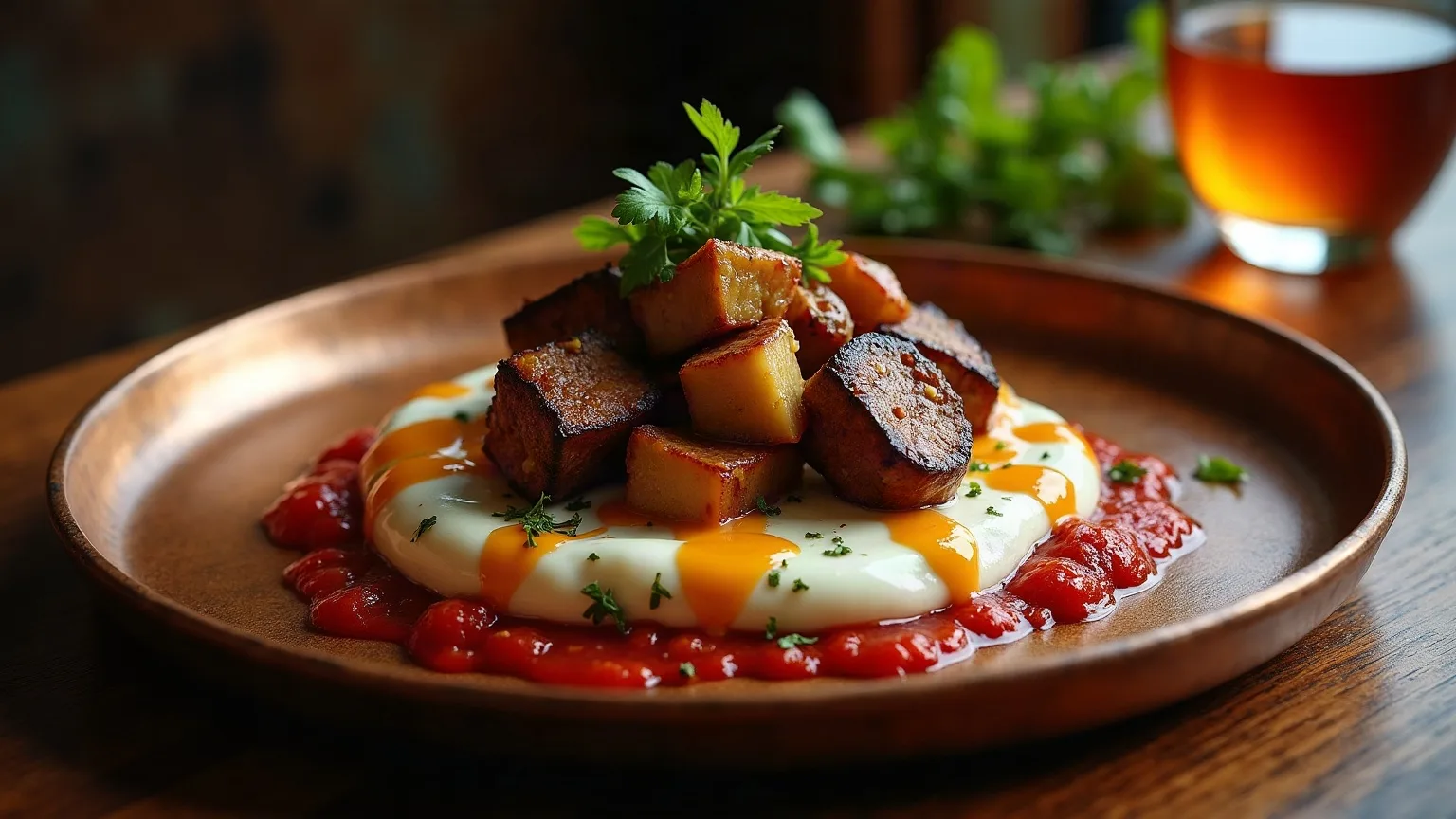
Ali Nazik
The Gaziantep classic: charred aubergine crushed with garlicky yoghurt under sautéed lamb. Everything rests on properly …
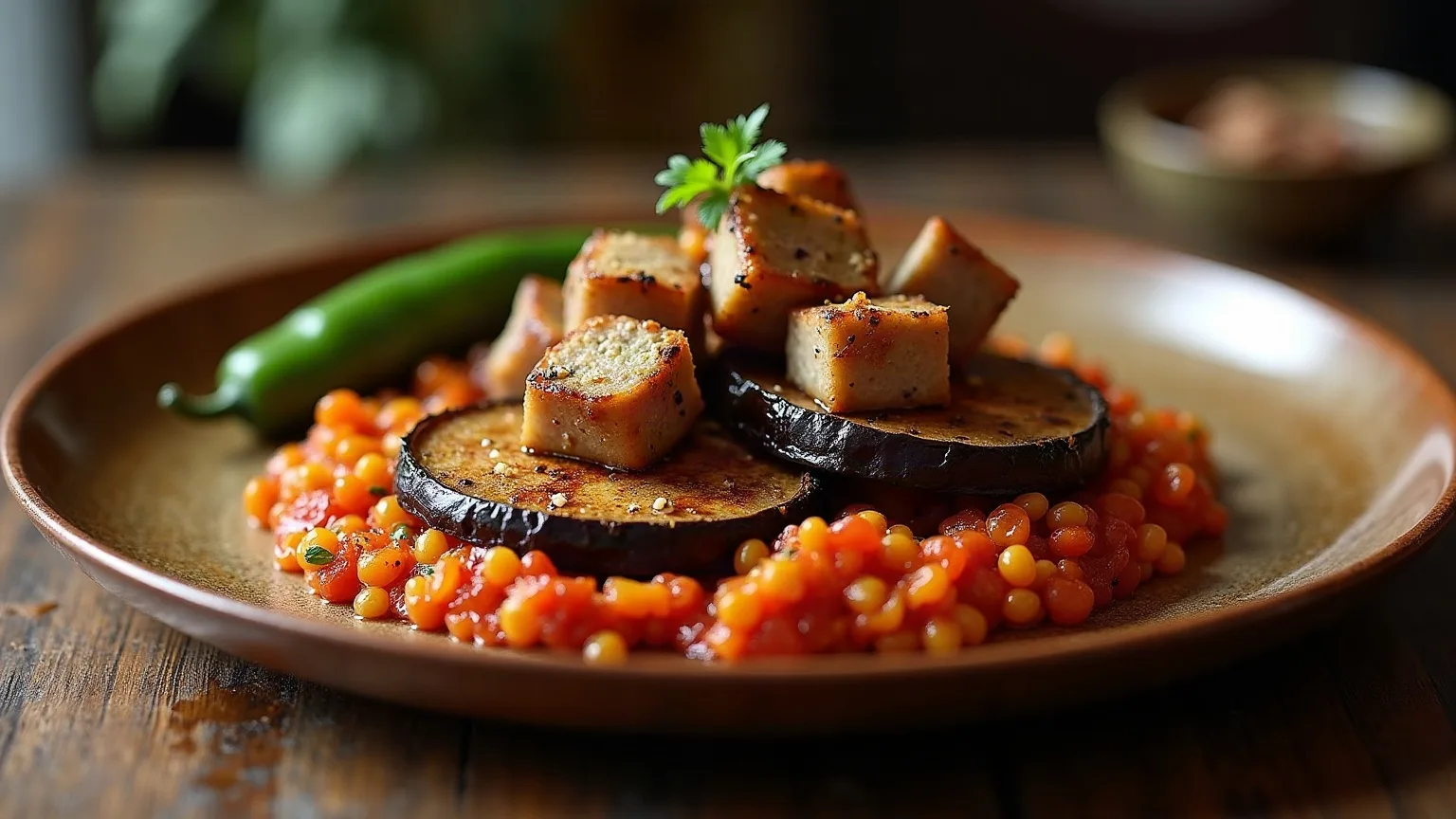
Ali Nazik
The Gaziantep classic: charred aubergine crushed with garlicky yoghurt under sautéed lamb. The aubergine must meet fire;…
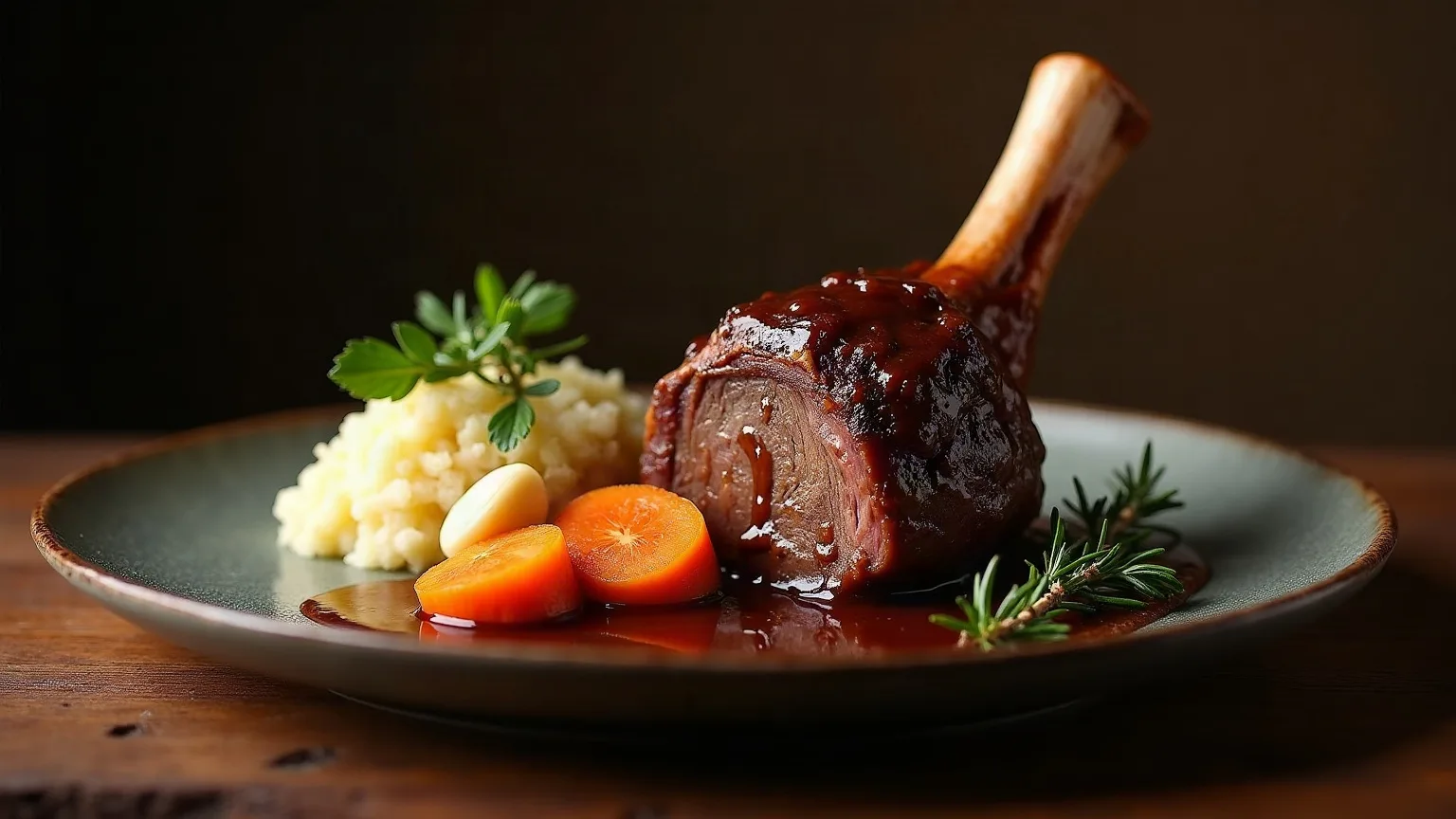
Slow-roast lamb shank
Three hours at 150 °C. There is no way to shorten it: collagen becomes gelatin with time rather than with temperature.…
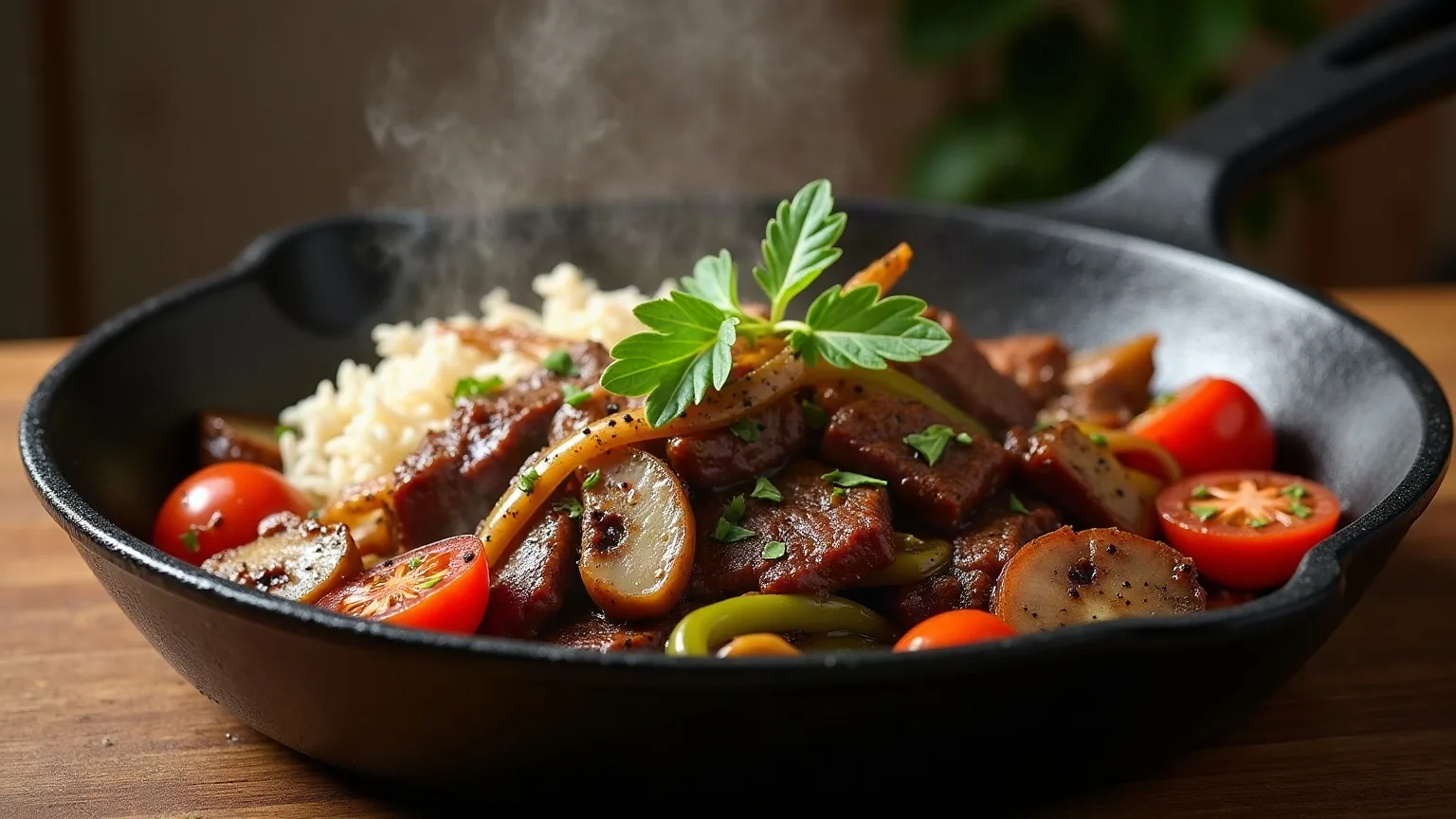
Beef sauté
A meat dish finished in fifteen minutes, on one condition: the pan is genuinely hot. In a warm pan this recipe does not …