
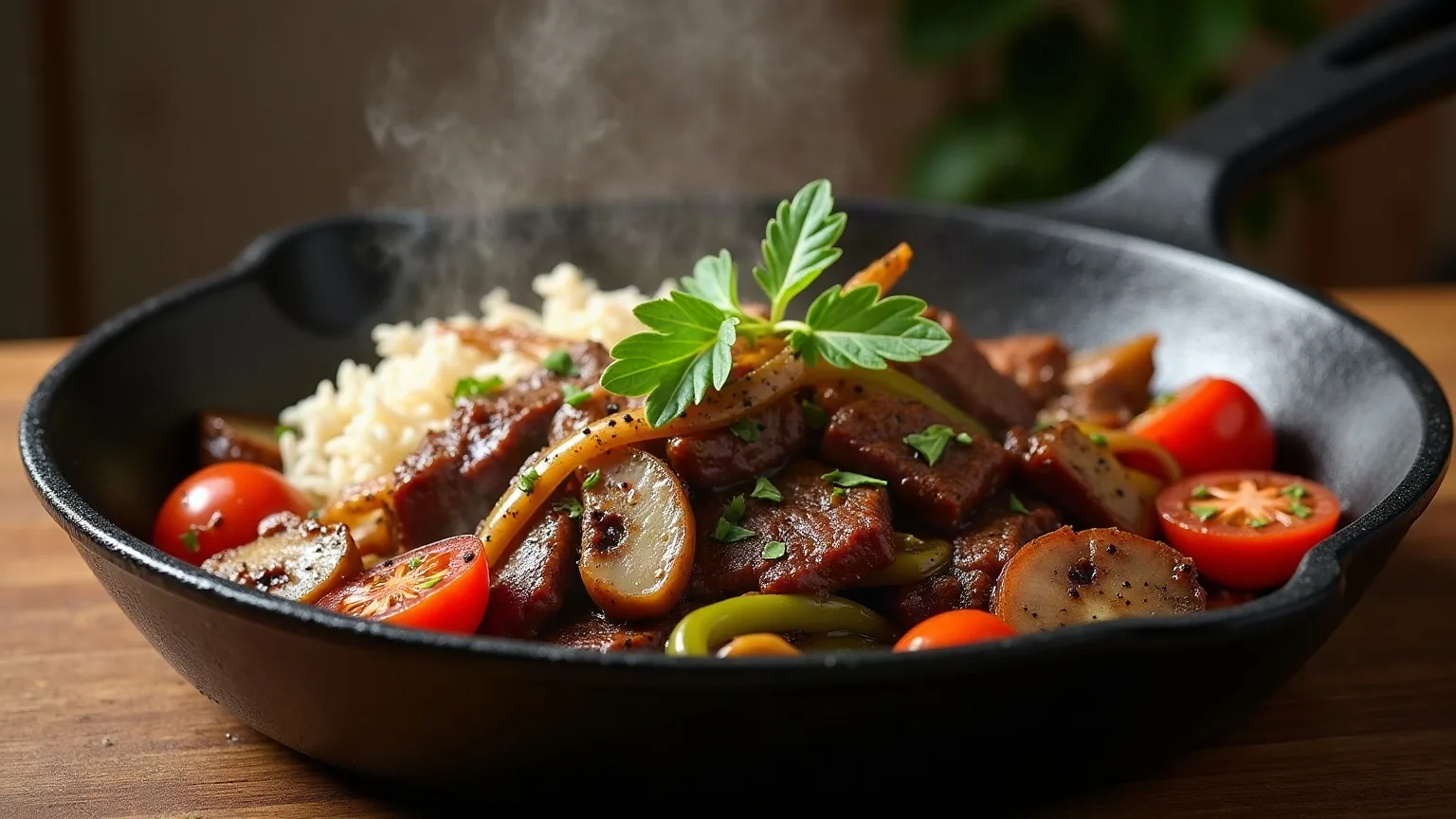
Beef sauté
A meat dish finished in fifteen minutes, on one condition: the pan is genuinely hot. In a warm pan this recipe does not work.
Meat dishes · Turkish · Under 30 minutes · One pot · Post-workout
- Preparation
- 15 min
- Cooking
- 15 min
- Difficulty
- Needs attention
- Cost
- Dear
- Season
- All year
Sauté comes from the French for "to jump", and the technique is named for the movement: the pieces keep moving so every face meets hot metal. In Turkish cooking a sote is distinguished from a kavurma by the proportion of vegetables — in a kavurma the meat leads, in a sote the vegetables are at least its equal. The rule is the same in both: let the temperature fall and the technique changes.
Method
- Cut the meat into thin strips across the grain.
- Cut all the vegetables and line them up beside the pan: a sauté does not wait.
You will need: A wide pan
-
Heat the pan hard when empty, add the butter and sear the meat in two batches, two minutes each; take it out.
Look for Brown outside and still pink inside: it has five minutes more to come with the vegetables.
Why A thin strip cooks in two minutes; longer contracts the fibres and the strips toughen. Two batches keep the pan’s temperature up.If it went wrong
If it weeps, drive the water off and carry on searing. Do not pour it away: that liquid is the base of the sauce.
Maillard is running Amino acids have met reducing sugars. The crust, the roasted flavour and that smell all come from here. no way back
Frying dynamics Surface water is flashing to steam and pushing outward — that is the shield keeping the oil out. no way back
-
Brown the mushrooms in the same pan for five minutes, until they have released and reabsorbed their water.
Look for The sizzle should return and the mushrooms colour at the edges.
Why Mushrooms carry the most water in this pan; add the other vegetables before it has gone and the pan cools and everything stews.Maillard is running Amino acids have met reducing sugars. The crust, the roasted flavour and that smell all come from here. no way back
Frying dynamics Surface water is flashing to steam and pushing outward — that is the shield keeping the oil out. no way back
-
Add the onion, garlic and peppers for three minutes, then the tomato for two.
Look for The vegetables should stay firm and the pepper still snap.
Why Tomato last: its water locks the pan at 100 °C, and past that nothing browns.Starch gelatinised The granules soaked up water, swelled and burst into a network. It has thickened, and it will firm further as it cools. no way back
-
Return the meat, add the salt and pepper, turn it for a minute and take it off.
Look for A thin glossy sauce in the pan rather than a pool.
Why The meat comes back only to warm through; cooked a second time the strips toughen. The salt is last so it does not pull the vegetables’ water out early.Starch gelatinised The granules soaked up water, swelled and burst into a network. It has thickened, and it will firm further as it cools. no way back
Salt · 0.65% Right in the window. Flavours sharpen, bitterness retreats, water is held.
If you want a crust, do not stay under 140 °C. Food cooks at this heat but never colours.
This recipe was run through the engine step by step — what goes in when, and at what temperature and for how long. The reactions above come from that run.
peak 225 °C · 15 minutes · engine 1.0.0 · confidence low
What can go wrong here
The meat came out dry and tough⌄
What happened
The meat passed 70 °C. Past that point the muscle fibres contract and wring out their water, while collagen never gets the time to turn into gelatine. It loses moisture and never tenderises.
By the numbers
Beef medium at 57 °C, chicken at 74 °C. Rest it for 10 minutes off the heat; unrested meat leaves its juice on the plate.
Without a thermometer
The palm test: touch thumb to index finger and press the pad below your thumb — that firmness is rare. Middle finger is medium, ring finger is well done. Watch the juice too: pinkish and clear means you are there, running white means you went too far.
After the heat goes off
Hot, with rice or bread. A sauté does not wait and is eaten as it is plated.
Two days in the fridge, with the vegetables softening on the second.
Two minutes in a hot pan: longer toughens the meat.
Not for the freezer: thin strips lose water on thawing and turn rubbery.
The leftovers go into a pan with eggs, into bread, or over rice.
From twelve months cut the meat thin and leave the peppers out. For 12–36 months the strips must be very thin and crushed with a fork, and their share lifted before the salt. These textures do not suit a baby under one.
- Red meat → Chicken Chicken works; with breast, cut the searing to ninety seconds.
- White button mushroom → Courgette Courgette stands in but brings no umami; a teaspoon of soy sauce closes the gap.
- Deep frying The method this recipe rests on
- Red meat What it does in heat, water and acid
- Tomato What it does in heat, water and acid
- White button mushroom What it does in heat, water and acid
- Saç kavurma Similar method, or something that sits on the same table
- Albanian liver Similar method, or something that sits on the same table
- Taş kebabı Similar method, or something that sits on the same table
- Under 30 minutes Other recipes that answer the same need
- One pot Other recipes that answer the same need
- Post-workout Other recipes that answer the same need
What it tastes like
The axes that define this recipe: umami 53, aroma 68.
This profile is computed rather than measured: the role-weighted average of its ingredients’ taste vectors, shifted by what the cooking does. The thin line is the database average on that axis.
Closest in taste
Not hand-picked: ranked by distance across the eight taste axes.
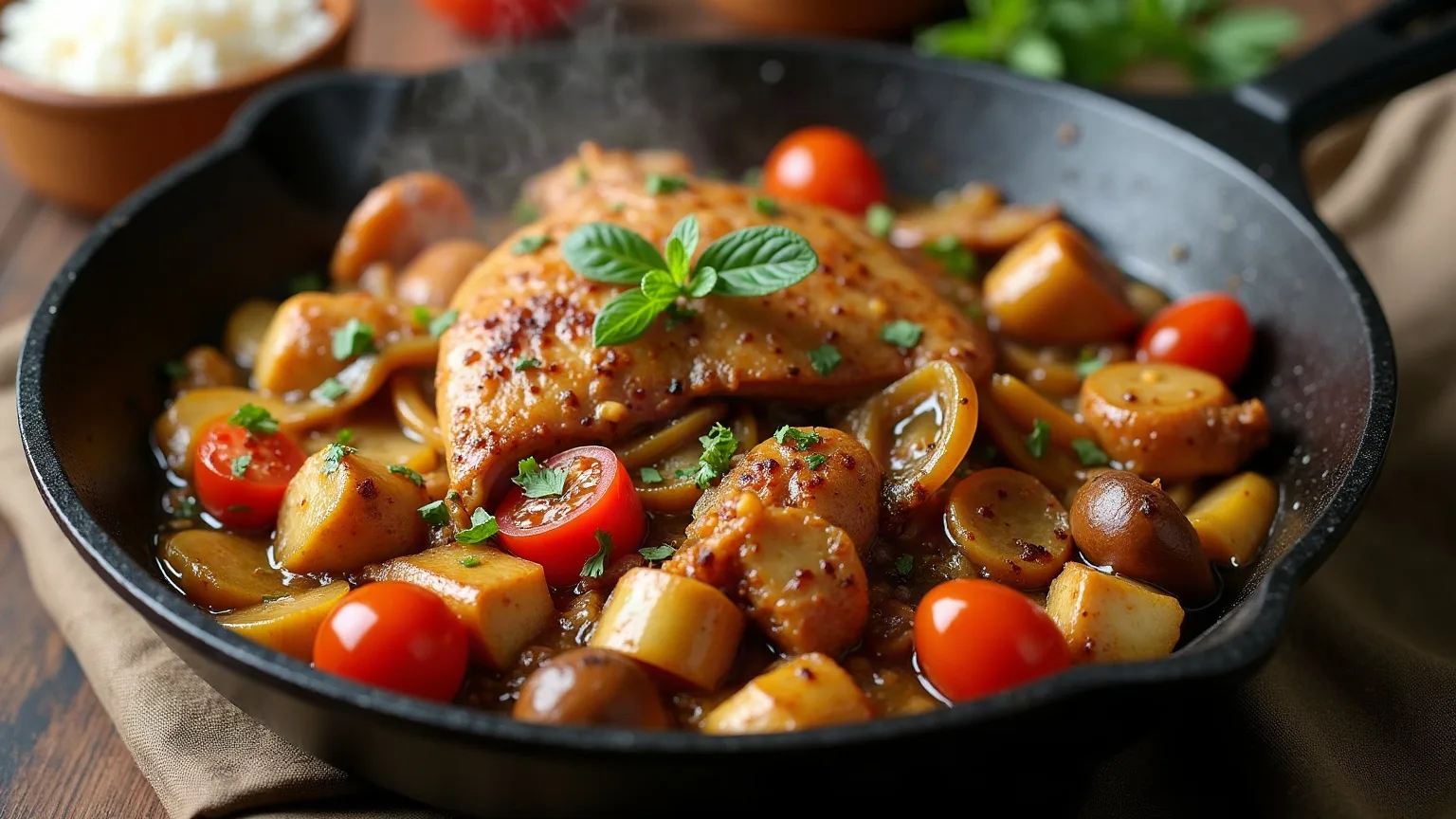
Chicken sauté
Chicken breast is done at 65 °C and dry at 72. Those seven degrees are the whole recipe.…
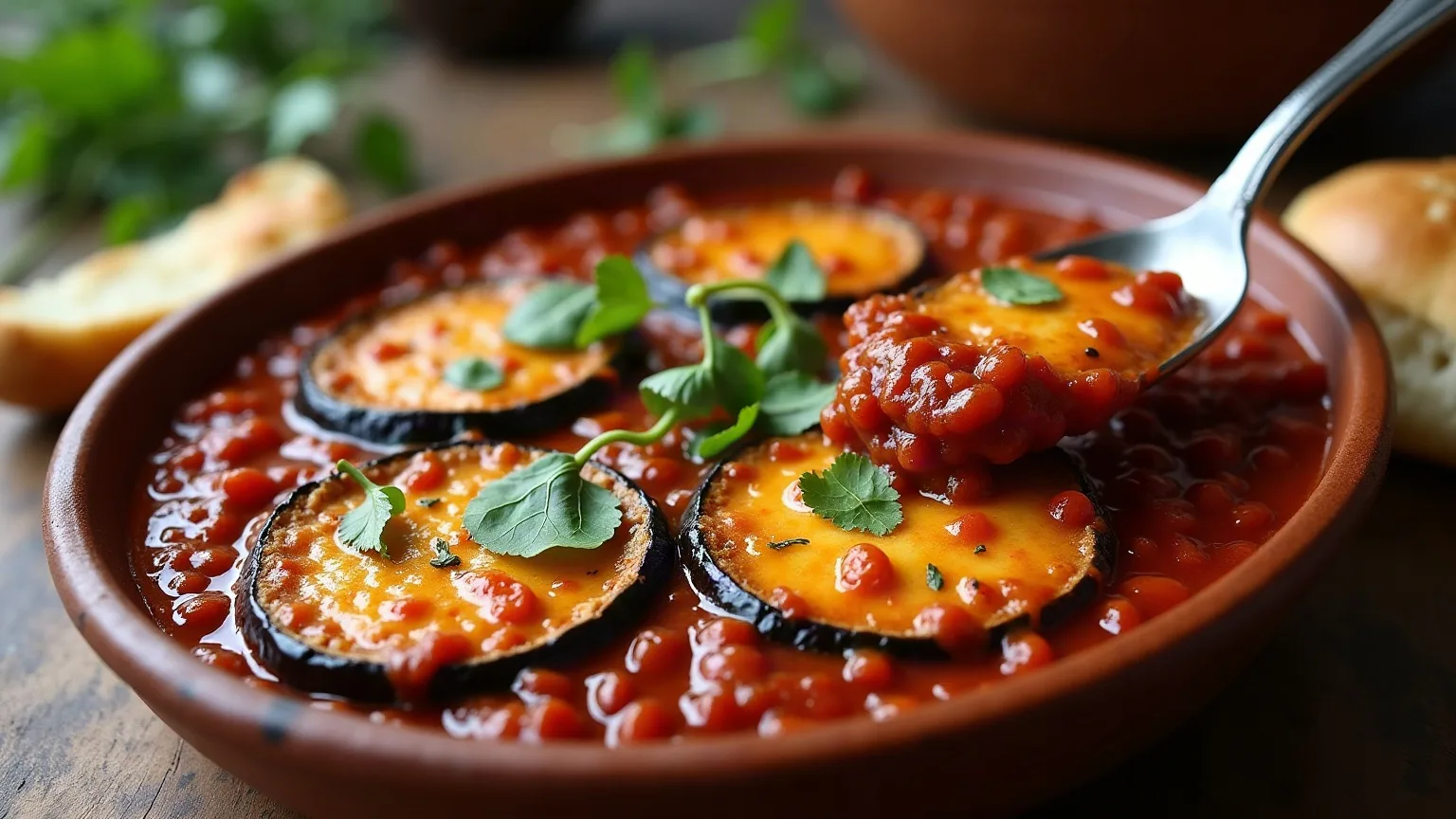
Musakka
Turkish musakka has no béchamel: aubergine, mince and tomato in one pan. Confusing it with the Greek version is a common…
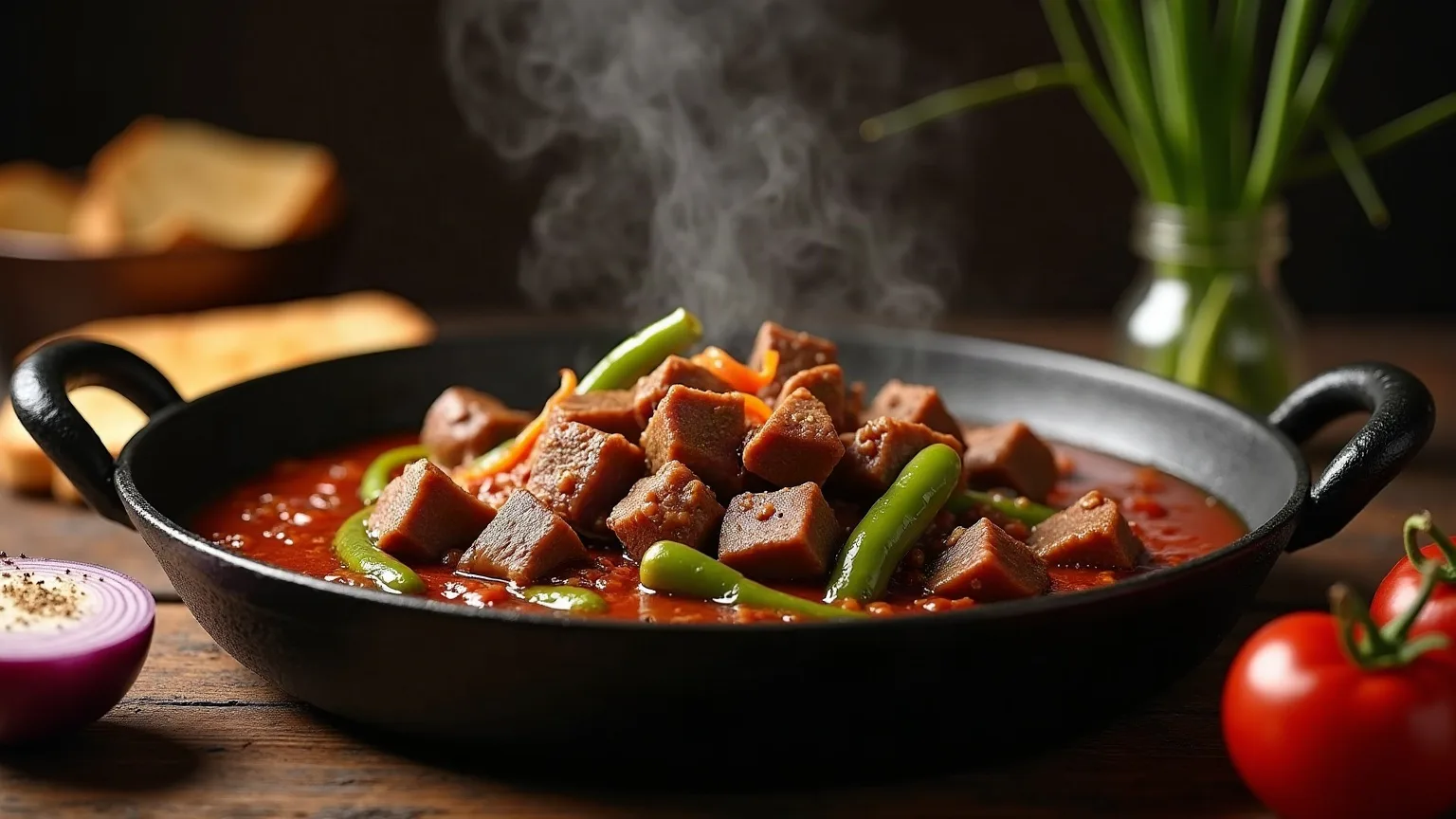
Saç kavurma
High heat, small pieces, an uncrowded pan. Miss any one of the three and it is not a sauté but a stew.…
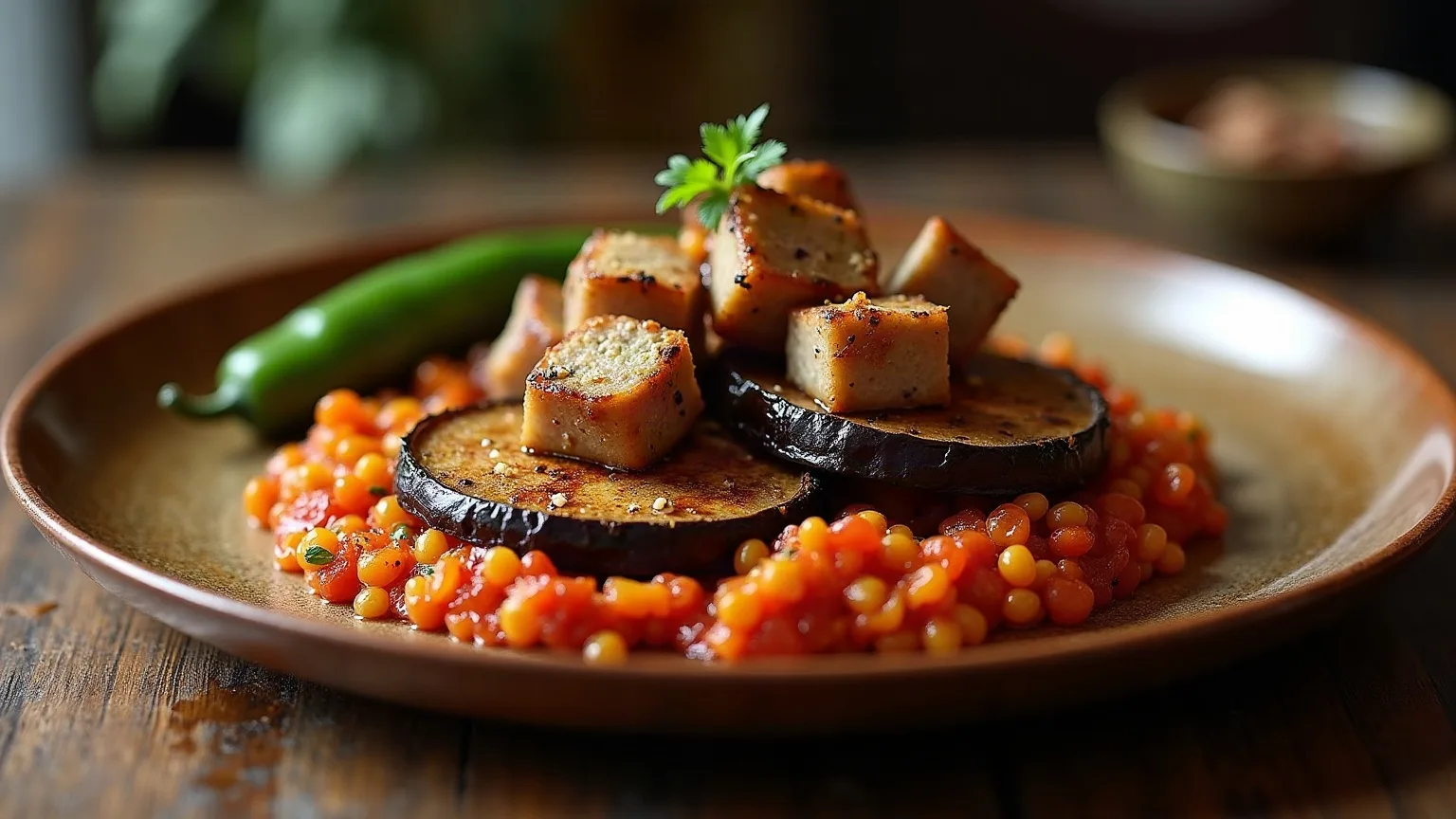
Ali Nazik
The Gaziantep classic: charred aubergine crushed with garlicky yoghurt under sautéed lamb. The aubergine must meet fire;…