
Musakka
Turkish musakka has no béchamel: aubergine, mince and tomato in one pan. Confusing it with the Greek version is a common mistake.
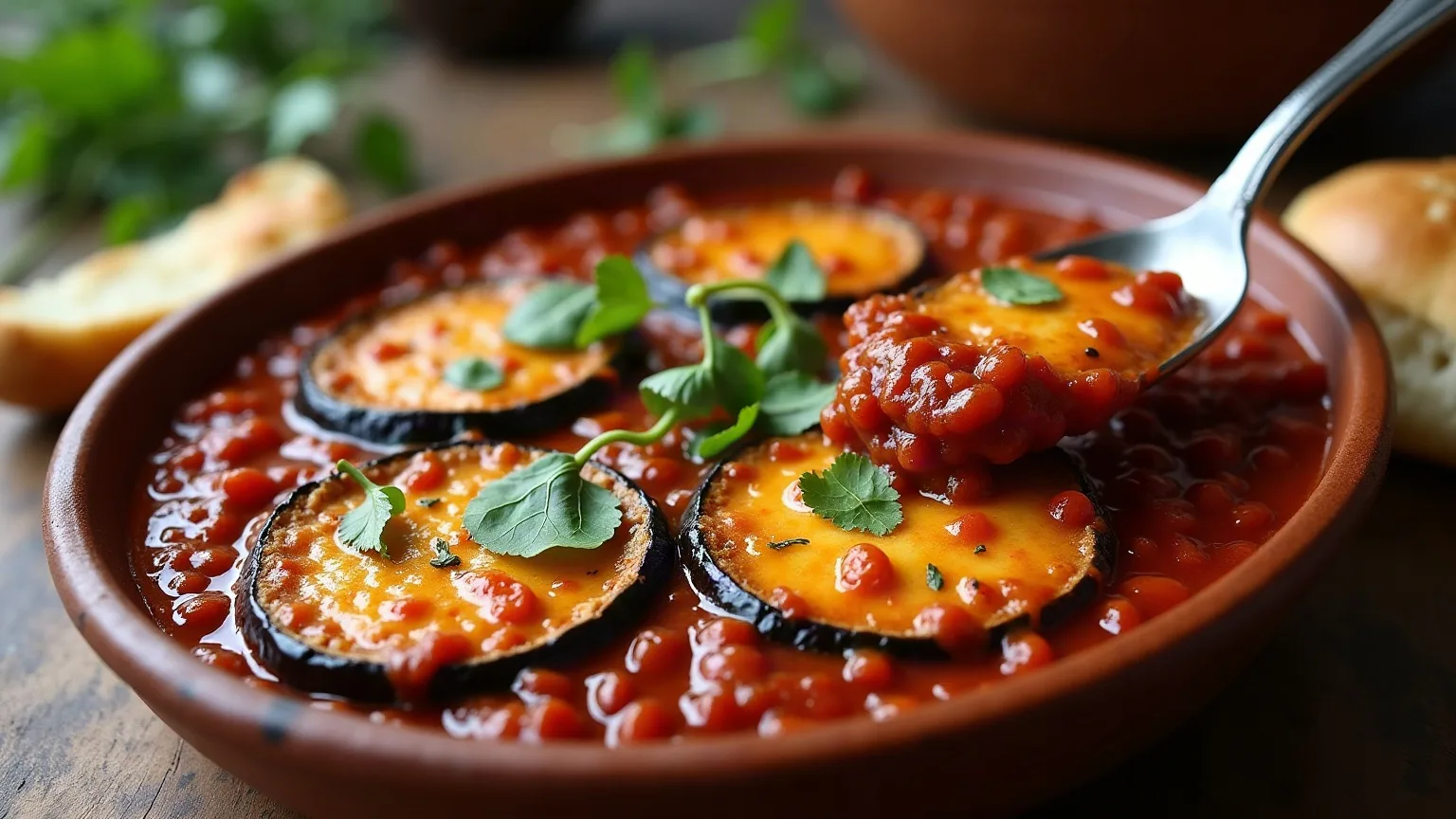
Meat dishes · Turkish · One pot · Seasonal · Freezes well
- Preparation
- 25 min
- Cooking
- 35 min
- Resting
- 10 min
- Difficulty
- Needs attention
- Cost
- Middling
- Season
- Summer, Autumn
Musakka comes from the Arabic musaqqa‘, "chilled", and in the Ottoman kitchen it was eaten hot or warm. The layered, béchamel-topped Greek version was added in the 1920s by Nikolaos Tselementes under French influence — that is, some four centuries after the Turkish dish. This recipe is the older one.
Method
- Dice the aubergines, soak them twenty minutes in salted water and dry them.
- Take the mince out of the fridge: at room temperature it browns more evenly.
You will need: A wide pan · A pan with a lid
-
Fry the aubergine cubes six minutes until the edges colour, and set them aside.
Look for Golden at the edges and soft in the middle.
Why The aubergine is fried on its own because, cooked with the mince, it stews in the mince’s water and disintegrates. Fried separately it keeps its shape when it comes back.Frying dynamics Surface water is flashing to steam and pushing outward — that is the shield keeping the oil out. no way back
-
Soften the onion in the same pan for six minutes, add the mince and cook eight minutes until its water has gone.
Look for The pan should dry out and the grains of mince separate.
Why If the paste goes in before the mince’s water has gone it dissolves in that water instead of frying, and the dish stays sour.If it went wrong
If the mince has clumped, press it with the back of the spoon and raise the heat: the clumps open as the water goes.
Starch gelatinised The granules soaked up water, swelled and burst into a network. It has thickened, and it will firm further as it cools. no way back
Frying dynamics Surface water is flashing to steam and pushing outward — that is the shield keeping the oil out. no way back
-
Add the garlic and paste for a minute, then the tomato, peppers, salt and hot water; cover and cook twelve minutes.
Look for The sauce should thicken enough to leave a trail on the spoon.
Why Under a lid the tomato takes its own water back and the peppers cook before the sauce reduces; uncovered, the sauce disappears in twelve minutes.Starch gelatinised The granules soaked up water, swelled and burst into a network. It has thickened, and it will firm further as it cools. no way back
Salt · 0.36% Low. Everything reads flat and nothing steps forward.
-
Return the aubergine, cover and cook eight minutes more. Take it off and rest it ten minutes.
Look for The cubes should keep their shape and be coated in sauce.
Why The aubergine returns last so it takes up sauce without collapsing. As it rests the sauce is drawn into it — musakka is at its best warm rather than scalding.Starch gelatinised The granules soaked up water, swelled and burst into a network. It has thickened, and it will firm further as it cools. no way back
Salt · 0.36% Low. Everything reads flat and nothing steps forward.
This recipe was run through the engine step by step — what goes in when, and at what temperature and for how long. The reactions above come from that run.
peak 180 °C · 51 minutes · engine 1.0.0 · confidence low
What can go wrong here
The aubergine drank all the oil⌄
What happened
Aubergine flesh is a sponge with air trapped between the cells. Hot oil fills those pockets within seconds — it is not absorbed so much as inhaled.
By the numbers
Salt it for 20 minutes and squeeze out the water. Or skip oil altogether: at 200 °C in the oven the cells collapse before they can take any on.
Without a thermometer
After salting, press it between two plates with a weight on top to draw the water faster. In a hurry, soak it in milk for 10 minutes: the milk fills the pores so there is no room for oil. Pat it properly dry before frying — wet aubergine spits and drinks even more.
After the heat goes off
Warm, with rice or bread, and a spoon of yoghurt on top to finish it.
Three days in the fridge, and better on the second.
Six minutes in a pan on a low flame with a little water.
Two months. The aubergine loosens but in the sauce it does not matter.
The leftovers work as a pasta sauce, or mixed with egg and baked as a sort of savoury cake.
Suitable from twelve months. For 12–36 months take the peppers out, mash the aubergine and lift their share before the salt. For a baby under one, take a spoon of the aubergine and tomato before the salt and the paste.
- Aubergine → Courgette Courgette works and needs no soak, because it does not drink oil. The cooking is four minutes shorter.
- Deep frying The method this recipe rests on
- Aubergine What it does in heat, water and acid
- Beef mince (15% fat) What it does in heat, water and acid
- Tomato What it does in heat, water and acid
- Karnıyarık Similar method, or something that sits on the same table
- Ali Nazik Similar method, or something that sits on the same table
- İzmir meatballs Similar method, or something that sits on the same table
- One pot Other recipes that answer the same need
- Seasonal Other recipes that answer the same need
- Freezes well Other recipes that answer the same need
What it tastes like
The axes that define this recipe: umami 49, aroma 61, richness 37.
This profile is computed rather than measured: the role-weighted average of its ingredients’ taste vectors, shifted by what the cooking does. The thin line is the database average on that axis.
Closest in taste
Not hand-picked: ranked by distance across the eight taste axes.
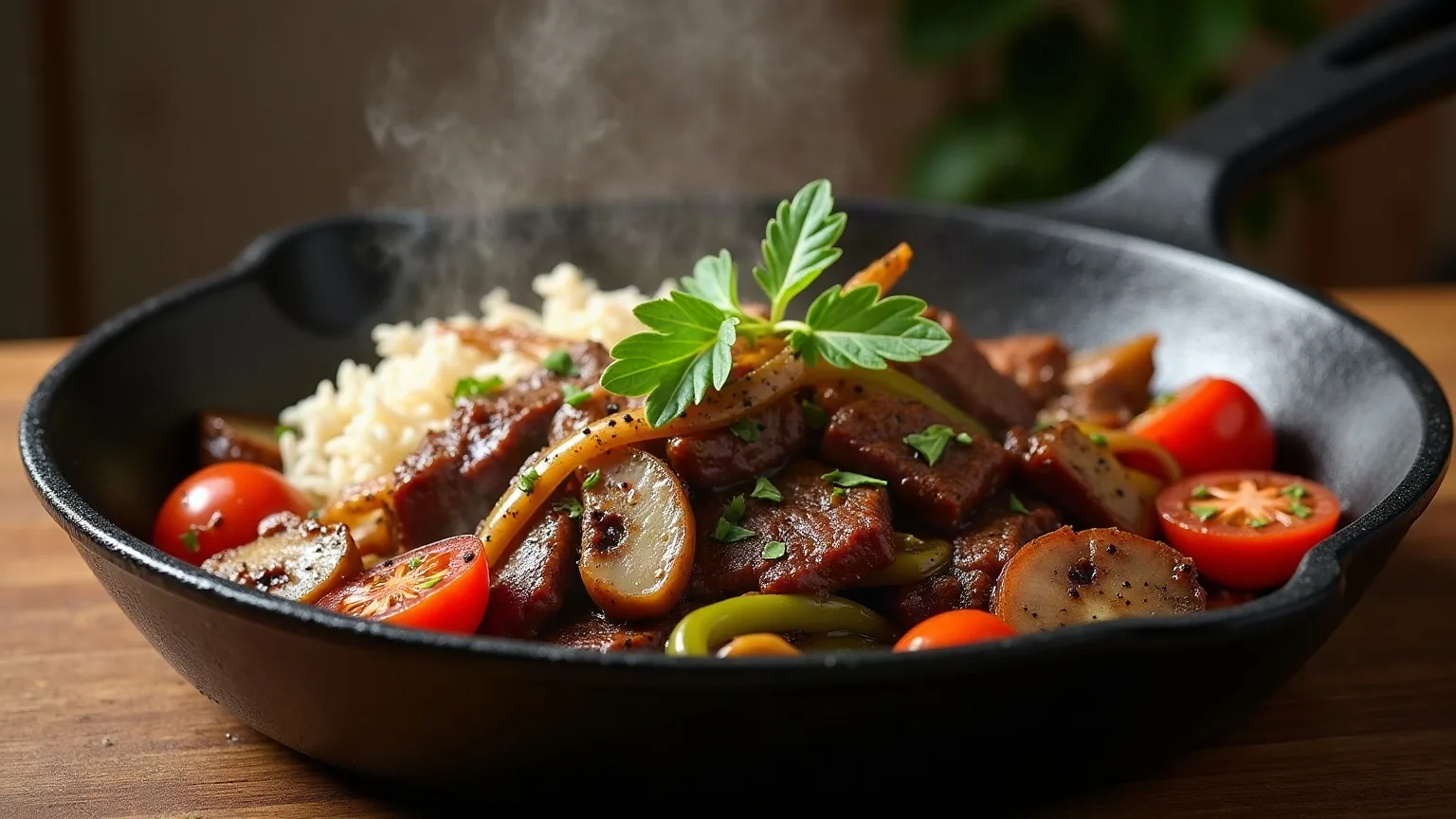
Beef sauté
A meat dish finished in fifteen minutes, on one condition: the pan is genuinely hot. In a warm pan this recipe does not …
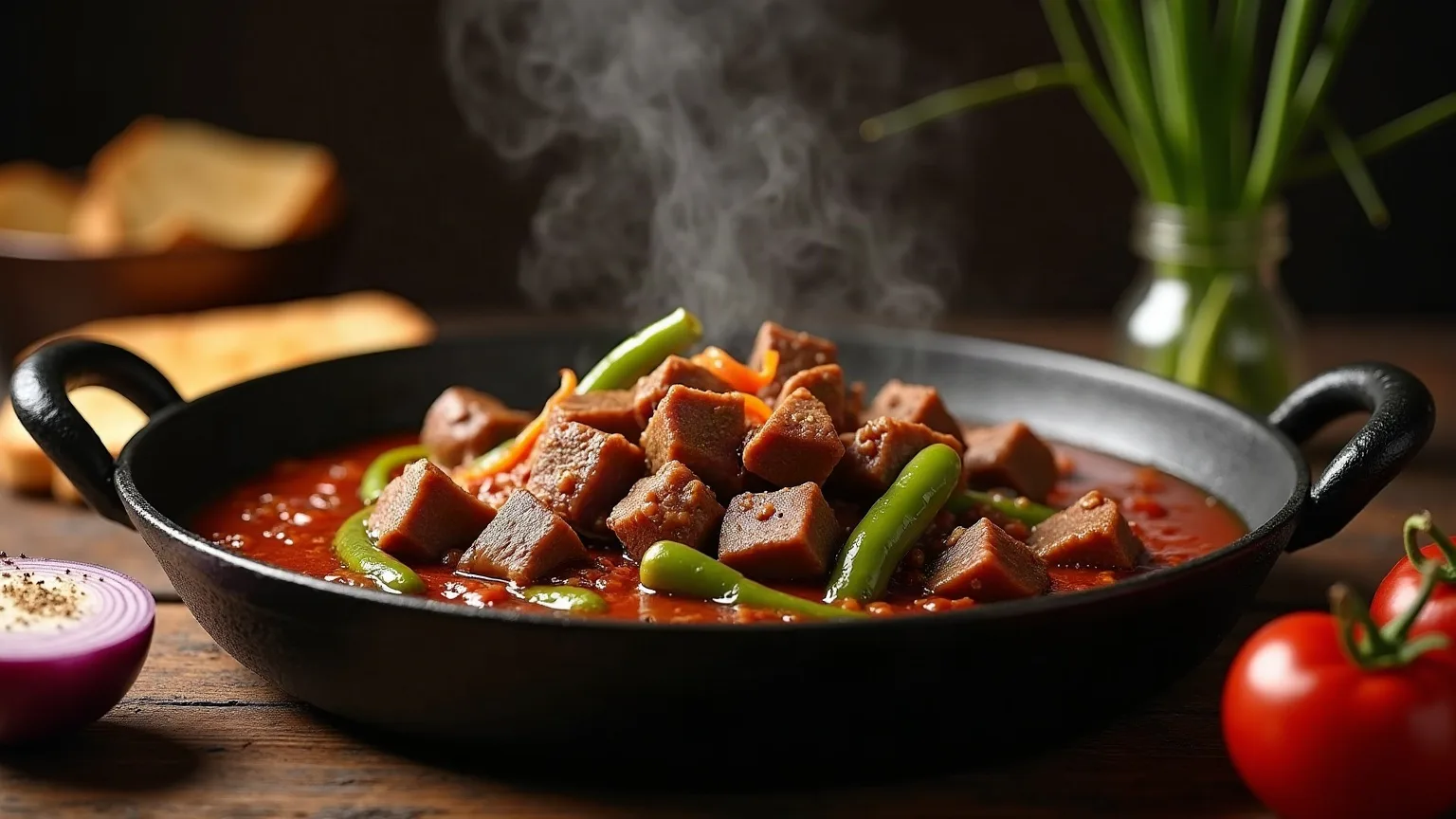
Saç kavurma
High heat, small pieces, an uncrowded pan. Miss any one of the three and it is not a sauté but a stew.…
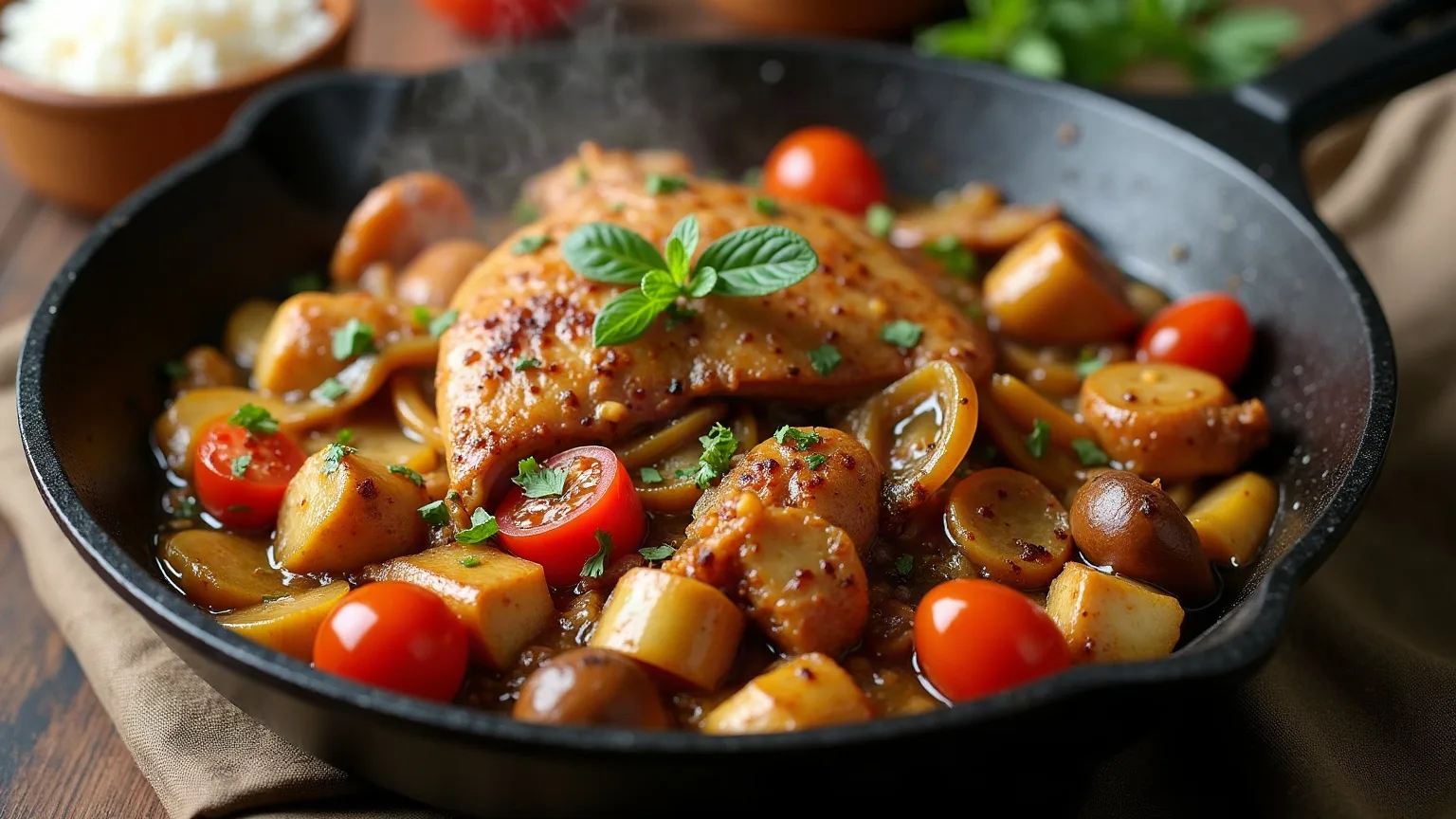
Chicken sauté
Chicken breast is done at 65 °C and dry at 72. Those seven degrees are the whole recipe.…
Menemen
Pepper, tomato and egg. Know the order and the heat and it takes fifteen minutes; miss them and you get a watery omelett…