
Turkish coffee
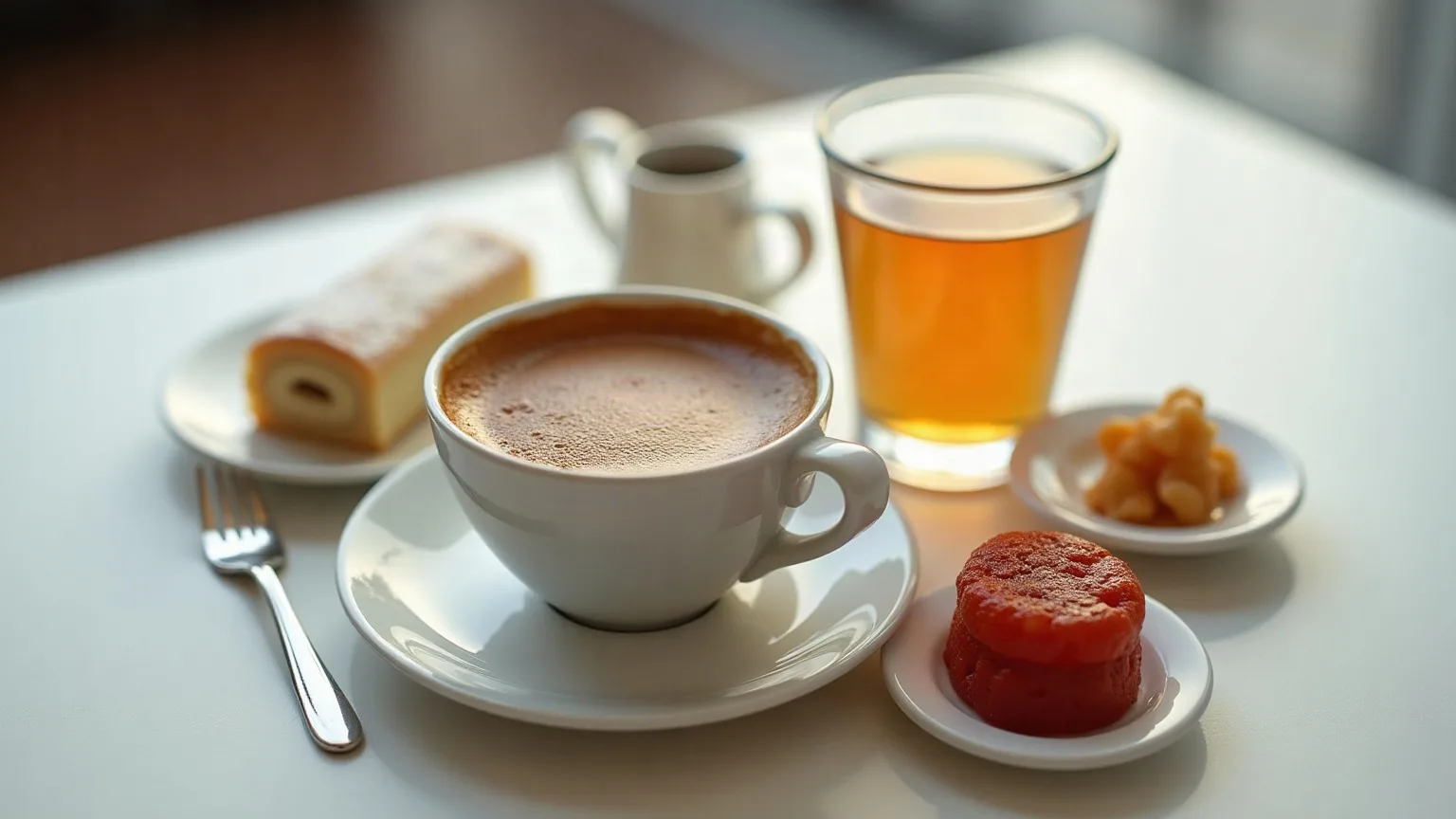
Cold water, coffee ground as fine as flour, and a low flame. The foam comes before the boil; let the coffee boil and the foam is gone.
Drinks · Turkish · Under 30 minutes · For guests · Vegan
- Preparation
- 1 min
- Cooking
- 4 min
- Resting
- 1 min
- Difficulty
- Needs attention
- Cost
- Cheap
- Season
- All year
Turkish coffee is a way of brewing: the coffee is not filtered but cooked with its grounds in the cezve, and the grounds settle in the cup. In 2013 it joined UNESCO’s list of the Intangible Cultural Heritage of Humanity. What makes it good is the foam: the coffee’s oils and proteins hold fine bubbles on the surface, and that structure collapses at the boil. The whole technique is taking the pot off before that line.
Method
- Measure the water with the cup itself: one cup (about 70 ml) of cold water per person.
You will need: A cezve for two cups · Coffee cups · A teaspoon
-
Stir the cold water, the coffee and the sugar if you are using it together in the cezve before it goes on the heat.
Look for No dry islands of powder should be left on the surface.
Why The coffee powder wets and disperses while the water is cold. Stirring once it is on the heat breaks up the foam starting to gather on top, so the stirring belongs here. -
Heat it over the lowest flame for three to four minutes, without stirring.
Look for A fine brown foam should gather on the surface, starting from the edges.
Why Slow heating gives the coffee time to build its foam: the dissolved oils and proteins rise as they warm and hold fine bubbles. Over a high flame the bottom boils before the top has built any foam at all. -
The moment the foam swells and starts to climb towards the rim — before it boils — take it off the heat; spoon the foam into the cups, warm the rest briefly once more and pour it slowly into the cups.
Look for The foam should rise slowly; big bubbles and a gurgle at the edges mean the boil has started.
Why The foam rises before the boil, with the coffee at about 70 °C. At the boil the structure holding the bubbles collapses, the coffee spills over and the cup gets a bitter coffee with no foam. Sharing out the foam first gives every cup an equal share.If it went wrong
If the coffee boiled over, the foam will not come back. Make it again: boiling the same grounds a second time only makes it more bitter.
-
Let the cup stand for a minute so the grounds settle, then serve it with a glass of water.
Look for The foam should cover the whole surface of the cup and still be there after a minute.
Why Turkish coffee is not filtered, so the grounds are in the cup; a minute’s wait takes them to the bottom and the first sip is not muddy.
This recipe was run through the engine step by step — what goes in when, and at what temperature and for how long. The reactions above come from that run.
peak 72 °C · 6 minutes · engine 1.0.0 · confidence low
After the heat goes off
With a glass of water and a piece of lokum or chocolate. Ask about sugar before you make it; it is not added afterwards.
It does not keep; it is drunk from its cup. Keep the ground coffee airtight, cool and dark.
It is not reheated: the foam of a cold coffee does not come back.
Brewed coffee is not frozen.
The grounds are thrown away. There is no leftover coffee, because it is measured by the cup.
Coffee contains caffeine. This page does not suggest an amount for children.
- Boiling & poaching The method this recipe rests on
- Coffee What it does in heat, water and acid
- Turkish tea Similar method, or something that sits on the same table
- Salep Similar method, or something that sits on the same table
- Under 30 minutes Other recipes that answer the same need
- For guests Other recipes that answer the same need
- Vegan Other recipes that answer the same need
What it tastes like
The axes that define this recipe: sweet 53.
This profile is computed rather than measured: the role-weighted average of its ingredients’ taste vectors, shifted by what the cooking does. The thin line is the database average on that axis.
Closest in taste
Not hand-picked: ranked by distance across the eight taste axes.
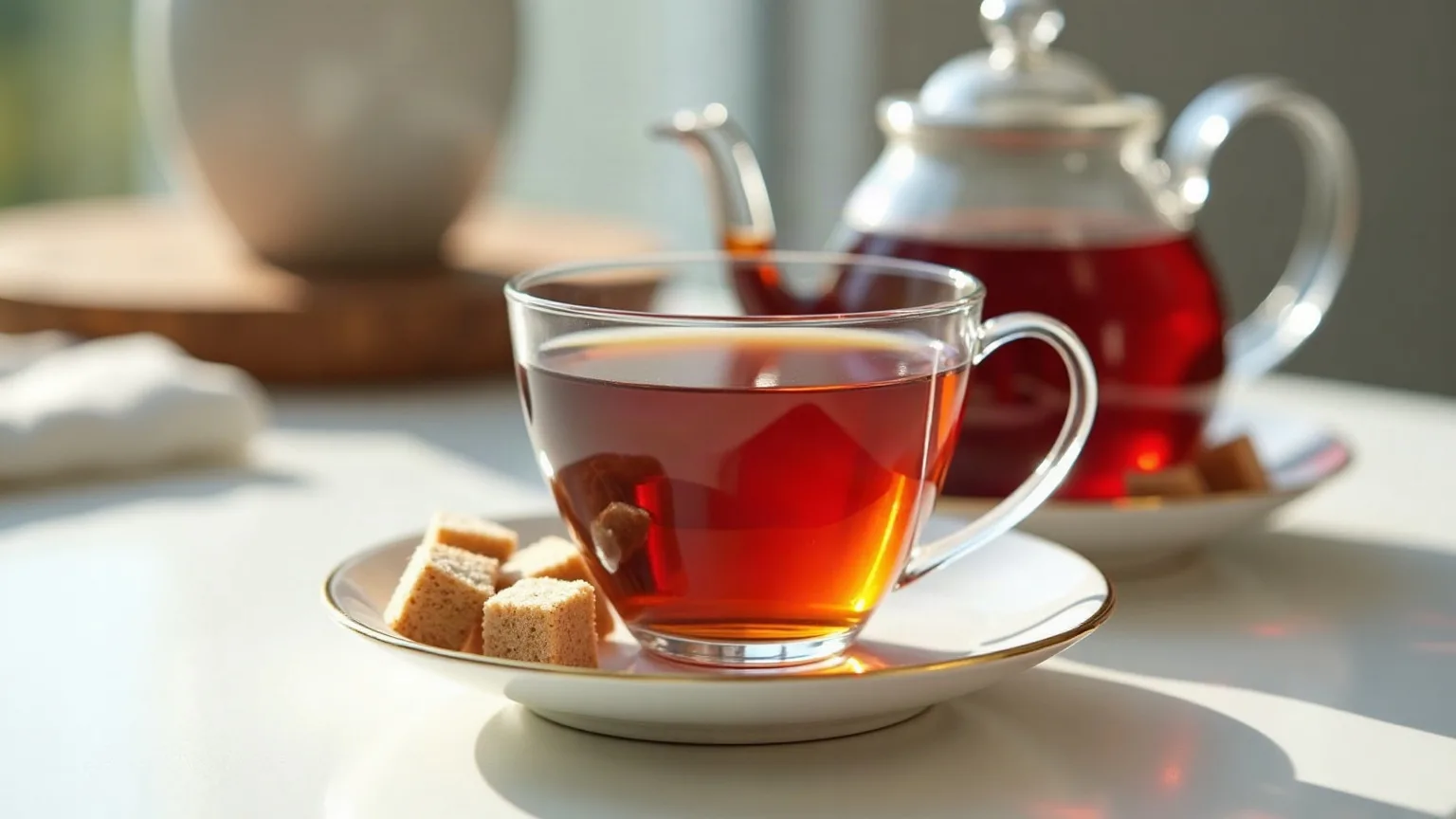
Turkish tea
Water boils in the lower kettle while the tea sits at 90–95 °C in the pot above for 10 to 15 minutes. The "rabbit’s bloo…
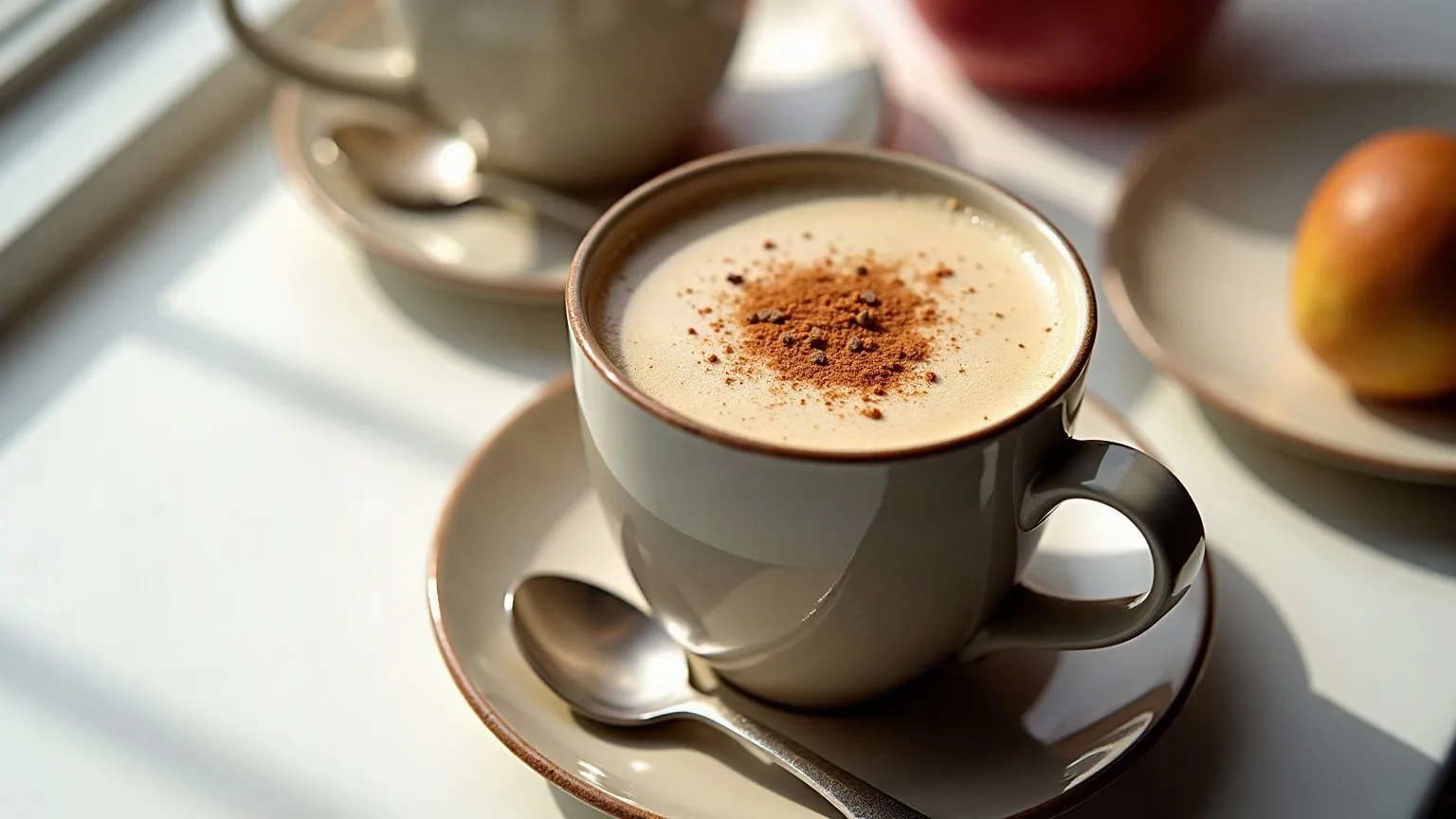
Salep
One tablespoon of salep thickens half a litre of milk, as long as the powder is mixed with the sugar before it meets hot…
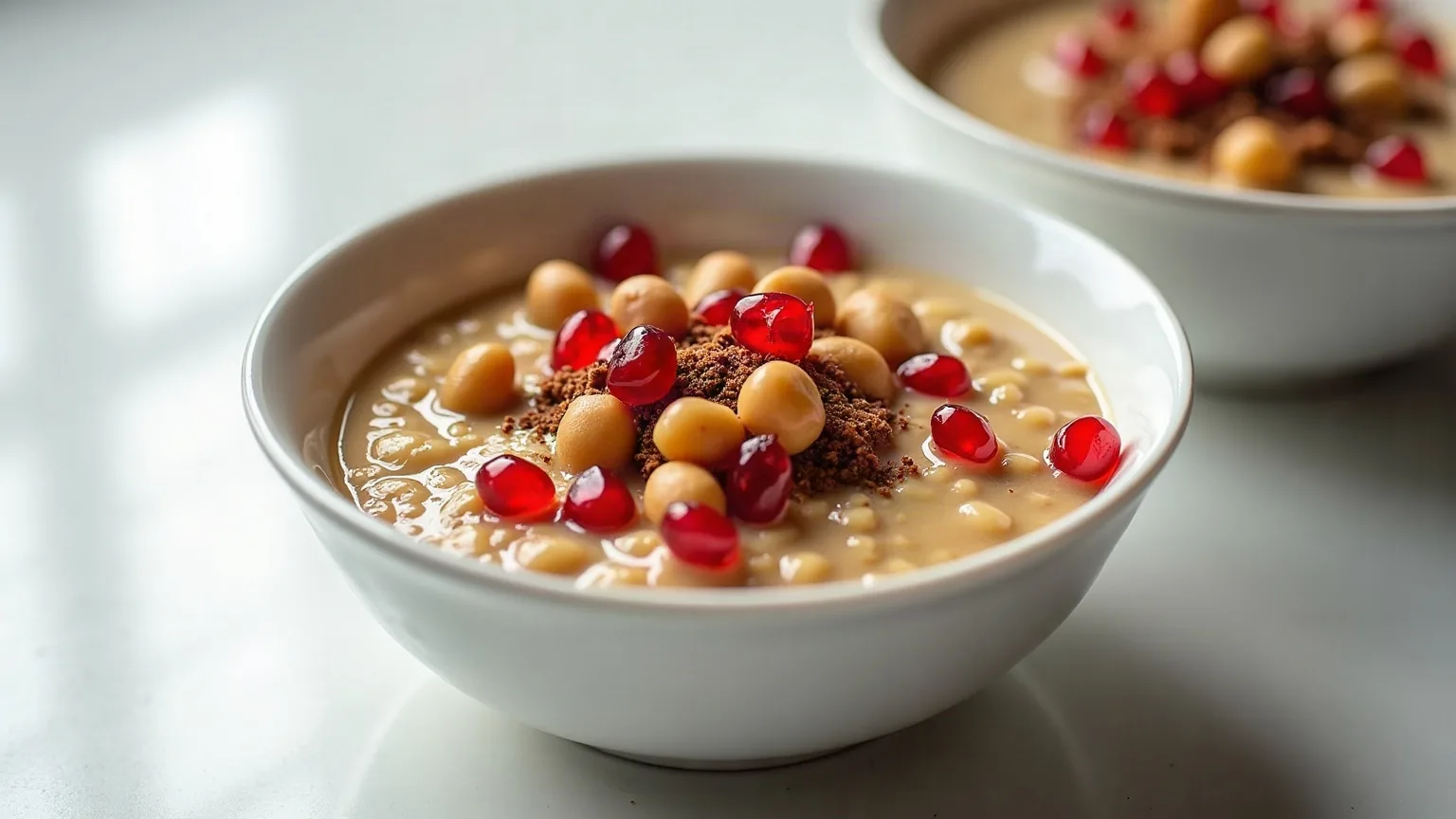
Aşure, Noah’s pudding
Wheat, chickpeas, beans and dried fruit in one pan. The sugar goes in only once the pulses are soft; added earlier, they…

Tomato soup
The taste of this soup is the taste of the tomato, which means a bad tomato cannot make a good one. In winter use paste …