
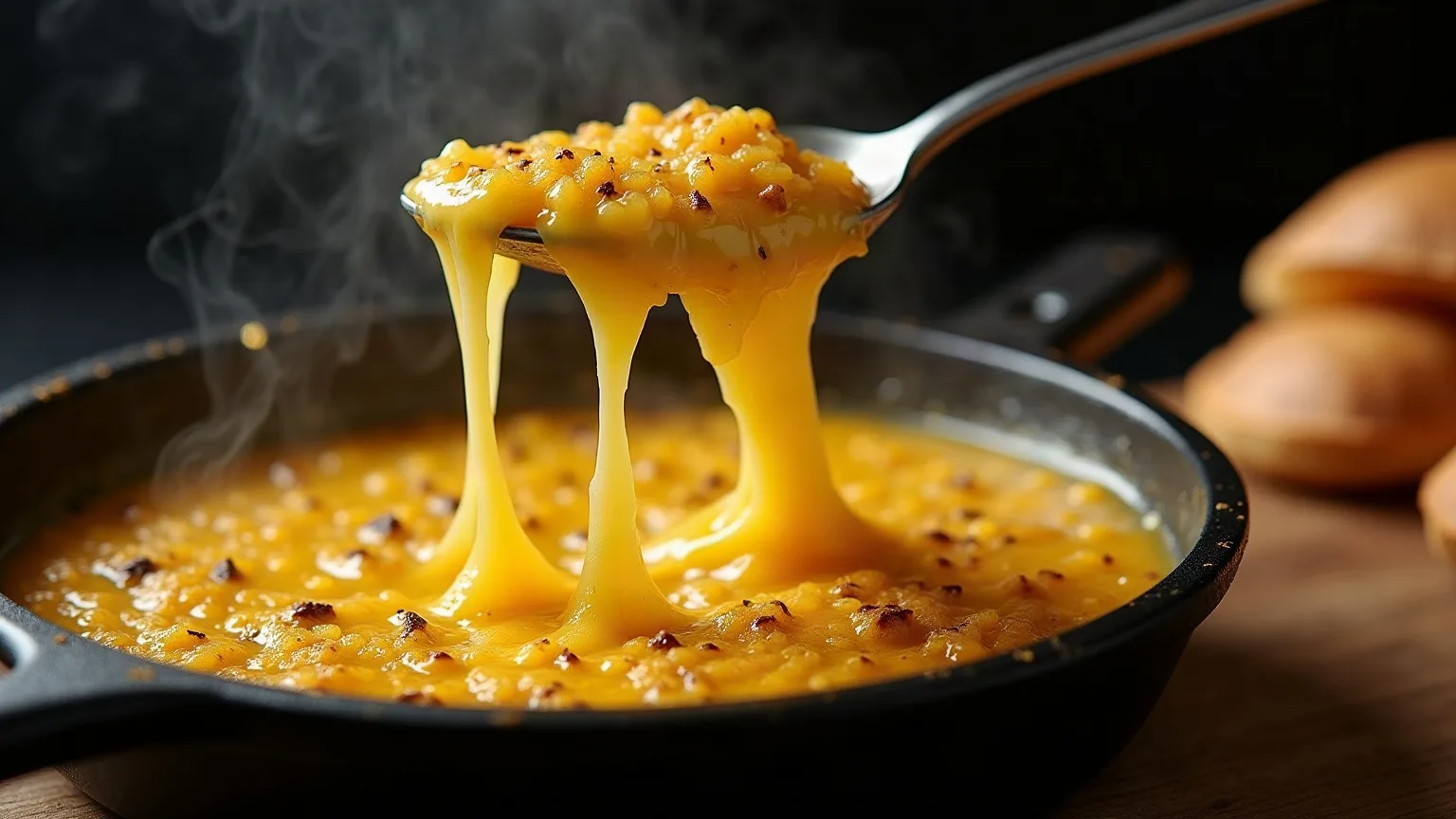
Mıhlama
Cornmeal, butter and a cheese that stretches. The stretch is not a knack but a temperature: past 70 °C it stops stretching and splits.
Breakfasts · Black Sea · Under 30 minutes · One pot · For guests
- Preparation
- 5 min
- Cooking
- 15 min
- Difficulty
- Practised hand
- Cost
- Cheap
- Season
- Autumn, Winter
A dish of the Black Sea high pastures: their cheese, their butter, and cornmeal. Maize arrived in the region in the seventeenth century and displaced wheat where wheat would not grow — mıhlama is the dish of that necessity. The stretch is about the calcium bridges in casein: in a fresh, low-acid cheese those bridges loosen with heat and the fibres slide. In an aged or acidic cheese they are already broken, and nothing stretches.
Method
- Slice the cheese thin or tear it into strands: cubes do not melt evenly.
- Sift the cornmeal ready.
You will need: Cast iron, or a heavy-based pan · A wooden spoon
-
Melt the butter over a low flame, add the cornmeal and toast it six to eight minutes, until it goes light brown and smells of it.
Look for The smell should start to resemble popcorn, and the mixture should slide off the spoon rather than cling.
Why Untoasted cornmeal tastes raw and stays gritty; toasting partly dextrinises the starch and turns the flavour nutty.If it went wrong
If it starts to darken, take the pan off and add the water at once: water fixes the temperature at 100 °C and the darkening stops. If it has gone far, start again — burnt cornmeal is bitter.
Maillard is running Amino acids have met reducing sugars. The crust, the roasted flavour and that smell all come from here. no way back
-
Add the water a little at a time, stirring constantly into a thick porridge, and cook it three or four minutes.
Look for The mixture should pull away from the side of the pan and start moving as one mass.
Why Maize starch gelatinises at 70–75 °C and binds the water. Poured in all at once it lumps, because the outer grains gel and seal the rest in.Starch gelatinised The granules soaked up water, swelled and burst into a network. It has thickened, and it will firm further as it cools. no way back
Too much starch. It will set into a rubbery gel once cool — add more liquid.
-
Turn the flame to its lowest, add the cheese and stir in a figure of eight. Take the pan off as soon as the cheese melts and starts to stretch.
Look for Lifting the spoon should draw a single strand 20–30 cm long. A separate pool of oil on the surface means you left it too long.
Why Cheese stretches between 55 and 70 °C. Above 70 the casein contracts and squeezes its fat out, and the mixture separates into oil and rubber — that is what "splitting" means here.If it went wrong
If it has split, take the pan off, add two tablespoons of cold water and stir hard: the temperature drops and the emulsion partly returns. Not fully rescued, but edible.
Starch gelatinised The granules soaked up water, swelled and burst into a network. It has thickened, and it will firm further as it cools. no way back
If you want a crust, do not stay under 140 °C. Food cooks at this heat but never colours.
This recipe was run through the engine step by step — what goes in when, and at what temperature and for how long. The reactions above come from that run.
peak 150 °C · 15 minutes · engine 1.0.0 · confidence low
After the heat goes off
In the pan, in the middle of the table. Everybody takes from it with their own spoon and eats it with bread; it is not portioned out.
Two days in the fridge. It sets rock hard as it cools, which is the butter and the casein solidifying rather than anything going wrong.
On the lowest flame with two tablespoons of water, stirring throughout. It still must not pass 70 °C, or this time it will certainly split.
Not for the freezer. The emulsion does not survive thawing: the fat separates and does not come back.
Once it has set solid, slice it and fry the slices two minutes a side: crisp outside and soft within, different from the original and good in its own right.
Very suitable from twelve months: no salt is added and the texture is soft. For 12–36 months halve the cheese — kaşar’s salt is high for a toddler. Not suitable for a baby under one: the cheese alone passes the limit.
- Fresh kaşar cheese → İzmir tulum cheese Tulum does not stretch, it crumbles: you get a cheesy porridge rather than mıhlama. Strong in flavour, different in texture.
- Wholegrain cornmeal → Flour Wheat flour binds too, but brings none of the toasted maize smell and comes out stickier.
- Deep frying The method this recipe rests on
- Fresh kaşar cheese What it does in heat, water and acid
- Butter What it does in heat, water and acid
- Wholegrain cornmeal What it does in heat, water and acid
- Cheese omelette Similar method, or something that sits on the same table
- Porridge Similar method, or something that sits on the same table
- Under 30 minutes Other recipes that answer the same need
- One pot Other recipes that answer the same need
- For guests Other recipes that answer the same need
What it tastes like
The axes that define this recipe: richness 63, umami 44.
This profile is computed rather than measured: the role-weighted average of its ingredients’ taste vectors, shifted by what the cooking does. The thin line is the database average on that axis.
Closest in taste
Not hand-picked: ranked by distance across the eight taste axes.

Fried eggs in butter
Eight minutes and one number: the butter must not pass 150 °C.…
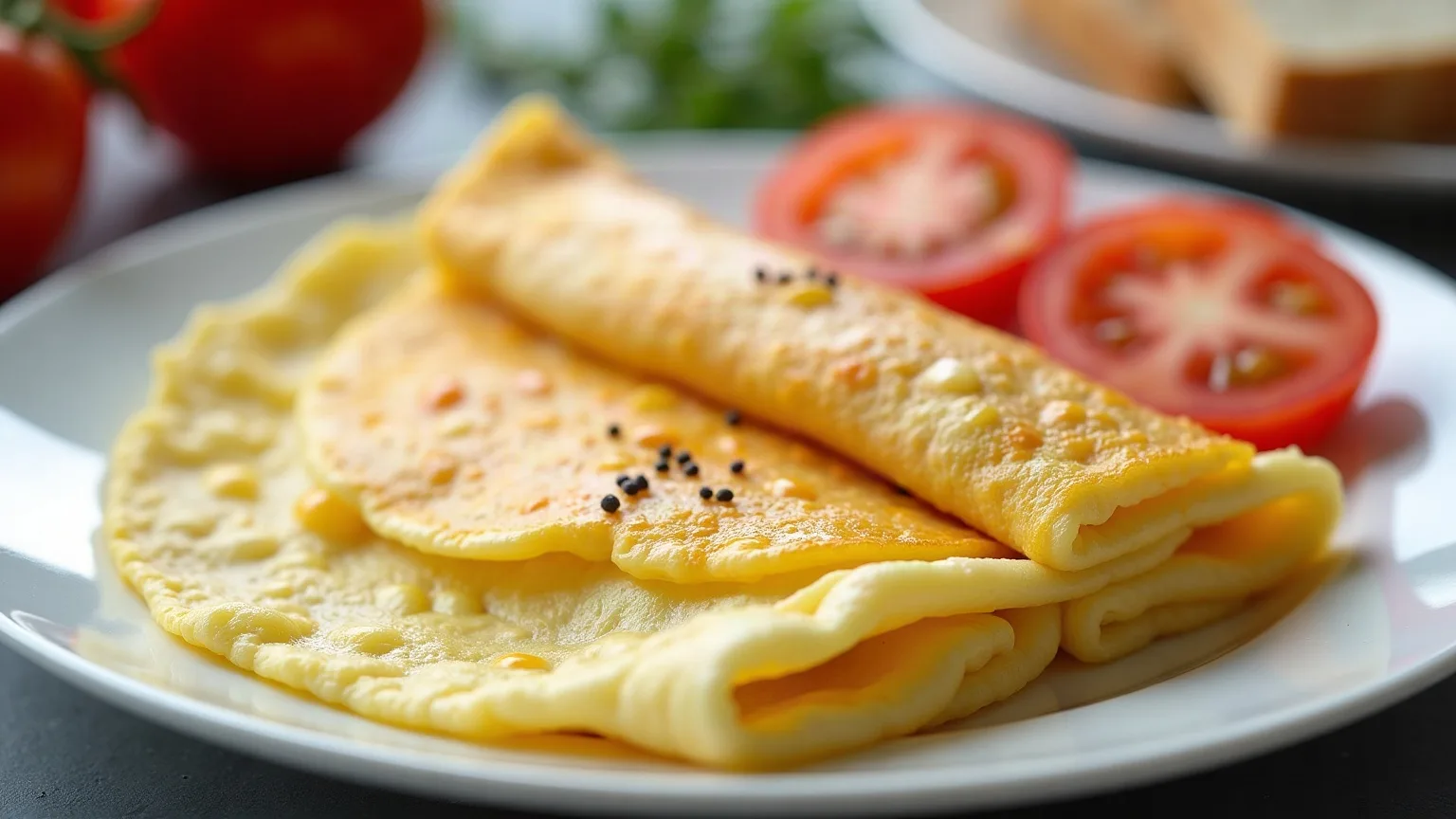
Cheese omelette
The colour of an omelette is a choice: pale means a low flame and brown means a high one, and the second is an accident.…
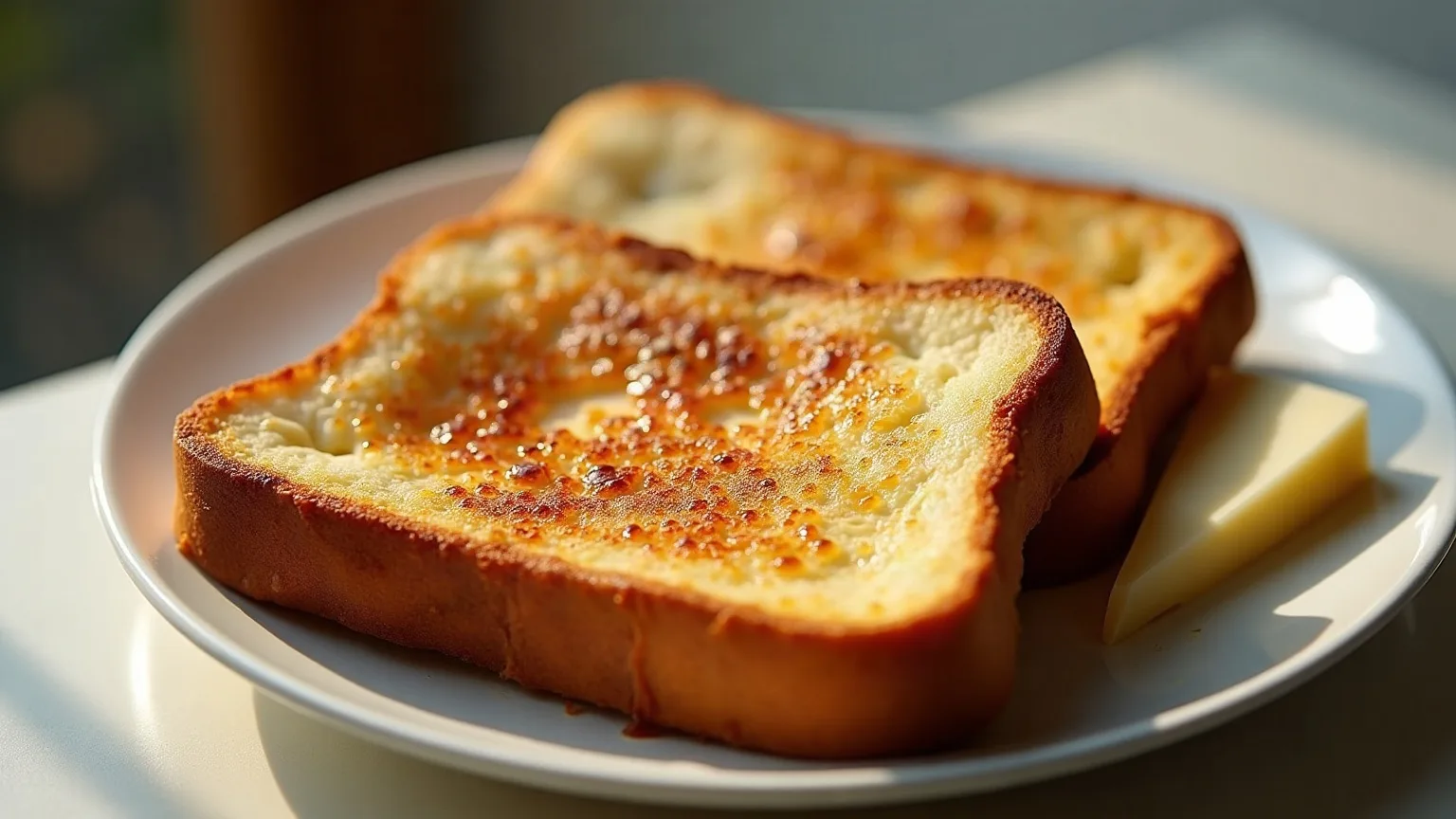
Eggy bread
The best use there is for stale bread. Fresh bread is no good here — it collapses before it has absorbed anything.…
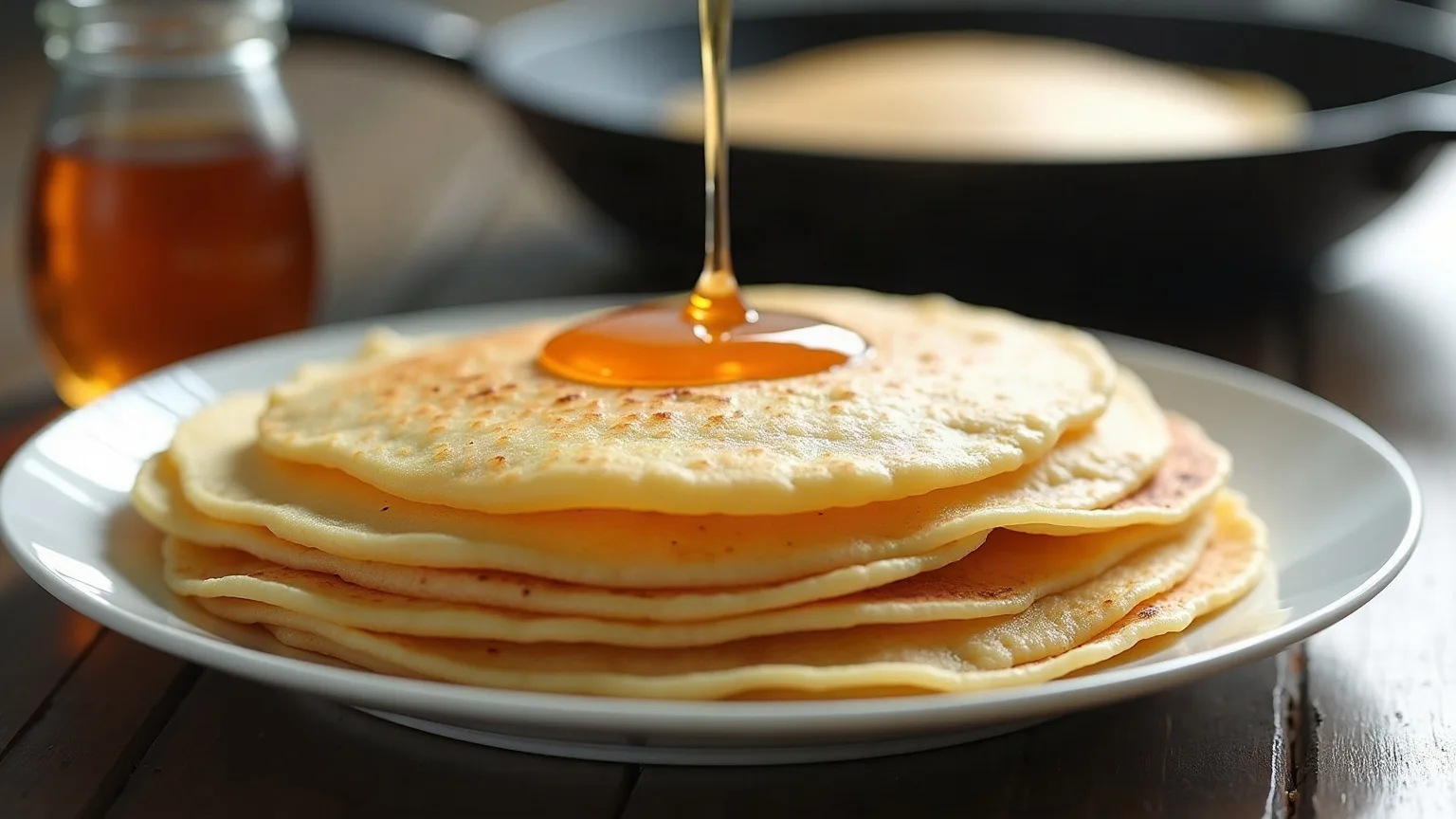
Crêpes
Flour, egg, milk. The one condition for crêpes that do not tear is half an hour of rest.…