
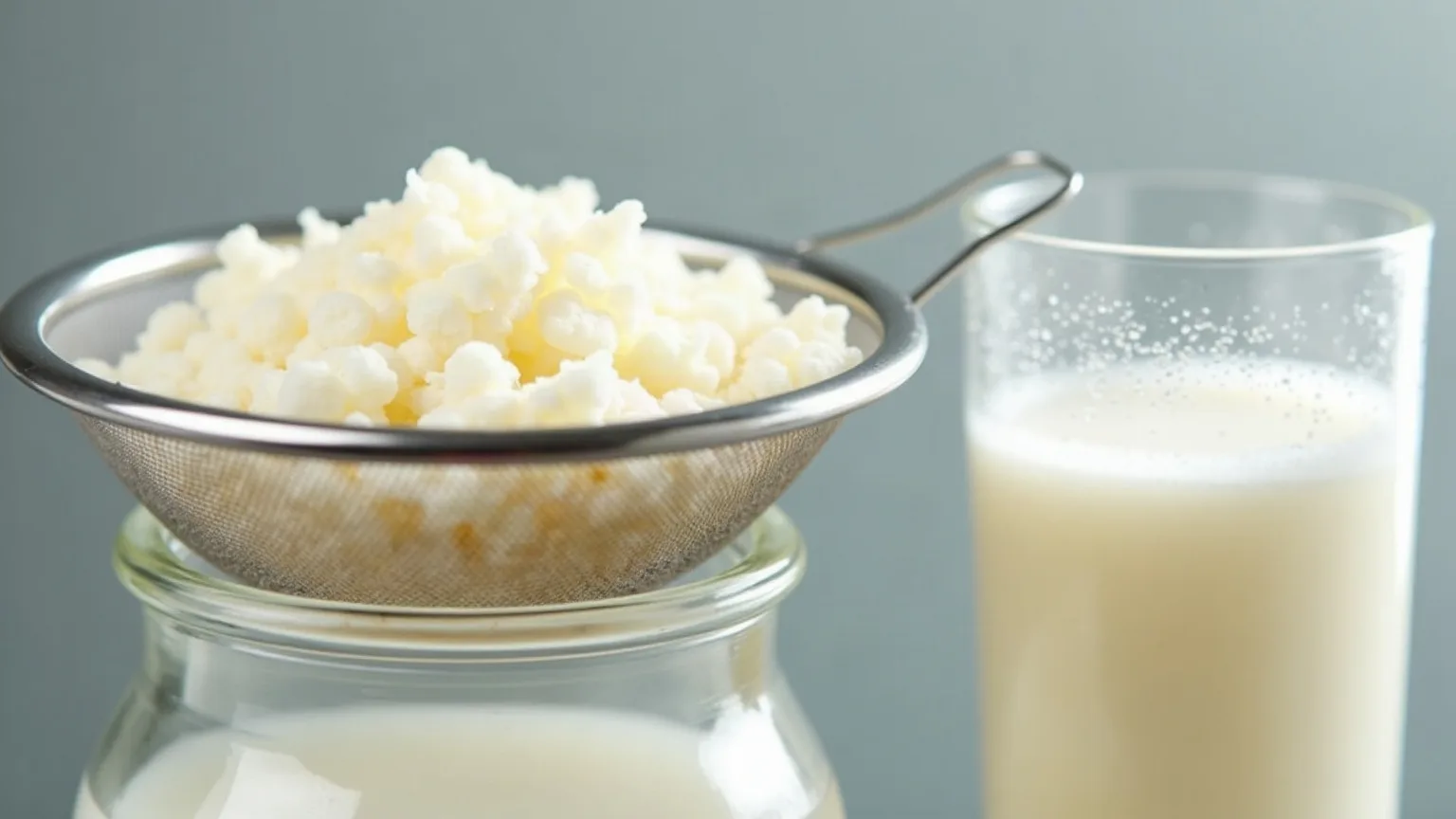
Kefir
The beliefKefir is taken for a runnier yoghurt, or for something that needs a machine.
The truthDrop the grains into milk, leave them a day at room temperature and strain. The grains come back every time.
How to make it
What you need
- 1–2 tablespoons of kefir grains
- 500 ml full-fat milk at room temperature
- A glass jar and a plastic sieve
How the engine read this list (2 lines)
| — | Kefir grains | no record |
| 515 g | Full-fat milk | milk |
An empty weight means that line could not be turned into grams — either the amount is open ("to taste") or the ingredient has no record here. Neither enters the sum as zero; they do not enter it at all.
Put the grains in a glass jar and pour the milk over them, leaving the jar a third empty: fermentation makes gas.
Do not seal it. Cover the jar with cloth or kitchen paper held by a band — a closed jar builds pressure.
Leave it at 20–25 °C out of direct sun for 18 to 24 hours. A warm kitchen may finish in 12, a cool room can take 36.
When it thickens and starts pulling away from the glass, strain it through a plastic sieve. Brief contact with metal is harmless; long contact is not.
Return the grains in the sieve to fresh milk and carry on. A further day in the fridge softens the finished kefir.
The others that work the same way

Yoghurt
The truthBesides milk you need one spoon of yoghurt. The rest is holding a temperature and waiting.
Butter
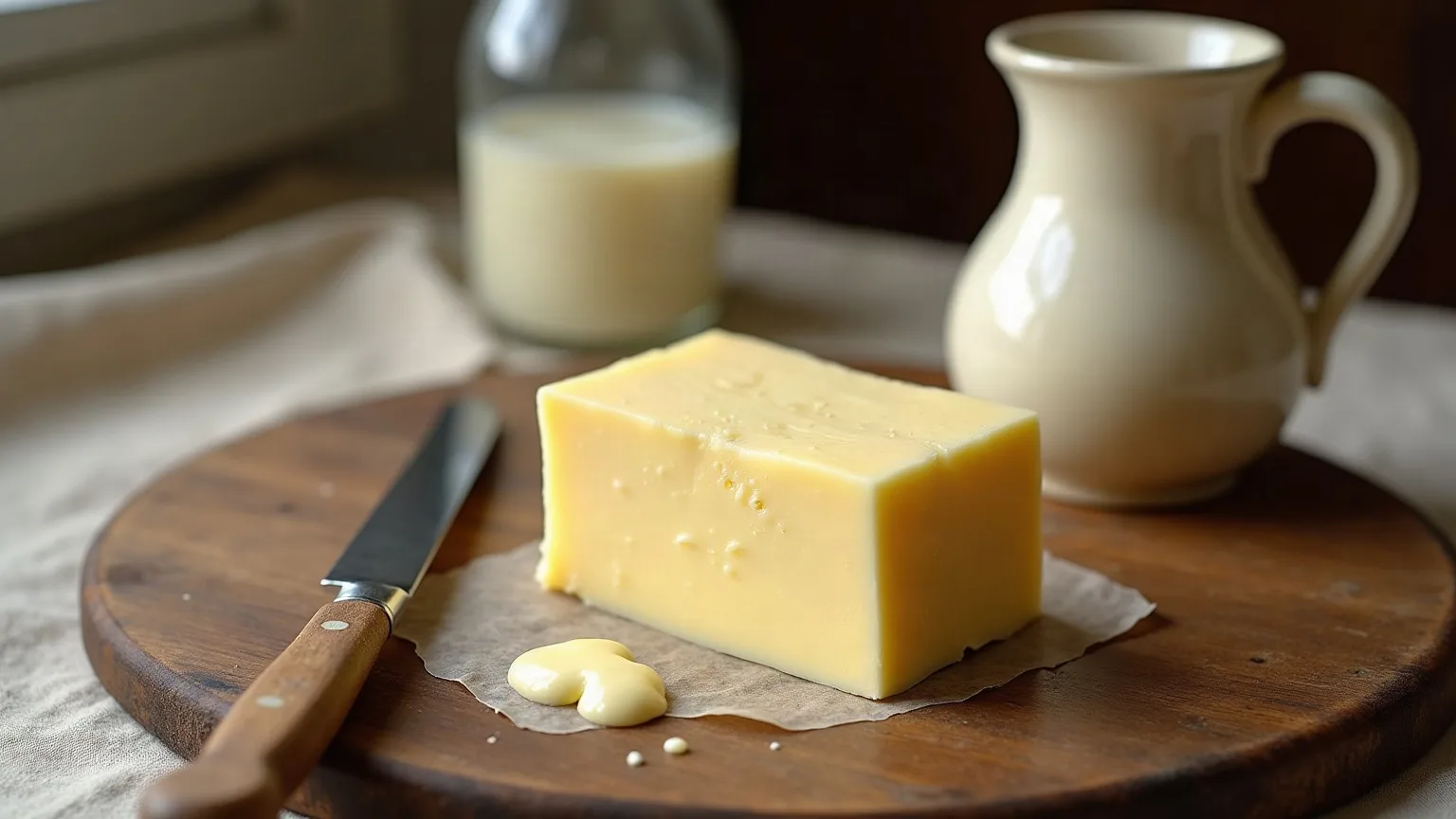
The truthIt is whipped cream taken too far. Around the fifteenth minute it separates on its own and you have both butter and buttermilk.
Labneh
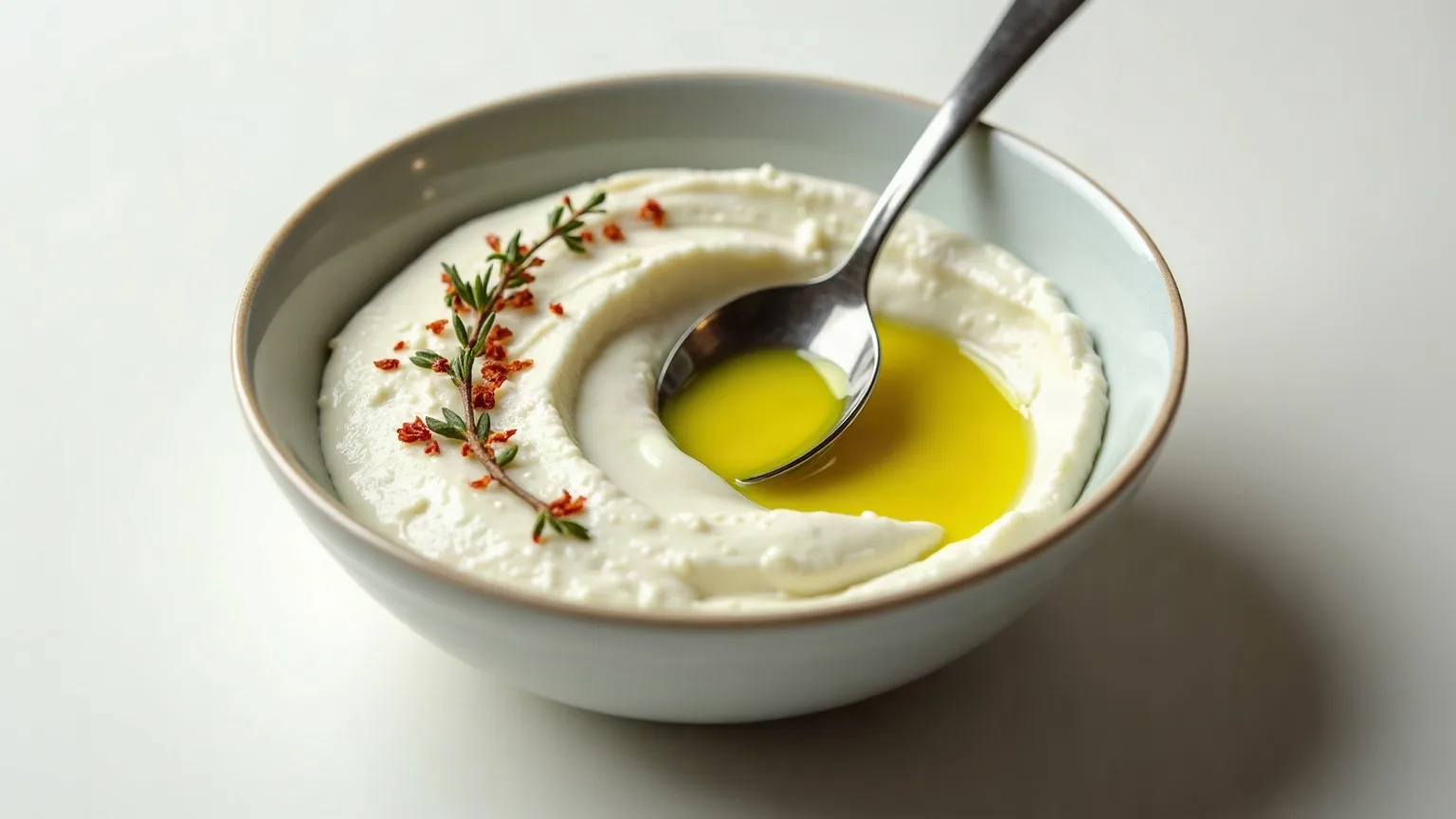
The truthIt is strained yoghurt, and the only variable is time: six hours gives a thick yoghurt, twenty-four a cheese.