
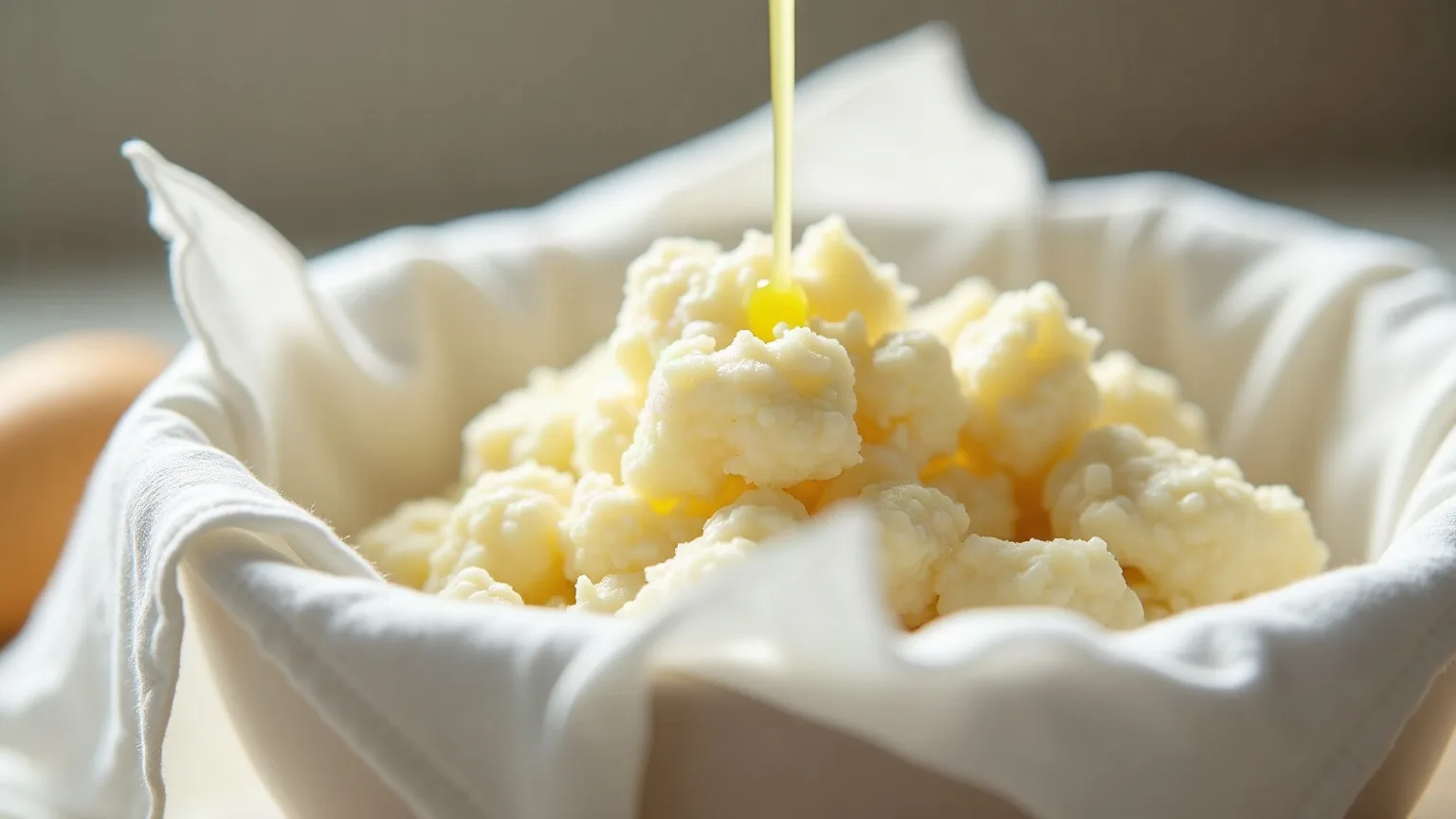
Çökelek
The beliefCheesemaking is assumed to need rennet, cultures and a thermometer, and anything at home to end up as curdled milk.
The truthHeat milk and add acid. No rennet, no culture — the curd separates in ten minutes.
How to make it
What you need
- 2 litres of full-fat milk, or the buttermilk left from churning
- The juice of one lemon, or 3 tablespoons of vinegar
- Salt and muslin
How the engine read this list (3 lines)
| 2060 g | Full-fat milk | milk |
| 40 g | The juice of a lemon | lemon |
| — | Salt | salt |
An empty weight means that line could not be turned into grams — either the amount is open ("to taste") or the ingredient has no record here. Neither enters the sum as zero; they do not enter it at all.
Heat the milk to 80 °C over medium heat. Do not boil it: boiled milk gives a rubbery curd and catches on the base.
Take it off the heat, add the acid slowly and stir once or twice. Do not work it — the curd should gather in large flakes.
Leave it untouched for ten minutes. The curd gathers at the top, leaving greenish clear whey below. If it has not separated, add one more spoon of acid.
Strain through muslin and rinse once with cold water: rinsing takes the edge off the acid and softens the taste.
Salt it, twist the cloth and hang it for another half hour. The more it drains, the drier and the longer-keeping it is.
The others that work the same way
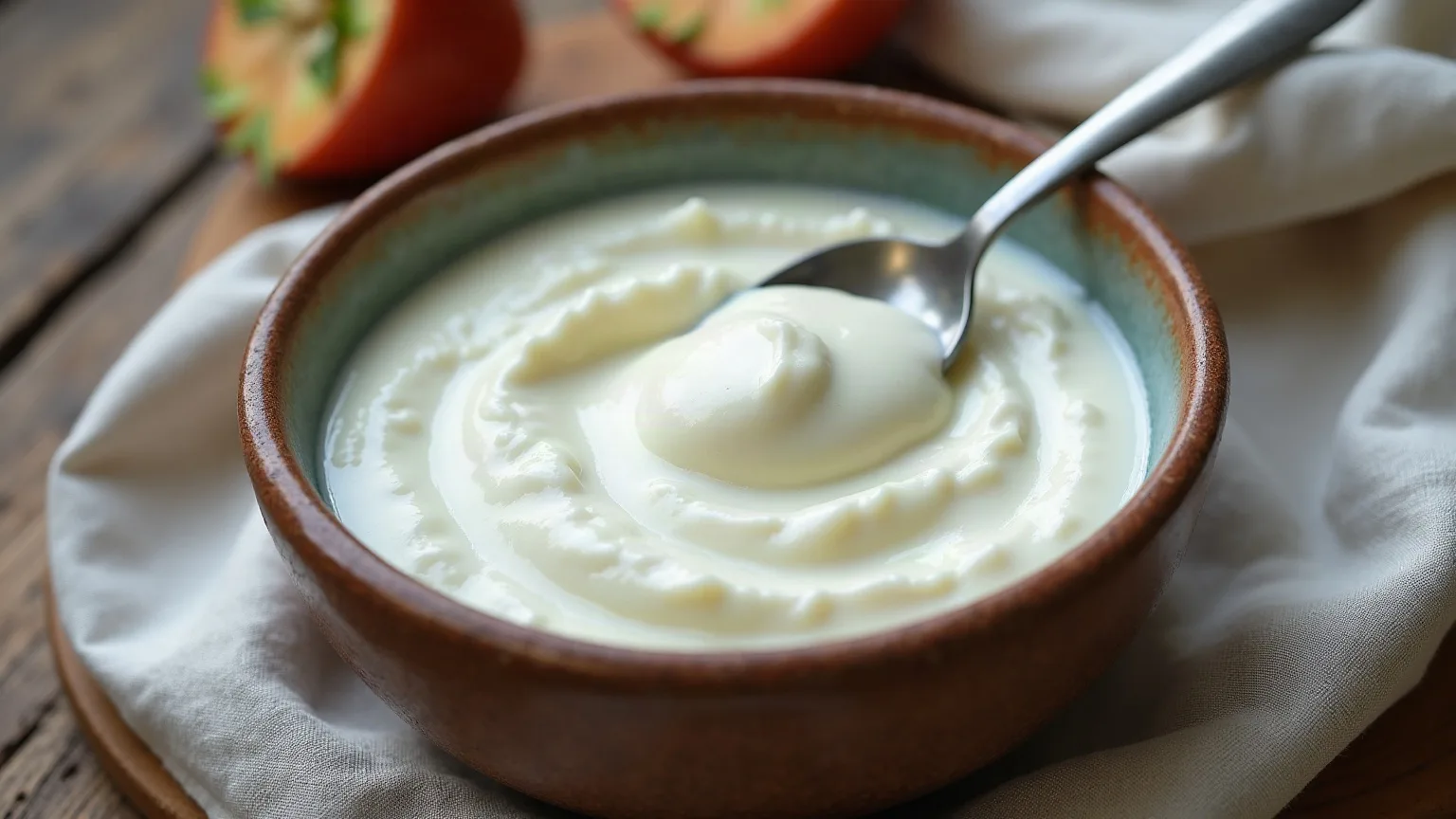
Yoghurt
The truthBesides milk you need one spoon of yoghurt. The rest is holding a temperature and waiting.
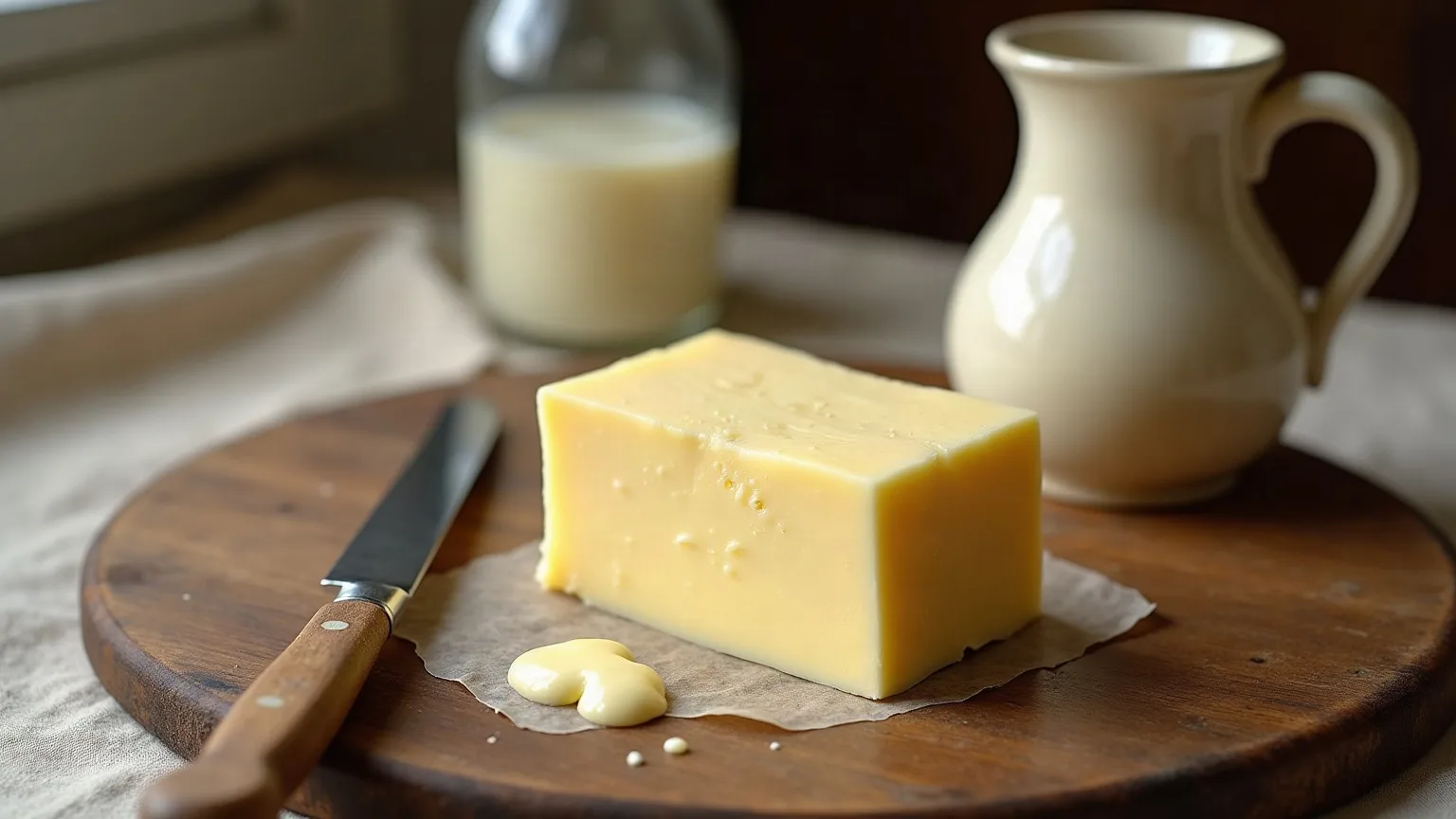
Butter
The truthIt is whipped cream taken too far. Around the fifteenth minute it separates on its own and you have both butter and buttermilk.
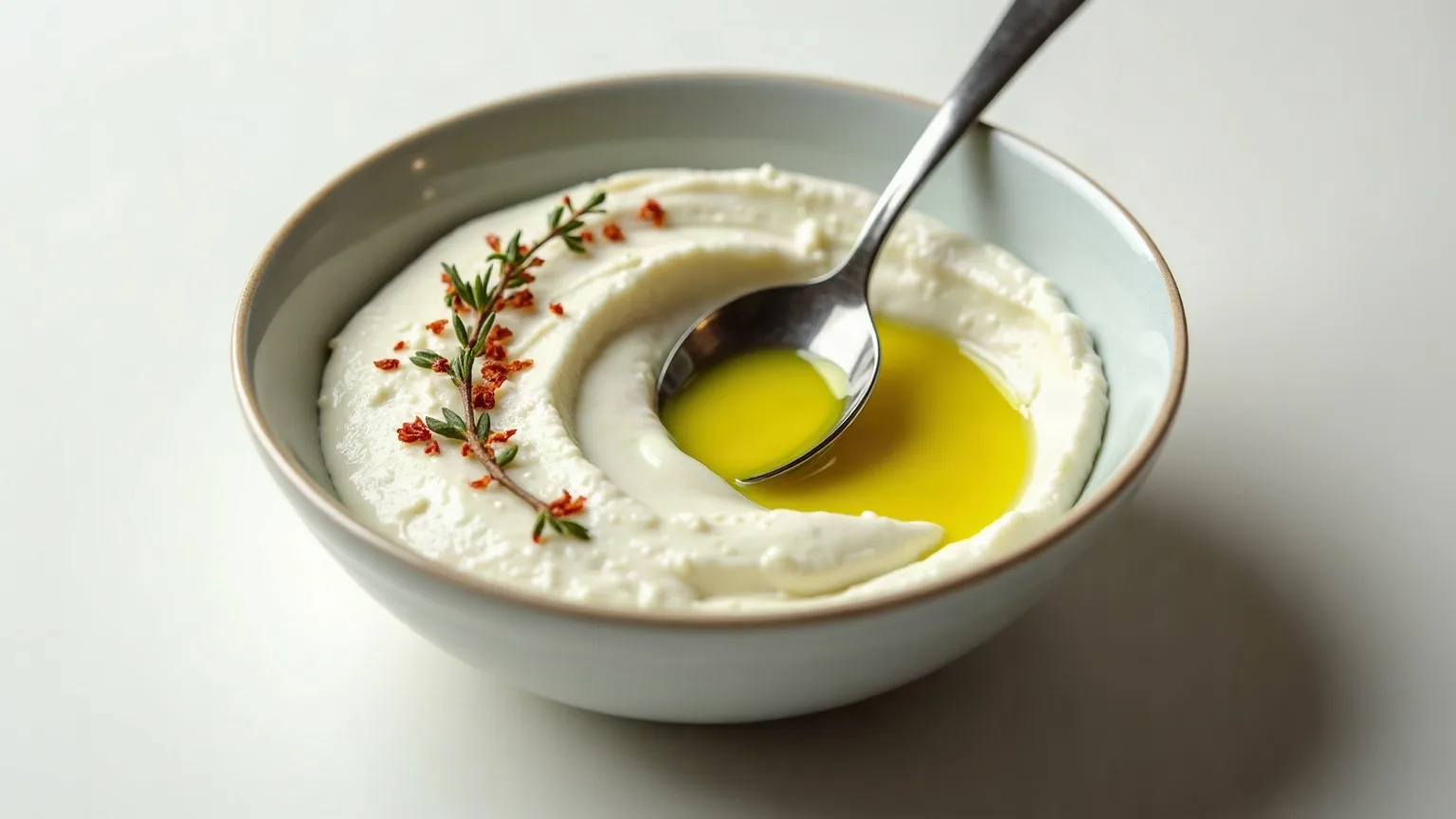
Labneh
The truthIt is strained yoghurt, and the only variable is time: six hours gives a thick yoghurt, twenty-four a cheese.